
St Virgil’s College – New Year 11 and 12 Facilities | Tim Penny Architecture + Interiors Pty Ltd
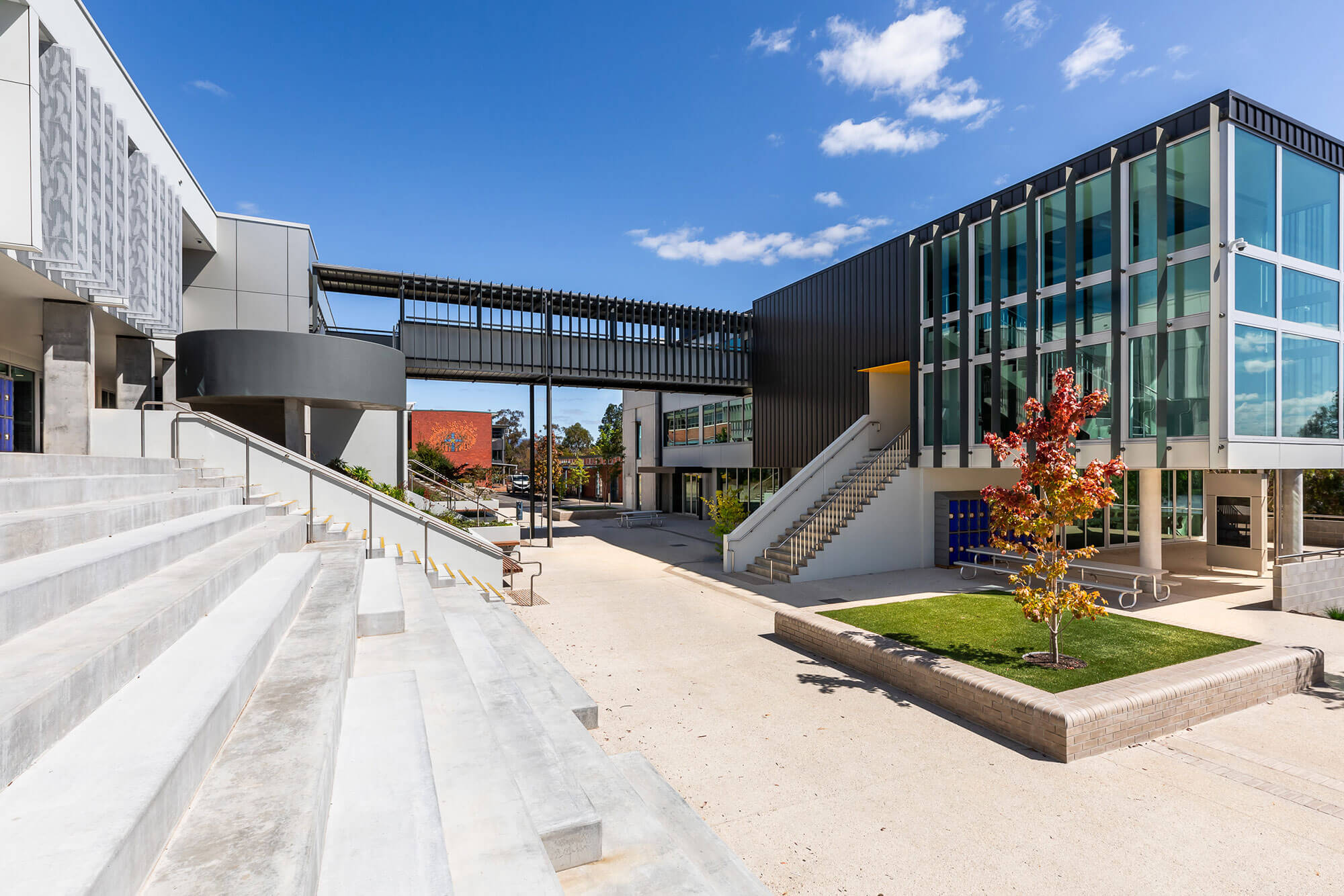
The year 11 and 12 facility provides new contemporary education spaces that are anchored into the 1961 campus plan, expanding and reinventing new external spaces. It is designed to optimise learning and provide seamless contemporary pedagogy, whilst providing a community asset that includes a great place to watch footy.
St.LukesHealth Flagship Store | TERROIR
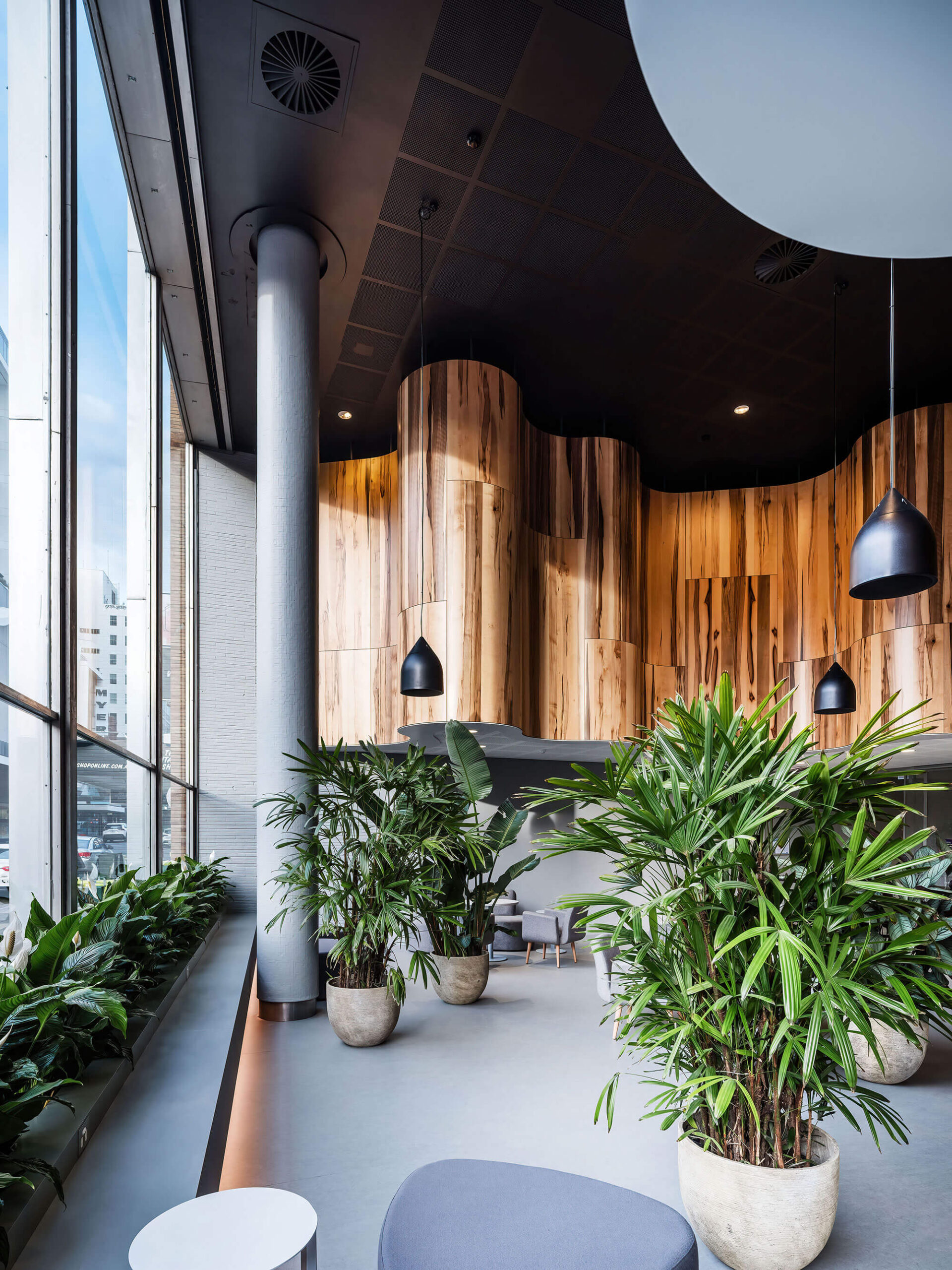
The best intentions of organisations can be betrayed by the banality of their key public interactions in their customer service centre. This critical opportunity to choreograph a set of relations with customers is often blighted by a fitout that is as unsustainable as they are uninspiring.
StLukesHealth are an extraordinary organisation, one that prides themselves on being uniquely Tasmanian with an ambitious vision for Tasmania to become the healthiest island in the world.
This dual sense distinctly Tasmanian but also healthy, safe and wellnurtured led to the concept for their new flagship store to be a gathering space formed by a giant tree hollow. Blackheart Sassafras, a most unique and recognisable Tasmanian timber, and a hollow, a natural form of refuge in our forests. A meeting point between StLukesHealth and their community, the hollow inspires imagination and talks to a healthier and poetic connection to our island state.
Skellig House | Crump Architects

In Skellig House, Crump Architects have created a dramatic shadow in the landscape that creates a harmonious blend of both treehouse and boathouse. The lightweight structure with a dark skin of Shou Sugi Ban hides in the bush on a rocky cliff looking north across the Derwent.
The name is inspired by Skellig Michael, a rocky outcrop off the Irish coast. The owners family is from the west coast of Ireland and felt a strong resemblance between this area and the wild Atlantic coast. The design creates a warm and comforting refuge in this wild southern environment, with a spectacular panoramic view.
The key challenge was to optimise an awkward and constrained suburban block. The final outcome maximises the use of the design envelope and effectively edits out the neighbours to create a lowimpact, low profile structure that uses the available space to create privacy and a sense of expanse.
Regent Street Extension | Preston Lane
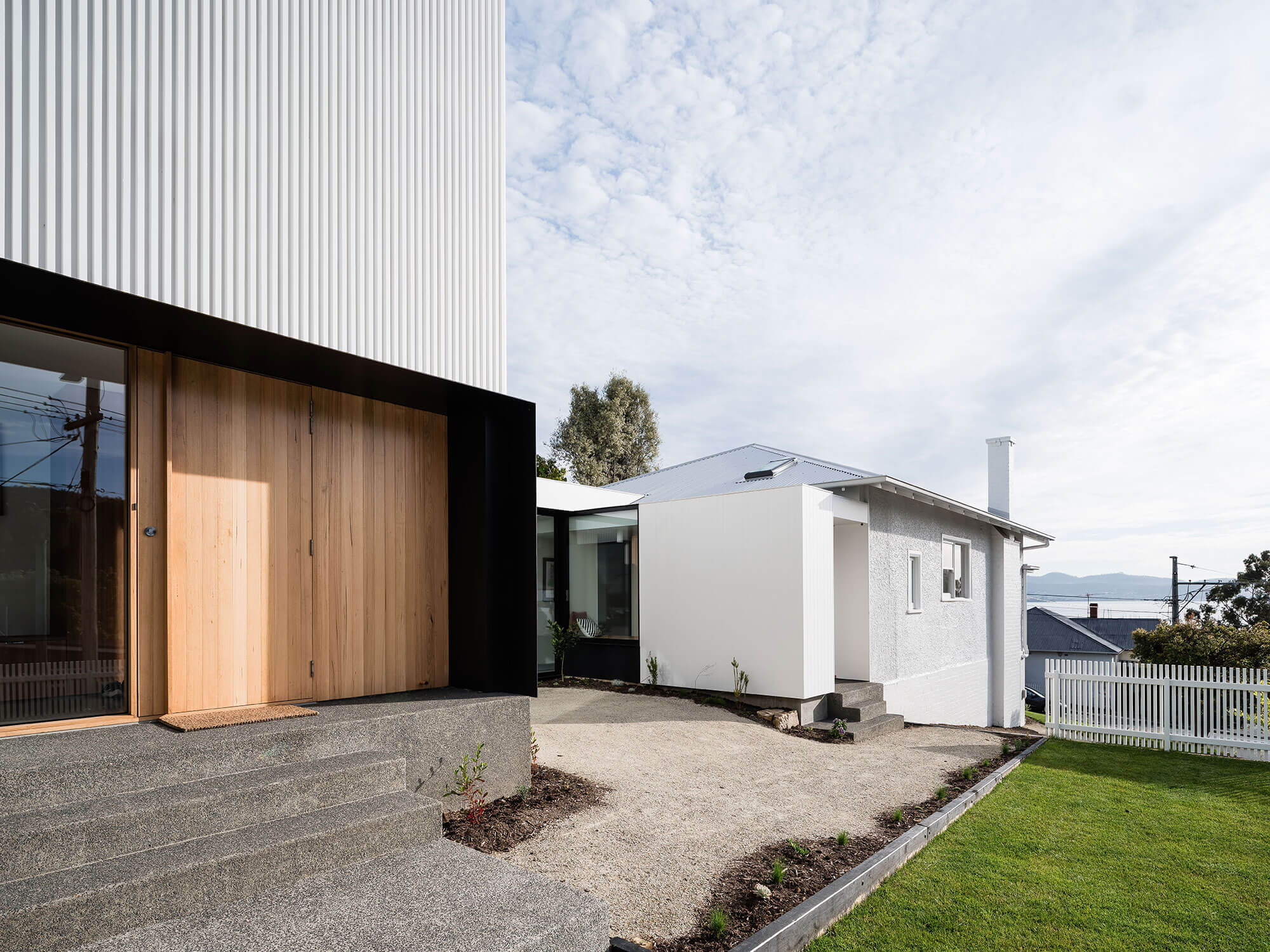
Located on the roundabout of a suburban arterial road in the heart of Sandy Bay, the extension steps up the slope of the corner site as it opens to the North enabling privacy for the occupants and distance from the noise of the road below.
Preston Lane was engaged to modernise the property to provide spaces for a growing family currently residing in Singapore. The extension included the revitalisation of the existing character home (back to its original form) and a substantial rear extension. An existing twolevel extension was removed as part of the works to reveal the original dwelling and to enable a better relationship between the internal and external spaces within the new works.
A new entry has been created off Alexander Street, providing greater connection to the homes new Living spaces housed within the new works, whilst a subtle side entry from Regent Street has been maintained.
River’s Edge Building, University of Tasmania | Wardle

Rivers Edge is a learning, teaching and research building located at the edge of the North Esk River /lakekeller in the University of Tasmanias Inveresk Precinct. Providing flexible, collaborative teaching and research spaces for students and staff from Humanities, Social Sciences, Law and Business disciplines. Its a contemporary learning environment where communities of students and staff gather for meaningful exchange.
The ground floor is organised around a series of brickpods, located at the edges of a lively central atrium designed to bring the community together. Spaces between them frame viewing portals out to the surrounding landscape.
Rivers Edge celebrates its position within a postindustrial site with references to structural expression and robust materials. The building adapts and optimises industrial vocabulary for enhanced solar orientation and thermal performance, concepts of Country are appropriately embedded in the design and consideration has successfully targeted embodied carbon reductions in construction, operation, and endoflife impact.
Patrick Street | Andrew Campbell and Georgina Russell

The Patrick Street project involved a series of interventions in a c.1880 heritage listed terrace house in Hobart. The brief to contain the program within the existing envelope prompted a design approach of discrete ‘moves’ that sought to unlock the plan and provide broad functional amenity seemingly by doing as little as possible. These moves involved the reconciliation of routes and rooms, introducing new insertions designed as buildings in miniature, and functional double moves where a single design move responds to more than one functional requirement. Material selections were informed by the heritage response, with new and modified openings and thresholds constructed from steel serving as a contemporary language counterpoint to the existing masonry and timer fabric. The detailing of the new insertions was approached as an exercise in the use of plywood, standard timber sections and off-the-shelf mouldings as a method for developing a distinct language across the scheme.
Pedder Street House | Bence Mulcahy

This 1920s cottage renovation and extension better connects the interior with the northfacing rear garden for a couple and their young child.
The well-loved cottage with double-fronted facade of white stucco and asymmetrical gables has an informal and endearing character.
The brief, delivered in a new extension which continues the cottage’s hipped roof, includes master-bedroom, ensuite, kitchen, dining, living, powder-room and laundry.
Plan and section are tightly worked to yield a playful arrangement of internal spaces of varying floor and ceiling levels, aligned with terraced courtyard and garden, and a discrete second storey master-bedroom and ensuite.
Demolition of the rear of the cottage connects the original interior to the garden and maximises daylight.
The extension, on the north-eastern quadrant of the site, opens to the luscious garden and courtyard. The interior softy shaded by an overhead pergola and external trellised green wall.
New Bethlehem House | Tim Penny Architecture + Interiors Pty Ltd
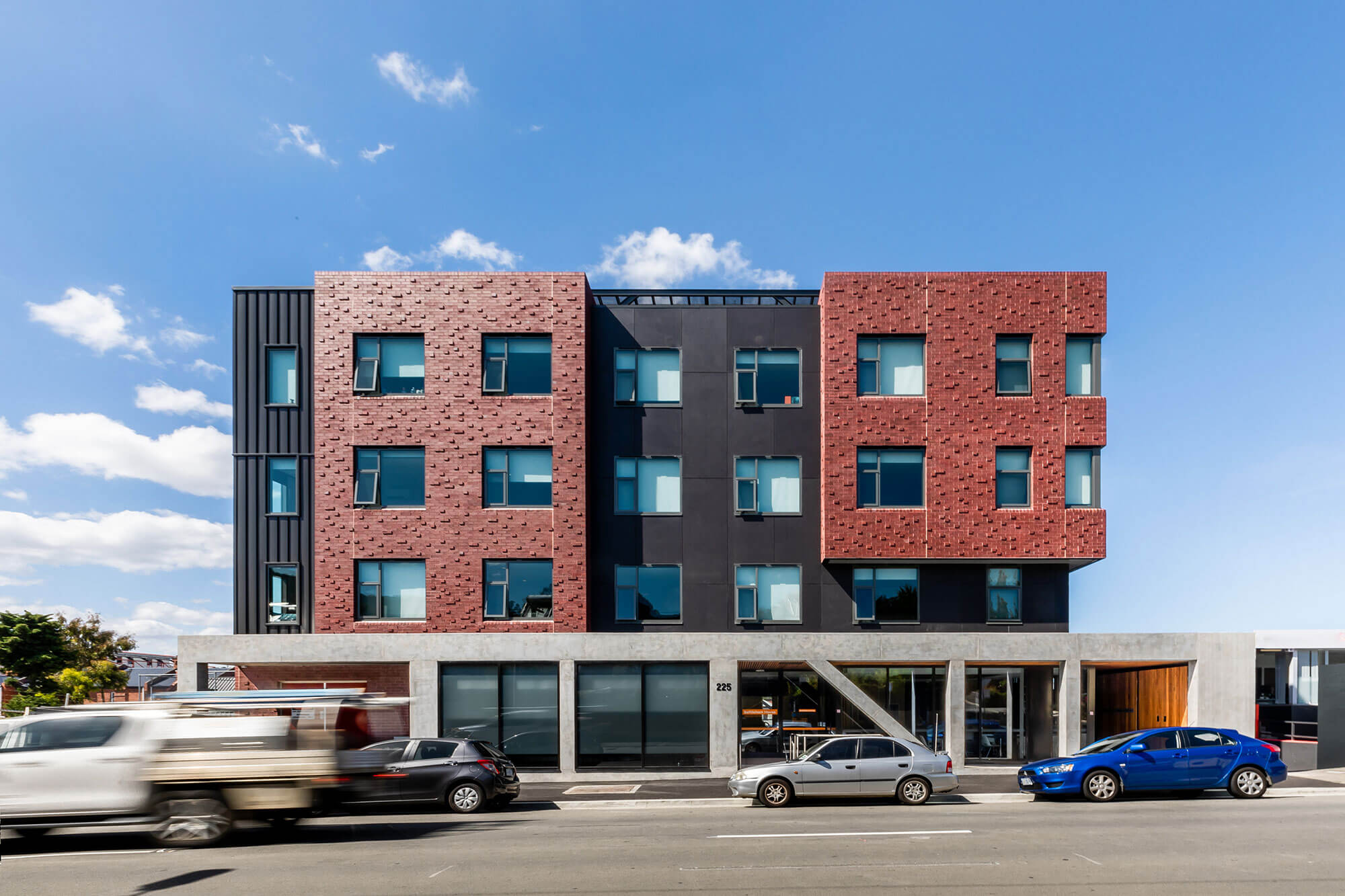
Bethlehem House has high quality spaces, materials and finishes to create calm and peaceful spaces, whilst providing seamless access for services, care and support for the residents with complex needs. The design echoes the underpinning concept that everyone is valued and the men are in an environment that can provide the best possible opportunity to transition out of homelessness into a home.
Murdolo Apartments | ROSEVEAR STEPHENSON

In mid 2014, we were approached by the owner of 258 Macquarie Street, who nearly lost the property to fire shortly after it’s purchase leaving a dilapidated rental property uninhabitable and an owner with an enormous challenge.
Around the same time AirBnB was emerging and we suggested adapting the building specifically to this new typology to achieve the returns required to fund the restoration demands.
We developed a policy of removing the intrusive elements, repairing damaged external fabric where required and distinctly inserting new elements within the existing spaces and externally as clear modern attachments. Where existing fabric could remain in it’s current state, it was left that way, “even the fire history” such that a patina of eras is on display.
During the 258 construction, 260 was purchased by the owner allowing us to restore both terraces as a whole and reestablish their stately Georgian presence on Macquarie Street.
‘Littoralis’ Midway Point | Leigh Woolley Architect
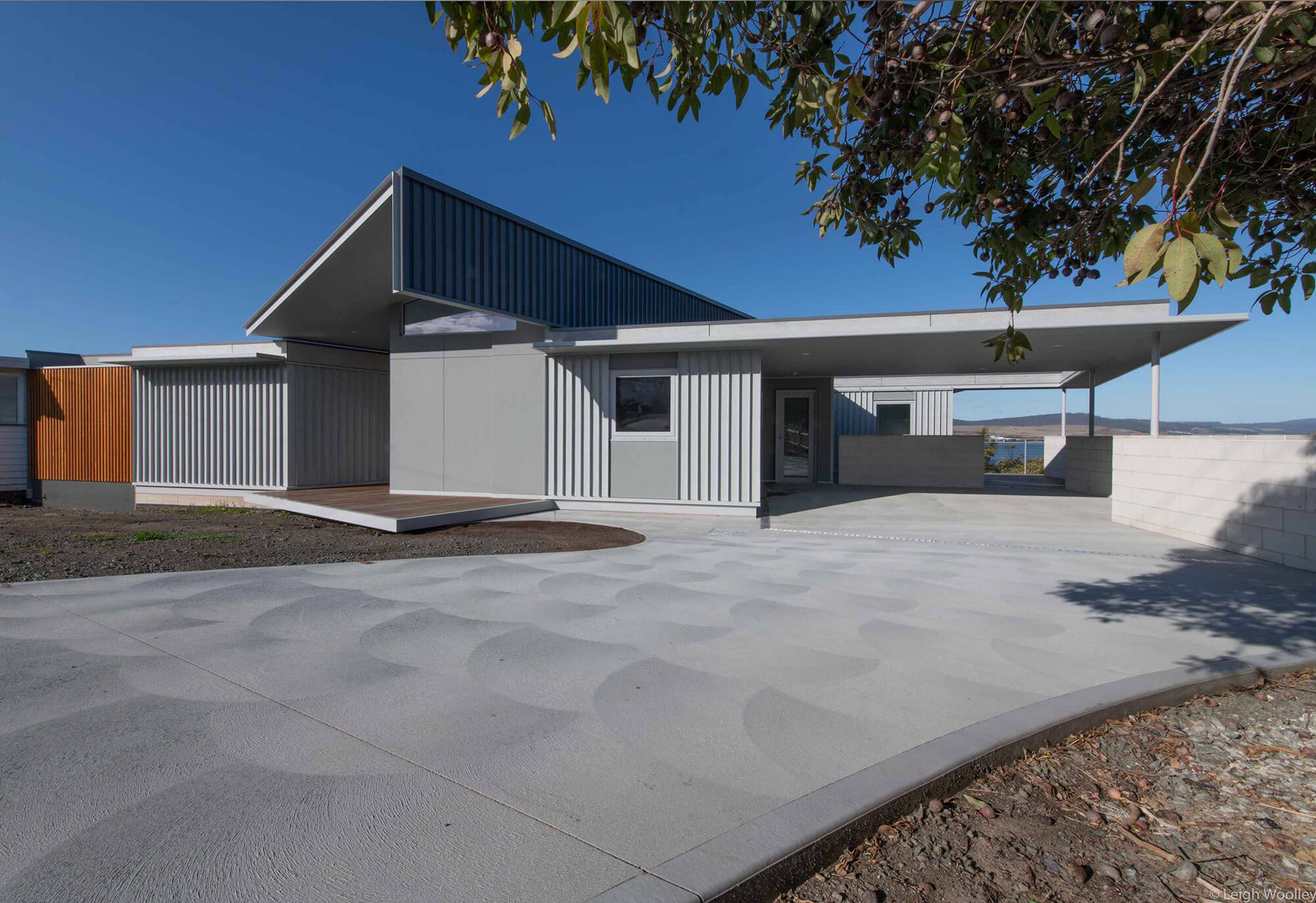
Attracted by the inter-tidal character and abundant bird life of the Pittwater embayment, the owners chose Midway Point, east of Hobart, to retire into. Maximising connection to the waterplane of the bay, the new dwelling provides both a living and viewing platform adjacent the coastal reserve and its abundant littoral shore.
In a compact plan providing diverse living spaces, the threshold between inside and outside is reinforced as a uniform datum. External edges in the sun, and out of the wind extend the interior outward providing local and regional orientation.
The design response has been to future proof the site for its retired owners by providing grade access via the driveway to the new dwelling, and its level living platform. Supplemented by vegetable and feature gardens, an existing dwelling provides ancillary accommodation (for a carer) to extend their longevity on the peninsula.