
Lanoma Street | Licht Architecture
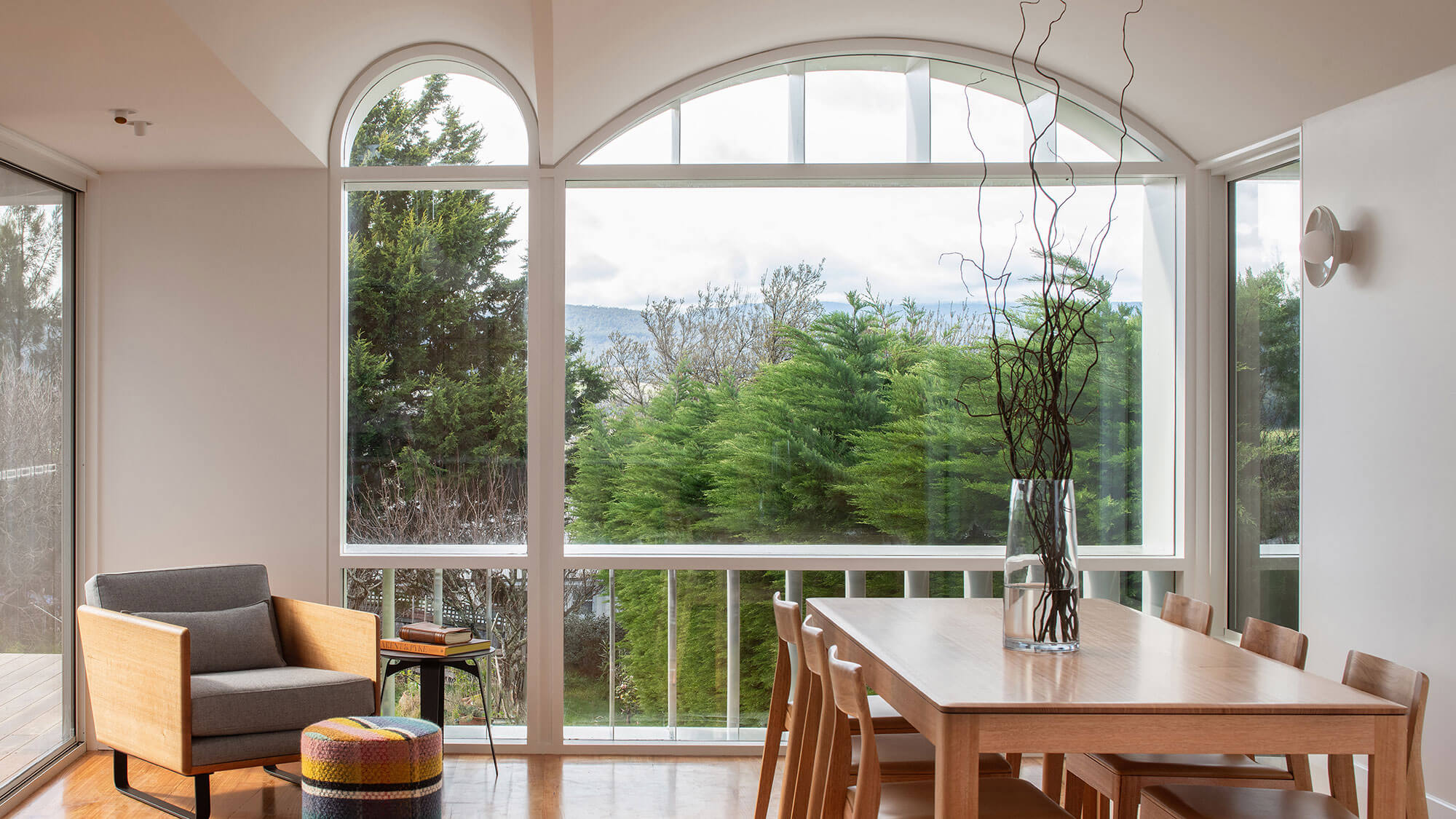
This project is a playful celebration of a humble 1914 Federation home in East Launceston. The home had charming character but its interiors were dark, internalised and disregarded the backyard and distant views.
A small extension and focus on cosmetic upgrades lifts the home to meet the familys needs. The new 17m2 addition references the federation details and finesse through a modern interpretation. Archways of the existing verandah are reinterpreted in vaulted ceilings and external shade structures. The internal plan has been rationalised to simplify movement through the home and create connection between rooms. Small moves enabled an ensuite, WIR, laundry, bathroom and separate toilet to be newly accommodated within the existing footprint. The new works draw light deep in to refresh the home. The footprint increased is only marginal but is significant in its result comfort, joy and connection for the clients.
Larapi Child and Family Learning Centre | JAWS Architects

The Larapi Child and Family Learning Centre provides a welcoming environment for local families to bring their young children to play and connect with other parents, centre staff and any service providers they may need.
Drawing on the duality of the Wynyard urban grid juxtaposed against the meandering river nearby, the planning of the centre uses these two contextual elements to shape the building.
The interior spaces are comfortable, calming, engaging and robust; the overall experience a familiar one, resembling an extension of the home.
Play is the fundamental theme throughout the centre, with elements that challenge, inspire curiosity and increase gross motor skills.
A circulation spine divides administration and service areas from social and play spaces, seamlessly opening out to the nature-based playground.
The fluid expression of the veranda and irregular groupings of columns form a dynamic relationship with the landscape, affirming that this is a fun, child-focused building.
LAVADA | Studio Ilk

We were approached by Tash and Dan to reimagine their wellness clinic. The new tenancy embedded in the historic IXL Jam Factory fabric on Hobarts waterfront, 700% larger than their previous location.
Contemporary elements carefully inserted into the constrained heritage envelope; spatial arrangement maximising natural light within a deep floor plan with minimal openings to the exterior façade.
Intentionally engaging and celebrating the work of local craftspeople and designers, from the bespoke furniture to handcrafted ceramics which form part of the subtle wayfinding experience navigating through the clinic.
Stripping back preceding superficial fabric, deliberately exposing and highlighting structure and services within the ceiling zone, celebrating the required functional elements and layers of history in public and shared spaces rather than hiding them away.
An earthy textural layer of materiality provides consistent language of materials: tasmanian oak and travertine. Embodying the Lavada brand which speaks of the uniqueness of lutruwita, Tasmania.
Lexus of Tasmania and Omotenashi | BYA with Core Collective Architects

The Lexus of Tasmania showroom & Omotenashi restaurant is a unique space that marries the company’s Japanese heritage with its Tasmanian context. Designed by BYA Architects with Core Collective Architects, the interior is restrained and quiet; a beautifully crafted and distinctly Tasmanian backdrop for the showcased cars. The interior reflects the brand identity of both Lexus and Omotenashi whilst creating a unique customer experience that is understated and elegant.
Lisa and Matt’s Place | Bek and Hame
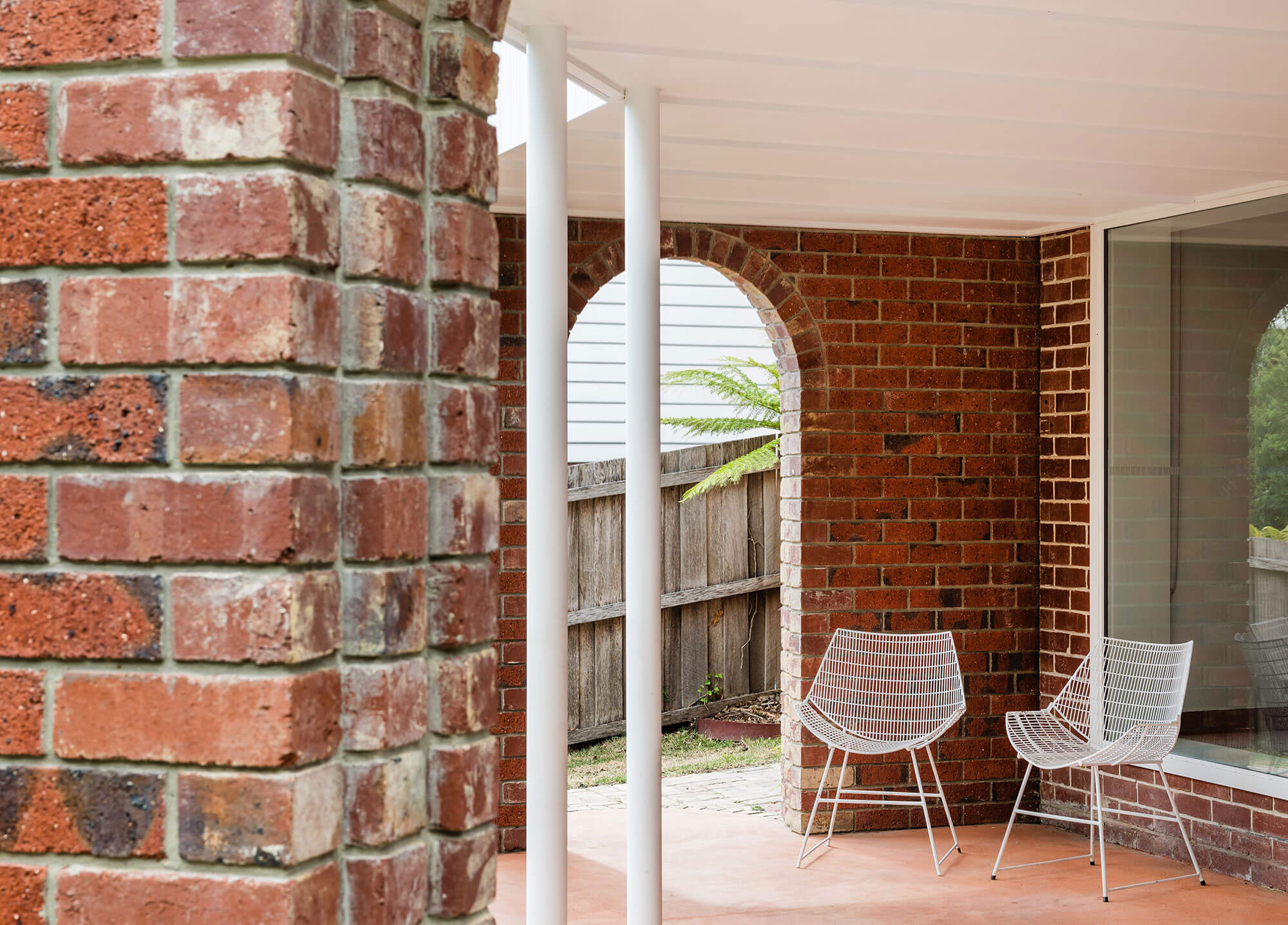
The project, a rear extension to a much loved quintessentially Hobartian red brick family home, facilitates greater outdoor connectivity and natural light to a previously closed garden façade. Though the employment of connected upper and lower storey space and eye directing planes, inviting views toward the garden whilst editing out the adjacent properties, the project ensures both upper and lower storeys meet the needs of the backyard devoted occupants. Small moves for big impact underpins the approach, including the conversion of an unused under croft space into a lightfilled family rumpus room, the addition of a garden accessing internal staircase to a north facing family dining space and kitchen, and the carefully crafted restoration of the existing front rooms of the home. By enacting the ideology of doing more with less, the project encapsulates the achievement of greater family liveability within a footprint reflective of a contextually sensitive scale.
Korunnah | Spark Architecture
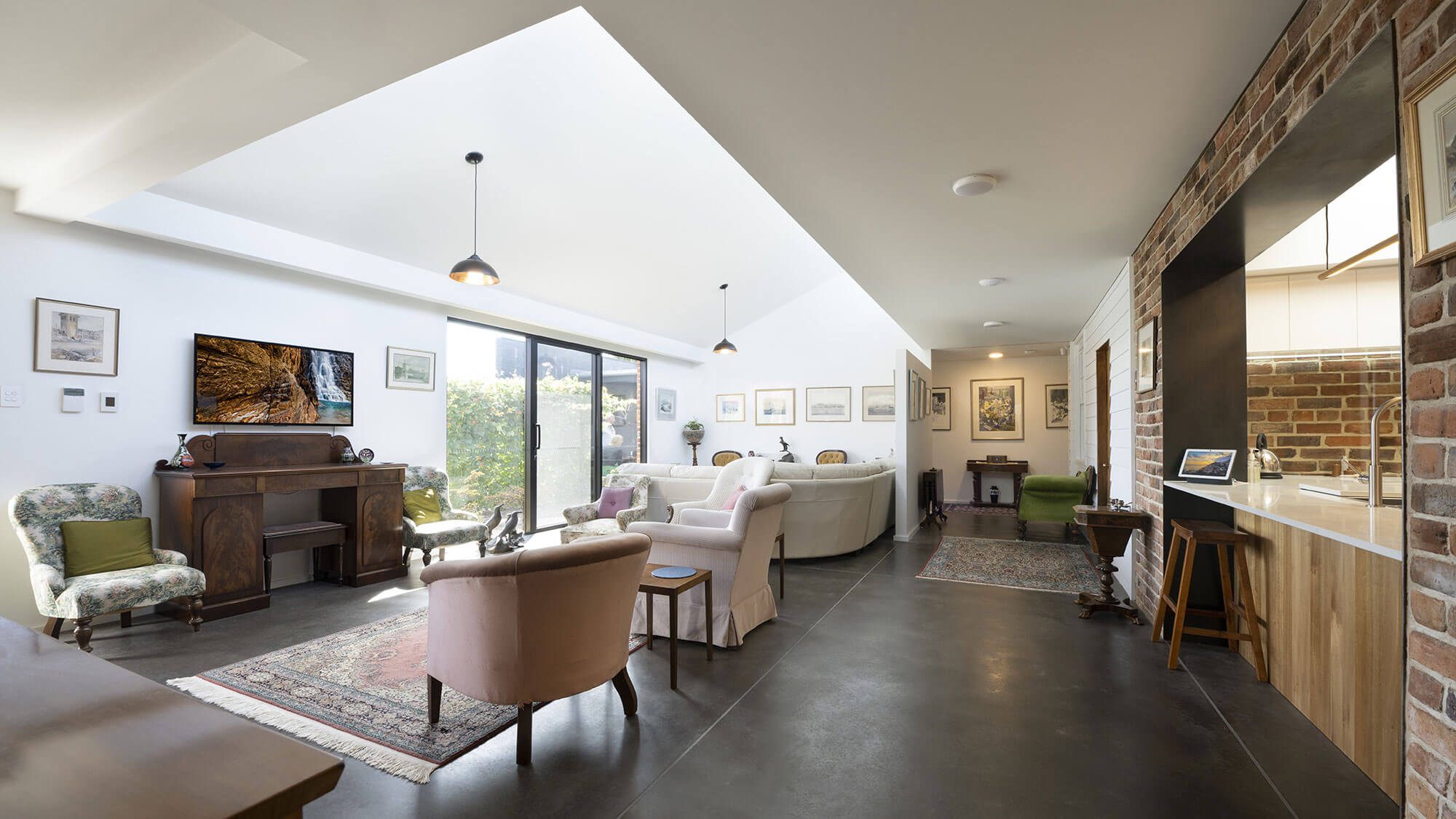
Spark Architecture’s Korunnah was a collaboration between insightful and trusting clients, heritage experts, and an experienced contractor delivering conservation, restoration, reconstruction and new work to a Victorian house with established cultural heritage significance. A balance between conservation, and creating a complementary warm, sunny, light-filled living wing extension was sought.
The inconspicuous extension continues the existing central circulation, integrating the cottage and rear-wing. The living space spills through the kitchen and dining room across defined thresholds incised through the original fabric. Views between old and new spaces are framed by these apertures and reinforce the connection between them.
The cottage was largely conserved, with some elements restored including removal of unsuitable modern alterations.
Due to its condition, a decision was made to dismantle and reconstruct the rear-wing utilising salvaged materials. Other unimportant elements were demolished.
The measures taken in the delivery of this project will ensure Korunnah’s longevity into the future.
James Street | Taylor and Hinds Architects

Conceived as a brick villa, James Street is located on an overshadowed and compact site, on the urban rim of Launceston’s colonial streetscapes.
The condition of the tight site, topography, and the presence of a century-old walnut tree is resolved in a strategy of walled courtyards, terraces, and volumes which abut the street edge.
From the street, walled courtyards elongate the entry sequence into the private realm. Quieter, immersive needs are oriented toward the light of walled courtyard gardens.
Elevated brick terraces allow for measured access to sunlight and aspect, and create daily connections to the streetscape. The walnut tree is used as a seasonal hinge for the composition of these courtyards and rooms, around which the interior volumes and gardens coalesce. This offers an unanticipated sense of expansion to the interiors, which is magnified by a subdued and dark palette that lofts towards the higher volumes.
Finlay Street | Christopher Clinton Architect

The Finlay Street project centres on a heritage-listed utility structure, once part of 34 Hampden Road. Alterations feature a new living area, removal of an unsympathetic fit-out, and landscaping with a north-facing green ‘warm’ roof. ‘Portals’ with integrated joinery enhance functionality and selectively frame views in existing west-facing openings. The northern addition maintains the original floor level, integrating a green roof intentionally kept low. A ‘lantern’ roof section, set apart as a distinctive glazed form independent of the main building, allows light penetration, ensures privacy, and establishes a visual link with the original house. Internal improvements expose and preserve the original brick structure, replacing laminate flooring with Tasmanian oak, and introducing detailed timber joinery. Achieving a harmonious blend of contemporary living, conservation, and historical sensitivity, this project reflects a successful collaboration among architect, client, and builder. The delicate balance between heritage preservation, functionality, sustainability, cost, and aesthetics defines its success.
Freer Farm Agricultural Centre of Excellence | Philp Lighton Architects

TasTAFE Agricultural Centre of Excellence prioritizes practical education, adaptability, and connection to land. It emphasizes flexibility to evolve alongside technology and teaching methods, integrating elements of the landscape to engage students and teachers in both classroom education and practical studies. The Centre’s contemporary form symbolizes progressive farming techniques, featuring a ‘cattle grid’ facade for privacy and solar control, and rammed earth walls, depicting the red hues of the northwest farming landscape.
The integration of artwork to enrich the space’s narrative and functionality, enhances the learning environment. Sustainability measures include natural light, passive solar heating, and thermal mass walls made of rammed red earth to minimize energy consumption and regulate indoor temperatures effectively.
Bond Store and Watergate Wall – TMAG | Purcell Architecture
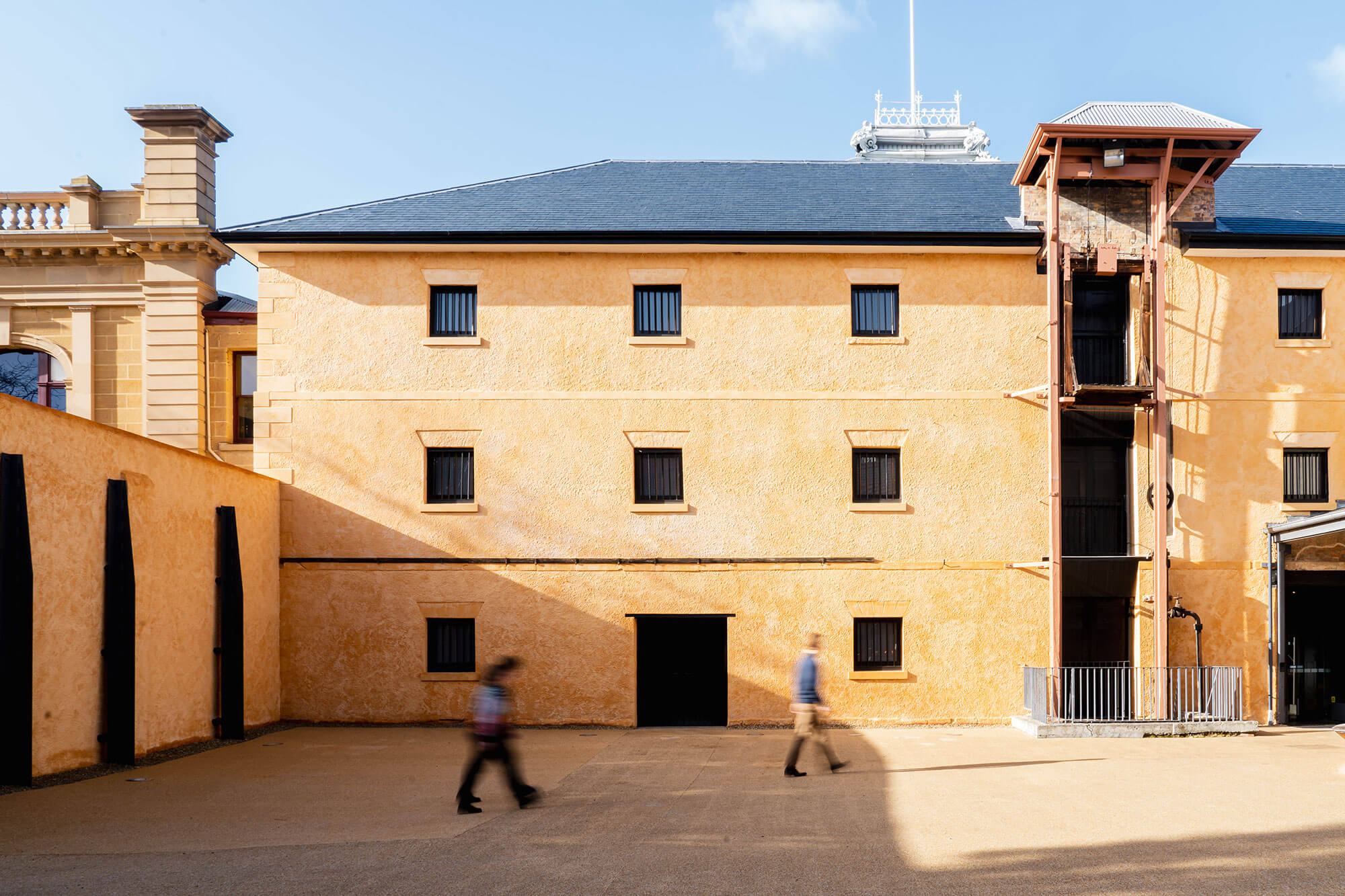
The Tasmanian Museum and Art Gallery (TMAG) comprises a collection of contemporary and historic structures, including the rare and intact Bond Store, and adjacent Watergate Wall. The conservation of these 200-year-old buildings was essential due to recent weather damage and ongoing deterioration.
Purcell, known for their expertise in retrofit, creative reuse, repair, and conservation, were engaged as the Heritage Architect to re-render and re-roof the Bond Store to its original state and stabilise and rerender the Watergate Wall at the sites entrance. Following extensive archival research and fabric analysis, Purcell and the wider team identified the structural and fabric matters compromising the integrity of the significant features. Rectifying these issues and using traditional materials and techniques returns both environmental and social benefit for the community.
This project revitalized a crucial historical site, strengthening the bond between Tasmania’s heritage and its community, while enriching educational opportunities and enhancing the visitor experience.