
John McGrath Kia | Open Principle Architects
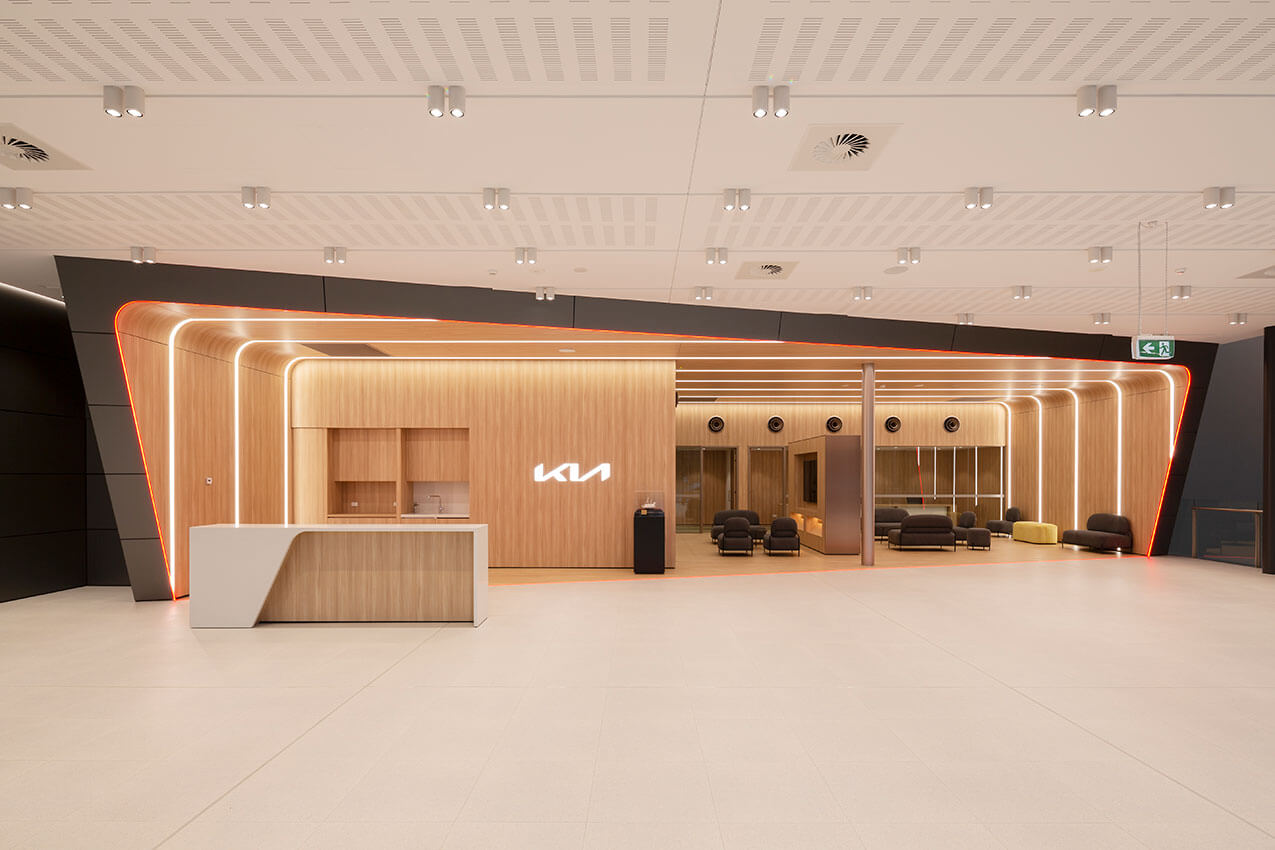
In 2021 KIA globally launched a bold reinvention of Corporate Identity and brand, including a new logo, change in strategic direction and new Store Identity. The new design philosophy Opposites United is inspired by nature, combining contrasting qualities and juxtaposing polar opposites to achieve a new outcome. This philosophy is notable in the contrast between the achromatic exhibition area and the warm sensibility of the customer area, with articulation that inspires movement between the two. These two distinct spaces are delineated and fused together by the emphatic red angled loop that balances dimensions and proportion. Open Principle Architects were privileged to work with John McGrath Auto Group and Kia to launch Australias first rebranded dealership setting the national standards for the continuation of Store Identity upgrades.
John Septimus Roe Anglican Community School Early Learning Centre | Hames Sharley
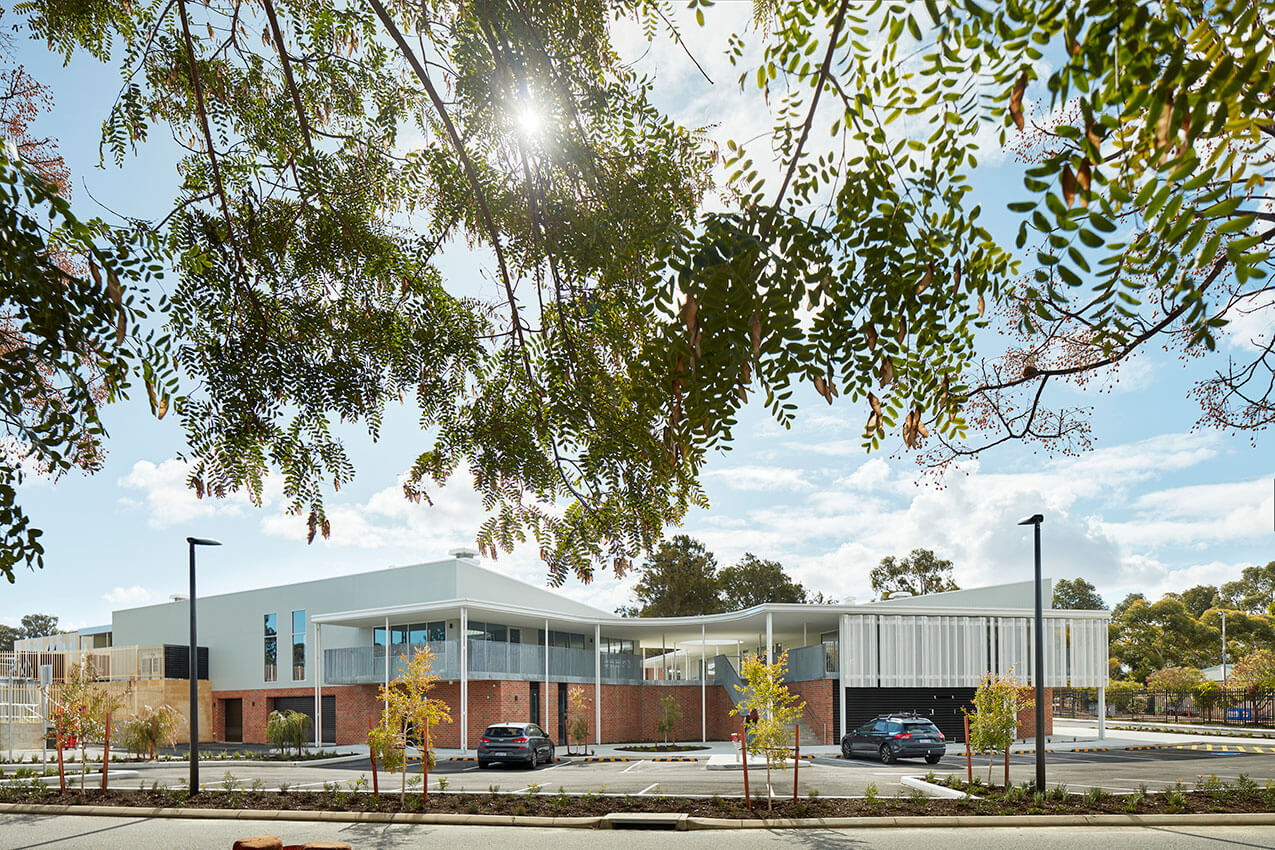
The Early Learning Centre (ELC) at John Septimus Roe Anglican Community School (JSRACS) is the first of two new buildings to be delivered in phase one of Hames Sharley’s master plan, increasing the School’s capacity to accommodate new students as they collocate their Beechboro campus with their existing Mirrabooka Campus.
Conceptually, the design echoes the School’s pedagogy to provide a state-of-the-art learning environment beyond its internal walls, setting a precedent for lifelong learning from the very first moment a child attends the School.
The two-storey building utilises the challenging topography of the site to place the learning and play areas level with the main school campus, while inserting a maintenance and storage undercroft below. A nature-based playground capitalises on the sunlit northern aspect of the site, while the interior of each building has a strong connection to the surrounding landscape, creating vibrant spaces that keep young minds engaged and inquisitive.
John XXIII College | TRCB

As part of an enduring relationship as Campus Architects for John XXIII College, TRCB has recently completed Stage 1 of the College’s campus masterplan.
The completion of this transformative project at JTC marks significant developments to the institution’s infrastructure.
Noteworthy enhancements include a reimagined entrance, strategically relocated buildings, and state-of-the-art administrative facilities designed to foster staff development and well-being. Additionally, our redesigned library now serves as a dynamic hub for student engagement, featuring versatile spaces and modern amenities.
This project underscores JTC’s dedication to providing a modern and dynamic educational environment, ensuring continued excellence in Catholic education. We extend our gratitude for the collaborative efforts of the JTC community, including students, staff, and parents, whose input was invaluable throughout the design process. Together, we’ve created spaces that inspire learning, foster creativity, and uphold the College’s esteemed legacy.
Hope Street Housing | Officer Woods Architects and MDC Architects
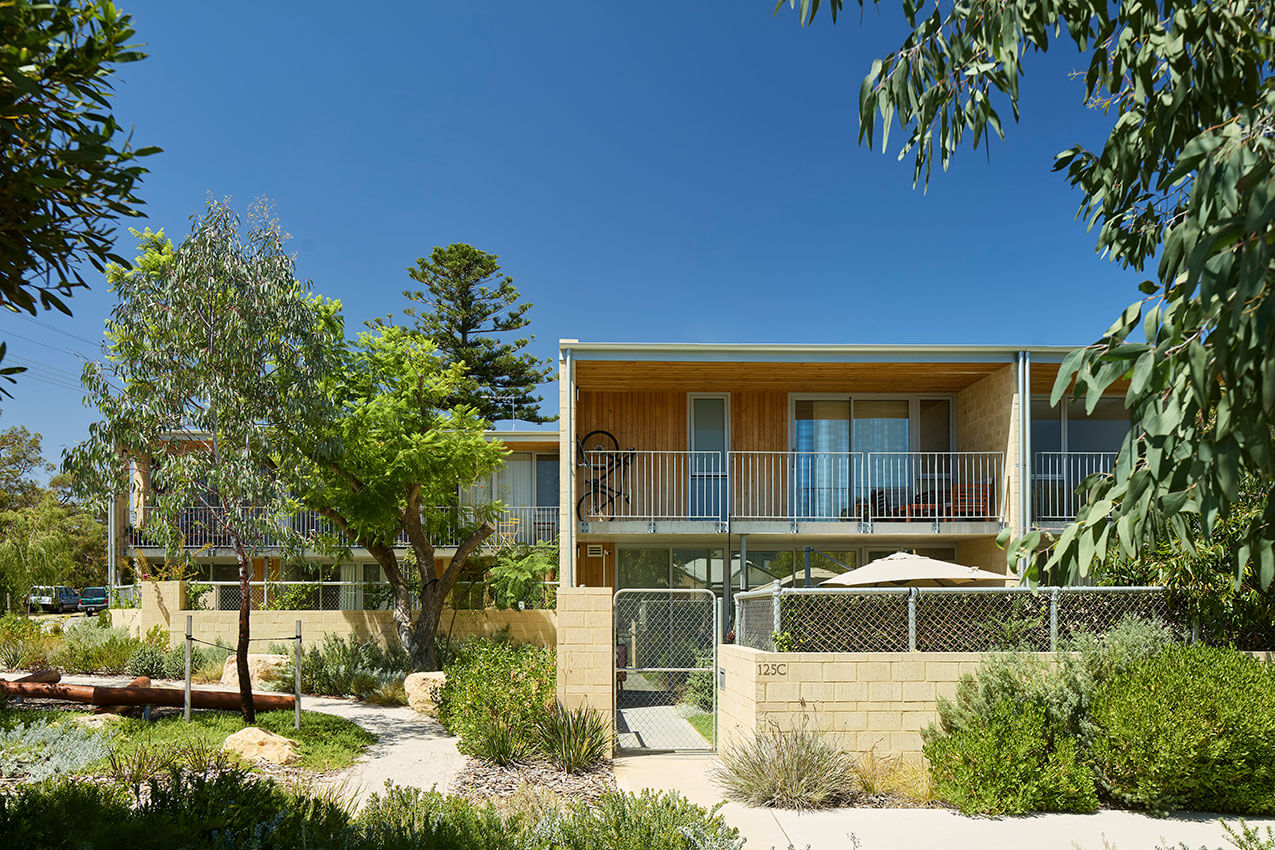
Hope Street is a medium density housing project comprising 28 diverse terrace houses/walkup apartments. Hope Street Housing increases the typological range of WhiteGumValley, allowing new residents in smaller households to share the established amenity of the suburb. Disposition is motivated by neighbourhood character, solar access, deep soil and appurtenant landscape. Balancing diversity and cohesion, two rows of welllit, wellventilated northfacing houses are created with generous setbacks for deep soil/gardens and high permeability. Priorities were integrating houses with landscape, legible/safe areas for pedestrian/vehicle movement, excellent amenity for private, semiprivate and communal open spaces and exploiting the sites solar access potential. A mews configuration, with only two crossovers, accommodates topography, provides good separation between rows and promotes community interaction in a lively landscaped laneway.
Horizon Apartments | CKDS Architecture & Hill Thalis Architecture + Urban Projects, architects in association

Horizon Apartments occupies a generous 5,600m2 site on Newcastle’s waterfront, located at the junction of three new public space: the Honeysuckle promenade, a public square on Steel Street’s extension and a park on Cottage Creek Corridor.
The project comprises three buildings defining two courtyards open to the water. The buildings are united by their waterfront alignment, scale and material palette. The design is an exemplar of equitable view sharing as the landscaped courtyards allow views between the buildings from both the public and private domain behind.
The buildings sit on a gently raised brick plinth, providing flood proofing and prospect over the adjoining public spaces.
Containing 110 generous apartments with a range of plan types, all achieve high amenity. 88% of apartments face north with harbour views, over 75% are cross ventilated.
The design is a considered response to this exceptional site and a model for the area’s evolving urbanity.
House 214 Yallingup | Paul Hofman Architect

This house is located on a stunning rugged coastal site in Yallingup in the south-west of Western Australia.
The house has been sited to take advantage of the north facing views over the ocean looking towards Cape Naturaliste.
The linear, north facing plan has been designed along passive solar principles allowing full winter sun penetration while excluding summer and provides abundant natural light and wonderful cross ventilation.
Environmentally the house achieves a 7 star rating. All doors and windows are double glazed, floors are heated via a hydronic underfloor heating system within the floor.
The simple palette of materials mimics the coastal setting. Walls are built from rammed limestone, floors are a similar-coloured travertine, and limestone removed from the site during the building process was used to create beautiful dry jointed limestone fireplaces and garden retaining walls.
House in Lilyfield | Charmaine Pang Architect
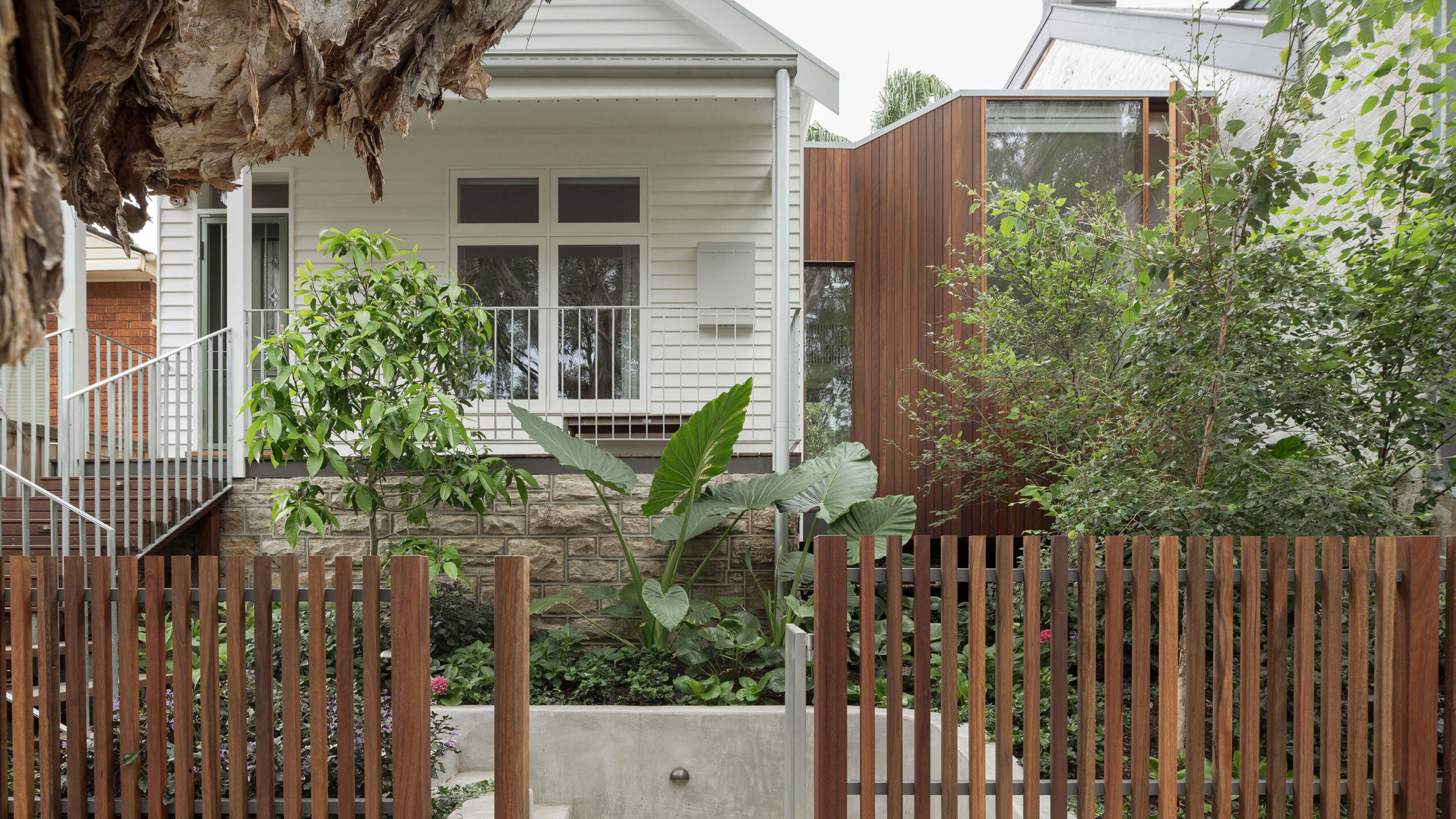
House in Lilyfield is an extension of a weatherboard cottage arising from the quirks of its streetscape context and the clients love of gardens.
A suspended timber clad addition with a cantilevered bay window sits adjacent to the cottage, screened by a trio of birch trees lending views, shade and privacy.
The garden experience begins at the street and unfolds throughout the home.
A hallway leading to the bedrooms scoops out the roof volume to draw in daylight before transitioning to the new sleeping and work spaces. Sited a few steps down, the addition responds to the sloping site and draws the outside in through generous apertures. A window seat, floating desk and deep sills are spaces to contemplate and enjoy the gardens.
Materially, the natural materials allow the house to develop a patina as time passes.
By only building what was needed the cottage vernacular is preserved and celebrated.
House in Surry Hills | Architect George
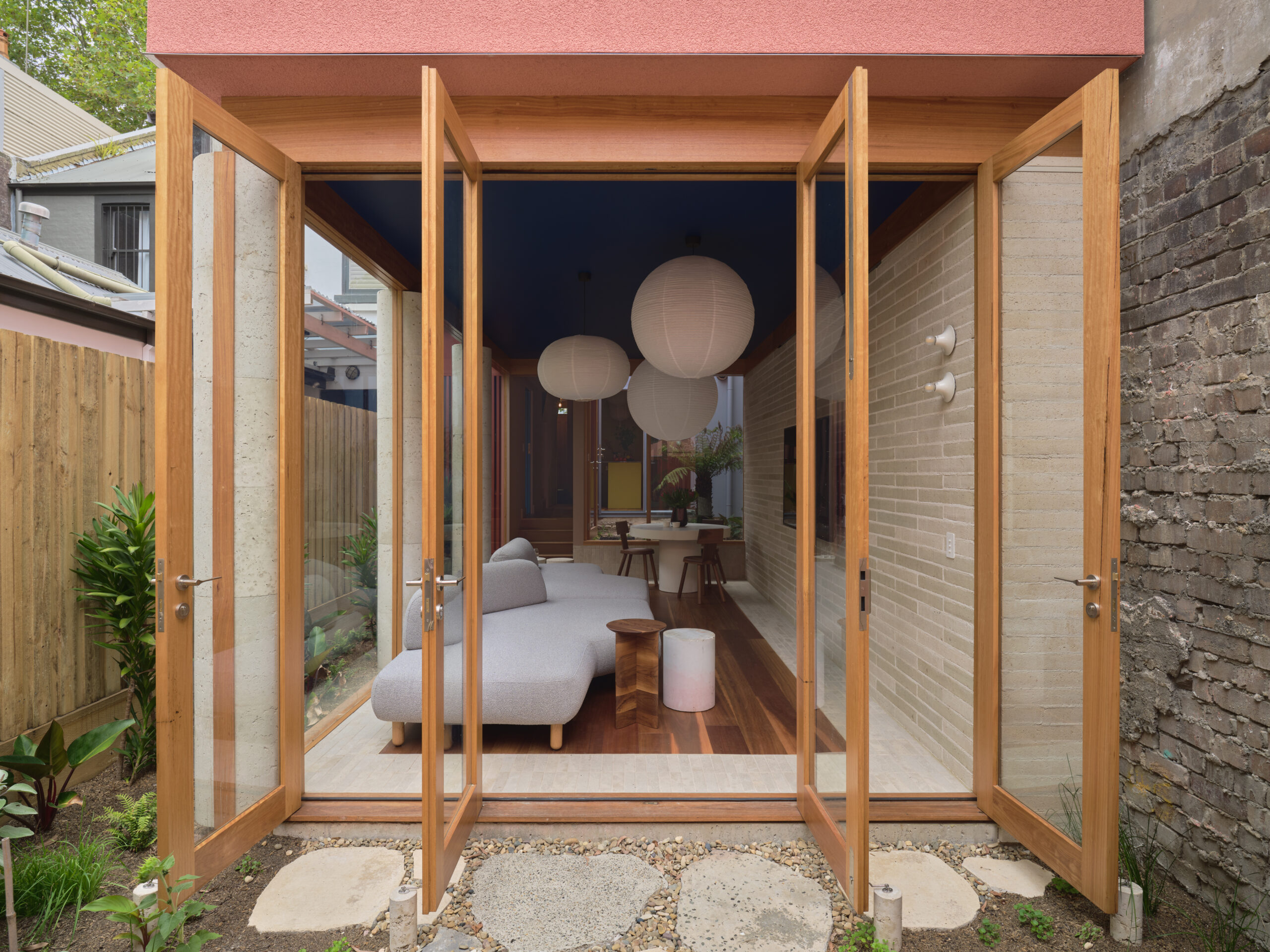
House in Surry Hills explores a contextually responsive, colourful and experimental home. The design seeks to showcase the beauty and abilities of materials, creating a series of vaulted sculptural pavilions in an urban garden.
The sculptural additions to the 1880s terrace are separated by garden spaces. The living pavilion, conceived as an outdoor room is surrounded by gardens on three sides. Gardens extend from living spaces like a wrap around verandah. Internal materials use sustainably made bricks, stone tiles and hardwood timbers.
Colourful pink rendered pavilions have been designed to appear as if they float above the garden, supported by custom brick circular columns.
Colour throughout the project was used to define the function or personality of a room. Living spaces are sunlit with minimal colour use, whereas intimate spaces like sleeping areas explore a deep monotone colour providing an inward facing mood with carefully framed views of the outdoors.
House in the City | James Allen Architect
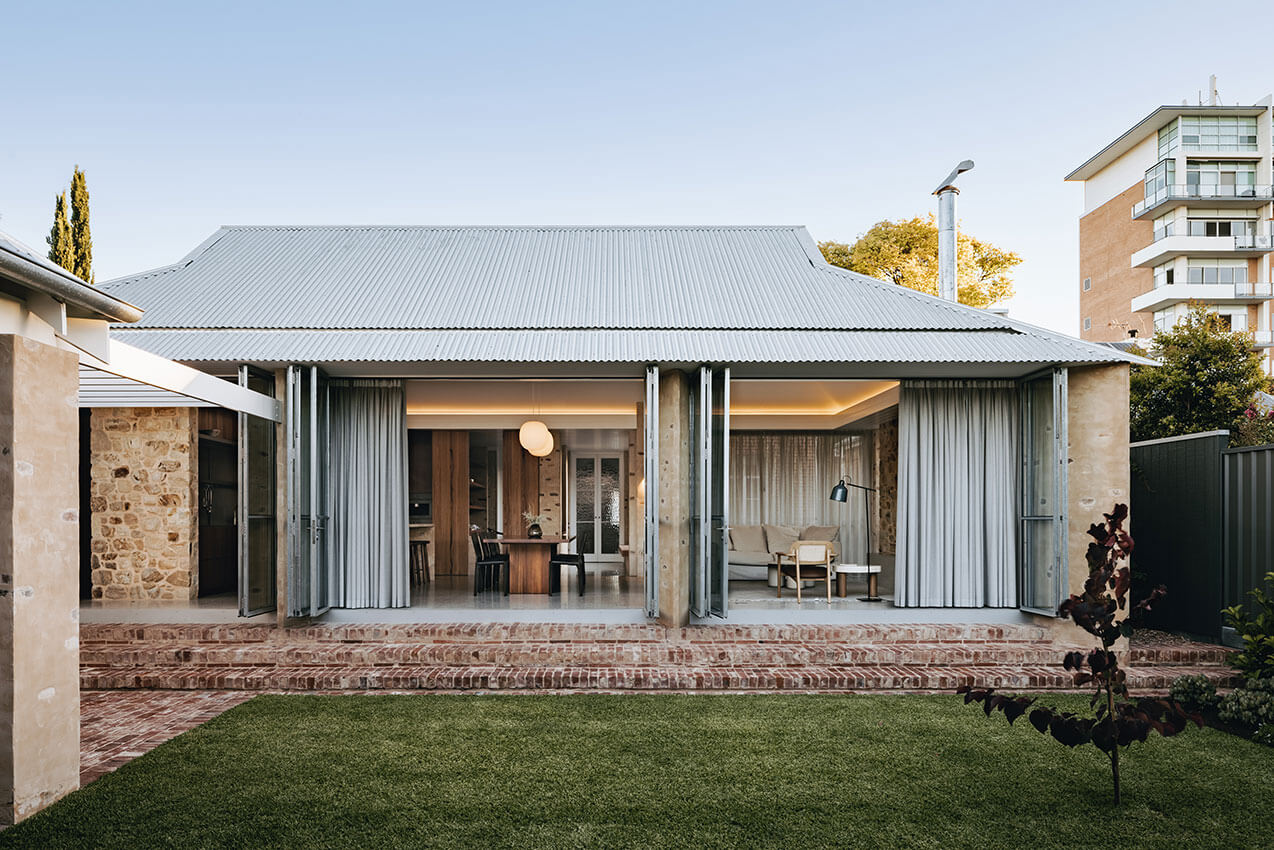
Designed for a retiring couple leaving the country, the House in the City is a reimagining of the archetypal Adelaide villa. The heritage zoned house was extremely run down, with a leaky roof, rising damp, subsiding footings, cracked walls, family of resident possums and overgrown garden.
The alterations and additions, designed by the couple’s architect son, was organised around a new internal courtyard, defining the old and new parts of the house.
A new pavilion accommodating the living areas across the back of the house is a modern interpretation of the villa with its Dutch-gable roof and masonry construction. There are spaces that both blur and bridge the inside with the outside as well as the new with the old.
The transformative project breathes new life into the dilapidated old house and is a balancing act between continuity and change.
House Lupe | LINTEL Studio for Architecture
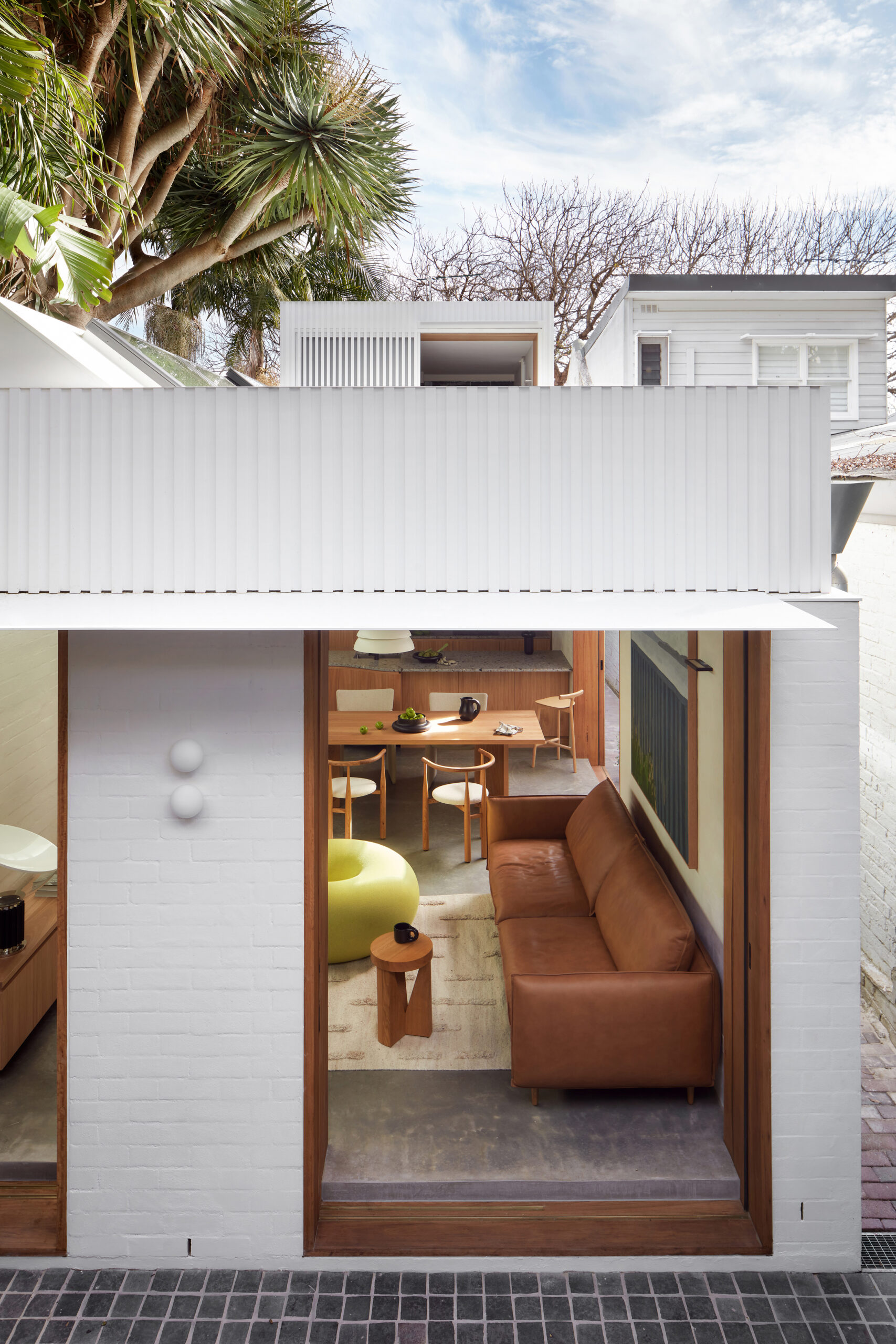
Once an inward looking cottage plagued by its bursting footprint, House Lupe is today composed around simple moments for contemplation. The project frames uncomplicated views to street side and neighbouring planting while maintaining necessary inner city privacy. Its carefully placed openings introduce an abundance of natural light without exposing the interior to the baking sun.
Today Australian families are looking beyond purely functional living, growing increasingly interested in conjuring beautiful and varied environments to enjoy at home. House Lupe is designed to offer its inhabitants the greatest possible flexibility within a limited footprint able to be opened up and closed off on multiple planes, both to the outdoors and to itself. This functionality accommodates the changing needs of a growing family who frequently receives international visitors. Importantly, architectural merit is sought by each of the home’s various guises, ensuring that the experience of the building remains exceptional.