
Maggie’s House | Light House Architecture and Science
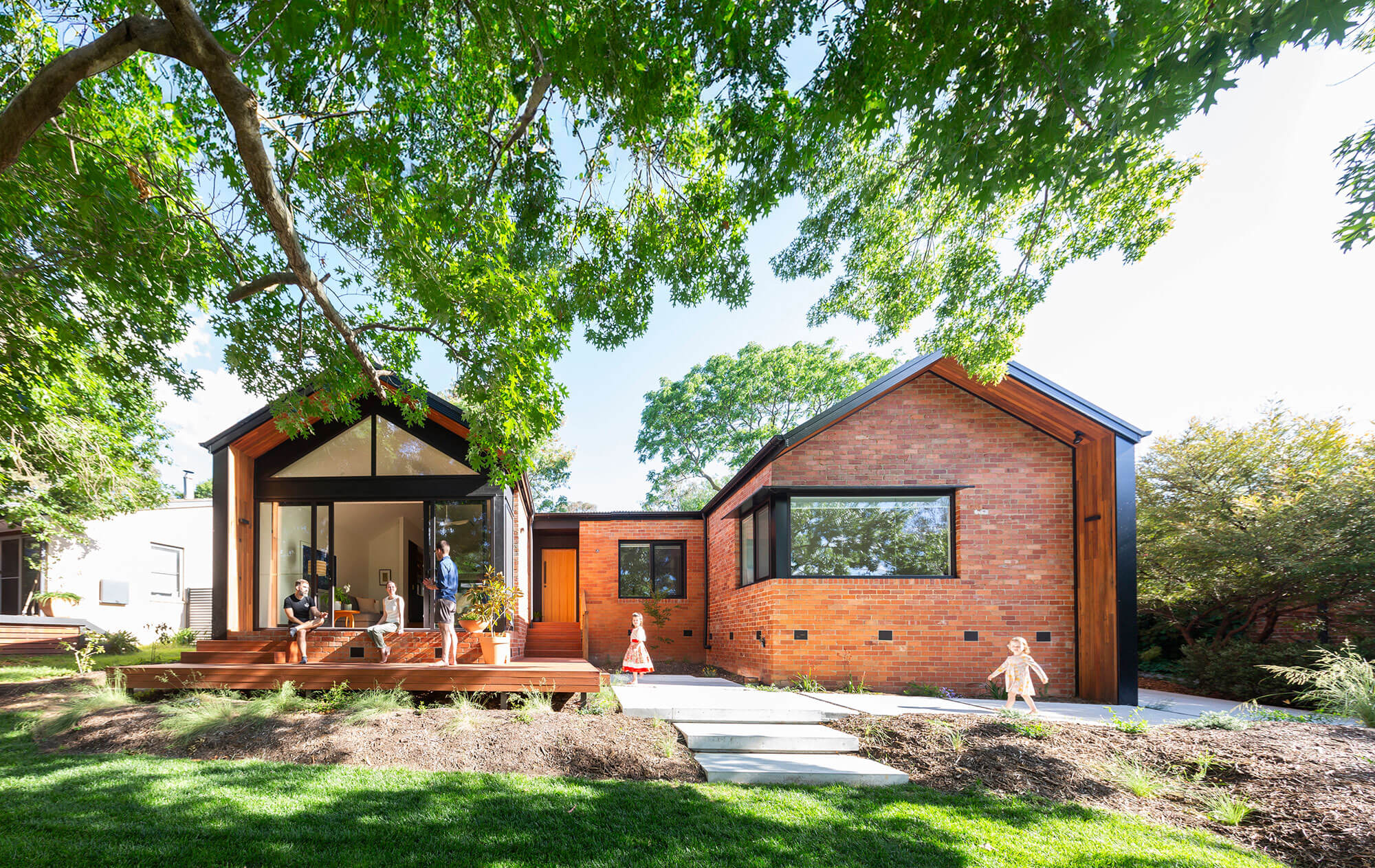
Maggies House is the stunning transformation of an original red brick, Plan 404, exgovernment home with a 1990s split level extension. The result of a carefully integrated architecture and science process By Light House is a energy and space efficient family home that is now climate resilient and takes full advantage of a leafy northerly outlook over the surrounding neighbourhood and parkland while also connecting beautifully to private garden areas to the rear.
Key principles behind this project:
Flexibility and adaptability the home needed to be suitable for a growing family and to host regular visiting family and friends
Connection with the existing wellestablished gardens and the neighbourhood
Climate resilience and solar passive design
Renovation rather than knockdown rebuild
Simplicity and a sympathetic streetscape reflective of the original neighbouring homes
Mansard House | Studio Bright
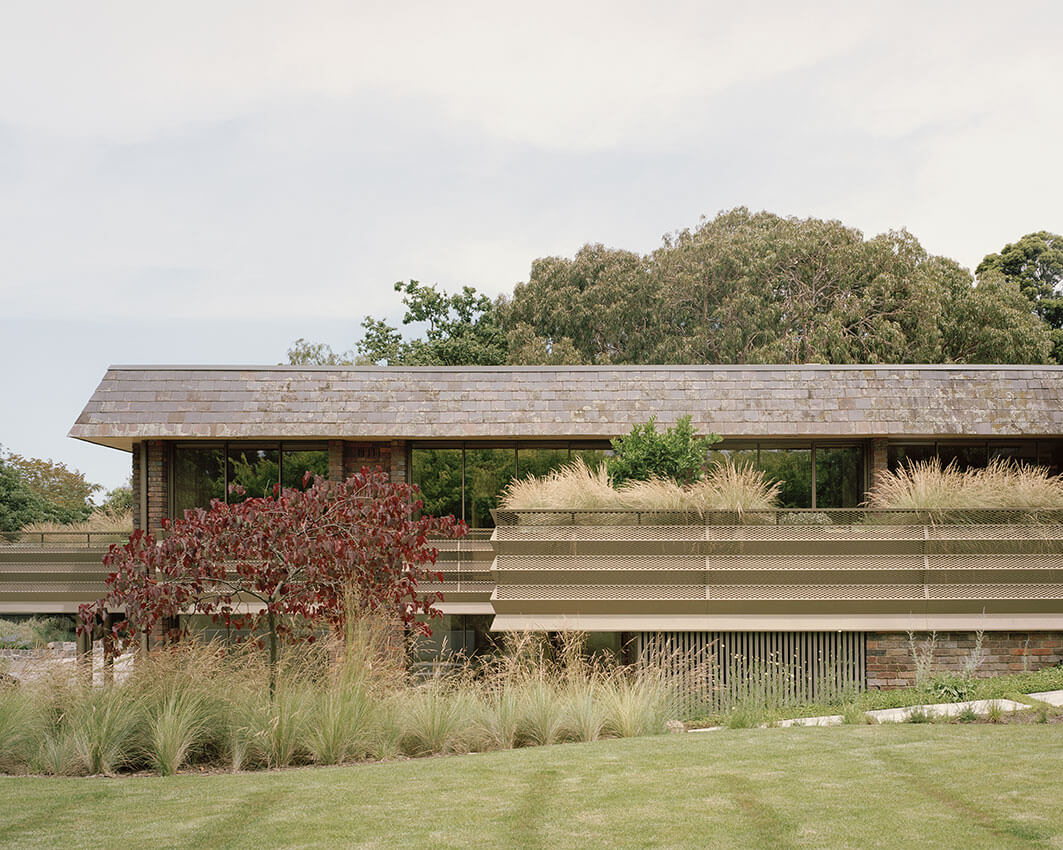
Not much suburban housing from Melbournes 70s has achieved streetscape heritage status as yet. Typically, houses such as these are demolished for the next big thing. While the original house is not a recognised piece of architecture, Mansard House is readily identifiable as a quintessential example from its time and deserving of retention for its timemarking contribution to a richly textured city that values its past.
Our clients intend aging at home and wish for the house to throw its arms out to extended family. Untangling the order of rooms and access to promote this desire required extensive internal remodelling.
Externally, wall alignments and their relationship to the mansard line are not changed. However, a new longer and finer horizontality transforms the proportioning system of the facade. The once heavy hat of the mansard gains elegance and a floating quality that redefines the way the mass sits in the landscape.
Lanoma Street | Licht Architecture
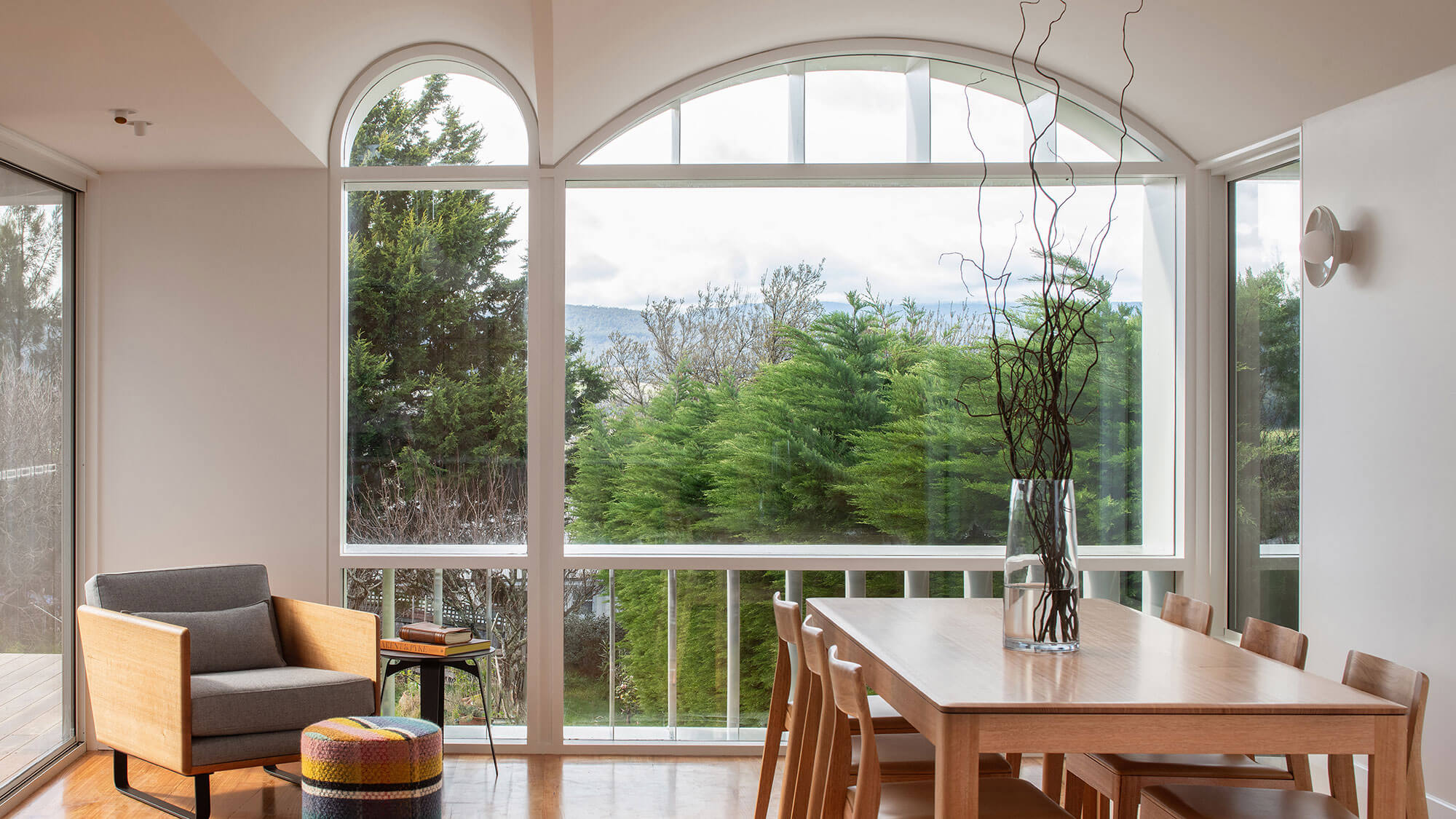
This project is a playful celebration of a humble 1914 Federation home in East Launceston. The home had charming character but its interiors were dark, internalised and disregarded the backyard and distant views.
A small extension and focus on cosmetic upgrades lifts the home to meet the familys needs. The new 17m2 addition references the federation details and finesse through a modern interpretation. Archways of the existing verandah are reinterpreted in vaulted ceilings and external shade structures. The internal plan has been rationalised to simplify movement through the home and create connection between rooms. Small moves enabled an ensuite, WIR, laundry, bathroom and separate toilet to be newly accommodated within the existing footprint. The new works draw light deep in to refresh the home. The footprint increased is only marginal but is significant in its result comfort, joy and connection for the clients.
Lee House | Candalepas Associates
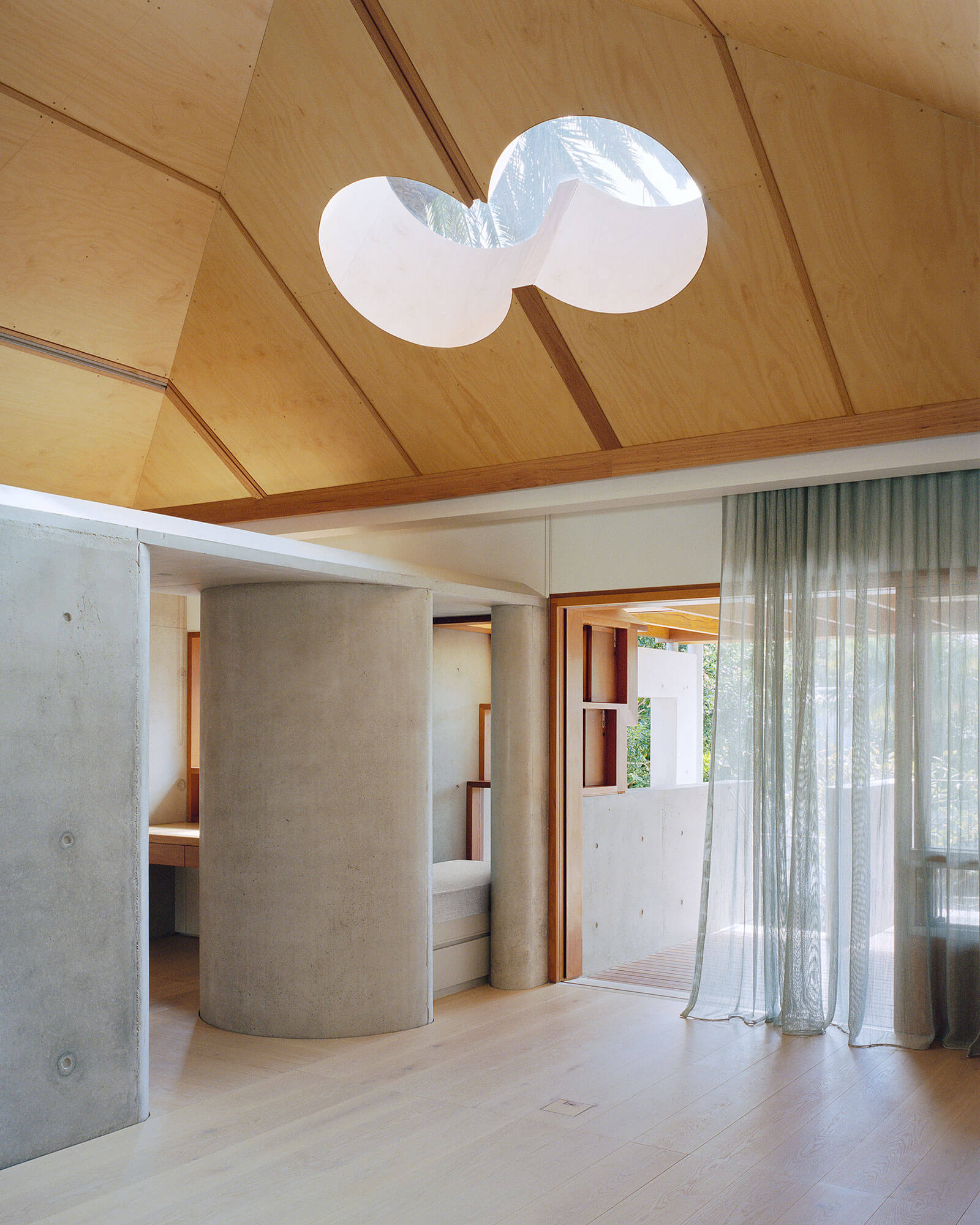
This is a reimagining of the traditional Watson’s Bay fisherman’s cottage. Responding to the heritage of the area, there is a recasting of a derelict fisherman’s cottage into a contemporary home of permanence
Whilst modest in size, the building provides all the needs to its inhabitants with a minimum of fuss, offering a sense of calm repose. Light, material, and form considerations guided the interior development, organized around a central off form concrete barrier. Initially presenting a wholly traditional facade from the street, the design subtly evolves into contemporary materials and forms along the sides, culminating in a contemporary at the rear.
From the interior a carefully considered sequence of spaces leads to an external landscaped patio from where the architecture of concrete, timber and steel characterise the building’s nature as an offering to those who will inhabit this work in the next few generations.
Lisa and Matt’s Place | Bek and Hame
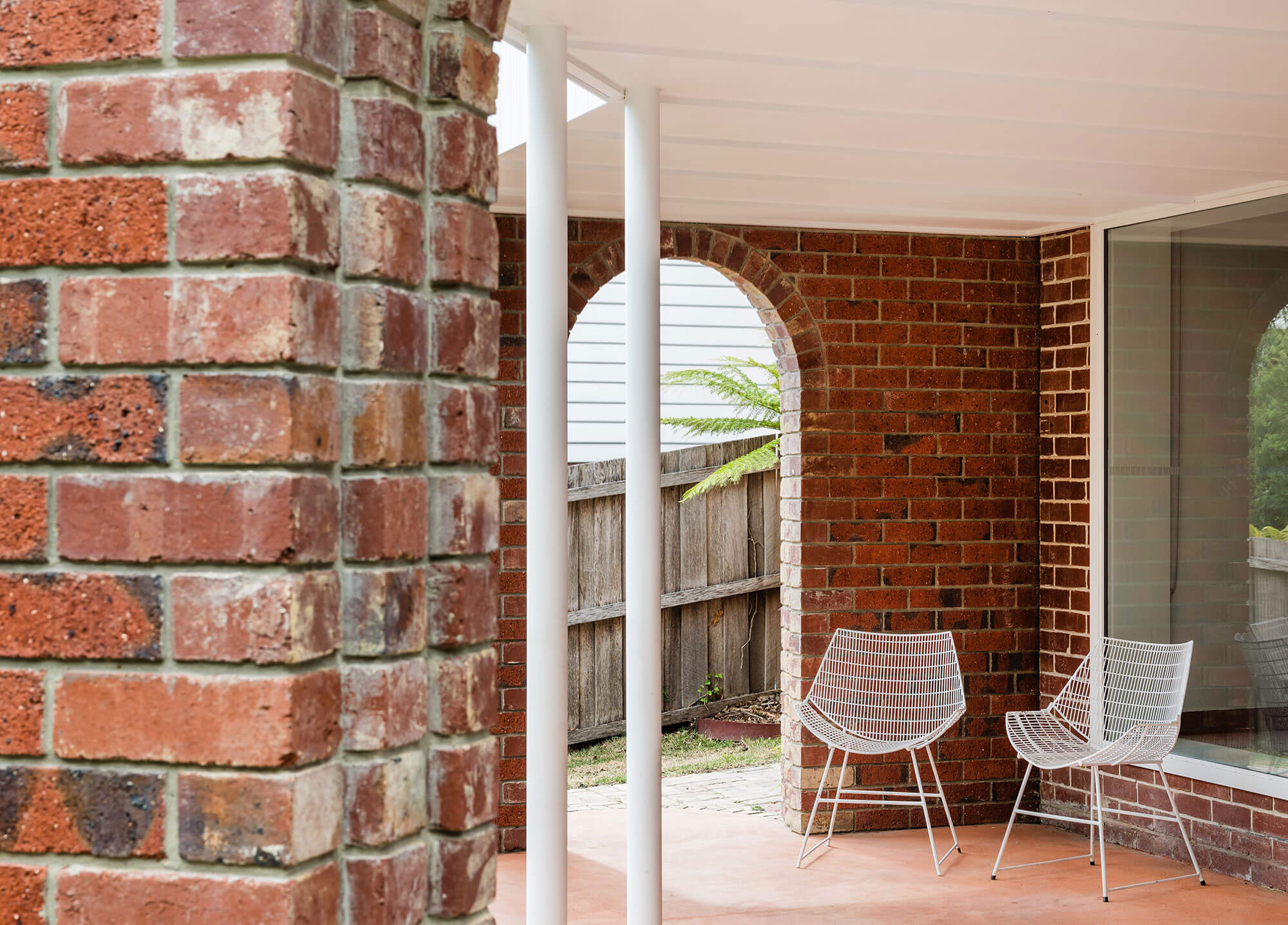
The project, a rear extension to a much loved quintessentially Hobartian red brick family home, facilitates greater outdoor connectivity and natural light to a previously closed garden façade. Though the employment of connected upper and lower storey space and eye directing planes, inviting views toward the garden whilst editing out the adjacent properties, the project ensures both upper and lower storeys meet the needs of the backyard devoted occupants. Small moves for big impact underpins the approach, including the conversion of an unused under croft space into a lightfilled family rumpus room, the addition of a garden accessing internal staircase to a north facing family dining space and kitchen, and the carefully crafted restoration of the existing front rooms of the home. By enacting the ideology of doing more with less, the project encapsulates the achievement of greater family liveability within a footprint reflective of a contextually sensitive scale.
Killcare House | Southmarc Architecture
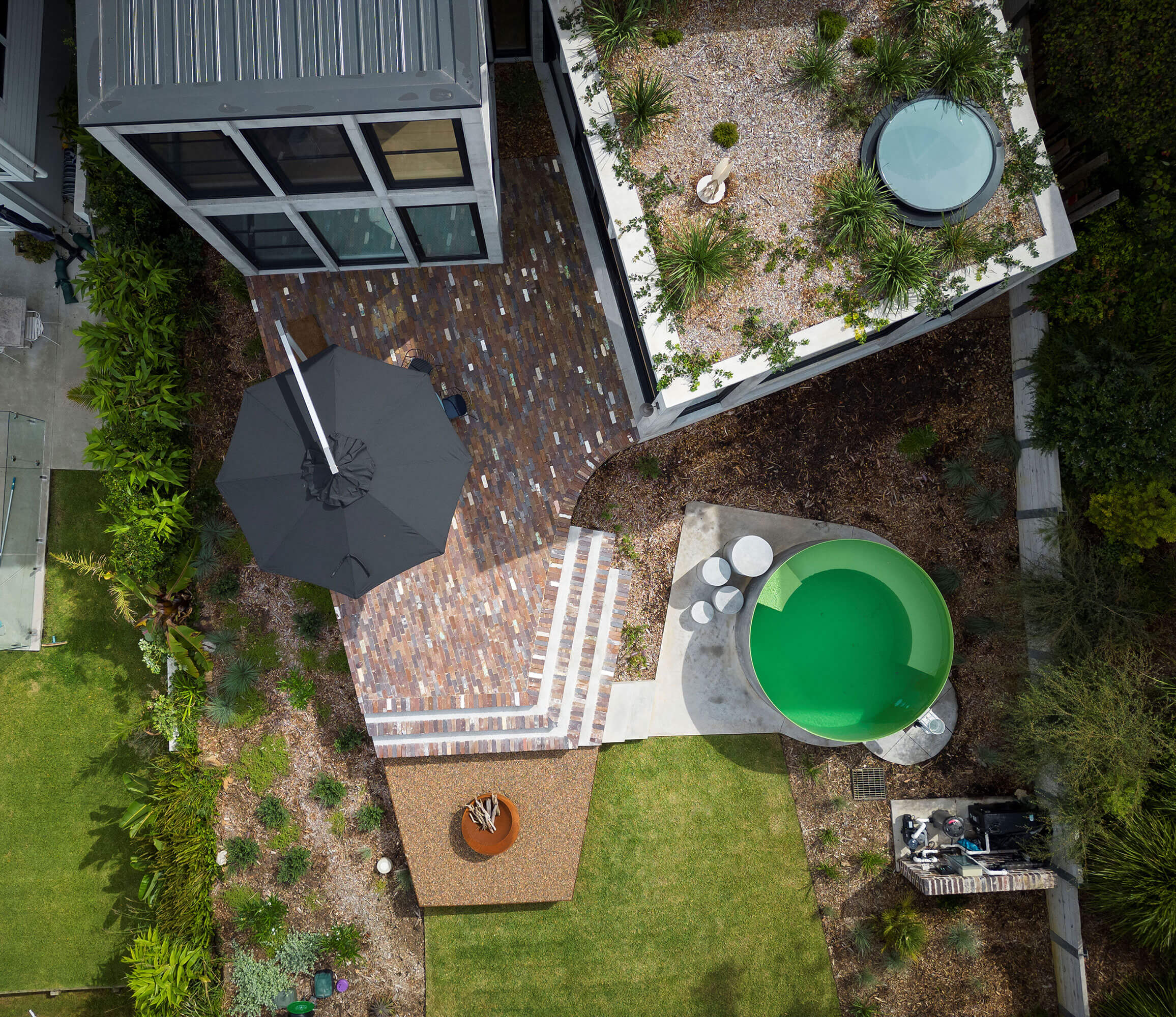
The only sustainable solution is to renovate.
The original house was constructed 50 years ago on the edge of the Bouddi National Park.
Now it is wrapped with insulation, powered by 10KW of Solar panels (car, cooking, heating and cooling), is doubled glazed and protected from bushfires.
All new work is made from concrete.
Sustainable engineered timber is throughout the interior: on floors, benches, hook rails and dining table. All custom designed to suit the space.
The architectural expression is playful. Internally two red steel portal frames mark the threshold of the Bushfire Flame Zone.
Light penetrates deeply with the use of Danpalon translucent polycarbonate. It surrounds the ensuite and forms the balustrade.
The new native filled garden attracts biodiverse native species: wallabies, a goanna, turkeys and native birds.
This was an old house, that has evolved to become electric. Conservation is no longer optional it is essential.
JD House | Architects Ink
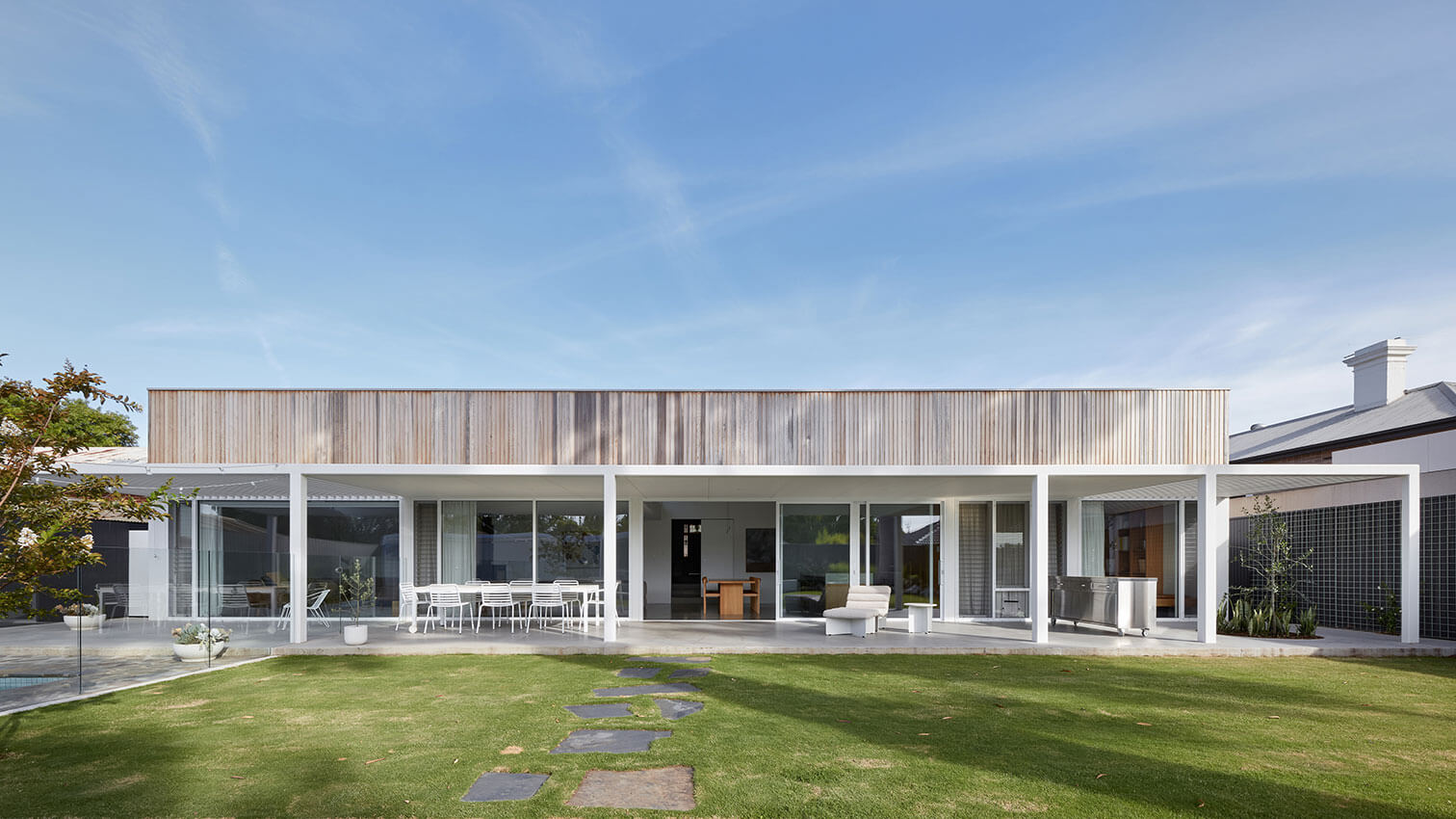
Humble in both scale and material JD House is a familial sanctuary, enhancing the lives of a family of five.
The original 1890s villa was preserved and a collection of structures, including a new addition, carport and garage were respectfully inserted between existing site elements.
Governed by a pursuit of lightness, each structure is supported by a delicate skeletal frame. The detailing is executed within the confines of 150mm framing sections, innovatively addressing drainage complexities.
Running almost the full width of the site and segmented along its length, the planning of the addition is uncomplicated and efficient. The interplay of varied ceiling heights and column spacing endows each section its own identity. Neatly wrapped in western red cedar, the external elevation conceals the undulation in internal volumes.
Composed of modest materials in light tones, there is a feeling of tranquility throughout, while the manipulation of light creates a dynamic environment.
House in Lilyfield | Charmaine Pang Architect
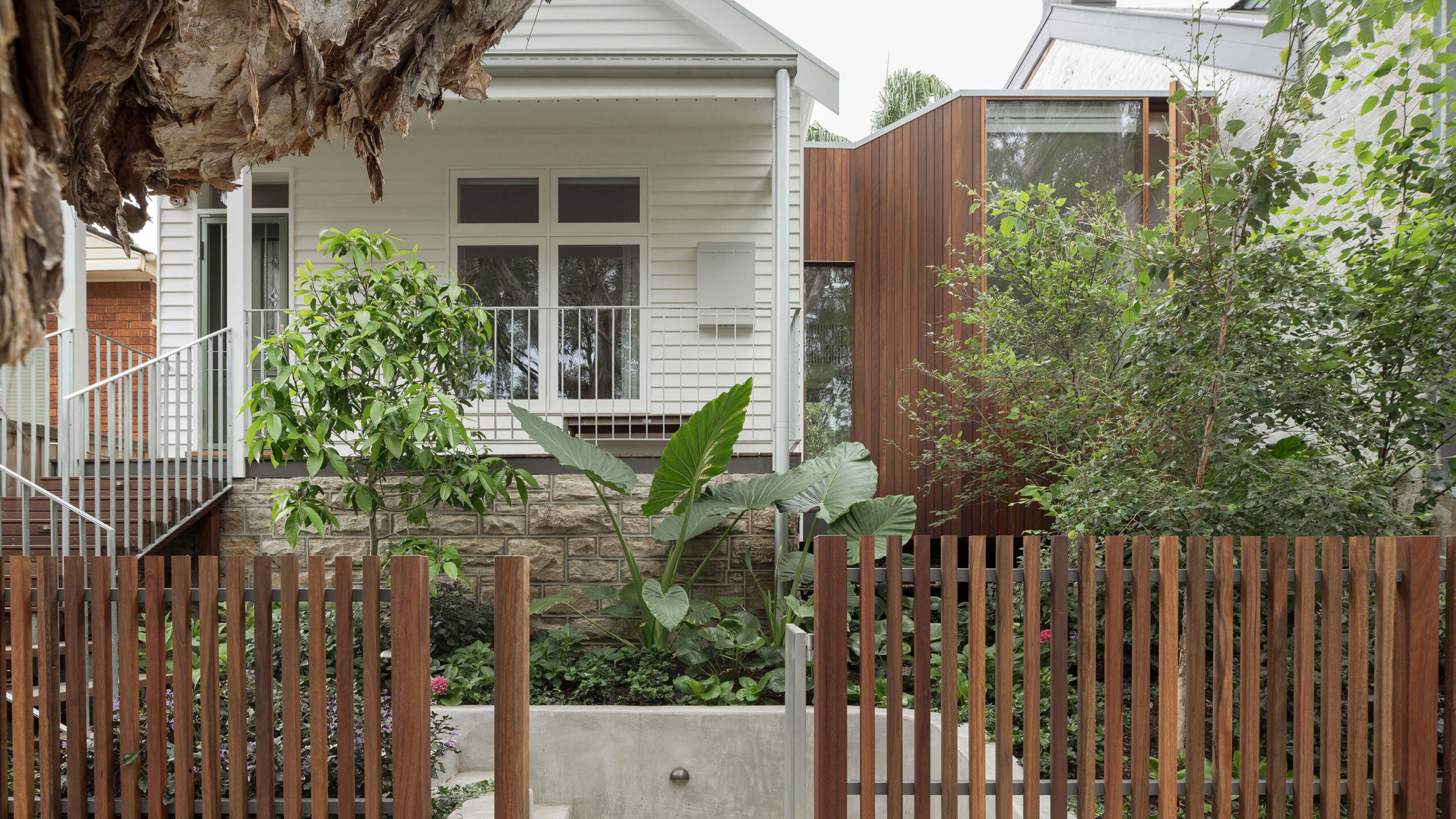
House in Lilyfield is an extension of a weatherboard cottage arising from the quirks of its streetscape context and the clients love of gardens.
A suspended timber clad addition with a cantilevered bay window sits adjacent to the cottage, screened by a trio of birch trees lending views, shade and privacy.
The garden experience begins at the street and unfolds throughout the home.
A hallway leading to the bedrooms scoops out the roof volume to draw in daylight before transitioning to the new sleeping and work spaces. Sited a few steps down, the addition responds to the sloping site and draws the outside in through generous apertures. A window seat, floating desk and deep sills are spaces to contemplate and enjoy the gardens.
Materially, the natural materials allow the house to develop a patina as time passes.
By only building what was needed the cottage vernacular is preserved and celebrated.
House in Surry Hills | Architect George
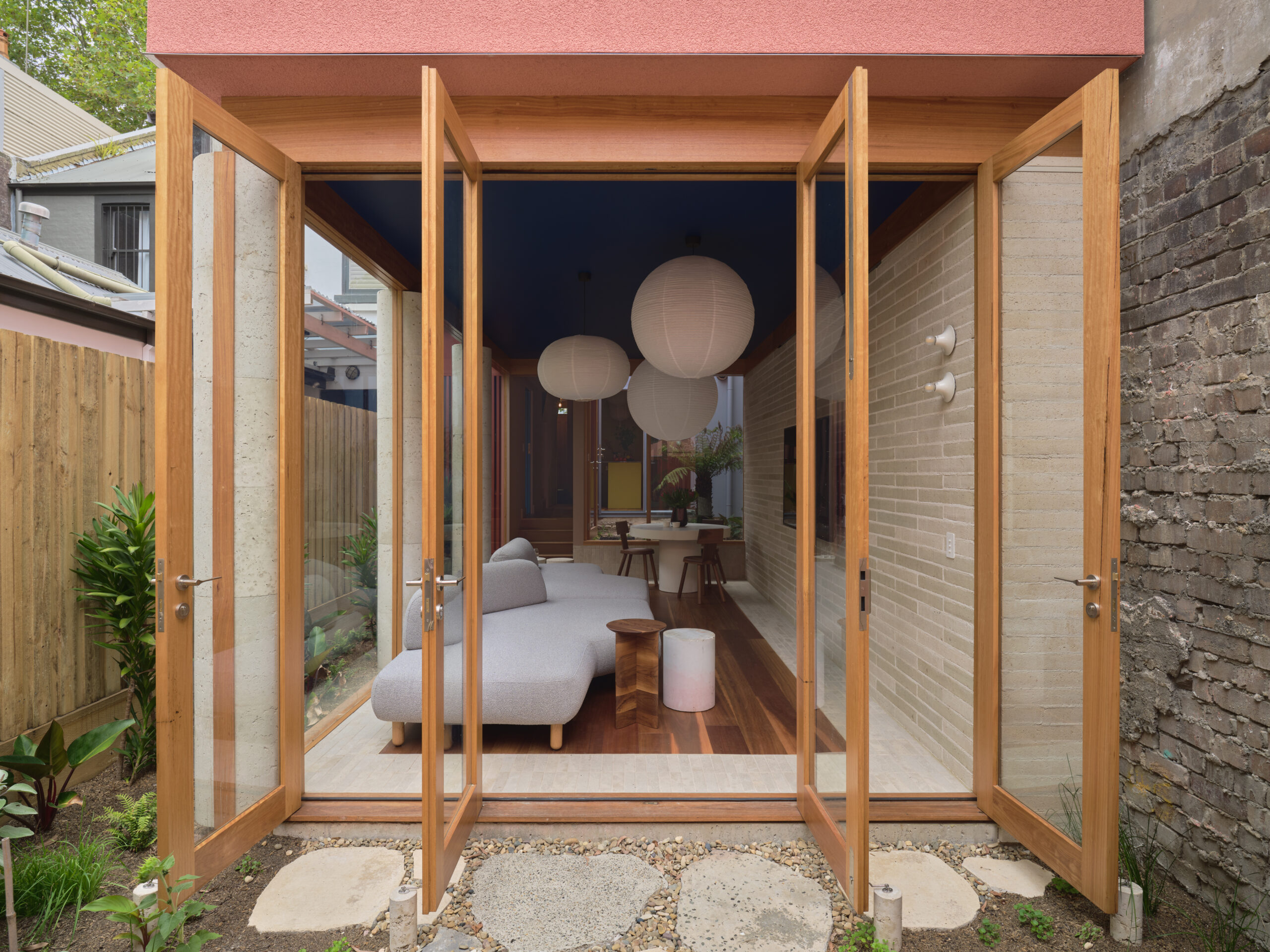
House in Surry Hills explores a contextually responsive, colourful and experimental home. The design seeks to showcase the beauty and abilities of materials, creating a series of vaulted sculptural pavilions in an urban garden.
The sculptural additions to the 1880s terrace are separated by garden spaces. The living pavilion, conceived as an outdoor room is surrounded by gardens on three sides. Gardens extend from living spaces like a wrap around verandah. Internal materials use sustainably made bricks, stone tiles and hardwood timbers.
Colourful pink rendered pavilions have been designed to appear as if they float above the garden, supported by custom brick circular columns.
Colour throughout the project was used to define the function or personality of a room. Living spaces are sunlit with minimal colour use, whereas intimate spaces like sleeping areas explore a deep monotone colour providing an inward facing mood with carefully framed views of the outdoors.
House in the City | James Allen Architect
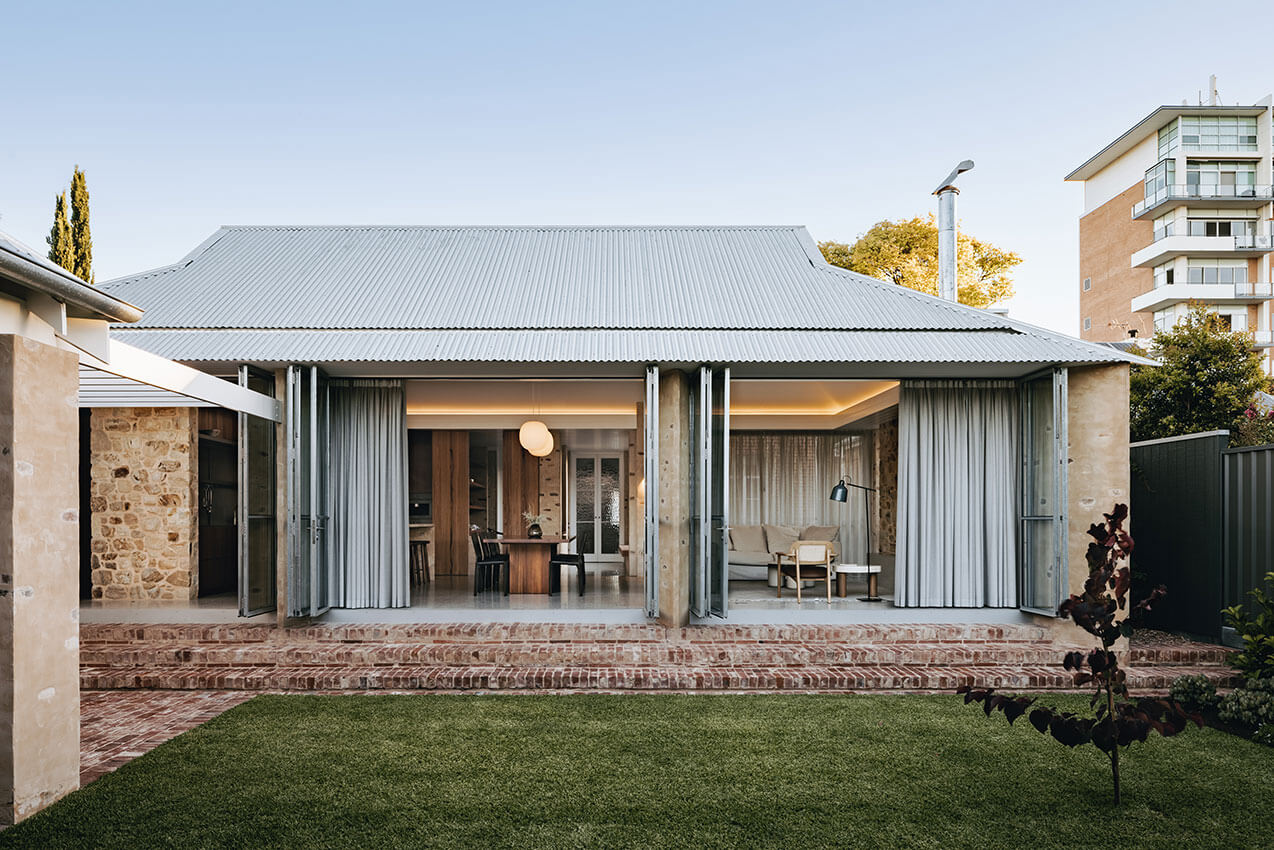
Designed for a retiring couple leaving the country, the House in the City is a reimagining of the archetypal Adelaide villa. The heritage zoned house was extremely run down, with a leaky roof, rising damp, subsiding footings, cracked walls, family of resident possums and overgrown garden.
The alterations and additions, designed by the couple’s architect son, was organised around a new internal courtyard, defining the old and new parts of the house.
A new pavilion accommodating the living areas across the back of the house is a modern interpretation of the villa with its Dutch-gable roof and masonry construction. There are spaces that both blur and bridge the inside with the outside as well as the new with the old.
The transformative project breathes new life into the dilapidated old house and is a balancing act between continuity and change.