
Pedder Street House | Bence Mulcahy

This 1920s cottage renovation and extension better connects the interior with the northfacing rear garden for a couple and their young child.
The well-loved cottage with double-fronted facade of white stucco and asymmetrical gables has an informal and endearing character.
The brief, delivered in a new extension which continues the cottage’s hipped roof, includes master-bedroom, ensuite, kitchen, dining, living, powder-room and laundry.
Plan and section are tightly worked to yield a playful arrangement of internal spaces of varying floor and ceiling levels, aligned with terraced courtyard and garden, and a discrete second storey master-bedroom and ensuite.
Demolition of the rear of the cottage connects the original interior to the garden and maximises daylight.
The extension, on the north-eastern quadrant of the site, opens to the luscious garden and courtyard. The interior softy shaded by an overhead pergola and external trellised green wall.
Periscope House Bondi Beach | Michael Clarke Architects

An alterations and additions project for a retiring couple, this house in Bondi Beach features two dramatic highlight windows that act as periscopes.
One periscope draws additional northern light and cross ventilation to the rear of the 10m long open plan living space.
The second periscope is formed by the void between the old and new roof profiles to the rear of the main bedroom.
Artwork by the clients is displayed on rotation via cables suspended from cornice mounted art hanging rails. The works are set against internal finishes that are neutral with seamless detailing.
Accessibility is a major feature of the design. A lift is integrated into the main corridor wall and the corridor permits wheelchair access to most doors and a 180 degree change in direction at certain points.
The steel security front door is an adaptation of a grille designed by a celebrated 20th century Italian Architect.
Plateau Project | Rama Architects

Perched above an ancient forest of thousand year old Angophora trees with views over Pittwater, Plateau Project embodies natural tones and materiality of the country is resides on: Garigal. An internal palate of microcement and raw concrete draw warmth, reflecting light. A wandering wall greets you as you enter, leading quietly around a deep curve to a dramatic reveal of soaring ceilings and exposed rafters framing an expansive view over bushland and water.
The house embodies shape and volume. Curves and lines, confinement and expanse collaborate to create a bold statement of opposites and cohesion. The winding hallway hides what lies beyond, delivering you to a fortress like turret with brick and masonry walls, smooth with soft light. Residing in a BALFZ flame zone, the home is built with non-combustible materials with aerated concrete features throughout. Plateau Project is punctuated by texture and angles creating moments solid and soft, bold and light.
Northcote House | LLDS
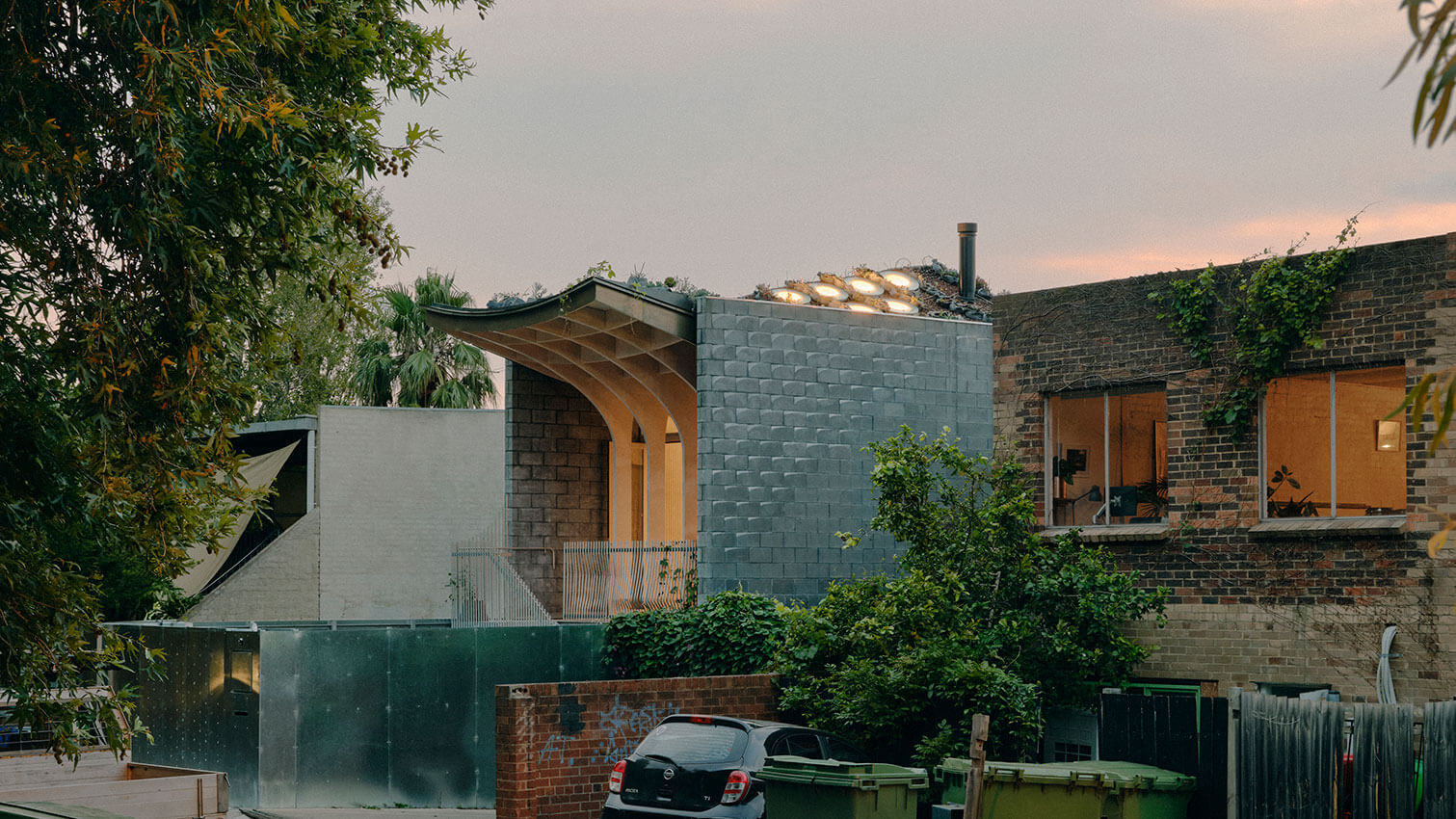
The project reconceptualises the Victorian terrace typology in response to the existing urban context. Sited on a narrow 4.6m wide plot, the ground is elevated to form a roof garden which reduces urban heat island effect and provide new space to support local ecology in an urban context. Below the freeform timber roof is a halllike room with a kitchen, dining room, and entrance veranda reminiscent of the neighbourhood’s large factory lofts and Victorian church halls. The highly textured concrete internal wall provides thermal mass and improves the acoustic of the dining room. The ground floor is spatially organised around a circular snug with a central void which brings natural daylight and ventilation to the depth of the House. The East and West façades are designed as a trellis for climbing plants with a generous entrance balcony acting as natural surveillance to the laneway and neighbouring public car park.
Mygunyah By The Circus | Matt Gibson Architecture + Design
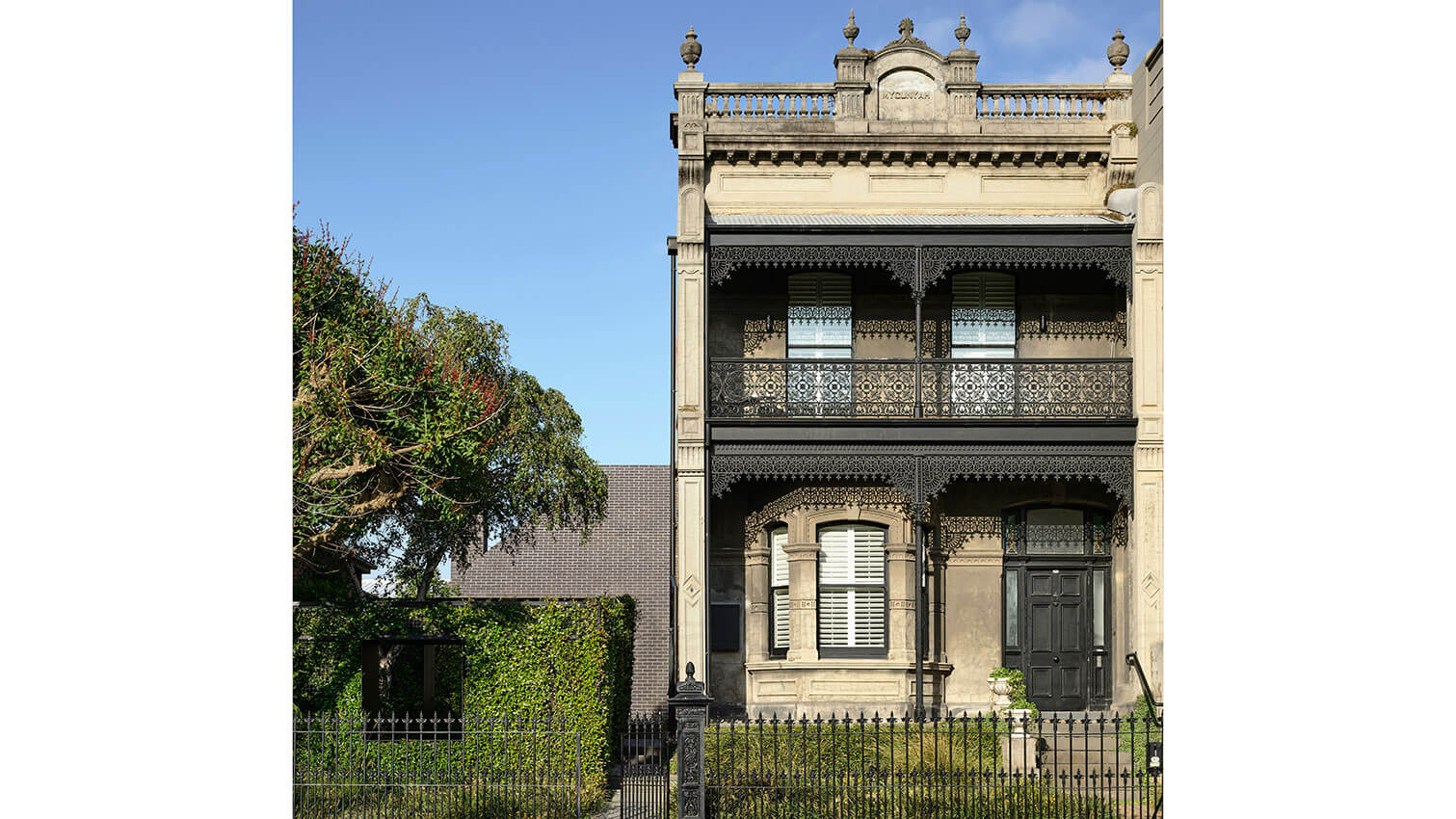
Conceptually the program is split up into a series of 3 pavilions the original heritage object, a second pavilion interpretive of the original and a third ground level pavilion containing a dedicated north facing family room that provides direct connection to front and rear gardens.
To the south of the family pavilion the previous green flank is broken up into a series of individual garden rooms of differing function. Pierced by apertures, a garden enfilade activates the street and provides a visual link between public and private domains.
Steep roof pitches, asymmetry, exaggerated chimneys and the considered use of brick are inspired by the context of the area and the artsandcrafts themes found next door.
The overall result is highly customised and tailored, designed specifically as a robust backdrop to this familys life, and one that delights in the experience of materials and the story of old and new.
Narrabundah House | Open Principle Architects
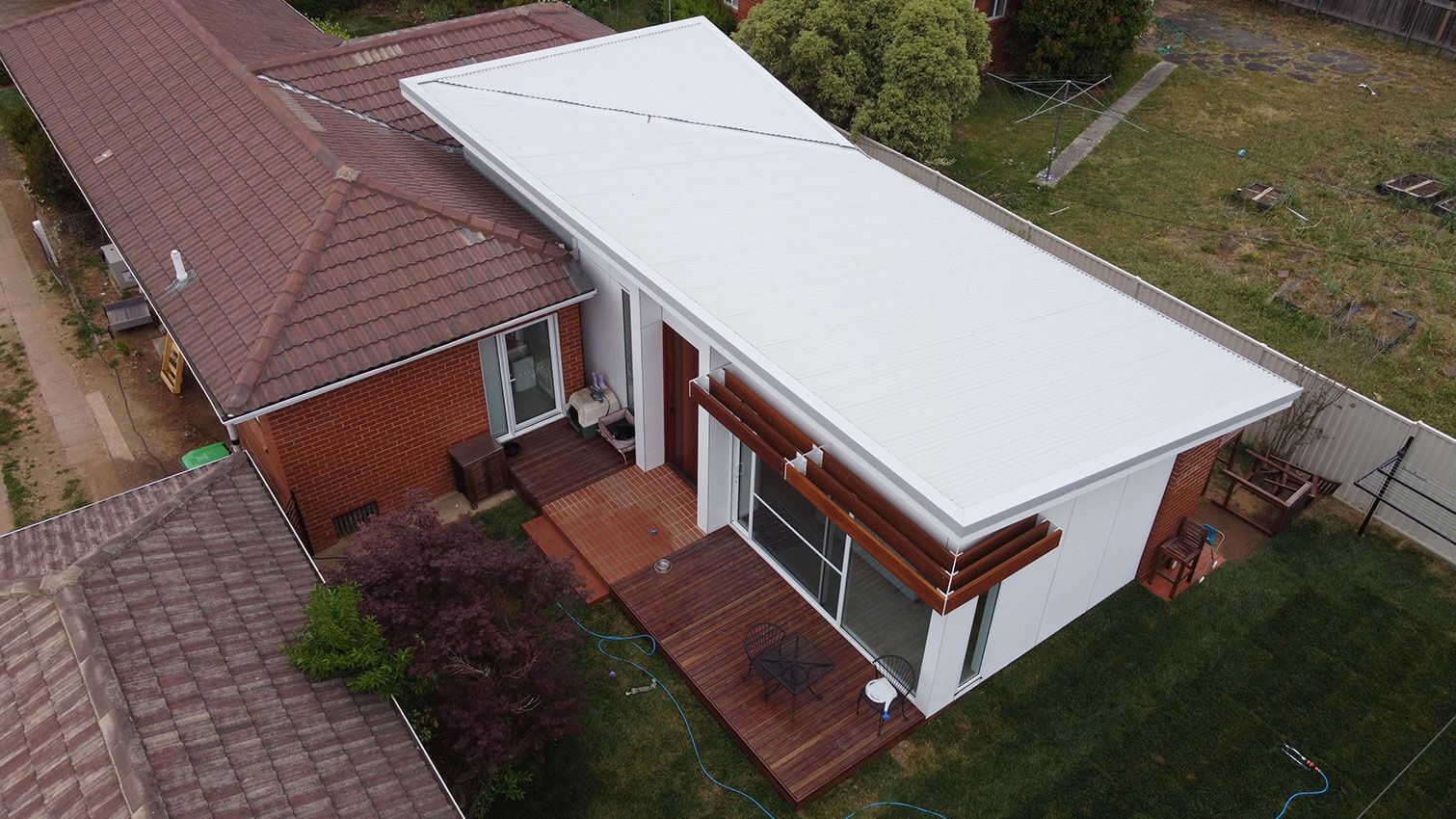
OPA were approach to help rejuvenate an aging red brick cottage. The client purchased the house on the merits of its small scale cottage like feel, from physical scale, assumed heritage value, materiality and feel.
The brief was to provide a new small living and dining extension as well as full interior architecture refit. The brief was established around an architecture which responds to the historical changes the house as a typology. An internal reorganisation sees the services areas such as bathrooms and laundry shuffle and morph to create the addition of a ensuite and a legible planning logic.
The creation of additional storage though joinery allows the rooms to be left to breathe without the need for clumsy storage items cluttering the space. A subtle realignment of the front door is all that may be noted as this project sought to maintain the historical and worthy original building frontage.
Mid Century Remastered | Equinox Architecture (company registration pending)
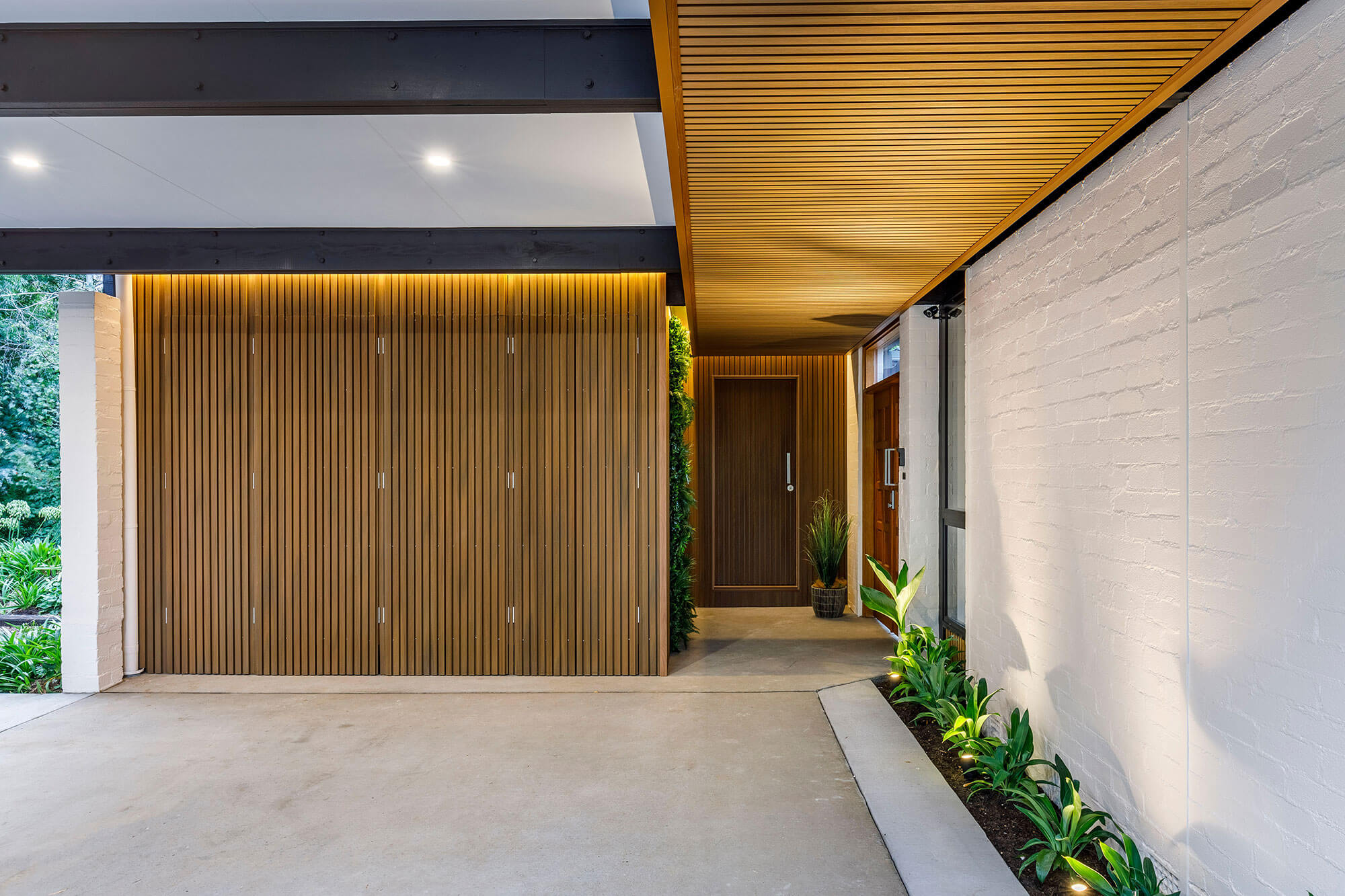
This mid-century residence, initially designed by Ken Woolley and Pettit & Sevitt architects in 1965, undergoes a transformative and considered renovation. The architects embrace a conceptual framework focused on sympathetic and respectful design and adaptive reuse, all underpinned by environmentally sustainable principles. The approach respects the original midcentury design, seamlessly blending old and new elements, while incorporating environmentally sustainable design (ESD) principles. The project not only safeguards the architectural heritage of Hughes but also contributes to community pride and identity.
The design cleverly integrates the existing structure, utilizing flitch beams for the structural spans, balancing aesthetics and functionality. This collaborative design effort involves diverse disciplines, fostering creativity and delivering costeffective solutions. The adaptive reuse strategy, combined with sustainable practices, results in financial value for the client and reducing the projects carbon footprint. The renovation not only preserves architectural history but enhances the cultural vibrancy and aesthetic richness of the public domain.
Maranatha House | Bijl Architecture

The Maranatha House is a study of layers material layers, liminal layers and site layers peeling back, exposing and renewing a house with many histories.
Tasked with reimagining the heritage listed dwelling as a contemporary, light filled home embracing the clients love of art and accommodating their blended family, the original stone cottage and its additions were examined at a fundamental level. Outlook, light, aspect, material and landscape were all contemplated to spatially unify the dwelling within strict heritage and planning controls.
The design approach leans into framing and layering strategies to address the brief and bring about functional flexibility, aesthetic delight and environmental performance. External and internal views are aligned and articulated, retaining the traditional floor plan proportions and adding minimal footprint.
Generous natural lighting is achieved via glazed, steel framed elements balancing heavy masonry walls, with a new stair void aside the impressive insitute artwork AES.
Mellow Yellow House and Cottage | Philip Leeson Architects and Sarah Truscott Architect
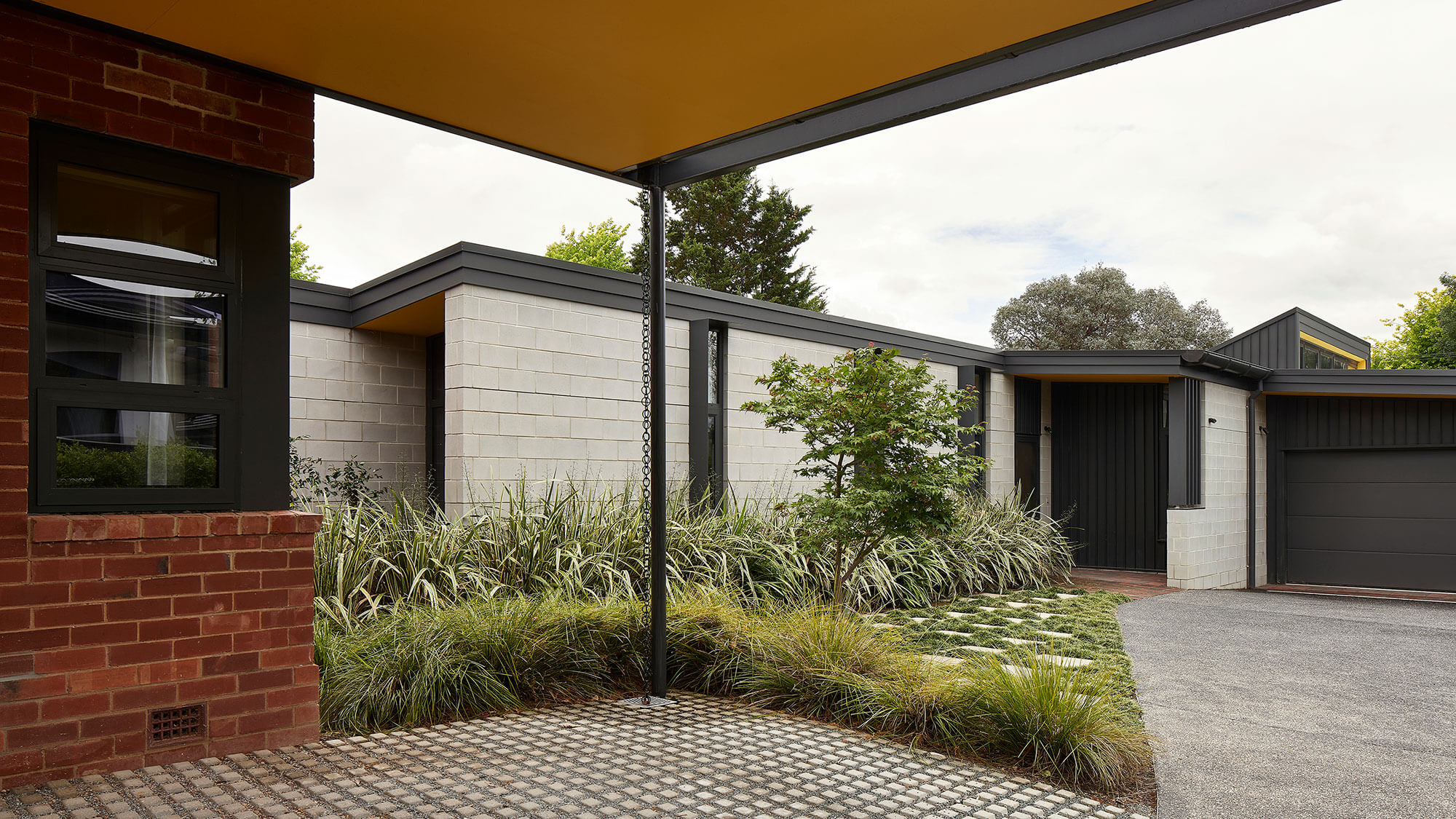
Mellow Yellow House and Cottage, a twostage project by Philip Leeson Architects and Sarah Truscott Architect is a synthesis of sustainability, functionality, and intergenerational living. The addition seamlessly integrates renewable energy and passive design in a quiet sanctuary for the owners, whilst the later upgrade to the original cottage blends modern aesthetics with the original form. Both stages cater to specific family needs, accommodating elderly parents and anticipating future arrangements for a carer and the owner’s son with autism.
These projects significantly contribute to the public domain; the solarcentric addition exemplifies sustainable living without compromising aesthetics, while the cottage preserves the streetscape with minor contemporary additions. Thoughtful design choices optimise solar exposure and enhance liveability, reflecting the collaborative efforts of the multidisciplinary team.
Mellow Yellow House and Cottage, beyond any architectural merit, fosters deep connections between architects and owners, and creates a flexible living environment resonating with community spirit.
MG House | Williams Burton Leopardi
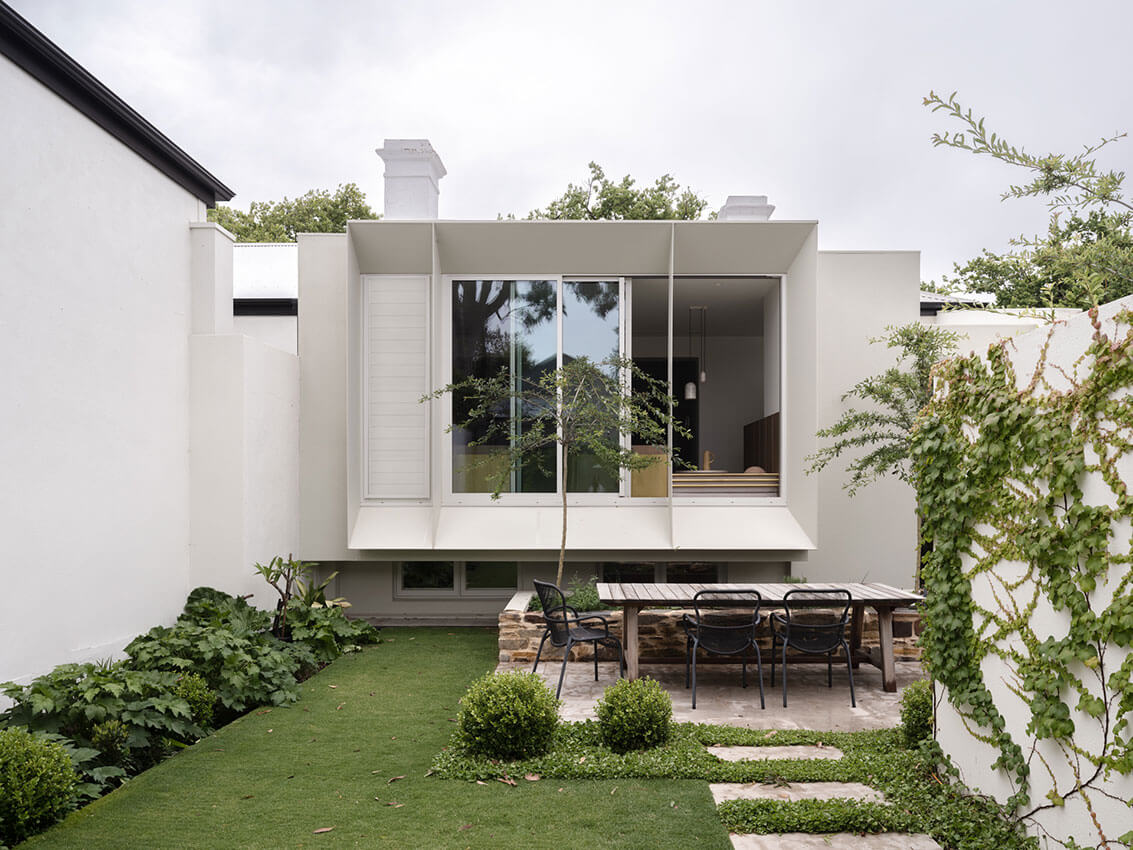
The layered nature of any heritage home is ultimately what makes its preservation so important. MG House – being one of the few of its style remaining in Adelaide – retained the memory of its past in so many ways and integrating reminders of that delicacy and filigree through a contemporary lens, became the focus. In crafting the interior to both connect and flow from inside-out, the curation and detailing of every element carries forward an homage to the past, emphasising a timelessness.
Opening up and reorienting the entry to the rear ensures the experience of the home (one that is light-filled and calm), is immediately present and all-consuming. Framed views and openings connect to the landscape, enriching a sense of seclusion. Throughout, personalised moments connect directly with the owners and the activities they love, while maintaining a sense of scale and grace.