
House Lupe | LINTEL Studio for Architecture
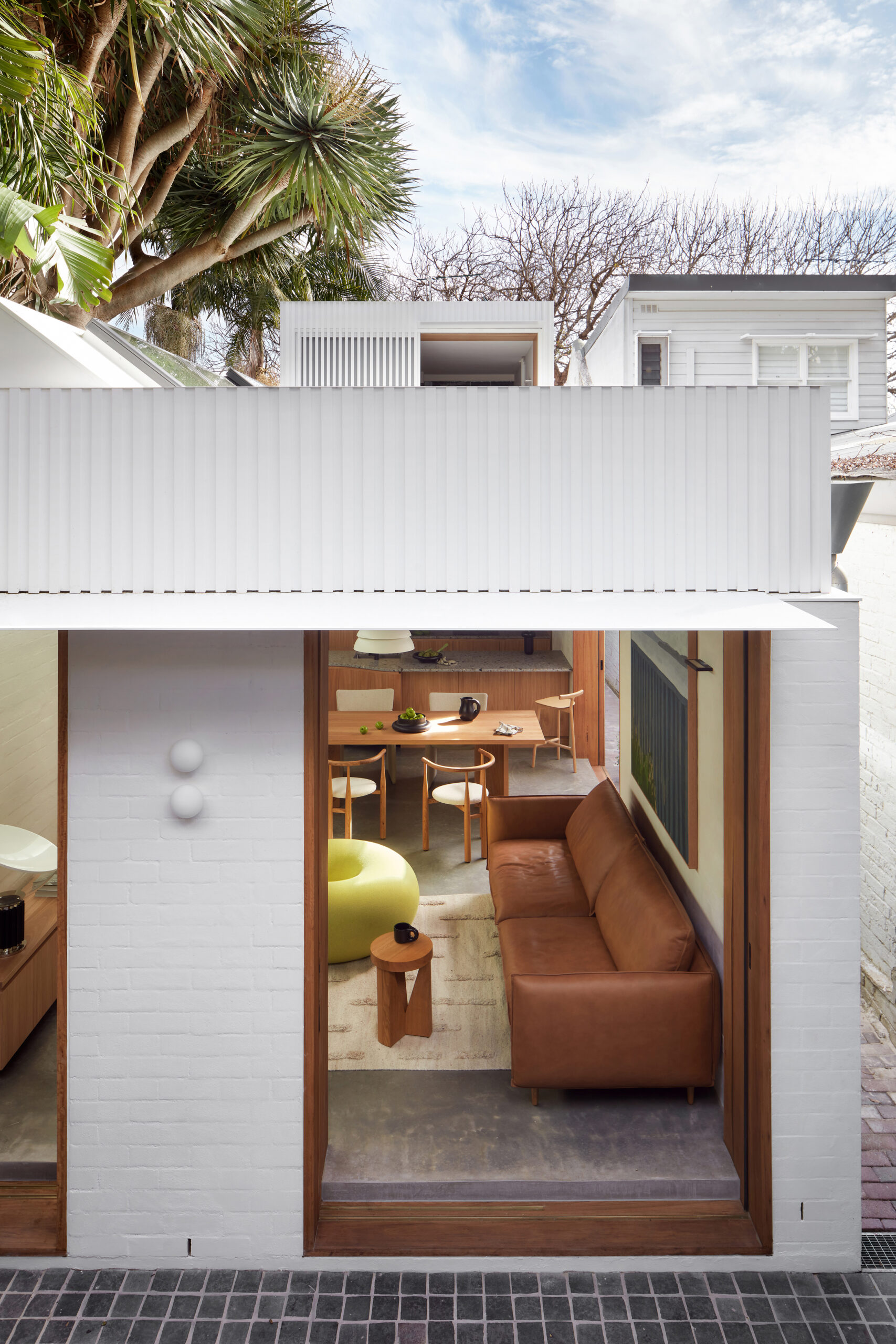
Once an inward looking cottage plagued by its bursting footprint, House Lupe is today composed around simple moments for contemplation. The project frames uncomplicated views to street side and neighbouring planting while maintaining necessary inner city privacy. Its carefully placed openings introduce an abundance of natural light without exposing the interior to the baking sun.
Today Australian families are looking beyond purely functional living, growing increasingly interested in conjuring beautiful and varied environments to enjoy at home. House Lupe is designed to offer its inhabitants the greatest possible flexibility within a limited footprint able to be opened up and closed off on multiple planes, both to the outdoors and to itself. This functionality accommodates the changing needs of a growing family who frequently receives international visitors. Importantly, architectural merit is sought by each of the home’s various guises, ensuring that the experience of the building remains exceptional.
House on a Path | Joanna Nelson Architect

A 1970s house on an experimentally planned suburban site in Canberra has been reorganised and reoriented through two precisely placed but loosely programmed additions to front and rear.
Japanese influences are evident in the original house and courtyard and Radburn planning principles in the battle axe block the unfenced front boundary is to a public pedestrian path while the rear driveway leads to the street.
The principal architectural idea is to amplify these distinctive attributes while providing legible entries and introducing circular routes.
The additions internalise seven external openings slotting under the existing eaves to the rear and matching the footprint of a demolished deck to the front. The additions function equally for utility, or to detour, gaze out and welcome in.
Inside, these circular routes enrich living patterns while outside, a new circular path skirts a new pool and gathers up narrow and generous spaces into a continuous whole.
Hurlstone Park House II | CMA – Carla Middleton Architecture
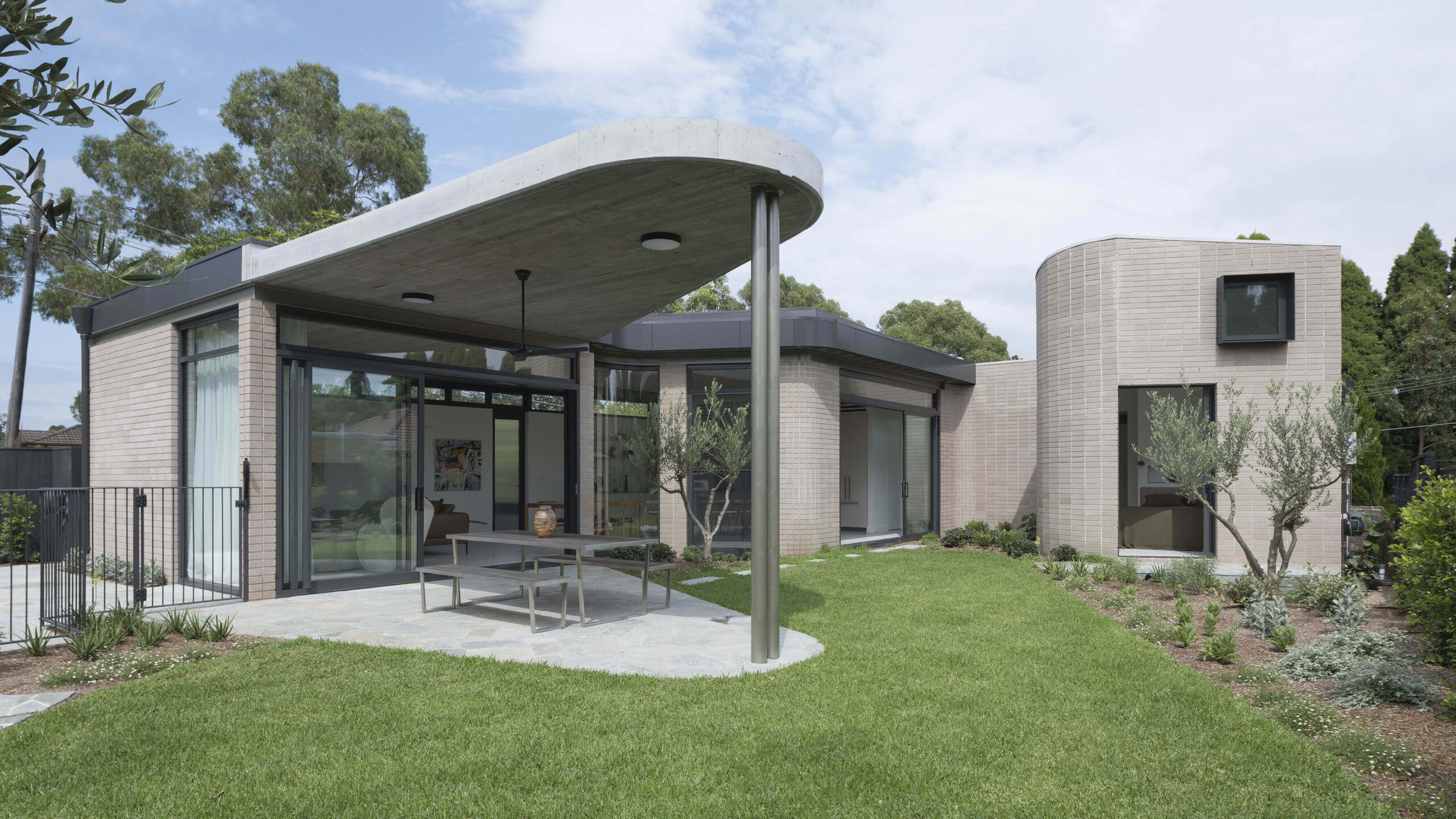
Hurlstone Park House II is a renovation to a single storey Federation home located on a corner block in a heritage conservation area in Sydney’s Inner West. The original building form was retained and a new single storey addition runs along the side southern boundary, providing privacy from the secondary street frontage while allowing the living spaces to open up to the north.
The built form has been pushed and pulled to allow for four private courtyards that create a sanctuary for its occupants and enhances the project’s connection to the garden. The curved and wrapping built form allows for varied living spaces where the family can both come together and retreat. The addition’s scale responds to the sloping corner block and respects the existing streetscape context with an appropriate and subtle contemporary addition that is highly functional, with every space carefully designed to meet the client’s needs without excess.
Ibbetson House Additions | Max Pritchard Gunner Architects

After purchasing a State Heritage listed house in the inner city, our clients’ wanted to substantially increase guest accommodation, garaging and add a modern light filled living area / entertaining space. Even for this relatively large block clever space planning was a necessary to include all their requirements without dominating the original heritage structure.
At the rear is a two-level addition, with a large living area opening out to a carefully landscaped courtyard and swimming pool. A large, glazed roof section shafts winter sun into the living area with an external blind providing summer shade. A wall of locally sourced random stone encloses the rear of the courtyard and extends through the lounge room, tying the interior and exterior to add to the feeling of space.
A two storey structure and with an undercroft presents as a distinctly separate modern structure, neutral and neat, not dominating the finely detailed original house.
Hale St Alterations & Additions | Philip Stejskal Architecture
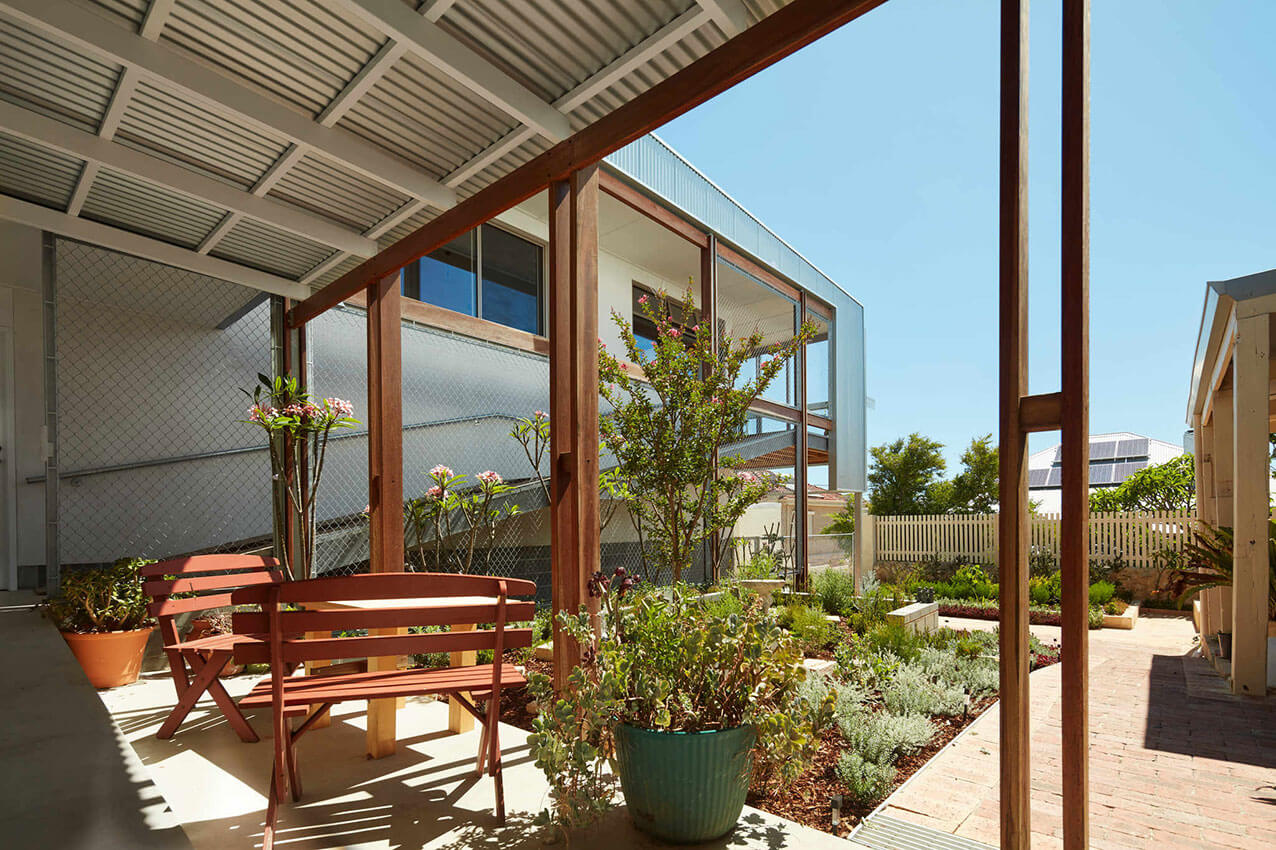
A project conceived around our clients’ desire to live out the rest of their lives here. Recently retired empty-nesters, Trish and Rob had aspirations for a forever home that was comfortable to live in, maintenance friendly, captured the panoramic views to the Indian Ocean, yet maintained strong connections with the garden that was to become a focal point of the site and their lives.
A sloping site led to a split level home connected by a series of ramps, weaving various interior and exterior spaces into a cohesive whole.
In pursuit of strong environmental credentials, Hempcrete became a key building material and part of the project, able to provide high levels of insulation, building sealing and indoor air quality. A series of other materials were used around the Hempcrete to protect it from the elements and to create a home that would age gracefully.
Hawthorn I | Agius Scorpo Architects
Hawthorn I is an exercise in backyard optimisation. An assortment of familiar domestic elements both constructed and grown are merged into a cohesive and practical assembly. By reimagining studio, utility shed and swimming pool as back fence, the resulting enveloped garden takes precedent over an arrangement of individual forms. One continuous element mediates the practicalities of entry and exit, work and play and connection and retreat. A singular ribbon provides a consistent backdrop for the garden whilst offering security, utility and generosity by means of a North facing loft that filters light deep into the footprint of the studio.
Helen’s Place | Custom Mad
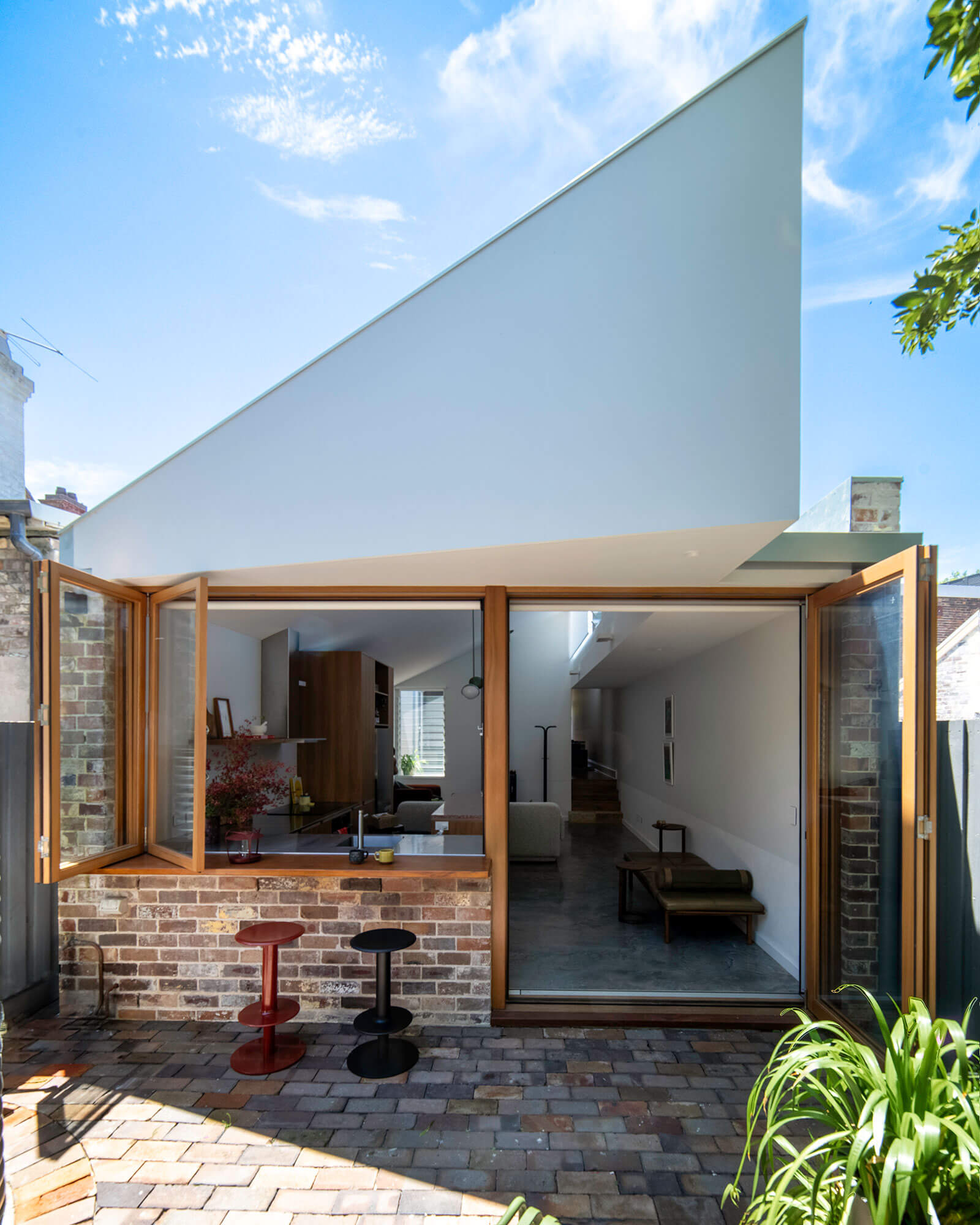
Helen’s Place explores how rituals of joy can bring peace to inner city homes; A moment of sunlight in the garden, a view of the sky from each room, feeling the garden within the house. Nestled between eight neighbours, a bustling cafe and a heavily trafficked street, creating these rituals of tranquility were integral to the comfort of this Victorian terrace. By reusing the existing materials and integrating handcrafted pieces into the home, materiality acts as a metaphorical handshake between rituals of the past and rituals of the future. The salvaged sandstone is repurposed as a stair between the old house and the new, the terrazzo benchtop, the heart of this contemporary home, is a slowly handmade object. Helen’s Place is studded with material reminders and joyful rituals that participate in the past, present and future of this home.
Hidden Garden House | Sam Crawford Architects

Our client’s brief for Hidden Garden House was rejuvenation of the existing house, an update to provide light and warm spaces, passively heated and cooled. They wanted quality over quantity, improved functionality, and low maintenance.
The original house required radical surgery. The ground floor was damp, dark, and cold, and upper floor hot and leaky.
Part of our response was to demolish the roof to the existing rear pavilion and create a hidden roof garden above a clerestory ceiling and high glass wall.
The clerestory rises above the floor level of the main bedroom which opens onto a new deck. Strategically placed screens provide the main bedroom and ensuite with private views of the garden and sky.
On the floor below, the curved ceiling and full height glazing in the kitchen / dining room draws the eye out and up to the landscaped rear yard and sky beyond.
Hill House | Breakspear Architects
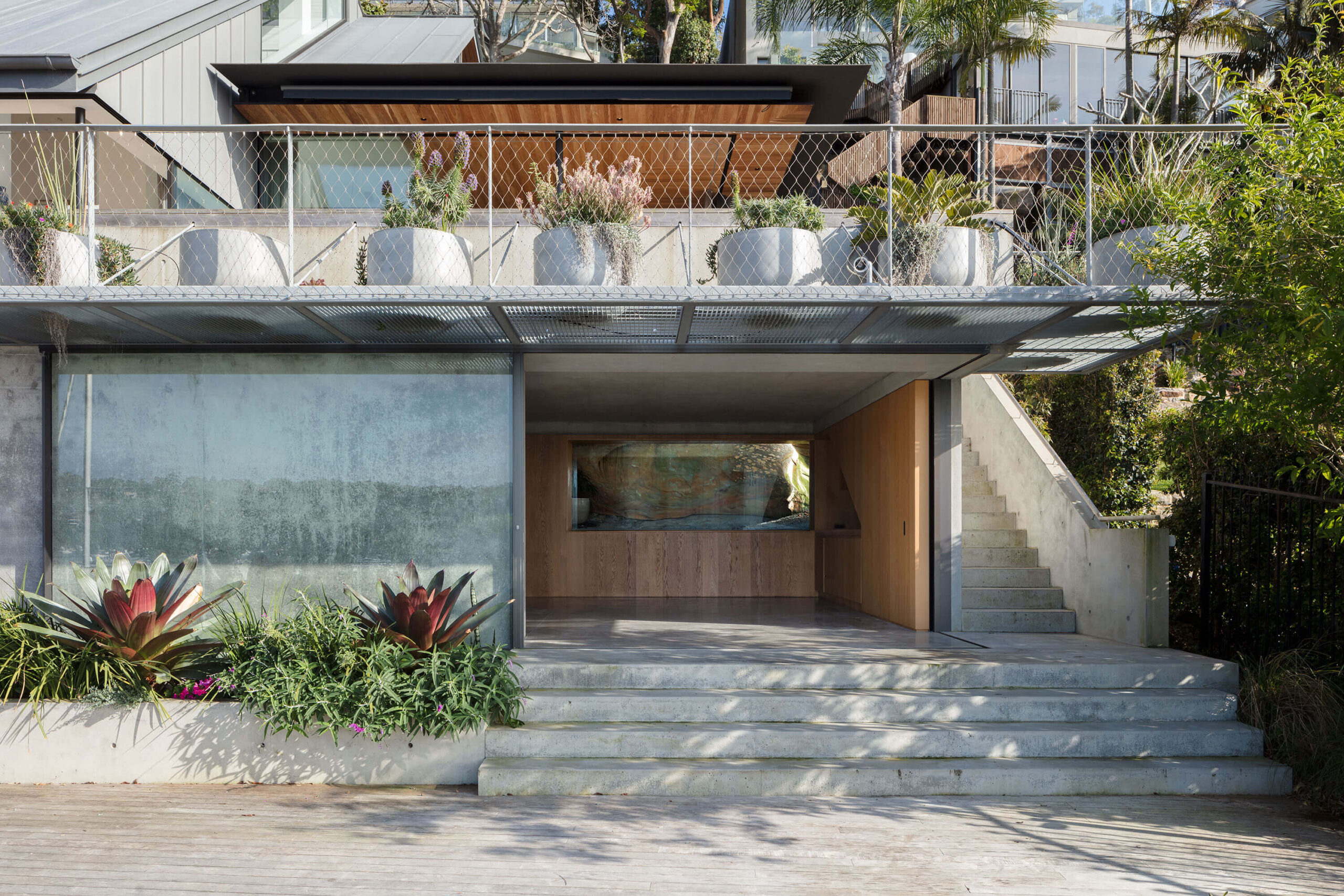
Hill House gracefully rests upon the Seaforth escarpment, offering a panoramic prospect of the harbour towards Spit Bridge. The house was built in 1980 by the current owners and has catered to the needs of a growing family living by the sea. More recently, with their kids grown-up, the owners found themselves living alone in the house whilst enjoying frequent visits from their adult children and grandchildren. The renovation of Hill House aimed to seamlessly blend its role as a cosy abode for two and a gathering space for the extended family.
The approach focused on preservation, whereby the existing house was largely maintained, and yet transformed with seamlessly integrated new outdoor spaces that connect with the landscape. Inspired by the Sydney School character and ecological principles of the original home, the renovations make the home whole with surrounds, inviting the interior to meld with the garden, topography and harbour setting.
Garden House | Zen Architects
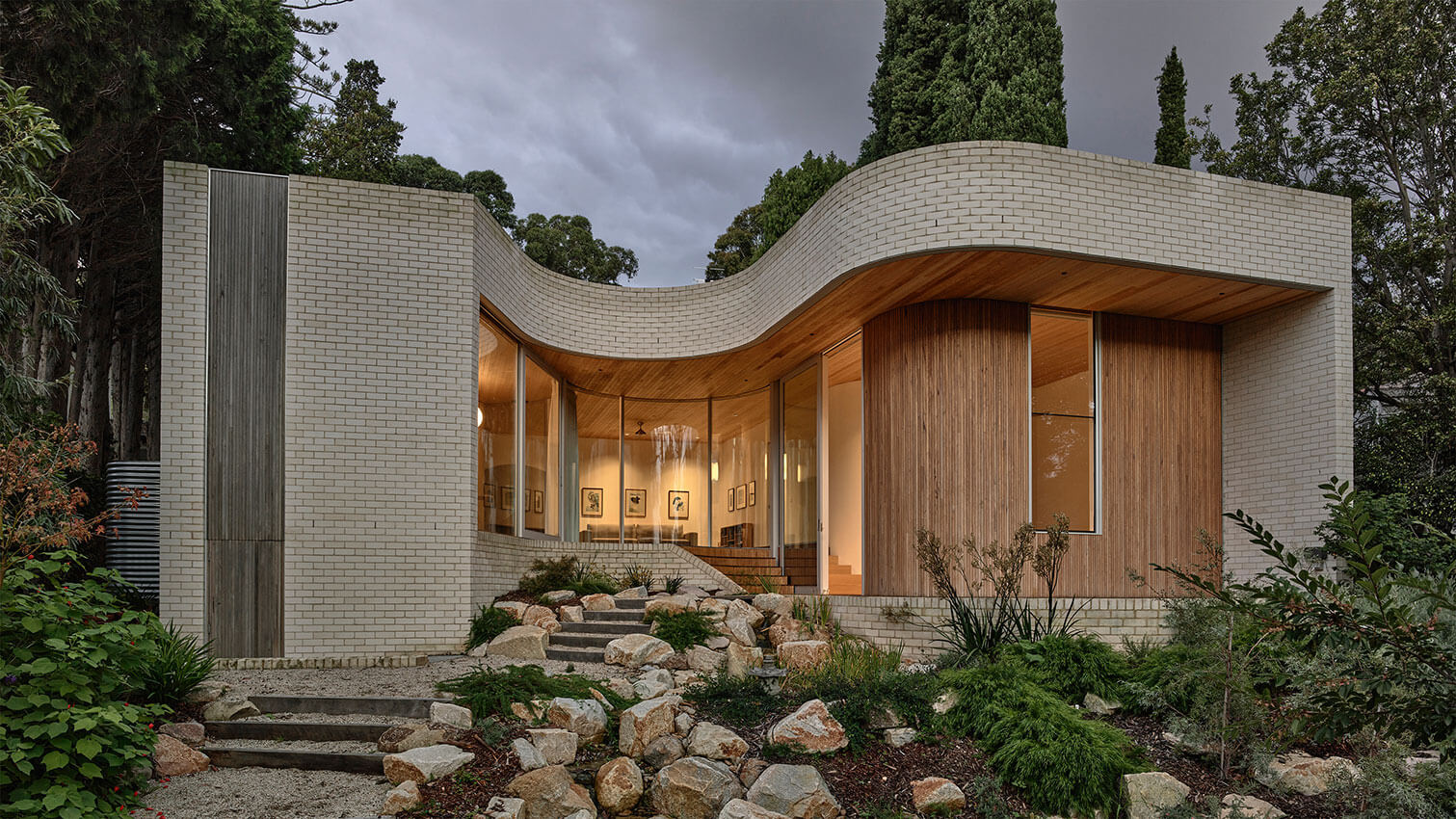
The owners of Garden House in Mount Eagle Estate loved their property and garden, but the house lacked light and outdoor connections, and the centre was dark, wasted space. Having lived in the home for more than 20 years, they came to Zen Architects wanting a design that brought them closer to their garden.
While the 1930s heritage façade gives no hint to what lies behind, all is immediately revealed upon opening the front door. Taking inspiration from the curvilinear roads and teardropshaped reserves of the subdivision, we sculpted a curved glass facade into the living area. Drawing light and nature deep into the floor plan, the glass void brings the clients close to their garden from all living spaces, as the interior expands around it.