Northcote House | LLDS
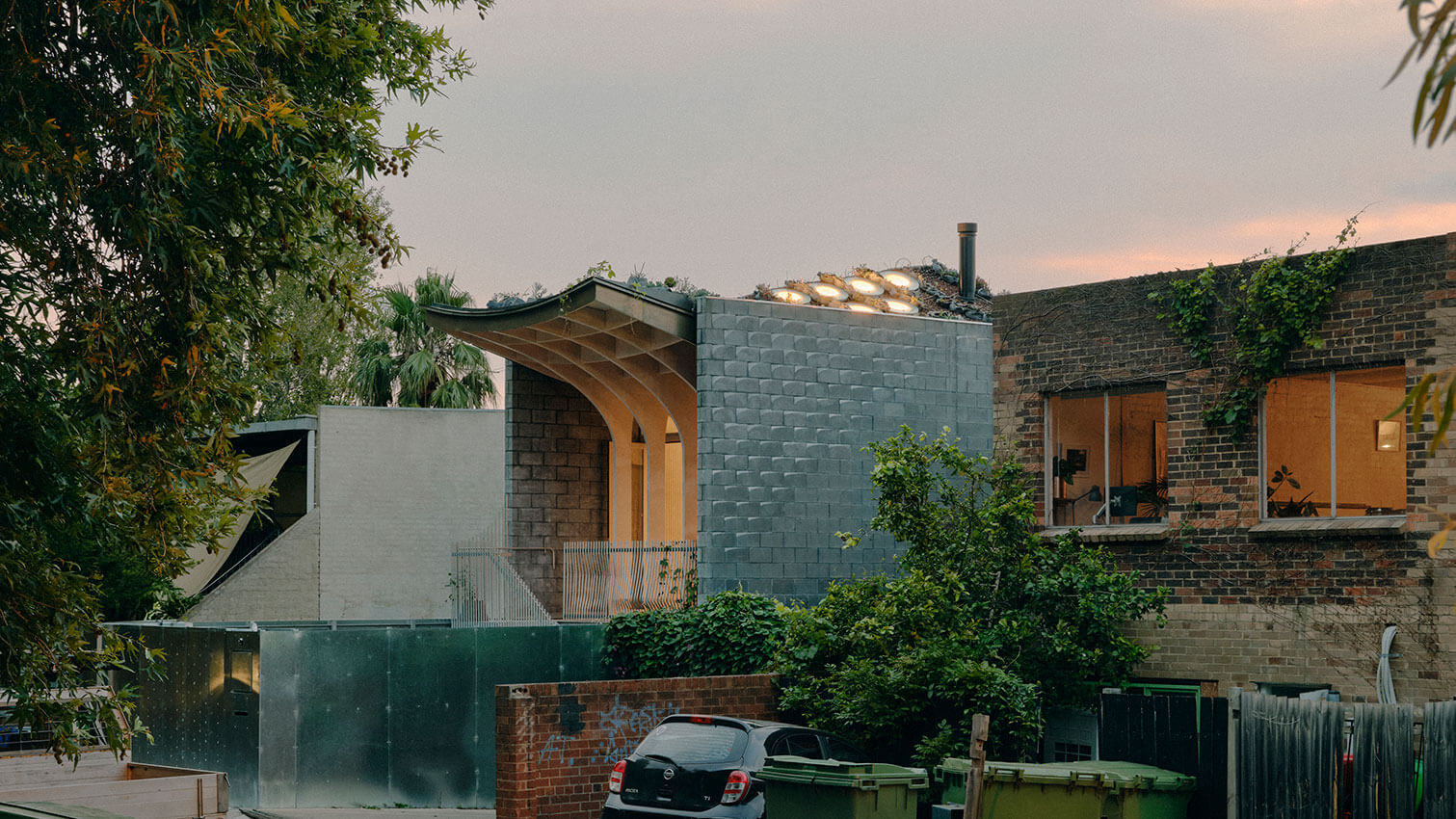
The project reconceptualises the Victorian terrace typology in response to the existing urban context. Sited on a narrow 4.6m wide plot, the ground is elevated to form a roof garden which reduces urban heat island effect and provide new space to support local ecology in an urban context. Below the freeform timber roof is a halllike room with a kitchen, dining room, and entrance veranda reminiscent of the neighbourhood’s large factory lofts and Victorian church halls. The highly textured concrete internal wall provides thermal mass and improves the acoustic of the dining room. The ground floor is spatially organised around a circular snug with a central void which brings natural daylight and ventilation to the depth of the House. The East and West façades are designed as a trellis for climbing plants with a generous entrance balcony acting as natural surveillance to the laneway and neighbouring public car park.
Er Pavilion | vittinoAshe with Brendan Moore, Melissa Cameron, Syrinx and ICS Australia
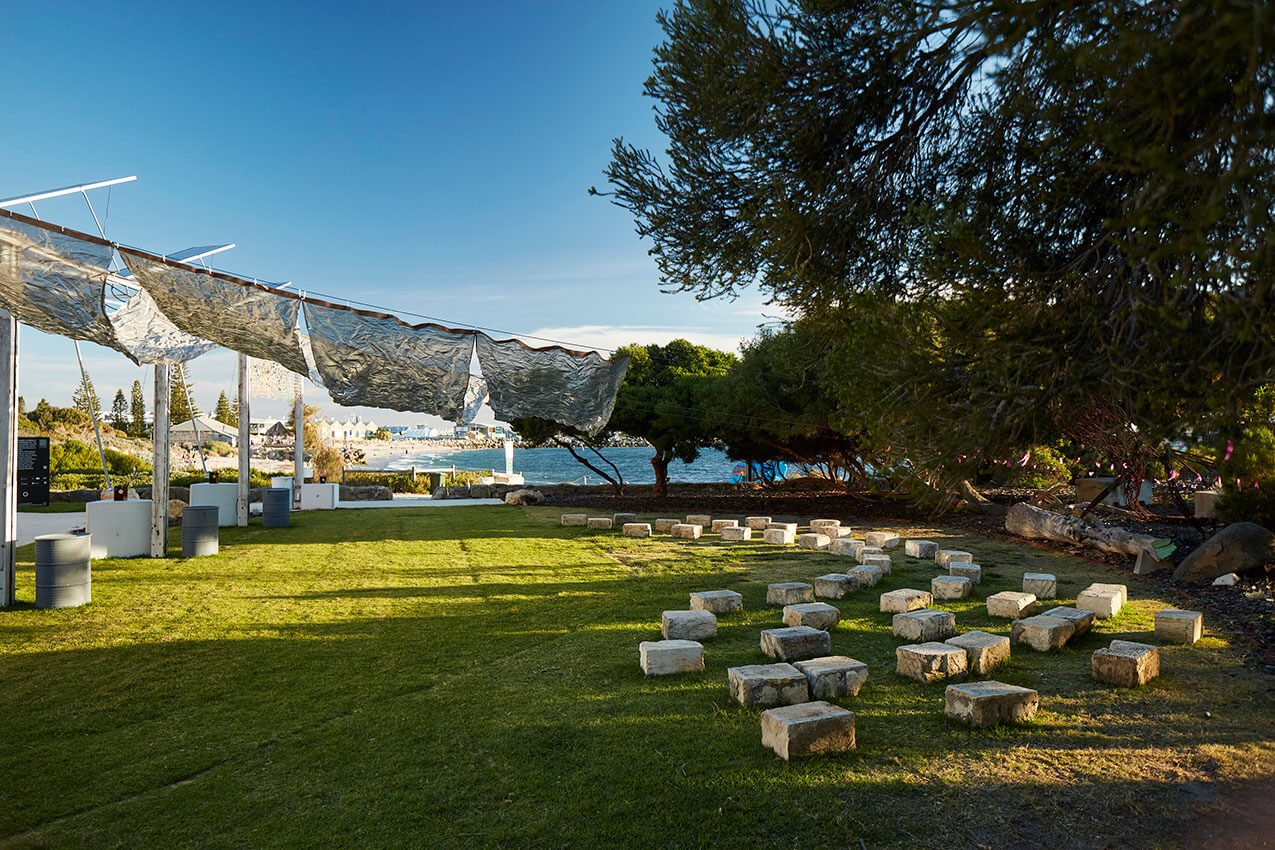
Under the shadow of the Roundhouse and adjacent to the swelling wardan (ocean) sat the 2023 Fremantle Biennale pavilion, Er a design collaboration between architects vittinoAshe, Whadjuk Noongar Traditional Owner Brendan Moore, jeweller Melissa Cameron, Syrinx Environmental, sustainability and green infrastructure company, environmental scientist Dr. Linda Davies and ICS Australia. The bilingual text embodied the conceptual facets and formation of the Er pavilion:
the void’s salt stories
carved into constellation
Djallam bardip
kodjat walyalup boodjarak
a series of notes drawn
ephemeral structures traced
Koora wirnt
kwornt ngaraniny
disparate fragments announced
a lightness of presence layered
Kendjil karda
biargar nidja
Mother/Sun
Ngarngk
concentrate elements to belong
koorliny gep nganiny gep
a collective composition repairs
Nidja kwoornt daan didiny
before and after its being
koora wer korliny
together spaces
where one hesitates
Ngalla nidja
windji noonook kaatidj
in a place and time drink
Yeyi Nidjak nganiny gep
a natural utterance
Er.
Dtabakarn
Carrickalinga Shed | Architects Ink
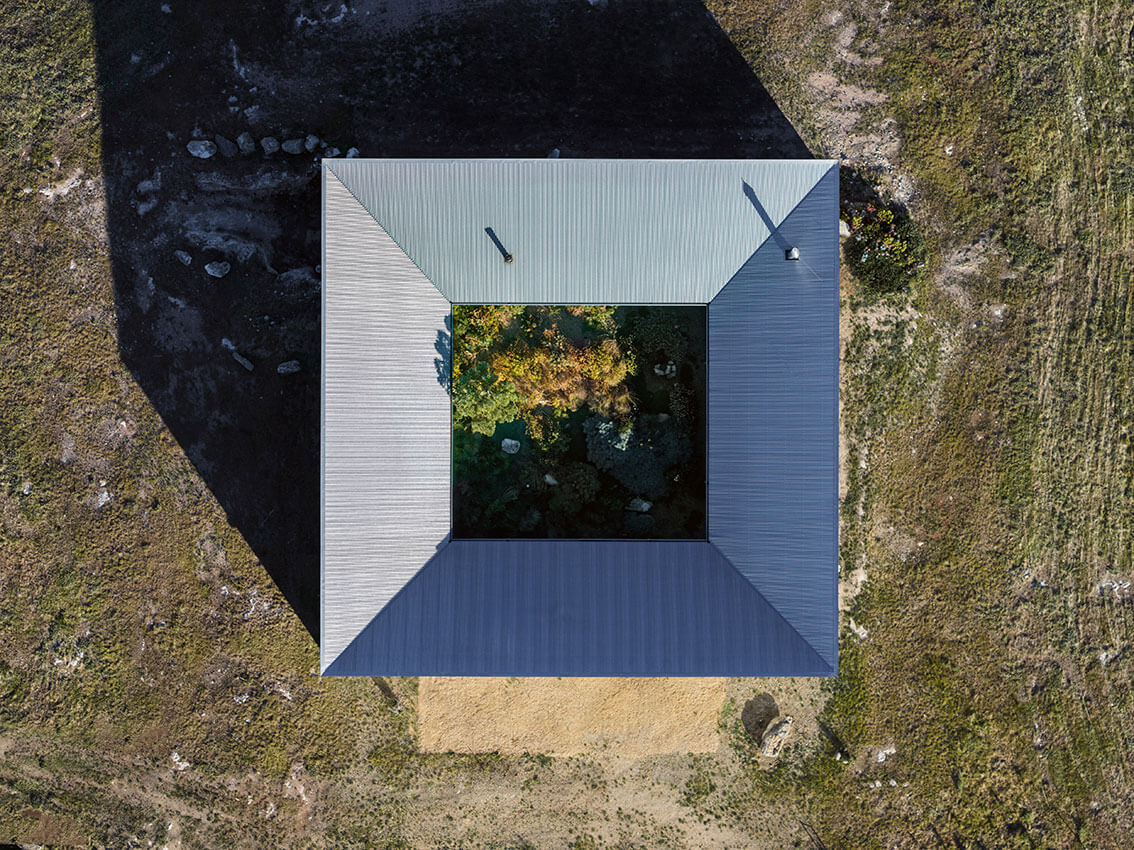
The premise was an interpretation of an Australian Federation Farmhouse, sited on a hilltop in Carrickalinga.
With extreme winds, we manipulated the traditional farmhouse, stretching the perimeter to a square, whilst removing the center for the courtyard. With the verandah on the ‘wrong’ side we inverted the roof. This creates a low eave to the protected garden allowing solar gain and solar access.
The apertures were aligned, framing the views of the landscape. Industrial shutters filter the amount of light desired, tuning the house to the seasons. All rooms have dual aspect to both sea and the garden.
Exterior walls and shutters are clad in heritage galvanized corrugated iron, folding over the ridge, and lining the internal valleyed roof. Structural columns were used as downpipes harvesting rainwater.
The dwelling is true to ‘place’, minimising its impact to its landscape and carbon footprint.
Campbell House Private Office | Tonkin Zulaikha Greer
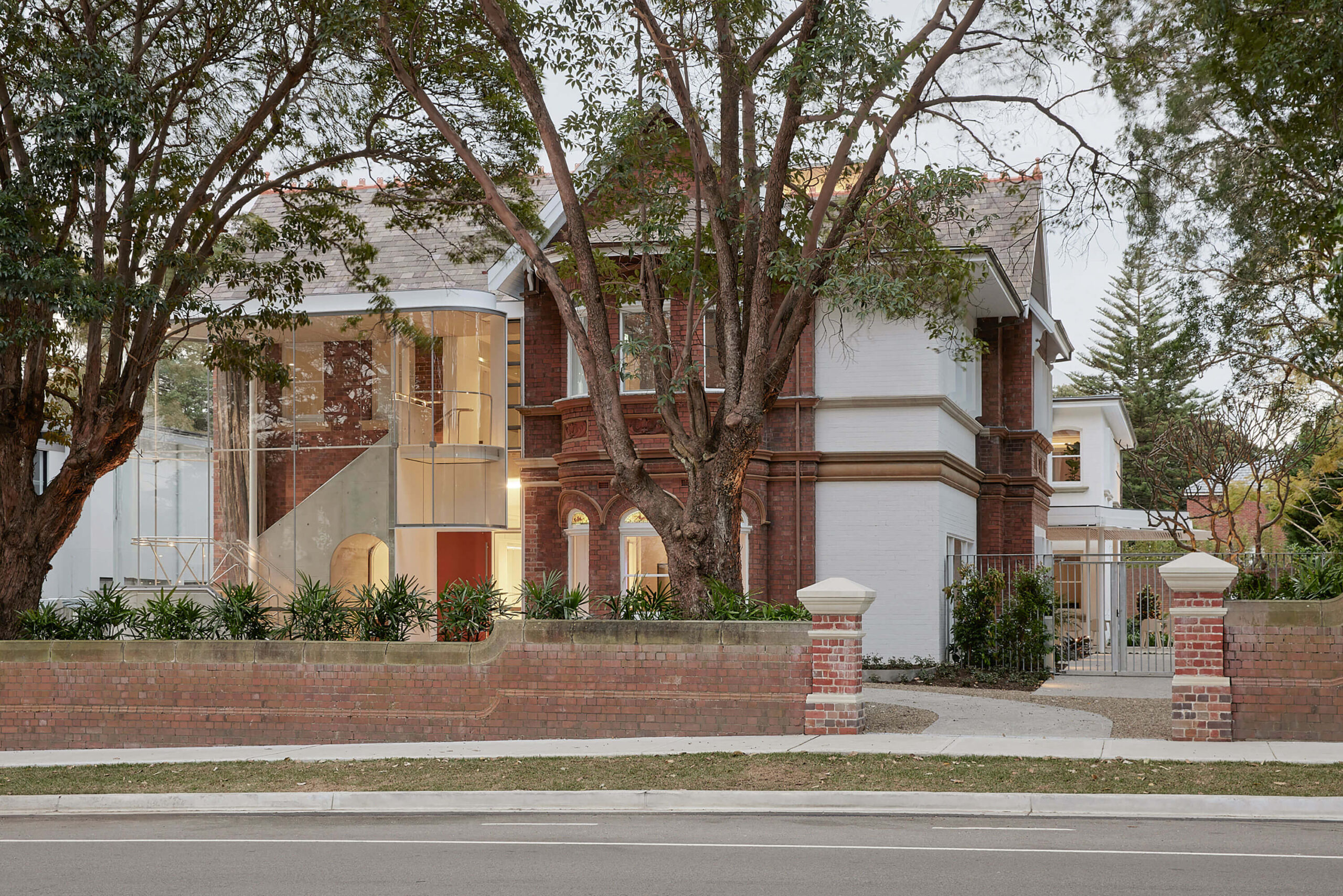
Campbell House Private Office is the adaptive reuse of a Federation style house from the early 1890s into a contemporary office. TZG’s approach to this design was to weave the built heritage fabric into the contemporary commercial design to unify the significant building and positively contribute to its Heritage Conservation setting.
The threshold between interior and exterior spaces is blurred by layered transparencies that welcome the established front garden and abundant natural light deep into the building. A mature Weeping Fig Tree was planted in the office atrium and is the central focus of the new building. The surrounding contemporary design interventions, like the tree, breathes new life into the building.
The office is an exemplar of environmental design based on natural light, passive ventilation, enduring materials and harvesting green energy facilitated by a contemporary intervention to a heritage building.
ANMF House | Bayley Ward
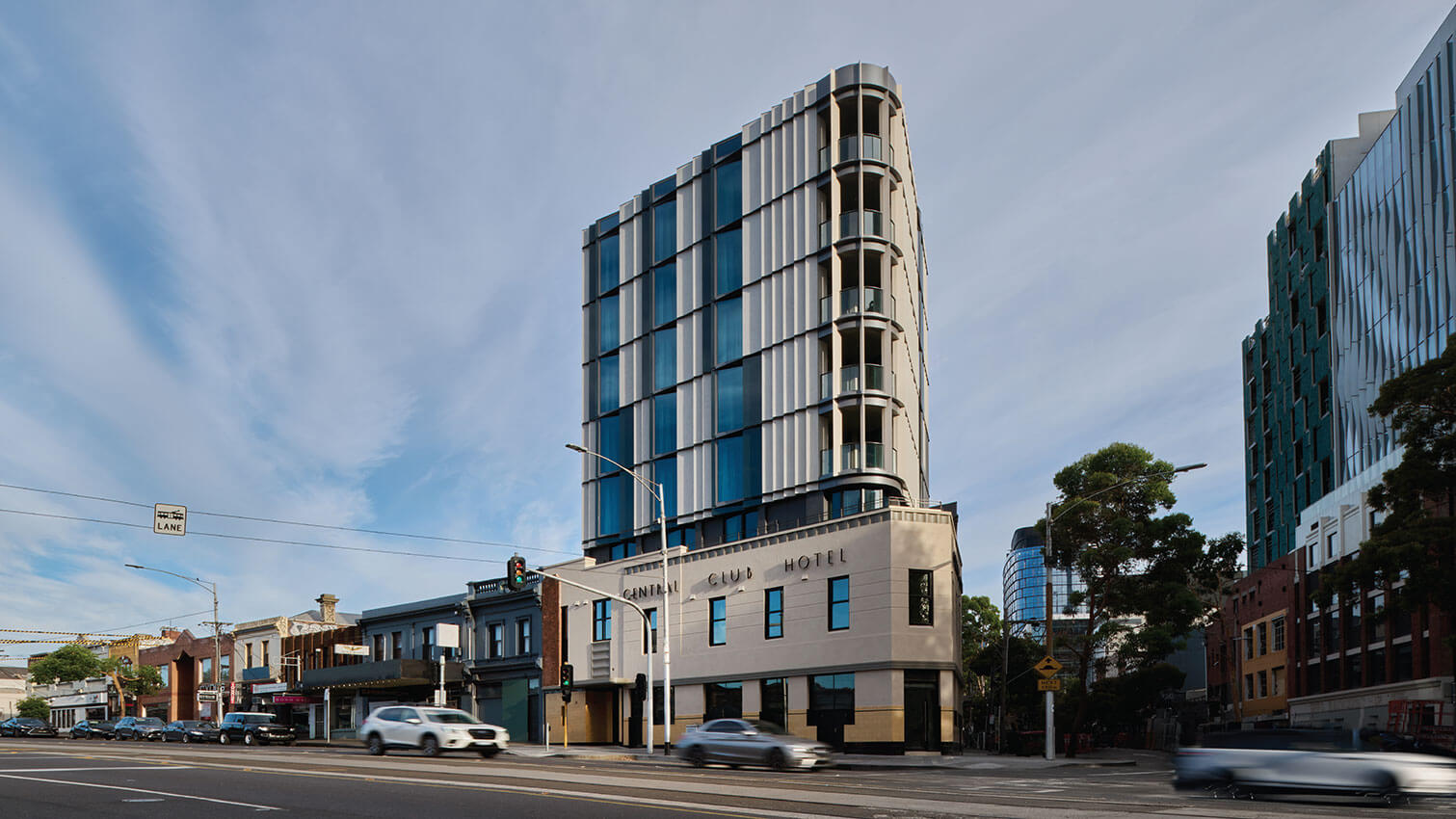
https://www.youtube.com/watch?v=dNsBOPqE9oEhttps://www.youtube.com/watch?v=BtR_9IOPqqY
Bach House | Light House Architecture & Science

Re-Generation House | Alexander Symes Architect with Second Edition and Jane Theau
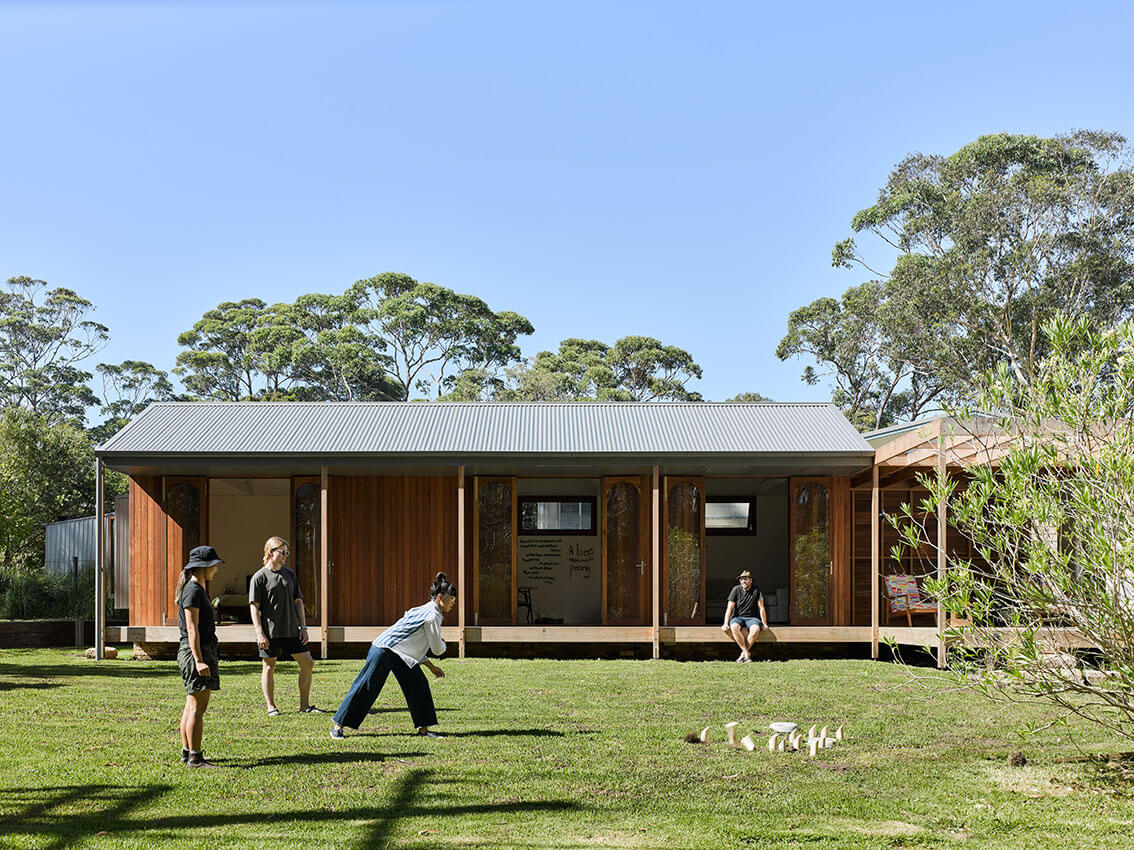
Bay Pavilions Arts + Aquatic | NBRS with Donovan Payne Architects
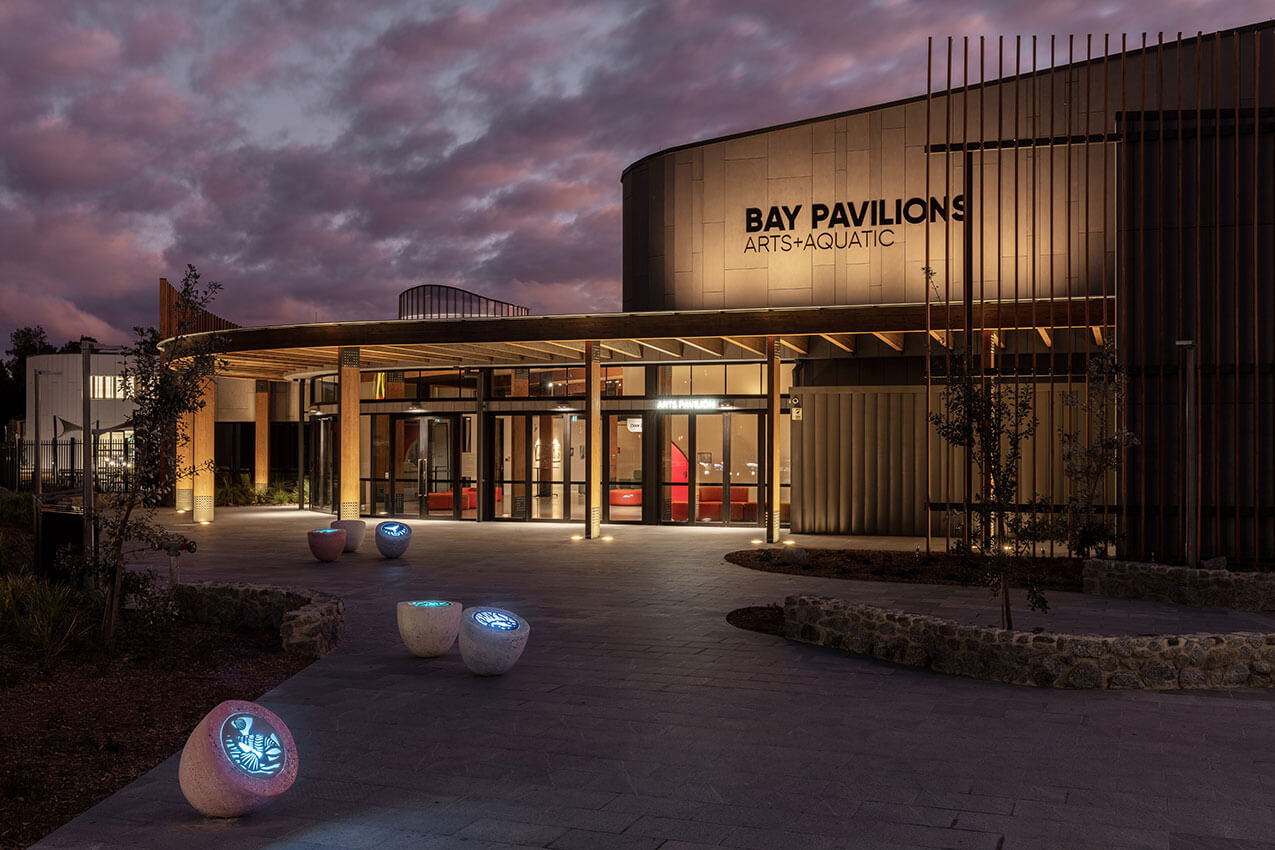
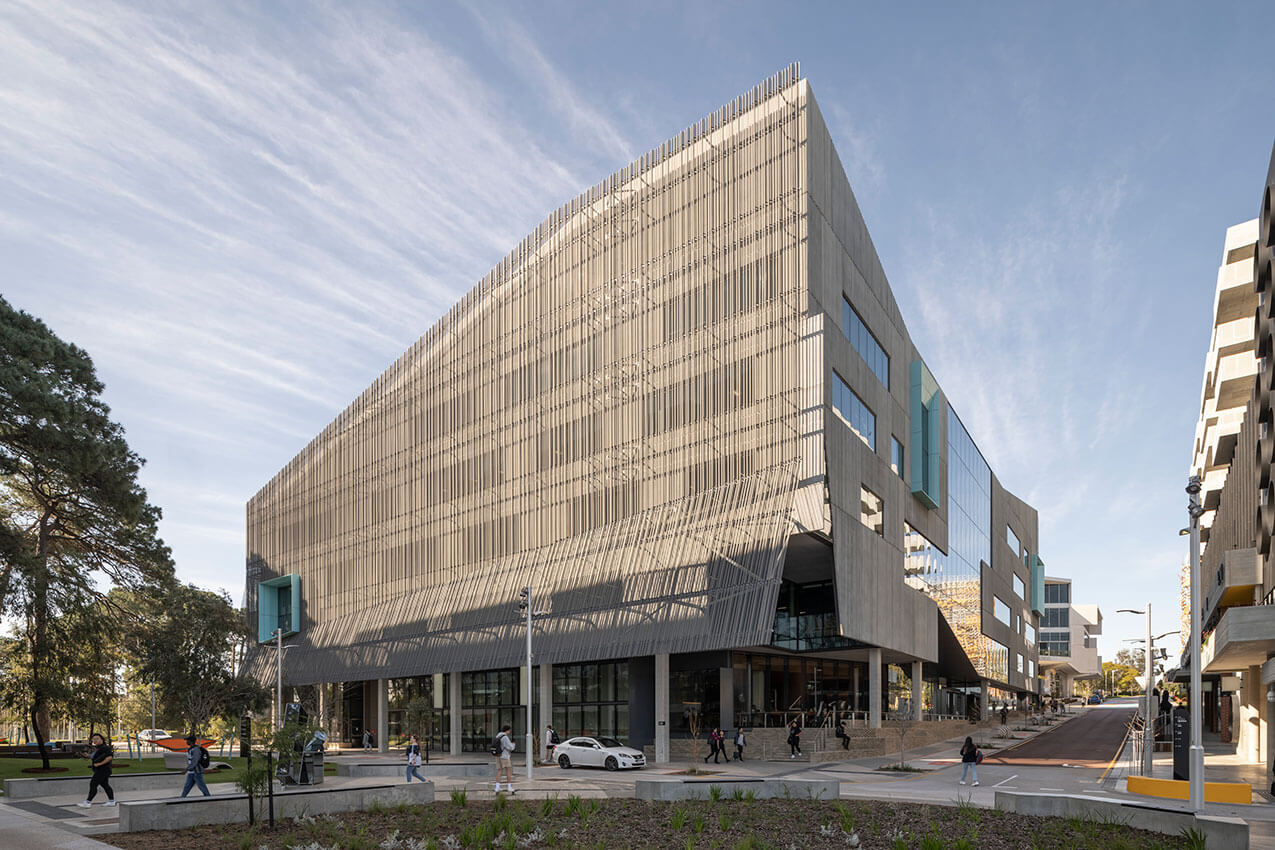
School of Design & the Built Environment, Curtin University | Wardle