
Jordan House | Preston Lane

Nebraska | Lara Maeseele
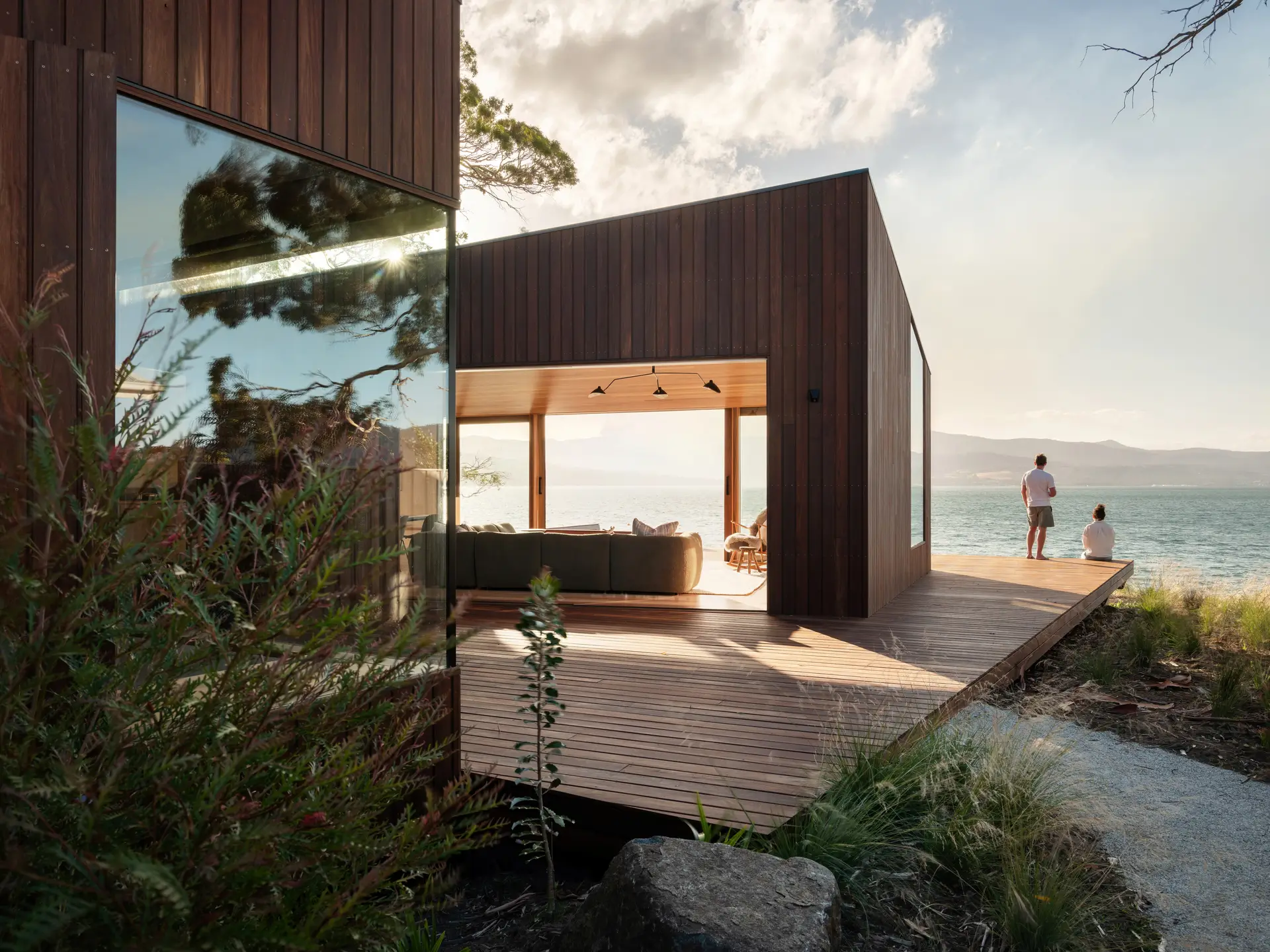
Small Wonder Winery | KHA with Edwards + Simpson
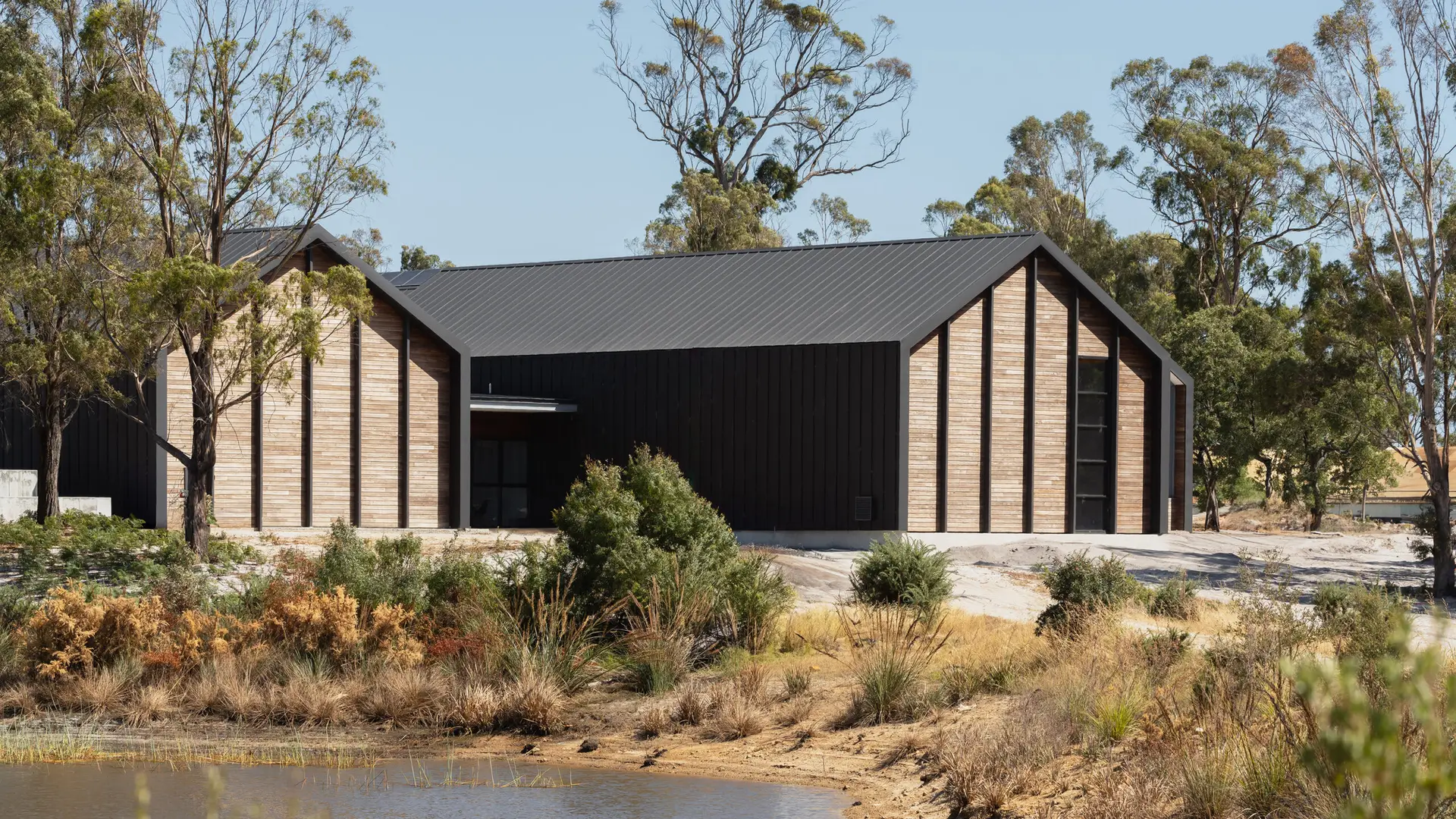
Tolpuddle Tasting Room | TANNER ARCHITECTS

The Rox Apartments | Core Collective Architects

The Rox Apartments makes a positive contribution to Hobarts urban realm whilst respectfully restoring and reinvigorating the surrounding heritage buildings. This project was spearheaded by a longterm owner of the heritagelisted property with a passion for its rich history. The development comprises a new apartment building with 15 apartments and ground floor commercial space, as well as the careful restoration of Scotch College (c.1880) at the rear of heritage listed Roxburgh House (c.1870).
The development is cited by the Tasmanian Heritage Council as a case study project, describing the conversion of the former Scotch College building into apartments as inspiring. The Rox demonstrates the potential for new housing in the centre of the city to increase density while responding to its heritage context with sensitivity, activating the ground plane and improving the quality of the urban realm.
The Hutchins School Pre-Kinder | ROSEVEAR STEPHENSON

The Hutchins School Pre-Kinder is a child centred learning space that allows children who need to move more than they need to sit still, to be dynamic and active participants in learning. The building opens to welcome the outside space as a third teacher – the changing weather, the nearby gums and wattle, the Derwent, Kunanyi engage in learning that connects children to the local environment and supports them to engage with and care for country.
Seasonal changes throughout the year such as the frequency of rain events are viewed through the lens of play. Students are involved in the capture and use of rain water to develop an understanding of finite natural resources and changing climatic conditions.
The Friends’ School Redevelopment Project | Bence Mulcahy with H2o Architects

The Friends’ School Major Redevelopment Project included, a gymnasium, adaption of the WN Oats Centre, site accessibility/safety improvements, a major substation, North Block repairs and new outdoor courts.
Approaches driving the project included the establishment of precincts within the campus, small strategic interventions to improve site accessibility and safety, utilisation/adaption of existing buildings, and Quaker values, simplicity, community and environmental stewardship.
Key projects are the WN Oats Centre refurbishment and the Revell Sports Centre.
The WN Oats Centre was adapted to accommodate x7 GLAs, specialist spaces, breakouts, offices, student/staff amenities in a light, robust, flexible and engaging environment.
The Revell Centre includes a gymnasium, offices, community/student amenities and x2 GLAs. Moderated by domestic scaled additions and street level detailing, its scale and siting draws from Carr Street precedents. Setbacks and landscaping tie the building into the campus, and materials strike the balance between utility and context.
The Cottage School | Taylor and Hinds Architects
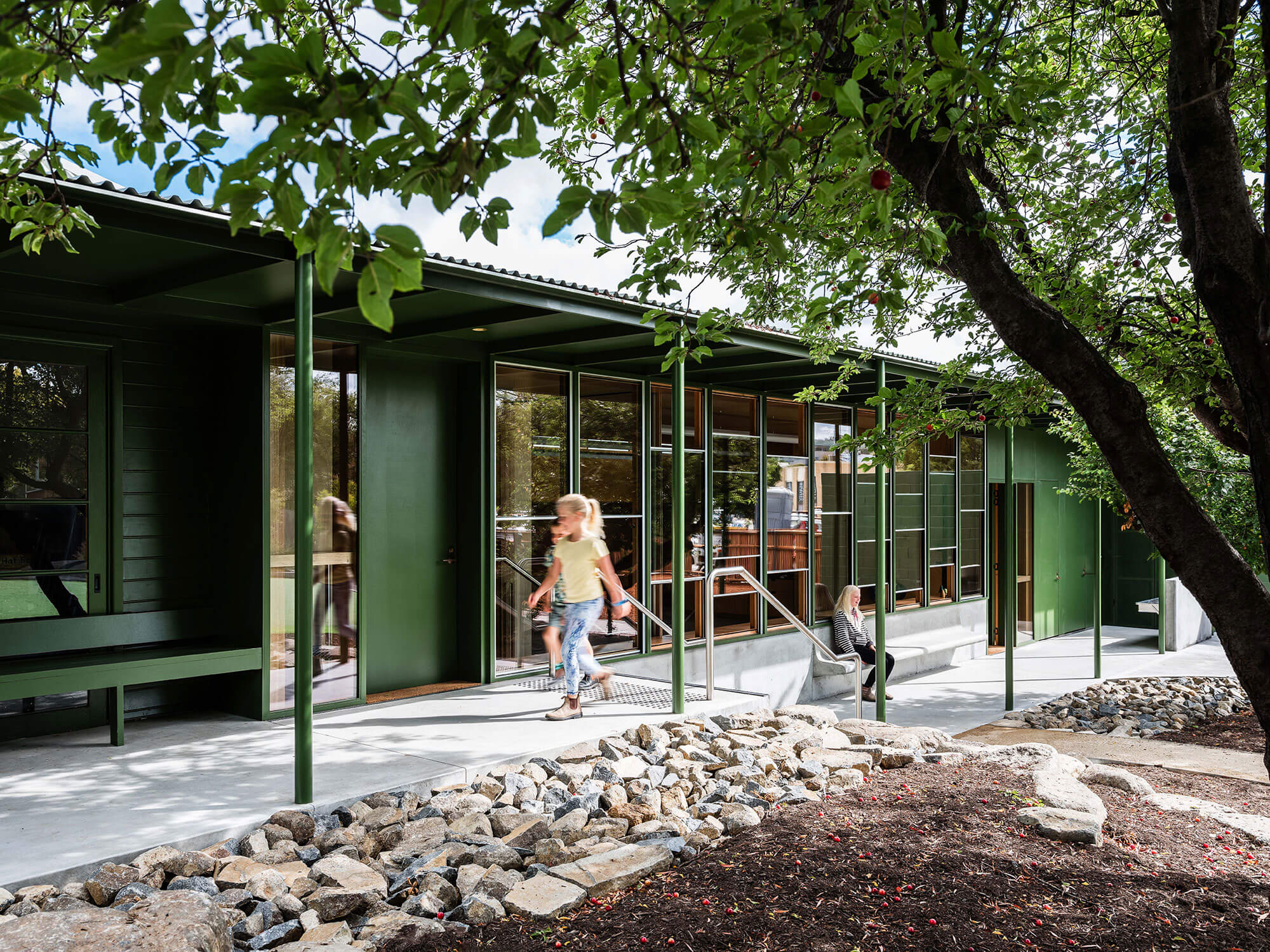
The Cottage School is a unique, small, independent, secular, community primary school. It is located in Queen Street, in Kangaroo Bay. The school prioritises the environment as a critical framework for learning.
Cohabiting a series of Federation weatherboard worker’s cottages, the School has established a unique pedagogical structure which borrows heavily from the intimacy and domesticity of its setting.
A new Green Cottage ‘addition’ was conceived as a unifying element between the existing external teaching and play environments, and the domestic scale of the original cottage. A verandah forms an extension of the educational realm, for woodwork, seating, and water play. Along this covered edge, an operable facade serves as a ‘streetscape’ for displays, and encourages imaginative play at thresholds. The sensorial environment is carefully orchestrated, through subtle acoustic and lighting. The new interiors are composed through a singular, warm and calming palette, which ‘backgrounds’ the experience of learning.
St.LukesHealth Flagship Store | TERROIR
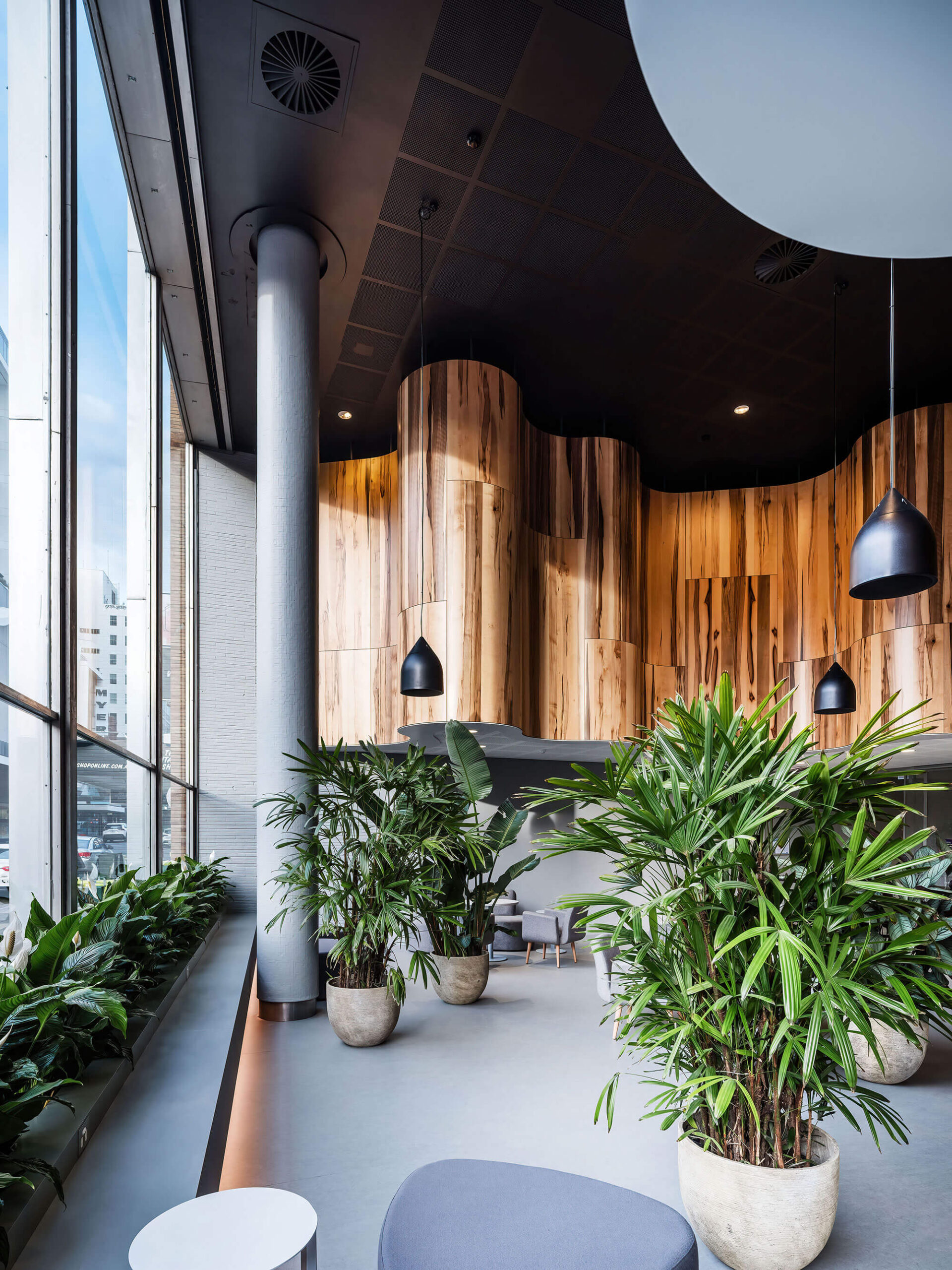
The best intentions of organisations can be betrayed by the banality of their key public interactions in their customer service centre. This critical opportunity to choreograph a set of relations with customers is often blighted by a fitout that is as unsustainable as they are uninspiring.
StLukesHealth are an extraordinary organisation, one that prides themselves on being uniquely Tasmanian with an ambitious vision for Tasmania to become the healthiest island in the world.
This dual sense distinctly Tasmanian but also healthy, safe and wellnurtured led to the concept for their new flagship store to be a gathering space formed by a giant tree hollow. Blackheart Sassafras, a most unique and recognisable Tasmanian timber, and a hollow, a natural form of refuge in our forests. A meeting point between StLukesHealth and their community, the hollow inspires imagination and talks to a healthier and poetic connection to our island state.
River’s Edge Building, University of Tasmania | Wardle

Rivers Edge is a learning, teaching and research building located at the edge of the North Esk River /lakekeller in the University of Tasmanias Inveresk Precinct. Providing flexible, collaborative teaching and research spaces for students and staff from Humanities, Social Sciences, Law and Business disciplines. Its a contemporary learning environment where communities of students and staff gather for meaningful exchange.
The ground floor is organised around a series of brickpods, located at the edges of a lively central atrium designed to bring the community together. Spaces between them frame viewing portals out to the surrounding landscape.
Rivers Edge celebrates its position within a postindustrial site with references to structural expression and robust materials. The building adapts and optimises industrial vocabulary for enhanced solar orientation and thermal performance, concepts of Country are appropriately embedded in the design and consideration has successfully targeted embodied carbon reductions in construction, operation, and endoflife impact.