
Smith House | Fowler and Ward
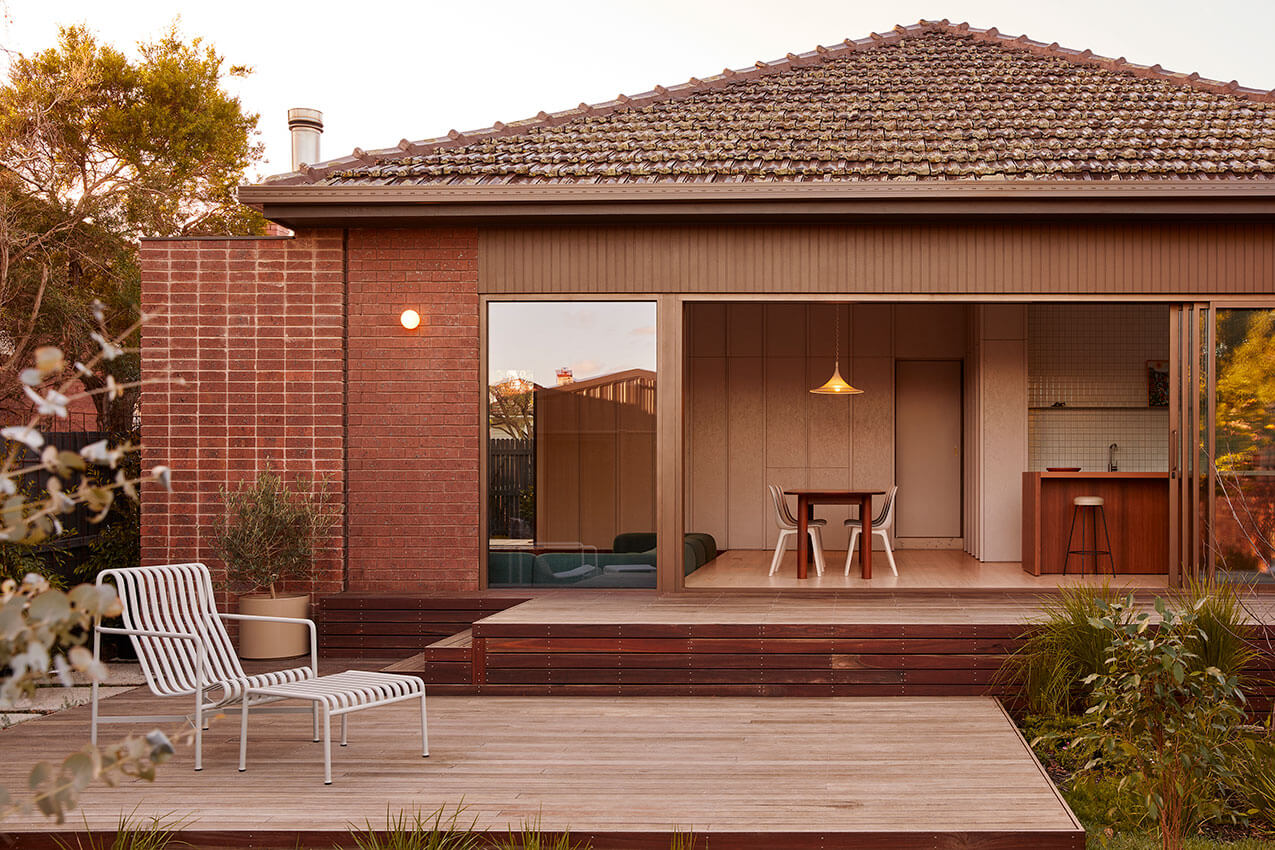
Smith House is a project that celebrates, rather than reinvents an underappreciated era of housing; the ubiquitous, brown brick, tiled roof, free standing suburban home.
Tucking in beneath the western eaves and dropping below the existing floor level, a modest 8m2 extension transforms the home. The design reorients the interior to its garden, bringing sunshine inside and opening up what was a highly segmented floor plan. Quality, not quantity of space is the priority.
Small interventions celebrate the homes character and offer an alternative to the usual; paint, render or demolish. Tesselated tiles, amber glazing and diagonal timber cladding peek out from the front arches while recycled and reclaimed brown brick is celebrated in the extension, laid in stackbond to delineate itself from its predecessor. The project demonstrates how working within an existing envelope and embracing character results in a delightful way of living without rebuilding.
Six Chimney House | Vokes and Peters

Improving early twentieth century housing is a recurring project type which calls for an appropriate response to the specific and evolving societal, cultural, environmental and economic contexts.
The palette of the heritagelisted interwar bungalow was adapted and abstracted in the new works. Each trade is elaborated in the composition, in the manner of the arts and crafts movement.
The elevated ‘Street Terrace’ maintains the leafy character of the neighbourhood. By placing the new kitchen into the former front room, the social life of the family spills out onto the street terrace and enables one to feel a part of the city.
The ‘City Terrace’ is a private outdoor space that offers an unexpected place of prospect.
A façade of many windows sits in constant dialogue with the panoramic view of Perth CBD.
The ‘Sunken Garden’ is imagined as a cool, shady forest supporting biodiversity and idealising the presence of nature.
Lee House | Candalepas Associates
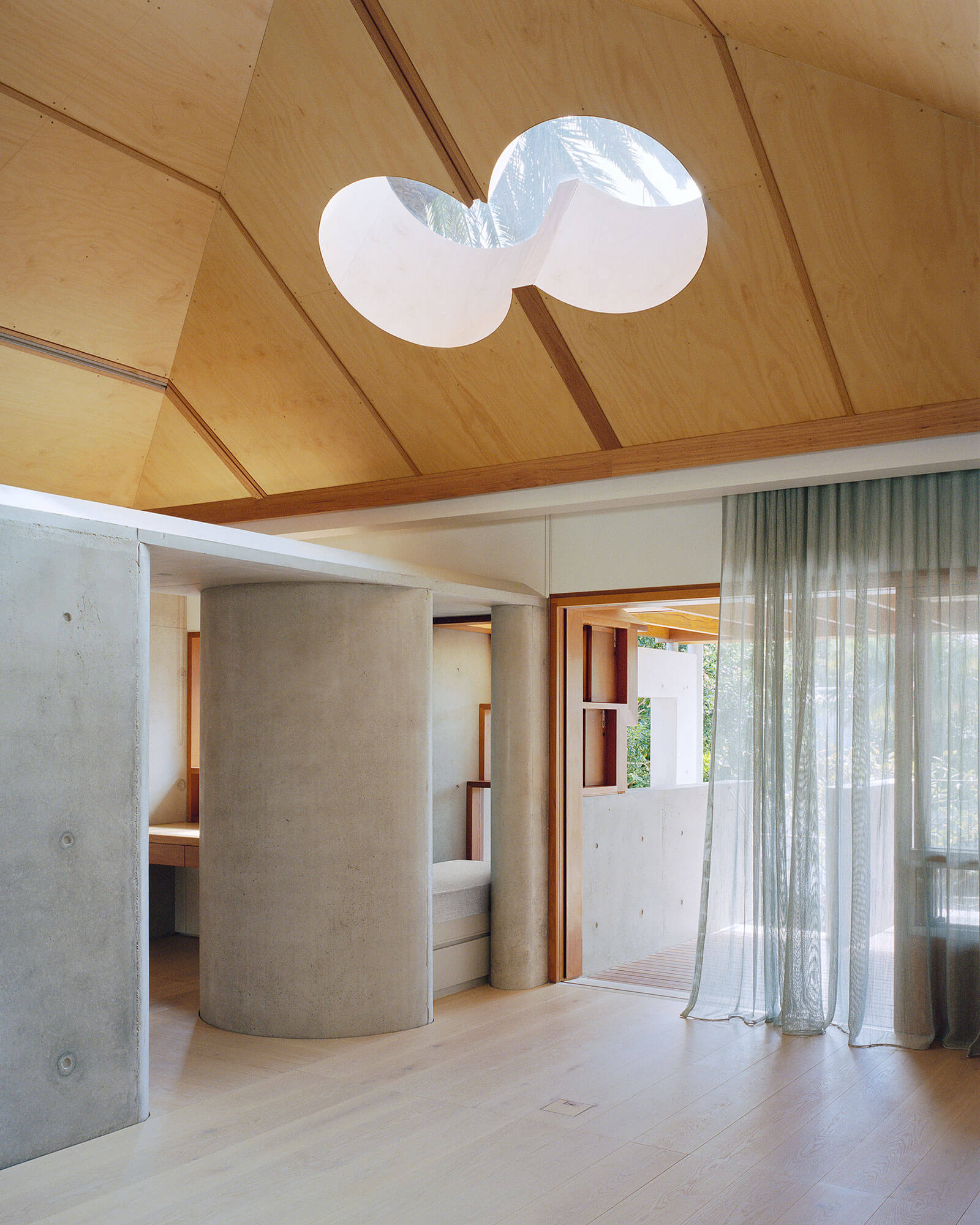
This is a reimagining of the traditional Watson’s Bay fisherman’s cottage. Responding to the heritage of the area, there is a recasting of a derelict fisherman’s cottage into a contemporary home of permanence
Whilst modest in size, the building provides all the needs to its inhabitants with a minimum of fuss, offering a sense of calm repose. Light, material, and form considerations guided the interior development, organized around a central off form concrete barrier. Initially presenting a wholly traditional facade from the street, the design subtly evolves into contemporary materials and forms along the sides, culminating in a contemporary at the rear.
From the interior a carefully considered sequence of spaces leads to an external landscaped patio from where the architecture of concrete, timber and steel characterise the building’s nature as an offering to those who will inhabit this work in the next few generations.
House in the City | James Allen Architect
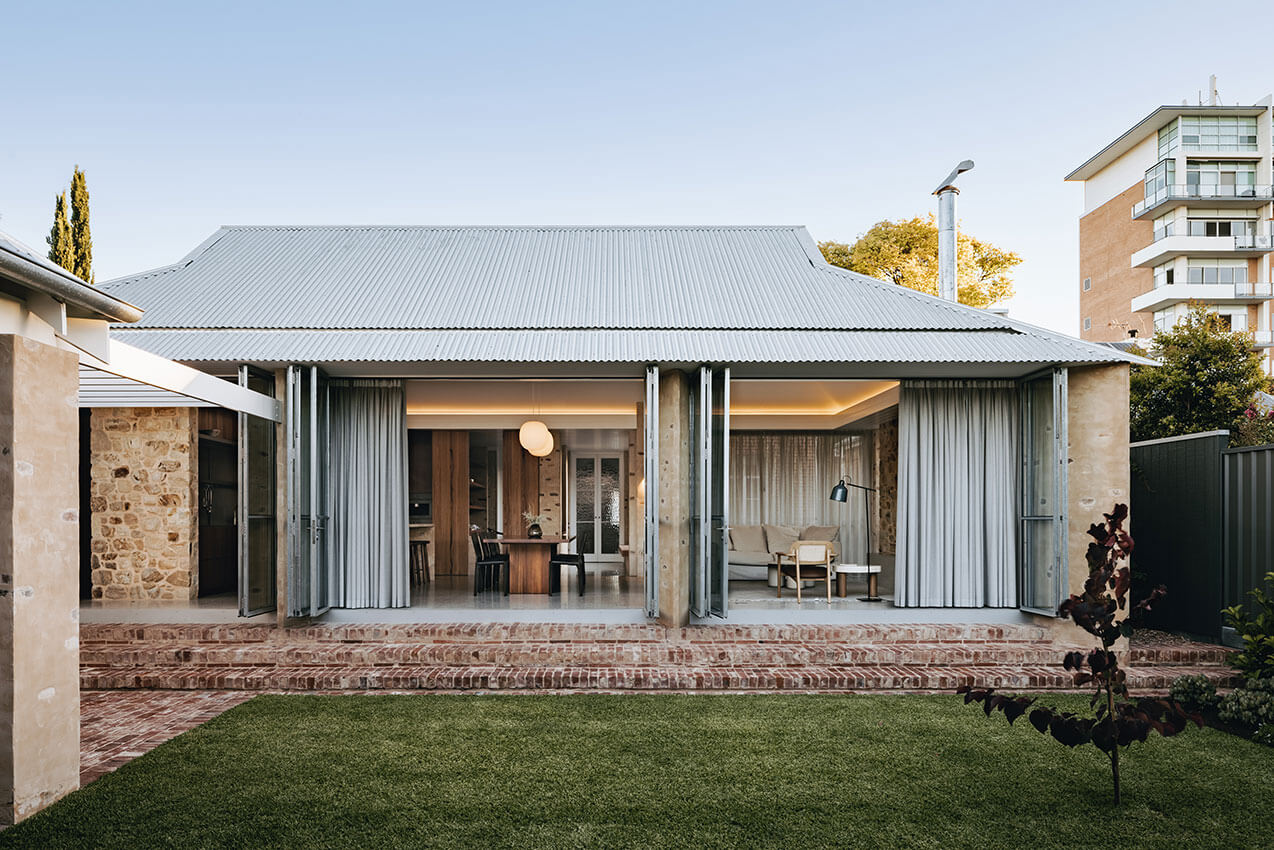
Designed for a retiring couple leaving the country, the House in the City is a reimagining of the archetypal Adelaide villa. The heritage zoned house was extremely run down, with a leaky roof, rising damp, subsiding footings, cracked walls, family of resident possums and overgrown garden.
The alterations and additions, designed by the couple’s architect son, was organised around a new internal courtyard, defining the old and new parts of the house.
A new pavilion accommodating the living areas across the back of the house is a modern interpretation of the villa with its Dutch-gable roof and masonry construction. There are spaces that both blur and bridge the inside with the outside as well as the new with the old.
The transformative project breathes new life into the dilapidated old house and is a balancing act between continuity and change.
Finlay Street | Christopher Clinton Architect

The Finlay Street project centres on a heritage-listed utility structure, once part of 34 Hampden Road. Alterations feature a new living area, removal of an unsympathetic fit-out, and landscaping with a north-facing green ‘warm’ roof. ‘Portals’ with integrated joinery enhance functionality and selectively frame views in existing west-facing openings. The northern addition maintains the original floor level, integrating a green roof intentionally kept low. A ‘lantern’ roof section, set apart as a distinctive glazed form independent of the main building, allows light penetration, ensures privacy, and establishes a visual link with the original house. Internal improvements expose and preserve the original brick structure, replacing laminate flooring with Tasmanian oak, and introducing detailed timber joinery. Achieving a harmonious blend of contemporary living, conservation, and historical sensitivity, this project reflects a successful collaboration among architect, client, and builder. The delicate balance between heritage preservation, functionality, sustainability, cost, and aesthetics defines its success.
Ember | MRTN Architects

Two studios with a unified language but serve contrasting purposes, to work and not to work. One exercise and meditation space, that can also be used as a guest room. The other, a work and inspiration space for a writer and art director. There was a clear decision not to build an addition to the existing home, but to keep its original form and create private spaces that physically detached but visually connected. The purpose and inhabitant of each building help to determine its form; that they be separate but with a connecting space between.
Bookend Addition | Studio Heim
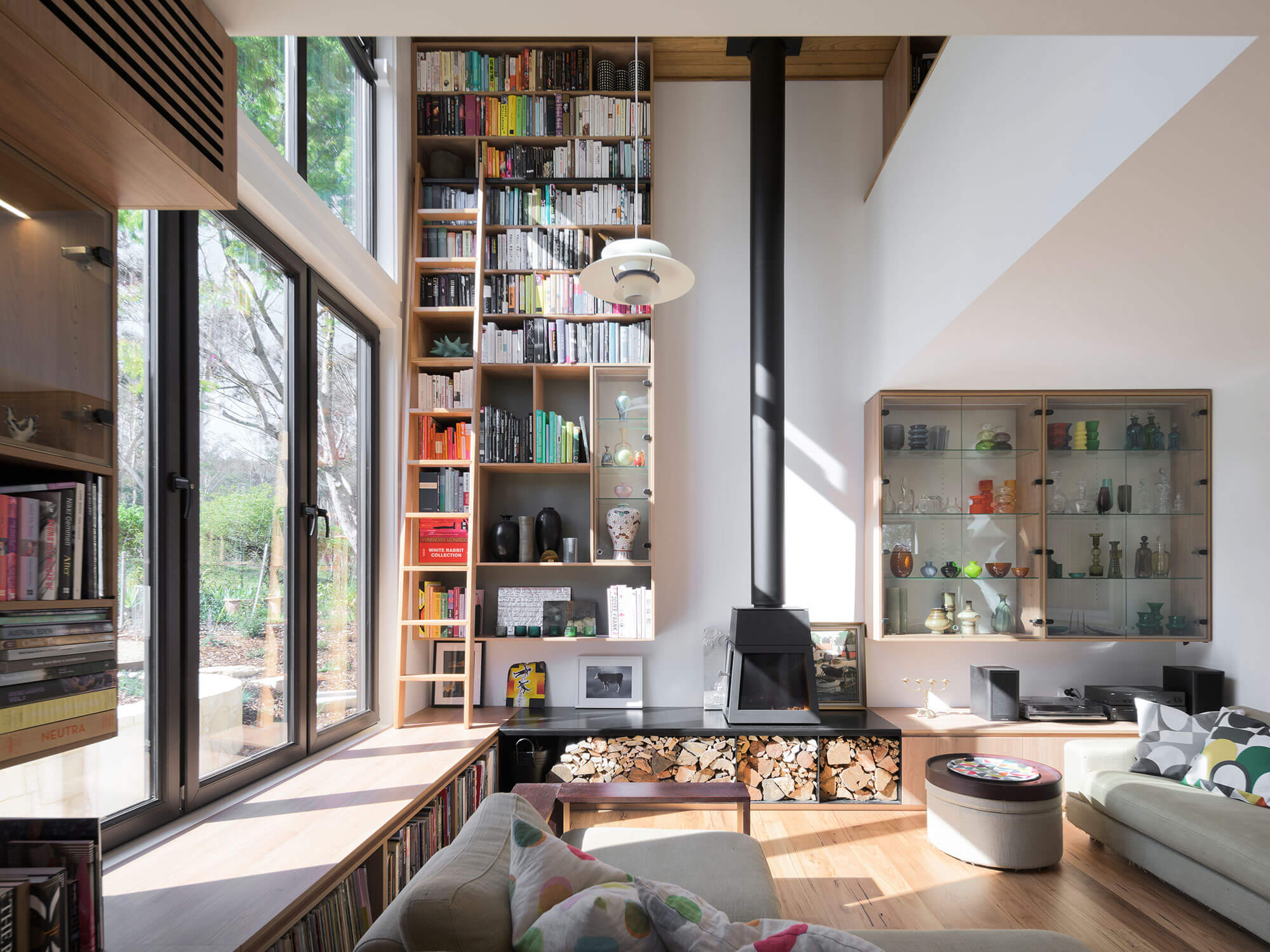
Bookending the front and rear of an existing midcentury Seidler inspired dwelling are two interventions that respect the original design. At the front, an undercroft area has been infilled to provide storage and a place for creative pursuits. At the rear, a contrasting two storey form holds new living and sleeping spaces.
Overcoming a challenging position on a wedgeshaped block, the new form is like a Tetris piece that hugs the existing dwelling whilst stepping to work with boundary setbacks. As a deliberate contrast to the existing dwellings cream brick, the new addition is clad in vertical Shou Sugi Ban, with a base of cream bricks, salvaged from a removed section of the rear façade, blending old and new together.
Bookend Addition is a light touch approach that enhances the dwellings liveability with a striking lightfilled form that makes the most of its unique position adjacent bushland.
Bob’s Bungalow | Blair Smith Architecture

This addition to a 1930 Californian bungalow in Strathmore, Melbourne, is a response to countless conversations with two romantics in semiretirement, accompanied by their rescue dogs, Archie, Buzz and at one time the projects namesake, the dearly departed Bob.
Project meetings typically involved sharing food, so this was conducive to extended, wide ranging discussions on subject other than architecture like; film, the veggie garden, collected artefacts, camping trips and the decades already lived within the house. These discussions and the idiosyncrasies of both individuals have now, somehow through osmosis, manifested into a space that evokes their personalities. As a space that compliments an authentically full life and decades of collected treasures, Bobs Bungalow is unashamedly pastichelike
a physical translation of an ongoing collaboration and friendship.
Blue Mountains House | Anthony Gill Architects
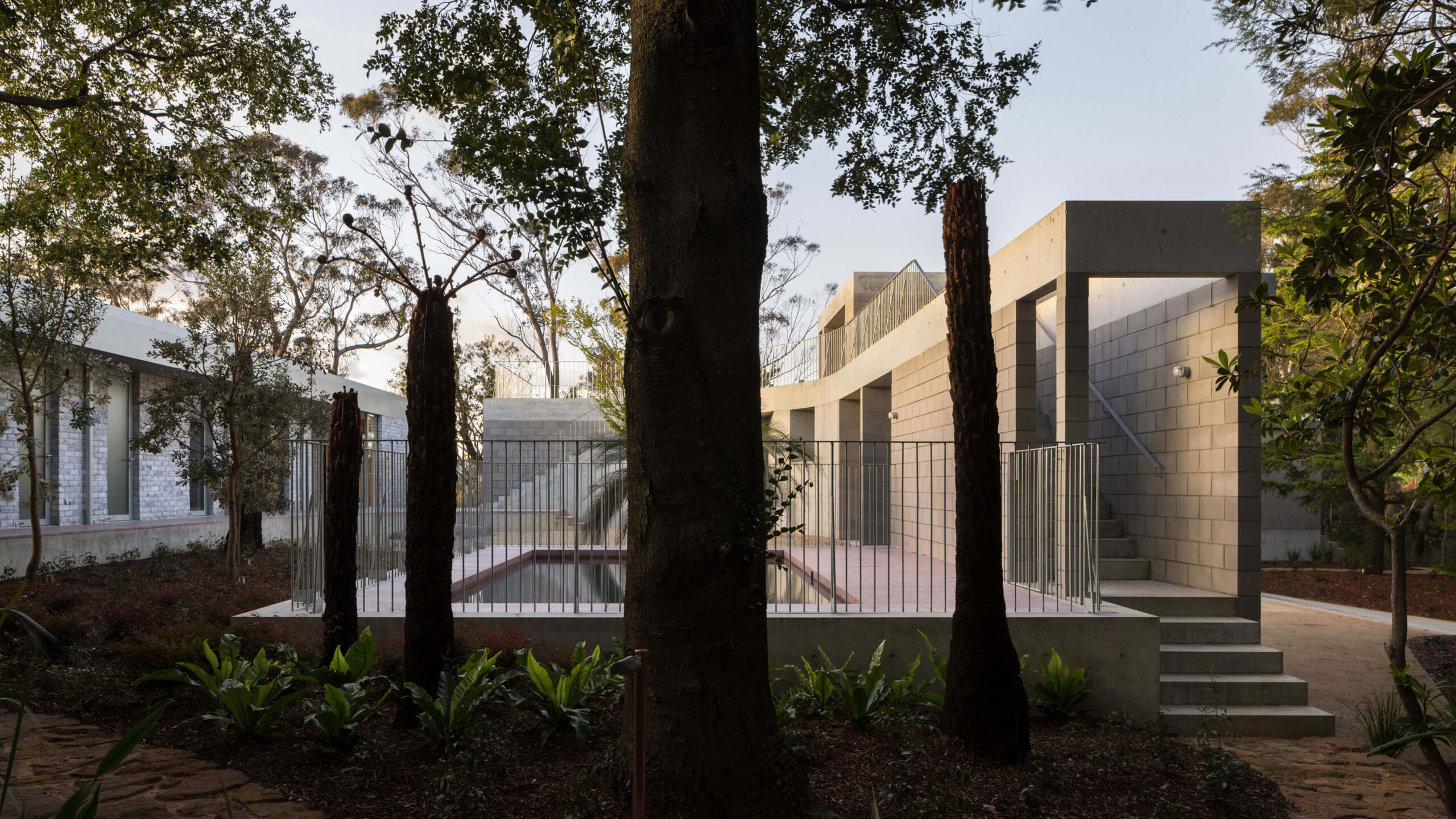
The project involved the substantial renovation of an existing 70’s kit home and the construction of a guest house adjacent.
The site is environmentally sensitive and classified as flame zone.
The existing house is modified to suit the client, becoming the family’s second home.
The guest house, excluded from the family’s regular use, is conceived as an extension of the site’s existing landscape. Acting as a large boulder or mass, it encourages the external traversing of the structure connecting its three separate external stairs with an original network of pathways on the site. This helps to absorb the building into the family’s realm.
This new structure enabled the site to be reorganised providing a buffer from the street and a new private, north facing entry courtyard that is the centre of the new home. It provides a place to gather, protected from the near constant southwesterly wind.
Black Box | Archaea

Black Box at Malvern is a sculpted contemporary container for the Hope family’s ever-changing art collection. An addition to a 1920’s bungalow, new built form has been defined in black steel and brick, distinctly contrasting the existing, white-painted brick and render. Never seeking to blend or compete, the black contrasts in both form and colour.
An existing Willow Myrtle, its gnarled, knobbly trunk and contrasting feathery foliage was retained and helped inform a design response that saw the eventual floorplate hold tight to the existing, extending laterally across the site rather than stretching towards the rear, savouring the tree.
The addition stands bold in black, with a sense of formality through its form coupled with a softness emerging from the contrasting palettes internally. The result is a home reminding the Hope family that beyond a canvas for artwork, the space is also, and more importantly, a canvas for family life.