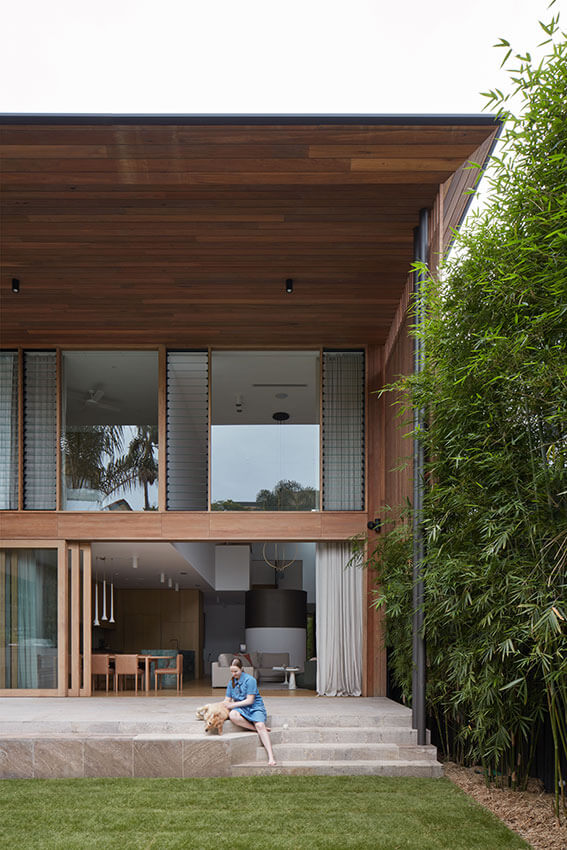
Arcadia | Plus Minus Design
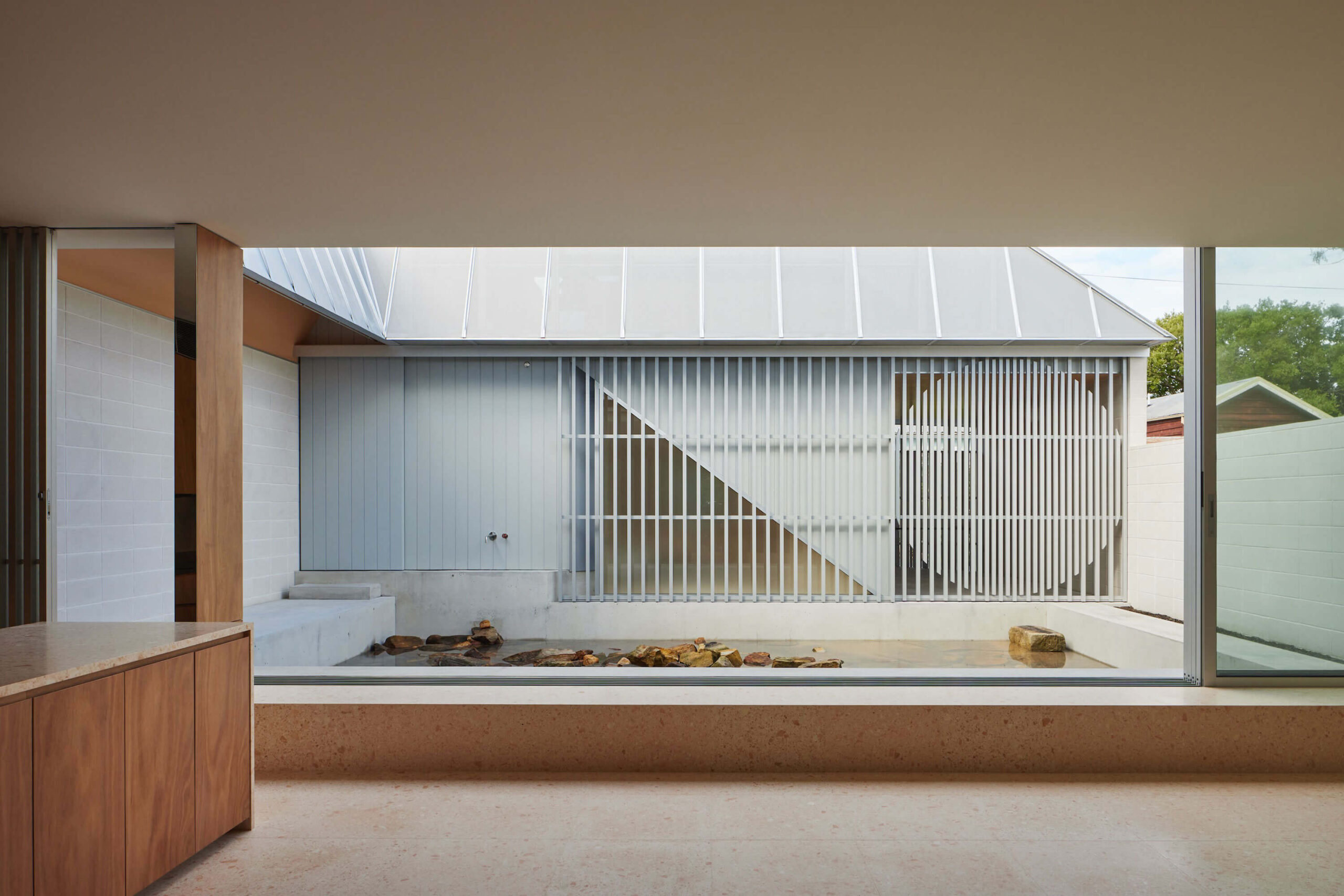
With no interest in architecture, our clients intended to commission a project home builder. Fortunately, their son convinced them otherwise.
The approach balanced heritage and reality, with original features restored when possible and no Pinterest driven gimmickry.
Skylight shafts were placed between original plaster details. An extension and new laneway structure provide parking and new accommodation.
A new roof sits behind the existing tiled roof and houses a new attic with perforated screens for shade, privacy and security.
An unexpected gift was the discovery of sandstone bedrock which was flooded to create a calming pond.
Ground level includes comfortable/accessible accommodation while additional multi function bedrooms accommodate frequent family visits.
The design also accommodates a lifetime’s accumulation of bric-a-brac and the home is now truly lived in.
From the overall scheme to the finest detail, our team has successfully negotiated 100 year old materials with contemporary amenity to see Arcadia into its next chapter.
Aru House | Curious Practice
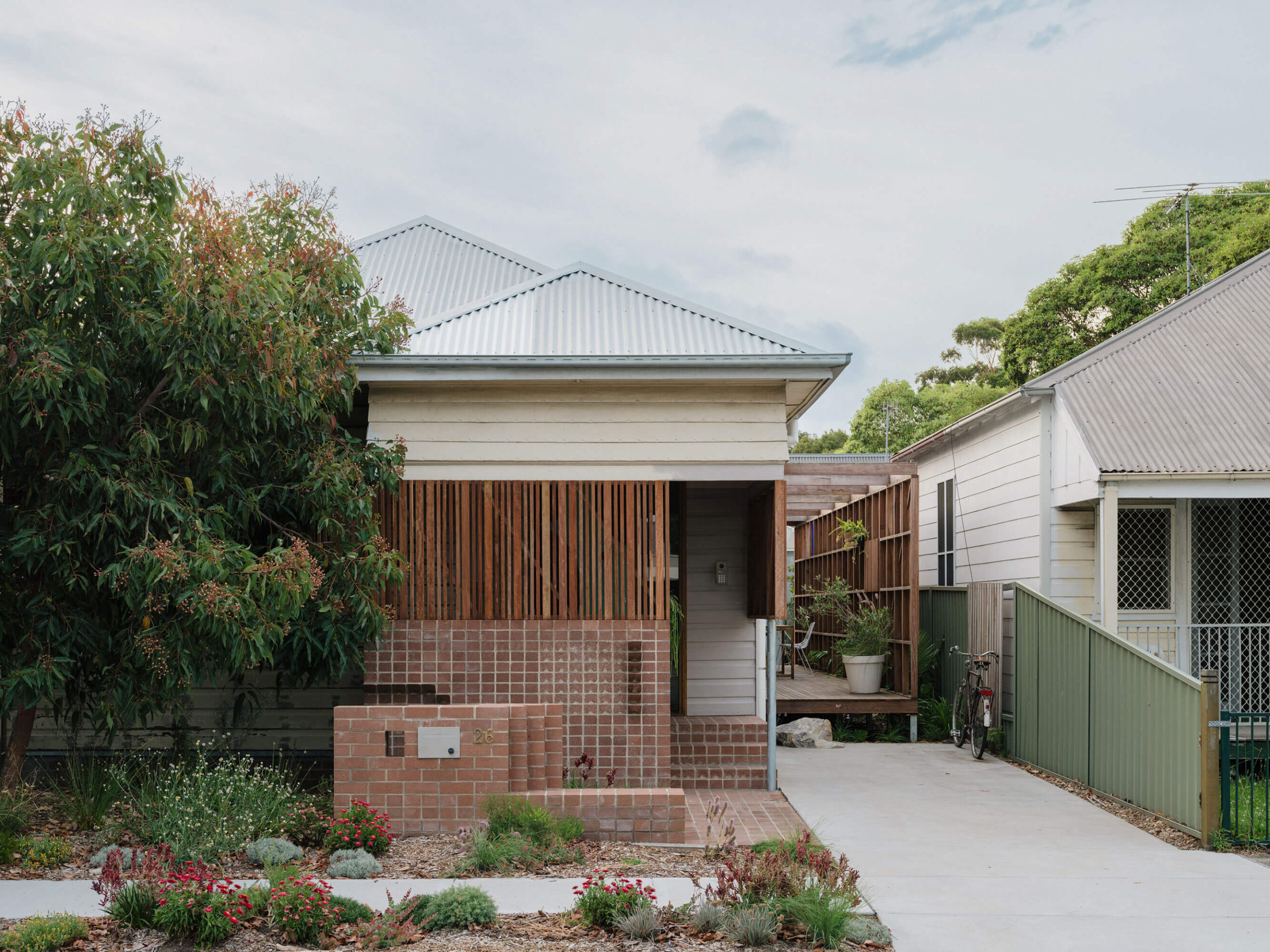
Weatherboard cottages built in the first half of the twentieth century were often generous at the front and restricted at the rear, with their relationship to prevailing breezes, appropriate orientation and gardens being a low priority. Aru House (Awabakal word for insect) plugs in a series of carefully balanced sensory amplifiers and connectors to just such a cottage in order for a long ignored sense of place to reemerge.
These sympathetic augmentations to the existing dwelling allow the building to become responsive to seasonal living patterns with a newfound sense of contextual sensitivity. All the new, and old, programs of the house overlap and borrow from each other, becoming more flexible and generous, enabling efficient planning and an ability to focus on quality over quantity. As a result, the value of the project is measured in joy and delight through the way materials are crafted, light is choreographed, and edges are blurred.
…number 50 | Black Rabbit Architecture + Interiors

…number 50 preserves the original family home’s historical charm while integrating modern amenities – guided by principles of heritage respect and contemporary living. It contributes positively to the neighbourhood’s architectural integrity and cultural heritage while enhancing functionality. Careful consideration is given to scale, materials, and context to complement the area’s historic fabric. Meticulously planned addition improves living spaces while retaining much of the original structure. Collaborative efforts ensure a cohesive outcome, seamlessly integrating structural, landscape, and interior elements. The project’s cost-value outcome reflects prudent decision-making, maximising investment value while respecting budget constraints. Sustainable features and tailored solutions enrich the family’s quality of life, ensuring usability and enjoyment for years to come.
461 Riley St | Lippmann Partnership

This conversion of a dilapidated terrace house for contemporary use provides coshare spaces for a variety of domestic living arrangements. The main terrace house provides living spaces at ground level, which flow out into a private sunny courtyard. Above, five bedrooms and a study are complimented by shared bathrooms and laundry. A separate studio above the garage at the rear offers another private bedroom or, alternatively a study or home office.
Most of the existing exterior fabric is retained with new interventions clearly articulated, whilst being contributory and sympathetic, with the original. The intrusion of natural light, the addition of the new studio box at the rear and the use of recycled building materials and sustainability strategies make the project suitable for contemporary life.
Kemp Street | SDA
This design aimed to seamlessly integrate the existing dwelling with a modern extension, striking a harmonious balance and well-organised home. The central concept revolved around a tree planted by the original homeowner, serving as both a visual and functional focal point. The client’s expertise as a landscape architect is evident in the careful planning of the outdoor spaces, ensuring privacy while maintaining a visual link to the pool and surrounding environment. The courtyard bridges the old and the new, preserving the heritage value of the original building while enhancing the contemporary addition. Overall, this project is an excellent example of how thoughtful design, a committed client and dedicated builder can collaborate to create an amazing and functional home.
Aru House | Curious Practice
Weatherboard cottages built in the first half of the twentieth century were often generous at the front and restricted at the rear, with their relationship to prevailing breezes, appropriate orientation and gardens being a low priority. Aru House (Awabakal word for “insect”) plugs-in a series of carefully balanced sensory amplifiers and connectors to just such a cottage in order for a long-ignored sense of place to re-emerge.
These sympathetic augmentations to the existing dwelling allow the building to become responsive to seasonal living patterns with a newfound sense of contextual sensitivity. All the new, and old, programs of the house overlap and borrow from each other, becoming more flexible and generous, enabling efficient planning and an ability to focus on quality over quantity. As a result, the value of the project is measured in joy and delight through the way materials are crafted, light is choreographed and edges are blurred.
Killcare House | Southmarc Architecture
The only sustainable solution is to renovate.
The original house was constructed 50 years ago on the edge of the Bouddi National Park.
Now it is wrapped with insulation, powered by 10KW of Solar panels (car, cooking, heating and cooling), is doubled glazed and protected from bushfires.
All new work is made from concrete.
Sustainable engineered timber is throughout the interior : on floors, benches, hook rails and dining table. All custom designed to suit the space.
The architectural expression is playful. Internally two red steel portal frames mark the threshold of the Bushfire Flame Zone.
Light penetrates deeply with the use of Danpalon translucent polycarbonate. It surrounds the ensuite and forms the balustrade.
The new native filled garden attracts biodiverse native species: wallabies, a goanna, turkeys and native birds.
This was an old house, that has evolved to become electric. Conservation is no longer optional – it is essential.
Karen’s Place | Studio Dot
‘Karen’s Place’ is a project born from the client’s desire to leave a legacy for her children. In its more recent years, the circa 1885-1886 terrace endured an earthquake, a rebuild and the raising of two young boys. With her sons now adults, the client sought to remove the existing rear two-storey wing which, due to a poorly executed reconstruction after the 1989 earthquake, was damp, dark, mouldy and in need of light and ventilation. The new addition constructed on the same footprint reused 10,000 salvaged bricks (from demolition) and afforded the client a new kitchen, dining space, bedroom and bathroom/laundry. An additional outdoor bathroom and storage space services sandy family and friends returning from the beach. A strong connection to garden spaces has been established and thermal mass, highly insulated building envelope and double-glazed timber windows create a comfortable and healthy space for the client to enjoy.
Lorn House | SDA
With a minimal brief calling for three bedrooms, a spacious laundry and an open plan kitchen and main living area for easy entertaining, our design sought to enhance the original charm and character of the property whilst integrating a modern feel. The situation of the home within a Heritage Conservation Area required careful consideration to ensure a seamless fit with the surrounding street context while allowing for a contemporary addition to the rear of the property.
The guiding principles of the renovation focused on allowing the original building to flourish while seamlessly connecting it with the new extension. Rather than blending the two sections together, we aimed for a contrast, utilising design elements that referenced each other. A clear break between the two areas maintains their distinct identities, creating a seamless fusion of heritage charm and contemporary design.
Griffith Street House | Nicole Milne