
Hidden Garden House | Sam Crawford Architects

Our client’s brief for Hidden Garden House was rejuvenation of the existing house, an update to provide light and warm spaces, passively heated and cooled. They wanted quality over quantity, improved functionality, and low maintenance.
The original house required radical surgery. The ground floor was damp, dark, and cold, and upper floor hot and leaky.
Part of our response was to demolish the roof to the existing rear pavilion and create a hidden roof garden above a clerestory ceiling and high glass wall.
The clerestory rises above the floor level of the main bedroom which opens onto a new deck. Strategically placed screens provide the main bedroom and ensuite with private views of the garden and sky.
On the floor below, the curved ceiling and full height glazing in the kitchen / dining room draws the eye out and up to the landscaped rear yard and sky beyond.
Highlands House | Luke Moloney Architecture

Highlands House was designed as a home for lovers of art.
Embracing views across the grey green immensity of the Australian landscape, the house serves as a retreat for busy people, a gracious family home, and an exemplar of off grid living.
Three barnlike pavilions are linked by a gently bending gallery space. Domestic spaces face outwards toward the landscape.
Long ribbon windows tie the interiors to the horizon space is at once contained and limitless.
Hill House | Breakspear Architects
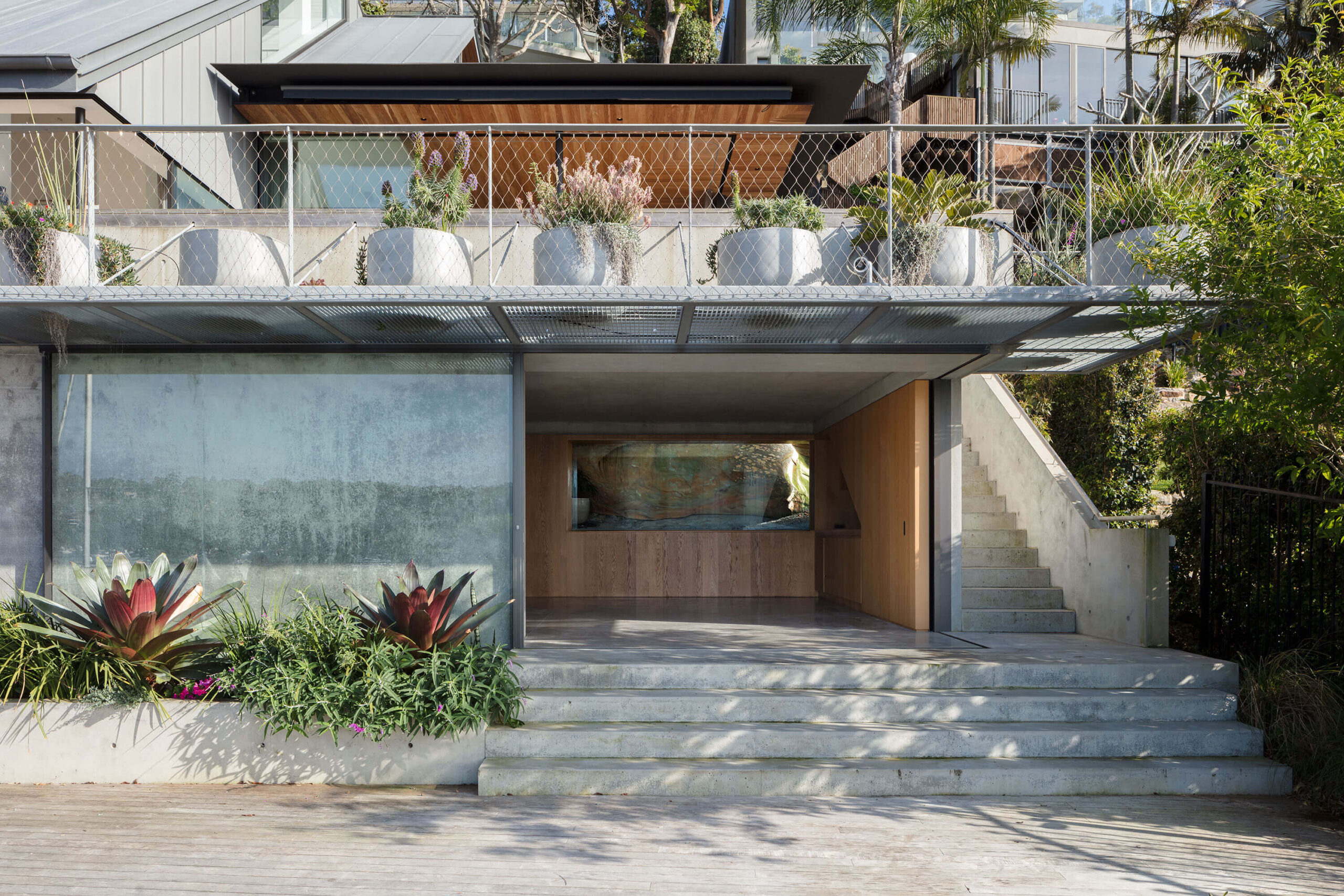
Hill House gracefully rests upon the Seaforth escarpment, offering a panoramic prospect of the harbour towards Spit Bridge. The house was built in 1980 by the current owners and has catered to the needs of a growing family living by the sea. More recently, with their kids grown-up, the owners found themselves living alone in the house whilst enjoying frequent visits from their adult children and grandchildren. The renovation of Hill House aimed to seamlessly blend its role as a cosy abode for two and a gathering space for the extended family.
The approach focused on preservation, whereby the existing house was largely maintained, and yet transformed with seamlessly integrated new outdoor spaces that connect with the landscape. Inspired by the Sydney School character and ecological principles of the original home, the renovations make the home whole with surrounds, inviting the interior to meld with the garden, topography and harbour setting.
Hilltops Young High School Library | Hayball
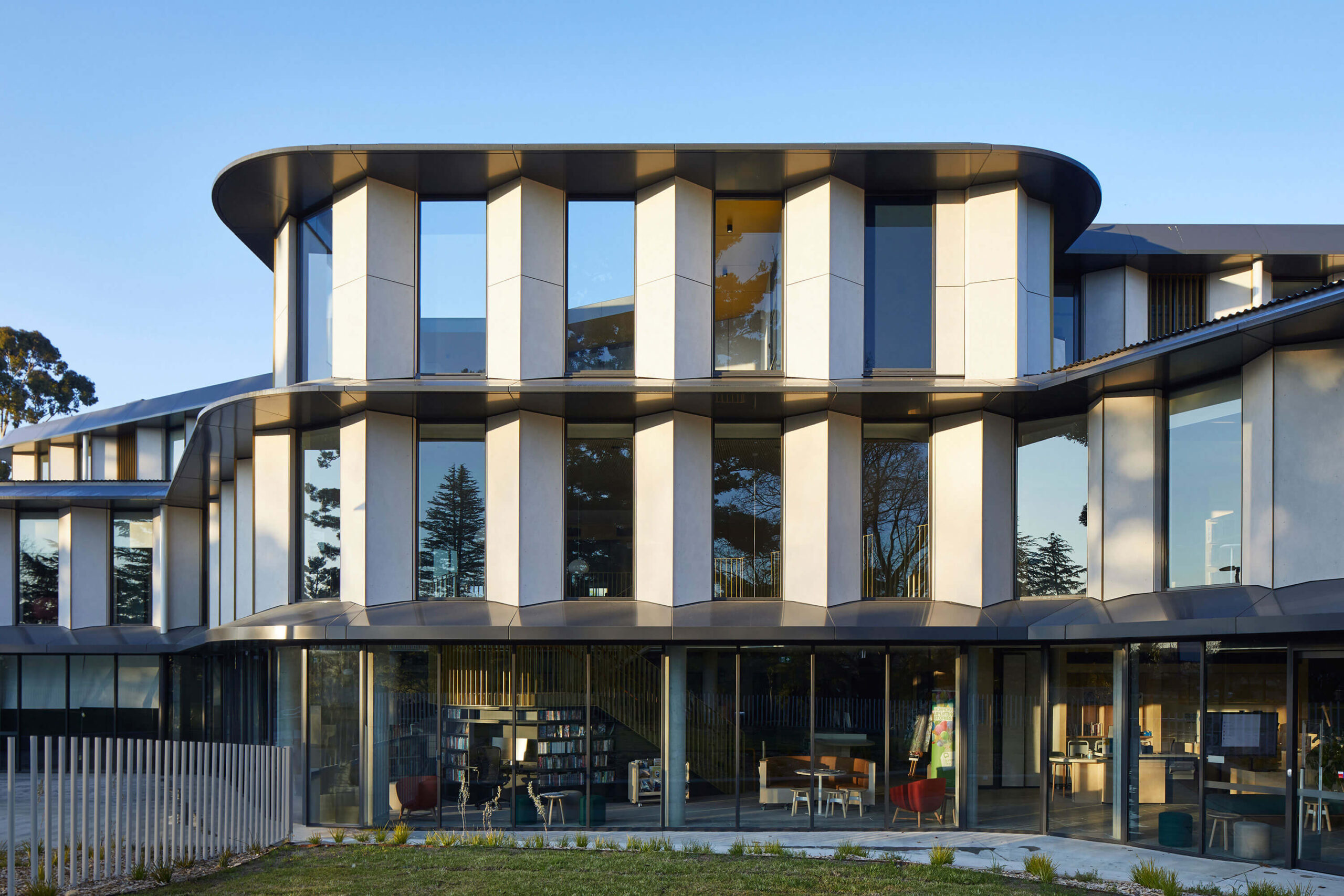
Connecting deeply to Wiradjuri Country and the project’s historic setting, the Hilltops Young High School Library is an integrated joint use facility enabling whole of life learning for the community of Hilltops.
The development incorporates this new integrated school and community library as the core element of a Cultural, Community and Education Precinct, evolving the definition of what a contemporary rural library can be. Through an urbanist approach, the design supports opportunities for community gatherings and activates the site as a civic precinct. It will also interpret the rich context of the site by responding to its Aboriginal and European heritage. Diverse facilities include a vast collection of library books, Wiradjuri learning centre and extensive community facilities such as an art gallery, wellbeing consulting, tertiary study centre, presentation space and meeting rooms, creative arts, multimedia and maker spaces and a café.
GardenHaus | Linden Thorley Architects

With glimpses of the ocean from the existing front deck, a first-floor addition afforded a vista down the street towards the ocean and connection to the sky. The result is a modern, light filled, energy efficient residence suitable for a young family with an open beach house feel. The new addition seamlessly fits into its surroundings as a contemporary interpretation of the pitched gable roof forms of the street.
Key components of the client brief were strong sustainability ambitions centred around modest scale, a bigger garden, enjoyment of the coastal location and energy efficiency. The building is designed to the Passivhaus EnerPHIT standard for retrofit projects, ensuring 90% less energy consumption to achieve year-round ideal thermal comfort and excellent air quality.
Goodhope | Those Architects
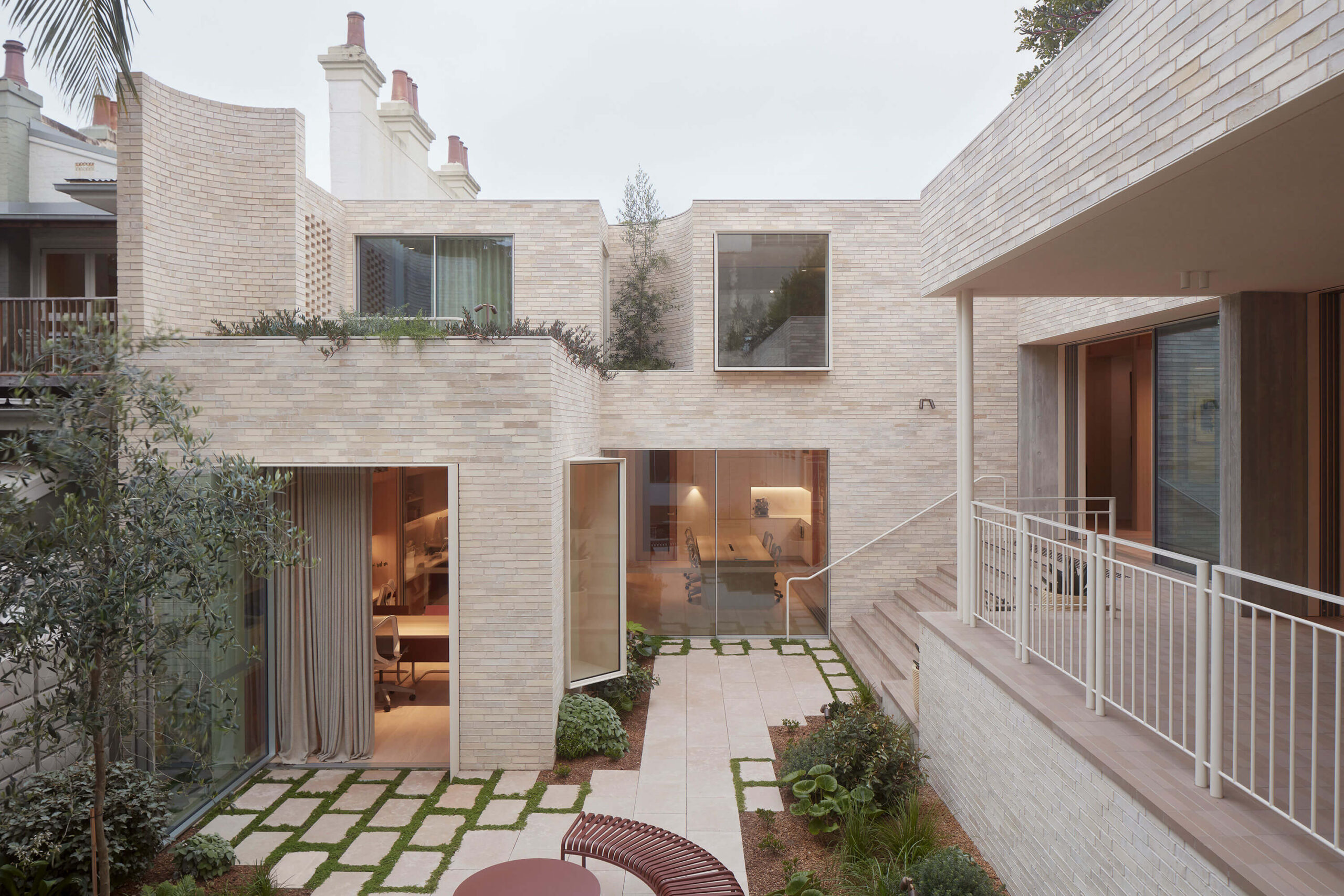
Goodhope reinvents a set of commercial buildings in Sydney’s Paddington, consolidating a family legacy, with two distinct spaces operating seamlessly in partnership. Housing the new office for See Saw Films, the building celebrates the artistic link between architecture and film. Seeking to mimic the rich, desaturated qualities of See Saw films, there is a cinematic quality to the resulting built form.
A consideration of human scale led to the selection of handmade bricks which act as a unifying ribbon that weaves its way through the building, anchoring the user in space. While the buildings function discretely and look unrelated from the street, inside the distinction dissolves. They share a spatial logic, a tight material language of off form concrete, Victorian ash timber work and a white brick skin the playful unifying element weaving its way from outside to in.
Goodhope is a testament to the interconnected craft of film and architecture.
Govetts Leap Bach | Anderson Architecture
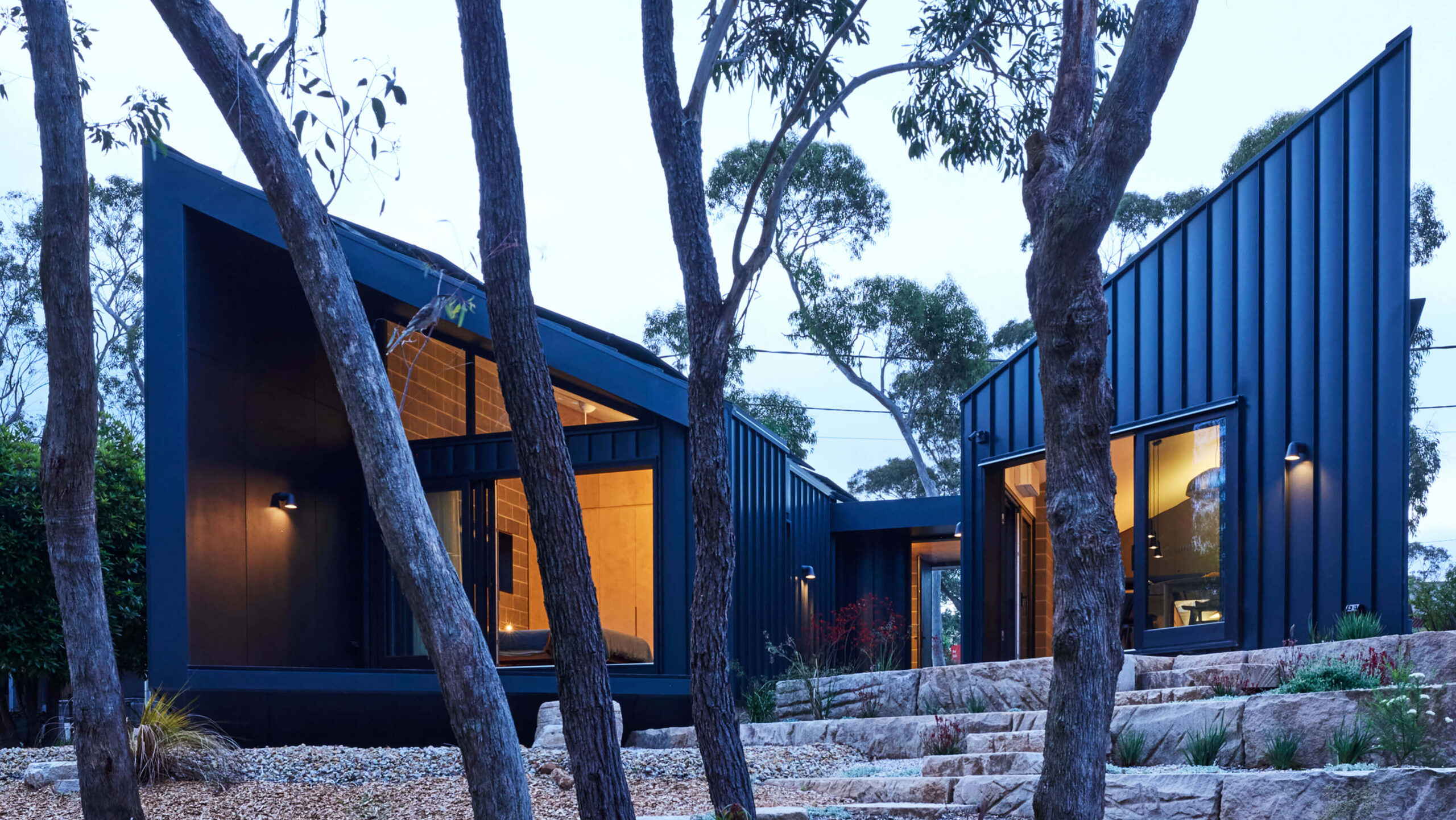
Govetts Leap Bach is representative of the synthesis of sustainable principles and technologies, and striking architectural character, informed not only by an awareness of the environmental sustainability and performance of the building fabric, but of the necessity for the spaces within to perform and endure over time. It demonstrates that passive design principles such as solar passive design remain valuable strategies alongside those more technocentric.
A single residential dwelling located in the Blue Mountains of NSW, Govetts Leap Bach has been designed with passive and Passivhaus principles front of mind. At 81sqm floor space, it is a compact home that responds to the duality of its context its situation on a residential block and its bushland setting. The overall design and materiality of the home speak to this duality, addressing its BAL 40 and BALFZ requirements and the wide range of climatic conditions experienced in the Mountains, whilst balancing amenity with privacy.
GRACES PLACE | IDA Design Group
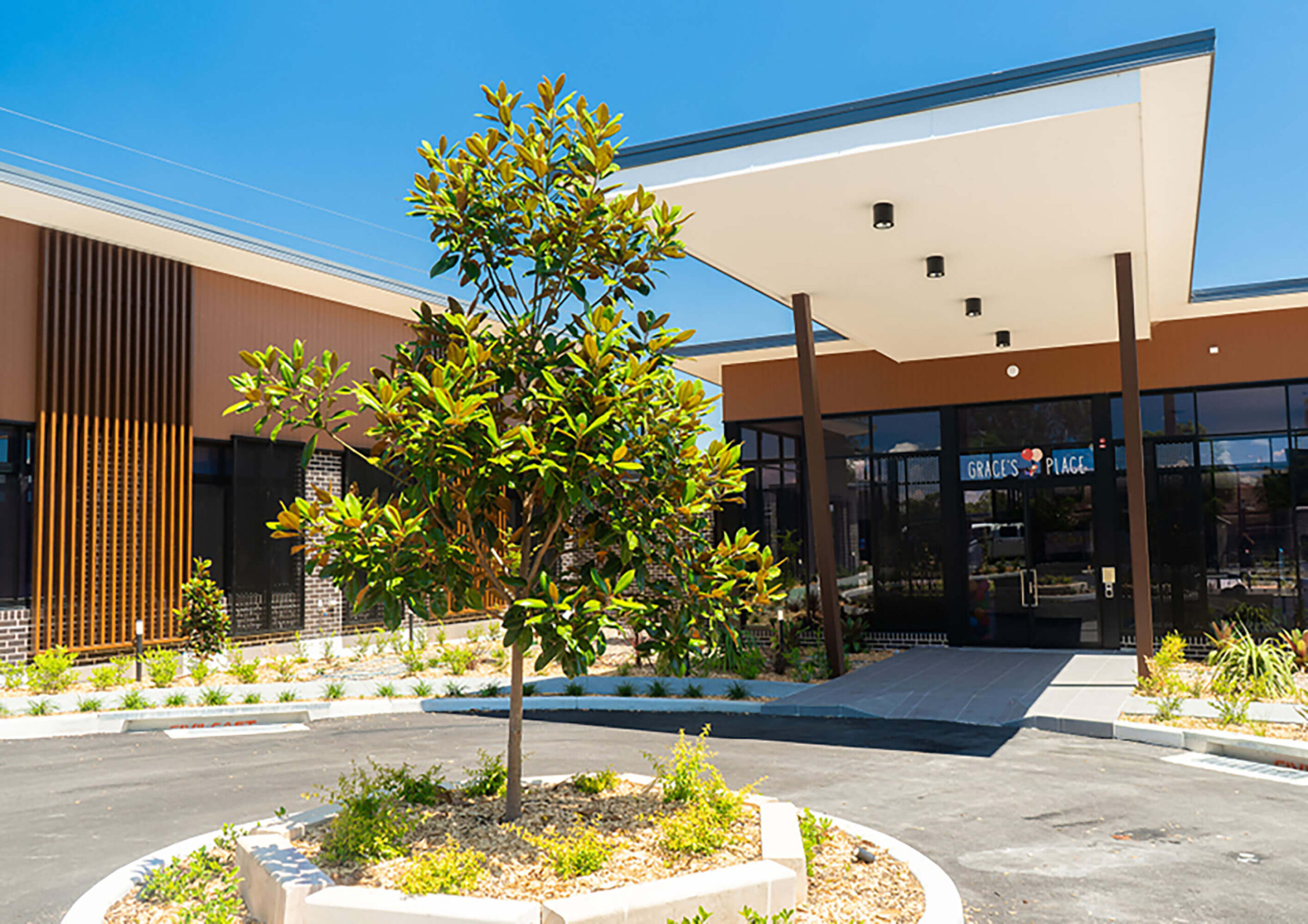
Grace’s Place stands as a pioneering residential trauma recovery centre, dedicated to healing children affected by homicide. This unique facility, named in honour of Grace Lynch, offers counselling, rehabilitation, and life skills education. The design prioritises a calming environment with open spaces, a central courtyard for reflection, and flexible areas for various therapeutic activities. Collaborating extensively with landscape architects ensures cohesion and multiple play zones.
Funded by the federal and state governments, with a 100-year land lease from Western Sydney Parklands for a symbolic $1, Grace’s Place is a testament to community support. Sustainable features, including extensive solar panels and water sensitive urban design, align with a commitment to environmental responsibility. This media summary encapsulates Grace’s Place as a symbol of hope, resilience, and compassionate architecture, uniquely addressing the needs of young victims in the community
Gully House | Andrew Burges Architects

Gully House is conceived as an extension of the gully, proposing continuous, connected views through the length of the site. This guiding principle led to a differentiation of façade response for the east/west and north/south elevations. The transparency of the north/south façade visually connects the northern front courtyard to the landscape spaces of the lower gully to the south, creating a continuous, unified experience of the sloping site.
The east/west facades act as a filter, mediating privacy, ventilation, and glare while providing a place for layered planting. In response to the steep fall across the site, the house was organised by a split-level cross section determined by studies of sun angles and site lines desired within the site and to the gully beyond.
Ewen Park Outdoor Learning Centre | Sam Crawford Architects
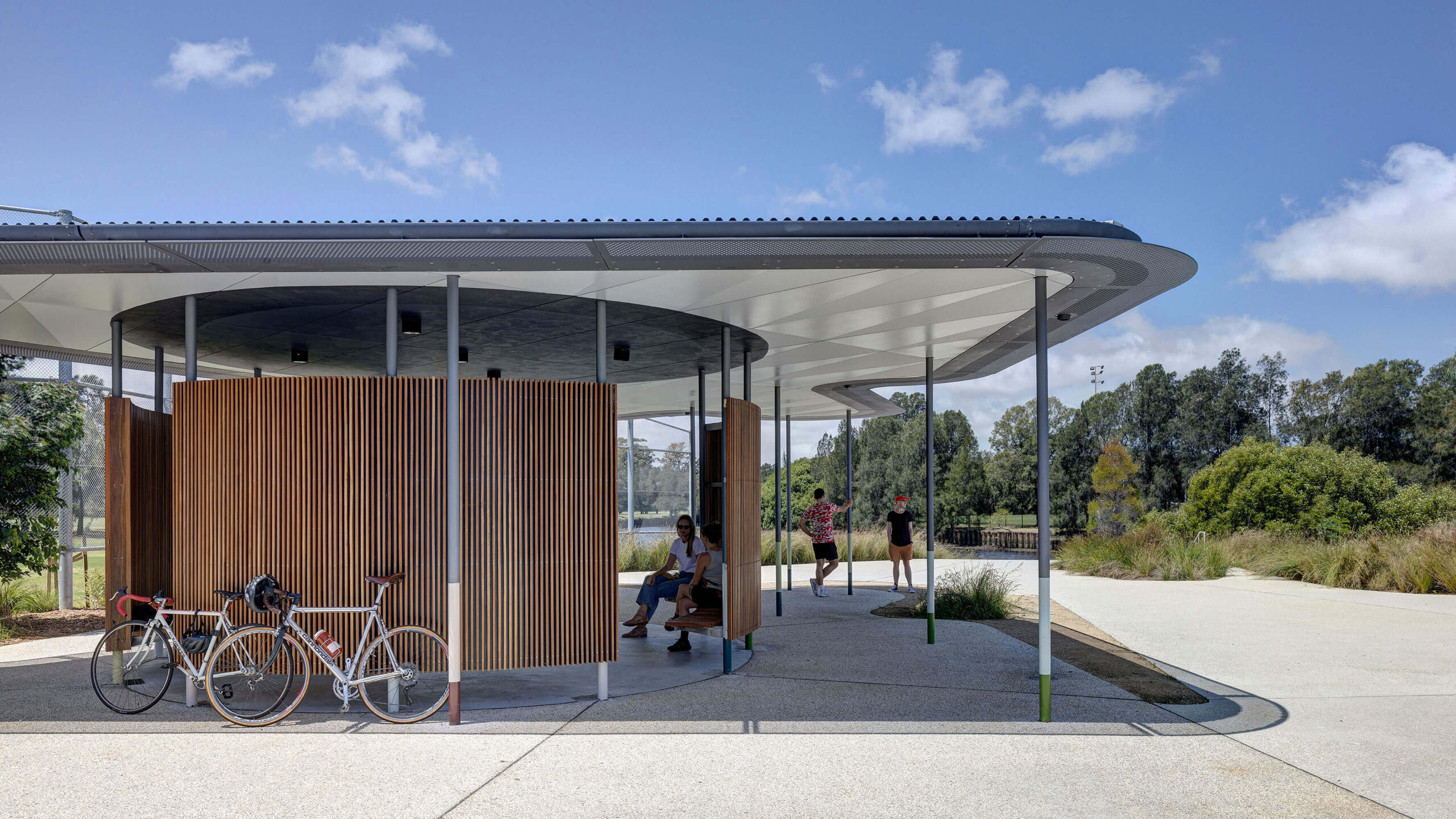
The Ewen Park Outdoor Learning Centre delivers a vibrant place for meeting, promotion of place, and environmental awareness.
Canterbury Bankstown Council’s brief required a simple yet dynamic shelter to provide the community of Hurlstone Park with a flexible use outdoor learning centre.
Referenced in the design is an appreciation of the history, hydrology, and ecology of the site; from strategic site planning initiatives through to the design details. Country centred design principles underpin the project.
The Outdoor Learning Centre is expressed as a pavilion with expansive roof that provides shelter to the central gathering space, as well as providing peripheral shade.
The playful edges of both the shelter and landscape afford flexibility in use, breadth of scope for inclusion of public art, and carefully integrate with adjacent developments in a manner that affords equitable use of the site and surrounds, with framed views and vistas of the Cooks River and park beyond.