
Family home in St Ives | Common Office
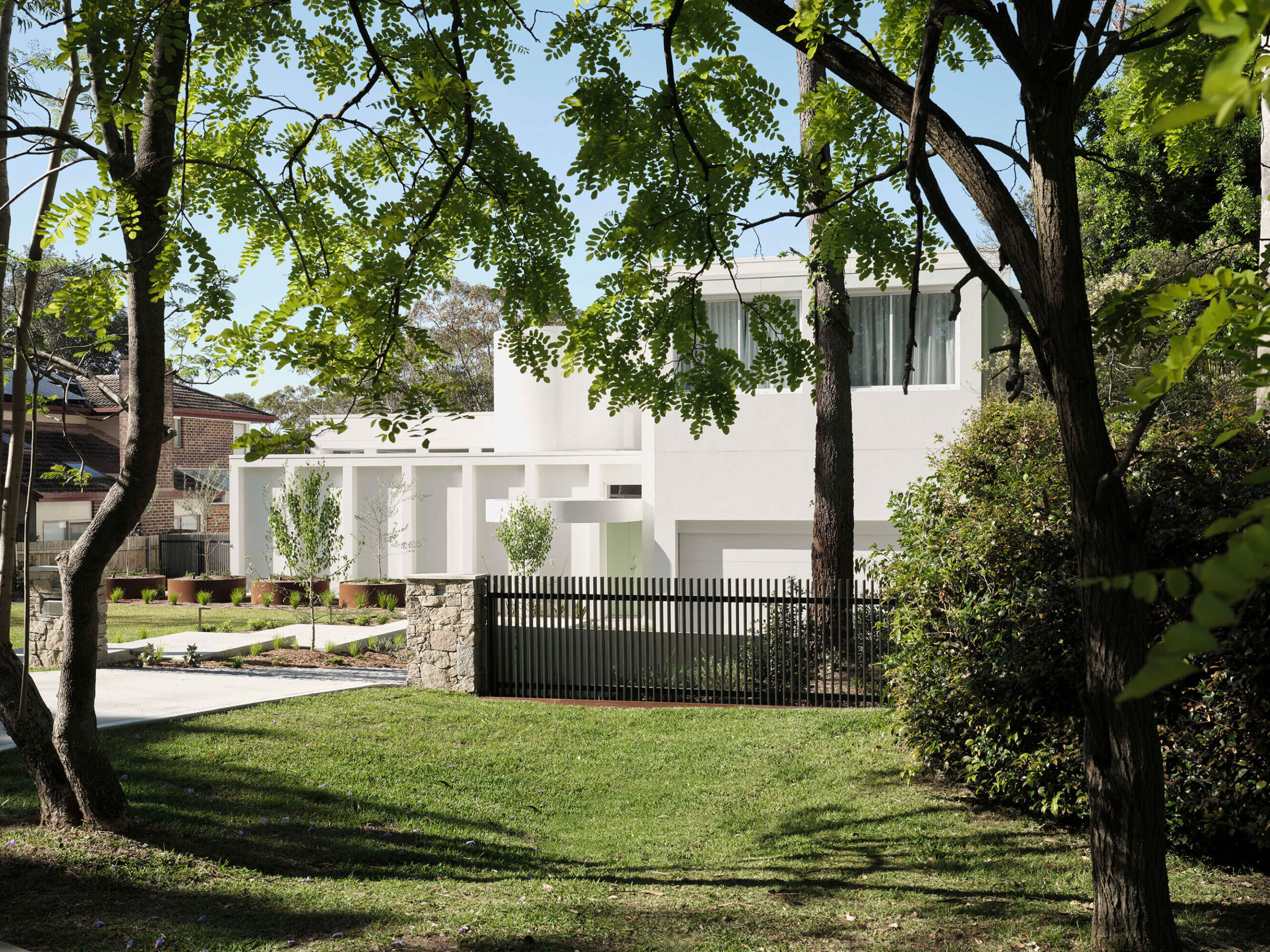
In St. Ives we situated a home for a family who place enormous value on time together. The architecture is open and embracing to the rear where the site extends towards the natural landscape of the national park. To the street the building is a composition of cues from a more civic architecture. The project assembles the ideas and references of two directors educated in the UK, Europe and the USA and deploys them to address a quintessentially Australian design question of the private residence in a beautiful Sydney suburb.
Fish River House | Incidental Architecture

Fish River House is on Gundungurra land, on a fertile strip of granite country adjacent to the Fish River; a capillary river flowing from the Blue Mountains.
The clients are second generation custodians of the site, with the intention to support the continuity of the gathering of four (living) generations of family.
Being near Oberon, the site is characterised by hot dry days in summer, and regular snow in winter. The house is required to provide a reasonable level of comfort, whilst balancing passive and active systems. orientation and solar access is deeply considered.
Spatially and emotionally, there is an intentional dialogue between prospect and refuge. View and protection are equally important.
One of the most satisfying aspects of this project is the way it helped encourage capacity within the local building community. The builder, certifier and most consultants were drawn locally from Oberon.
Forster Civic Precinct – Solaris | TVS Architects
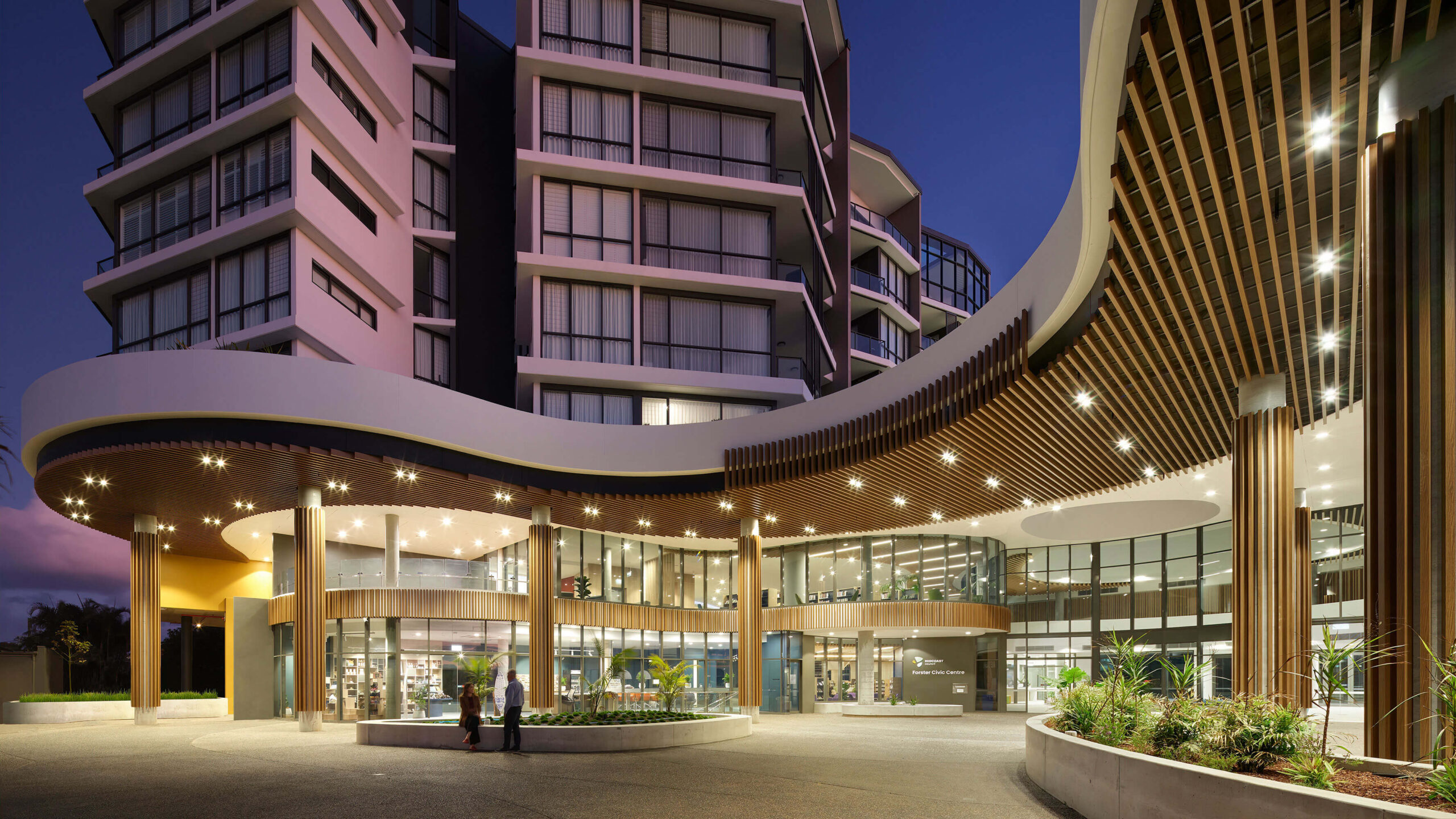
Solaris is a large mixed-use development that was initiated to facilitate moving the Council’s community facilities from a suburban site to this central beachside location. This first stage of the development comprises a residential apartment tower with 56 units, a restaurant and commercial space, and the Forster Civic Centre comprising a Library, Community Lounge, Visitor Information Centre and Customer Service Point for MidCoast Council.
The philosophy behind the master planned community precinct was to provide the community with a wide variety of amenities in an architectural context which facilitates adaptability and future flexibility for an evolving population. The diverse mix of uses futureproofs Solaris to better cater for the changing needs of an evolving population. The amenity enriches the public experience, creating a new social precinct to engage with the local community through its built form and presence near the lake and beachside commercial precincts.
Foveaux Street | Candalepas Associates
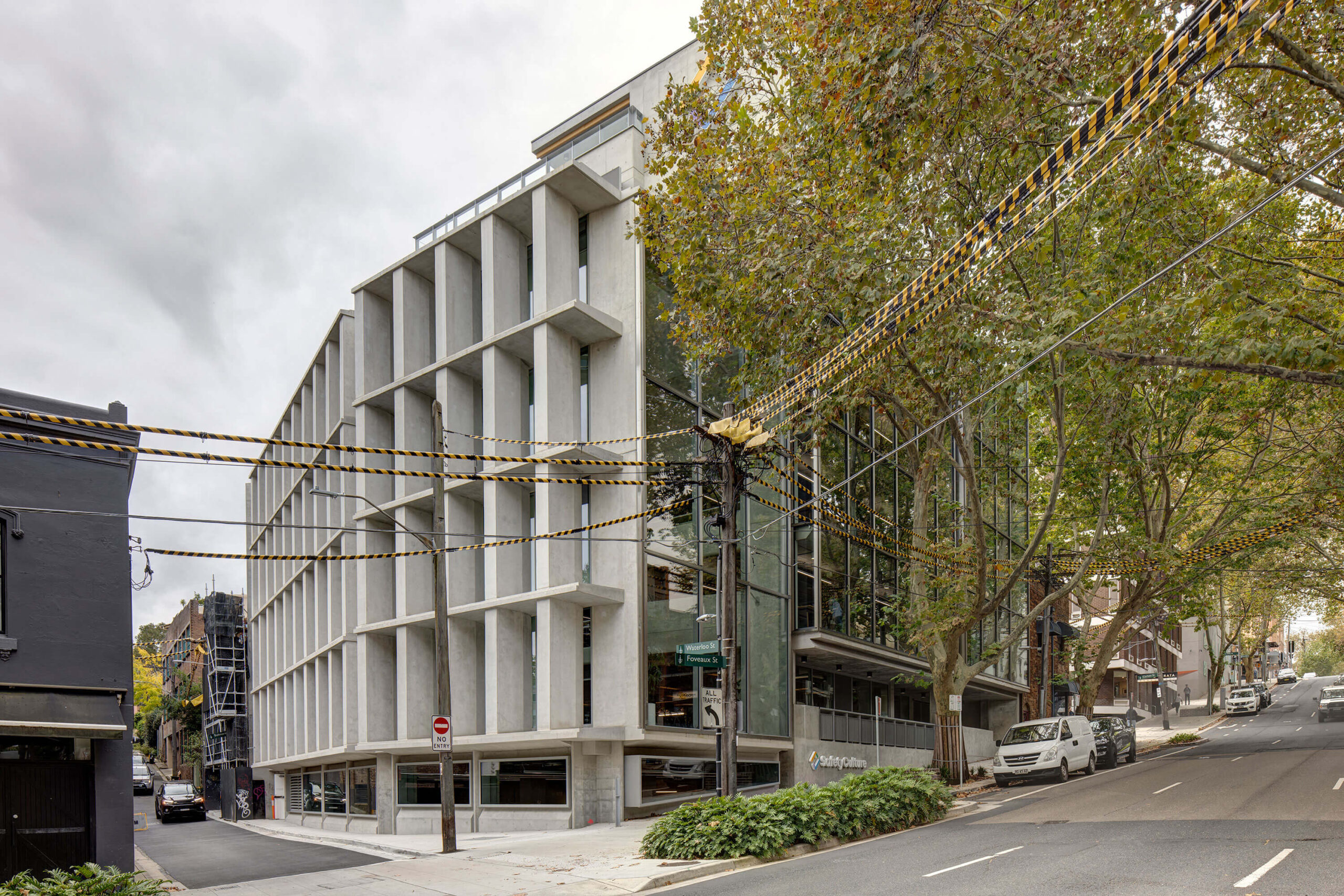
The Foveaux Street project preserves a 1960s and 1970s sewing factory, stripping the existing six level concrete and brick structure down to its basic elements. The renovated building maintains low floor to ceiling heights, enriched by a large west and south facing internal atrium incorporated into the eight level commercial expansion.
This space serves as a focal point, featuring a glass artwork by Janet Laurence and carefully crafted concrete brise soleil for controlled light. The communal atrium, shared with the city through a south facing window, enhances the office environment.
White lanterns augment natural light, creating a dynamic workspace with a relaxed engagement with the street. The project transforms a slated for demolition building into a contemporary, flexible workspace, fostering a connection between the internal and external environment for office workers, ensuring its utility for years to come.
A building which was earmarked for demolition is now one which is kept and renewed into a contemporary workspace.
Fun House | ASA

Fun House seeks to push preconceptions of space per person on a small 117m2 urban site. The primary dwelling is constructed behind the existing cottage frontage and a secondary detached dwelling sits along the rear lane. Separation between the dwellings offers flexibility in household permutations, with a total of 6 people being able to reside on the site. The maximised central courtyard was important to provide both dwellings with access to light, ventilation and landscape outlooks.
Also serving as an intermediate space, each dwelling can passively interact with one another from across the courtyard. The incorporation of varying paint colours and material textures gives each room unique personalities within the efficient floor plan. Built to the Passive House Standard, using durable materials and high-performance detailing means the dwellings are futureproofed to withstand extreme weather events, whilst using very low operational energy.
DOUGLAS | Ahron Best Architects

Douglas is a play full alteration and addition that transforms an existing classic semi into a modern living sanctuary for a young family of four.
The concept, a simple sectional diagram, creates uplifting spaces and a feeling of openness throughout the home.
Convex curved ceilings provide access to northern light and sweeping views to a central roof garden and beyond. The ceilings act to define the various functions of the house providing a balance of privacy and connection between the spaces.
High level windows allow for light and air to circulate home.
Courtyard House | Atelier M

Courtyard House is an Alteration & Addition to the Heritage Listed Rinaultrie.
The brief was for a contemporary modification that created a better connection to the garden, improving privacy from the neighbours, whilst sculpting pockets of sunlight with the addition of new contemporary spaces.
The extension is a checkerboard of rooms and courtyards creating varied spaces. The morning courtyard capturing the eastern sun for a cup of tea, the larger afternoon courtyard which basks in the northern sunlight for family feasts that continue well past sunset, and the triangular double height space over the sunroom with its custom designed couch with seats facing the garden and courtyard.
The rear addition makes reference to the original fabric in the use of its matching sandstone, face brick and rendered walls, under its timber lined slate roof. It has done so with equal delight in the detailing.
Courtyard House 3 | Stanic Harding Architects
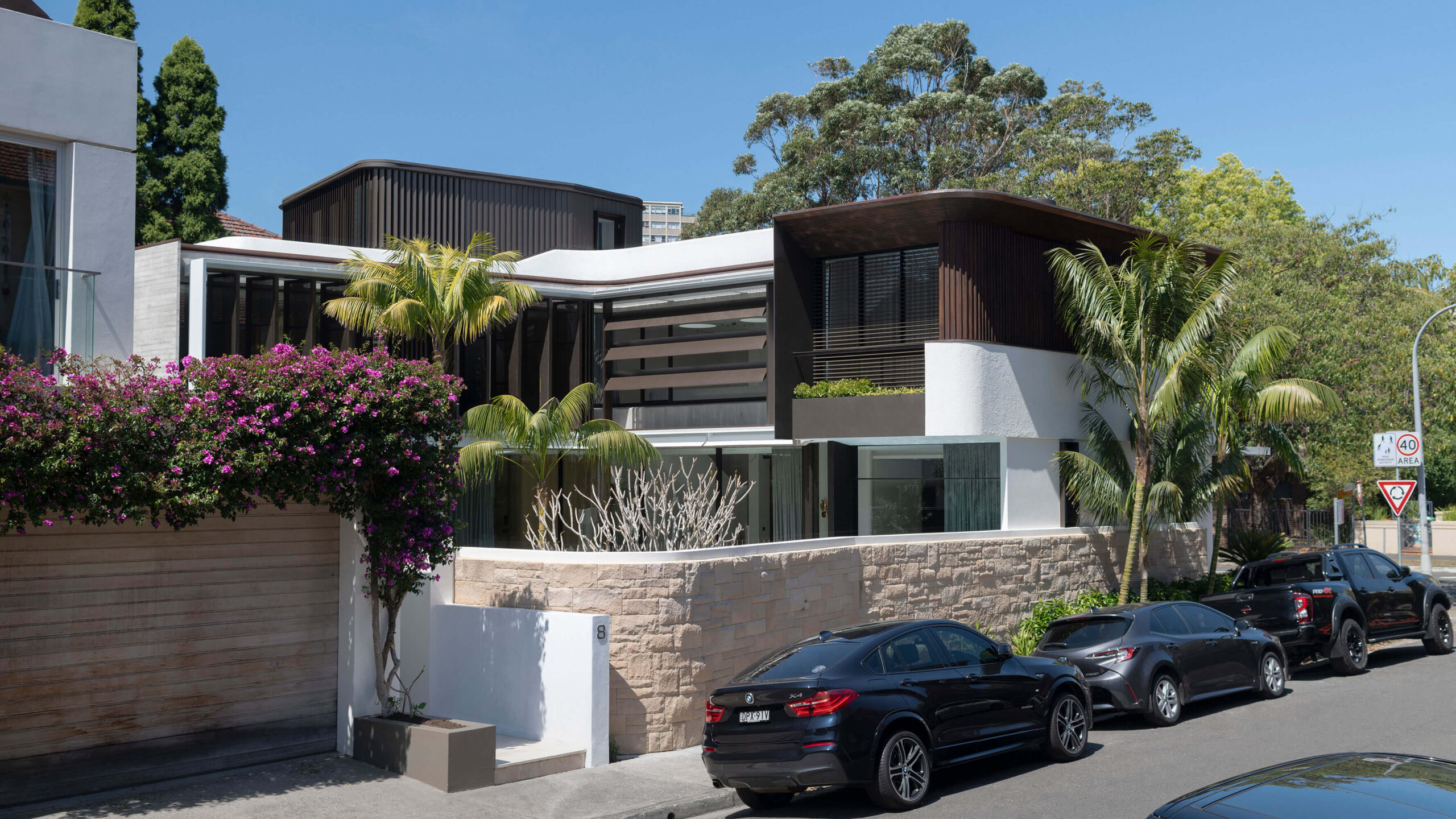
The primary design strategy was to open the house and the courtyard to the northwestern sky.
The living spaces wrap around the courtyard offering direct visual and physical connections to the garden, pool and district views. This open façade is contrasted with the more shielded southwestern façades protecting the occupants from the busy street noise.
Solar control and privacy were achieved by the introduction of a fine upper-level screen fitted with operable horizontal and vertical louvres which also provides articulation and shading to the ground level.
The crafted built form successfully addresses the corner site and respectfully engages with its neighbours and the public domain. The variety of materials & textures creates additional richness to the house which offers the clients a contemporary home with soul.
It is a house that embraces its evolving family of five and will serve them for decades to come.
Culburra Beach House | Virginia Kerridge Architect
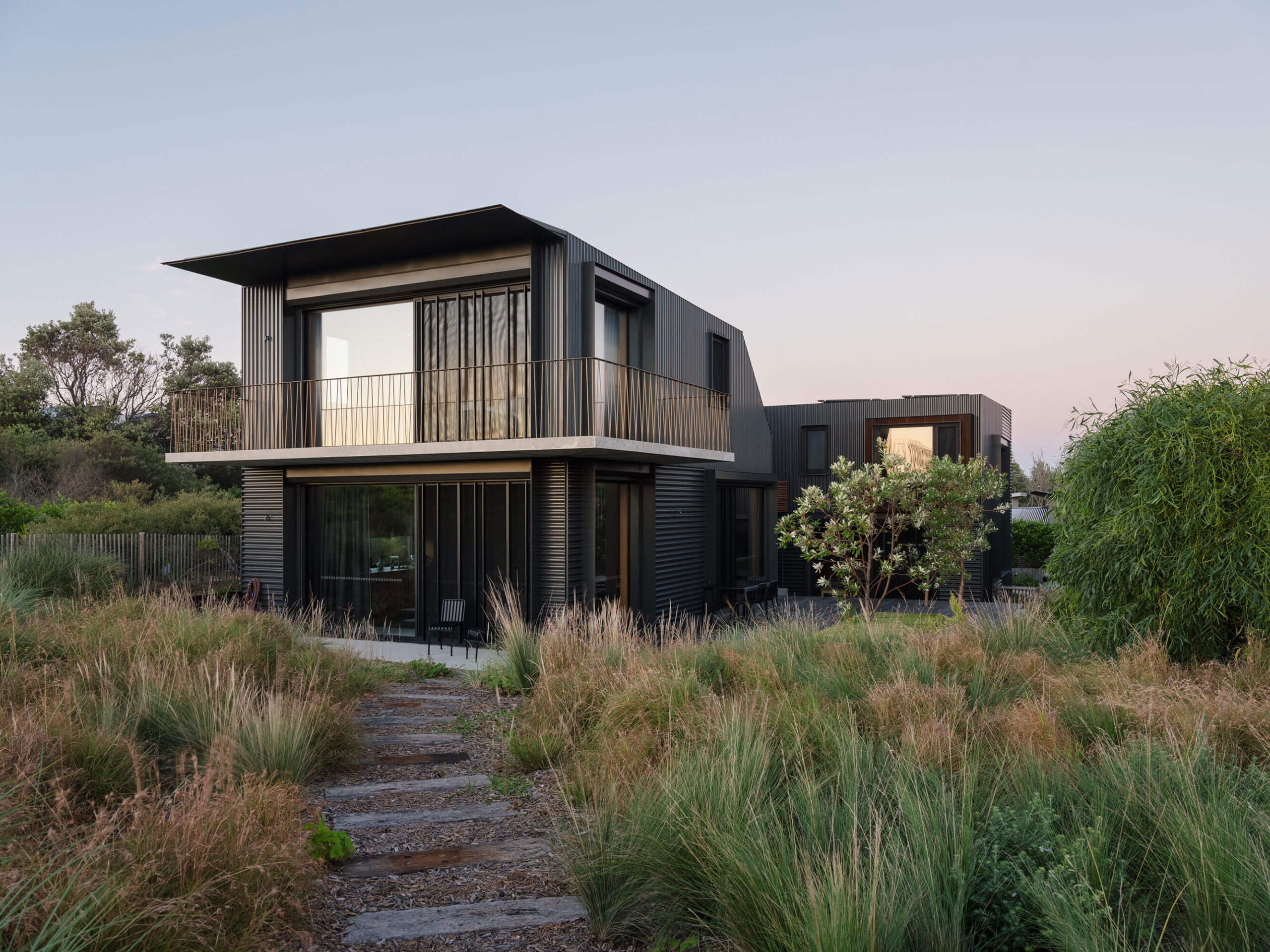
The site was a never built upon piece of land situated beachfront at Culburra. The landscape is windswept, with low native foliage with a large setback to the beach consisting of planted sand dunes.
The shapes of the trees are bent over and distorted by constant winds along the coast. The design of the house responds to this with a roof shape that gracefully ascends and flattens towards the beach. It is a house that becomes a safe retreat and a place of serenity amidst the storm.
The landscape design is by Jane Irwin Landscape Architects.
Dachshund House | Maxwell & Page
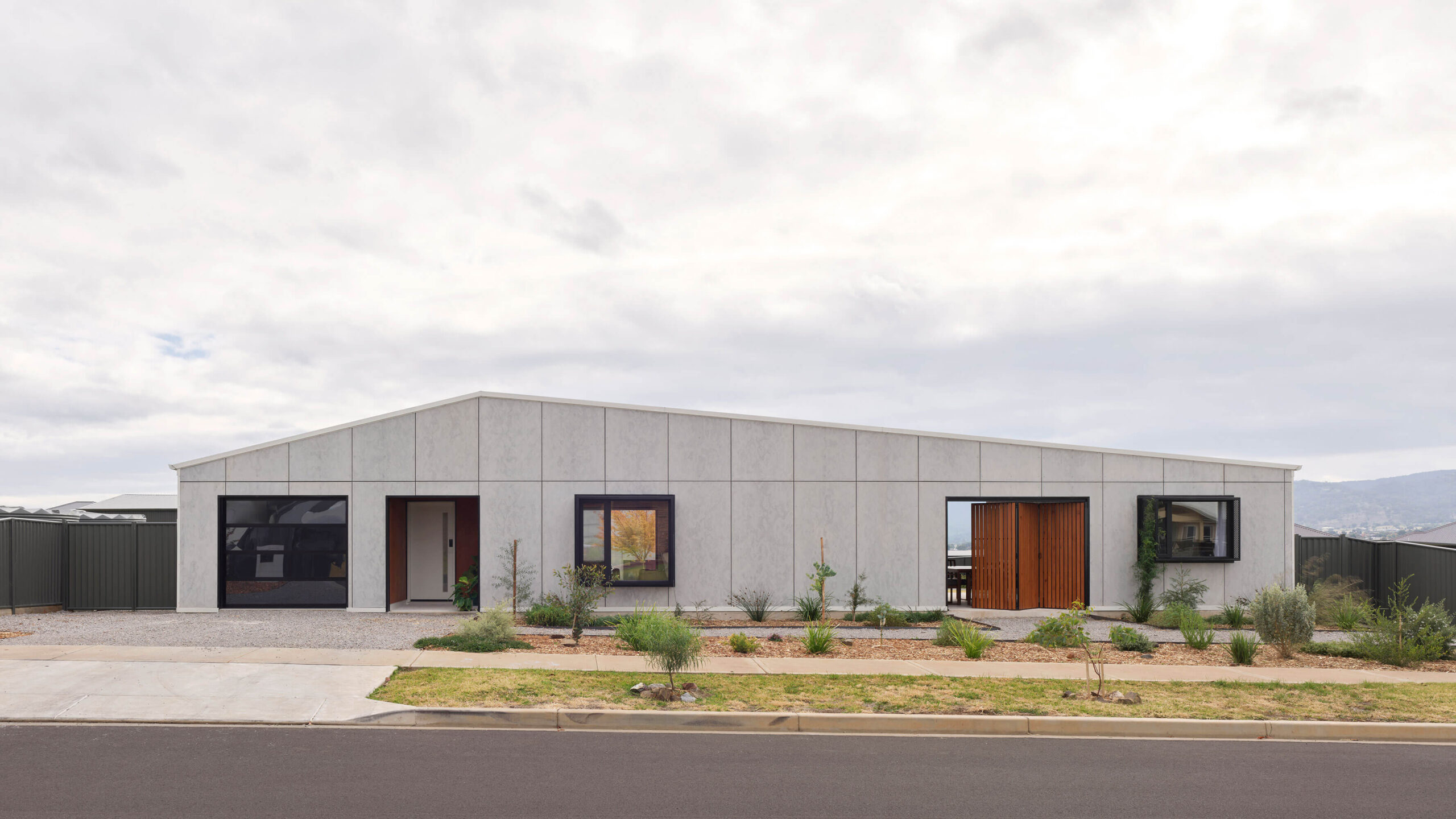
Dachshund House represented a paradigm shift for our clients as they sought to establish a sustainable, cost efficient, adaptable and joyful family home within a sea of brick and tile semirural suburbia just outside of Tamworth, northwestern NSW.
A deep discussion about what makes a house sustainable (and an early neighbouring precedent otherwise) has generated a locally unique suburban courtyard form that reflects our client’s values and provides a seasonally adaptive cradle for their growing family.
The programme of the house twists around a Coral Bark Maple (Acer Palmatum Sango kaku) and fountained pond providing a private, cool, shaded focal point within the semiarid suburban landscape. Every habitable space is oriented to north with generous eaves to manage light and heat.
A muted material palette of greys, browns and greens evokes remnant eucalyptus forests and the burgeoning native garden surrounding the home and repairing the degraded ecology of the site.