
Horizon Apartments | CKDS Architecture & Hill Thalis Architecture + Urban Projects, architects in association

Horizon Apartments occupies a generous 5,600m2 site on Newcastle’s waterfront, located at the junction of three new public space: the Honeysuckle promenade, a public square on Steel Street’s extension and a park on Cottage Creek Corridor.
The project comprises three buildings defining two courtyards open to the water. The buildings are united by their waterfront alignment, scale and material palette. The design is an exemplar of equitable view sharing as the landscaped courtyards allow views between the buildings from both the public and private domain behind.
The buildings sit on a gently raised brick plinth, providing flood proofing and prospect over the adjoining public spaces.
Containing 110 generous apartments with a range of plan types, all achieve high amenity. 88% of apartments face north with harbour views, over 75% are cross ventilated.
The design is a considered response to this exceptional site and a model for the area’s evolving urbanity.
House in Lilyfield | Charmaine Pang Architect
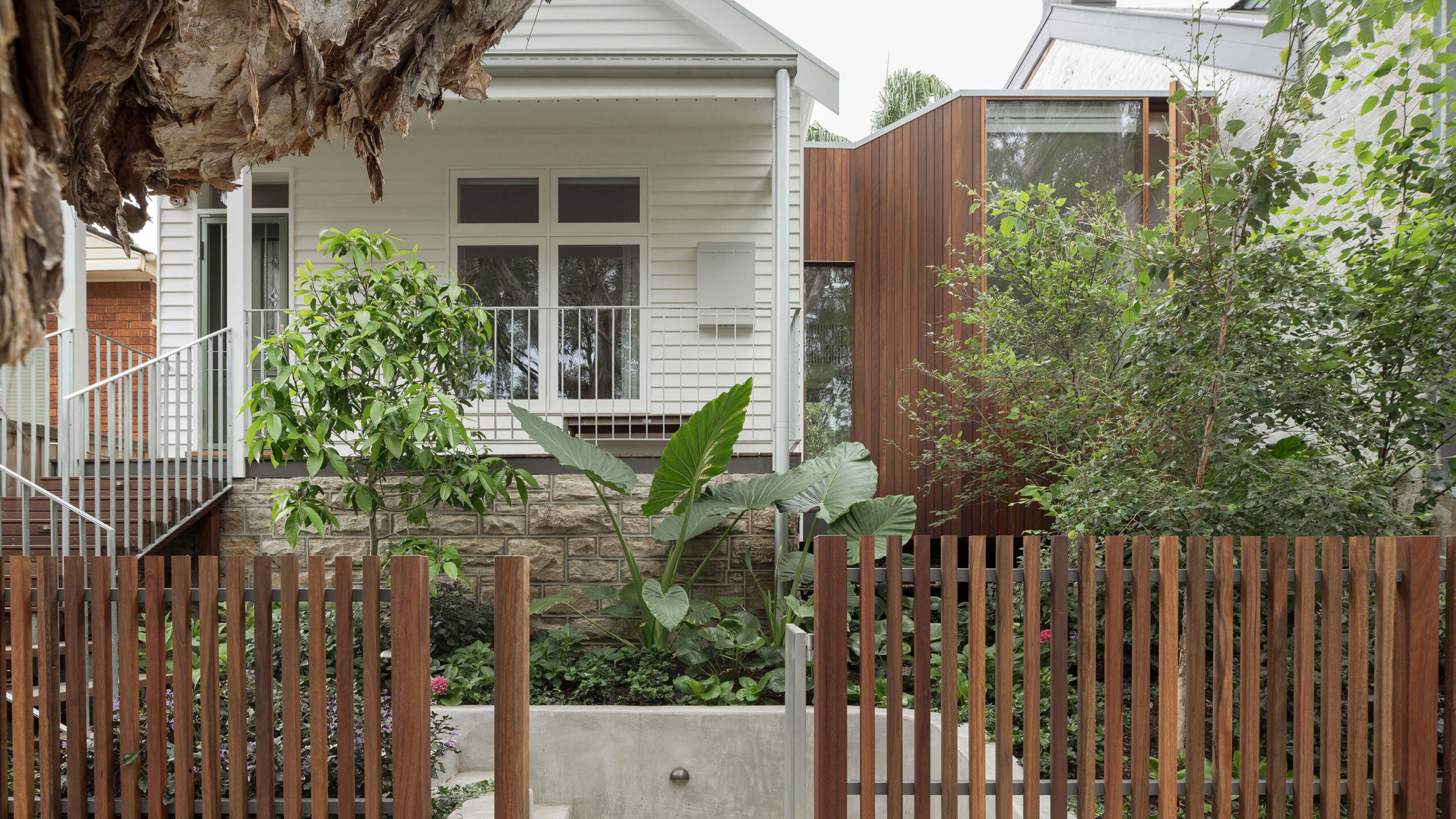
House in Lilyfield is an extension of a weatherboard cottage arising from the quirks of its streetscape context and the clients love of gardens.
A suspended timber clad addition with a cantilevered bay window sits adjacent to the cottage, screened by a trio of birch trees lending views, shade and privacy.
The garden experience begins at the street and unfolds throughout the home.
A hallway leading to the bedrooms scoops out the roof volume to draw in daylight before transitioning to the new sleeping and work spaces. Sited a few steps down, the addition responds to the sloping site and draws the outside in through generous apertures. A window seat, floating desk and deep sills are spaces to contemplate and enjoy the gardens.
Materially, the natural materials allow the house to develop a patina as time passes.
By only building what was needed the cottage vernacular is preserved and celebrated.
House in Surry Hills | Architect George
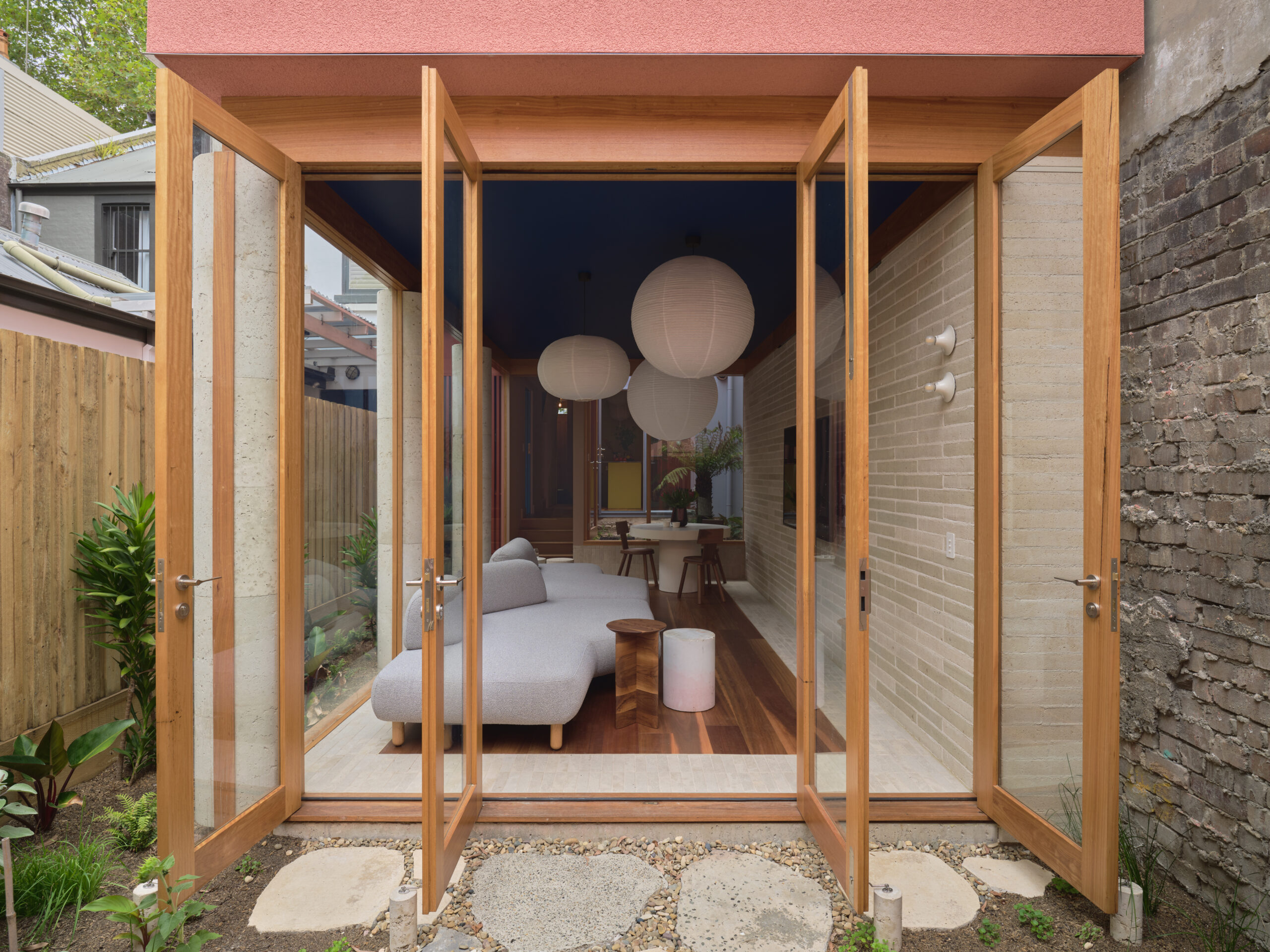
House in Surry Hills explores a contextually responsive, colourful and experimental home. The design seeks to showcase the beauty and abilities of materials, creating a series of vaulted sculptural pavilions in an urban garden.
The sculptural additions to the 1880s terrace are separated by garden spaces. The living pavilion, conceived as an outdoor room is surrounded by gardens on three sides. Gardens extend from living spaces like a wrap around verandah. Internal materials use sustainably made bricks, stone tiles and hardwood timbers.
Colourful pink rendered pavilions have been designed to appear as if they float above the garden, supported by custom brick circular columns.
Colour throughout the project was used to define the function or personality of a room. Living spaces are sunlit with minimal colour use, whereas intimate spaces like sleeping areas explore a deep monotone colour providing an inward facing mood with carefully framed views of the outdoors.
House Lupe | LINTEL Studio for Architecture
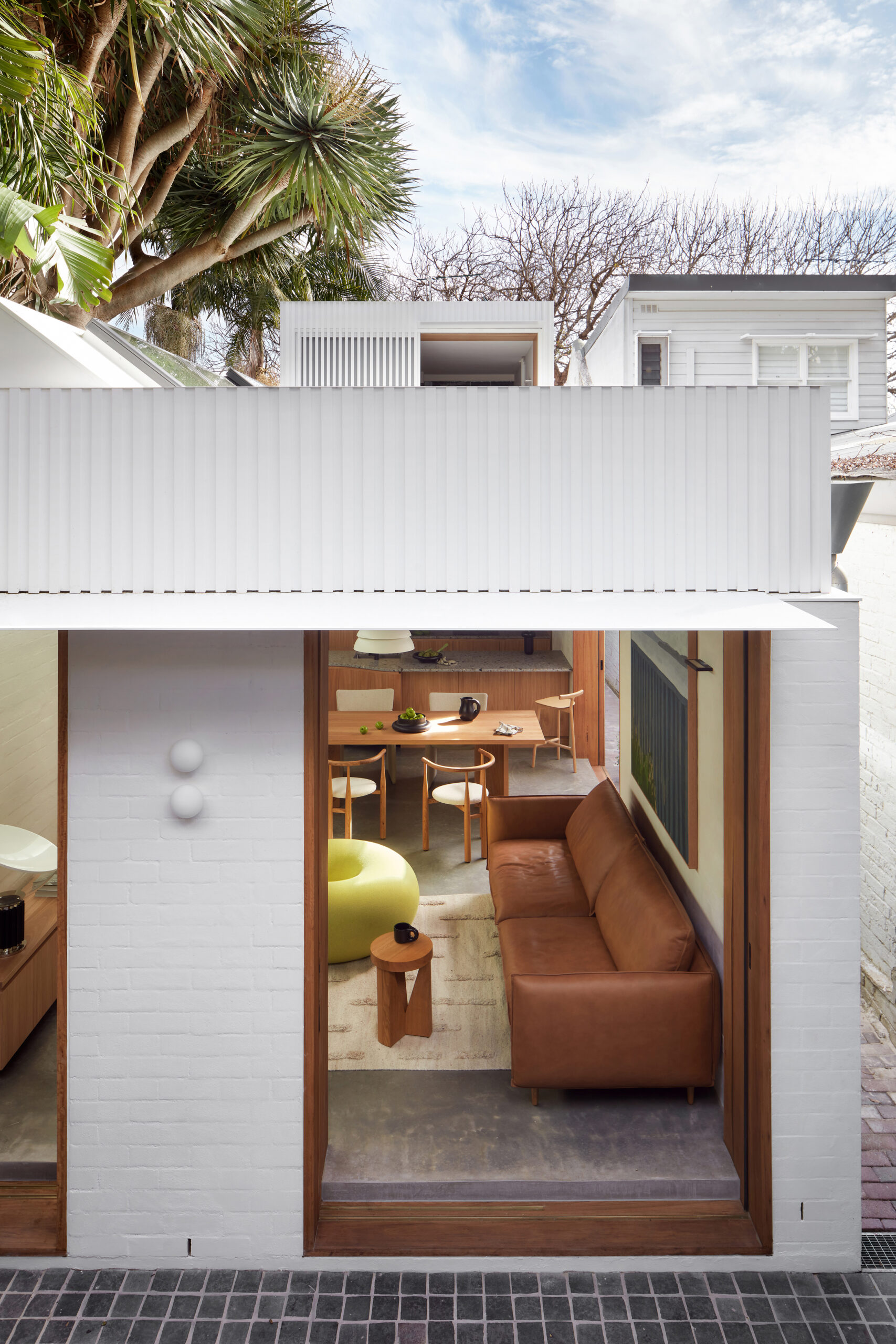
Once an inward looking cottage plagued by its bursting footprint, House Lupe is today composed around simple moments for contemplation. The project frames uncomplicated views to street side and neighbouring planting while maintaining necessary inner city privacy. Its carefully placed openings introduce an abundance of natural light without exposing the interior to the baking sun.
Today Australian families are looking beyond purely functional living, growing increasingly interested in conjuring beautiful and varied environments to enjoy at home. House Lupe is designed to offer its inhabitants the greatest possible flexibility within a limited footprint able to be opened up and closed off on multiple planes, both to the outdoors and to itself. This functionality accommodates the changing needs of a growing family who frequently receives international visitors. Importantly, architectural merit is sought by each of the home’s various guises, ensuring that the experience of the building remains exceptional.
Huntington | SJB
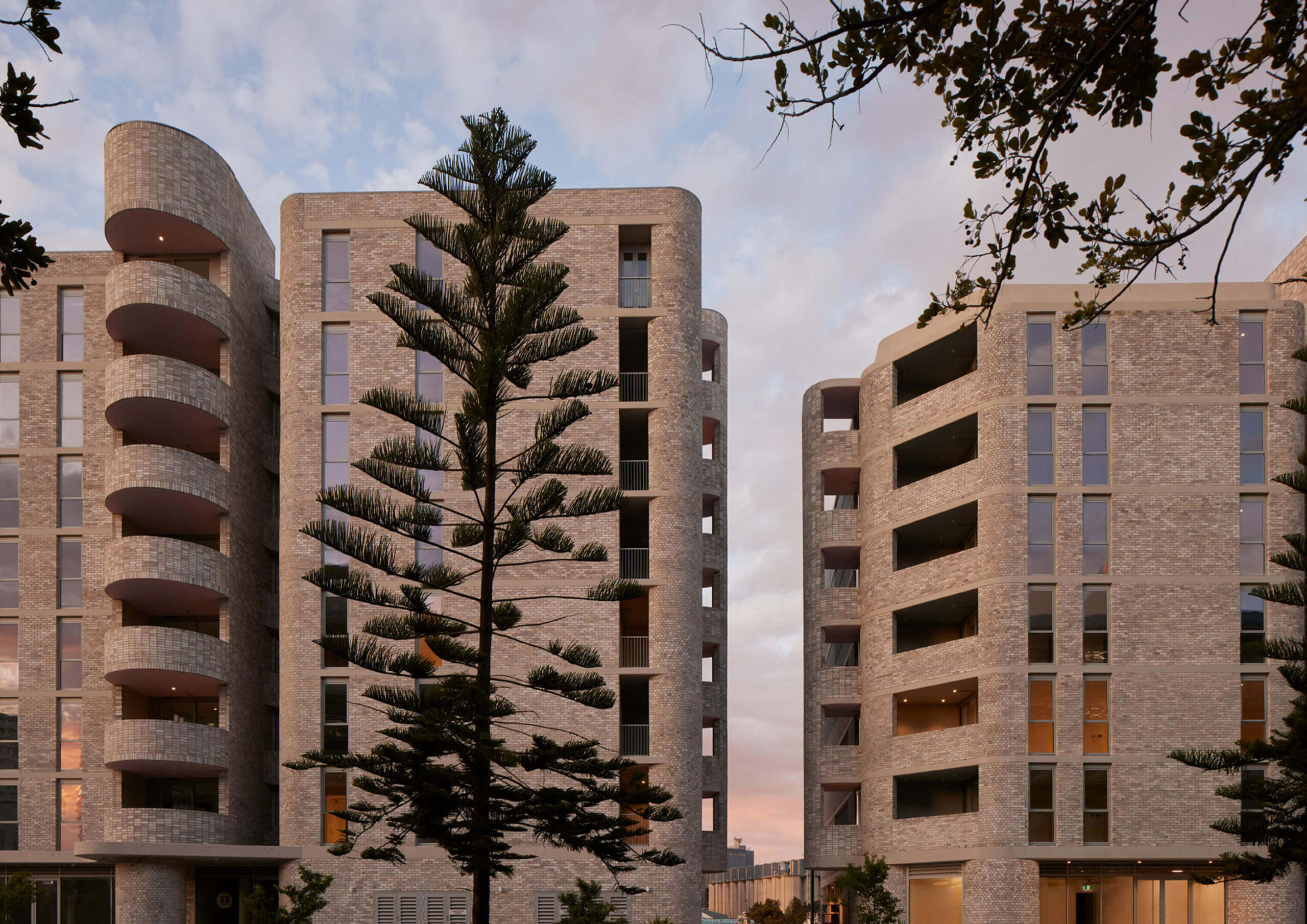
Running parallel to the Hunter River, Huntington at 35 Honeysuckle Drive is a key node in the Newcastle Honeysuckle Precinct urban renewal corridor, evolving the foreshore into a highly connected, mixed use precinct. Poised to play an important role in enlivening the precinct this new residential development introduces significant retail to the ground plane and 90 apartments above, across two buildings.
The success of the Honeysuckle precinct is intrinsically linked to the connectivity between the city and the water’s edge and its activation. Huntington stitches the old town at the south to the foreshore boulevard through permeability and the introduction of protected, north facing retail spaces. The material palette also speaks to the site’s differing conditions, with a playful brick façade facing Honeysuckle Drive which opens to the north to capture views and light and reflect the palette of industry across the river.
Hurlstone Memorial Reserve Community Centre | Sam Crawford Architects
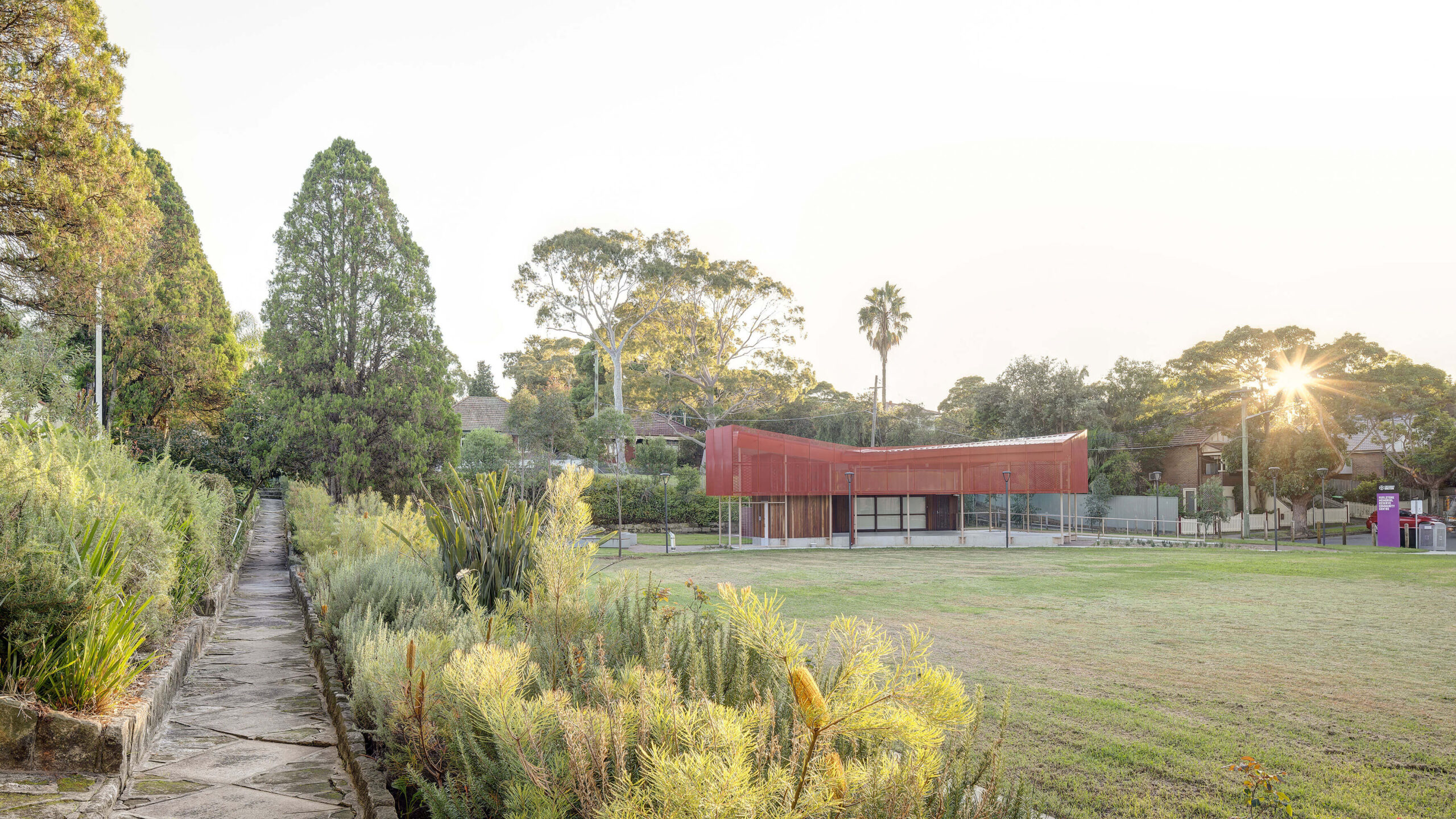
The soft Y shape of the Hurlstone Memorial Reserve Community Centre welcomes the local community with multiple access points and vistas.
The shape of the building minimises the building mass, allows views through the building from key park entry points whilst framing views to all areas of the park.
The layout also allows spaces around the building to be maximised for public use. Each side forms a sheltered courtyard, and facilitates circulation around the building so that no one side is the back.
The pavilion is lifted off the ground to avoid flooding and to provide seating around the edge. The three curved sides feature large glass doors adding transparency, cross ventilation, and accessibility.
Perforated screens on the roof and undulating facade create a lantern effect offering views out and up, bringing light in, and promoting safety. The materials, colours and forms complement the Federation heritage of the area.
Hurlstone Park House II | CMA – Carla Middleton Architecture
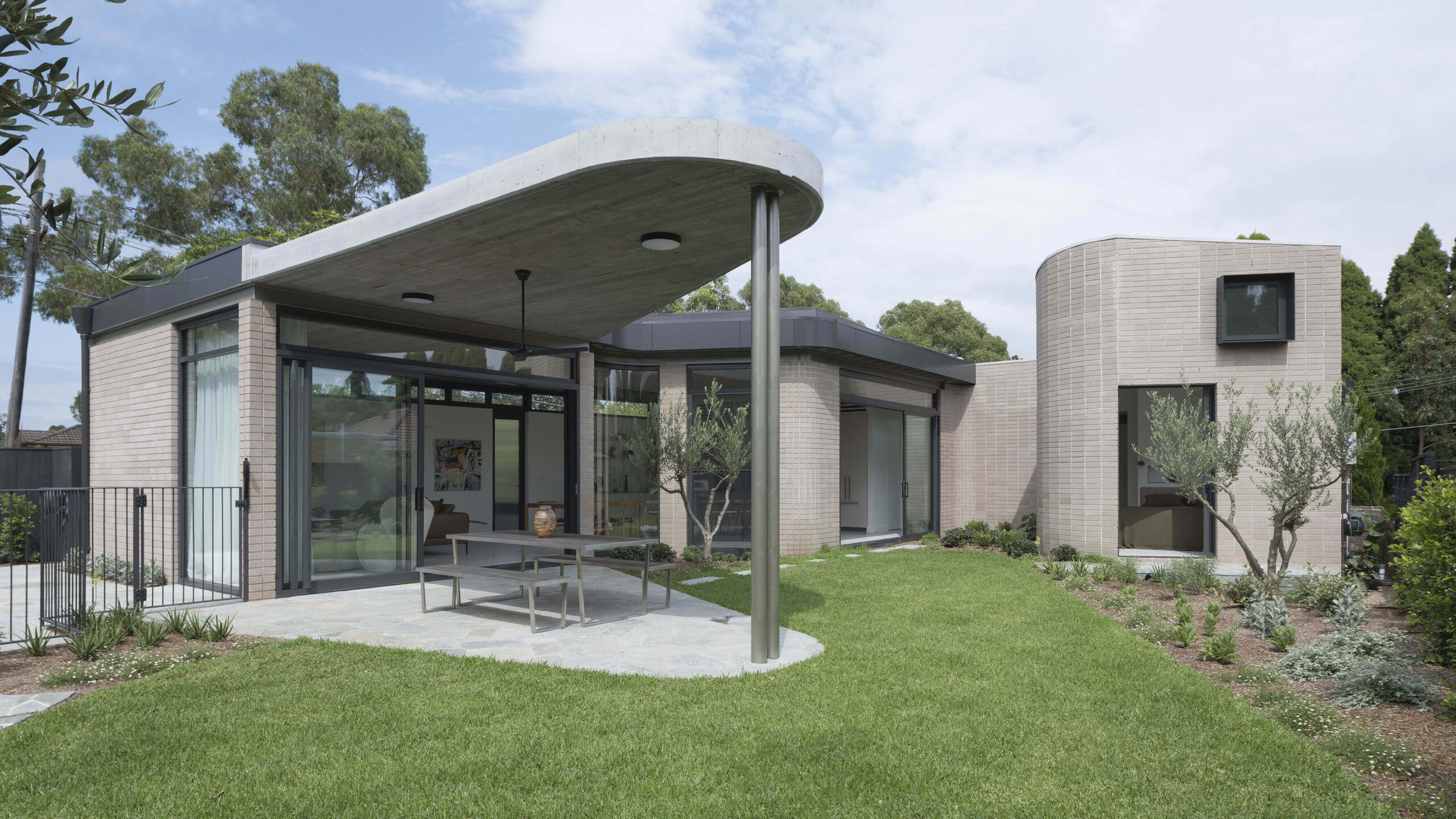
Hurlstone Park House II is a renovation to a single storey Federation home located on a corner block in a heritage conservation area in Sydney’s Inner West. The original building form was retained and a new single storey addition runs along the side southern boundary, providing privacy from the secondary street frontage while allowing the living spaces to open up to the north.
The built form has been pushed and pulled to allow for four private courtyards that create a sanctuary for its occupants and enhances the project’s connection to the garden. The curved and wrapping built form allows for varied living spaces where the family can both come together and retreat. The addition’s scale responds to the sloping corner block and respects the existing streetscape context with an appropriate and subtle contemporary addition that is highly functional, with every space carefully designed to meet the client’s needs without excess.
Iglu Mascot | Bates Smart
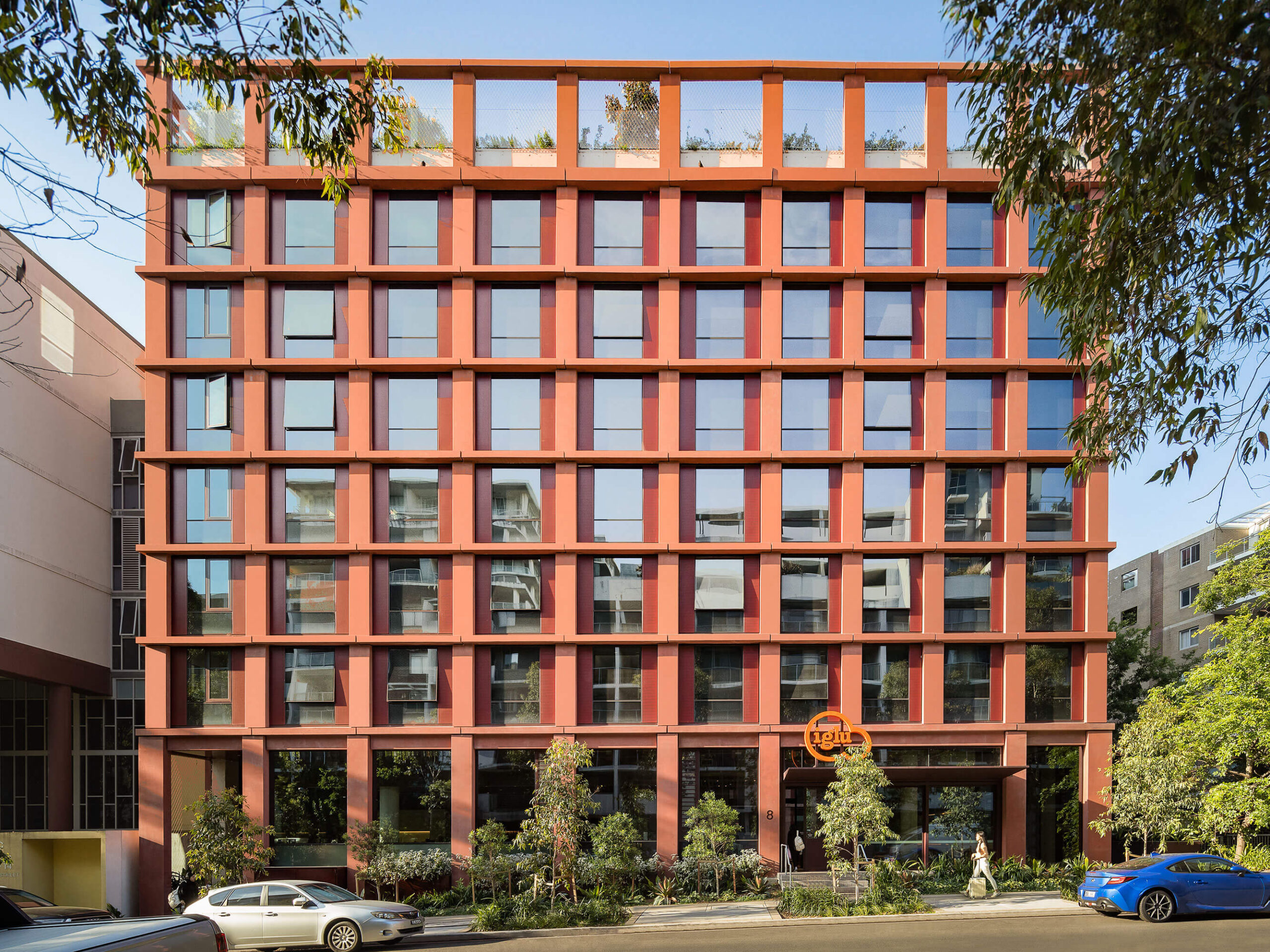
Iglu Mascot’s architecture center’s on community in two ways. The building provides a much needed, high-quality home to more than 430 university students, close to Mascot Station. It also works hard to lift Mascot’s built environment, which is dominated by bland residential super blocks, traffic congestion, and a lack of open green space.
Three interconnected rectilinear volumes of varying height are organized around a landscaped courtyard. The volumes are wrapped in a precast concrete grid that embraces the modularity of the apartments within. Colour is integral to the grid, each volume is identified by its own unique hue, drawing from a palette that references Mascot’s older homes and brick warehouses.
Inside, the building balances efficient studio and 6xbed cluster apartments with generous shared amenities that support study and promote community. Communal outdoor spaces and soft landscaping have been maximised to improve liveability and set a new precedent for neighbourhood architecture.
Hanson’s House | XAAP Design Pty Ltd

The project is meticulously crafted for an architect’s personal residence. The duplex layout is artfully configured to optimize privacy and minimize interference between the two households, strategically positioning entrances and backyards. Drawing inspiration from a vertical wave concept, the building facade elegantly complements its surroundings. Softened corner principles extend to both interior and landscape design. The structural integrity of the building is underscored by the use of 50 tons of steel, facilitating large spans and cantilevers. The external walls, constructed with Ductal from Holcim, boast Concrete C120 strength, ensuring durability and resilience. Furthermore, double layer insulation and double-glazed window systems contribute to significant energy savings. Prefabrication technologies streamline construction, reducing onsite labor and environmental impact. The building cost is balanced by strategically increasing material costs while reducing onsite labor work time. This approach ensures optimal efficiency without compromising on quality or structural integrity, ultimately contributing to a cost-effective yet high-quality final product.
Helen’s Place | Custom Mad
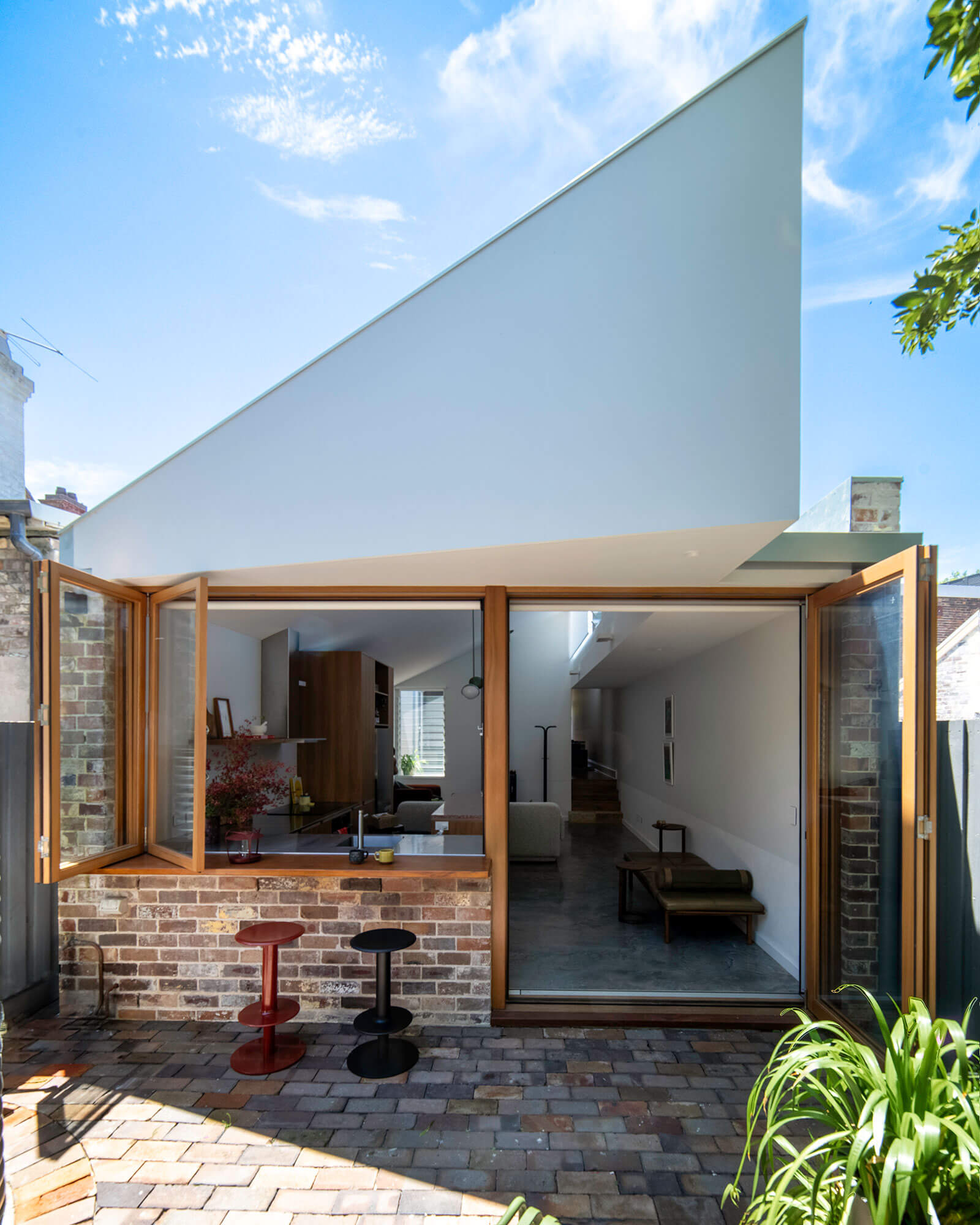
Helen’s Place explores how rituals of joy can bring peace to inner city homes; A moment of sunlight in the garden, a view of the sky from each room, feeling the garden within the house. Nestled between eight neighbours, a bustling cafe and a heavily trafficked street, creating these rituals of tranquility were integral to the comfort of this Victorian terrace. By reusing the existing materials and integrating handcrafted pieces into the home, materiality acts as a metaphorical handshake between rituals of the past and rituals of the future. The salvaged sandstone is repurposed as a stair between the old house and the new, the terrazzo benchtop, the heart of this contemporary home, is a slowly handmade object. Helen’s Place is studded with material reminders and joyful rituals that participate in the past, present and future of this home.