
Courtyard House | Clare Cousins Architects
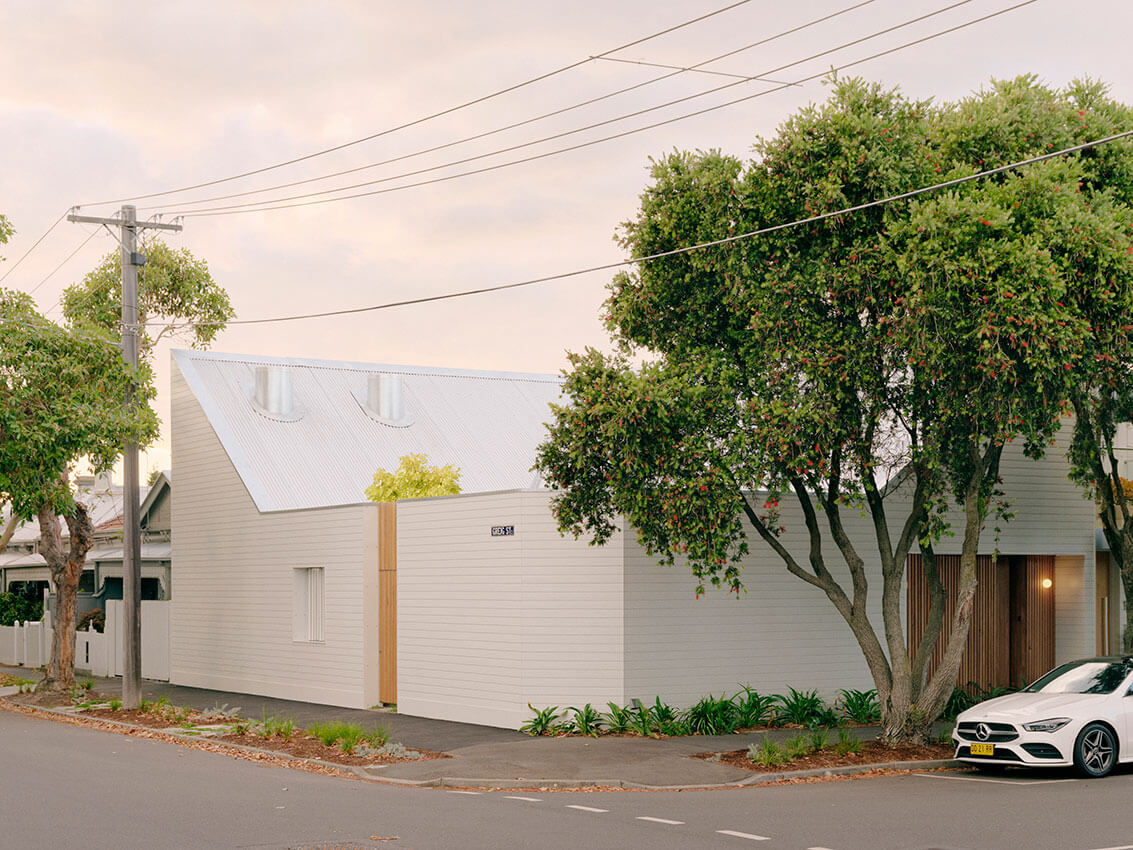
Careful to consider its sensitive heritage context, Courtyard House reinterprets the previous condemned 1885 cornerstores scale, materiality, and modest street presence. The building is directly informed by the sites history, the shiplap cladding and galvanised roof establishing a contemporary expression of the past.
Unusually located at the centre of the street frontage, the southern courtyard enables a more dynamic interface between private outdoor space and the public realm.
Courtyard House is shaped from within, dissecting the traditional gable form for a home that is private yet open, contemporary yet figurative, modest but generous.
Dandenong High School Design and Technology Hub | Kerstin Thompson Architects
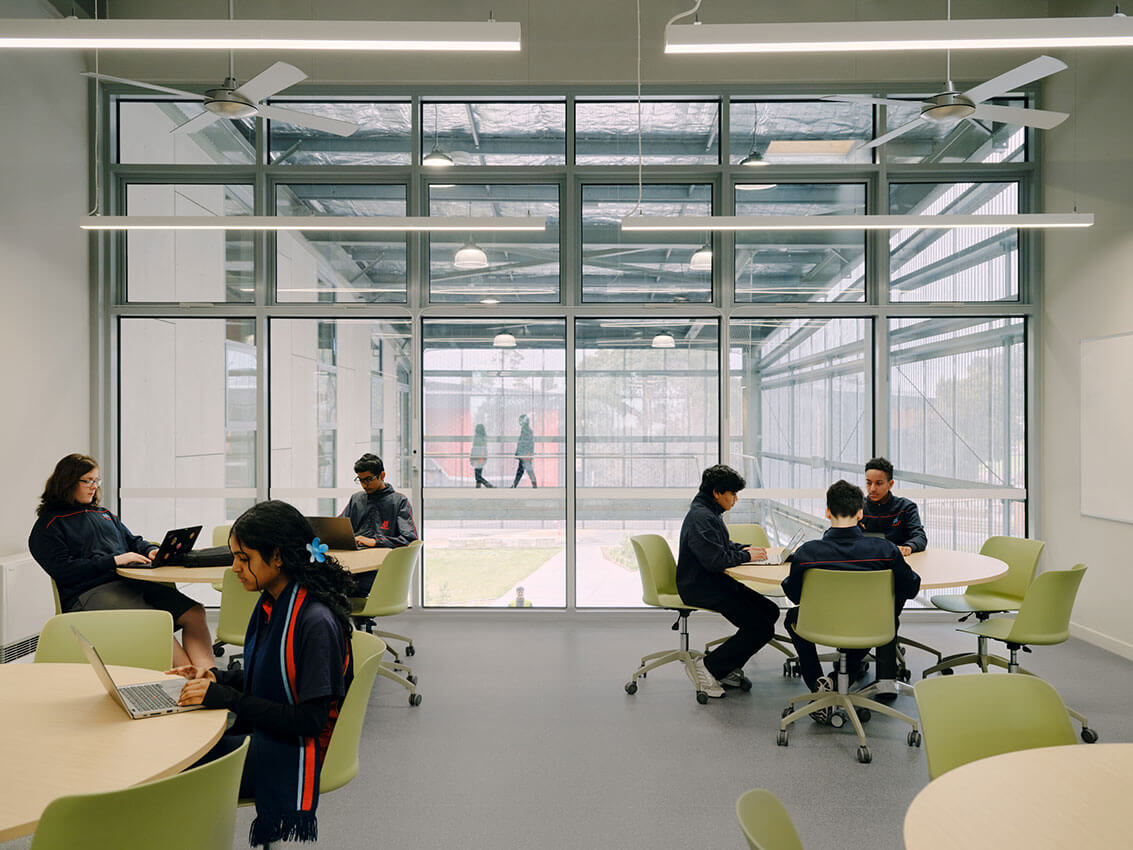
Dandenong High School Design and Technology Hub is a final piece of the campus puzzle, the project takes an existing redundant aging gym and performing arts centre located against along the edge of the school and adaptively reuses the structural frame into a new twolevel hub for design and technology studies.
The school envisaged the building as a space that would provide the students with a realworld working environment where they could independently investigate the many streams of design and technology in the resolution of their projects. The key to creating these collaborative spaces is the establishment of a spine that links all the teaching spaces encouraging the mixing of ideas and techniques. The pockets created along the spine blur the line between the more formal spaces and the informal ones, where ideas can be developed in small groups in a way more akin to a studio than a classroom.
Dennis House | Olaver Architecture
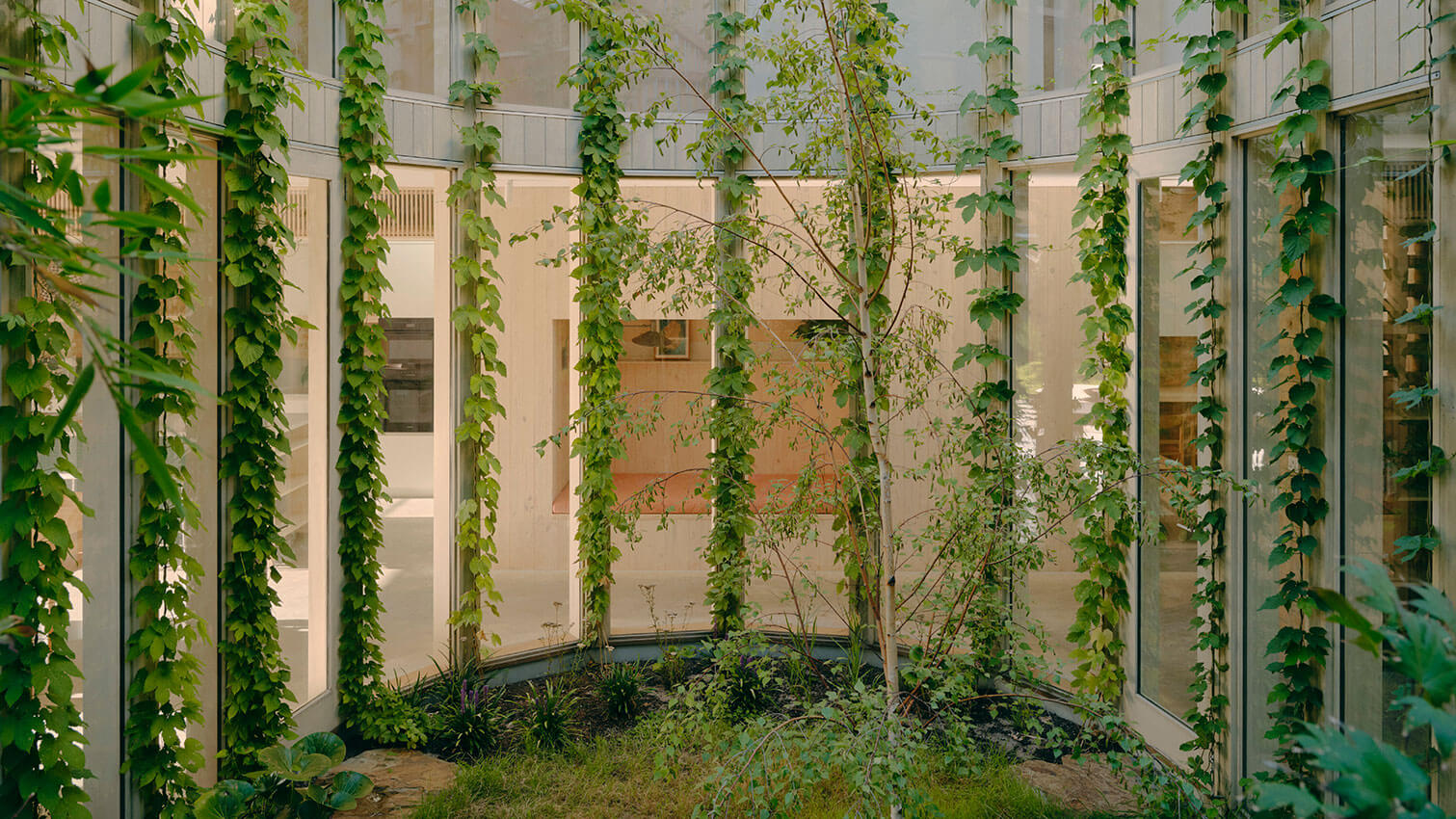
Dennis House is a courtyard house which is robust for its layers in planning, section, structural resolution and material choices. Every element of Dennis house is considered for its contribution to the whole and there is a richness in the resultant simplicity which is deeper than the sum of its parts. The CLT and recycled brick structure is both cost effective and sustainable, with richness in texture and a calming interior. Dennis House supports family life and fosters a sense of togetherness extending to the gardens and neighborhood beyond. The careful balance of simplicity, sustainability, and functionality sets Dennis House apart as a home that enriches the lives of its inhabitants.
Clifton Hill Primary School | Jackson Clements Burrows Architects
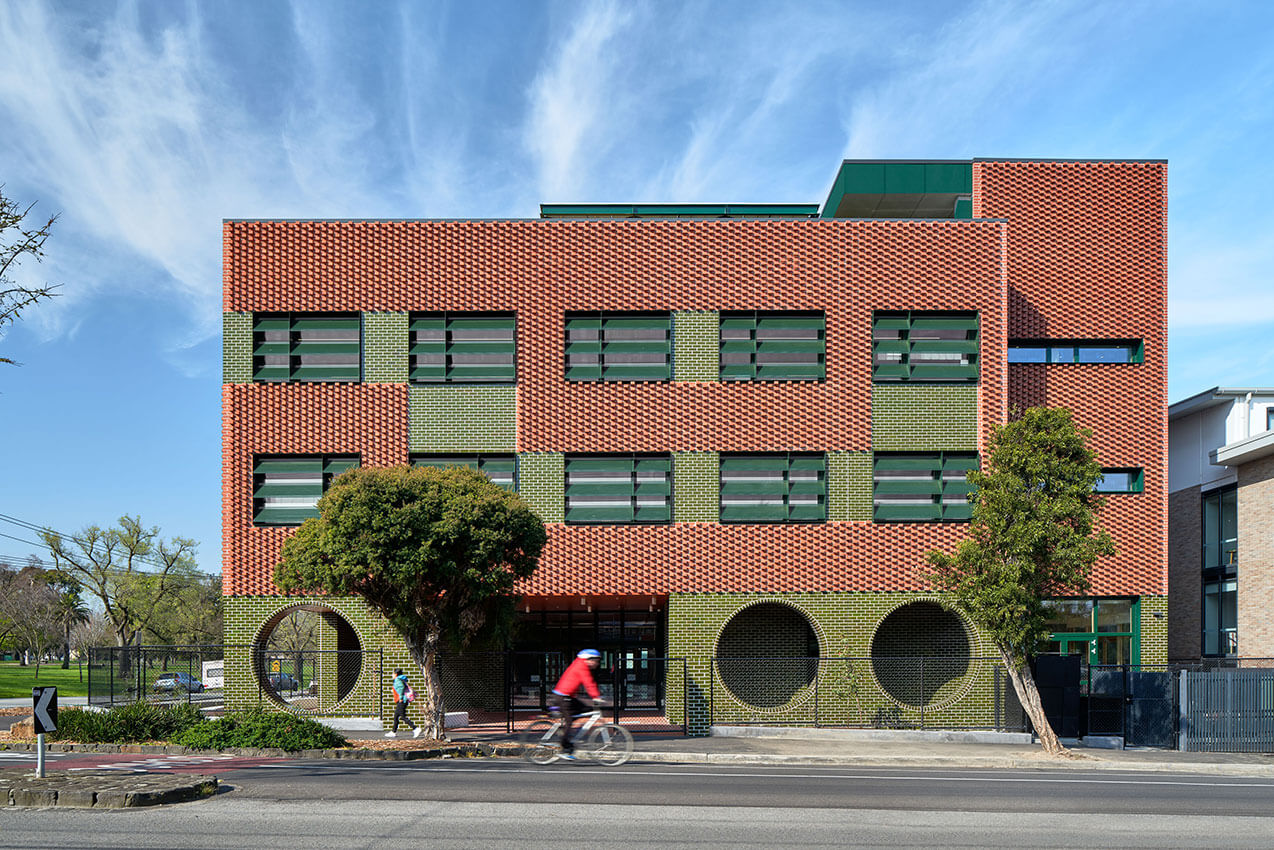
This dynamic vertical campus for grade 5 and 6 students creates exemplary learning, teaching, staff working and multipurpose community environments for a muchloved innercity school. Spanning three levels, the building adopts a simple but rigorous floorplan that accommodates a large program on a constrained site. Located opposite the Darling Gardens, the design response references the existing heritage campus buildings while also drawing inspiration from Eric Carles The Very Hungry Caterpillar. A ribbon band of glazed green bricks and use of circular bite like apertures bring a whimsical quality to the design. Exposed structural elements including mass timber and articulated services enable the building to serve as an explanatory teaching tool for students. Designed utilising a mass timber hybrid construction to achieve Passivhaus Certification, a first for the VSBA, the building integrates a PV array on the playground roof terrace to provide power and a visual learning opportunity.
Cobden Terrace | Matt Gibson Architecture + Design
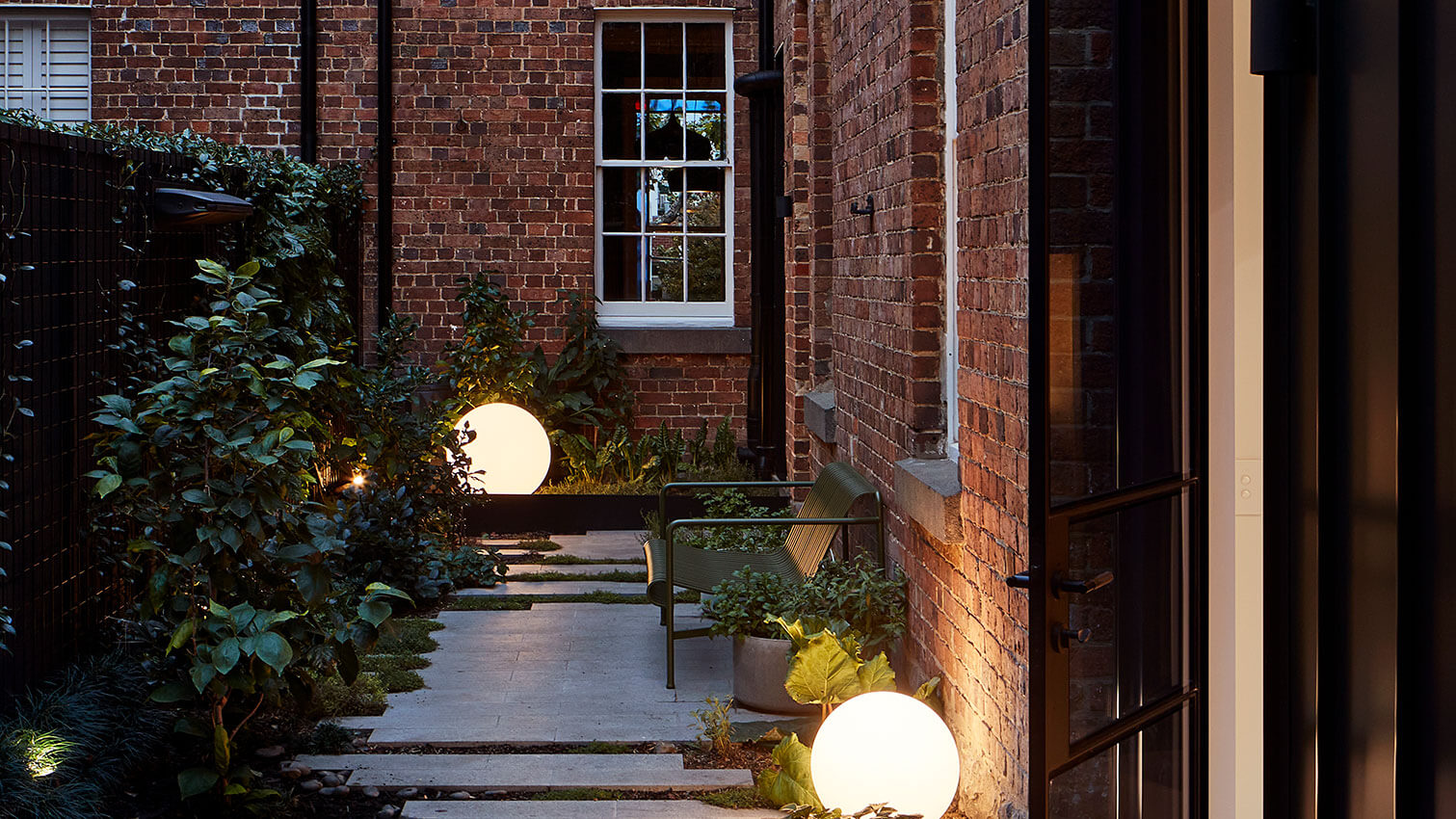
Cobden Terrace is a heritagesensitive adaptation of an 1868 statelisted terrace house in Fitzroy. The project applies adaptive reuse through minimal but impactful change to meet a host of social, environmental and functional aspects, whilst enabling a joyous, personalityfilled family living environment.
Heritage, sustainability and budget principles have converged with equal influence. Adaptive reuse, through doing less, helps retains the history of the place for its social and cultural imperatives as well as enable a functioning family layout that will sustain.
Externally, a small rigorously detailed yet rationally conceived ground level addition is however provided in sympathy with the existing building. Inside, we sought to celebrate and emphasise the best aspects of the Victorian home. The result is celebratory of the sites legacy and neighbourhood at large preserving its integrity whilst making subtle adaptations enabling greater livability.
Connected House | Architects EAT
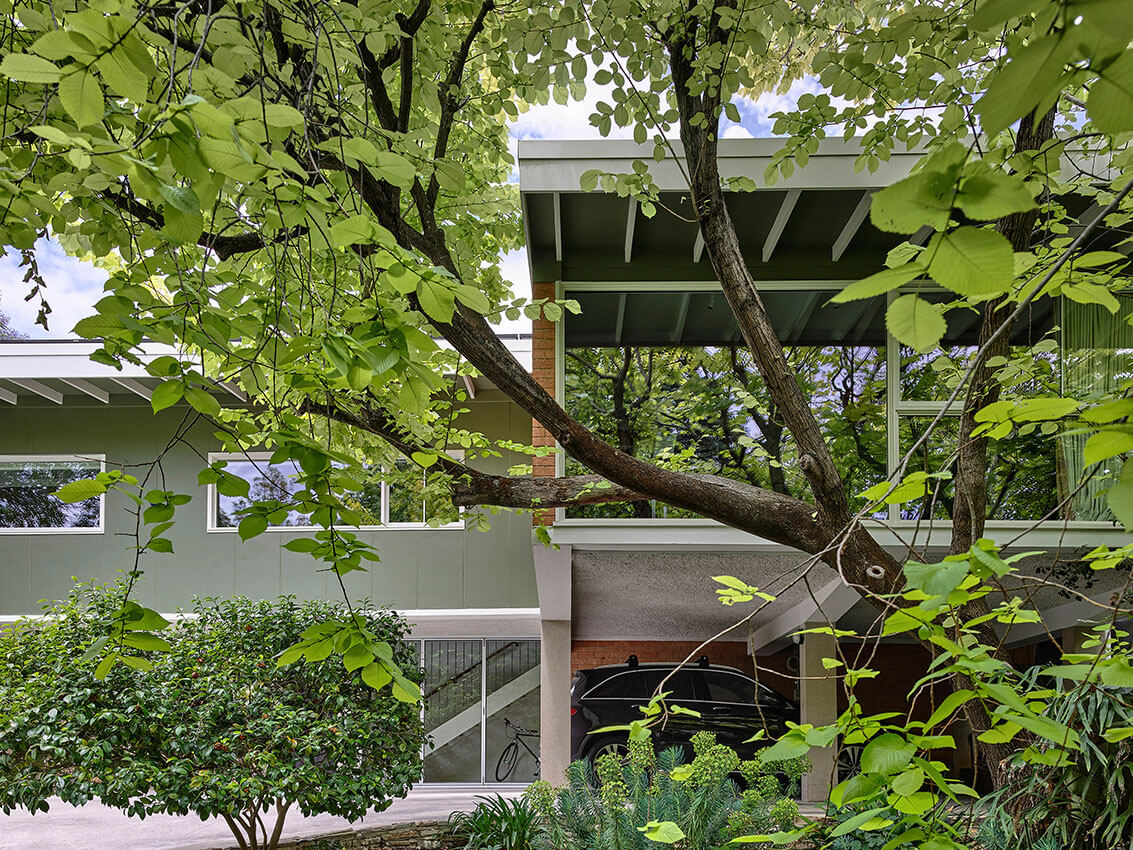
Few projects allow as much experimentation as an architects own home, Connected House is no exception. Fifteen years ago architect/client, Albert Mo and his family moved into a 1950s midcentury home designed by Peter McIntyre. For more than a decade they ruminated on design philosophes that would become the driving force behind the extension. The conceptual framework for the project balanced the restoration of architectural heritage with a new approach to outdoor connections and a growing floor plan to accommodate teenage children. The resulting home is as much about garden as it is about building, the daily ritual of living interacts with nature at all levels from the cantilevered lounge room in the canopy of a mature elm, to the dining tables microcosm courtyard garden.
Ararat House | SJB

This is a rural right sizing project, a new chapter in the history of a modest house that enables an older couple to enjoy life in town. Within walking distance of shops, doctors and friends, Casa Parents is the reworking of a 1950s home that their youngest son was the last custodian of. This reimagining of the home captures its carbon and cultural footprint ensuring that its history is amplified. A new good room facing the north to the street includes a private courtyard and a contemporary veranda, while a bathroom box to the rear delivers delight and surprise.
Brunswick Galley House | Topology Studio

Conceptual inspiration for a house centred around a galley was drawn from the experience of our Clients life when they lived on board a narrowboat.
More broadly this house is about family, strengthening the neighbourhood connection and living with a firm understanding that what we do on an individual level directly affects the macro. The design supports everyday interactions with the neighbourhood through graduations of enclosure between public and private spaces and through careful consideration of entry.
Every centimetre is utilised to avoid excess. Reuse of building fabric while improving its thermal performance minimises waste and new materials that are repairable ensure their longevity.
The design plays with scale, spatially and through material pattern. Pockets of saturated colour within a bright interior, enlivened by shifting light. There is dialogue between the details and materials of the original home and the addition, the transition between the two is distinct but seamless.
Burnt Earth Beach House | Wardle

Burnt Earth Beach House is a multigenerational home that utilizes terracotta in two primary forms through the exterior brickwork, internally to line walls, floors and joinery elements. The dwelling is a haven both functionally and aesthetically, providing connection for its inhabitants to the landscape and to each other. The materials imbue the home with a sense of place further embedding the home in its context.
The broadly cruciform plan describes view lines and daylight ingress precisely. Views are to the Southern Ocean and surrounding landscape. The governing lines of the plan mark the centre point of the X as the island kitchen bench literally and figuratively the heart of this home. Spotted gum timber is used carefully in varying formats recycled (flooring), veneer (joinery) and sparingly as solid (windows and revealed structure in areas). Across two levels a variety of spaces come together for sociability and solitude.
Berninneit Cultural and Community Centre | Jackson Clements Burrows Architects

Located on Phillip Island, Berninneit, (meaning Gather Together) creates a new purposebuilt public building to support a range of uses including a theatre, library, gallery, museum, community function rooms and offices.
Evoking the regions natural geology and topography, the design feels inherently connected to and of its place. Warm, pinkcream brick references nearby sand dunes and beaches, whilst internal timber columns speak to the islands jetties and pier structures.
The building creates a dynamic and interactive destination that is set to become a source of civic pride. Bringing together the cultural and social aspirations of the community, it draws visitors to showcase the regions rich history and culture.
Designed to Passivhaus Standards and incorporating mass timber construction, the Centre expands and diversifies existing community programs and services and creates a place for people to meet and connect.