
Timber House | Mather Architecture
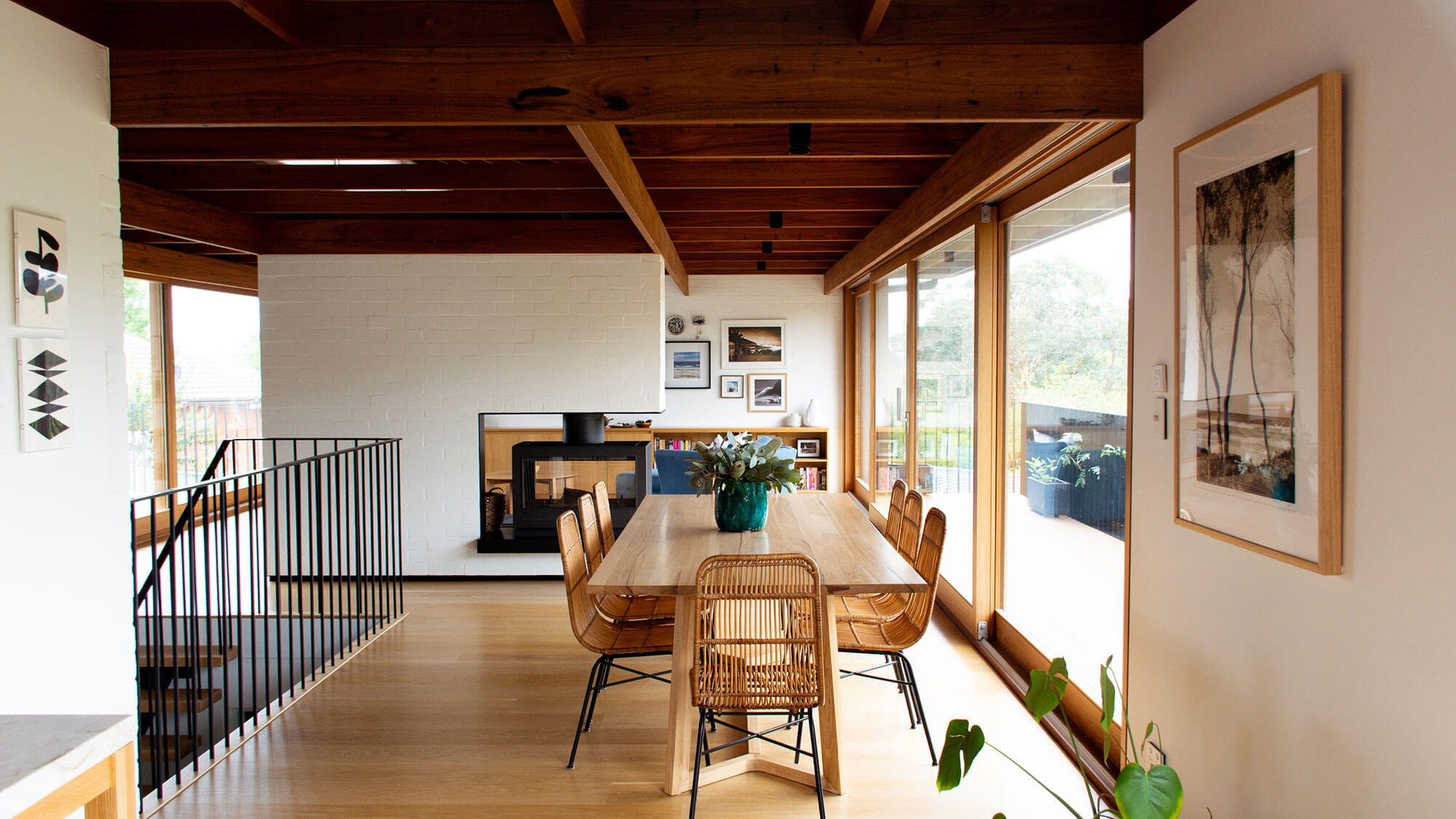
Timber House showcases how existing buildings with character and charm can be successfully transformed for modern family living. The 62 sqm extension and clever reconfiguration of functional spaces has brought new life to this 1970s home originally designed by Harkin & Ziersch Architects from Melbourne.
Existing features, including timber ceilings and clerestory windows, have been revived and celebrated, with new clerestory windows bringing in additional natural light and a soft illumination to the space. New timber flooring, joinery and ceiling linings result in a delightfully warm and comforting home. Expansive doubleglazed windows capture views to outside and lush vegetation, while drenching the living areas with natural light.
Stage 1: new garage/workshop and a selfcontained unit under the main home for multigenerational living or guests. Stage 2: master bedroom suite was constructed along with a reconfiguration of internal spaces. Stage 3: new kitchen, dining, and living areas featuring clerestory windows.
Tomich House | Mark Jeavons Architect with Ohlo Studio
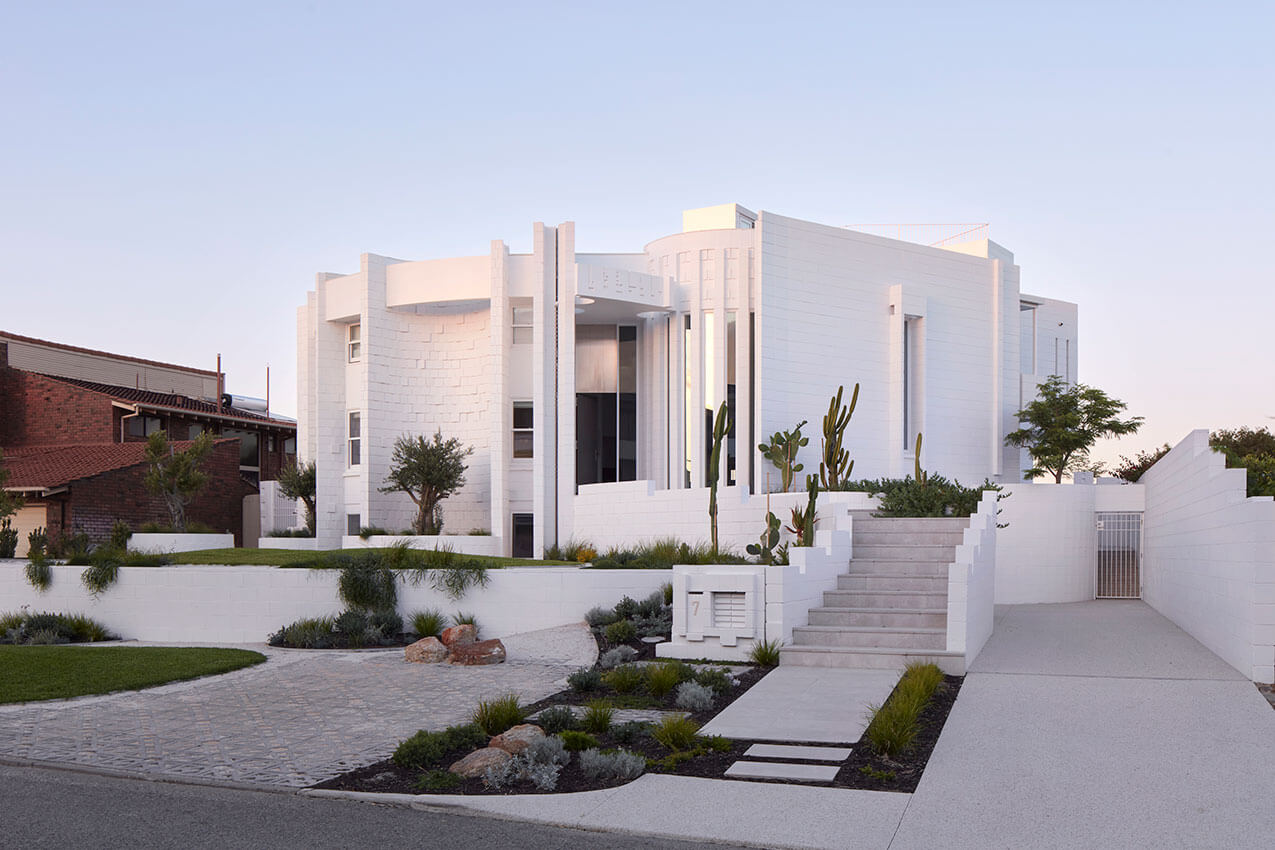
Completed in 1971, Tomich House stands as one of Iwan Iwanoff’s most distinctive houses. However, multiple alterations and a threelevel extension in 1986 deviated from the architect’s original vision resulting in compromised planning and gradual disrepair.
Guided by thorough research into Iwanoffs oeuvre, a comprehensive restoration and adaptation was undertaken. Revitalisation of the original character of the house was achieved through thoughtful replanning and the use of finishes and detailing sympathetic to Iwanoffs original design. Sustainability was prioritized through innovative approaches that seamlessly integrate new technologies while restoring and uncovering heritage architectural fabric.
The Tomich House renovation stands as a contemporary ode to Iwanoff’s architectural legacy by achieving a harmonious fusion of old and new, while preserving the essence of his original design and adapting it to modern living.
Tree House | DunnHillam Architecture + Urban Design

This house has as its central organising principles two things; the established garden and the kitchen table. During the previous 20 odd years of occupation of this house by the clients those two elements were almost the same thing. The majority of meals were eaten at a large table in the garden, and though the brief was to provide a more allweather solution to dining there was also a desire to keep the connection and feel of being in the garden.
The design of this house has dual ambitions; to provide a quiet retreat for two busy professionals, and then at other times to welcome family and friends. Further, the house seeks to demonstrate a way of living that creates more gentle density in our established suburbs and to give an old house another couple of hundred years of useful life.
Tree Island | Carter Williamson Architects

Tree Island is a family home whose airy verticality transcends the limitations of its tight footprint and heritage context, using planning constraints as direct design opportunities. Elegantly balancing the protection of an existing cottage with the freedom to climb up against the adjacent warehouse conversion, its dramatic section is as rare as it is expansive, making of the most of its narrow innercity site.
A breathtaking, lightfilled void at the centre of the home unites the living, dining, and kitchen areas, playing host to a glorious fig tree planted in the kitchen island itself. Illuminated by a long, northfacing skylight, this doubleheight space cradles the most essential functions of its young familys life as it brings the garden inside.
Treetop House | Whitehaus
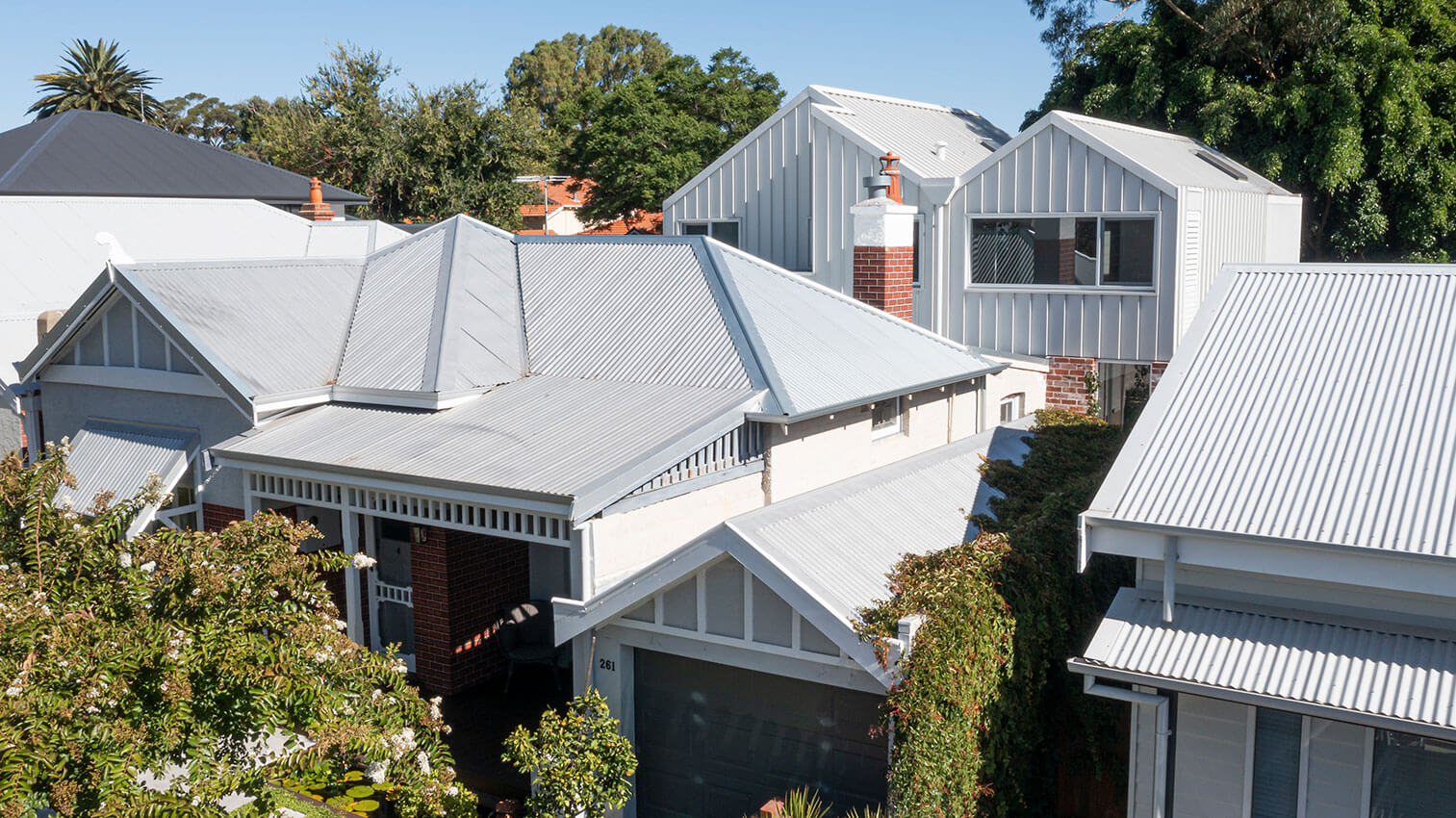
Treetop House delivers a unique family home for a family of six in Subiaco. The brief was to keep as much garden as possible to ensure space for four active kids and provide a robust passive solar house for the future. The south facing addition provided challenges for getting in northern light into the garden and the house and this was achieved through a double gable roof style and north facing windows cut into the living and kitchen areas. To conform to the height limits without compromising the quality of the resulting spaces, we included raked ceilings in the new upperlevel bedrooms. These have a fantastic cubbylike feel, thanks to their outlook into the established gardens generous tree canopy.Our clients were extremely pleased with the resulting design and made statements to the fact that they could never have imagined achieving a result of this quality and delight.
TERRACE HOUSE MIRAGE | ALCAMI ARCHITECTURE

The walls of this gem hold 150 years of stories frozen in time, now meticulously restored. Unfolding a narrative that defies spatial limits says Victor Alcami, Director of Alcami Architecture.
The fully openable ground floor with sliding panels transforms into an open space haven. A visionary design with outdoor elements inspired by Mediterranean vernacular architecture infuse cultural nostalgia, while elevated mirrors expand the space with an infinite perspective.
A love letter to Victorian terraces, the operable courtyard, a symphony of custom design, breaths fresh air. Sunlight dances, highlighting the natural finishes, while a vibrant orange bathroom promises indulgent selfcare. Sustainability whispers through repurposed materials and repaired walls, ensuring longevity.
Metallic finishes echo Chippendale’s industrial heartbeat, blending Modernism, Japanese seduction, and reminiscences from European interior design. Alcami’s style resonates with transitional mystery, offering an aspirational escape through art and architecture, inviting a desire for more tales from this poetic design journey.
Stewart | SSdH

Stewart celebrates the 1970s brown, brickveneer, Brunswick house a quintessential element of Melbournes built character that defines a period within Australias recent history but is yet to be recognised as having heritage value.
The employed strategy focuses on a combination of new elements and light touch design interventions to provide significant impact. Internally, an intentional blending of new and existing conditions leaves viewers questioning where interventions begin and end.
This approach not only preserves the architectural significance and character but also considers the economic and environmental impact, proving that minimal intervention is a valid response in today’s climate. The success of the project opens doors for others by demonstrating the accessibility of thoughtful architecture. This impact extends beyond the immediate project it begins to shape the potential future of surrounding suburbs as they evolve, recognising that their inherent value and ongoing contribution to our city is worth protecting.
Suite Shed | alsoCAN
We retain traditional facades and streetscapes, but what about backyards?
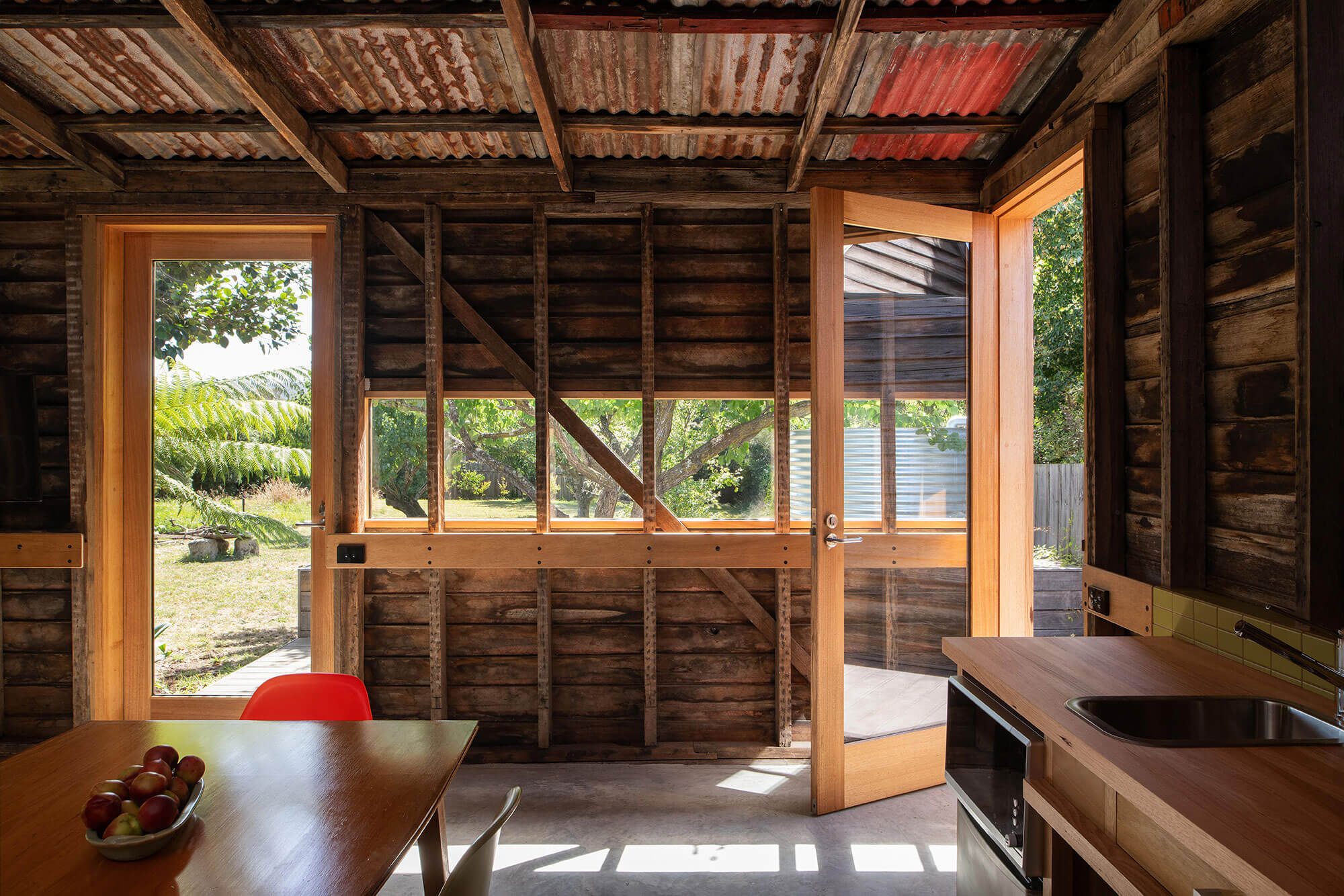
The existing building had been a sleepout in a working backyard dotted with fruit trees. We wanted to keep this quality and this purpose.
From the outside, the result retains the same profile. Nearly all the existing structure has been kept, but now insulated and wrapped so its waterproof and warm. From the inside all the studwork, cladding and roofing remain, so it looks just like it did before with new fittings.
The new building adds no new floor area. However, we now have a larger bedroom, a refitted bathroom and a large space for living.
A critical part of the design was to make the building fully accessible. There are handrails around the outside of the rooms with sensoractivated lighting, along with more generally accessible aspects such as wheelchairaccessible benchtops, rails, a shower seat and talking kitchen appliances.
Sunkissed Higgins | RADS

Aussie culture has always been bound to allure of the coast. Sunny days lathered in coconut-scented lotions. Sun blushed skin becomes tanned over the longer days. Rising early to hit the surf before the wind picks up. Salty hair, sandy feet and sinking cold Coronas with friends while the kids run amok.
Welcome to Sunkissed Higgins: A home for 80’s Babies who skipped the big smoke to live the coastal dream.
Yiew!
Square House | Mather Architecture

Square House is an elevated late 60s modernist home situated on a steeply sloping block in Farrer. The aim was to minimise the impact of any additions on the natural environment by creating very minimal extensions that interrupt the perfect square, with a total of 16m2 added to the floor plan. The first pop out for the kitchen area adds space under the existing roofline, while the second, projects further out than the existing roofline, utilising the continuous roof throughtowall properties of longline cladding to create a neat insertion.
New cedar windows provide material warmth and contrast the simple lines of the exterior cladding. Sunshade shrouds on windows to the north and west were added along with stained timber battened garage door, front balustrade, dividing screen, and feature sliding panel. These elements connect the midcentury house with the client’s love of Japanese architecture. The result is a calm, lightfilled home