
Balmoral Bluff | Shane Marsh Architect
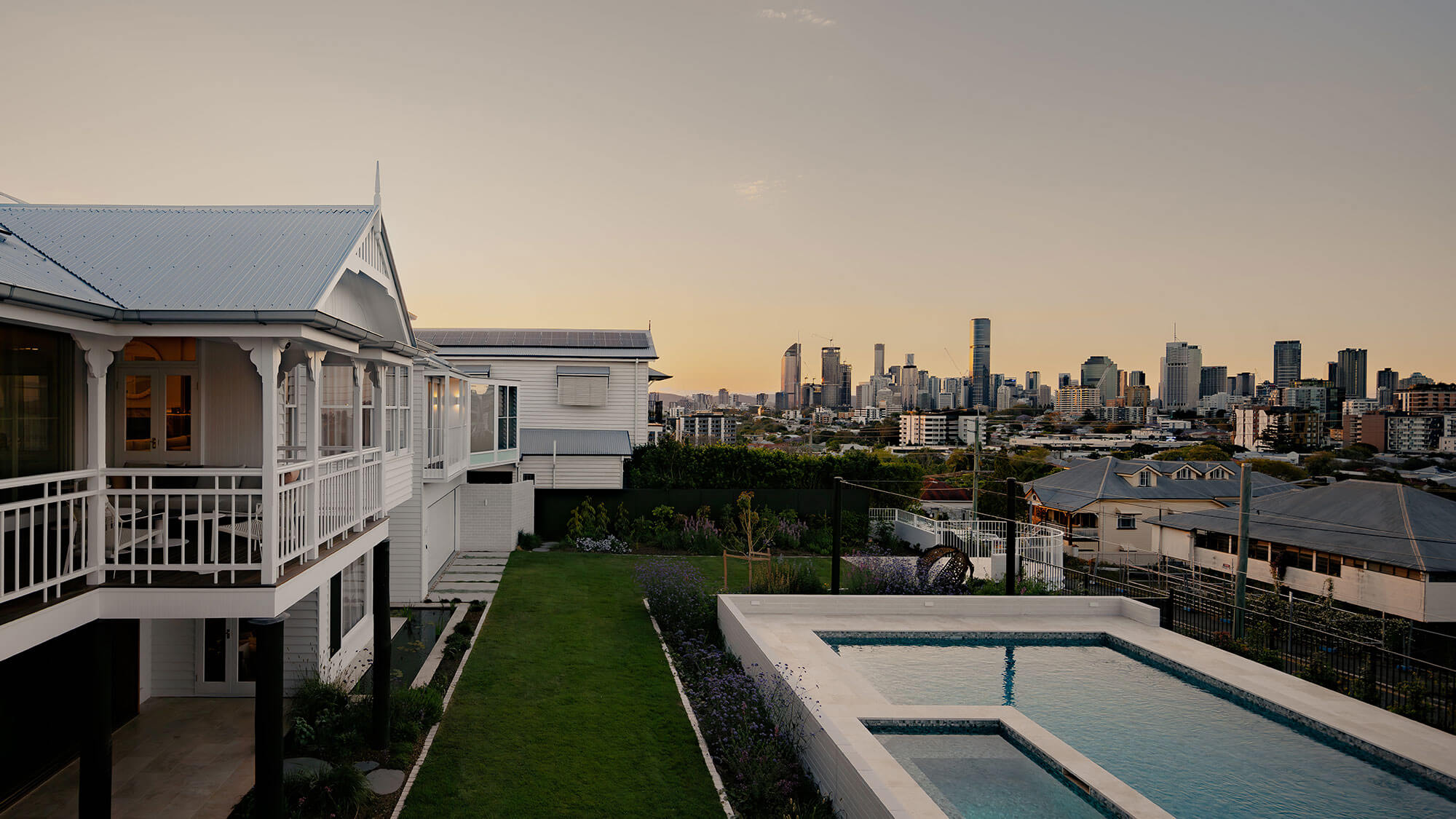
The Architectural design by Shane Marsh is intended to look inward towards the past while balancing the outward looking home that faces towards the city’s future.
Barton Street Residence | Chalmers Partners Architects
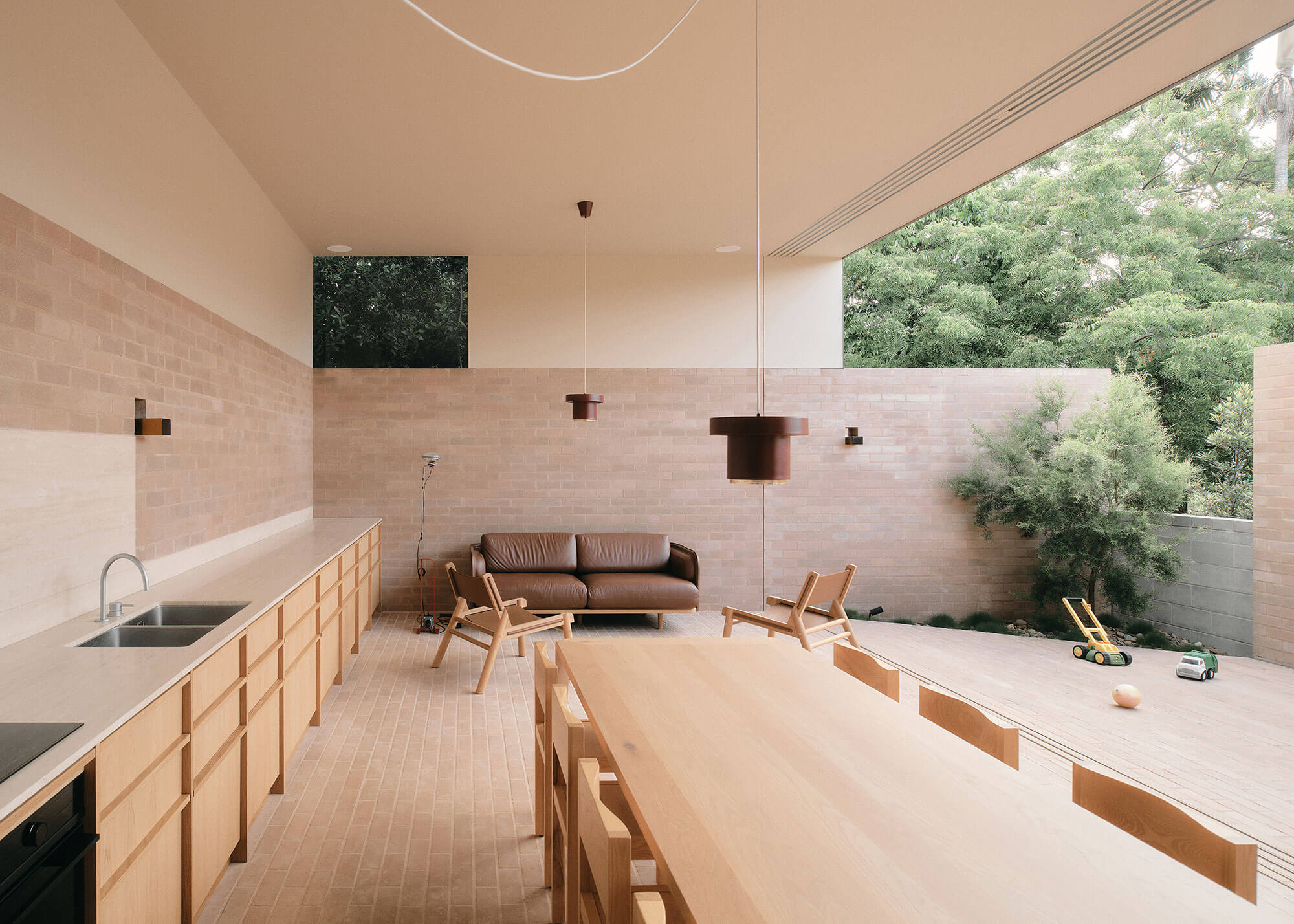
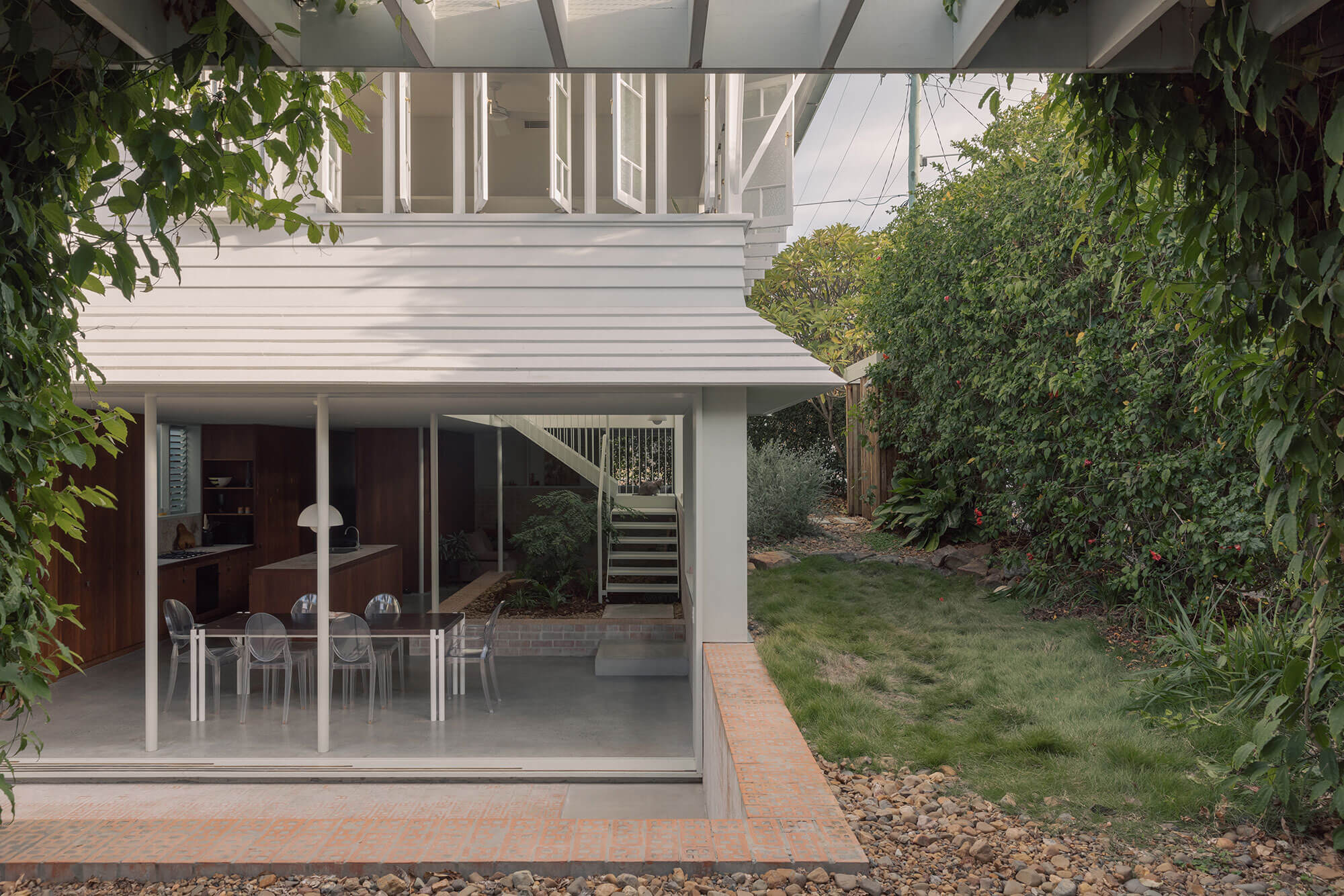
With a growing family, the need for space led to a transformation into an inward facing courtyard house. Inspired by a connection to Japan, the design sought to blend Japanese tradition with practicality. While Brisbane differs greatly from Tokyo, the idea of an insular sanctuary resonated, emphasizing control within one’s property. The house creatively integrates traditional Japanese elements like roofs, shoji screens, tatami, and engawa, adapting them to subtropical living. Despite limited frontage, the design features an internal deck and lower courtyard. The interplay of light, spatial transitions, and visual connections, reminiscent of shoji and fusama, defines the architecture. The use of brick replicates the textural experience of tatami, showcasing clever integration with sub-tropical Queensland architecture. The project successfully delivers a bespoke solution aligned with the family’s evolving needs.
Dorrington House | Whiteroom Architects

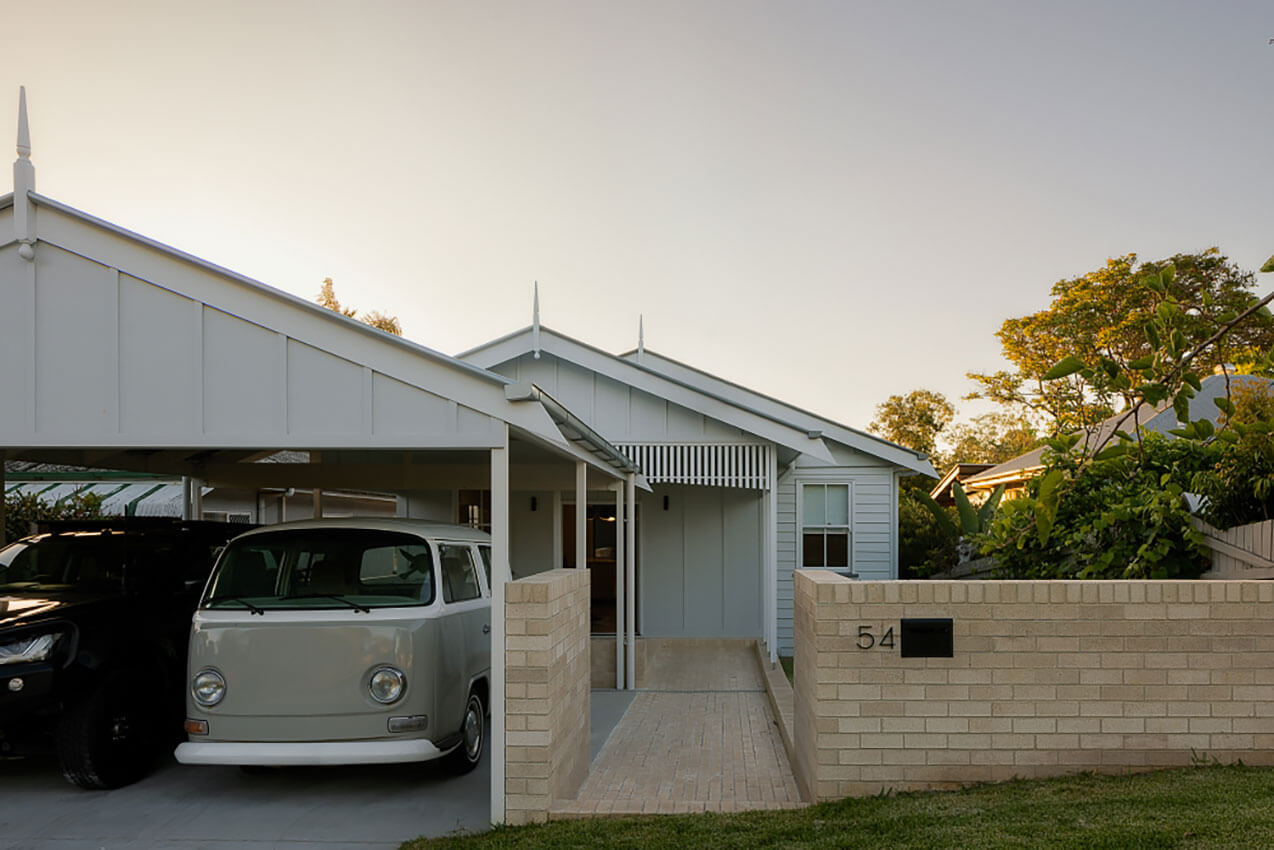
Dorrington House is a multigenerational family home is transformed from a 70-year-old, postwar, Queenslander. A survivor of a lift, extension, and a smattering of faux character, this alterations and additions project has transformed its functionality to house three generations.
The house engages outwardly in a way that is both respectful of the character of its place and is an individual and honest expression of its own time. It strives to tell the story of how it was created. It marks a new chapter in this house’s journey, traditional of Queenslanders, each modified by successive owners, leaving their unique mark. We respect what came before us here, and we plan for this chapter to endure, for quite some time yet.
East Toowoomba Renovation | Kin Architects

East Toowoomba Renovation distils an abundance of ideas into an enriched long-term home for a family of six. A careful renovation and rear extension to our clients’ humble cottage has retained its charm and street presence, while allowing it to deftly accommodate four kids and two parents who work from home. The L-shaped extension wraps around the cottage, forming courtyards where the two meet, and houses generous shared spaces that open seamlessly to their garden. Fairy gardens, ‘rat runs’ and thoughtful kids’ retreats are integrated throughout the home, infusing it with child-centric magic. Grounded in pragmatism, including meticulously designed workflows and a tailored office for each parent, the design responds to the busyness of our clients’ daily lives – but more importantly, it connects to their beloved landscape, prioritises moments of delight and fosters togetherness for this close-knit, community-minded family.
High Street | Lineburg Wang
A tiny pre1911 cottage on a tiny 253m2 site, the design works hard to find generosity.
The existing house is moved forward, a relaxation to all boundary edges enables enough space to construct one special room to the rear.
The project builds less in order to provide generosity on a constrained site the special room remains flexible, void of any fixed walls or cabinetry that could dictate the permanence of the occupant’s routine.
The room is an empty square, serviced by a utility core, circumnavigated by a split-level stair. By removing obstacles, the special room is free, occupied only by loose furnishings, changeable. With doors open, the internal and external public space operates as a single volume, sharing the same brick materiality.
The project challenges the commonly prescribed room requirements of today’s homes, working with strategies of expanding constrained space to ensure the small site does not feel small.
Kent | Base Architecture
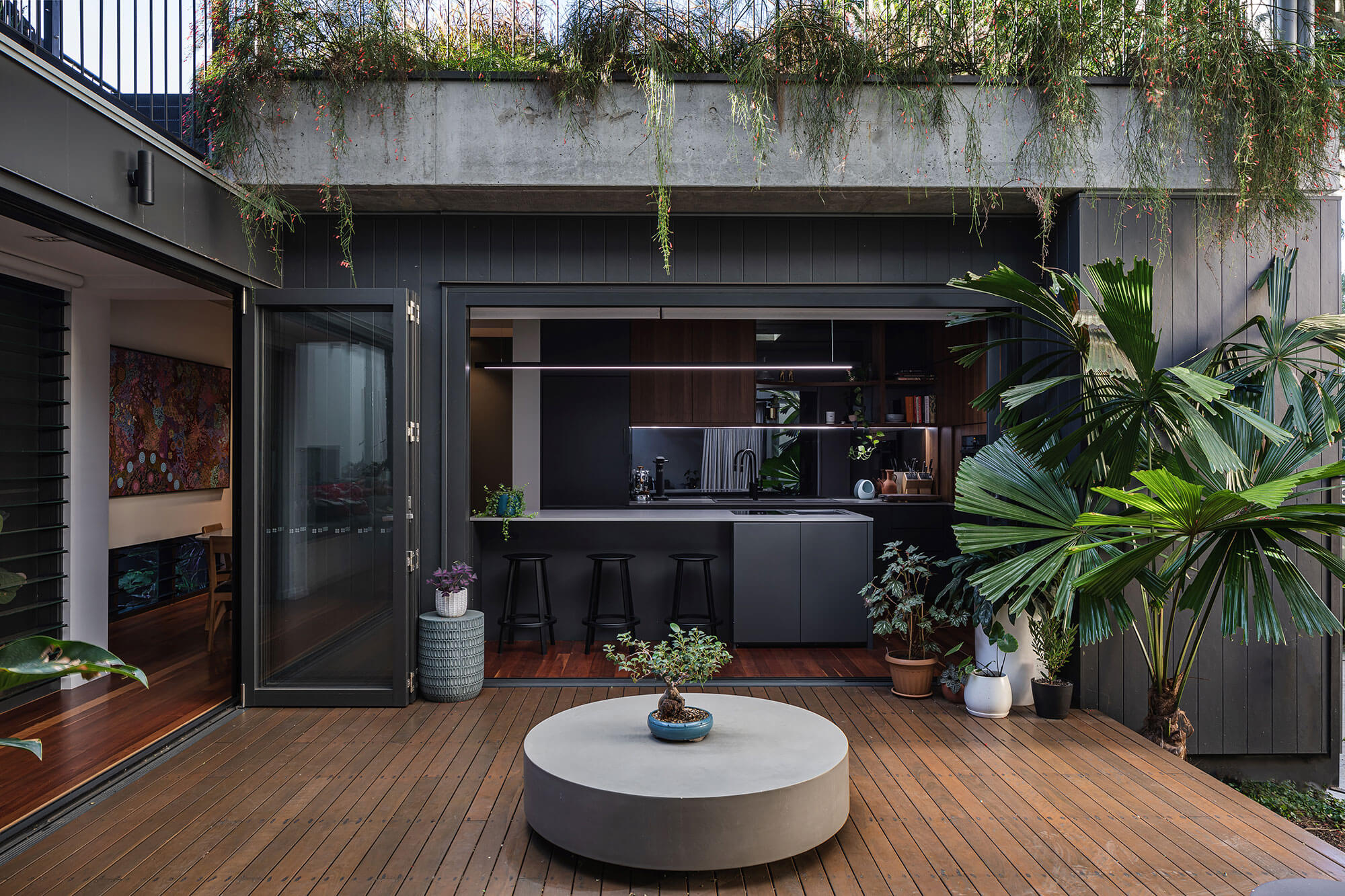
In New Farm, this small plot posed a challenge for transforming a well-loved timber cottage into a modern haven. All available space has been meticulously utilised, with a plunge pool at the entrance and rooms opening to private courtyards for a spacious feel. Sustainability was key, utilising underground cool air, solar panels, and concrete for thermal mass. Mixing classic white timber with bold concrete and steel accents has contributed modern flair while maintaining warmth. In spite of the surrounding neighboring homes and proximity to the street, the secluded courtyard at the rear offers privacy and seclusion. The owners’ desire for an urban oasis has been realised through abundant greenery, from rooftop gardens to green walls, seamlessly blending the house with nature’s embrace.
KANGAROO POINT HOUSE | NIELSEN JENKINS
Kangaroo Point House explores ideas of refuge and exposure in a tight inner-city context. There was a desire from our clients for the house to be able to be an active participant in the joy and excitement of the pre- and post-game pedestrian commute from the Pineapple Hotel to The Gabba whilst being able to retreat away from this if need be. Similarly, within the site there are moments that have a sense of performance, and moments of being able to feel entirely protected deep in the plan whilst still being only a couple of meters away from the ankles of boozy passersby.
The ground floor plan of this project considers the site as a cohesive whole, seeding the architecture into the furthest extents of the site, and bringing the garden inside the building as a two storey void allowing ventilation and dappled light deep into the plan.
Little Green Cabin | Cloud Dwellers
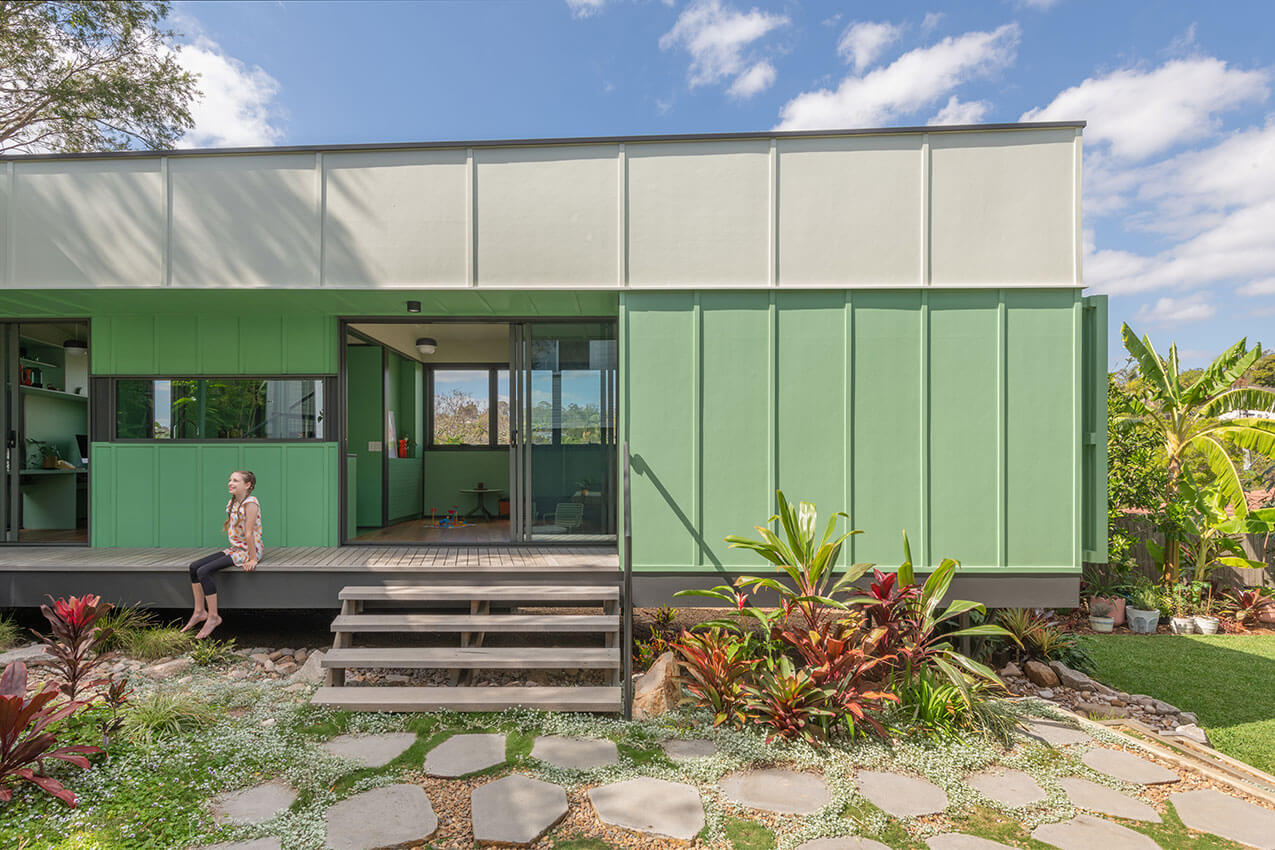
Little Green Cabin goes beyond the standard house extension approach, instead offering an enjoyable backyard getaway. Following the removal of earlier additions to the existing house, a new covered link leads to a cabin positioned adjacent the rear boundary. This planning allows both house and cabin to look into a central landscaped courtyard. The new structure also progressively brings people from the elevated house down to ground, reconnecting the house with the landscape.
The cabin interior accommodates an office, bathroom, kitchenette, and a flexible space used both for visiting relatives and as a breakout for a family with active boys. While the design features the clean lines of modernism, quirky colours that continue from interior to exterior hark back to the fibro holiday houses once common along Queensland’s coast. Little Green Cabin’s humble material palette, compact size, and climate responsive design show that architecture can still be about simple pleasures.
NA House 2 | Reddog Architects
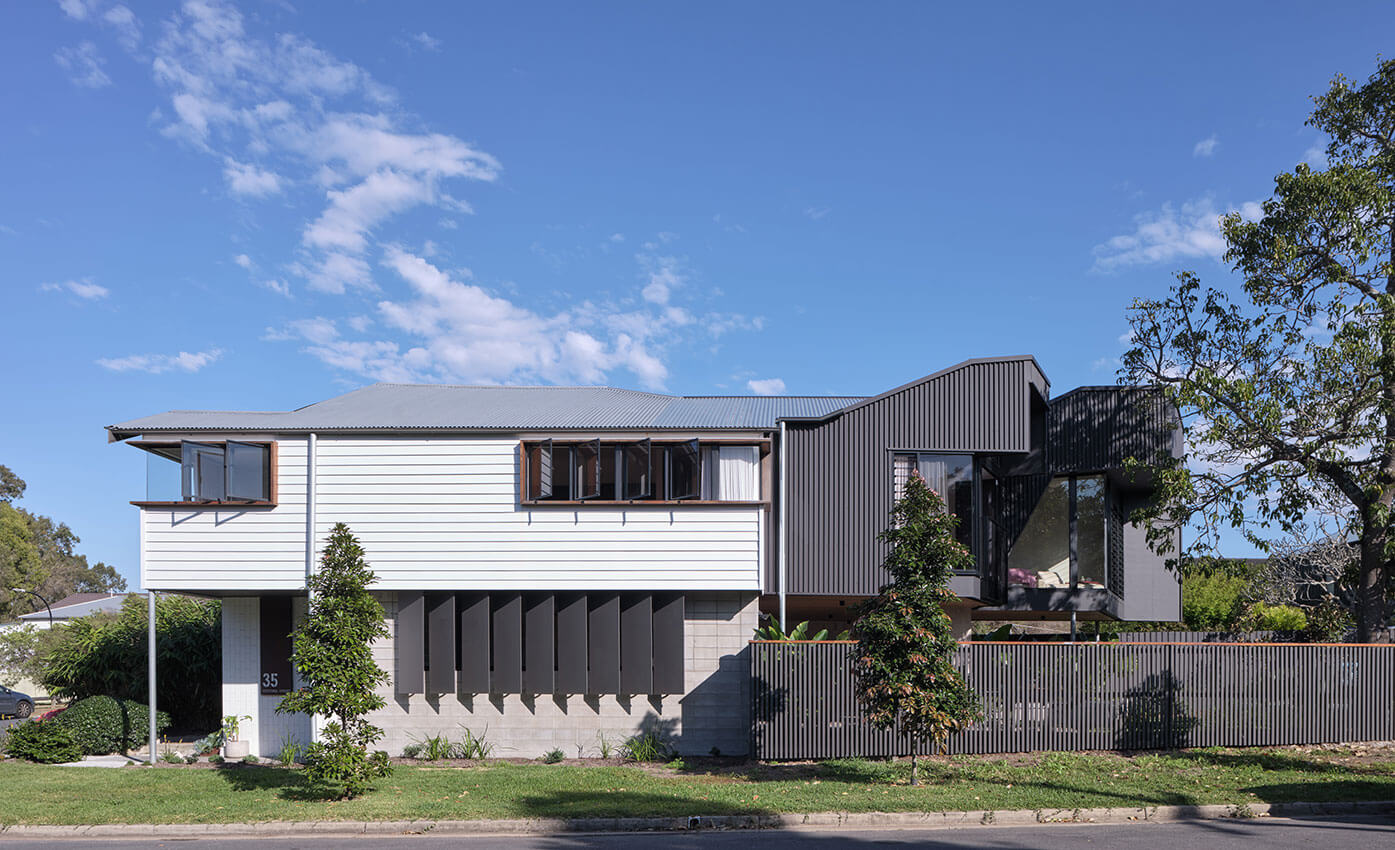
With the stage 2 works, the owners’ initial aspirations were ambitious yet unequivocalto not only build upon the overarching design of the house but to extend its spatial boundaries, refine the material quality of the spaces and fashioning spaces that exuded adaptability and flexibility. The completion of a masterplan started the journey and laid the foundation for the project into the future. By expanding the living areas of the house including further developing the undercroft area, the stage 2 additions achieve the original goals of engaging physically and visually with the backyard whilst respecting the need for the spaces to be flood resilient. The rear addition to the building is orientated northeast and helps achieve the goal of engaging visually with the backyard.
In continuity with the material palette introduced in stage 1, the architectural narrative remains cohesive, ensuring a seamless transition between the original structure and the recent expansions.
River Loop House | Vokes and Peters

River Loop House is an alteration and addition to a midcentury detached house in suburban Brisbane. New works reconfigure the original plan to improve social connectivity, respond to climate, and emphasise the presence of the suburban setting, including the revegetated garden and the pleasant neighbourhood streetscape (part of a popular inner city cycling route known as the ‘River Loop’).
Reconfigured internal planning, circulation and new openings create expansive and generous volumes, with only 14m2 added to the overall GFA.
The resulting building is more open and generous than its predecessor, providing a pleasant living environment for its occupants, promoting social engagement through the active occupation of the front garden and street elevation, and establishing a lush, native garden that contributes to the visual appeal of the local streetscape and the broader suburban garden setting of Yeronga.