
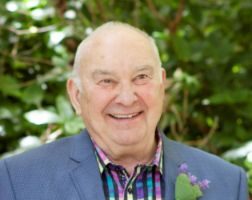
Vale Barry Millage FNZIA FRAIA
12 November 1941 — 25 October 2024
It is with great sadness that we inform the membership of the passing of Barry Millage FNZIA FRAIA on Friday 25 October 2024 in New Zealand.
Barry Millage, FNZIA, FRAIA, was a distinguished architect whose work significantly influenced the architectural landscape in New Zealand, Australia, and beyond. His career spanned decades, showcasing creativity, dedication, and a commitment to community-focused design.
Early Beginnings and Mentorship
Barry’s journey into architecture was shaped by Bernard Johns, a prominent residential architect, and a friend of Barry’s father. Although Barry initially aspired to join the navy, his father had other plans. Bernard Johns offered Barry an apprenticeship at five pounds per week, and under the mentorship of this seasoned architect, Barry began his architectural career. This formative experience ignited his lifelong passion for design.
In the early 1960s, Barry embarked on what he fondly referred to as his “misspent youth,” traveling to the United Kingdom and Canada. During this period, he gained invaluable experience, collaborating with Fritz Schulze in Nanaimo, British Columbia, on projects such as the design of educational facilities, including Nanaimo District Secondary School and John Barsby Secondary School. These experiences were pivotal in shaping Barry’s architectural perspective.
After eight years abroad, he returned to New Zealand to complete his architectural degree, building on the knowledge and skills he had honed overseas.
Architectural Highlights
Barry Millage’s expertise covered a wide range of projects:
- Residential Projects: Barry worked on numerous homes, blending sustainability with innovative design principles. Notable projects include designs in Waikanae, Auckland, and Wellington, often featuring meticulous hand-drawn plans.
- Community: His contribution of time on the plans for the Poutasi Memorial Hall in Samoa post-tsunami was a highlight. Various Masonic lodges, such as the Shirley Masonic Lodge in Christchurch and Lodge Waikanae in Marae Lane Waikanae, New Zealand, exemplified his ability to merge modernity with traditional influences.
- Educational Architecture: Barry’s collaborations with Fritz Schulze emphasized functional and inspiring learning environments, showcasing his commitment to community-focused design.
- Commercial and Heritage Projects: Restoration of heritage buildings, such as the Wellesley Boutique Hotel in Wellington, demonstrated Barry’s skill in preserving historical architecture while meeting contemporary needs.
- Shop Fitouts and Restaurants: Barry designed various commercial spaces, including shop fitouts for hairdressers and restaurants. A notable example is the renowned Wellington restaurant Genghis Khan, reflecting his versatility and ability to create inviting commercial environments.
- Apartments and Townhouses: Barry contributed to the design of apartment blocks, demonstrating his ability to balance functionality with modern aesthetics in urban living spaces.
Collaboration with Bernard Johns Architect
Barry’s early collaboration with Bernard Johns laid the foundation for his architectural career. Learning from Johns, a master of residential design, Barry developed a deep appreciation for craftsmanship and attention to detail, qualities that would define his work throughout his life.
Major Achievements and Recognition
Barry was a Fellow of both the New Zealand Institute of Architects and the Royal Australian Institute of Architects, signifying his contributions to the field. His notable roles included:
- Trustee of the Masonic Villages Trust
- Project Architect for alterations to the New Zealand Embassy in Beijing
- Contributor to the post earthquake Christchurch challenging rebuilds
Sporting and Musical Talents
In addition to his architectural career, Barry was a talented sportsman and musician. In his late teens, he played in the NZ “rock” band, the Premiers, before heading on his overseas adventures. Though he initially tried boxing at Christ’s College, he discovered his true passions in rugby and judo, excelling in both sports. He achieved a 4th dan in judo and was especially proud to serve as a referee at the Commonwealth Games in Sydney. His love for rugby and achievements in judo reflected his team spirit and dedication. As a musician, Barry’s creativity extended beyond architecture, enriching his personal life. Until his passing, he still enjoyed playing his baby grand piano.
High Status as a Mason and Origins
Barry was a Right Worshipful Brother of high standing in Freemasonry, a testament to his leadership and commitment to community service. Born as a fourth-generation European in Cawnpore (now Kanpur), Barry’s upbringing was deeply shaped by the end of British rule in India. In 1947, he moved to England and eventually settled in New Zealand, where he continued his education and embarked on the next phase of his life. Barry’s journey from youthful aspirations to a celebrated career demonstrates the profound influence of his upbringing and values.
Notable Clients
Barry’s architectural acumen attracted high-profile clients, including:
- Tainui Group Holdings Ltd.
- Shirley Freemasons Centre, Christchurch
- Beijing Royal Park Country Club and Golf Course
Vision and Legacy
Barry’s designs reflected his passion for creating spaces that were not only functional but also emotionally resonant, blending modern aesthetics with cultural and historical elements. His legacy endures in the architectural community as a mentor and visionary.