
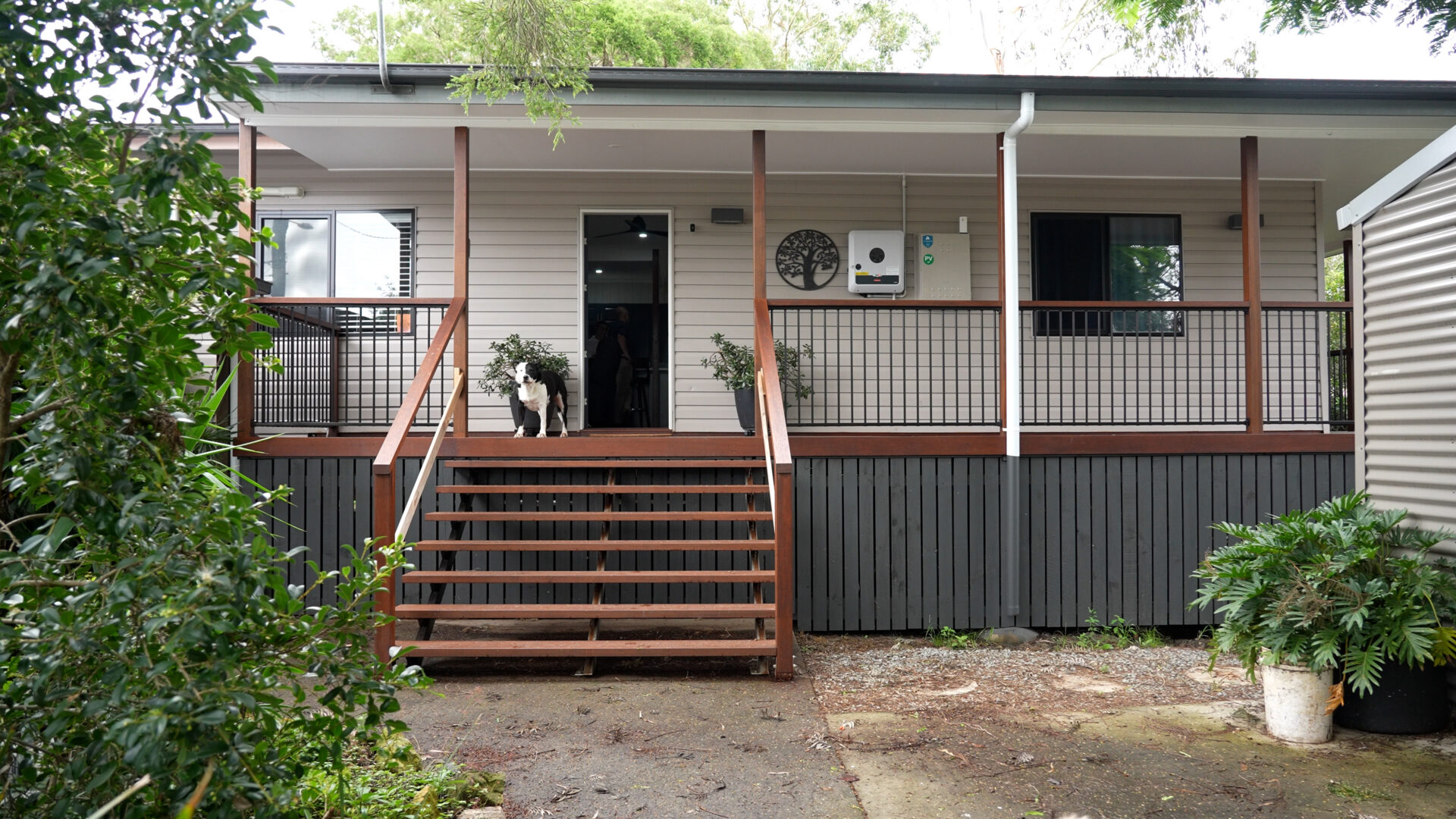
The owners of this home in a leafy Brisbane suburb have managed to raise their home out of harm’s way while still maintaining the home’s original scale and relationship to the ground.
When 150mm of water came through their home in the 2022 flood event it was the start of a three-year rebuilding journey – not only restoring their home but also recovering emotionally from the experience.
Their flood resilience works were tested far sooner than expected when Tropical Cyclone Alfred caused flooding in their street in March 2025. But this time they remained safe, dry and relatively calm.
“It would have been 250-350mm through if we hadn’t lifted,’’ the homeowner recalls. “It was such a relief not to flood again – a lot less anxiety, a lot less stress.’’
A raised switchboard meant they didn’t even lose power.
Using the knowledge gained from experiencing a flood, as well as strategies recommended in the original guidance publication, the couple also, independently made their shed flood resilient.
Their experience now features in the updated Design Guidance for Flood Resilient Homes, which builds on the research and design principles of the original publication.
Their steel-framed shed features PVC flooring, raised shelving, elevated power points and stainless-steel toolboxes. The shed walls are coated in hardwood panels, and everything inside has been chosen with water resistance in mind.
There is even a hoist for the homeowner’s “baby’’ – a 1988 Ducati 750 sport motorbike.
“We have peace of mind now and that’s the silver lining.’’
Architect: N/A
Project: Home Raising program, Resilient Homes Fund, Department of Housing and Public Works
Location: Brisbane, Qld
Date: 2025
CASC Green Digest project lead: Sophie Barrett
Links to further reading: