EmAGN Spotlight
To feature and celebrate the amazing work being undertaken by those within the EmAGN demographic, we’ll be sharing profiles of some of these dedicated people.
For EmAGN South Australia’s second Spotlight piece, we’re featuring Eddie Omondi.
Eddie is a graduate of architecture whose work and research explores mid-rise housing and its potential to address Adelaide’s growing housing challenges. In 2025, Eddie was awarded the Adelaide University Kenneth & Hazel Milne Travelling Scholarship. The scholarship supports graduates of the Master of Architecture to travel and undertake study abroad, before returning to Adelaide to share their experience and benefit architecture in South Australia.

What inspired you to focus specifically on mid-rise housing as a solution to Adelaide's housing challenges?
I suppose I am personally experiencing the increasing lack of affordability of living in Adelaide.
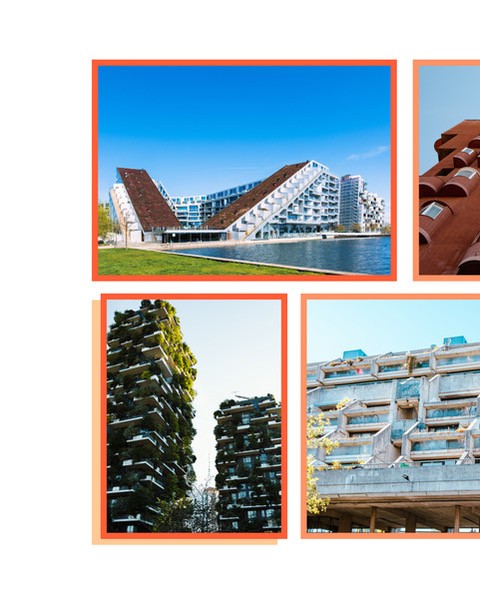
Growing up, almost everyone I knew lived in a big house with a backyard, but as our population grows, that is becoming less and less attainable. I don’t necessarily think that has to be a bad thing. While living in a big house with a big fence is nice because you have your own space, it’s not the only way to have a high quality of life. I think we have a unique opportunity to develop housing typologies that can offer some of the benefits of the traditional quarter-acre block, but in a smaller footprint, while also providing greater connectivity and a stronger sense of community.
Could you trade the big backyard for access to a beautiful park, for example? Mid-rise housing is particularly interesting because it allows us to create more housing without losing the human scale of the city.
After visiting all of the case study cities, which one had the greatest influence on your thinking, and what made it stand out?
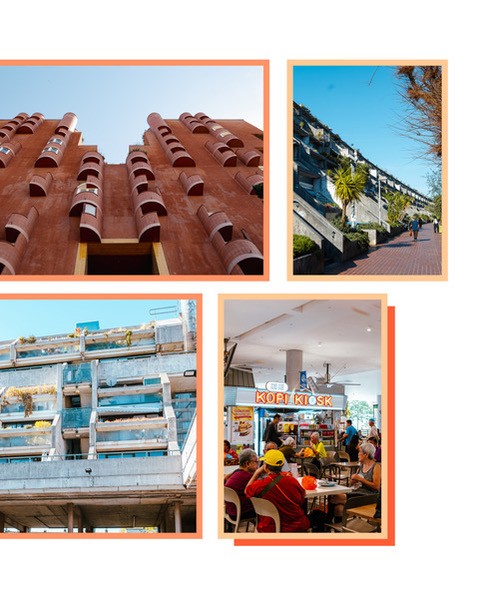
The city that amazed me the most was Copenhagen. It felt like a city designed for people, rather than for vehicles. There seemed to be more bikes than cars on the road, not to mention the very generously sized bicycle lanes, but what stood out to me more was the considered approach to the city as a whole.
Architecture, housing policy, public open space, landscape, transport and urban planning all seemed to work together rather than being treated as separate issues.
In particular, I was fascinated by Copenhagen’s limited-profit social housing model, (almene boliger), which provides housing through limited-profit housing associations. Rents are generally capped and set to cover the actual costs of providing and maintaining the housing, rather than maximising investor profit, with government and municipal support helping to facilitate construction and maintain long-term affordability. The model also aims to create mixed and inclusive neighbourhoods, with municipalities able to require social housing within new developments. This means affordable housing can be integrated into ordinary neighbourhoods rather than being concentrated in separate estates.
Have your views on what Adelaide needs changed since completing your international research? If so, how?
When I began the research project, I think I expected most of my learnings to be about how we can build better buildings. What I realised, however, was that the housing conversation is much broader than architecture, and that as architects, our work is only one part of the solution.
We obviously need to design better housing, but we also need more connected public transport to support a less car-centric city, and we need to work more closely with urban planners and landscape architects to develop holistic approaches to designing neighbourhoods. Most importantly, I think we need planning and housing policies that actively encourage high-quality, affordable and appropriately dense housing. The research made me realise that good housing outcomes are often the result of a much broader system working well, rather than simply a good architect designing a good building.
Ultimately, it’s about creating thoughtful, context-responsive outcomes that positively impact both people and the environment.
If you could implement one idea or planning principle you observed overseas in Adelaide tomorrow, what would it be, and why?
For me, the most transferable idea is Vienna’s Four-Pillar Model, which incentivises affordability and design quality at the same time. In Vienna, developers competing for subsidised housing sites are assessed by an interdisciplinary jury against four criteria: architecture, economy, ecology and social sustainability. The land price for these sites is fixed in advance, meaning developers compete on the quality and value of their proposal rather than simply who can pay the most for the land. I think that is a really powerful idea.
For Adelaide, a similar system could be applied to government-owned or strategically rezoned land, particularly sites identified for medium-density housing. The State or local government could set a fixed land price and require competing developer architect teams to demonstrate performance against the four pillars: high-quality architecture and public realm, genuinely affordable housing and controlled construction costs, environmental performance, and social outcomes such as diverse dwelling types and communal spaces. I think this could help shift the focus from simply maximising the development potential of a site towards achieving the best overall housing outcome.