The Student Organising Network for Architecture (SONA) and the Australian Institute of Architects are proud to announce the chapter and national results for Super Studio 2026. As Australia’s premier national student design challenge, Super Studio provides architecture students with an intensive, fast-paced platform to push conceptual boundaries and tackle real-world design briefs.
This year’s Super Studio national brief, titled “Pause, Gather, Feel”, was developed by Creative Directors Madeline Sewall and Keith Westbrook of design practice Up to Something, alongside SONA Vice President of Professional Development Zoeanna Upadhyay.
In a world increasingly regulated by speed, digital overload, and screen interaction, the 2026 brief challenged participants to design physical spaces centered around a single artwork, artefact, or narrative – creating environments that encourage observation, presence, and embodied engagement.
Reflecting on the outstanding calibre of entries this year, the jury panel highlighted the creativity, rigor, and fresh perspectives brought forward by the student teams:
“Congratulations to Arirang Gogae from Queensland, we were deeply moved by the clarity, elegance, and simplicity with which your ideas came together. What made this project so extraordinary was how music and architecture were fused to address profound political divide. Set on Arrowhead Ridge in the DMZ, transforming a memorial pavilion into an architectural musical instrument was a stroke of genius. The idea of visitors plucking integrated strings to send vibrations of the song Arirang across the space, allowing strangers from opposite sides to feel one another’s presence, was a deeply poetic reflection on memory, touch, and shared identity.
The thought, energy, and genuine passion you brought to your presentation were incredible to witness. You truly brought your project to life in such an engaging and creative way, and it was an absolute highlight of SuperStudio 2026.”
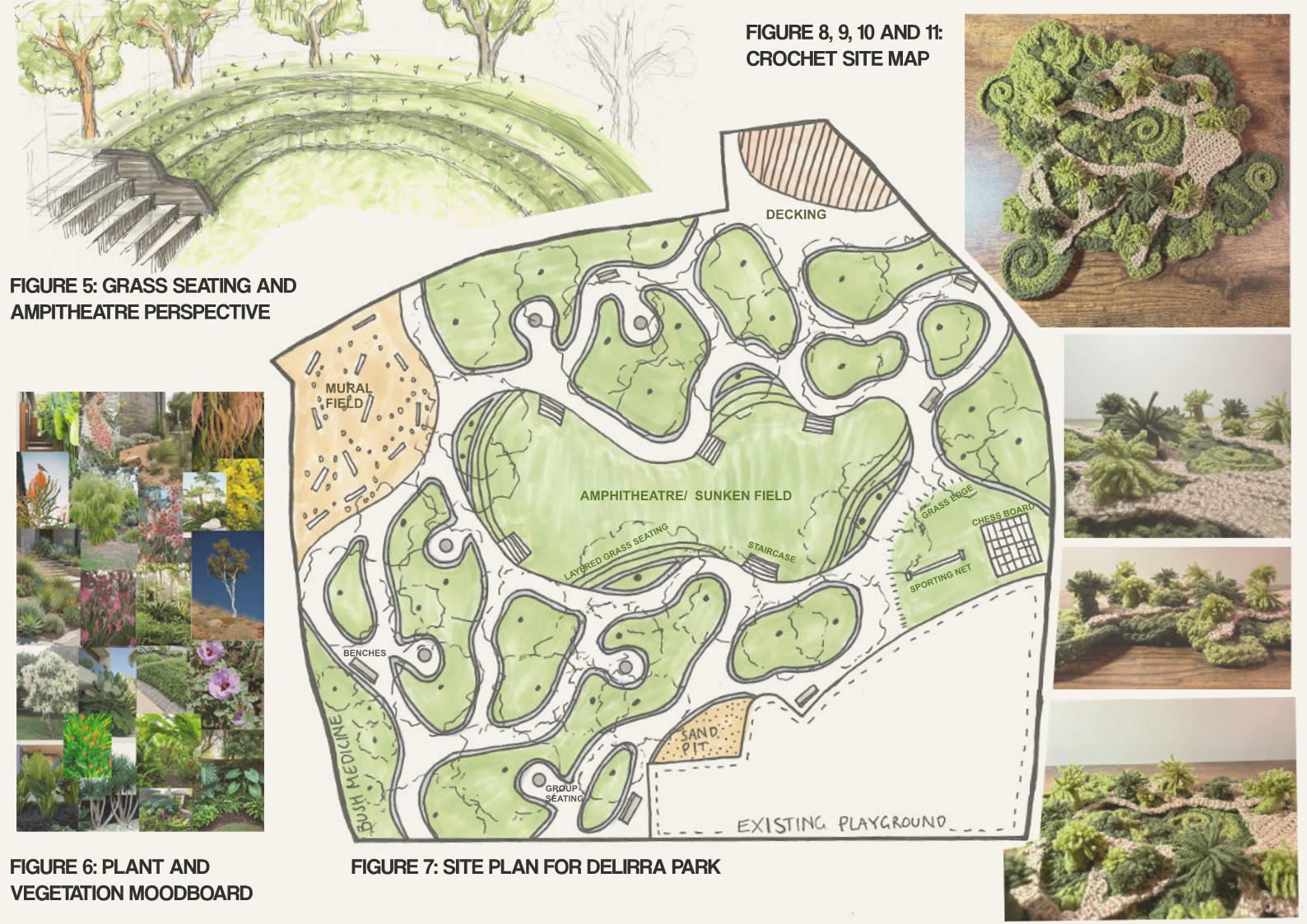
They added “To all the Chapter winners who presented today, your inventive thinking shone through not just in your concepts, but in your visual storytelling and drawings. We particularly loved those unique, personal creative touches, with special mentions going to the crochet model, which was an absolute highlight, and the Refuge presentation, which resonated strongly with us.”
“Seeing how much heart and original thinking went into your work brought immense energy to the room. It was an absolute joy to watch, and you should all be exceptionally proud of what you’ve achieved.”
Super Studio is an annual conceptual design competition hosted by the Student Organising Network for Architecture (SONA), the student body of the Australian Institute of Architects. The competition connects architecture students across Australia with mentors and industry leaders, fostering creative exploration, peer networking, and design excellence. For more information, visit architecture.com.au/sona/super-studio.
Discover the award-winning designs and full project showcases online here.
The 2026 Super Studio National Winner is as follows
Queensland (QLD)
- Project Title: ARIRANG GOGAE
- Team Members: HAN with Jaehong Kim and Seo Jin Hong
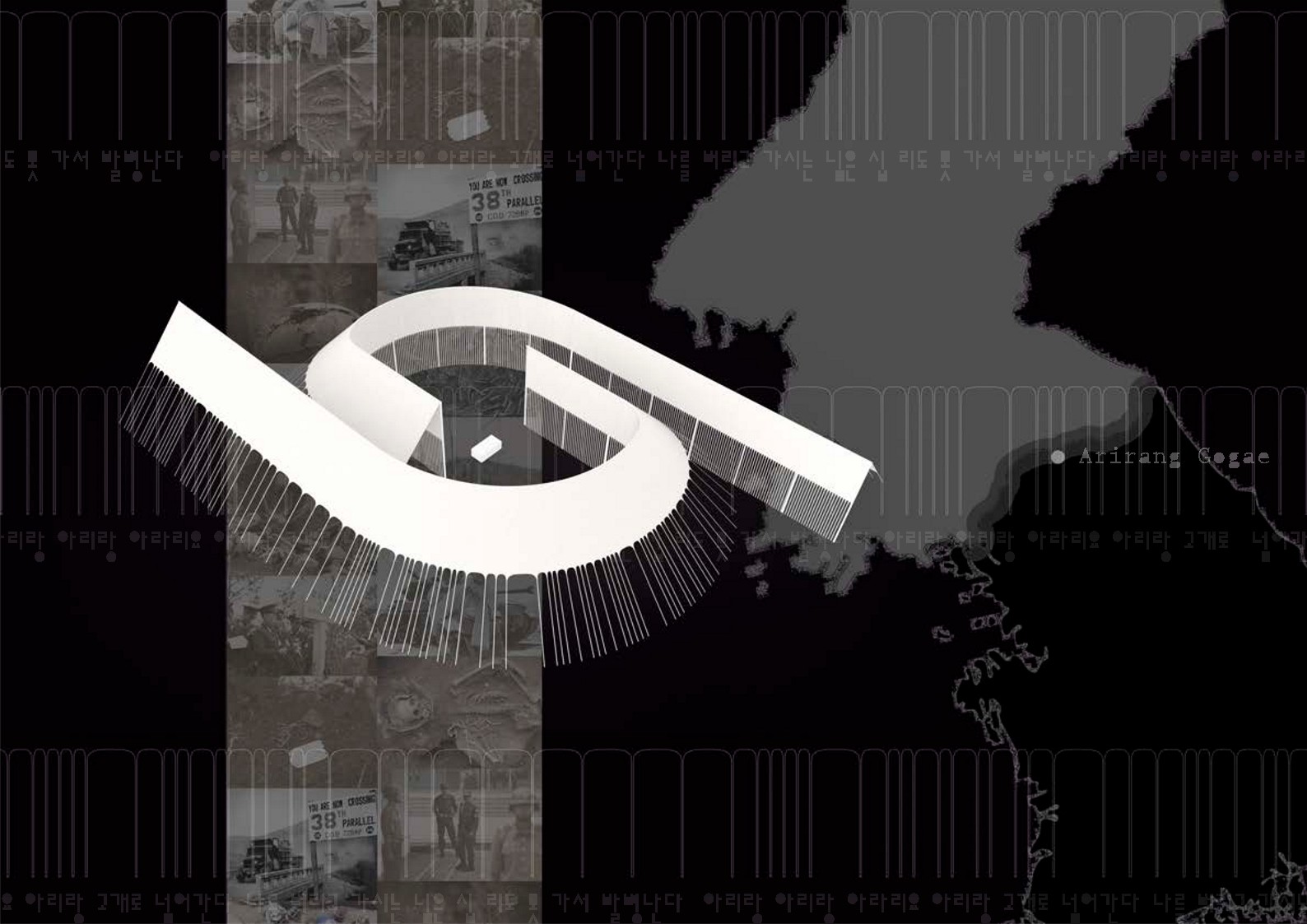
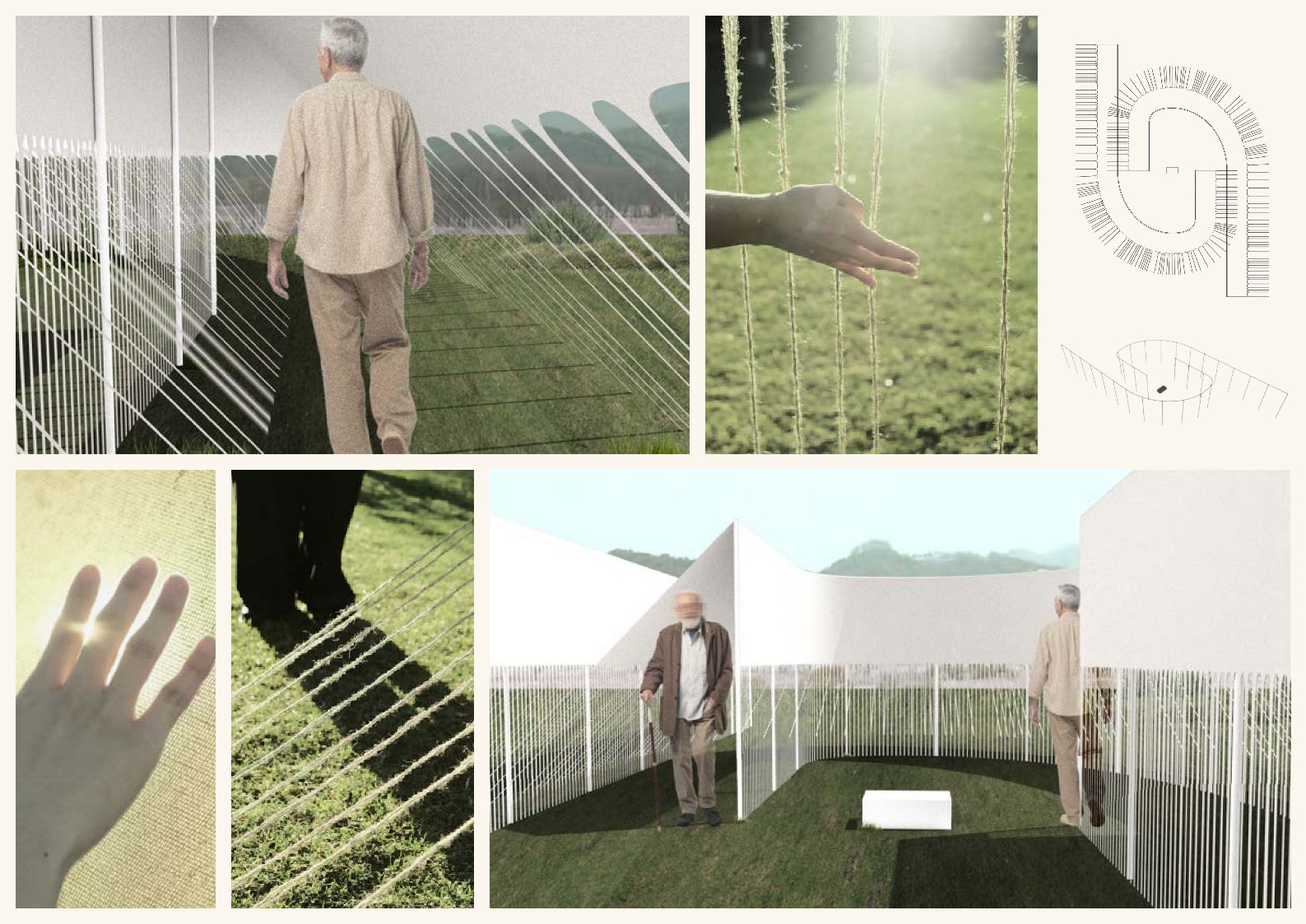
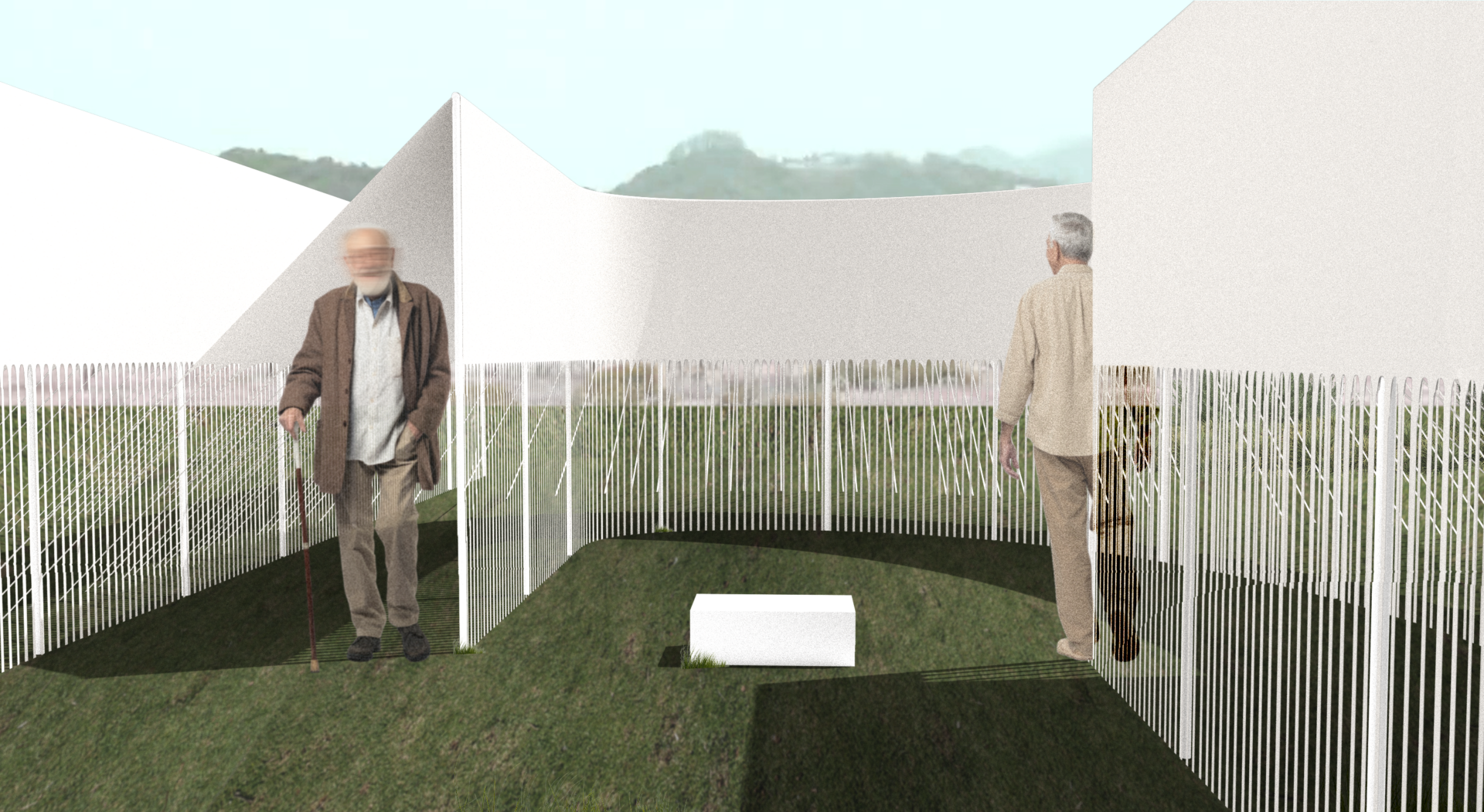
- Project Overview: The devastation of war and the collapse of shared values divided the Korean Peninsula in two. Though we remain one people, speaking the same language and sharing the same cultural roots, no dialogue or exchange is permitted between us. Yet one song continues to be shared across this divide: Arirang. Arirang, Arirang, Arariyo, Crossing over Arirang Pass. My beloved who leaves me behind, May you not travel even ten ri before your feet grow weary and you return. The song expresses the longing of one who waits, hoping that a loved one, forced to leave, will return. During the Korean War, countless people departed for the battlefield. Many never returned. Bound by this tragedy, North and South Korea began a joint recovery mission at Arrowhead Ridge in 2019 located in the DMZ, where fierce battles once took place. Both nations excavated the remains of fallen soldiers, united by a shared purpose. “Our project begins with the belief that the shared wounds of war can be remembered, and our shared identity reclaimed, through the one song both Koreas still possess together. On Arrowhead Ridge, where the joint excavation took place, we propose a memorial pavilion. Where the architecture itself becomes a musical instrument. Visitors pluck strings integrated into the pavilion, allowing Arirang to resonate through the space. At the entrance, they feel vibrations left by someone who has already passed through. Playing the melody, they arrive at a white stone ossuary and encounter another visitor approaching from the opposite direction. Only after passing the centre do they realise that the vibrations they first experienced were created by someone entering from the other side; perhaps the north. Then another realisation follows: their own melody has also reached someone they will never know. Together, they continue forward.
The 2026 Super Studio Chapter Winners are as follows
Australian Capital Territory (ACT)
- Winning Entry: Pre-Sense
- Team: Barton with Barton Taylor
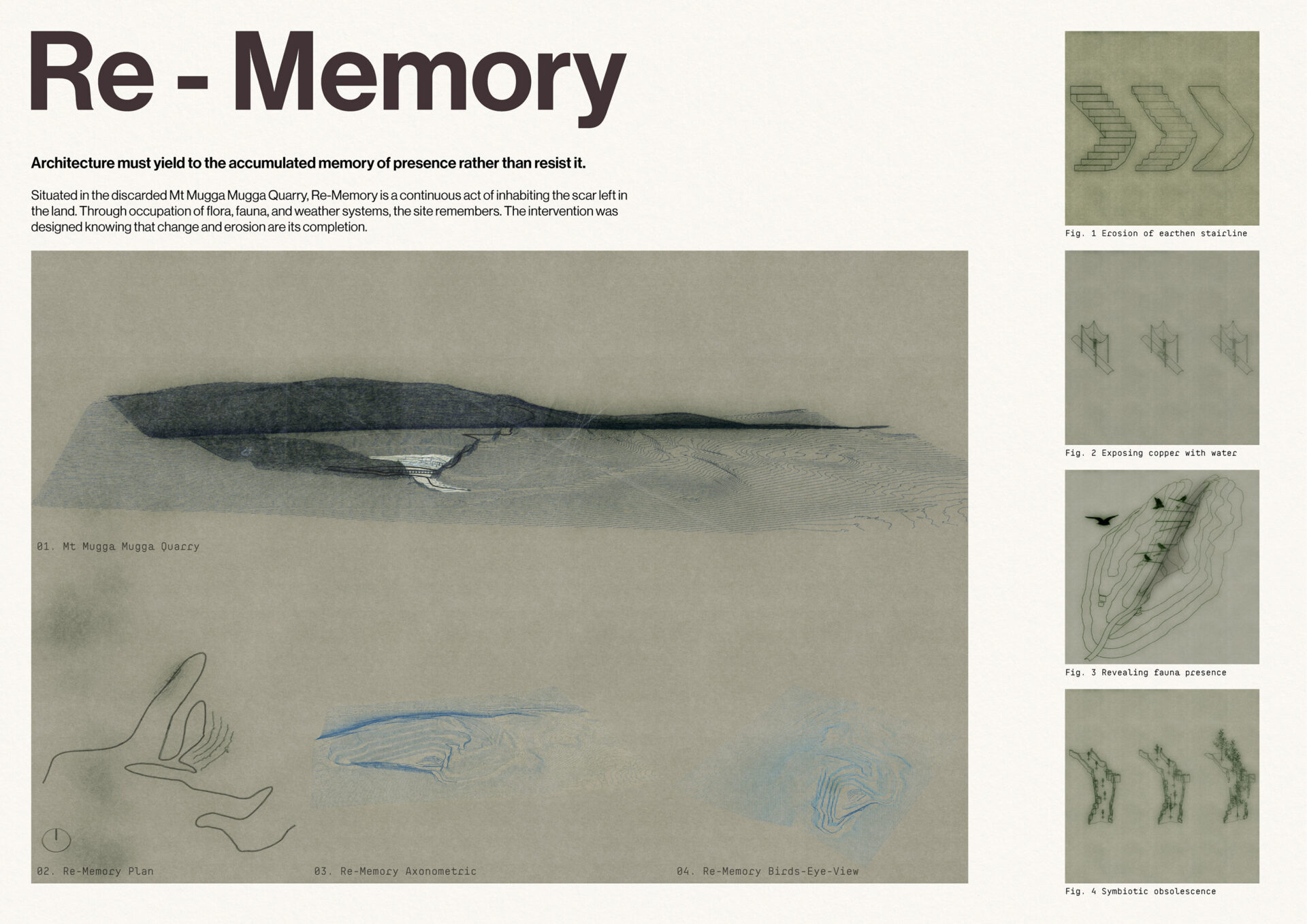
- Project Overview: Can absence become physically present? Ana Mendieta’s question lingers beyond the body and art, asking how traces of occupation might endure after we have gone. The project extends that inquiry through architecture. Can presence become physically remembered? Pre-Sense comprises four architectural fragments situated within existing Canberra landscapes, each selected for the systems already embedded within them. Rather than introducing new events, the interventions reveal those already occurring. Soft bio-plastics mould to the weight of occupation, recording bodies over minutes and hours. Thermochromoatic pigments in concrete briefly capture the moving shadows of trees and people. Copper gradually develops a patina through touch and weather, while aeolian harp strings transform the harsh industrial noise of Mitchell into melodic hums. Collectively these materials register presence across different temporal scales, revealing the accumulated interactions of people, flora, fauna, and environmental systems. These fragments culminate in Re-Memory, situated within the abandoned scar of Mugga Mugga Quarry. Here, architecture no longer resists time but yields to it. A soft raised earthen pathway is designed to erode through weather and occupation, while rammed earth walls slowly deteriorate into a symbiotic relationship with emerging sapling trees. Birds perch upon horizontal bars, their shadows briefly impressed onto a cyanotype concrete by the changing sun. Water dripping from the fabric roof of the colonnade gradually exposes a concealed copper path, allowing rainfall itself to inscribe the architecture. As the pathway dissolves into the existing quarry cut, the intervention gives way entirely to the landscape, framing the city beyond and inviting a renewed awareness of one’s own presence within a larger framework of systems. Architecture should not resist the accumulated memories of presence but yield to them.
New South Wales (NSW)
- Winning Entry: Edge of Paradise
- Team: originalteamnamefor1 with Ho Yeung Alvin Chan
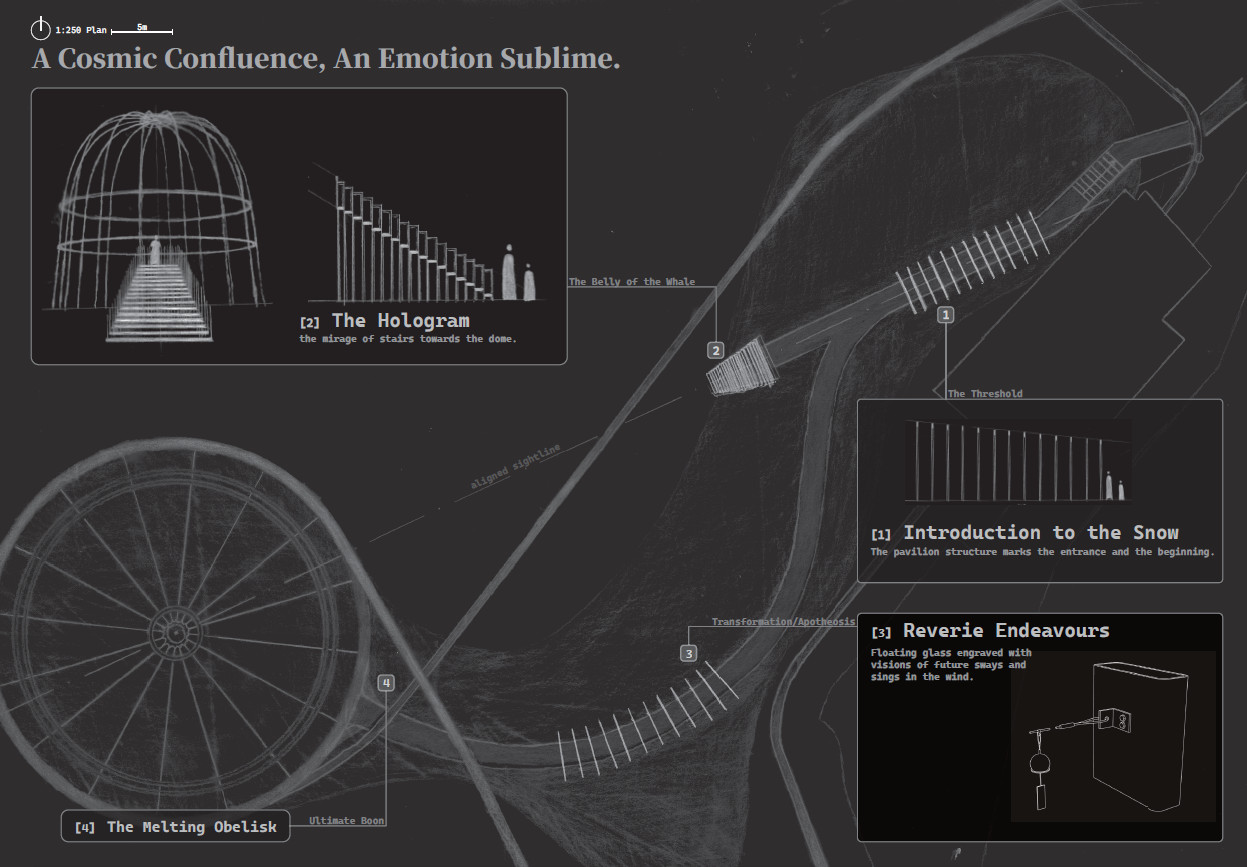
- Project Overview: Edge of Paradise is an architectural tale surrounding a rollercoaster structure, primarily inspired by the song ‘Dream Sweet in Sea Major’ by Miracle Musical. Since its closure in 2021, the 27-year-old structure remains standing at the steep hillsides of Hong Kong’s south, overlooking the horizon. As the theme park continues to struggle under financial hardship, are there meaning beyond mere extraction of economic value? Can we bring back what once was, through the medium of architecture? Story arc progression/journey through the curated space: Chapter 1: Introduction to the Snow [Crossing first threshold]. As we descend from the stairs, the pavilion structure metaphorically marks the entry to the curated space, redirecting our vision and remind us of the destination of our journey. Chapter 2: The Hologram [Belly of the whale]. The stairwell appears to be a connection between realms, from the ground plane to the top of the dome. As we move towards the top, however, it reveals what it truly is, a mere mirage. The goal remains visible and closer than ever, yet there is no way forward. With no choice, we descend and to the alternate winding path. Chapter 3: Reverie Endeavours [Transformation/Apotheosis]. As we slowly move around the curving path, reminiscing the view from the past, another threshold welcomes us with sounds of glass chiming in gusts of wind. The hills steepen slowly as we move towards the obelisk. Words of imagination to the future sways around us, and the light reflects from the chimes. Chapter 4: The Melting Obelisk [Ultimate Boon]. The winding path finally leads to the goal of the journey, as we gaze towards the constellations shimmering above the horizon. Looking back, we are perhaps still the same person, yet the decisions we made in transitory defines who we become on the final page.
Northern Territory (NT)
- Winning Entry: Delirra Park
- Team: Rocky Road with Rose Souter, Jorja Handebo and Ashley Bagadiong
- Project Overview: In an era plagued by mechanical efficiency and digital fixation, public spaces are increasingly failing to encourage people to linger and enjoy the pure theatre of life. As future generations navigate its relationship with technology, reconnecting with the outdoors through tactile and tangible experiences is intrinsic to a higher quality of life, supporting mental, physical and social wellbeing.
Queensland (QLD)
- Winning Entry: ARIRANG GOGAE
- Team: HAN with Jaehong Kim and Seo Jin Hong
- Project Overview: The devastation of war and the collapse of shared values divided the Korean Peninsula in two. Though we remain one people, speaking the same language and sharing the same cultural roots, no dialogue or exchange is permitted between us. Yet one song continues to be shared across this divide: Arirang. Arirang, Arirang, Arariyo, Crossing over Arirang Pass. My beloved who leaves me behind, May you not travel even ten ri before your feet grow weary and you return. The song expresses the longing of one who waits, hoping that a loved one, forced to leave, will return. During the Korean War, countless people departed for the battlefield. Many never returned. Bound by this tragedy, North and South Korea began a joint recovery mission at Arrowhead Ridge in 2019 located in the DMZ, where fierce battles once took place. Both nations excavated the remains of fallen soldiers, united by a shared purpose. “Our project begins with the belief that the shared wounds of war can be remembered, and our shared identity reclaimed, through the one song both Koreas still possess together. On Arrowhead Ridge, where the joint excavation took place, we propose a memorial pavilion. Where the architecture itself becomes a musical instrument. Visitors pluck strings integrated into the pavilion, allowing Arirang to resonate through the space. At the entrance, they feel vibrations left by someone who has already passed through. Playing the melody, they arrive at a white stone ossuary and encounter another visitor approaching from the opposite direction. Only after passing the centre do they realise that the vibrations they first experienced were created by someone entering from the other side; perhaps the north. Then another realisation follows: their own melody has also reached someone they will never know. Together, they continue forward.
South Australia (SA)
- Winning Entry: Finding Ourselves
- Team: Dylan & Angus with Dylan Fleming and Angus Vojnovic
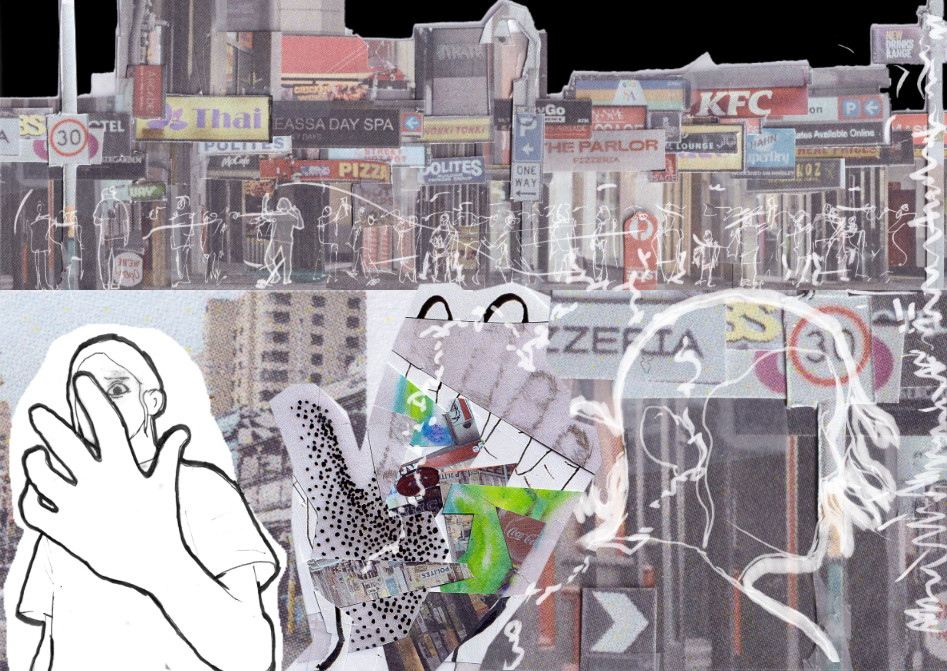
- Project Overview: Australia is shattered. We ask of you, especially who were born on these lands, but who do not have any lineage to them, what exactly are we all anchored to? Beyond aspirations of being generally easy-going and looking out for one another, it seems an existential dread lurks in both the individual and the core of the Australian identity. Western society is so focused on individuality and agency. You can do anything. You can see everything. All at once. But what is there to feel when the experience of the world strobes so quickly before us? Why gather, when we can tailor our own worlds exactly to our individual wants. And why pause if we’ll just be left wondering “who actually are we?”. What is the ‘matter’ of this ‘Australian-ness’? I’s a difficult question to grapple with. So, we import who we are. Our pop culture and our entertainment, our art and our architecture. The self-concept becomes a patchwork of generic Western ideals, perhaps made only more interesting by the rich cultures brought from those from other lands. Whether actually constructed, a mirage, or environmental rift formed by Australia herself, our intervention offers a chance to consider something more than the noise of contemporary culture. A true environment spawns. An idiosyncratic architectural identity emerges, not based off of any preconceived notions, not of some reverence for an apparently great Australian past. This country is so unique. Let us all stop racing ahead, instead combine, and love this sunburnt country.
Tasmania (TAS)
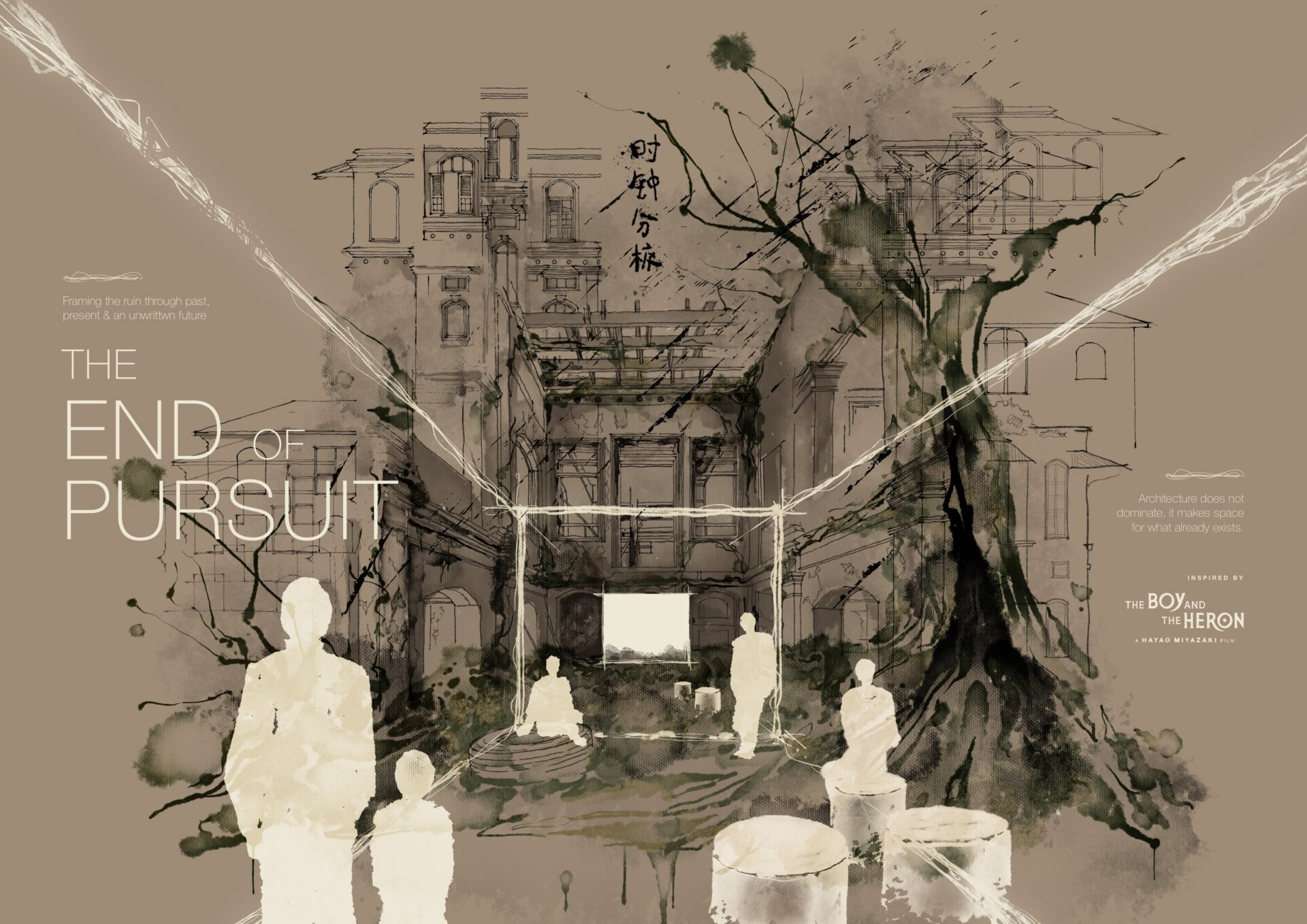
- Winning Entry: The End of Pursuit
- Team: It Takes Two with Ee Xuen Lee and Gabriel Yiek
- Project Overview: Framing the ruin through past, present and an unwritten future: This ruin has never held a single identity. Once a private mansion, later occupied and adapted through periods of conflict, education and abandonment. The building has repeatedly been made to serve another human intention, yet none could offer the building a permanent or complete future. Today, nature continues this history through rain, sunlight, wind, little insects, moss and decay. Inspired by the philosophical structure of a semi-autobiographical film by Hayao Miyazaki – The Boy and the Heron. The film moves through grief, memory, war and mortality without resolving them into a perfect answer. The protagonist is offered the possibility of maintaining an ideal world yet chooses to return to an imperfect reality. His decision suggests that acceptance does not mean repairing everything that has been damaged, but recognise loss, live within uncertainty without seeking perfection. The intervention frames the ruin as though visitors are watching a film unfold through space. A threshold withdraws visitors from the speed of the surrounding city and introduces a slower mode of attention. A sequence of viewing frames presents the building through three timeframes: a past that can be remembered but never recovered, a present that must be directly experienced, and a future intentionally left unknown. Mirroring connects these timeframes, creating a physical timeline in which past and future are reflected from the present. The frames do not explain the ruin completely. They isolate particular views, asking visitors to spend time noticing changing light, vegetation, decay and the sounds of non-human life. Architecture therefore does not restore or occupy the ruin but heightens awareness of what is already happening. At the central frame (the present), the intervention becomes a civic place for gathering, listening and collective remembrance. Architecture does not restore or occupy the ruin. It frames attention, allowing people to coexist with what remains. What if care is not the act of saving a building, but knowing when to stop?
Victoria (VIC)
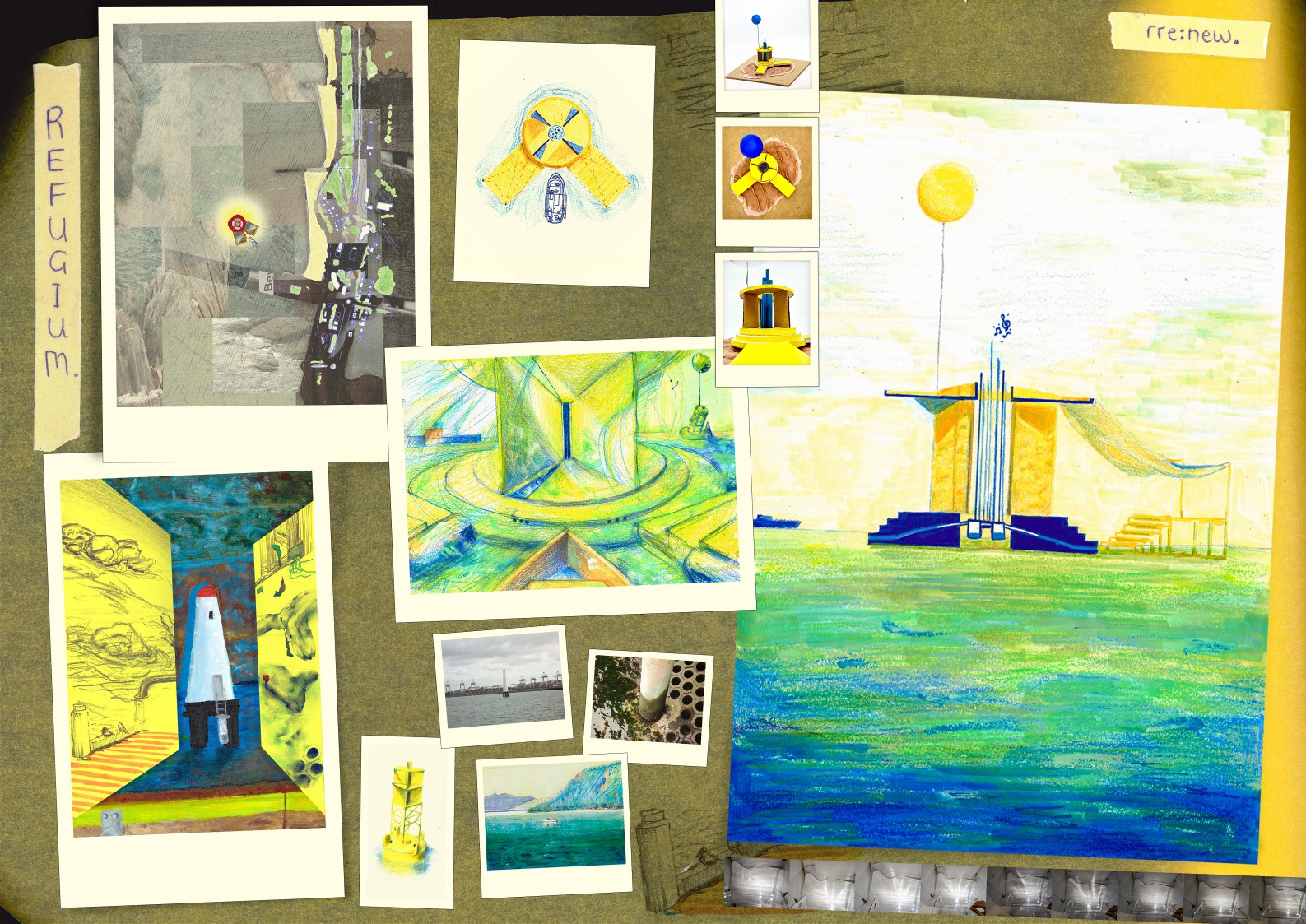
- Winning Entry: Refugium
- Team: rre:new with Wendy Ding, Rowan Taylor and Ruth Martin
- Project Overview: There is a disaster in Port Melbourne. Cargo shipping routes and rapid urbanisation of the coastline have scarred the environment. Fog horns overpower the subtly of the ocean lapping at the shore, ship anchors turn waters murky with sediment as their anchors rip through the sea floor. The bay is dying. Wayne Thiebaud in his painting Untitled (Boat on a Lake), depicts a banal, every-day scene, however through saturation and negative space, turns the image into picturesque serenity on the water. This project represents the problematic correlation between mankind and the environment we occupy. The Refugium is a relict, a surviving remnant from a pre-colonial age, from when the bay had life and colour. Detached from land, the structure gently sways in the waves. Only accessible by boat, its bright appearance draws from the neighbouring buoys, painted yellow, it cautions that something bad is happening. Stepping onto the vessel, the visitors are immersed into a moment of peace removed from the surrounding chaos. The visitor must wade through a shallow pool of water to reach the central space. Water rushes through pipes that run through the inside of the memorial, amplifying sounds of the ocean and producing a tune ‘a sea-organ. Floor-cutouts and angled mirrors project dancing caustic reflections across the walls. Taking a step back, the visitor sits viewing what has been lost in the bay. In serenity, the viewer becomes the boat in Thiebauds Lake, immersed within a vibrant, lost environment. The noise of the world feels so distant. To interact with the Refugium is to be reminded of the value of what has been lost. Only then can the viewer understand the scale and importance, and imagine a progressive future of the bay, one which is more culturally colourful than what was handed to them.
Western Australia (WA)
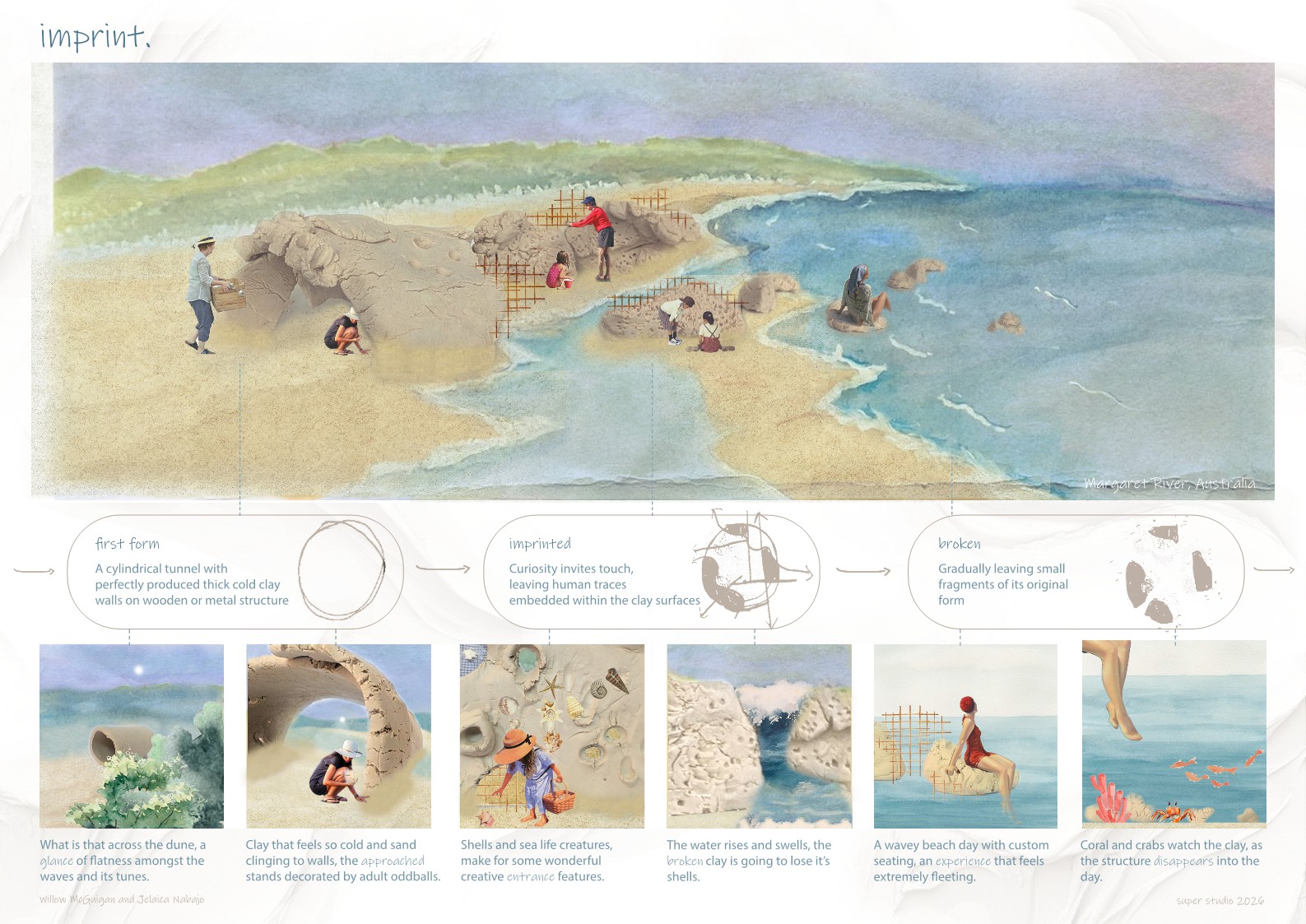
- Winning Entry: imprint.
- Team: Jellow with Willow McGuigan and Jelaica Nabajo
- Project Overview: As boundaries between the artificial and the human continue to blur, moments of physical touch remain uniquely human. The Ship of Theseus is a philosophical narrative that questions whether an object remains the same after every one of its wooden parts has been gradually replaced over time. The narrative has been reflected in the traces of Theseus’ touch as the lasting thread that connects the ship to its origin. Just as the narrative questions what preserves an object’s identity through change, Imprint asks what preserves our humanity in the age of artificial replication: curiosity and physical touch. Untethered to a single location, the installation adapts to contrasting sites. With the active streets of Lisbon, filled with tourists and smiling locals, activity around the structure slowly dwindles away the clay and occupies a new home. Along the beaches of Margaret River, the sand and tides gradually embrace and reshape the clay, allowing nature to become another maker. A temporary clay sculpture is offered as an open canvas, inviting children and adults to pause, gather, make a mess, shape, remove, rebuild and create. Every fingerprint, impression and imperfection becomes a record of presence. Imprint is never intended as a finished design. It exists as an evolving Architecture of touch, where every alteration contributes to shared story, reminding people that it is the collective art of making, gathering and remembering, an evolving expression of what it means to remain present and human. It is a design that cannot be replicated but can be prompted to change through existence as a monolith to its space.