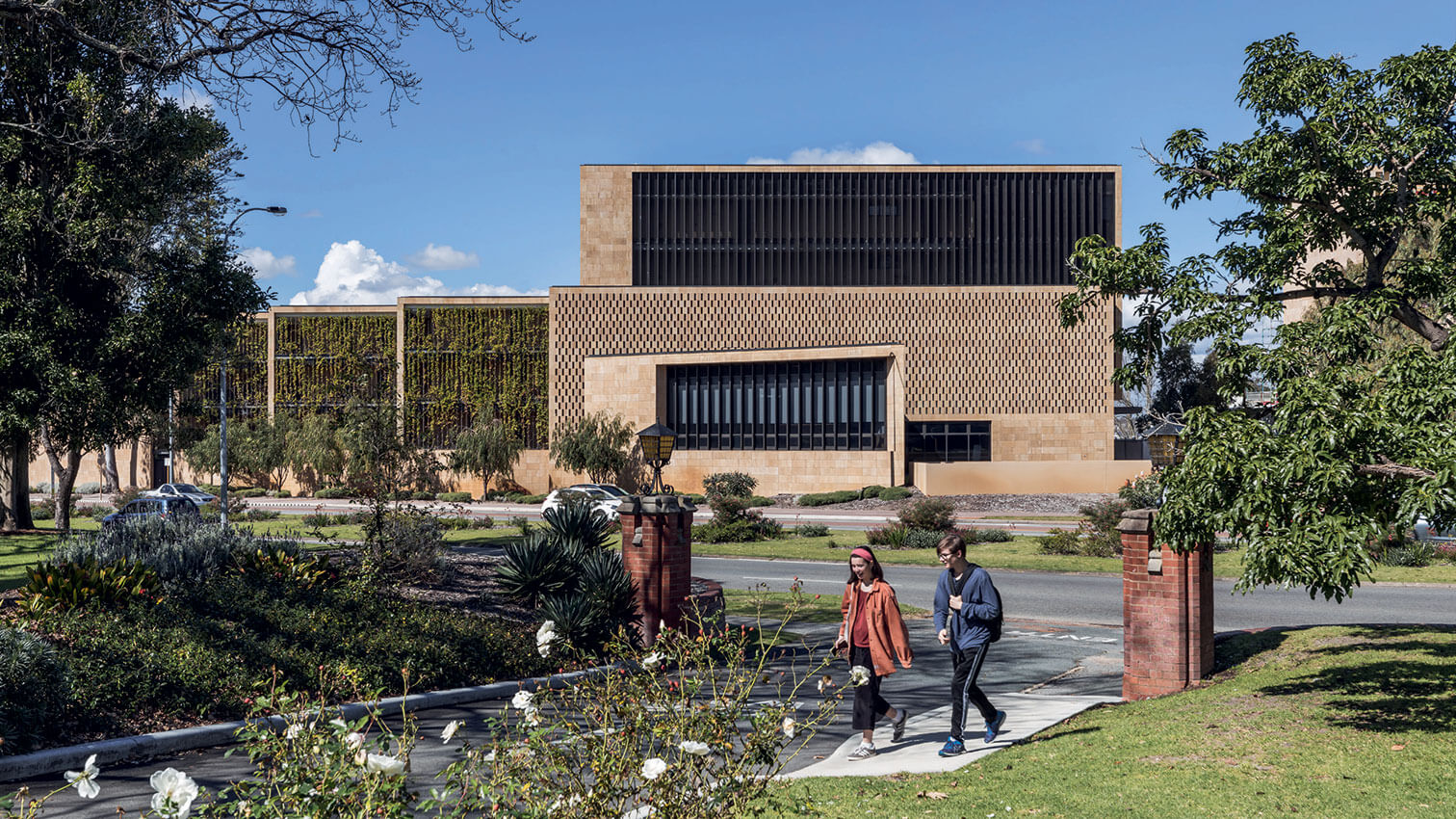
Maggie Street | Curious Practice

Maggie Street reinterprets and respects the amenity, heritage and character of the surrounding suburb, but while neighbours inhabit as single dwellings on large lots, Maggie Street manages a fraternal quadruplet of generous two storey townhouses. Flexibility in the planning of each unit can allow for any number of occupant requirements, from a growing family, home office or just having room to have the grandchildren stay.
Materials have been chosen for their practicality, durability and texture changing with shifting shadows and development of patina over time. The red cement bonded particle board and zincalume claddings bring both familiarity and vitality to the development, and with lawn removed from the site, an all native landscape plan brings biodiversity back to help repair the site post construction.
Increasing density, reducing sprawl and fostering a sense of community between occupants are becoming the new standards for developments people actually want to live in not just buy.
Kiora | KHA
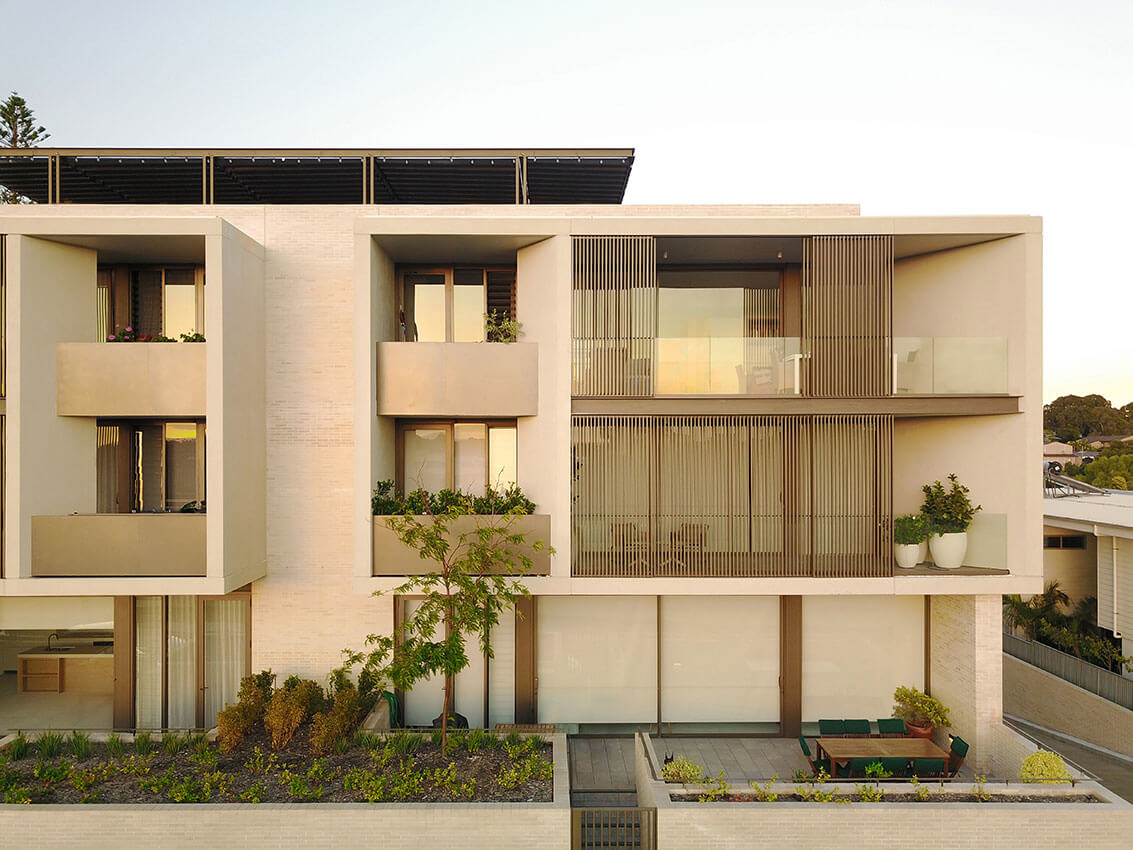
Kiora is part of a masterplan for St Louis Estate that contemplates greater density while increasing retirement living accommodation in the Claremont area.
The massing of the building steps back from the street, sympathetically addressing the adjacent residential scale.
The conservation of the priests house is a key organising device for the project, curating the entry to the project and providing a series of social spaces for residents.
At ground level, adjacent to the priests house the project incorporates a wellness area for medical appointments, therapy and group exercise.
All apartments are provided with true cross ventilation and generous terraces.
Kiora demonstrates how high quality density can be achieved in a suburban context, satisfying societys need for more retirement living accommodation within an established suburb.
One of the projects strengths is the aggregation of residential and communal uses, which provide the opportunity to age gracefully and socially, within a community.
Horizon Apartments | CKDS Architecture & Hill Thalis Architecture + Urban Projects, architects in association

Horizon Apartments occupies a generous 5,600m2 site on Newcastle’s waterfront, located at the junction of three new public space: the Honeysuckle promenade, a public square on Steel Street’s extension and a park on Cottage Creek Corridor.
The project comprises three buildings defining two courtyards open to the water. The buildings are united by their waterfront alignment, scale and material palette. The design is an exemplar of equitable view sharing as the landscaped courtyards allow views between the buildings from both the public and private domain behind.
The buildings sit on a gently raised brick plinth, providing flood proofing and prospect over the adjoining public spaces.
Containing 110 generous apartments with a range of plan types, all achieve high amenity. 88% of apartments face north with harbour views, over 75% are cross ventilated.
The design is a considered response to this exceptional site and a model for the area’s evolving urbanity.
Huntington | SJB
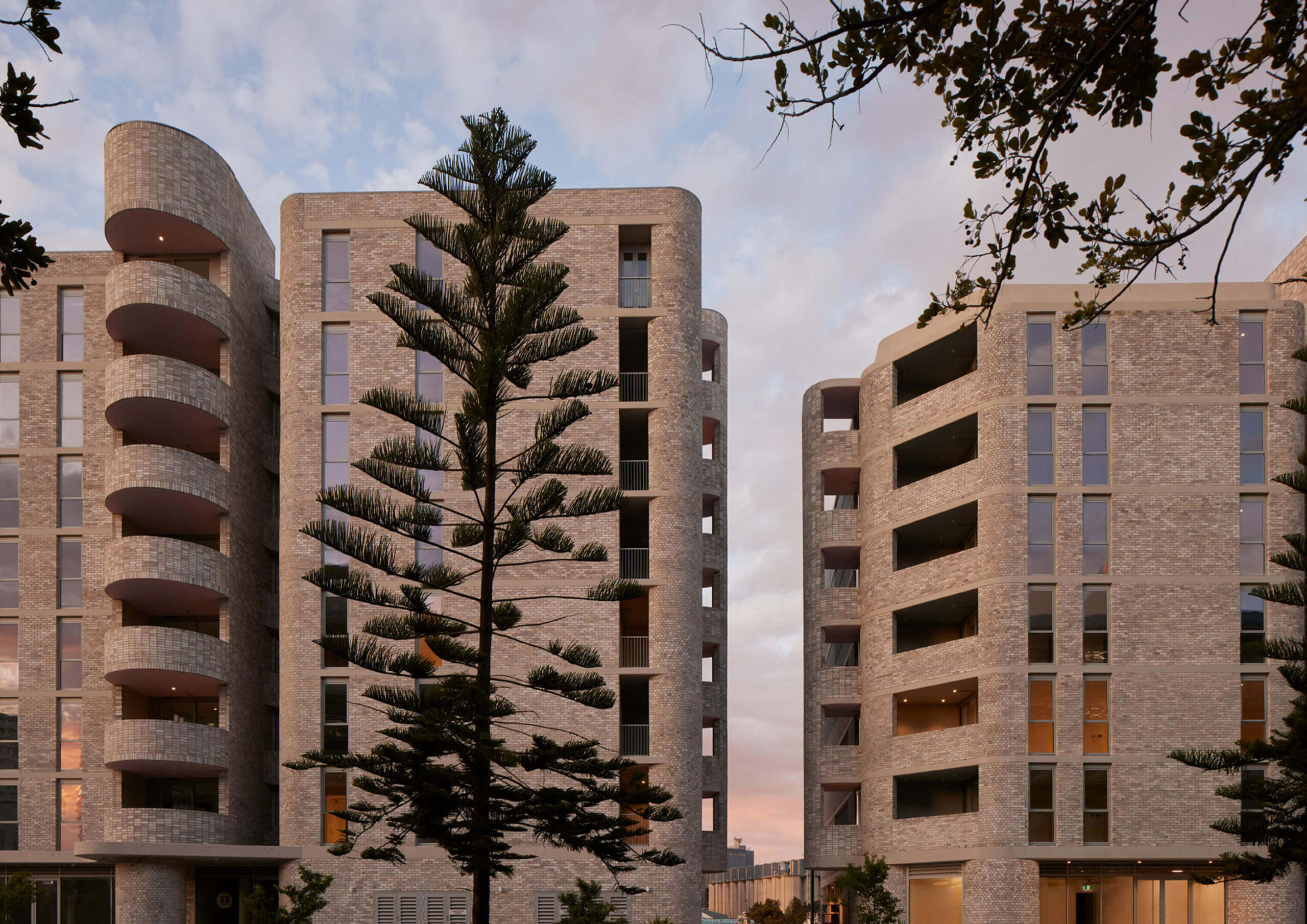
Running parallel to the Hunter River, Huntington at 35 Honeysuckle Drive is a key node in the Newcastle Honeysuckle Precinct urban renewal corridor, evolving the foreshore into a highly connected, mixed use precinct. Poised to play an important role in enlivening the precinct this new residential development introduces significant retail to the ground plane and 90 apartments above, across two buildings.
The success of the Honeysuckle precinct is intrinsically linked to the connectivity between the city and the water’s edge and its activation. Huntington stitches the old town at the south to the foreshore boulevard through permeability and the introduction of protected, north facing retail spaces. The material palette also speaks to the site’s differing conditions, with a playful brick façade facing Honeysuckle Drive which opens to the north to capture views and light and reflect the palette of industry across the river.
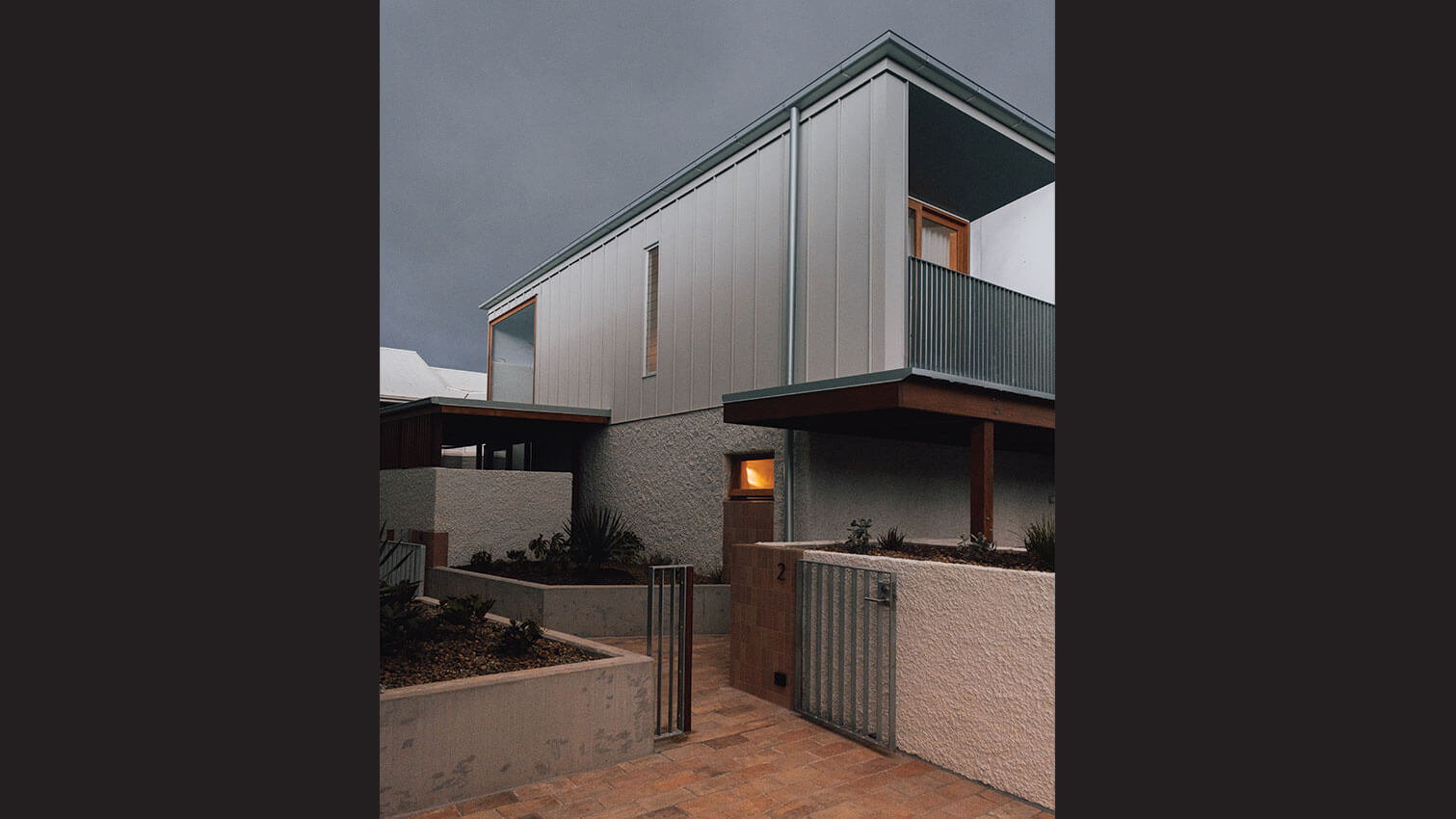
Maggie Street |Curious Practice
Maggie Street reinterprets and respects the amenity, heritage and character of the surrounding suburb, but while neighbours inhabit as single dwellings on large lots, Maggie Street manages a fraternal quadruplet of generous two-storey townhouses. Flexibility in the planning of each unit can allow for any number of occupant requirements, from a growing family, home office or just having room to have the grandchildren stay.
Materials have been chosen for their practicality, durability and texture—changing with shifting shadows and development of patina over time. The red cement-bonded particle board and zincalume claddings bring both familiarity and vitality to the development, and with lawn removed from the site, an all native landscape plan brings biodiversity back to help repair the site post-construction.
Increasing density, reducing sprawl and fostering a sense of community between occupants are becoming the new standards for developments people actually want to live in—not just buy.
The Park Santa Monica | KoningEizenberg Architecture

Turner Avenue Homes | Push and David Pennisi
Bigge St Liverpool | Turner
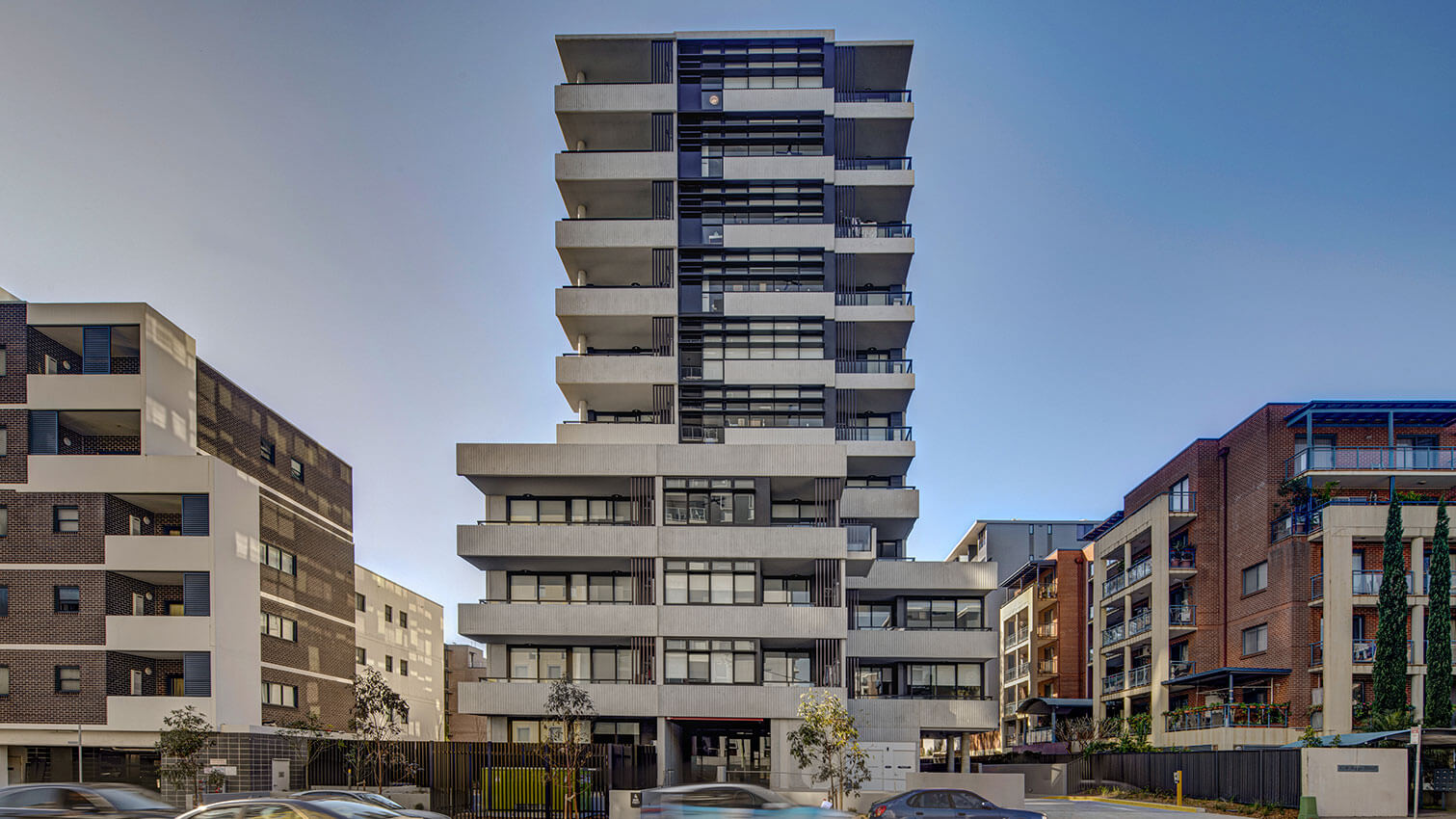
Nightingale Bowden | Breathe
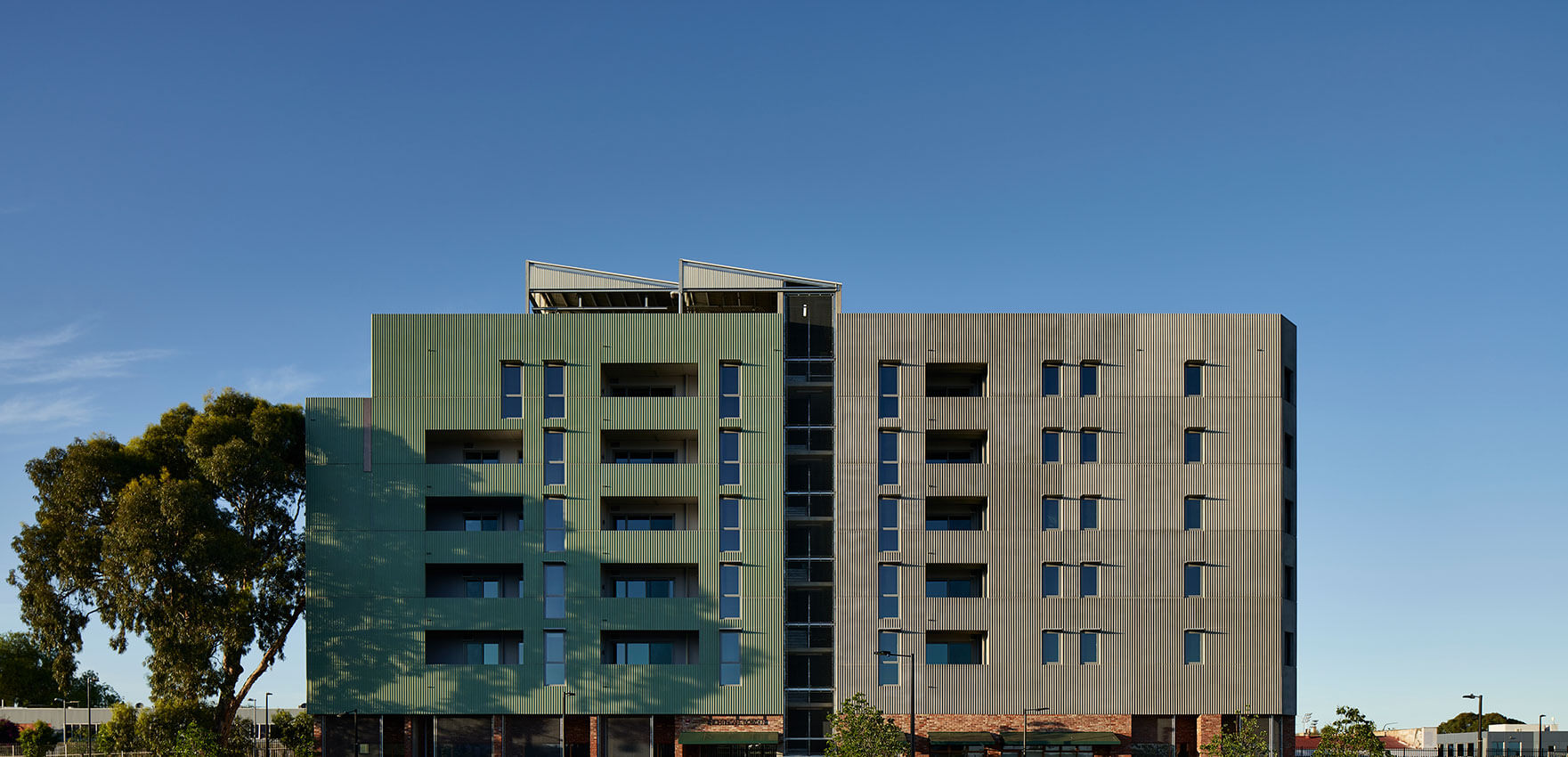
Forrest Hall | KHA (Kerry Hill Architects)