
Munro Site – Queen Victoria Market Precinct | Bates Smart and Six Degrees
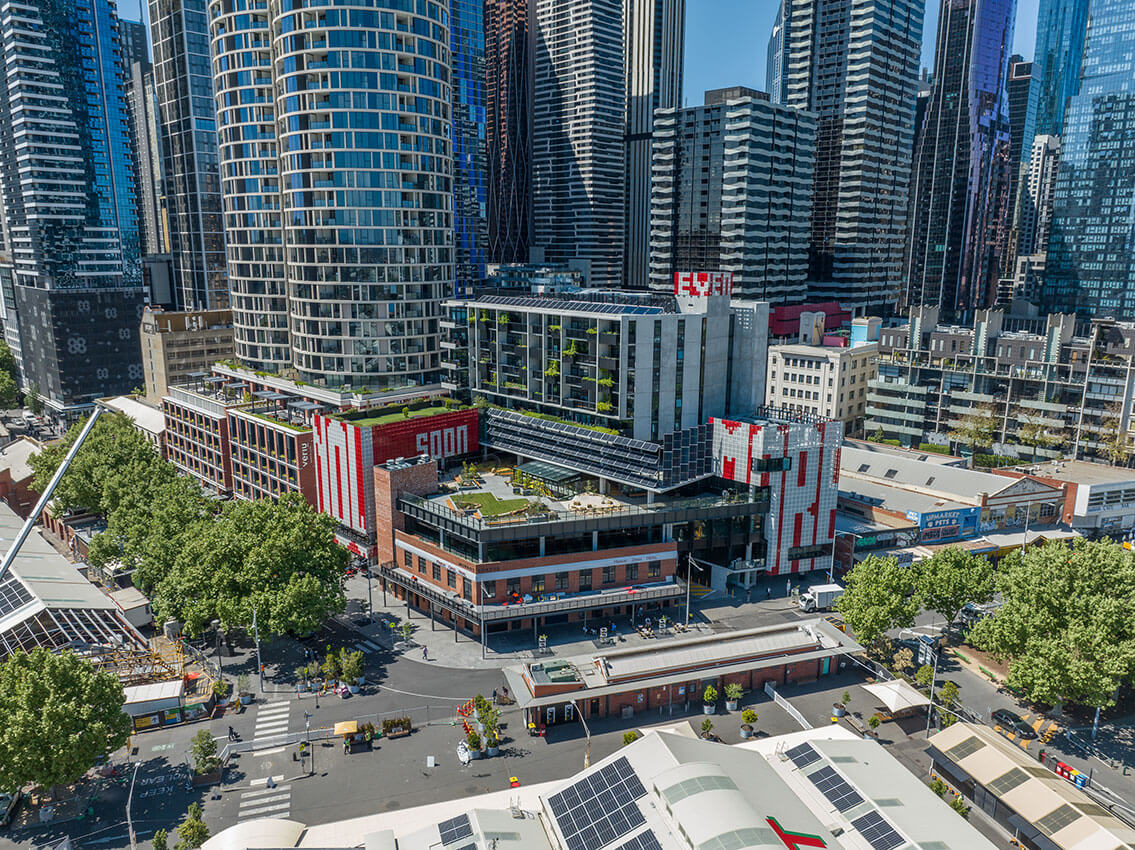
The Munro site development, adjacent to the Queen Victoria Market was a continuous 7year collaboration between the City of Melbourne, PDG Corporation and architects Bates Smart and Six Degrees.
The urban design strategy introduced a new central laneway (dhanga djeembana Walk) providing pedestrian links to the south through to Franklin Street, while additional smaller connections throughout the site encourage movement and increased activation.
The project presents a strong focus at the street level with over 80% of building frontages activated with retail and hospitality, further extending activation throughout the precinct.
The new underground carpark replaces the previous ongrade parking and enabled the inclusion of an urban park to the precinct.
The full site features a BuildToRent tower, City Library, Family Services, social housing, underground carpark and Veriu hotel as well as new retail and food and beverage.
Murdoch Residence | Kyearn Architecture
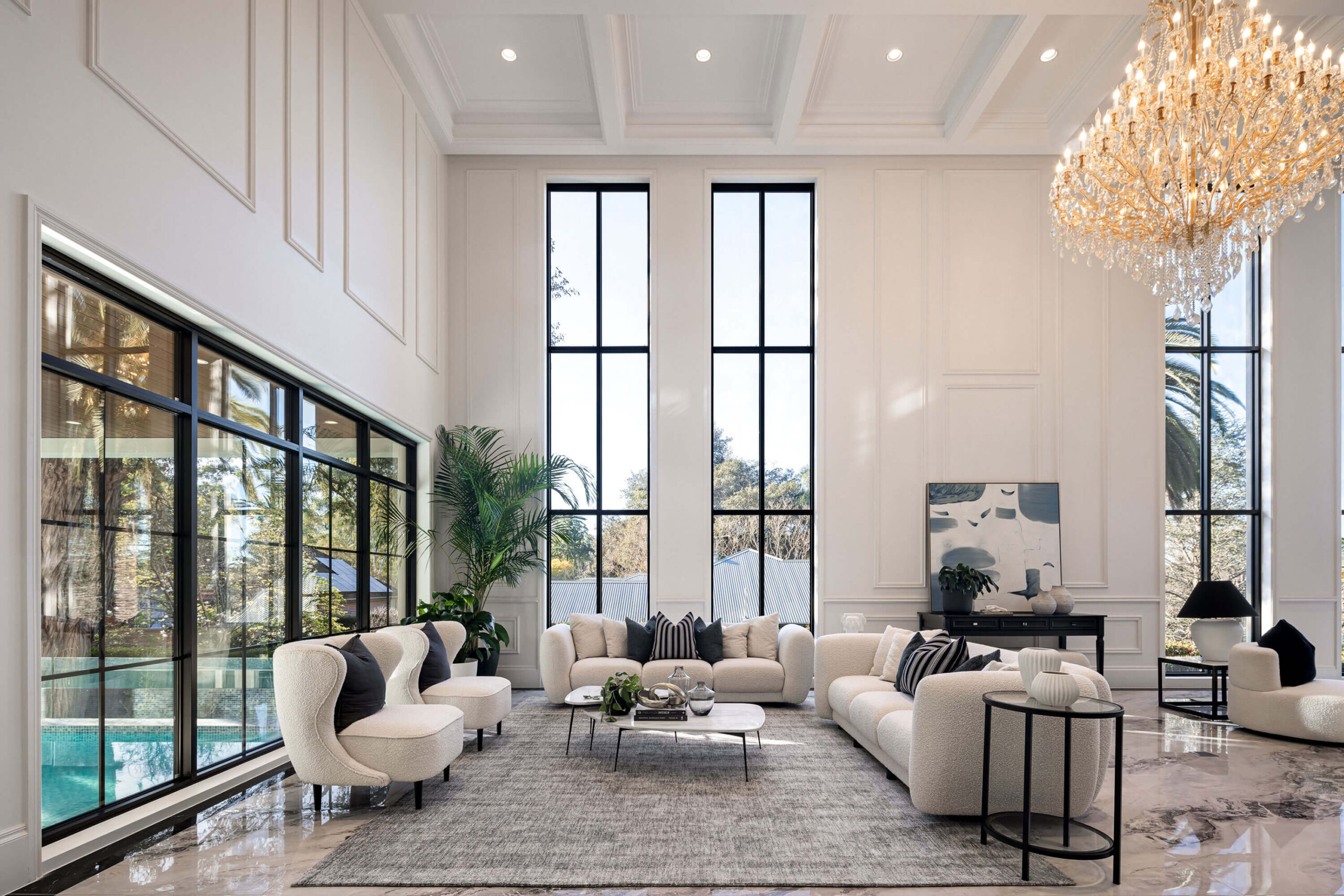
The Murdoch Residence stands out amidst suburban homes with its blend of openness and private retreats. Its welcoming entrance, highlighted by a grand staircase and lack of perimeter fencing, contrasts with typical suburban homes. Inside, a double volume living space offers space offers panoramic views and abundant natural light, while areas towards the rear provide intimacy and tranquillity, surrounded by lush trees of the adjacent park. Built on a challenging slope, the house preserves the original foundation and mature trees, minimising topographical changes and maintaining the landscape’s integrity. Sustainable Australian materials were prioritised in the interior design, reflecting a commitment to environmental responsibility, and supporting local industries.
Murdolo Apartments | ROSEVEAR STEPHENSON

In mid 2014, we were approached by the owner of 258 Macquarie Street, who nearly lost the property to fire shortly after it’s purchase leaving a dilapidated rental property uninhabitable and an owner with an enormous challenge.
Around the same time AirBnB was emerging and we suggested adapting the building specifically to this new typology to achieve the returns required to fund the restoration demands.
We developed a policy of removing the intrusive elements, repairing damaged external fabric where required and distinctly inserting new elements within the existing spaces and externally as clear modern attachments. Where existing fabric could remain in it’s current state, it was left that way, “even the fire history” such that a patina of eras is on display.
During the 258 construction, 260 was purchased by the owner allowing us to restore both terraces as a whole and reestablish their stately Georgian presence on Macquarie Street.
Maranatha House | Bijl Architecture

The Maranatha House is a study of layers material layers, liminal layers and site layers peeling back, exposing and renewing a house with many histories.
Tasked with reimagining the heritage listed dwelling as a contemporary, light filled home embracing the clients love of art and accommodating their blended family, the original stone cottage and its additions were examined at a fundamental level. Outlook, light, aspect, material and landscape were all contemplated to spatially unify the dwelling within strict heritage and planning controls.
The design approach leans into framing and layering strategies to address the brief and bring about functional flexibility, aesthetic delight and environmental performance. External and internal views are aligned and articulated, retaining the traditional floor plan proportions and adding minimal footprint.
Generous natural lighting is achieved via glazed, steel framed elements balancing heavy masonry walls, with a new stair void aside the impressive insitute artwork AES.
Markham Avenue | Architectus

Markham Avenue is one of the first projects designed and delivered under the Victorian Governments Big Housing Build.
Spread across five buildings within a welcoming environment, the communitys 178 social and affordable homes are tenure blind, arranged and designed to be indistinguishable from each other. The 100% governmentowned development is a socially and environmentally sustainable place to live with quality at its core.
Once occupied by 56 timeworn public housing units from the 1950s, the site has been transformed into a vibrant, landscapeled community designed for longevity, with the dwellings integrating seamlessly with their natural surroundings and with the grain and materiality of their neighbourhood context.
Defined by generous spaces and amenities, connections to nature, and timeless, durable materials, Markham Avenue represents a healthier, more inclusive form of higherdensity living.
Marnkutyi Parirna Theatre | Detail Studio

The newly completed Marnkutyi Parirna Theatre at Trinity College stands as a testament to the College’s unwavering commitment to embracing 21st-century educational opportunities. Inspired by principles of innovation and creativity, this exceptional space redefines the traditional concept of a theatre, offering students and the community alike a sophisticated and elegant environment in which to engage in rich, authentic learning experiences.
Creativity and innovation are woven into every aspect of the theatre’s design, from the fluidity of the seating arrangements to the dynamic movement reflected in the timber batten design on the walls.
Central to the theatre’s vision is the authentic partnership with the Kaurna people, honouring Indigenous narratives and connections to the local landscape. The concept of the Three Rivers, symbolising unity and connection, is deeply integrated into the design elements, enriching the space with cultural symbolism and a profound sense of place.
Mavis Terrace | Pasqual Architects

For the Mavis Terrace, the project goal was to respect the neighbourhood character, whilst working to create a respectfult and aesthetically appealling contemporary design .The Architecture responds to contempary planning and design, whilst respecting the existing forms and proportions of the original buildings.
In summary the Mavis Terrace translates the traditions found in an small inner west Calinfornian Bungalow Site, to a contemporary reinterprestaion. The Mavis Terrace has proudly set a new precedent in the smaller scale inner west projects.
Melaleuca Australia Courtyard Shade Structure | Hames Sharley NT Pty Ltd
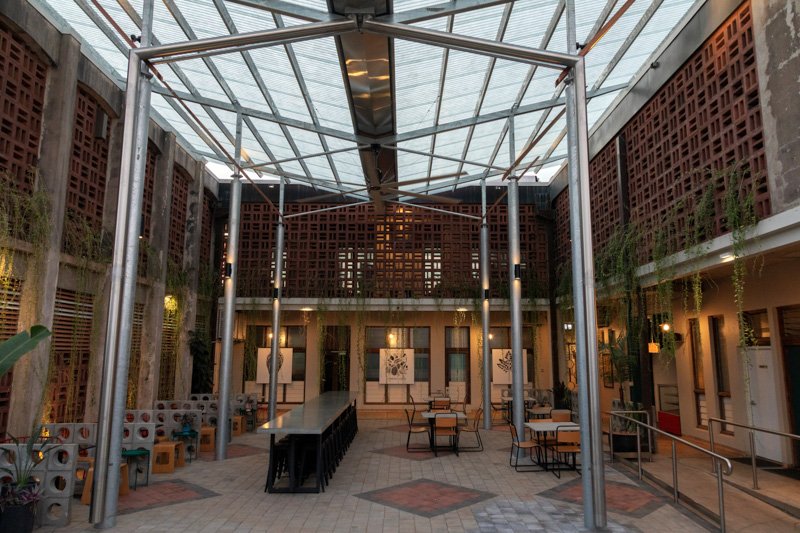
Melaleuca Australia’s new roof structure has transformed an underused weather-exposed courtyard into a unique and idyllic communal gathering space for staff, clients, and the wider community to enjoy.
A not-for-profit organisation, Melaleuca celebrates connections and belonging, and is dedicated to assisting refugees and migrants in their settlement journey.
The new butterfly roof makes a statement and gracefully soars over the existing courtyard, honouring and embracing the original 1960s breezeblock building. The robust yet lightweight, contemporary roof structure features galvanised steel roof framing and spotted gum timber details. Raw, unrendered materials and an efficient structural design minimise construction costs. The strict yet artful structural detailing and use of large concealed cyclonic washers on the roof sheeting are creative solutions that respect the tropical environment.
Melaleuca’s new courtyard roof is a truly collaborative project. From cost-effective solutions to in-kind contributions from the design team, the project exemplifies a community-driven approach and outcome.
Melbourne Indigenous Transition School Boarding House | McIldowie Partners

Built on Wurundjeri land, the new flagship boarding facility at 371 Church St, houses 40 students from remote areas across Victoria and the Northern Territory. Featuring a mix of dormitories, study areas & a collection of gathering spaces, it serves as the physical and spiritual home for the MITS community. Outdoor gathering spaces, including a rooftop terrace with spectacular city views, seamlessly link inside and out and connect students to Country, with native gardens designed to reflect the precolonial landscape of the area and a colourful poured paving artwork by Trawlwoolway artist Edwina Green.
The facade, designed in collaboration with Indigenous artist Lorraine Kabbindi White, acts as a billboard for MITS, featuring a lasercut perforated screen telling the Dreamtime story of the ‘First Bees.’ This story wraps the façade and acts as a landmark always was, always will be statement for the Melbourne Indigenous Transition School and the broader community.
Melbourne Now: Community Hall | BoardGrove Architects

Community Hall was one of the flagship spaces within the NGVs 2023 Melbourne Now exhibition.
It needed to have flexibility for various event types whilst maintaining a strong sense of presence and identity. The resulting design broke down the formality of the rectilinear exhibition space by introducing a sweeping curved structure that acted as a backdrop to the space. Opening up to the wider exhibition the curve drew the visitor into the space, like a big openarmed hug, a welcoming and inclusive formal gesture. Its positioning and colour made the space feel activated and enriched when no event was occurring.