
Lidcombe Rise | Plus Architecture
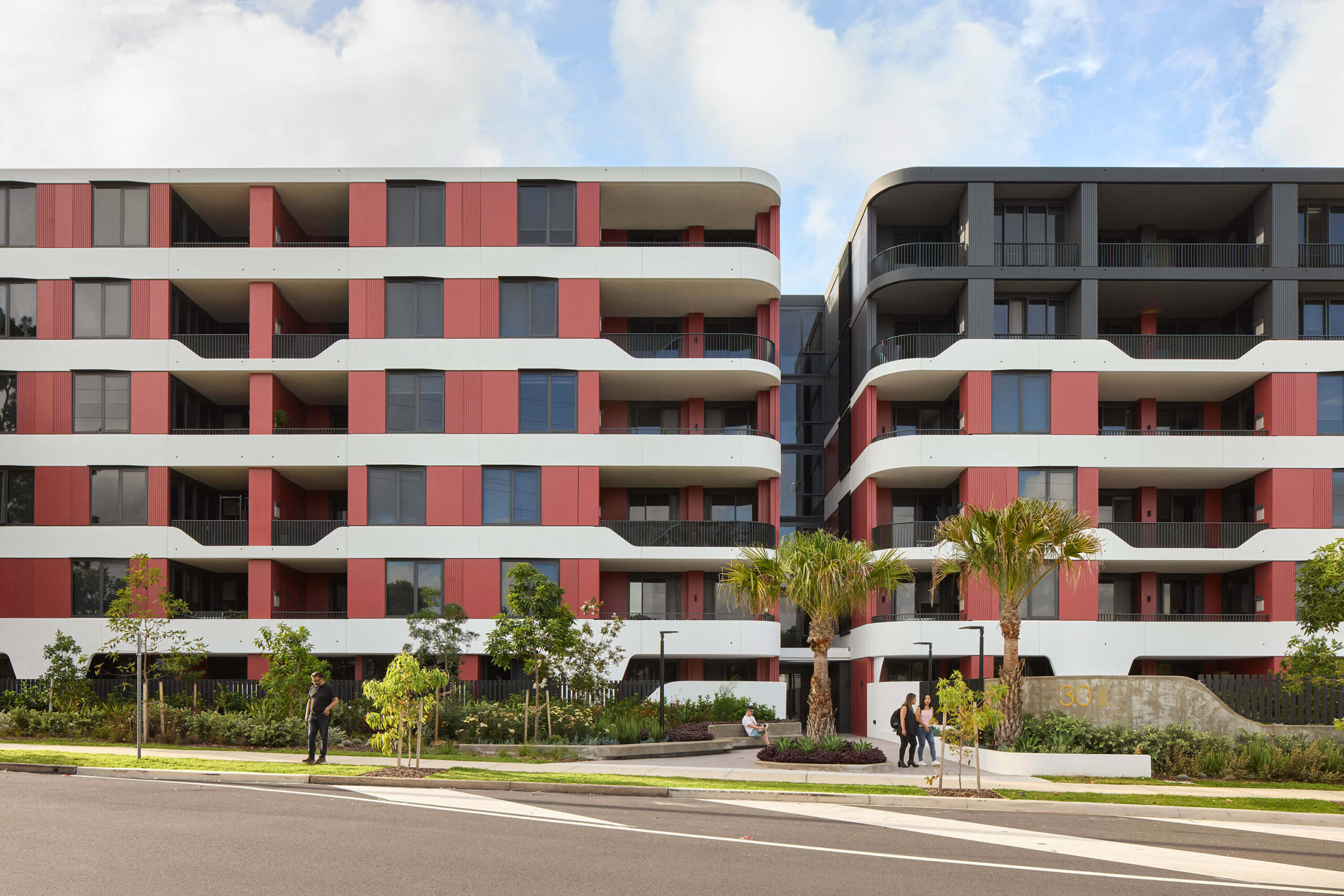
Lidcombe Rise, at 236 Church St Lidcombe, is the first Communities Plus Development to be delivered in NSW. Communities Plus is an initiative by the NSW government to revitalise and expand its stock of Social Housing across NSW by partnering with private developers and NGO’s.
Comprising four buildings housing 376 apartments,the foundational design principle guiding the design and development teams was the notion of equity of amenity across the residential typologies provided. From the experience of the residents as they entered from the street into their lobbies and to their apartments, the quality of the ground floor amenity zones and the amenity offered by the apartments themselves, the overall offering was designed to be indistinguishable between the different types of tenure offered, realising the opportunity implicit within the provision of such developments that the base nature and dignity of the occupant doesn’t change, regardless of circumstance.
Kashmir Apartments – SOHO | Stewart Architecture
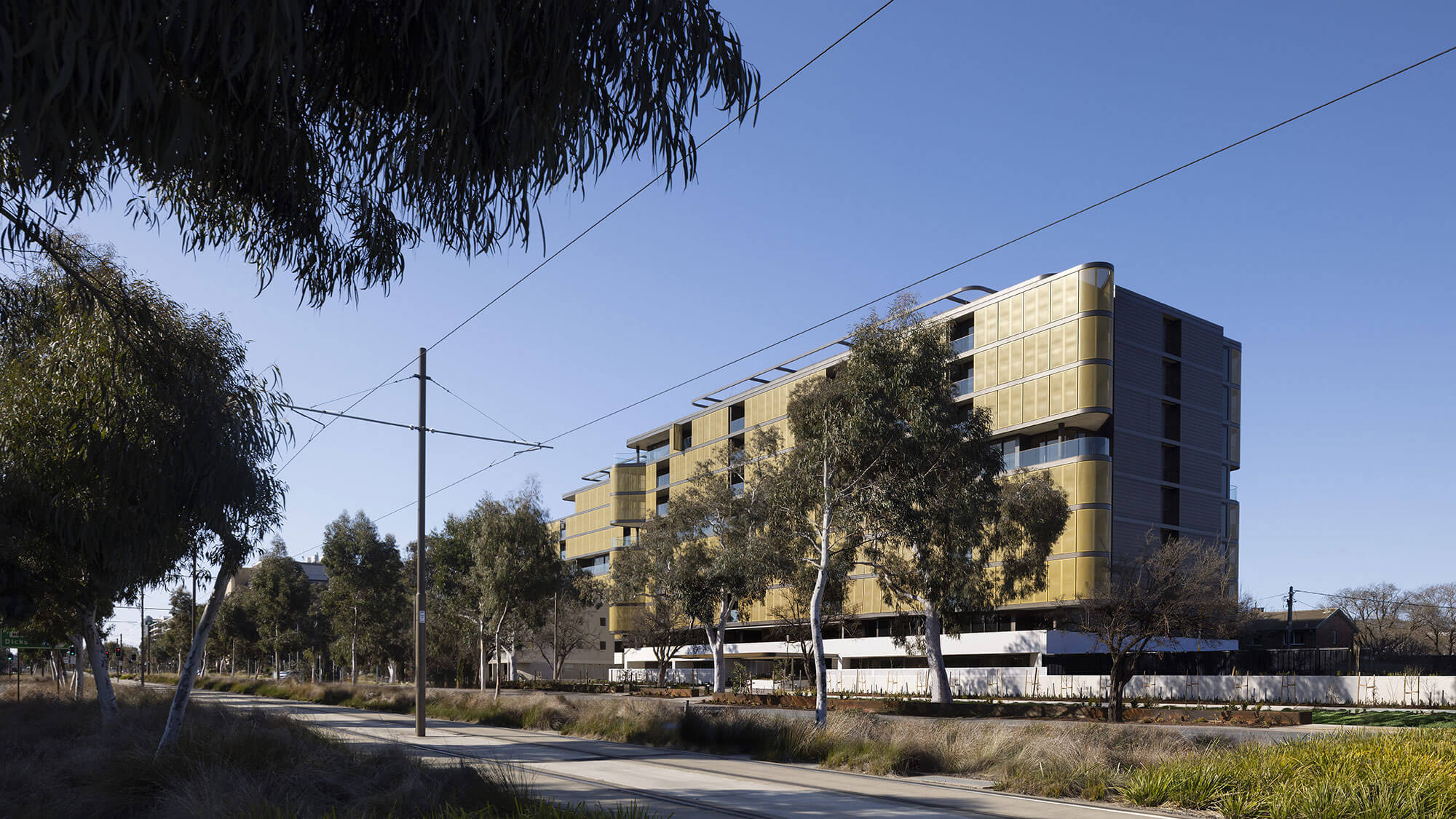
The SOHO precinct is a mixeduse village fronting the Northbourne Avenue corridor in the heart of Canberra. Kashmir is one of a sequence of buildings in the precinct that form the gateway streetscape to Canberra’s city centre. The buildings are designed to contribute and connect to the community at various scales building, precinct, and city.
Kashmir contributes to the citys vision for an active and connected mixeduse avenue by providing a variety of dwelling arrangements that contribute to its longterm vitality. The site includes the Northbourne Housing Groups Bedsitter Flats (Ancher, Mortlock and Murray for the National Capital Development Commission (NCDC), 1959) which has a distinct visual language and is one of the earliest mediumdensity housing examples in Canberra. Kashmir is designed and sited in recognition of this heritage building that sits in the foreground, fronting the avenue and defining the ground plane.
Kiora | KHA
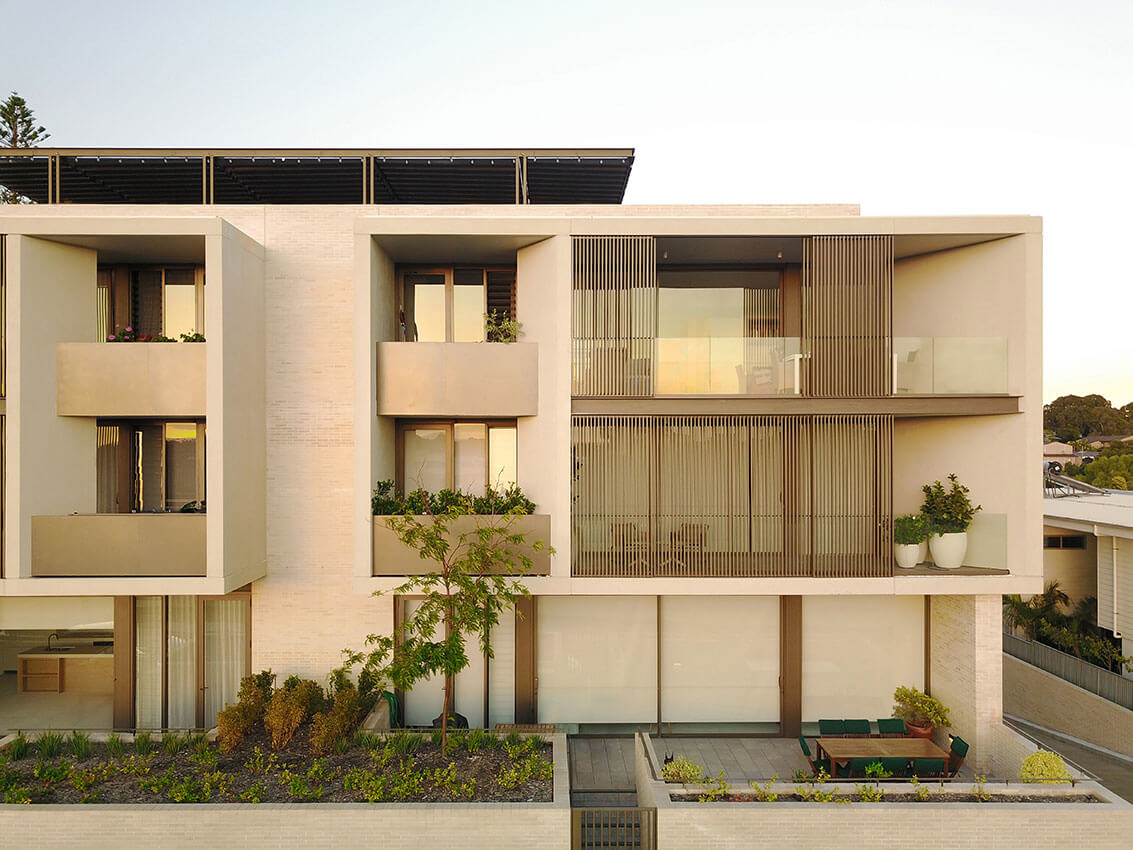
Kiora is part of a masterplan for St Louis Estate that contemplates greater density while increasing retirement living accommodation in the Claremont area.
The massing of the building steps back from the street, sympathetically addressing the adjacent residential scale.
The conservation of the priests house is a key organising device for the project, curating the entry to the project and providing a series of social spaces for residents.
At ground level, adjacent to the priests house the project incorporates a wellness area for medical appointments, therapy and group exercise.
All apartments are provided with true cross ventilation and generous terraces.
Kiora demonstrates how high quality density can be achieved in a suburban context, satisfying societys need for more retirement living accommodation within an established suburb.
One of the projects strengths is the aggregation of residential and communal uses, which provide the opportunity to age gracefully and socially, within a community.
Illume | Cox Architecture
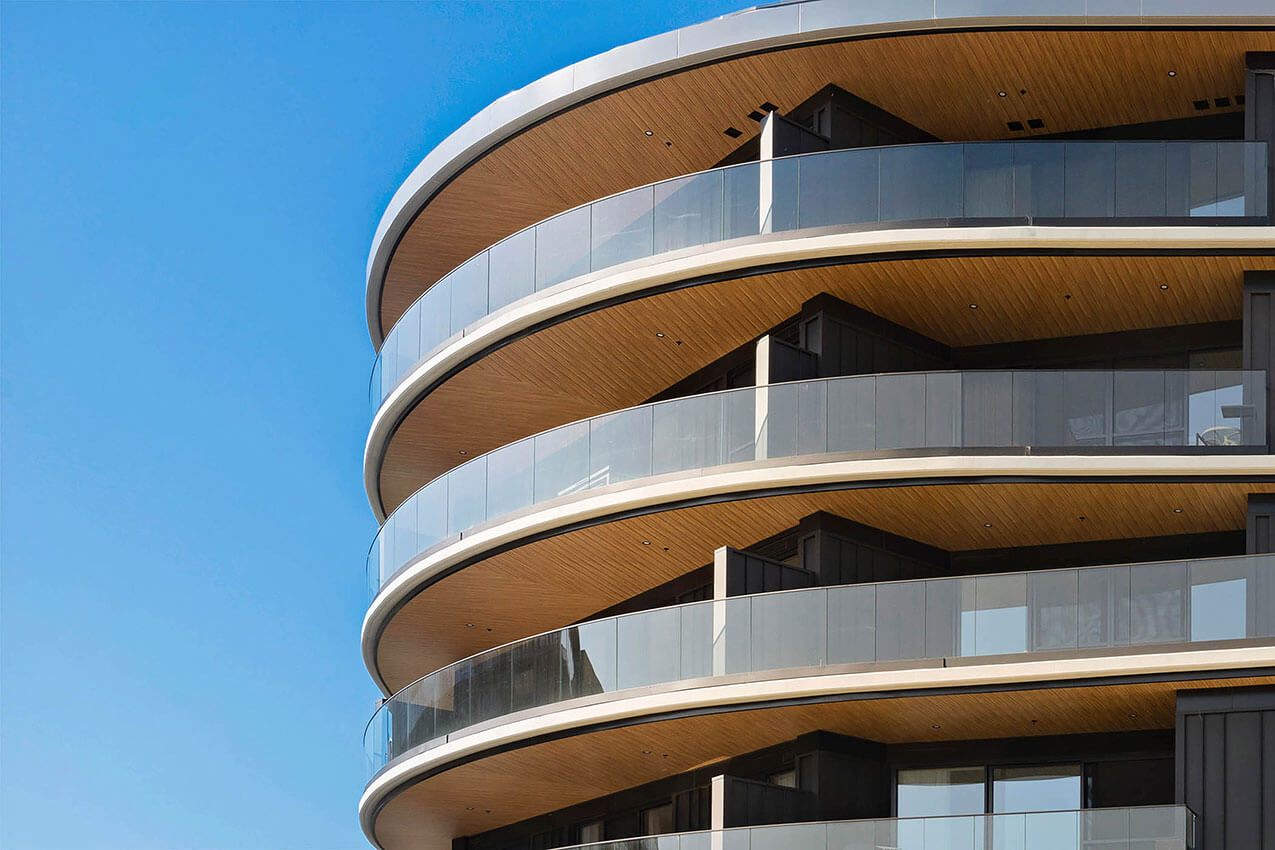
Illume aims to demonstrate how contextual considerations about site together with preferencing the basics of light and air can create a truly liveable multiunit housing solution. The project consists of two sperate buildings that site above a common landscape which itself conceals the basement levels below. The larger of the two buildings contains just under sixty units, ranging in size, from one bedroom through to fourbedroom apartments. The smaller of the two buildings only contains three apartments, each of which occupies entire floor. It is appropriately dressed in gold brickwork in response to the two original Heather Sutherland and Malcom Moir houses across the street. Altogether, the project exemplifies the criticality of the fundamentals of context, topography, light and air in the context of multiunit housing as distinct from individual dwelling.
Inkerman + Nelson | MA+Co

Inkerman and Nelson is a project that eschews austerity, taking instead a softer approach to articulate the legacy of the site. Previously industrial sites are replaced with brick terraces, comprising 26 two and three storey townhouses arranged around central courts and walkways. The townhouses are three and four bedroom dwellings with ground level living and flexible space on the second floor. The incorporation of a freestanding frame narrates the experience at ground level. Primary and strategic secondary points of access introduced throughout the ground plane create a circulation path that feels urban and connected, but also intimate. The detailing, materiality and layering of the existing building is embraced, resulting in a contemporary collection of amenable townhouses. In turn, Inkerman and Nelson is a precinct that decisively responds to its context and the demands of contemporary living through subtle gestures, laying the foundations for a community, that over time, will flourish.
Hope Street Housing | Officer Woods Architects and MDC Architects
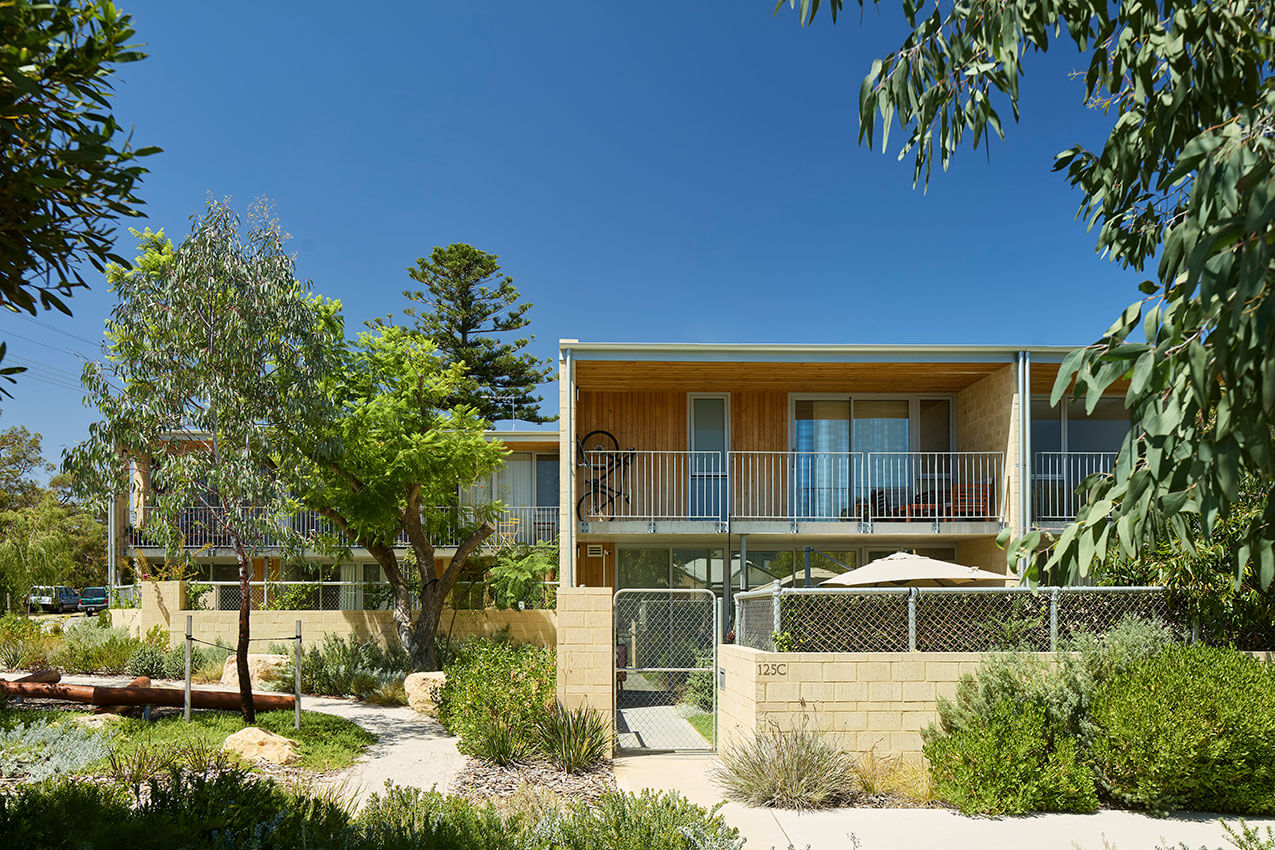
Hope Street is a medium density housing project comprising 28 diverse terrace houses/walkup apartments. Hope Street Housing increases the typological range of WhiteGumValley, allowing new residents in smaller households to share the established amenity of the suburb. Disposition is motivated by neighbourhood character, solar access, deep soil and appurtenant landscape. Balancing diversity and cohesion, two rows of welllit, wellventilated northfacing houses are created with generous setbacks for deep soil/gardens and high permeability. Priorities were integrating houses with landscape, legible/safe areas for pedestrian/vehicle movement, excellent amenity for private, semiprivate and communal open spaces and exploiting the sites solar access potential. A mews configuration, with only two crossovers, accommodates topography, provides good separation between rows and promotes community interaction in a lively landscaped laneway.
Horizon Apartments | CKDS Architecture & Hill Thalis Architecture + Urban Projects, architects in association

Horizon Apartments occupies a generous 5,600m2 site on Newcastle’s waterfront, located at the junction of three new public space: the Honeysuckle promenade, a public square on Steel Street’s extension and a park on Cottage Creek Corridor.
The project comprises three buildings defining two courtyards open to the water. The buildings are united by their waterfront alignment, scale and material palette. The design is an exemplar of equitable view sharing as the landscaped courtyards allow views between the buildings from both the public and private domain behind.
The buildings sit on a gently raised brick plinth, providing flood proofing and prospect over the adjoining public spaces.
Containing 110 generous apartments with a range of plan types, all achieve high amenity. 88% of apartments face north with harbour views, over 75% are cross ventilated.
The design is a considered response to this exceptional site and a model for the area’s evolving urbanity.
Huntington | SJB
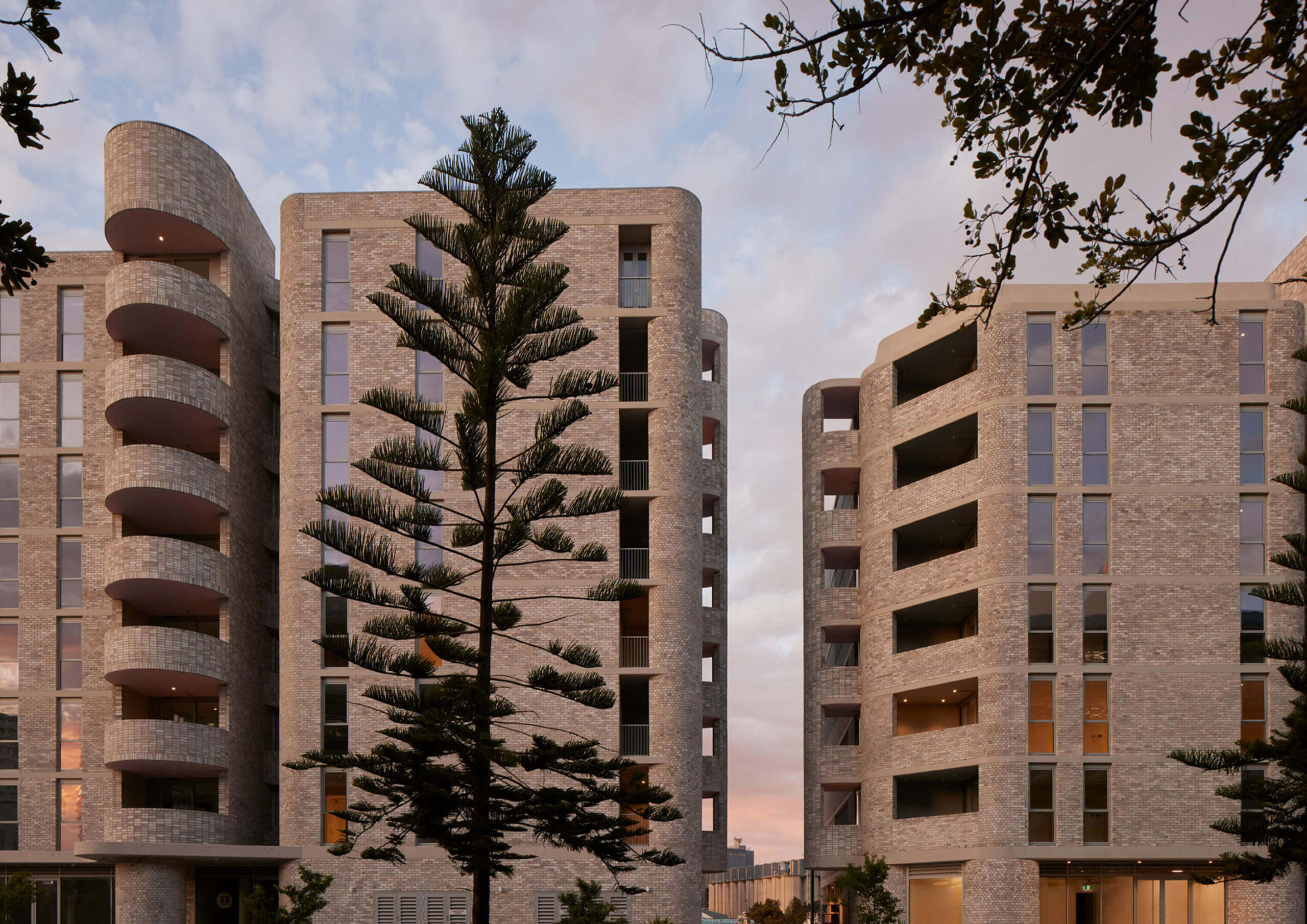
Running parallel to the Hunter River, Huntington at 35 Honeysuckle Drive is a key node in the Newcastle Honeysuckle Precinct urban renewal corridor, evolving the foreshore into a highly connected, mixed use precinct. Poised to play an important role in enlivening the precinct this new residential development introduces significant retail to the ground plane and 90 apartments above, across two buildings.
The success of the Honeysuckle precinct is intrinsically linked to the connectivity between the city and the water’s edge and its activation. Huntington stitches the old town at the south to the foreshore boulevard through permeability and the introduction of protected, north facing retail spaces. The material palette also speaks to the site’s differing conditions, with a playful brick façade facing Honeysuckle Drive which opens to the north to capture views and light and reflect the palette of industry across the river.
Iglu Mascot | Bates Smart
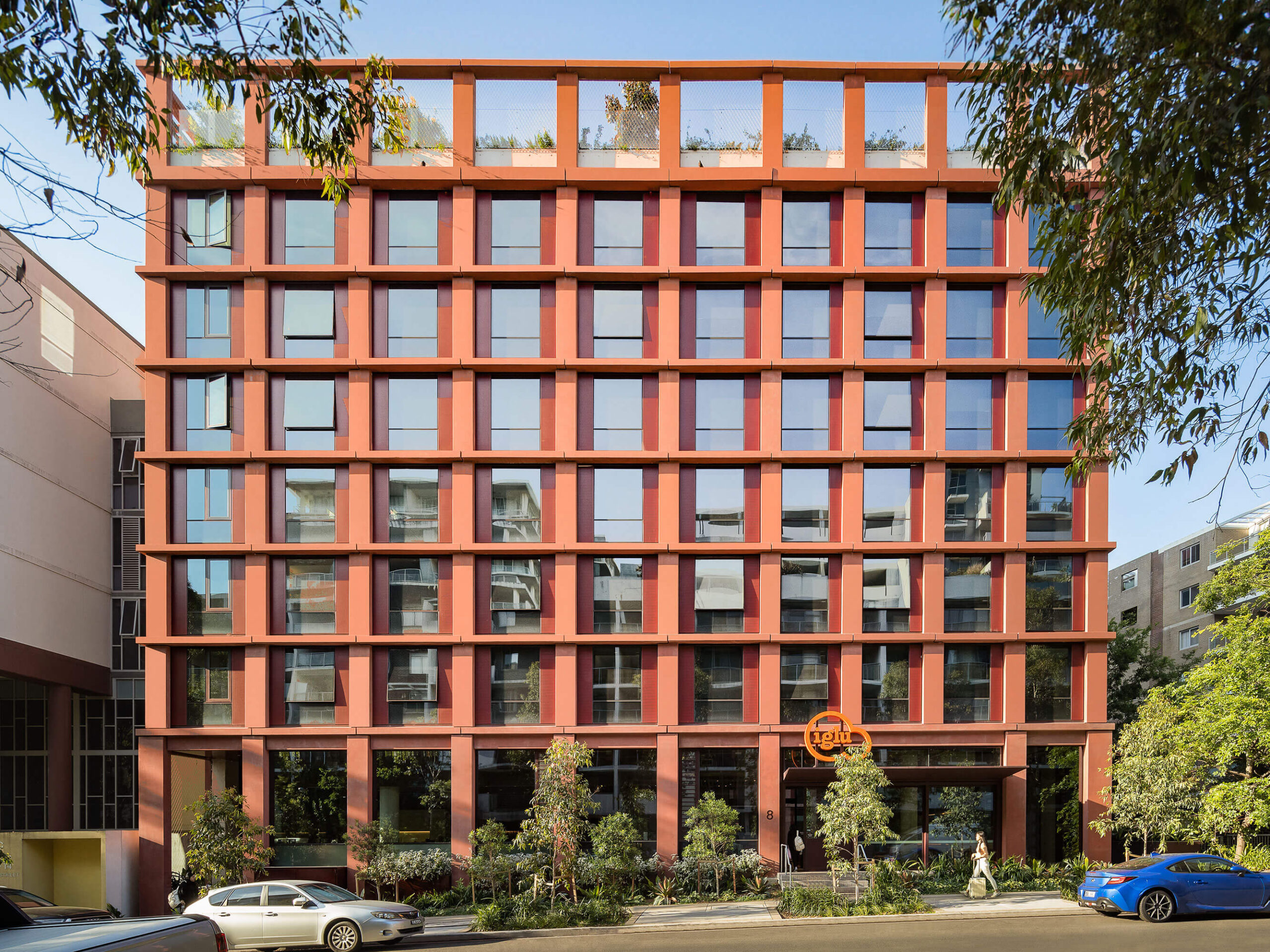
Iglu Mascot’s architecture center’s on community in two ways. The building provides a much needed, high-quality home to more than 430 university students, close to Mascot Station. It also works hard to lift Mascot’s built environment, which is dominated by bland residential super blocks, traffic congestion, and a lack of open green space.
Three interconnected rectilinear volumes of varying height are organized around a landscaped courtyard. The volumes are wrapped in a precast concrete grid that embraces the modularity of the apartments within. Colour is integral to the grid, each volume is identified by its own unique hue, drawing from a palette that references Mascot’s older homes and brick warehouses.
Inside, the building balances efficient studio and 6xbed cluster apartments with generous shared amenities that support study and promote community. Communal outdoor spaces and soft landscaping have been maximised to improve liveability and set a new precedent for neighbourhood architecture.
Havard St Terraces | Mather Architecture
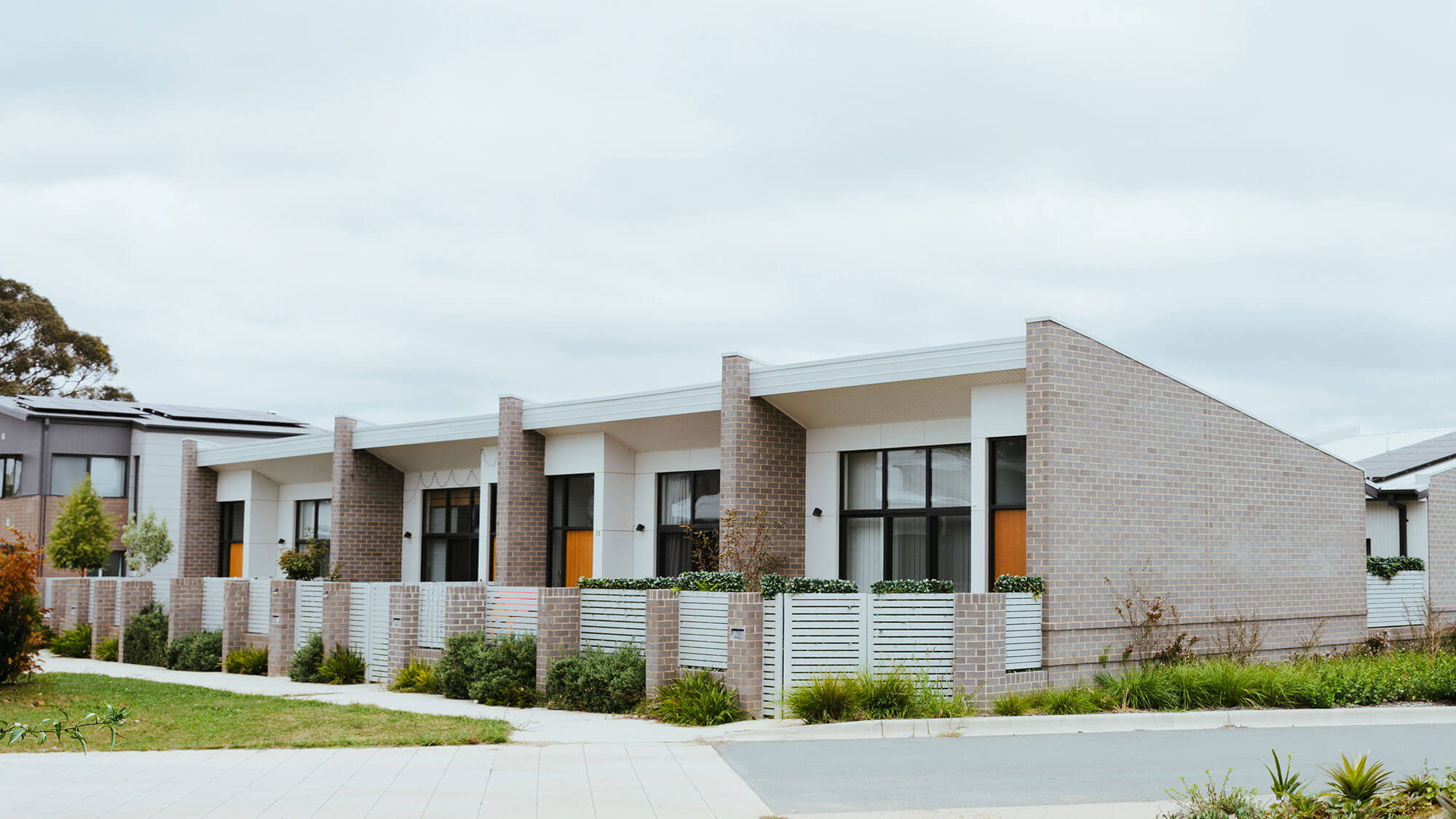
This project demonstrates where less is more. This site was originally anticipated for 4 x 2 storey townhouses. Working with the developer, we identified a gap in the market for smaller, single level, compact and more affordable homes. Nestled into a compact site, the dwellings are surrounded by roads. In order to address this, the front and rear skillion roofs slope down into the inner courtyards bringing natural light and soft landscaping into the centre of the homes. Materials were selected for their honesty and durability. Externally, face brick end and party walls articulate each dwelling while lightweight FC cladding complements the glazing geometry. A simple pop of colour identifies each front door. Raked ceilings with boarded lining increase natural lighting and perceived space into the living areas. The front seat and screen act create a subtle yet functional entry space separate from the main living zones.