
Monument Apartments | Stanisic Architects
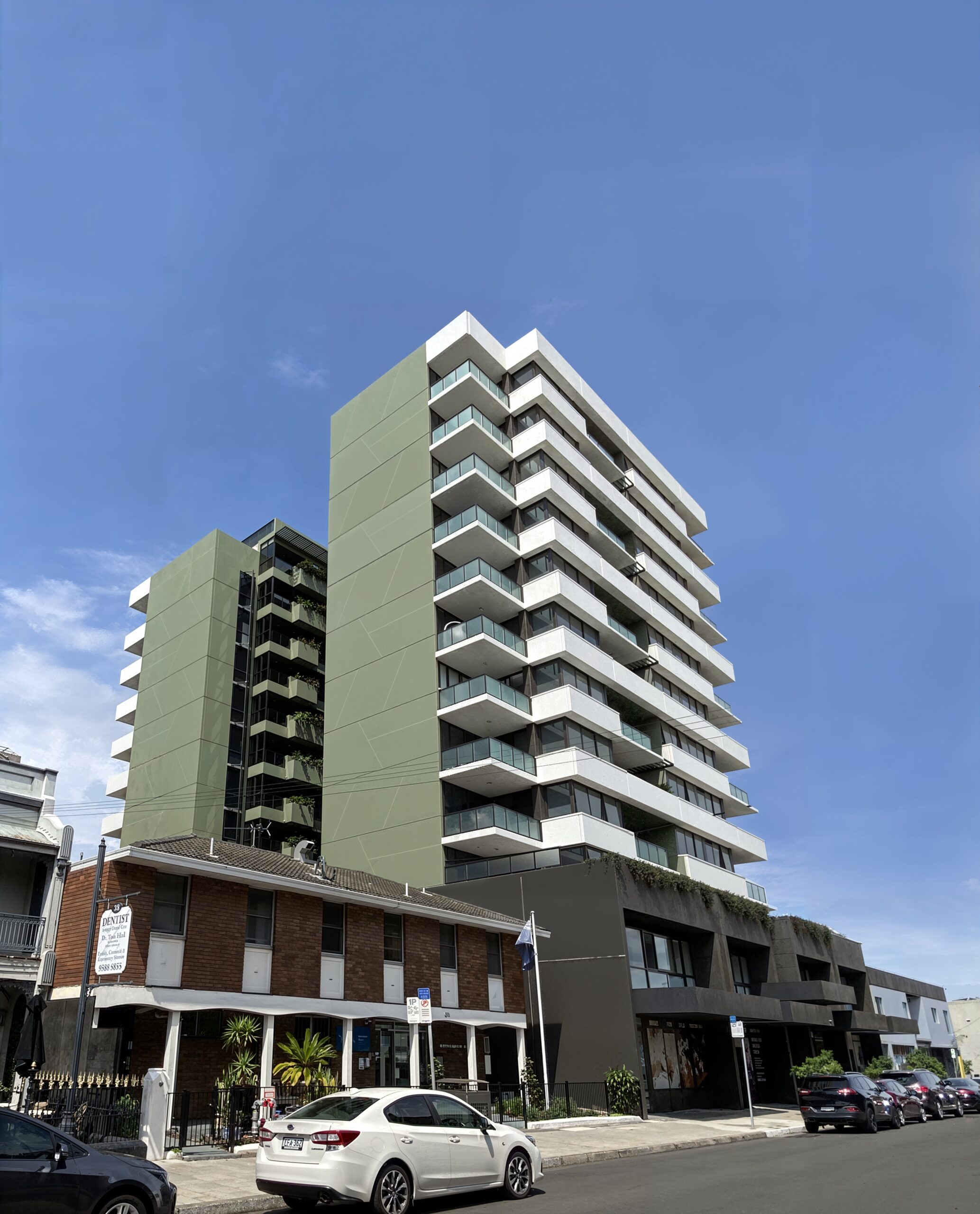
The main concept is an outdoor green oasis that functions as a vertical stack or breezeway, filled with irrigated planting a bio sink of cool air that creates an invigorating and refreshing environment and provides natural ventilation to habitable apartments. The walkways around the central outdoor area are external spaces or open galleries and not internal corridors. The outdoor area is 12m between walls.
The plans develop a diversity of housing choice suited to meet the needs of the current and future residents of Kogarah, including one studio apartment, three one bedroom apartments, forty three two bedroom apartments and four three bedroom apartments. The proposal includes affordable two bedroom, switch back, apartments.
The project is a 12 storey mixed use building comprising 51 apartments and 540sqm shops on the ground floor. It develops passive design responses to reduce energy consumption to reduce greenhouse gases from air conditioning.
Murdolo Apartments | ROSEVEAR STEPHENSON

In mid 2014, we were approached by the owner of 258 Macquarie Street, who nearly lost the property to fire shortly after it’s purchase leaving a dilapidated rental property uninhabitable and an owner with an enormous challenge.
Around the same time AirBnB was emerging and we suggested adapting the building specifically to this new typology to achieve the returns required to fund the restoration demands.
We developed a policy of removing the intrusive elements, repairing damaged external fabric where required and distinctly inserting new elements within the existing spaces and externally as clear modern attachments. Where existing fabric could remain in it’s current state, it was left that way, “even the fire history” such that a patina of eras is on display.
During the 258 construction, 260 was purchased by the owner allowing us to restore both terraces as a whole and reestablish their stately Georgian presence on Macquarie Street.
Markham Avenue | Architectus

Markham Avenue is one of the first projects designed and delivered under the Victorian Governments Big Housing Build.
Spread across five buildings within a welcoming environment, the communitys 178 social and affordable homes are tenure blind, arranged and designed to be indistinguishable from each other. The 100% governmentowned development is a socially and environmentally sustainable place to live with quality at its core.
Once occupied by 56 timeworn public housing units from the 1950s, the site has been transformed into a vibrant, landscapeled community designed for longevity, with the dwellings integrating seamlessly with their natural surroundings and with the grain and materiality of their neighbourhood context.
Defined by generous spaces and amenities, connections to nature, and timeless, durable materials, Markham Avenue represents a healthier, more inclusive form of higherdensity living.
Mavis Terrace | Pasqual Architects

For the Mavis Terrace, the project goal was to respect the neighbourhood character, whilst working to create a respectfult and aesthetically appealling contemporary design .The Architecture responds to contempary planning and design, whilst respecting the existing forms and proportions of the original buildings.
In summary the Mavis Terrace translates the traditions found in an small inner west Calinfornian Bungalow Site, to a contemporary reinterprestaion. The Mavis Terrace has proudly set a new precedent in the smaller scale inner west projects.
Melbourne Indigenous Transition School Boarding House | McIldowie Partners

Built on Wurundjeri land, the new flagship boarding facility at 371 Church St, houses 40 students from remote areas across Victoria and the Northern Territory. Featuring a mix of dormitories, study areas & a collection of gathering spaces, it serves as the physical and spiritual home for the MITS community. Outdoor gathering spaces, including a rooftop terrace with spectacular city views, seamlessly link inside and out and connect students to Country, with native gardens designed to reflect the precolonial landscape of the area and a colourful poured paving artwork by Trawlwoolway artist Edwina Green.
The facade, designed in collaboration with Indigenous artist Lorraine Kabbindi White, acts as a billboard for MITS, featuring a lasercut perforated screen telling the Dreamtime story of the ‘First Bees.’ This story wraps the façade and acts as a landmark always was, always will be statement for the Melbourne Indigenous Transition School and the broader community.
Meridian | TURNER

Meridian consists of two buildings of 6 storeys and 8 storeys set within a landscaped sequence of private and public spaces. The development comprise both private residential and affordable housing. The site is located along a natural ridgeline that follows the alignment of The Kingsway. The elevated location beside Miranda park allows for uninterrupted views to the north towards the Georges River and the City skyline beyond.
The organic building forms take their inspiration from the gentle curves of the surrounded elevated topography. The materials used are quality, low maintenance finishes such as concrete, brick, and metal cladding. The colours are chosen from a classic monochromatic palette of whites and dark greys that bring a sense of calmness to the composition and ensure a long term quality to the facades. The built form and landscape elements have been designed to embrace ESD principles, both passive and active.
Mesa Aldinga Beach | Architects Ink

Six dwellings located along the Aldinga Esplanade have stepped frontages, like birds in flight, each house is given their own identity.
The entrance is reminiscent of an underside of a jetty with exposed beams overhead, connecting the rear yard to the beach, where surfboards and towels can patiently wait until the next ocean visit.
Insertion of an internal courtyard brings ample light into the center of the dwelling. The skillion roof invites morning light over the kitchen, at its lowest point serves to shield the living areas from the afternoon sun. The combination of high-level windows and horizon views establishes a connection to both the sea and sky.
Material selections are humble. Exposed rafters unify internal and external spaces. The activities of the homes sit between robust concrete blockwork, offering a sense of permanence and protection.
Mesa encourages relaxation, where the sea breeze flows through and sandy footprints are welcomed.
Little Young Street 4A & 4B | David Langston-Jones
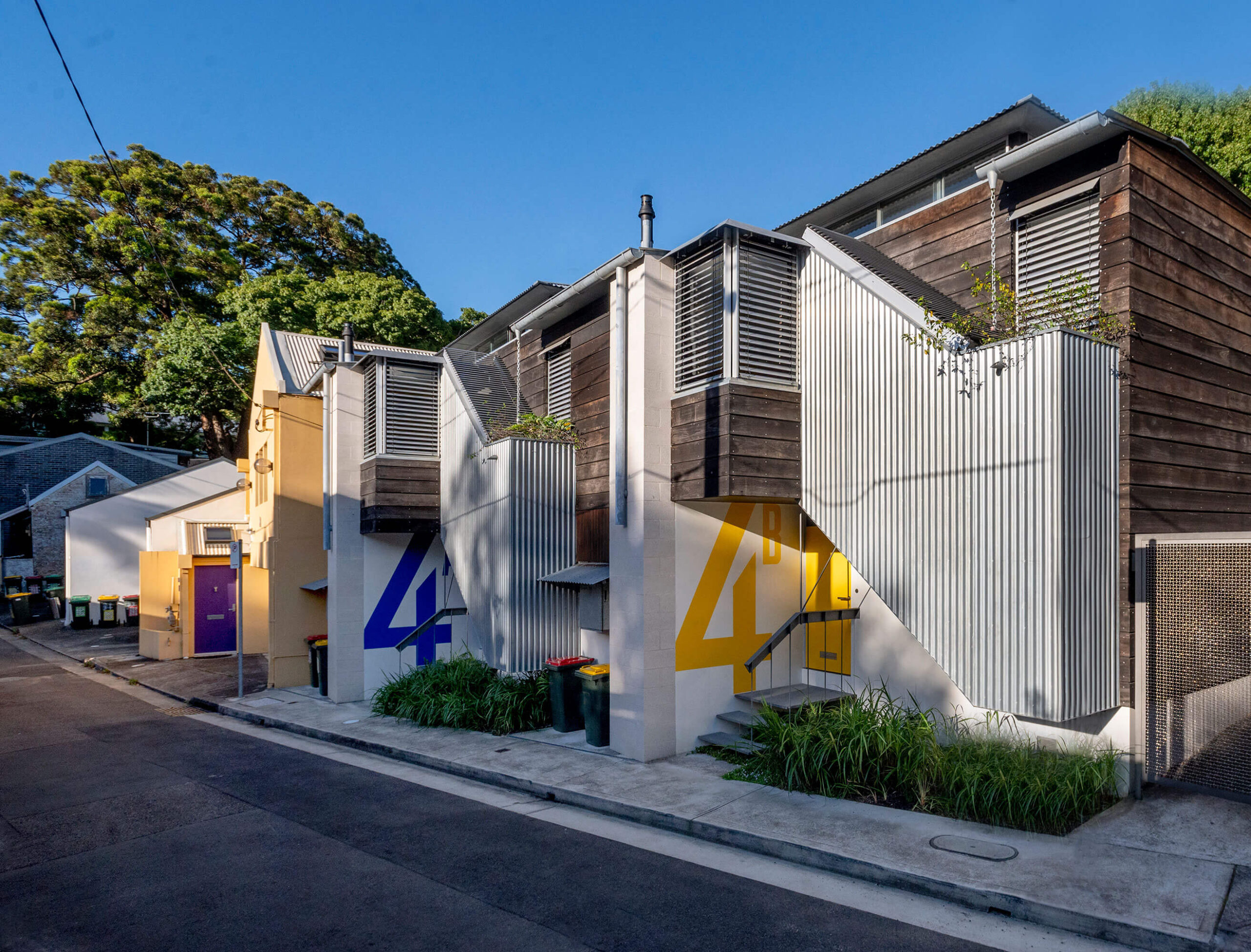
With a footprint little bigger than a pair of double garages, two 80 sq m houses have been fitted onto an awkward sloping site which most would expect to contain only one. Infilling a narrow inner city laneway, these replace the original asbestos ridden bungalow, which had outlived its usefulness, with two storey houses without garages taking advantage of their proximity to public transport.
The identical houses are ‘upside down’: bedrooms below and living areas above. All ‘machines’ bathrooms, stairs, kitchens, rubbish bins, etc are rowed in front concentrating the main massing away from the street. Articulate and expressive, the resulting external appearance contributes much to the streetscape.
Internally, the houses exhibit a spaciousness and grandeur that belie their size and are private yet transparent in spite of being cheek by jowl with neighbours. Carefully arranged openings frame views onto courtyard gardens, distant trees and the sky while filtered sunlight enliven the living areas throughout the day.
Lunar Apartments | Rothelowman
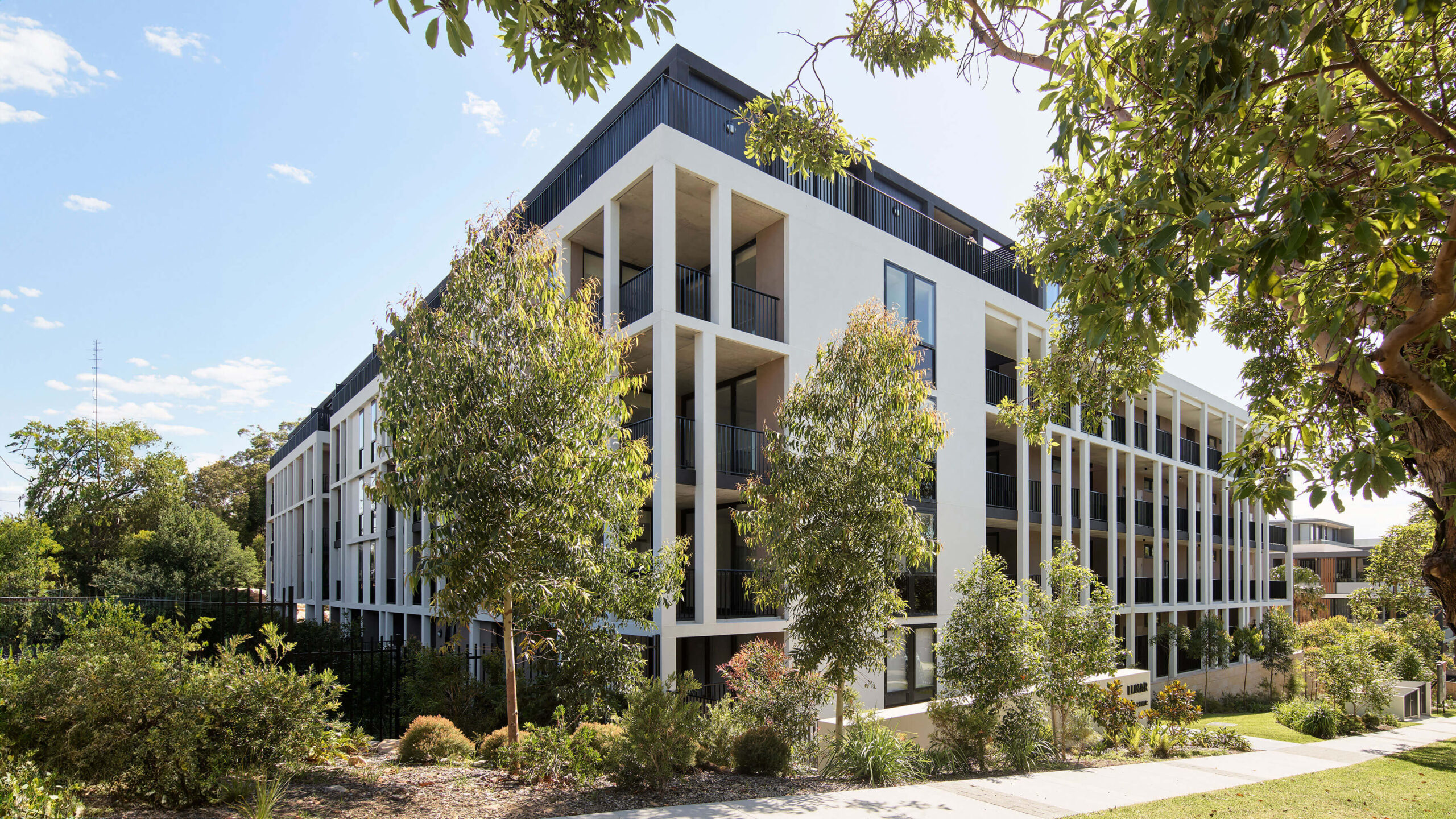
Lunar integrates what people love about living in Jannali in Sydney’s Sutherland Shire: being part of a neighbourhood and community, and having light, nature, ventilation and views. Offering a new vision for suburbia, Lunar provides high quality, affordable, liveable apartments for the local market, many of them young couples and downsizers who want to stay close to family and friends.
The five storey courtyard building is surrounded by nature and rock shelves, and maximises the number of north facing dwellings, for sunlight and views. Externalised circulation fosters a neighbourhood feeling and animates the streetscape. Breezeway apartments draw light and ventilation through the interiors. Drawing on suburban housing models, every apartment has two facades: a front porch (public corridor and semi public internal space) and back yard (private balcony). These outdoor spaces provide connections to nature and fragment the building to create a lighter density and modern, unpretentious architecture that relates to Jannali’s character.
Maggie Street | Curious Practice

Maggie Street reinterprets and respects the amenity, heritage and character of the surrounding suburb, but while neighbours inhabit as single dwellings on large lots, Maggie Street manages a fraternal quadruplet of generous two storey townhouses. Flexibility in the planning of each unit can allow for any number of occupant requirements, from a growing family, home office or just having room to have the grandchildren stay.
Materials have been chosen for their practicality, durability and texture changing with shifting shadows and development of patina over time. The red cement bonded particle board and zincalume claddings bring both familiarity and vitality to the development, and with lawn removed from the site, an all native landscape plan brings biodiversity back to help repair the site post construction.
Increasing density, reducing sprawl and fostering a sense of community between occupants are becoming the new standards for developments people actually want to live in not just buy.