
Canopy House | Neighbourhood Architecture
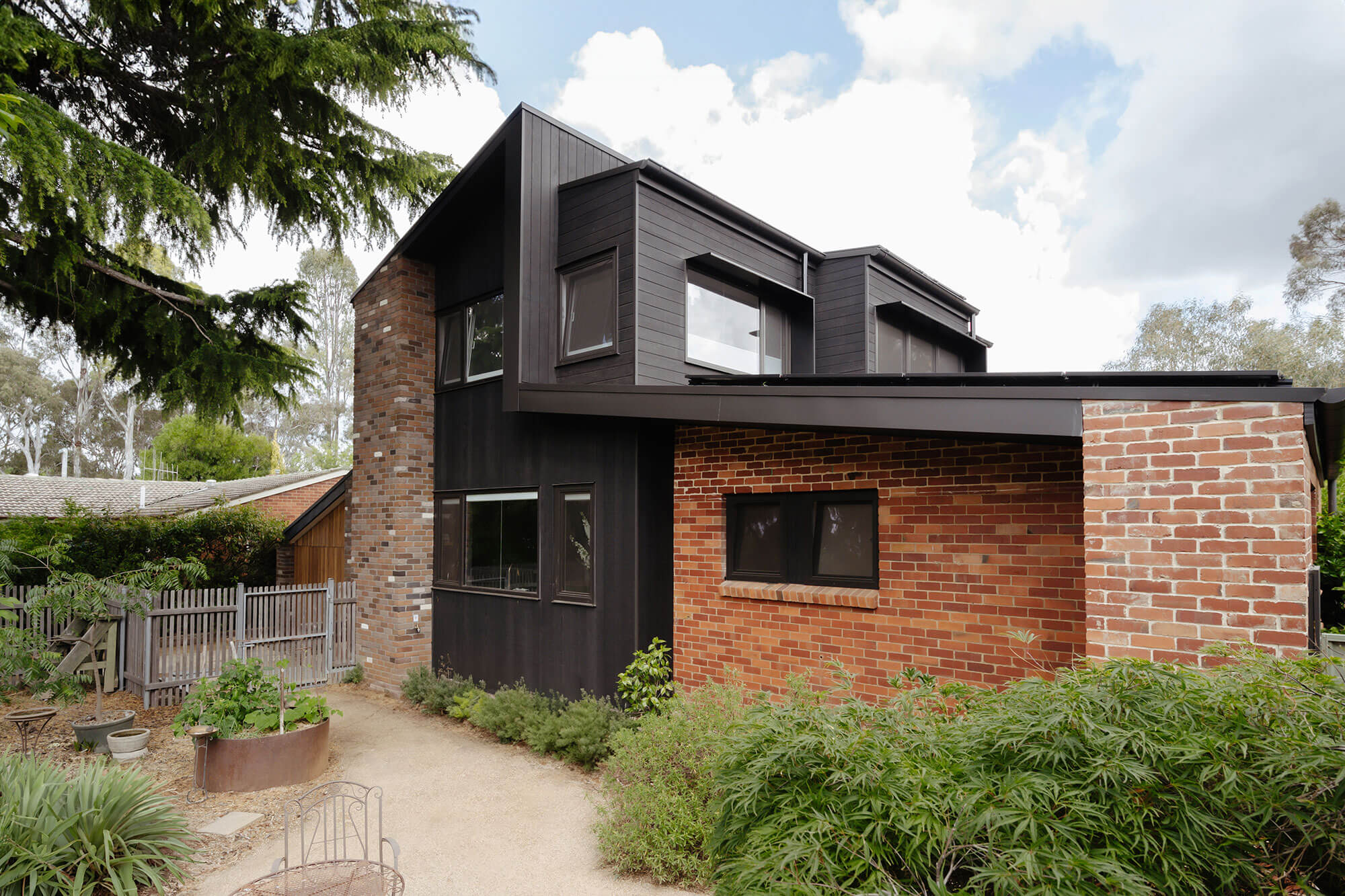
This architectural project in Watson aimed to rejuvenate an aging residence, transforming it into a modern, energyefficient home with an added upper storey. Combining historical charm with contemporary functionality, the project focused on sustainability through solar passive design, insulation, and smart home technology. The upper storey addition seamlessly integrated into the existing structure, offering additional bedroom, office, panoramic views and a striking facade. Architectural features blended traditional and modern elements, emphasising open spaces and the connection to outdoor areas.
Ararat House | SJB

This is a rural right sizing project, a new chapter in the history of a modest house that enables an older couple to enjoy life in town. Within walking distance of shops, doctors and friends, Casa Parents is the reworking of a 1950s home that their youngest son was the last custodian of. This reimagining of the home captures its carbon and cultural footprint ensuring that its history is amplified. A new good room facing the north to the street includes a private courtyard and a contemporary veranda, while a bathroom box to the rear delivers delight and surprise.
Bondi Abode | LAVA (Laboratory for Visionary Architecture)

A 1930s Californian bungalow with a 70s makeover featuring timber cladding and free-spirited vibe recalled the architect’s 70s childhood home in Germany.
The pokey, rambling original five-bedroom house, was transformed into a four bed four-bathroom house, in tune with current market demand in a desirable location.
The retro 70s vibe is complemented with a design for 21st century living bringing nature indoors, natural materials, flexible floor plans, and the latest technologies to address the way we live today: adaptable architecture, integrated facilities, smart technologies.
Clever engineering replaced solid walls and utilities that blocked the inside/outside flow. Within the same footprint, integrated pivot doors, disappearing sliding doors and screens offer privacy, ventilation and connection to an oasis garden. Flexible internal spaces allow various configurations for different ambiences. The house runs on solar and natural ventilation. The client’s favorite designers are integral to the design. An original 1970s hardwood staircase was restored.
Bookend Addition | Studio Heim
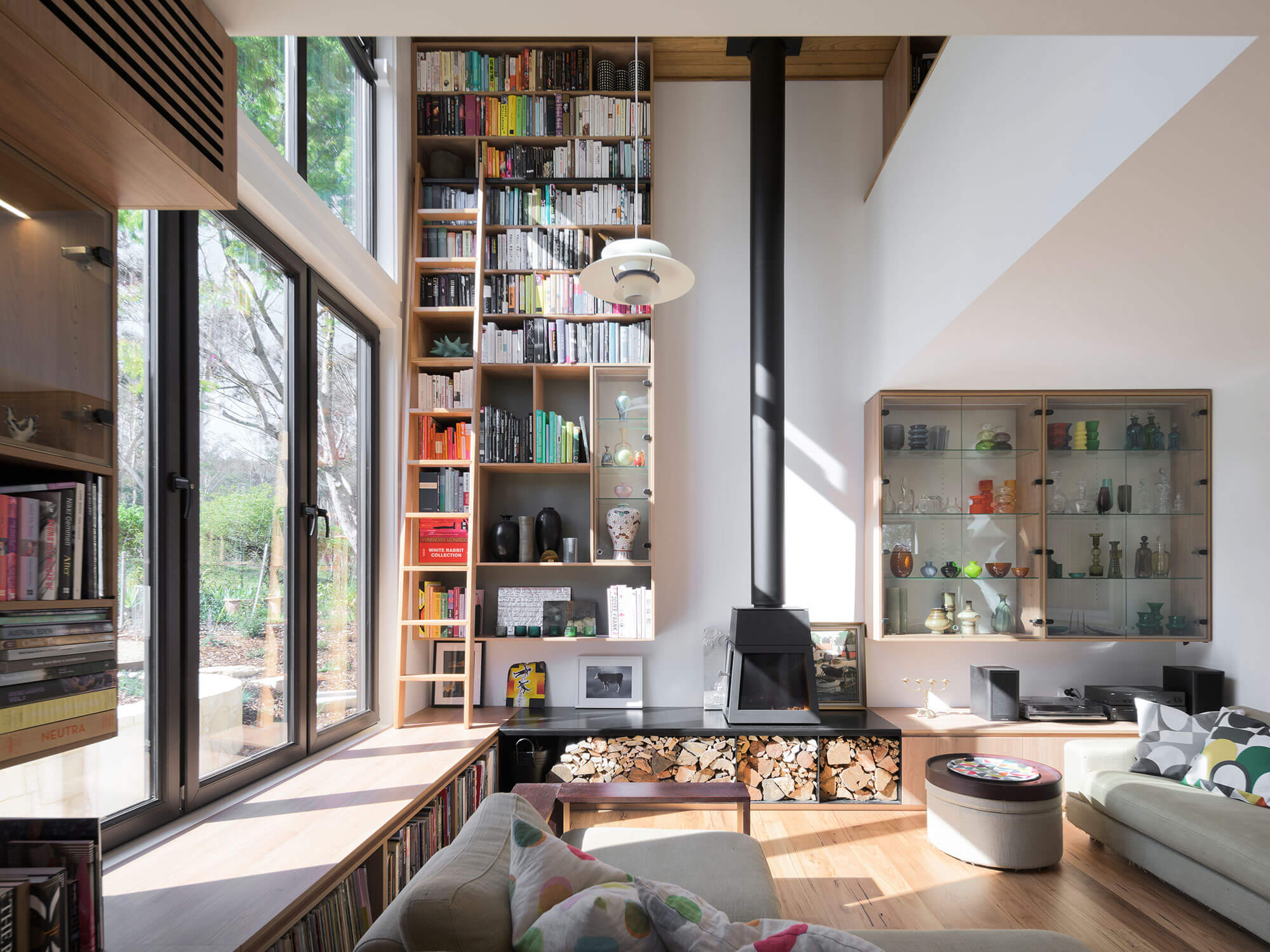
Bookending the front and rear of an existing midcentury Seidler inspired dwelling are two interventions that respect the original design. At the front, an undercroft area has been infilled to provide storage and a place for creative pursuits. At the rear, a contrasting two storey form holds new living and sleeping spaces.
Overcoming a challenging position on a wedgeshaped block, the new form is like a Tetris piece that hugs the existing dwelling whilst stepping to work with boundary setbacks. As a deliberate contrast to the existing dwellings cream brick, the new addition is clad in vertical Shou Sugi Ban, with a base of cream bricks, salvaged from a removed section of the rear façade, blending old and new together.
Bookend Addition is a light touch approach that enhances the dwellings liveability with a striking lightfilled form that makes the most of its unique position adjacent bushland.
Bowral House | Luke Moloney Architecture
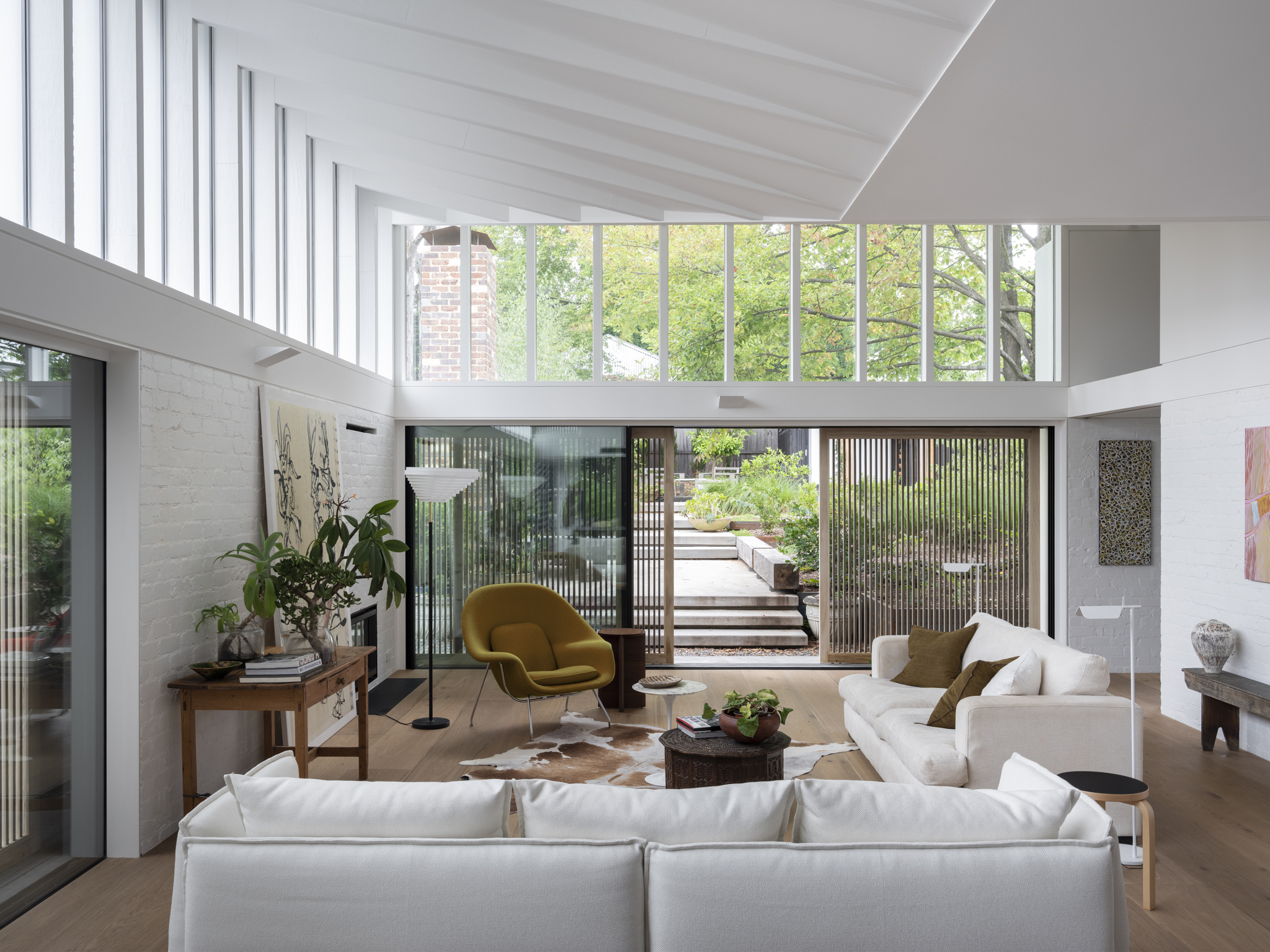
Alterations and additions to a cottage in Bowral. A house designed with reference to the landsccape, so that a modern building feels like an abstract extension of place.
Bronte Sisters | Sam Crawford Architects

Bronte Sisters comprises two dwellings, a heritage listed house, once altered by Andrew Burgess Architecture, and a neighbour, half of a pair of semidetached dwellings.
In order to serve our client’s brief for a flexible, multifunctional home for a young family and their overseas relatives, both have been restored, renovated, and, at the rear, opened to the landscape and physically connected via a timber deck.
Our approach was to create a pair of buildings that can be appreciated as one, or as individual dwellings, in dialogue, through a shared materiality and geometry.
From the street the existing houses are different yet sympathetic in scale and materiality. For the rear additions we have built on this relationship.
Brunswick Galley House | Topology Studio

Conceptual inspiration for a house centred around a galley was drawn from the experience of our Clients life when they lived on board a narrowboat.
More broadly this house is about family, strengthening the neighbourhood connection and living with a firm understanding that what we do on an individual level directly affects the macro. The design supports everyday interactions with the neighbourhood through graduations of enclosure between public and private spaces and through careful consideration of entry.
Every centimetre is utilised to avoid excess. Reuse of building fabric while improving its thermal performance minimises waste and new materials that are repairable ensure their longevity.
The design plays with scale, spatially and through material pattern. Pockets of saturated colour within a bright interior, enlivened by shifting light. There is dialogue between the details and materials of the original home and the addition, the transition between the two is distinct but seamless.
Bung Tooth | Khab Architects
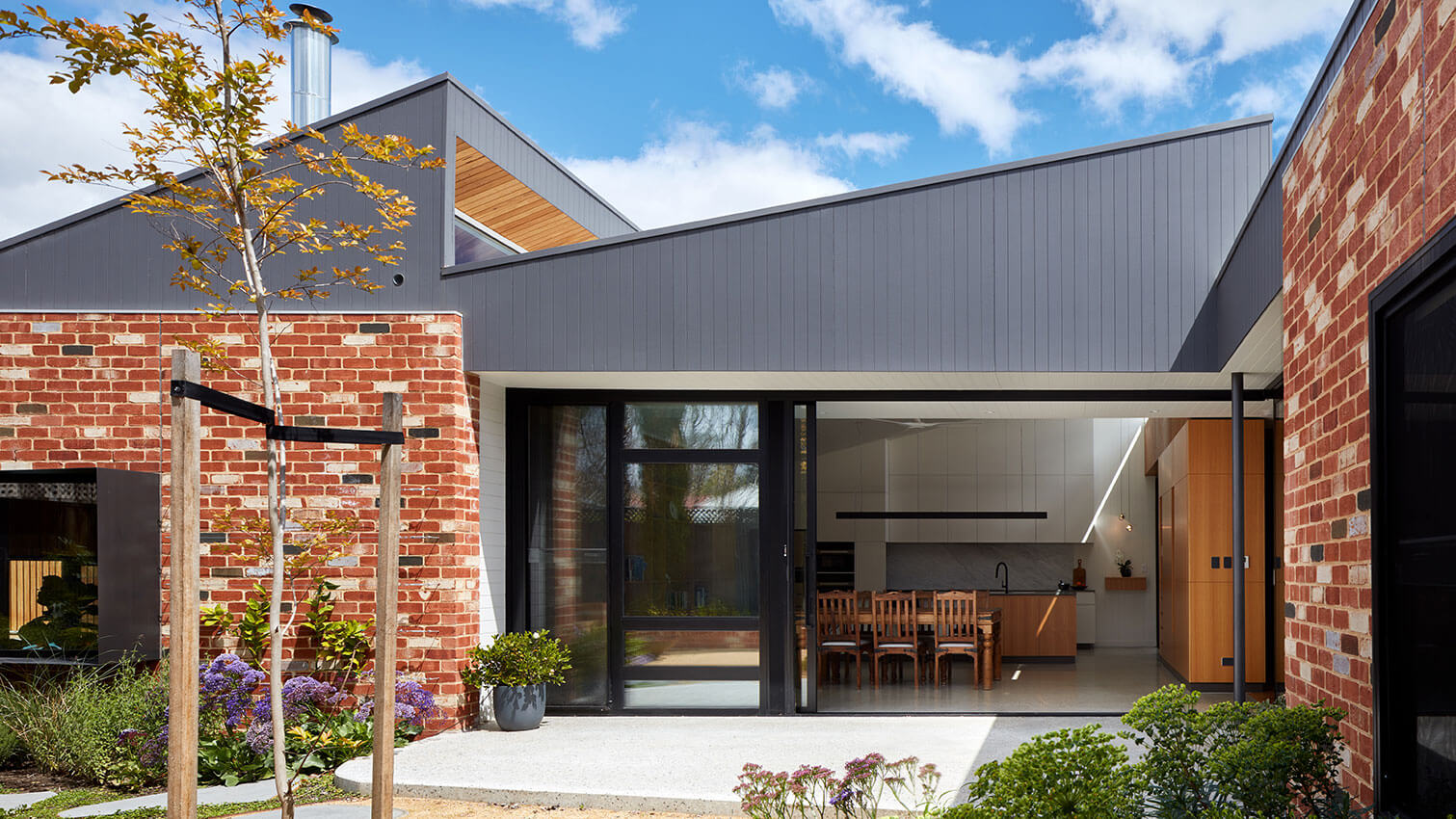
Bungalows are a classic suburban Adelaide home with a lot to offer but the rear is rarely as good as the front.
This project was no exception and made worse by the sunless, south facing aspect – rear living spaces that were dark and cold for a great deal of the year.
Provided Khab could come up with a clever way to capture northern sunlight, the bungalow would be happily retained for it’s charming qualities and the sustainable value of its re-use.
A Saw Tooth roof extension was the solution to catch sunlight. The high level windows reach up to scoop sunlight over the bunglow, feeding sunshine into new living spaces.
How does the Saw Tooth – an icon of industry, pair with an iconic Bungalow? The Bung Tooth… This is the moment where Kevin McCloud says “I’m just not sure it’s going to work!”
Bungalow Blonde | LiteraTrotta Architecture
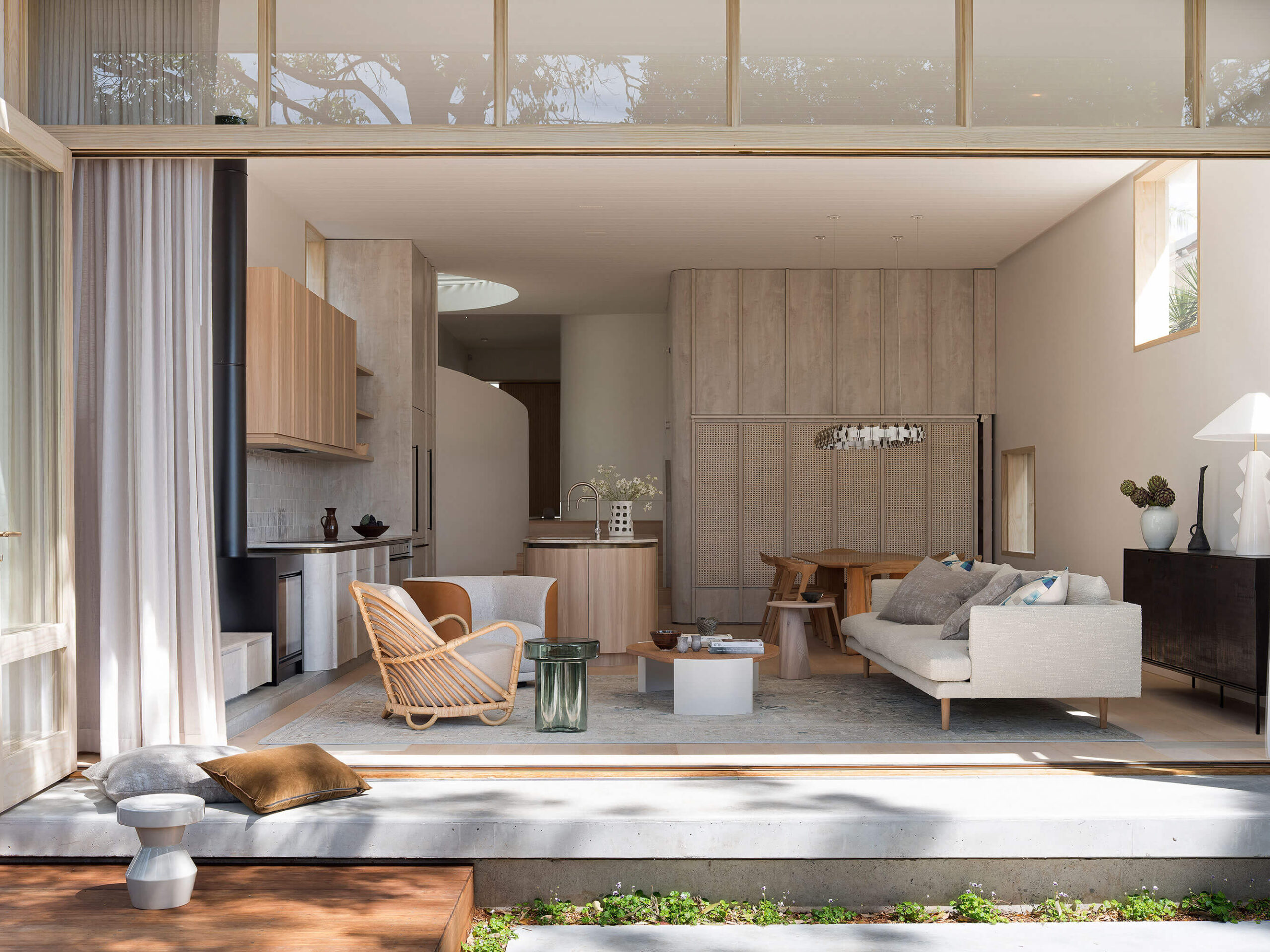
This delightful bungalow in a winding residential street, was home to our clients for many years before they approached us seeking change, advising that the layout of the home was flawed and the centre dark and unused. We approached the design with the upbeat attitude of our clients, maintaining its street presence with stepped and pitched rooves, and a unique window that hints at curiosities beyond. The living spaces are bathed in natural light that enters via a halfmoon skylight above the stair, and through joyous peekaboo windows along the northern façade. The indoors spill out onto a luscious garden, a curved seat and deck defining one corner under a large Brushbox.
Truly transformed from its basic bones into an incredibly warm family home, its unassuming front is a veil for the wonders within generous spaces, soft sinuous curves, and playful natural light, it implores its guests to expect the unexpected
Burt Street | Kate Moore and Gian Tonossi
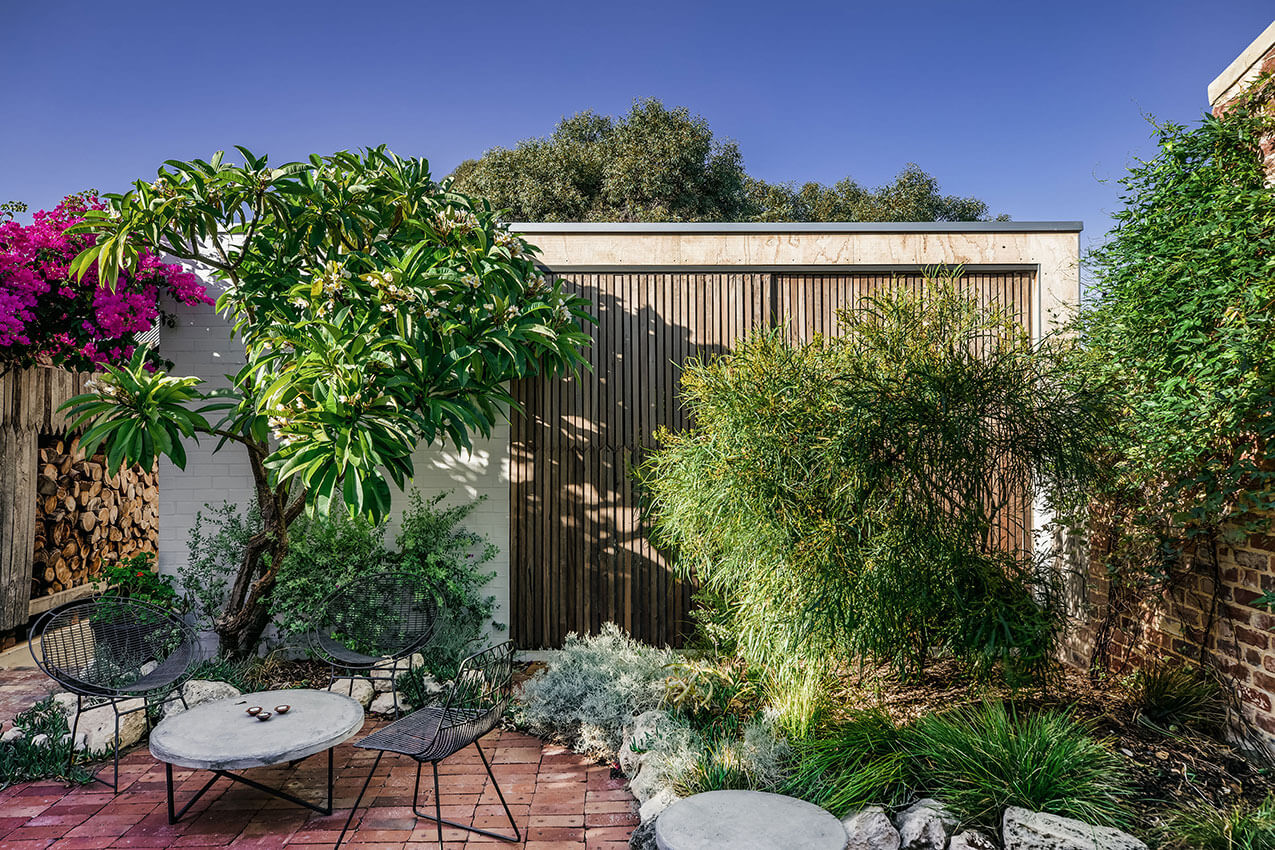
Burt Street house is an experiment with small spaces and big tables. This house is one of two semidetached cottages built using limestone from the former quarry on which they sit.
Our brief was to bring the outdoor bathroom inside and facilitate a sunny, wind protected courtyard despite a challenging southwest orientation.
The 1890s original house has been largely unaltered. A new vertical volume, anchored by a generous dining table forms the new heart of the house. An outbuilding with another table have been positioned on the rear boundary for flexible use, bike storage, as a wind break and night lantern.
This project celebrates the value of existing elements, seeking to peel back a colourful history through layers of paint and weathered materials. Imperfections present stories in a new light and give a lively backdrop for the current custodians of the house.