
Whadjuk people
Western Australia
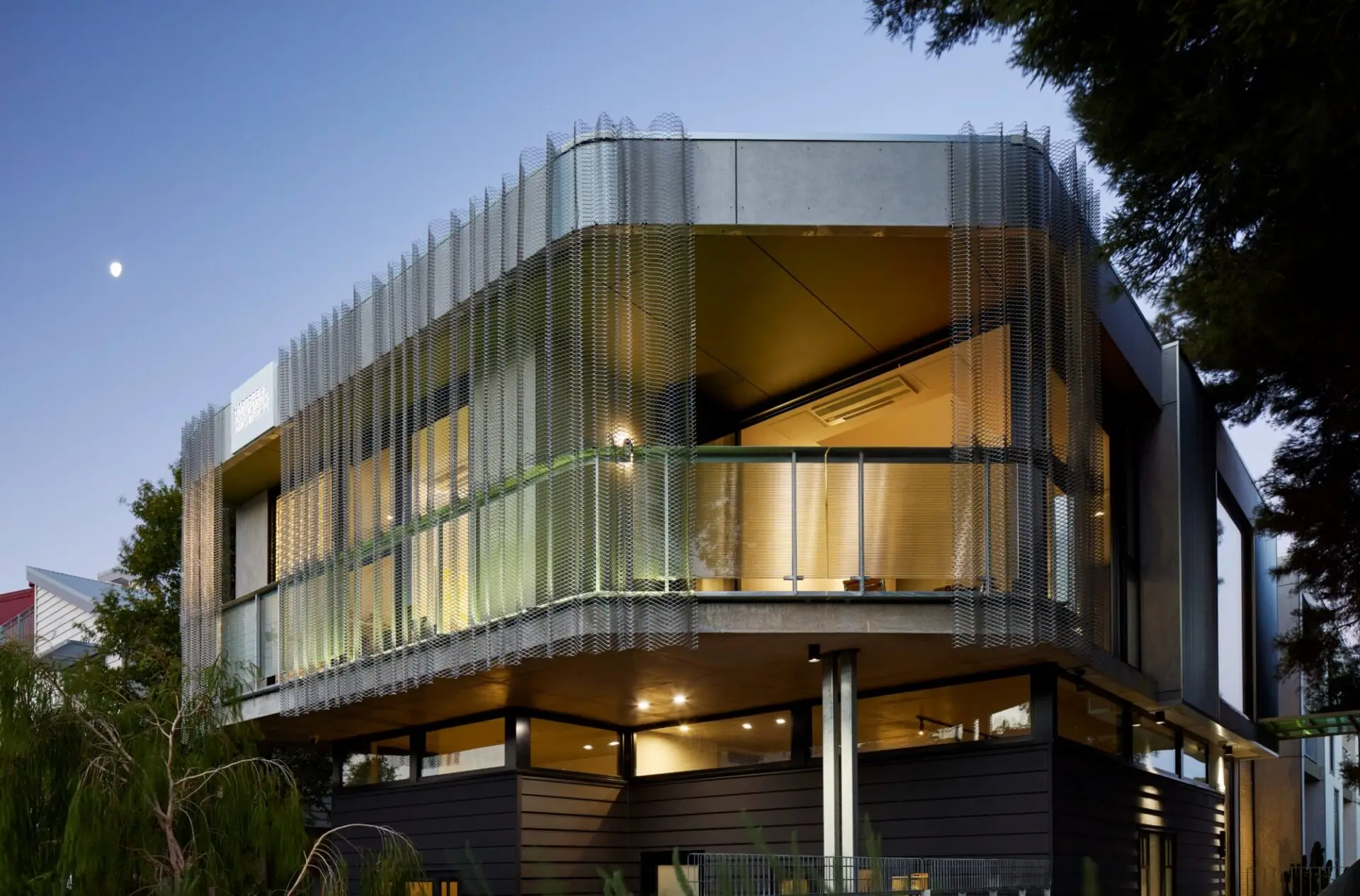
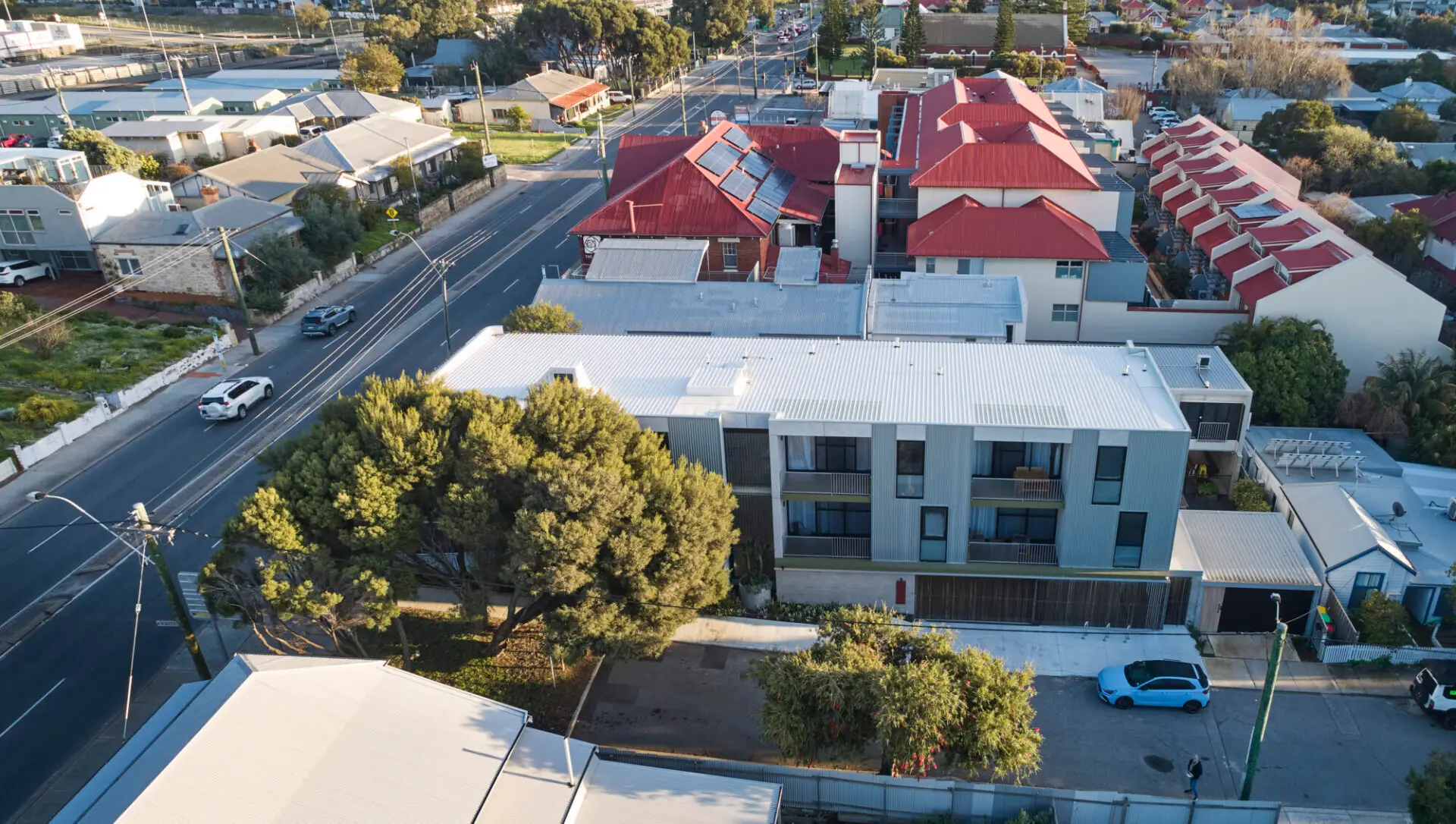
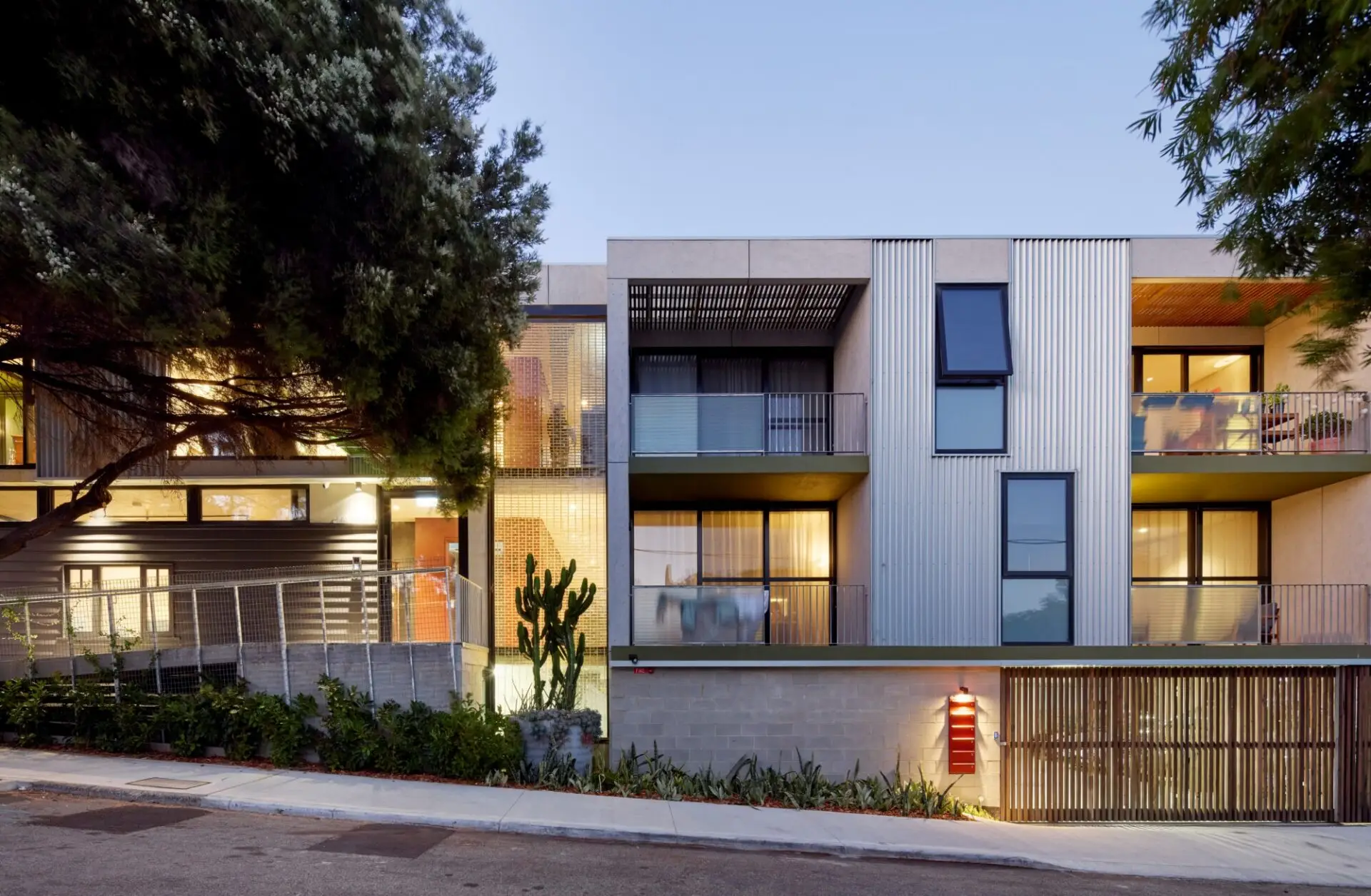
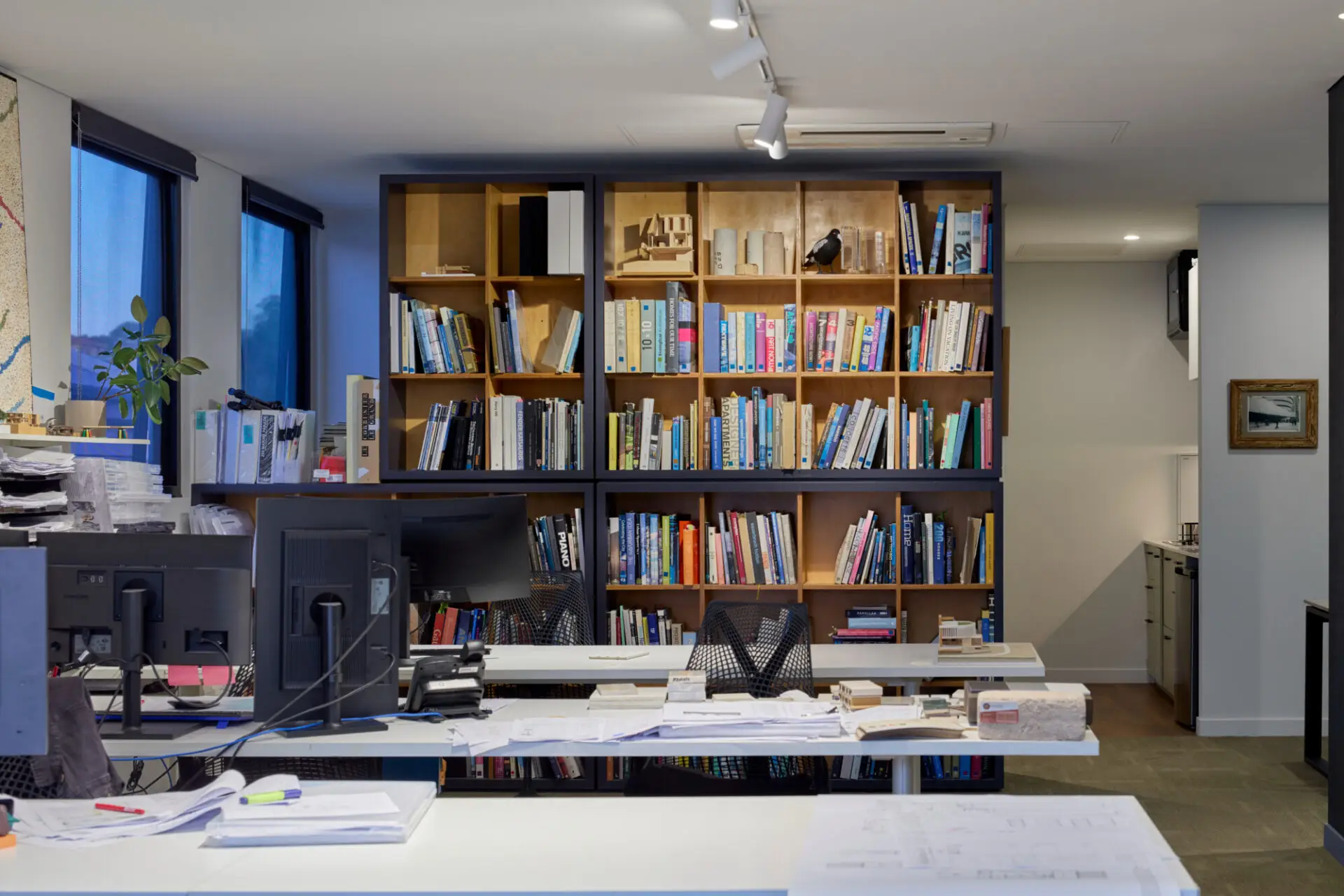
H+AAs’ mixed-use development responds to an evolving market while advancing adaptable urban design. The project integrates the retained frame of a 1934 cottage, purchased as a ruin, with a contemporary structure housing the practice’s architecture studio and five apartments – adaptable for residential, commercial, NDIS or short-stay use.
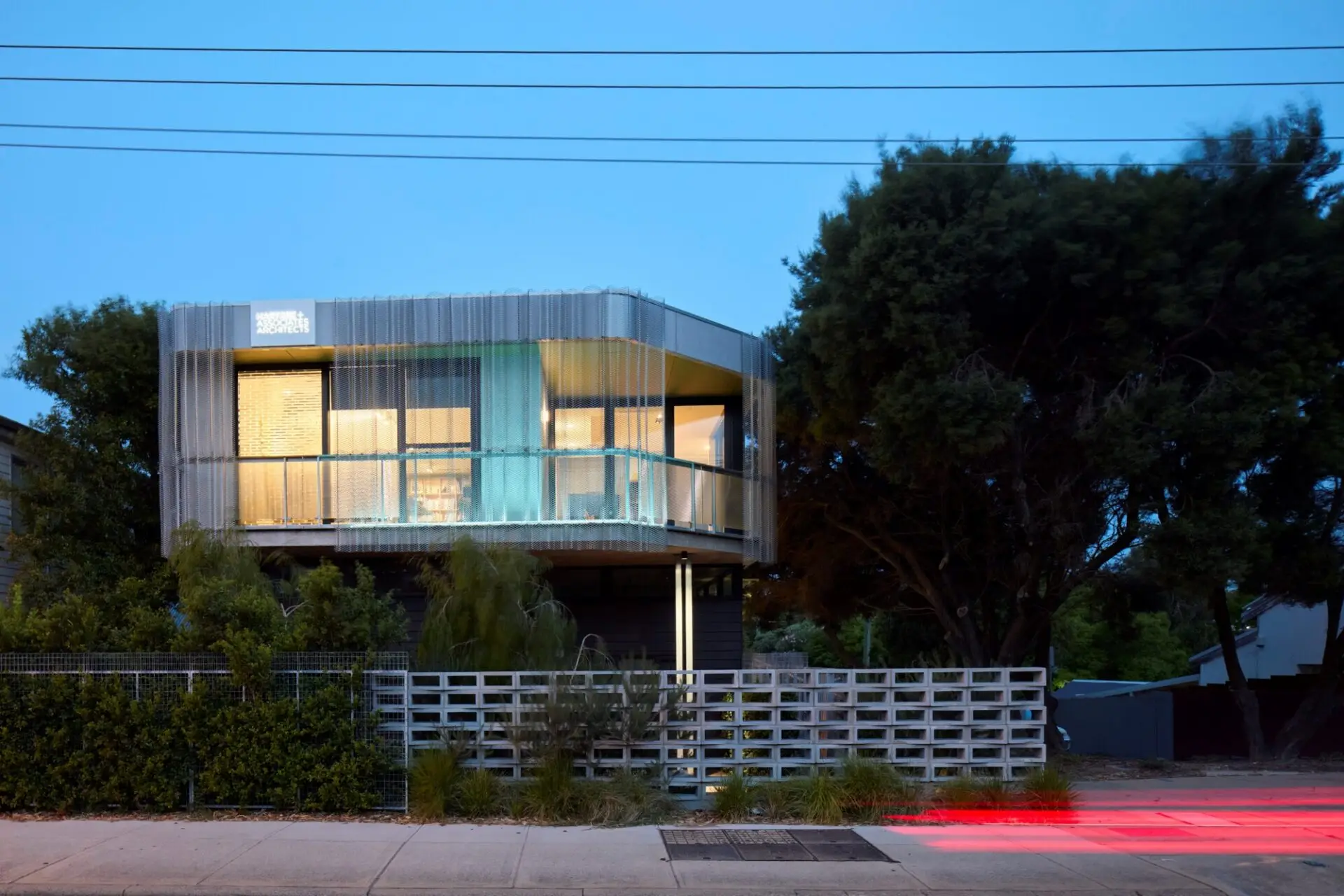
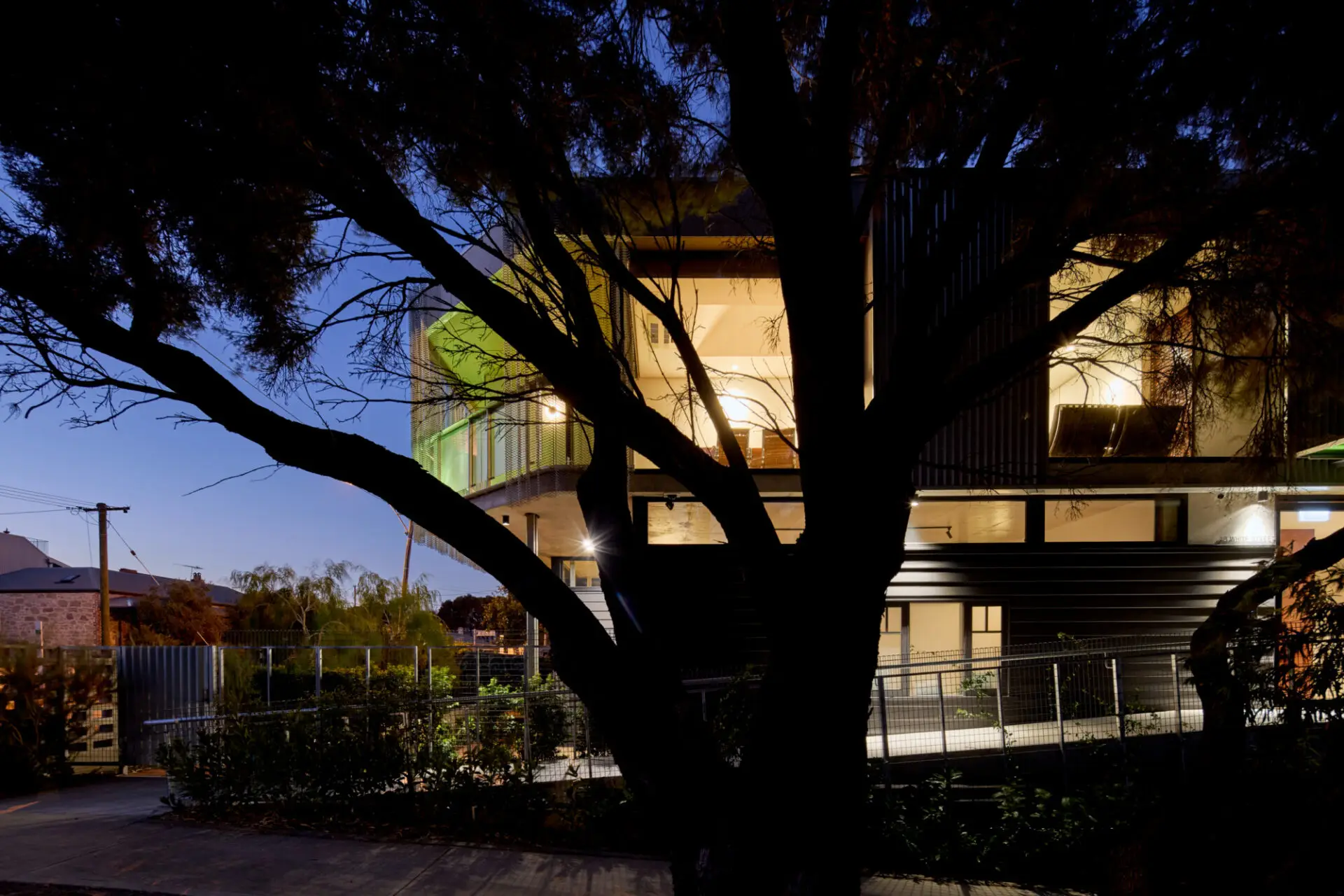
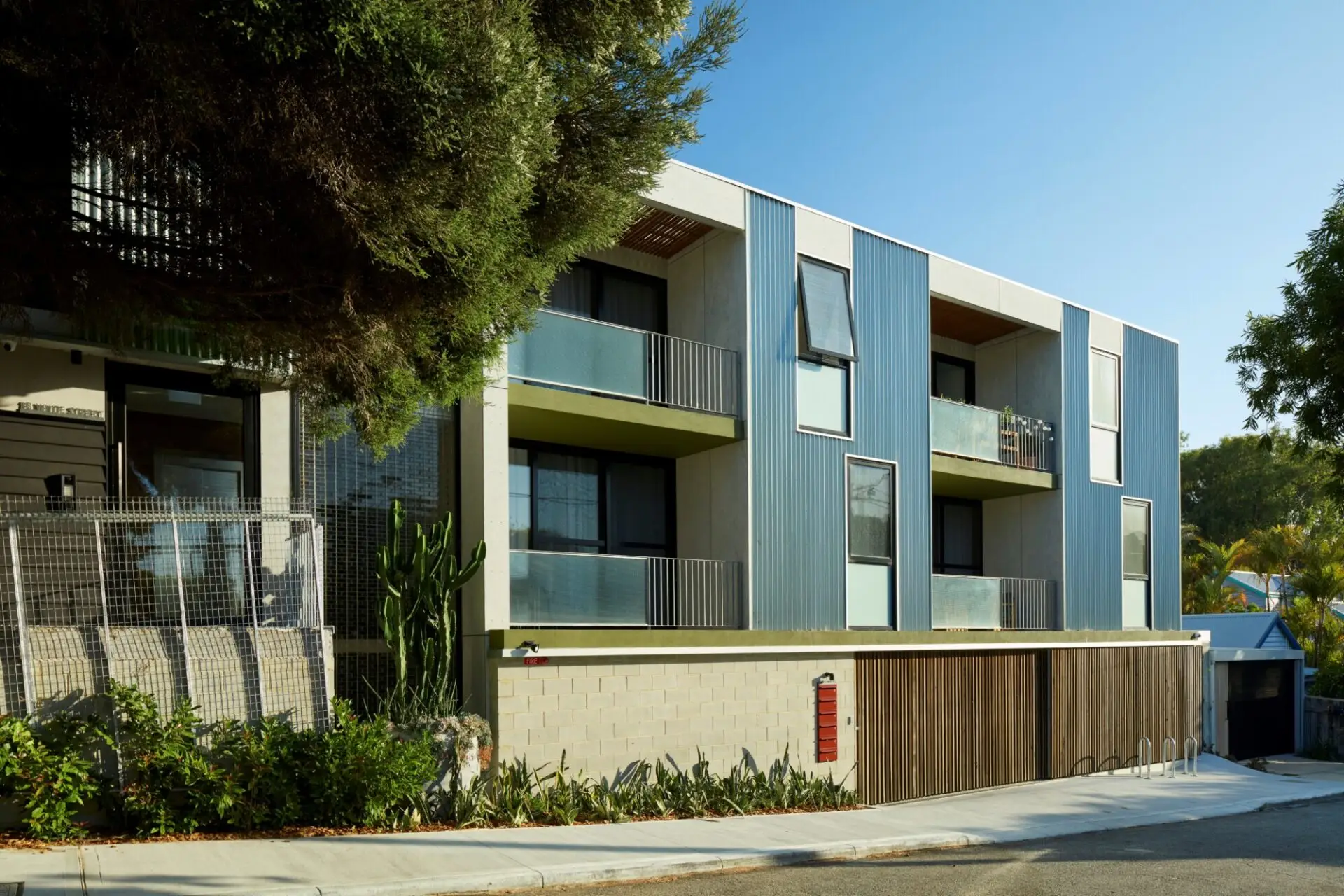
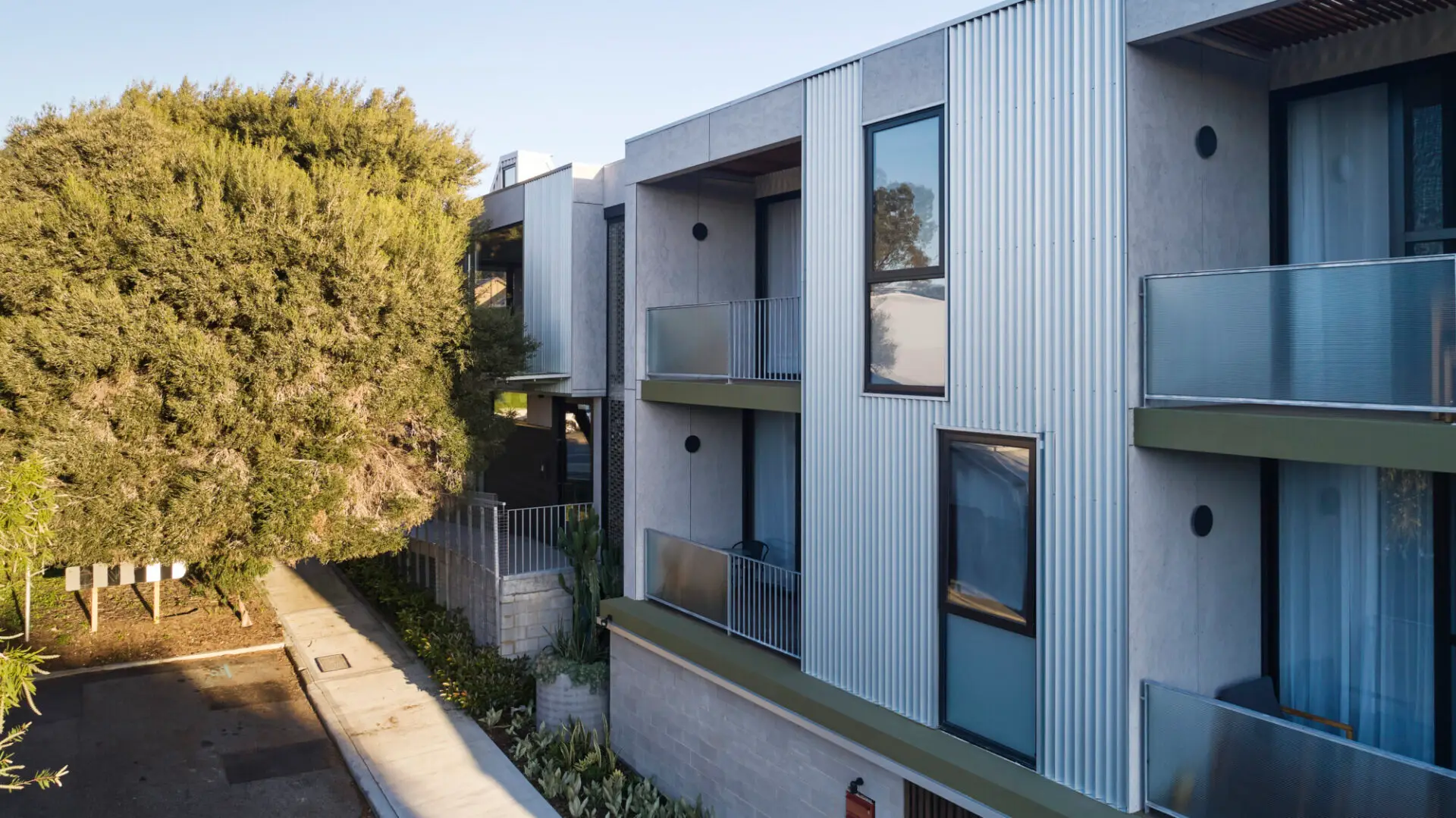
The building is articulated as three connected volumes responding to its context. The heritage cottage and studio engage the highway, with the studio appearing to float above the original form, while the residential component addresses White Street. A suspended mesh veil mitigates harsh western sun and traffic exposure, animating the façade with shifting light and colour to create a distinctive urban presence.
Sustainability is embedded through passive design strategies, including natural light, cross-ventilation and retractable glass walls that reduce reliance on mechanical cooling. Salvaged materials were reused and artefacts uncovered during excavation are on display, revealing layers of the site’s social history.

Award for Residential Architecture – Multiple Housing
White Street is an agile urban infill project that turns constraint into architectural opportunity. On a narrow and level-changing site between the intensity of Stirling Highway and the finer grain of North Fremantle’s residential fabric, the project assembles mixed uses, adaptable apartments and a retained cottage into a composition that is both tough and carefully calibrated.
The jury was particularly drawn to the project’s material sensibility. Its palette is raw, diverse and direct: profiled steel cladding, face blockwork, timber battens, micro glass blocks, off-form concrete and galvanised steel are deployed with an honesty that avoids affectation while giving the building texture, depth and durability. The result is an architecture that feels entirely of its place — industrial in tone, coastal in resilience, and responsive to the suburb’s layered character.
Planning is equally deft. The apartments are compact yet unexpectedly open, using efficient devices to free living spaces from clutter and maximise light, ventilation and privacy. Universal access to the upper level extends the project’s long-term usefulness, while flexible configurations allow changing residential and commercial occupation over time.
That so much has been achieved within a modest budget is notable. White Street is a rigorous and inventive work of architecture that demonstrates the value of careful planning, material intelligence and adaptability in contemporary multi-residential design.
Award for Residential Architecture - Multiple Housing
White Street is an agile urban infill project that turns constraint into architectural opportunity. On a narrow and level-changing site between the intensity of Stirling Highway and the finer grain of North Fremantle’s residential fabric, the project assembles mixed uses, adaptable apartments and a retained cottage into a composition that is both tough and carefully calibrated.
The jury was particularly drawn to the project’s material sensibility. Its palette is raw, diverse and direct: profiled steel cladding, face blockwork, timber battens, micro glass blocks, off-form concrete and galvanised steel are deployed with an honesty that avoids affectation while giving the building texture, depth and durability. The result is an architecture that feels entirely of its place — industrial in tone, coastal in resilience, and responsive to the suburb’s layered character.
Planning is equally deft. The apartments are compact yet unexpectedly open, using efficient devices to free living spaces from clutter and maximise light, ventilation and privacy. Universal access to the upper level extends the project’s long-term usefulness, while flexible configurations allow changing residential and commercial occupation over time.
That so much has been achieved within a modest budget is notable. White Street is a rigorous and inventive work of architecture that demonstrates the value of careful planning, material intelligence and adaptability in contemporary multi-residential design.
Client perspective