

The Ngunnawal People
ACT
The National Site of Recognition was established by the Australian Government to acknowledge the thalidomide tragedy and as a lasting reminder to all Australians that the lessons of the tragedy must never be forgotten. Thalidomide, introduced in the 1960s, had devastating consequences, causing severe birth defects.
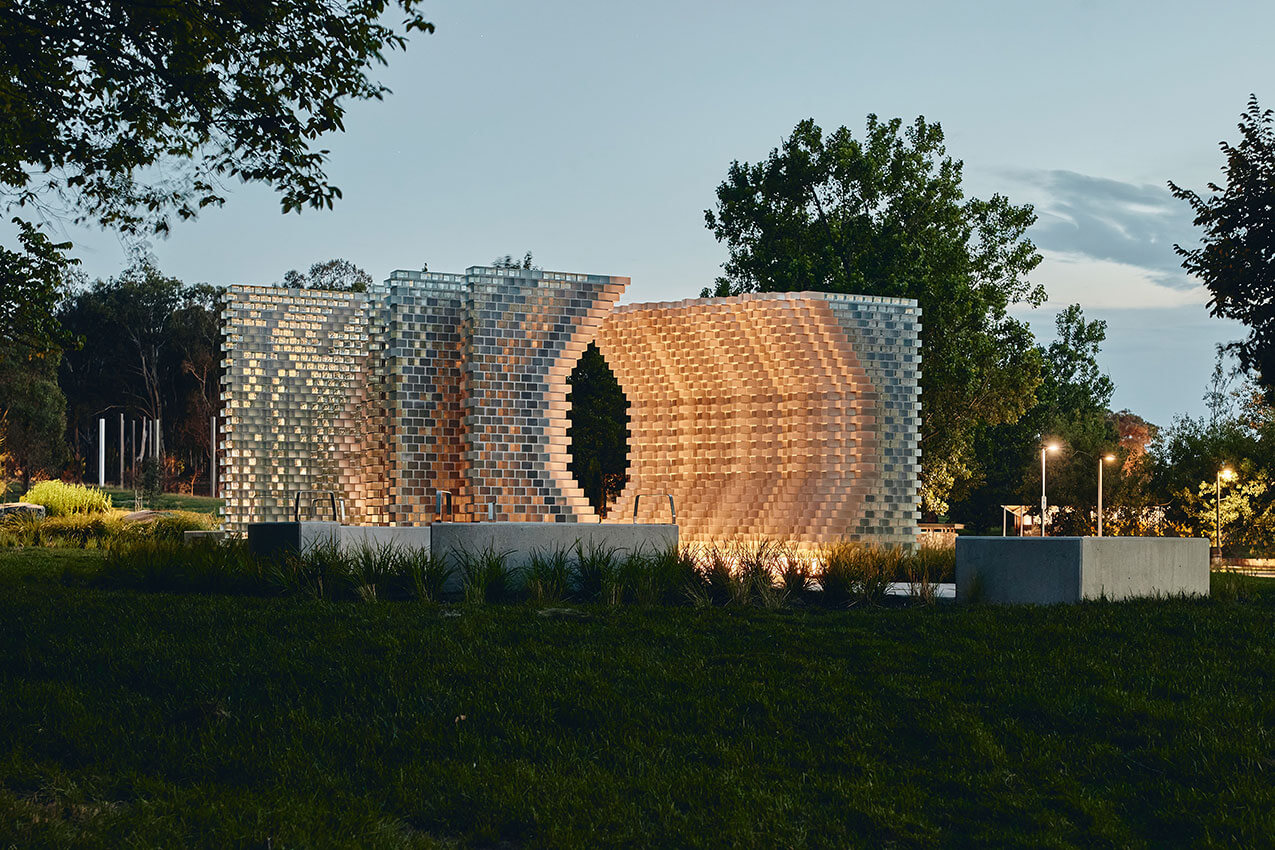
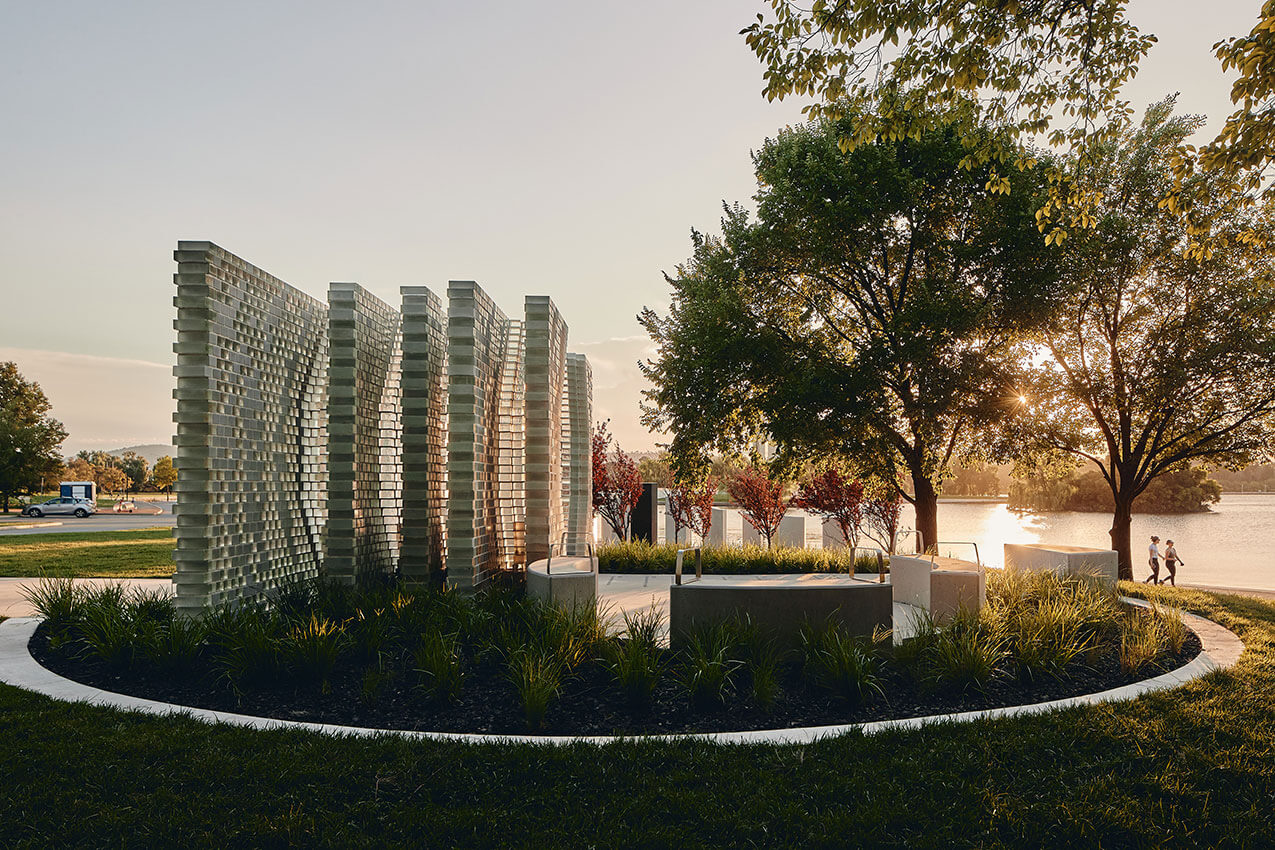
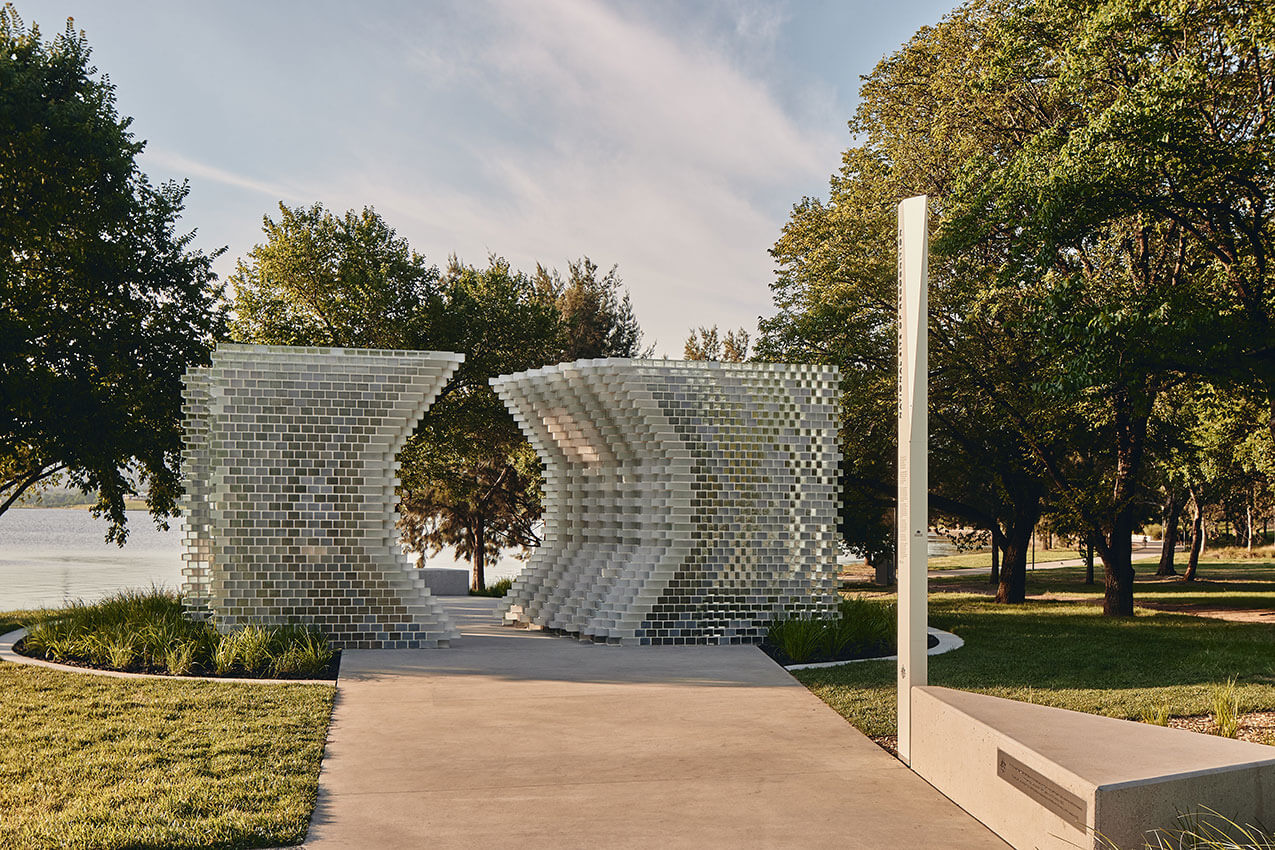
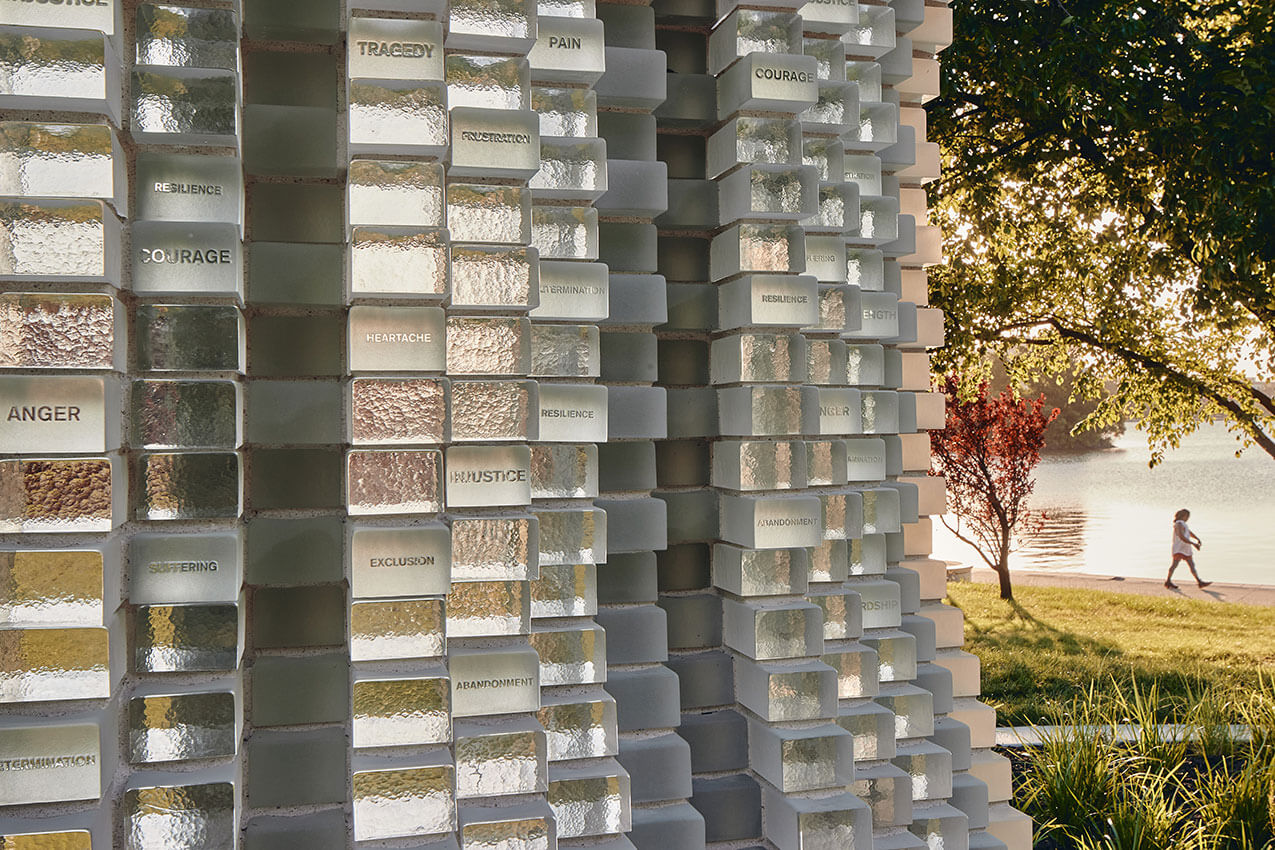
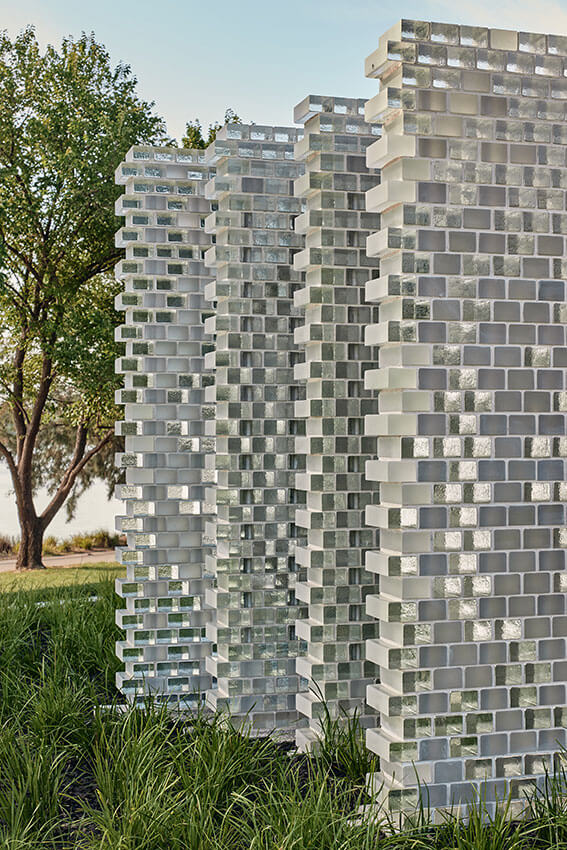
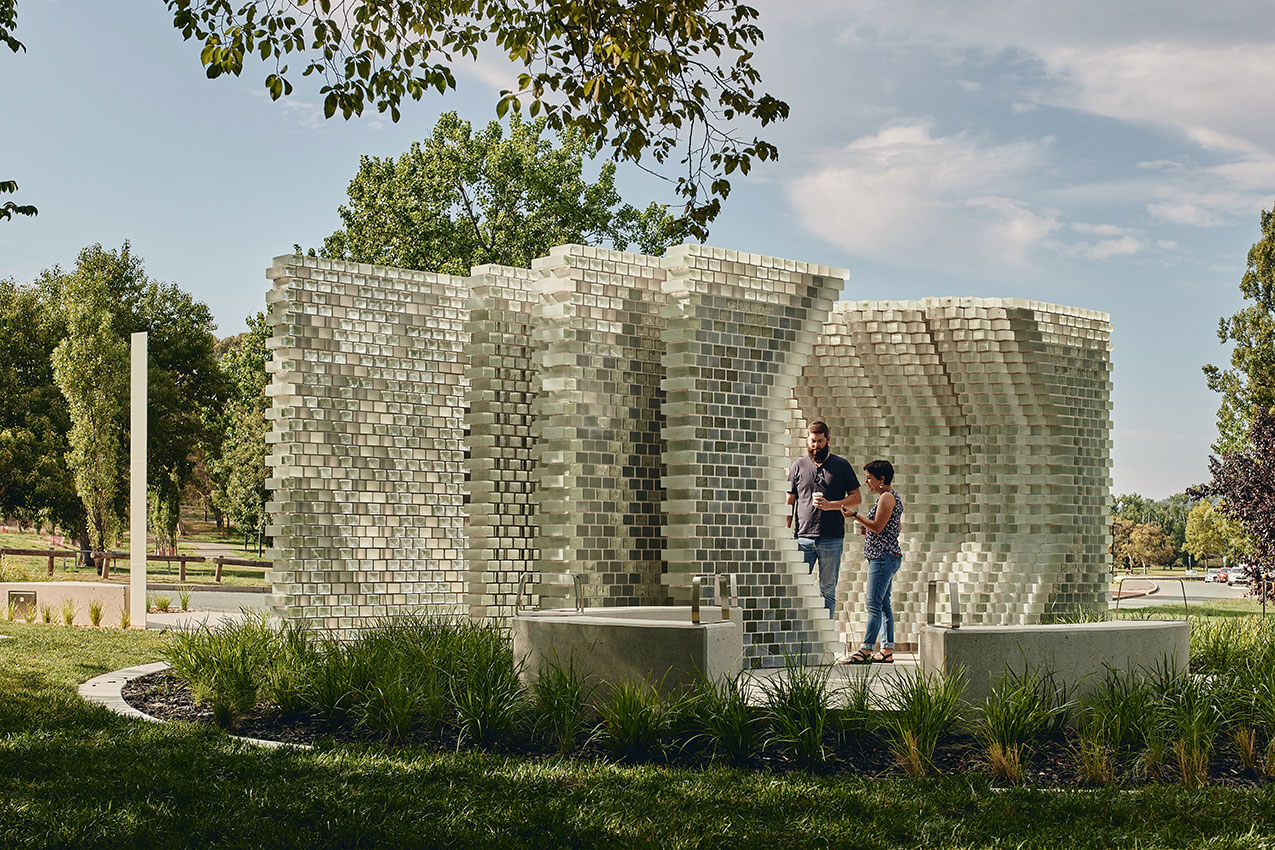
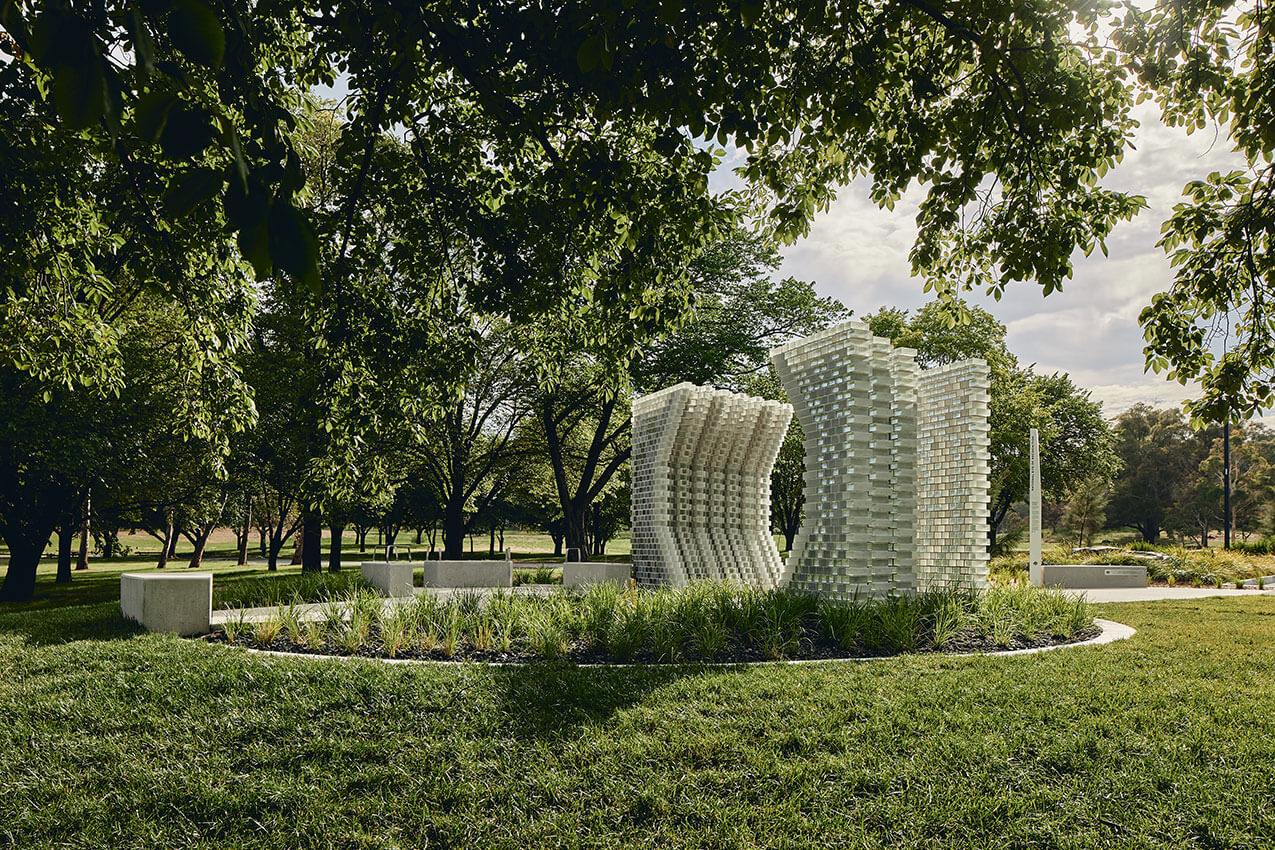
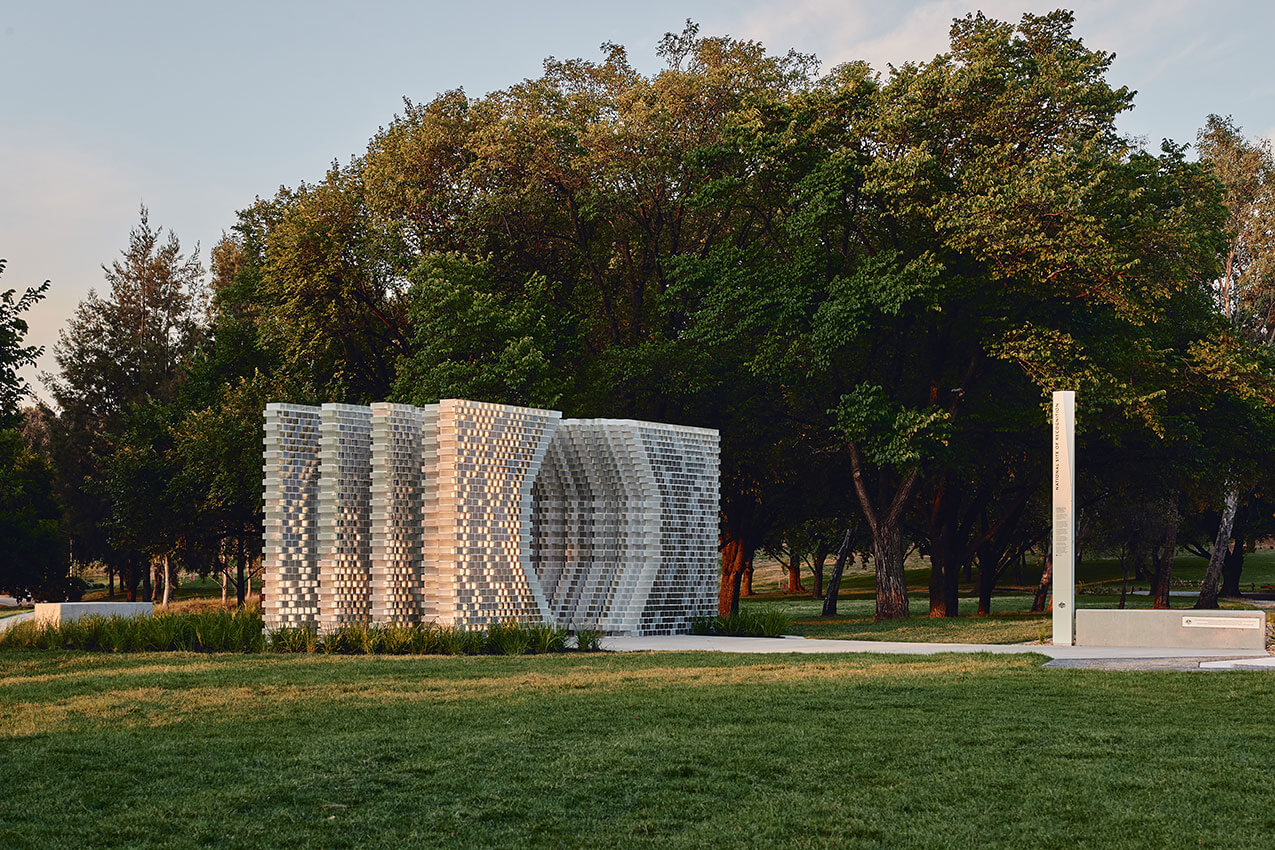
The glass brick structure designed by PLACE Laboratory aims to create a space for empathy, emotional reflection, and education.
Symbolic gestures unfold a narrative as visitors move through the space, with features representing the fragility of life, the ripple effect of thalidomide, and survivors’ strength. Words etched into the walkway convey the impact, acknowledging trauma and loss. A historical timeline educates about the tragedy, while an archway through the structure frames a view of Lake Burley Griffith offering hope and a sense of fulfillment. The memorial provides a serene setting for reflection, emphasizing the ongoing impact of thalidomide on survivors and fostering awareness.

Commendation for Small Project Architecture
The National Site of Recognition for Thalidomide Survivors and their Families is a provocative example of how a prosaic architectural program can be developed to achieve a poetic metaphor that is emotionally engaging.
Diminutive in scale, the memorial presents a vision of colour and light that appears to dissolve into the surrounding sky and landscape.
Moving through the memorial, the glazed brick structure lingers in the memory, mediating between tragic specter and a meditation on the fragility of life.
The National Site of Recognition for Thalidomide Survivors and their Families recognises an important chapter in our nations history. It acknowledges the tragedy of thalidomide and the unequivocally unique meaning it holds for those Australians impacted, which should never be forgotten. The enduring design sensitively honours the pain and suffering experienced by survivors, the memory of those who died prematurely, as well as the impact on their loved ones. Importantly, thalidomide survivors registered with the Australian Thalidomide Survivors Support Program, their families, friends and carers helped to inform the selection of this engaging and memorable design.
Client perspective