
The Traditional Lands of the Wurundjeri Woi Wurrung Cultural Heritage Aboriginal Corporation, part of the Kulin Nation
Victoria
Fairfield Park Amphitheatre Complex is historically significant for its representation of the bicultural importance of Greek-Australians in Victoria’s social, cultural and political development. It represents a significant moment in the migration continuum between the inception of Australia’s postwar immigration program from Greece in 1947, the Federal government’s policy of multiculturalism from the late 1970s, and decline of Greek migration at the end of the 1980s, by which time around 96 per cent of Victoria’s Greek community lived in Melbourne. Modelled on the ancient amphitheatre at Epidaurus (late 4th century BC), the cultural importance of the Fairfield complex in Melbourne’s migrant cityscape transcended its immediate suburban scale, and became an important expression of identity for Greek-Australians across Victoria.


The Maggie Edmond Award for Enduring Architecture
It is fitting that this year’s Maggie Edmond Enduring Architecture Award is presented to Maggie Edmond for the enduring success of the Fairfield Park Amphitheatre, a work of remarkable cultural generosity and quiet theatrical power.
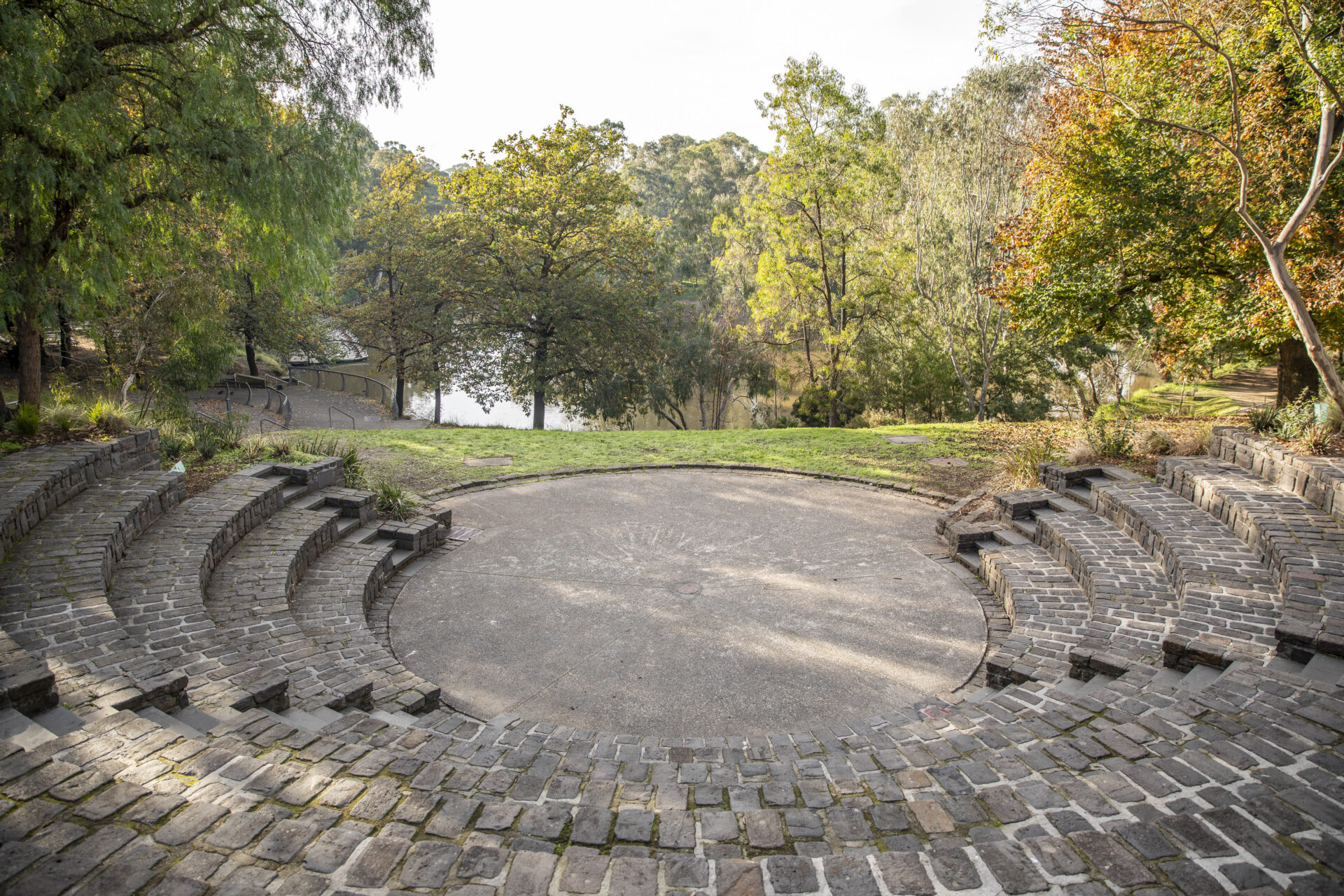
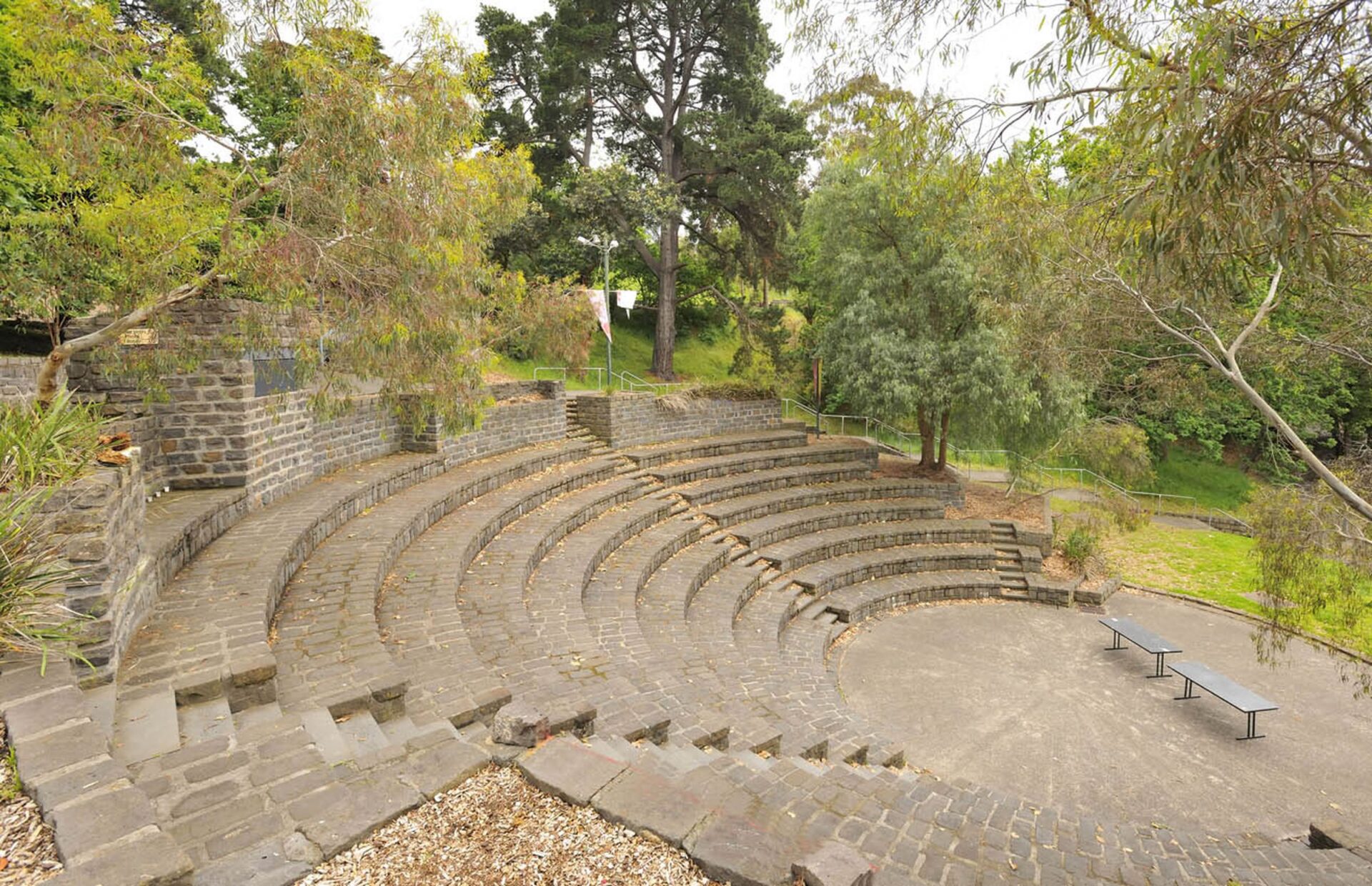
The amphitheatre, constructed in 1985, evokes a fragment of Ancient Greece reimagined within an Australian bush park setting. Eleven tiers of terraced seating arc in a semicircle around a circular stage, creating a space at once intimate and civic, monumental and deeply grounded in landscape. Originally conceived to accommodate the bilingual Greek-English performances of the Epidavros Summer Festival, the amphitheatre became a vital expression of Melbourne’s emerging multicultural identity in the late twentieth century.
Built through a ‘work for the dole’ scheme, the project also carried a generous social ambition. Unemployed workers were trained in stone-cutting skills, crafting the amphitheatre from recycled bluestone pitchers salvaged from Melbourne’s inner-city gutters and laneways. In both material and making, the project transformed fragments of the city into a place of collective gathering and cultural exchange.
The Fairfield Park Amphitheatre thus stands as a lasting social and cultural institution. Since the 1980s it has nurtured generations of Victorian multicultural theatre and community life. Today it remains a thriving public venue for performance, celebration and gathering beneath the open sky. Its continued relevance and recognised State heritage significance affirm the architectural vision, cultural generosity and civic contribution at the heart of Maggie Edmond’s outstanding work.
The Maggie Edmond Award for Enduring Architecture
It is fitting that this year’s Maggie Edmond Enduring Architecture Award is presented to Maggie Edmond for the enduring success of the Fairfield Park Amphitheatre, a work of remarkable cultural generosity and quiet theatrical power.
The amphitheatre, constructed in 1985, evokes a fragment of Ancient Greece reimagined within an Australian bush park setting. Eleven tiers of terraced seating arc in a semicircle around a circular stage, creating a space at once intimate and civic, monumental and deeply grounded in landscape. Originally conceived to accommodate the bilingual Greek-English performances of the Epidavros Summer Festival, the amphitheatre became a vital expression of Melbourne’s emerging multicultural identity in the late twentieth century.
Built through a ‘work for the dole’ scheme, the project also carried a generous social ambition. Unemployed workers were trained in stone-cutting skills, crafting the amphitheatre from recycled bluestone pitchers salvaged from Melbourne’s inner-city gutters and laneways. In both material and making, the project transformed fragments of the city into a place of collective gathering and cultural exchange.
The Fairfield Park Amphitheatre thus stands as a lasting social and cultural institution. Since the 1980s it has nurtured generations of Victorian multicultural theatre and community life. Today it remains a thriving public venue for performance, celebration and gathering beneath the open sky. Its continued relevance and recognised State heritage significance affirm the architectural vision, cultural generosity and civic contribution at the heart of Maggie Edmond’s outstanding work.
Client perspective
Maggie Edmond, Design Architect
Edmond Corrigan, Design Architect
Paul Couch, Design Architect