

Ngunnawal
Australian Capital Territory
An Australian industrial vernacular applied to a European-style market hall at the Capital Food Markets in Belconnen, ACT. The hall is solid and highly adaptable, simple and robust in form yet elegantly textured. Despite the large size of the building, human scale remains front and centre.
The hall’s eastern periphery creates a throughfare lined with external eateries that can operate outside of market hours, and a pocket play space – these activate the public realm and create a non-commercial space that softly merges market activity and the surrounding precinct.
The hall is a result of 20 years of design thinking around the Capital Food Markets – a backdrop for urban and public life; a place to shop, gather and socialise. The hall reinforces the markets’ function as an important commercial and public place and acts as an anchor for future planned works at the site.
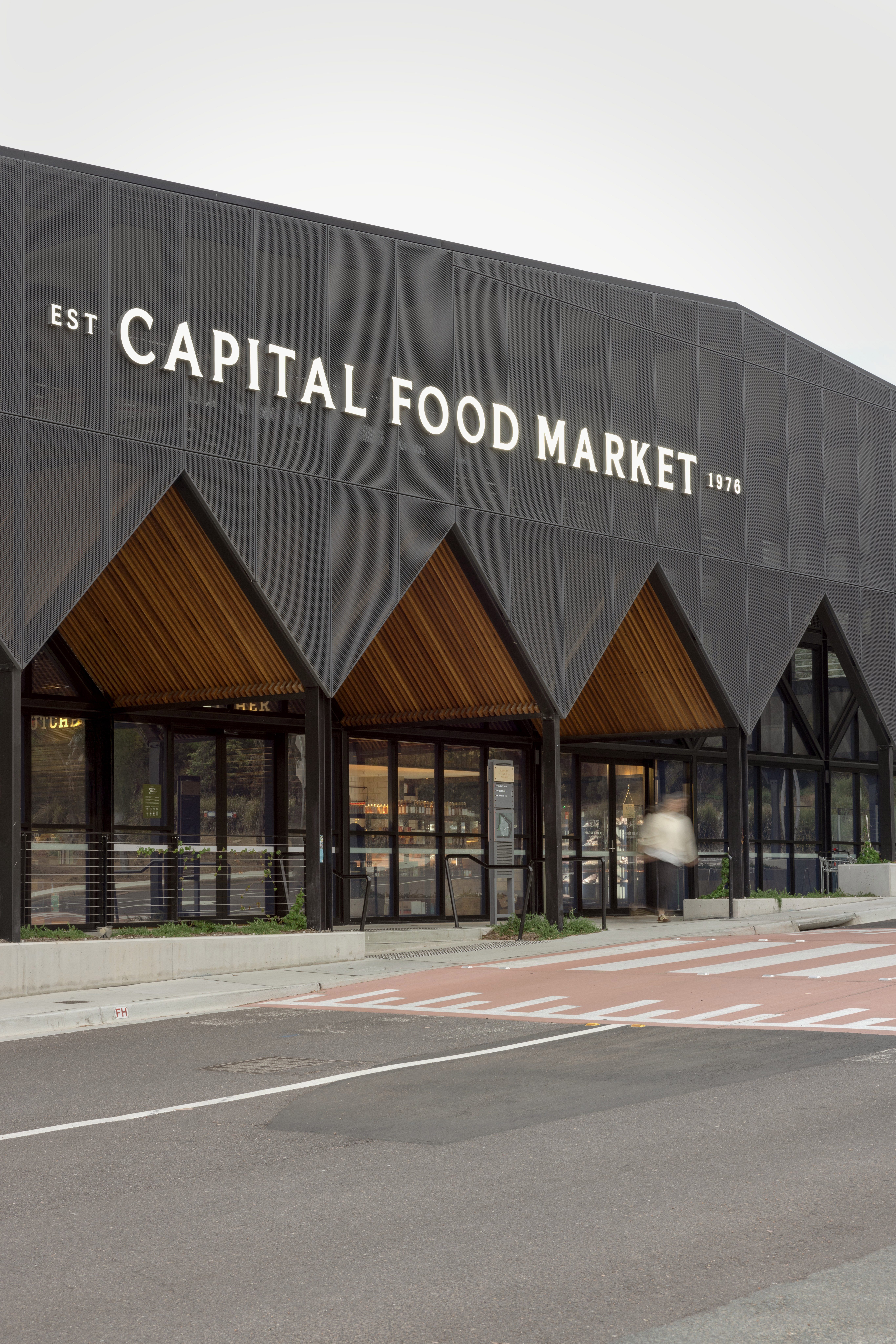
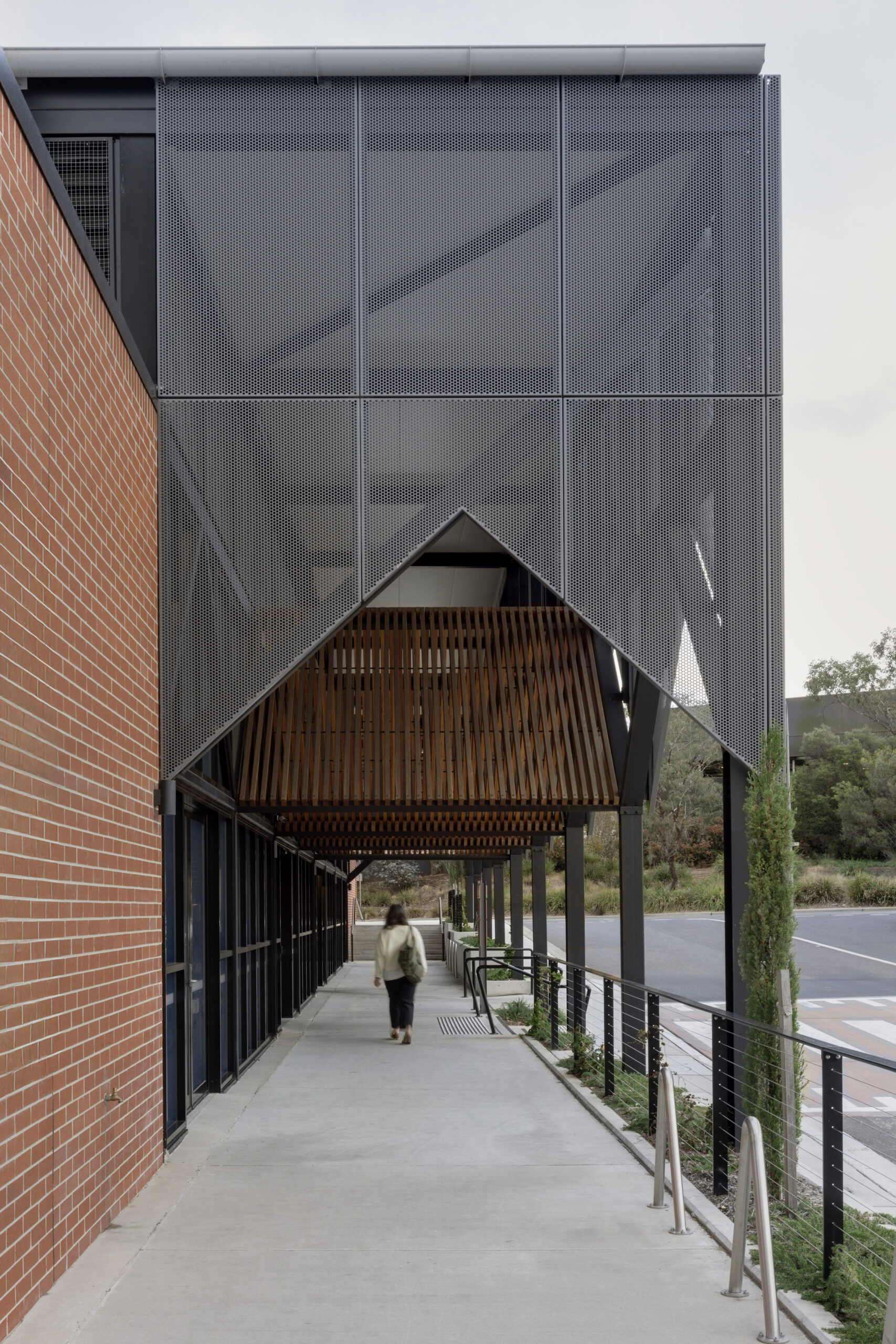
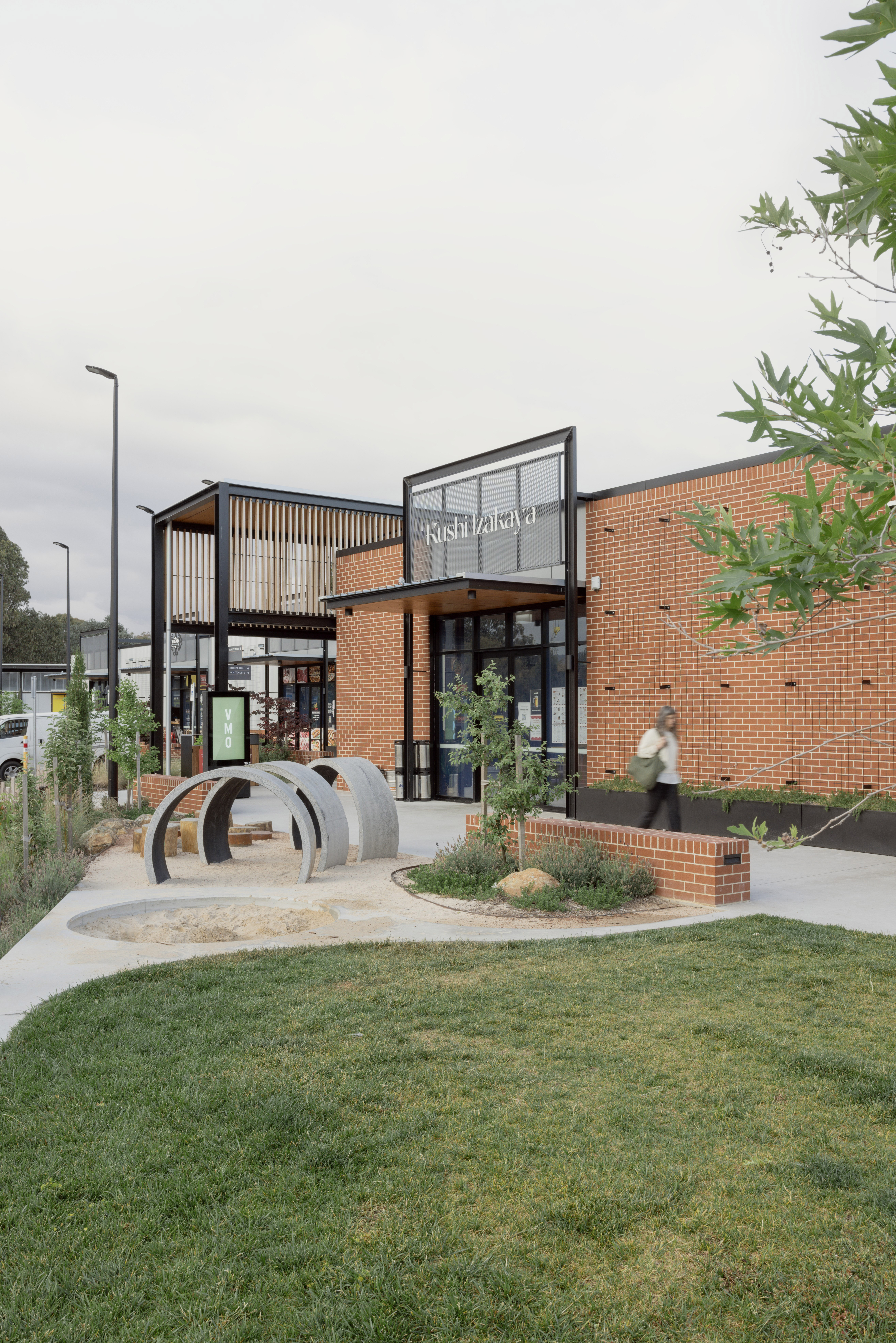


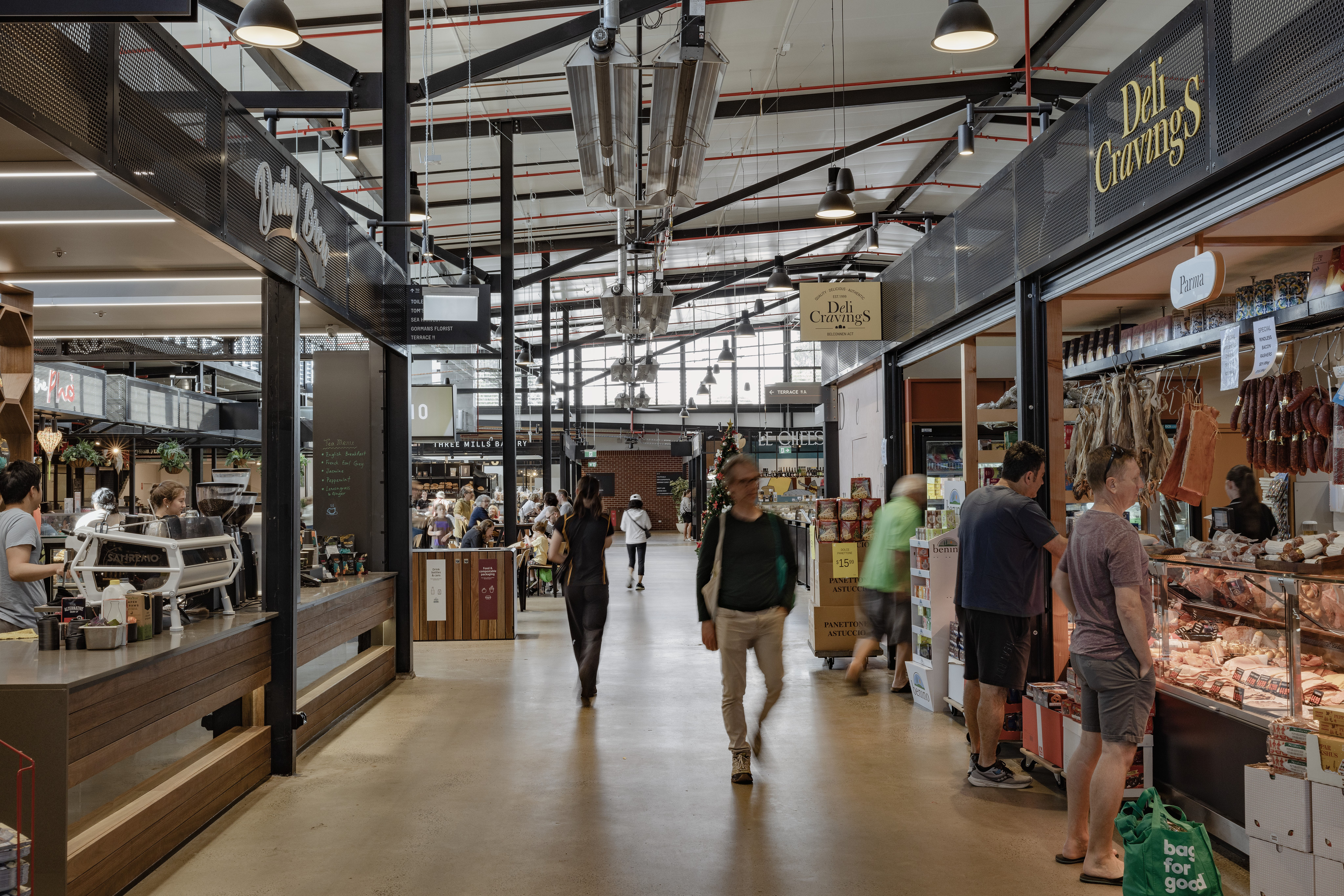


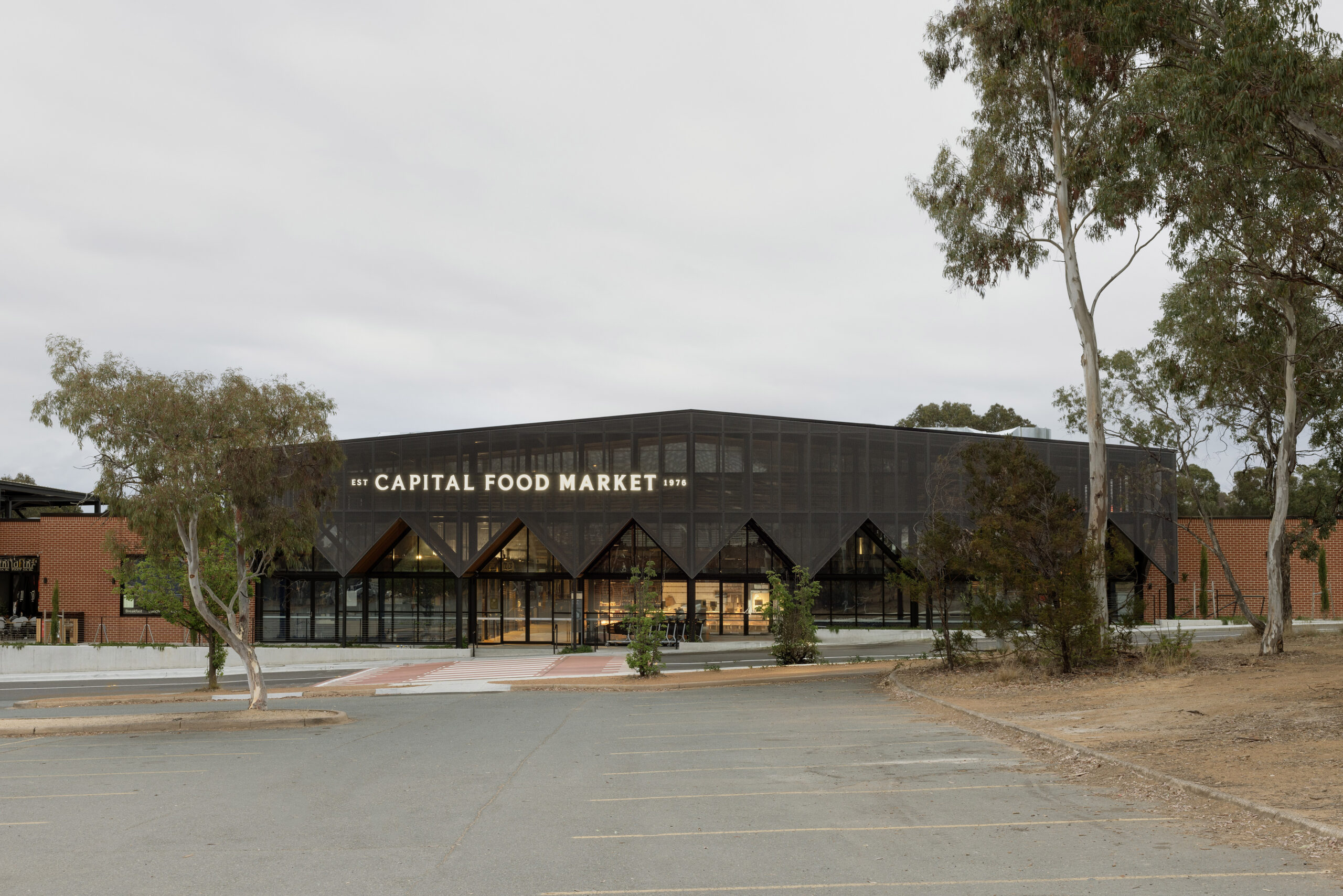
The Capital Food Market project undertaken by Stewart Architecture forms the stage for how a food market performs in Canberra’s densifying town centres. At the centre of the food market’s architecture is a simple and utilitarian hall, which hosts an intricate and sophisticated understanding of market uses, services, and occupant needs.
Externally, the market’s form is articulated to indicate varying conditions including primary circulation, storefronts, breakouts, and back of house requirements. The language of these conditions is reflected in the robust and considered material choices, which also allow for natural light to the internal spaces.
Internally, the hall form is constructed from a steel frame, allowing for generous free spans of space. This creates an ordered and logical arrangement of market stalls, circulation, and public spaces.
While modularity and improvisation have been highly considered in the design, the architects have also created elements of commonality within the market stalls’ designs, which aid in reflecting an individual experience when in a large volume of space.
The importance of the Capital Food Market to host utilitarian and social programs is important to the evolution of this town centre, and the roll and importance of the architect in this project reflects this.
Byron Kelly, Design Architect
Marcus Graham, Design Architect
Mark Craswell, Project Architect
Lachlan Larney-Dawson, Student of Architecture
Envirolinks, Landscape Consultant
Indesign Access, Access Consultant
Sellick Consultants, Services Consultant
Vortex, Fire Consultant
Sellick Consultants, Structural Engineer
Lockbridge, Project Manager
ADP, Services Consultant