
Burnt Earth Beach House | Wardle

Burnt Earth Beach House is a multigenerational home that utilizes terracotta in two primary forms through the exterior brickwork, internally to line walls, floors and joinery elements. The dwelling is a haven both functionally and aesthetically, providing connection for its inhabitants to the landscape and to each other. The materials imbue the home with a sense of place further embedding the home in its context.
The broadly cruciform plan describes view lines and daylight ingress precisely. Views are to the Southern Ocean and surrounding landscape. The governing lines of the plan mark the centre point of the X as the island kitchen bench literally and figuratively the heart of this home. Spotted gum timber is used carefully in varying formats recycled (flooring), veneer (joinery) and sparingly as solid (windows and revealed structure in areas). Across two levels a variety of spaces come together for sociability and solitude.
Berninneit Cultural and Community Centre | Jackson Clements Burrows Architects

Located on Phillip Island, Berninneit, (meaning Gather Together) creates a new purposebuilt public building to support a range of uses including a theatre, library, gallery, museum, community function rooms and offices.
Evoking the regions natural geology and topography, the design feels inherently connected to and of its place. Warm, pinkcream brick references nearby sand dunes and beaches, whilst internal timber columns speak to the islands jetties and pier structures.
The building creates a dynamic and interactive destination that is set to become a source of civic pride. Bringing together the cultural and social aspirations of the community, it draws visitors to showcase the regions rich history and culture.
Designed to Passivhaus Standards and incorporating mass timber construction, the Centre expands and diversifies existing community programs and services and creates a place for people to meet and connect.
Bob’s Bungalow | Blair Smith Architecture

This addition to a 1930 Californian bungalow in Strathmore, Melbourne, is a response to countless conversations with two romantics in semiretirement, accompanied by their rescue dogs, Archie, Buzz and at one time the projects namesake, the dearly departed Bob.
Project meetings typically involved sharing food, so this was conducive to extended, wide ranging discussions on subject other than architecture like; film, the veggie garden, collected artefacts, camping trips and the decades already lived within the house. These discussions and the idiosyncrasies of both individuals have now, somehow through osmosis, manifested into a space that evokes their personalities. As a space that compliments an authentically full life and decades of collected treasures, Bobs Bungalow is unashamedly pastichelike
a physical translation of an ongoing collaboration and friendship.
Atlantic Fellows for Social Equity Hub | Jackson Clements Burrows Architects

Atlantic Fellows for Social Equity (AFSE) is an Indigenousled social change fellowship program based at University of Melbourne. The brief was to create an inspiring and culturally safe space for staff and visitors, and a welcoming place for leaders from Australia and the Pacific to collaborate.
Underpinned by extensive Indigenous engagement, the design process involved listening to and being guided by Indigenous voices. The design incorporates a Welcome space, Knowledge room, kitchen, amenities, open and enclosed offices, and an Elders Lounge. The layout and adjacency of spaces were functionally and culturally informed.
The Welcome space incorporates a contemporary interpretation of message sticks as a ceremonial space for connection. 60 message sticks were sent across the Country to be carved and marked by Indigenous artists. The Hub enables fellows to thrive in a culturally safe work environment while also meeting ambitious aspirations for environmental and cultural sustainability.
Aireys Inlet Primary School Art & Music Hub | Sibling Architecture
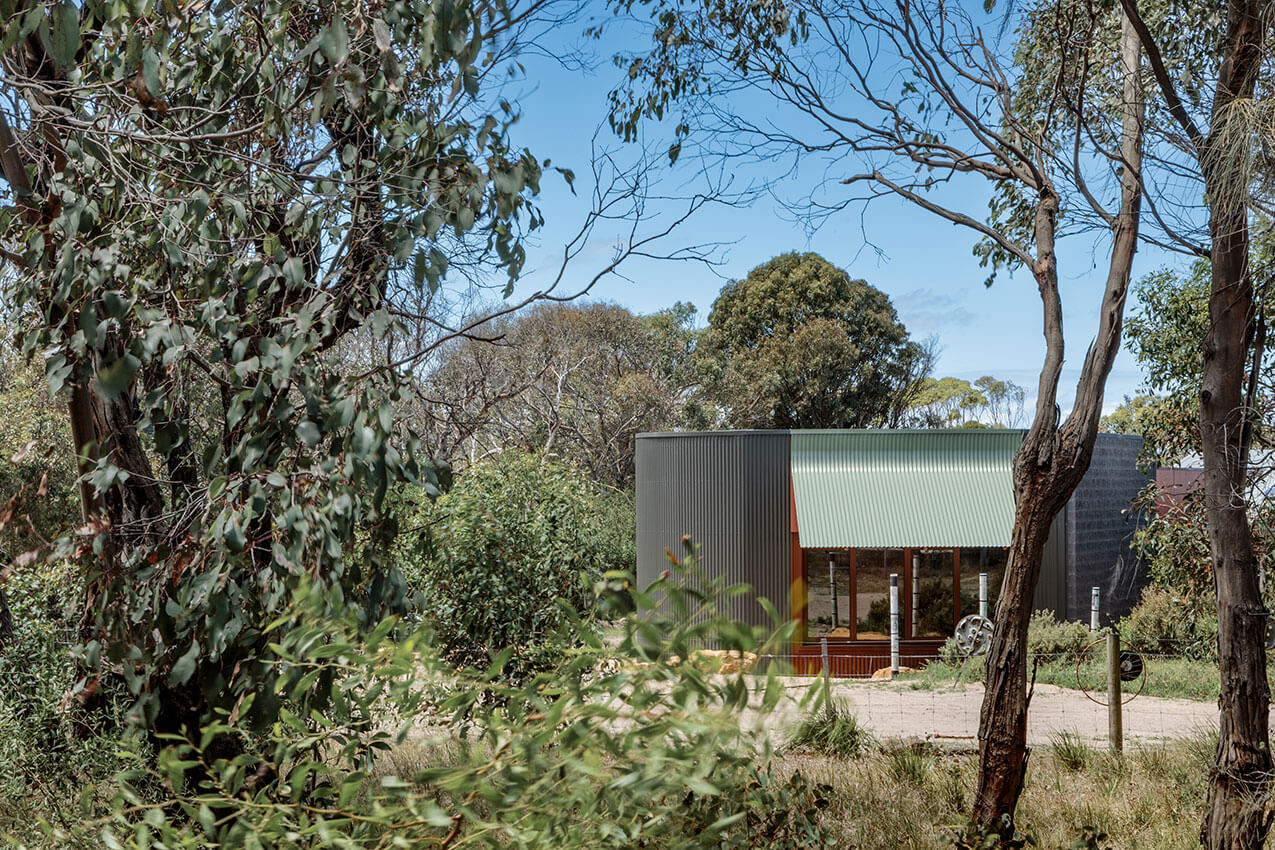
The Aireys Inlet Primary School Art and Music Hub is a modest project conceived as a harmonious convergence between the Australian Bush and the Southern Ocean, evident by the schools Great Ocean Road address, embodying the school’s core values of environmental appreciation and artistic expression. The architectural design, inspired by this conceptual framework, not only complies with stringent BAL FZ safety standards but also symbolises a commitment to fostering creativity, collaboration, and community engagement within its local context.
The design carefully considers the existing natural surroundings, seamlessly integrating the built form into the picturesque landscape and exisitng school buildings. The textured external blockwork, red fibre cement cladding, and green Colorbond sun shading awning were chosen to resonate with the local environment, ensuring a visual dialogue between the new structure and its context. This contextual sensitivity reinforces the project’s commitment to the harmonious coexistence of architecture and nature.
All Saints Estate | Technē Architecture + Interior Design
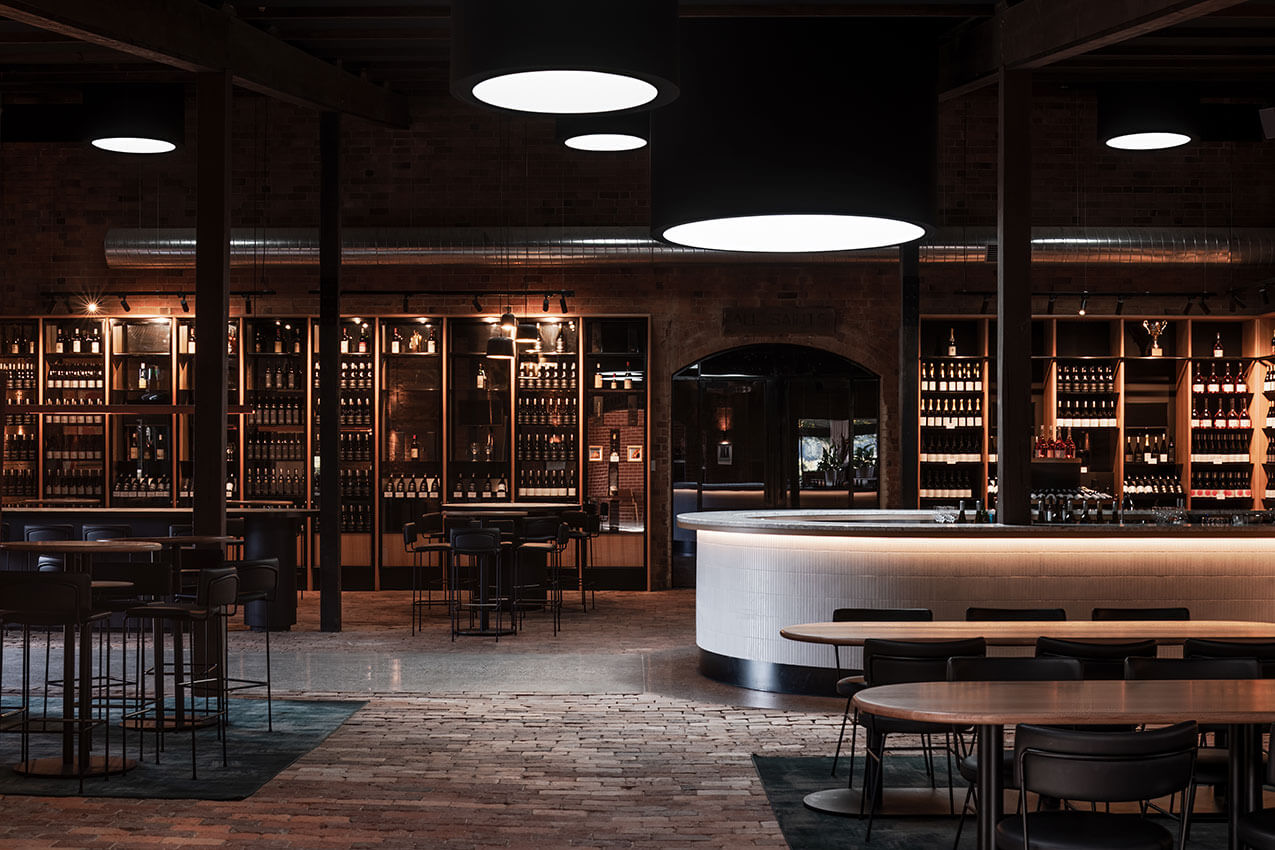
All Saints Estate harmoniously blends old and new, with a modern extension complementing the existing castle. The design pays homage to the estate’s heritage while embracing a forwardlooking approach, incorporating natural materials, panoramic views, and curated interiors. This project revitalises the winemaking experience while also boosting tourism in the region.
The scope of works encompassed a project area of 800m2, with refurbishments made to the cellar door and Bonnie café, alongside a newly constructed restaurant, Kin, an extension that sits beside the existing main castle. Both the architecture and interior works maintain cohesive ties to the estates heritage while imbued with poignant inflections gesturing to the future of this family business.
Taking the form of a light contemporary structure sitting on the landscape, the new architecture is a particularly fitting symbol for the winery estates evolution, as it emerges from the history and solidity of the existing castle.
Altona Pier | Jackson Clements Burrows Architects + Site Office + AW Maritime
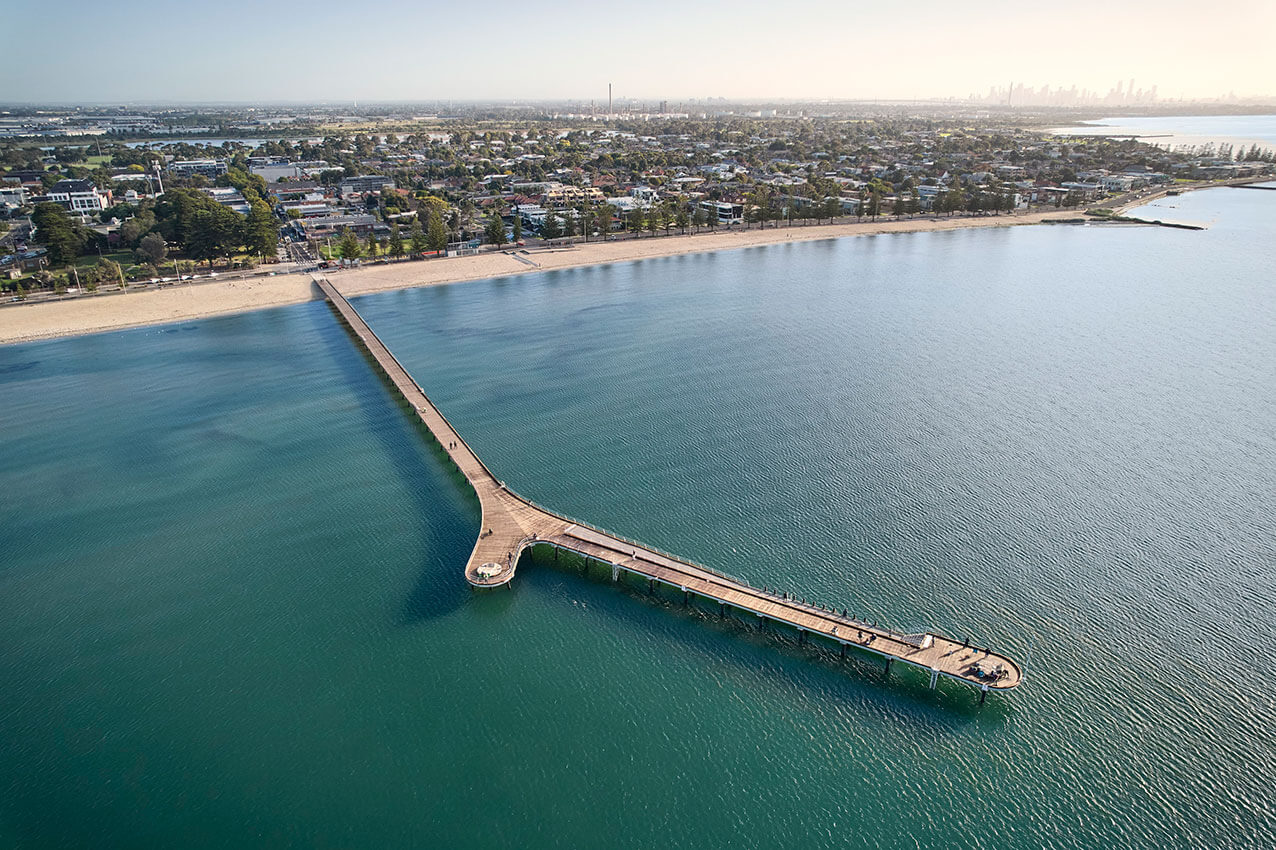
Altona Pier is a muchloved community landmark that has played a vital role in the growth of the suburb since the 1800s, enjoyed for promenading, swimming, fishing, boating and socialising.
In 2020, Parks Victoria with government stakeholders highlighted the need for a new pier. Community engagement informed a project vision underpinned by multiple objectives.
A key design move realigns the new pier to strengthen the axis and relationship with Pier St and the Altona commercial precinct. The geometry is crafted to provide an experiential quality and fulfill the functional brief, including recycling timber from the original pier.
The design tackles the competing requirements of a high impact public realm in a marine environment to mitigate wave overtopping, resolve robust detailing and prefabricated components to reduce environmental impact, and achieve a pier of civic generosity and accessibility that supports multiple community activities to elevate Altona Pier as an iconic destination.
(This is) Air | Nic Brunsdon

The idea for this project was conceived during the global COVID19 pandemic, when suddenly this gas that connects us all to each other, and indeed to most living things, urgently became more apparent. We were reminded that despite the power we exert on this planet, we were not in control. We were reminded of air as part of an independent biosphere that could act with its own agency. These facts also highlighted that air is foundational to the global economic, social and ecological realities of billions of people.
Throughout the day the volume of this spherical commission inhales and exhales as though its breathing. (This is) Air invites visitors into its space, and if you stand close enough, it will breathe on you.
The audience is prompted to think about air as matter, air as ecology and air as precious and finite resource to be cherished.
17 Spring St | Bates Smart
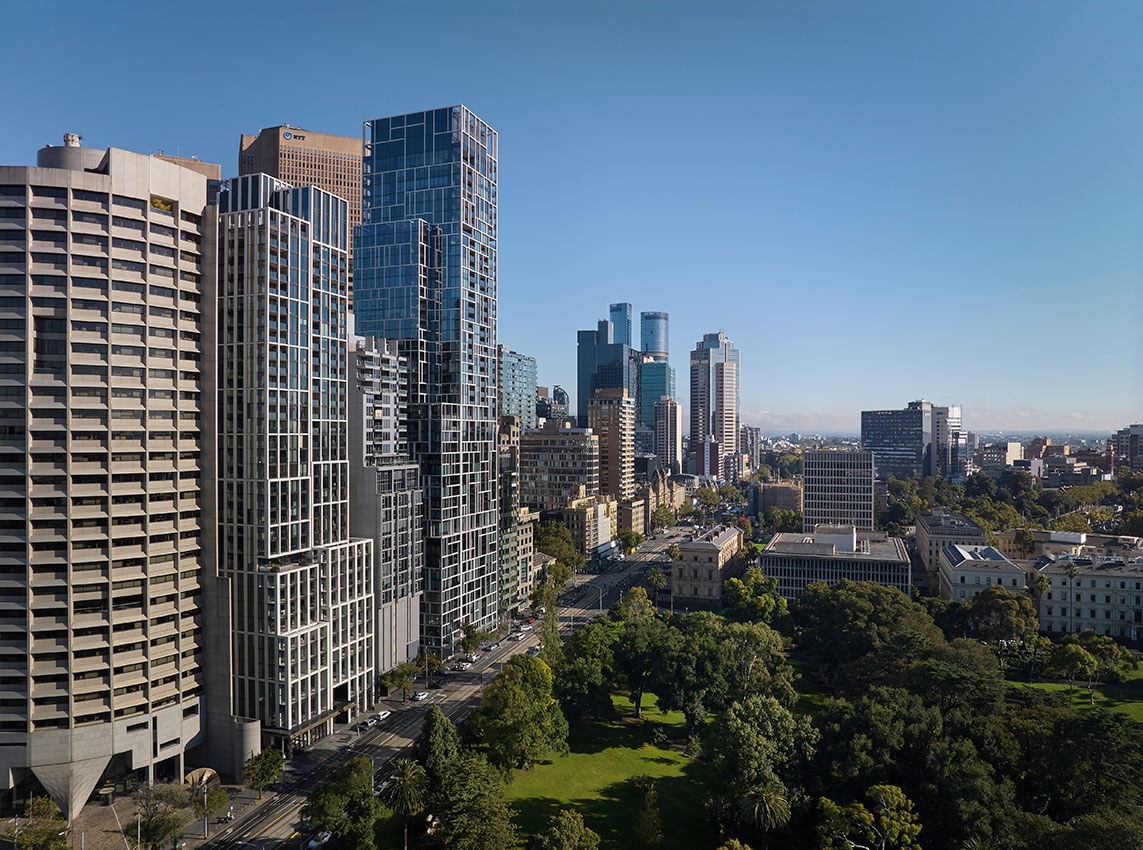
Positioned near the corner of Flinders Street and opposite the Treasury Gardens, Cbus Property’s 32storey residential tower, 17 Spring St is contextually responsive to it’s metropolitan location, complementing the surrounding buildings, while accentuating the edge of Melbournes city grid.
Visually demarcated into two vertical forms, the tower is an elegant and balanced design. Expressed spandrel panels placed every second and third floor further create a distinctly sculptural and gridlike appearance.
Designed to reflect light and shadow, the podium provides a series of transitional heights, helping to generate a more intimate streetscape along Spring Street.
Entry to the tower is intentionally grand, reflecting the prestigious address. Bathed in natural light, a lounge for residents is located adjacent to the lobby and takes full advantage of its corner position with views towards the Treasury Gardens. Carefully selected furnishings and furniture create a sophisticated, yet warm and welcoming atmosphere.
54 Wellington | Wardle
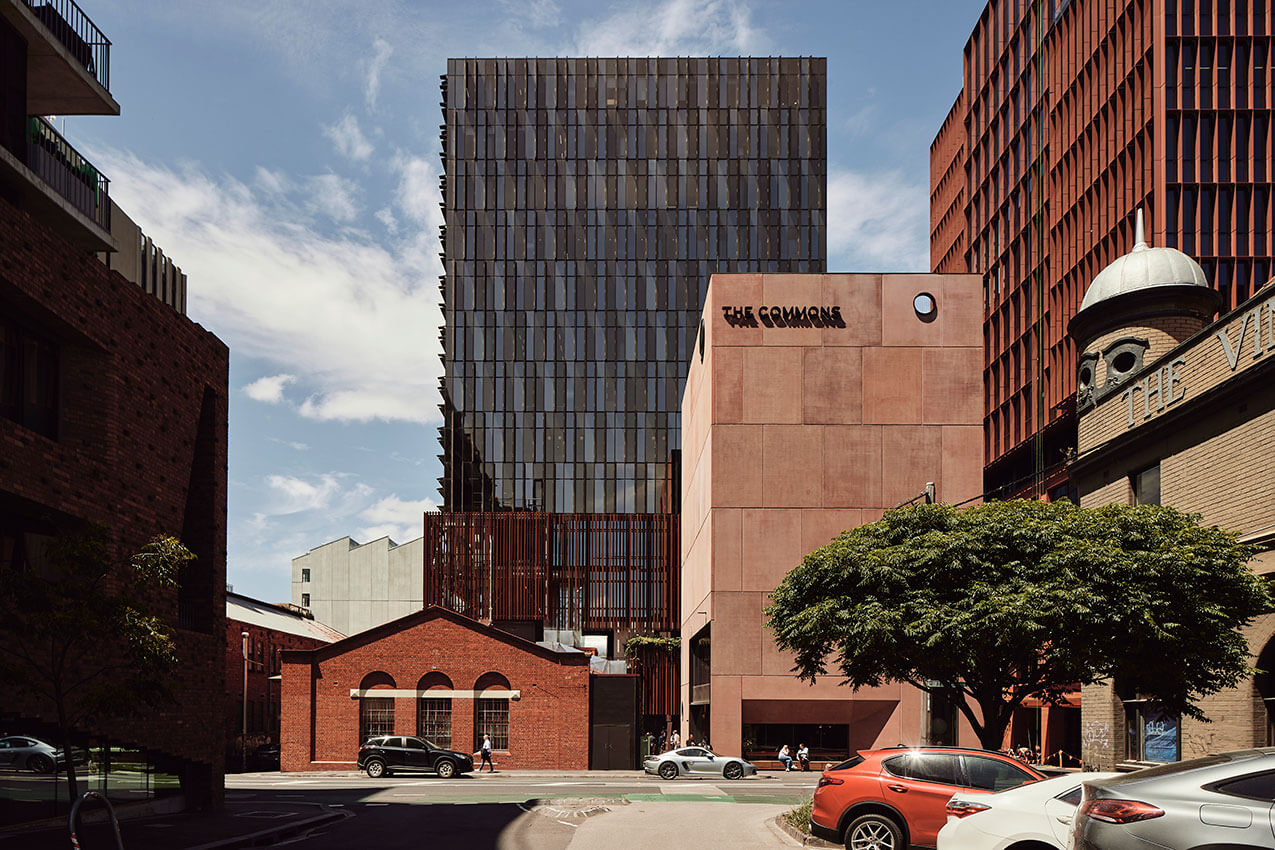
Two contemporary commercial buildings are set within a collection of existing functioning telephone exchange in Collingwood. The buildings create an exemplary workplace for sustainability, health and wellbeing while respecting heritage and encouraging commerce.
A lower scale companion building defines a new laneway through the site. The taller main building is set back from Wellington Street, attracting activity and creating an intimate location for tenants and community.
The companion building is a solid campanile form with a bronze patina. A private roof garden is a verdant, green contrast to the urban setting. To the south a sawtooth roof form, is turned on its end to create a fourstorey glazed façade that draws in diffuse southern daylight.
The main office building incorporates an ordered pattern language that recalls the façade explorations of early Melbourne modernism. An emphasis on the vertical creates an unusual façade grid with sun shading fins providing additional texture.