
Castlecrag Courtyard | Downie North

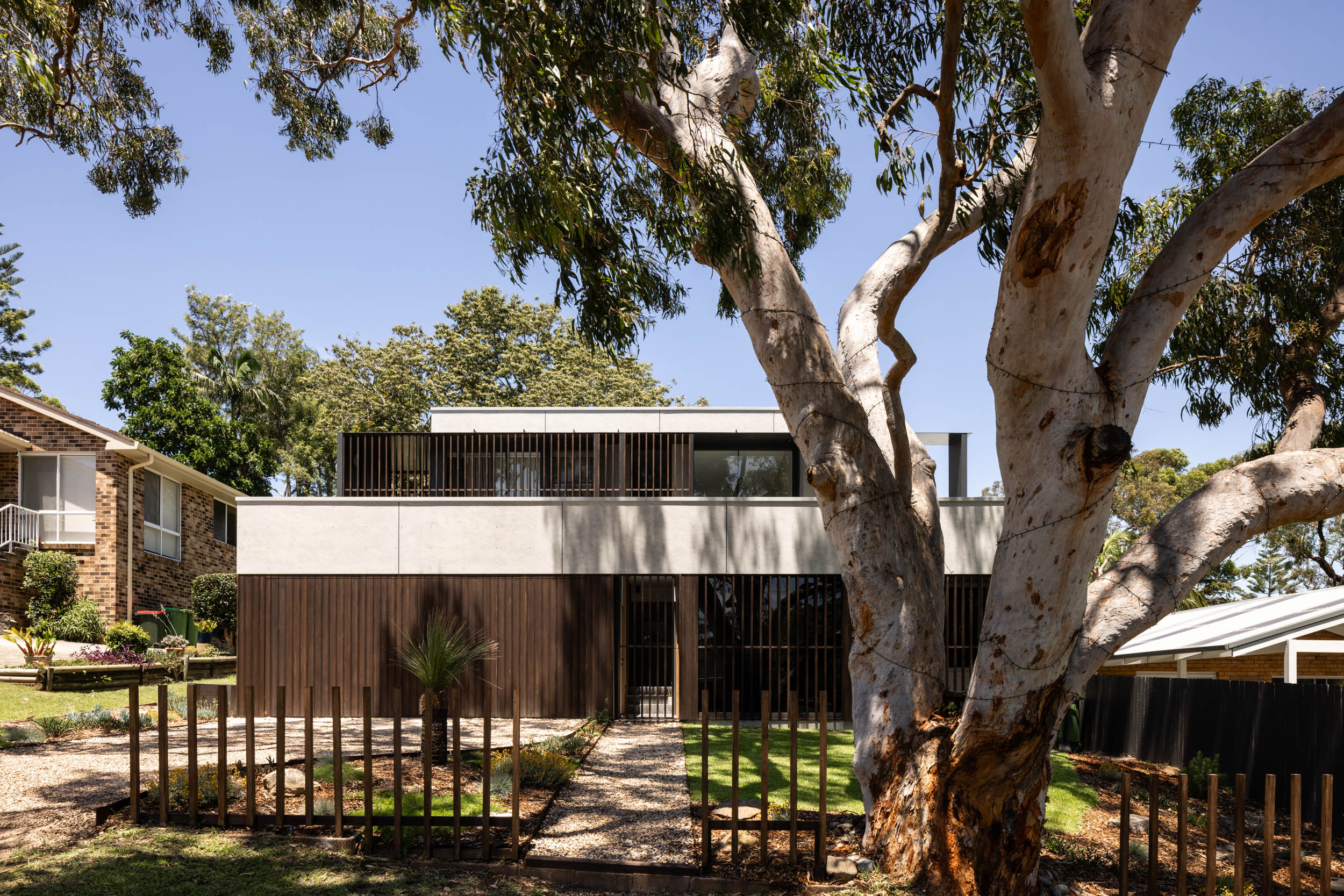
Seeking a return to the utopian spirit of the bushland suburb, the design of Castlecrag Courtyard draws from and repairs relationships in the landscape creating a house designed to last generations. Embracing an expansive endemic garden that remediates the landscape, the increased amenity and efficiency of the courtyard typology deftly addresses issues of privacy, protected private open space, access to sunlight, cross ventilation, reduced bulk and view sharing.
Complementing this alliance of architecture and landscape, is the material palette, selected for its inherent beauty, timelessness, and propensity to echo midcentury modernism. The house is organised into three distinct sections and spatial and material variegations applied across the levels accord with their function, heightening the experience of living within the landscape where shelter and refuge, exposure and prospect are paramount.
Cedar on Collins | Kennedy Associates Architects

Cedar on Collins, a senior’s development by Fresh Hope Communities, designed by Kennedy Associates, represents Fresh Hope’s core values of Kindness, Connection, Optimism and Integrity.
These values underscore KAA’s design, delivering 56 units, 5 communal areas, 4 roof terraces and 4 activity rooms that harmoniously balance individuality with community, and calmness with activity.
The heart of the development is the central space, 3 interconnecting courtyards supporting the community through the interplay of built form with private and communal space.
Earth toned bricks, the excavated rock strata, characterize the lower levels.
A covered walkway integrates wayfinding, buildings, courtyards and common rooms.
Irregularly placed columns define the walkway, support the grey toned upper storey and provide intimate recesses along the journey.
Over 50% of the site is communal open space or landscaped area.
The client, in their response to the design, said.
“Through its intelligent design, the built form feels like home”.
Centre for Science and Art, Abbotsleigh Senior School | AJC
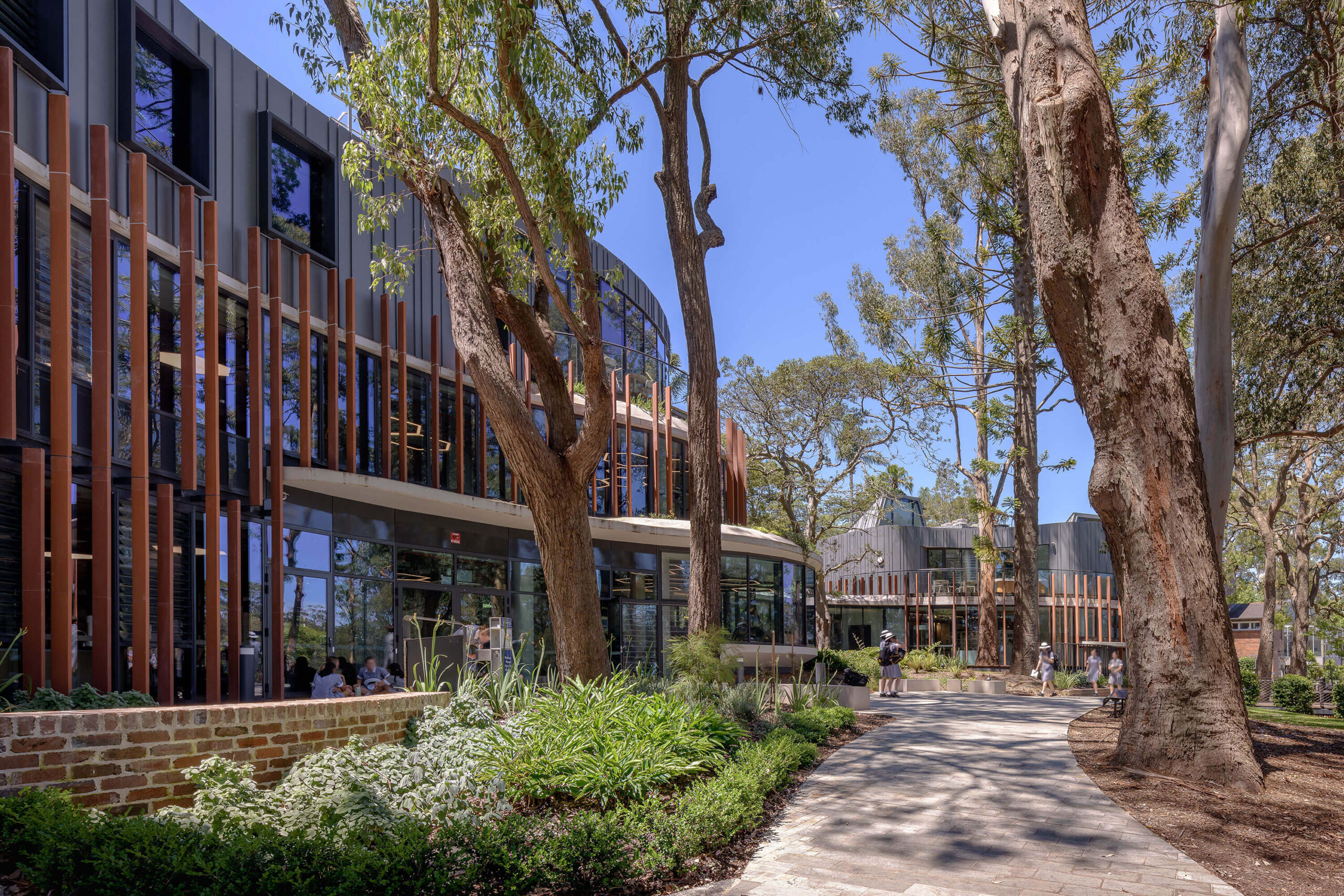
This pivotal step in the master planned extension of Abbotsleigh Senior School focuses the campus with a sculptural building designed around remnant blue gum forest. The butterfly shaped building is woven between the mature tree and the two heritage houses that bookend the site. Cloud point surveys helped determine the optimal form to preserve tree canopy and root systems. The two organically shaped wings one for science, one for art are joined centrally by a curved glass enclosed walkway.
In the spirit of scientific inquiry, the science wing expresses its material construction with exposed structure and services, while the art workshops and studios are naturally lit from windows and skylights to the south. Multiuse assembly spaces, staff and meeting rooms and informal breakout areas are distributed through both wings, with unprogrammed public spaces adjoining the glass bridge at either end, fostering dialogue between art and science exhibitions and happenings.
Bondi Abode | LAVA (Laboratory for Visionary Architecture)

A 1930s Californian bungalow with a 70s makeover featuring timber cladding and free-spirited vibe recalled the architect’s 70s childhood home in Germany.
The pokey, rambling original five-bedroom house, was transformed into a four bed four-bathroom house, in tune with current market demand in a desirable location.
The retro 70s vibe is complemented with a design for 21st century living bringing nature indoors, natural materials, flexible floor plans, and the latest technologies to address the way we live today: adaptable architecture, integrated facilities, smart technologies.
Clever engineering replaced solid walls and utilities that blocked the inside/outside flow. Within the same footprint, integrated pivot doors, disappearing sliding doors and screens offer privacy, ventilation and connection to an oasis garden. Flexible internal spaces allow various configurations for different ambiences. The house runs on solar and natural ventilation. The client’s favorite designers are integral to the design. An original 1970s hardwood staircase was restored.
Botany Road | Candalepas Associates

Botany Road is composed of two multi residential projects offering generous interiors that utilise space and maximise on natural light. Running parallel to one another, they vary in scale, material, composition, orientation and density.
The façade design is influenced by the client’s Cretan heritage, incorporating the geometry of Cretan antiquity and craft. Geometrical themes symbolically unite both sides of the street, adding an element of change and interest. Drawing from row housing traditions, the intentional repetition aims for a non oppressive, variegated façade on both sides.
The subtle variation in colour of the cream face brickwork enhances the tonal play of light and shadow being created across the façade. The angled bay windows of solid brickwork at the upper levels contrast against the hit and miss brickwork of the lower levels which in turn create shading screens for the privacy and enjoyment of the residents looking onto the street.
Bowral House | Luke Moloney Architecture
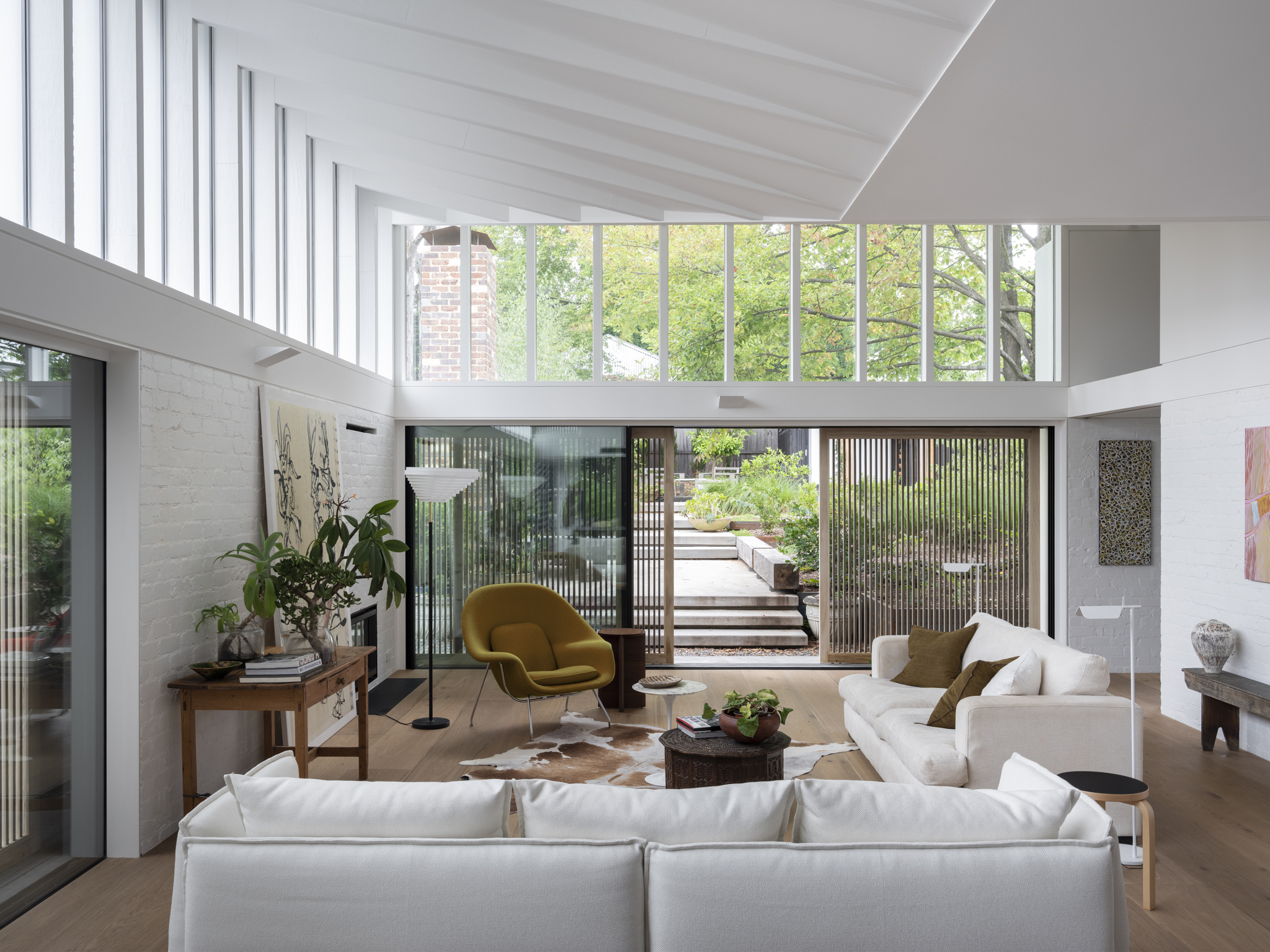
Alterations and additions to a cottage in Bowral. A house designed with reference to the landsccape, so that a modern building feels like an abstract extension of place.
Bronte Sisters | Sam Crawford Architects

Bronte Sisters comprises two dwellings, a heritage listed house, once altered by Andrew Burgess Architecture, and a neighbour, half of a pair of semidetached dwellings.
In order to serve our client’s brief for a flexible, multifunctional home for a young family and their overseas relatives, both have been restored, renovated, and, at the rear, opened to the landscape and physically connected via a timber deck.
Our approach was to create a pair of buildings that can be appreciated as one, or as individual dwellings, in dialogue, through a shared materiality and geometry.
From the street the existing houses are different yet sympathetic in scale and materiality. For the rear additions we have built on this relationship.
Bungalow Blonde | LiteraTrotta Architecture
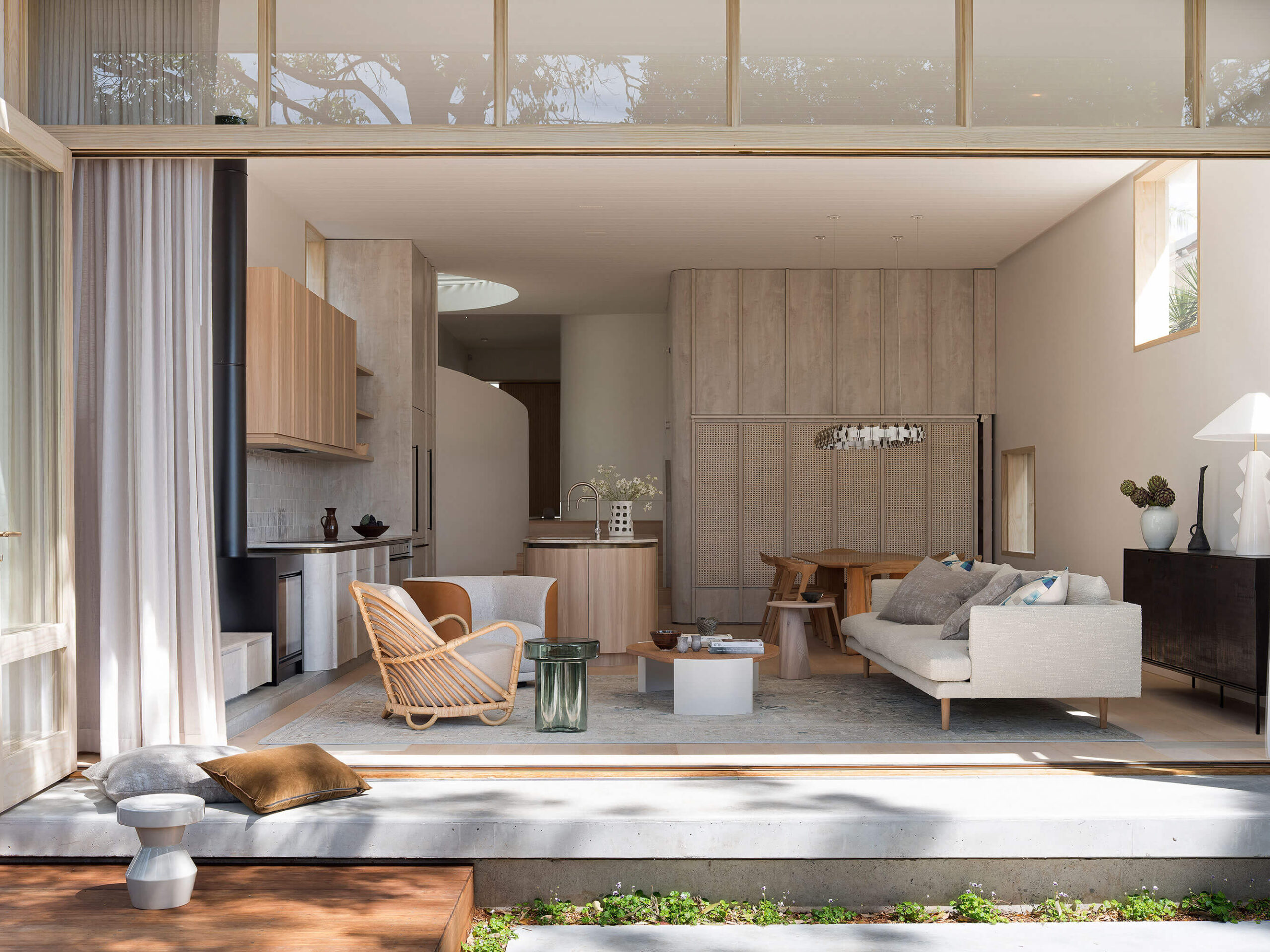
This delightful bungalow in a winding residential street, was home to our clients for many years before they approached us seeking change, advising that the layout of the home was flawed and the centre dark and unused. We approached the design with the upbeat attitude of our clients, maintaining its street presence with stepped and pitched rooves, and a unique window that hints at curiosities beyond. The living spaces are bathed in natural light that enters via a halfmoon skylight above the stair, and through joyous peekaboo windows along the northern façade. The indoors spill out onto a luscious garden, a curved seat and deck defining one corner under a large Brushbox.
Truly transformed from its basic bones into an incredibly warm family home, its unassuming front is a veil for the wonders within generous spaces, soft sinuous curves, and playful natural light, it implores its guests to expect the unexpected
B’Yachad Building | TKD Architects
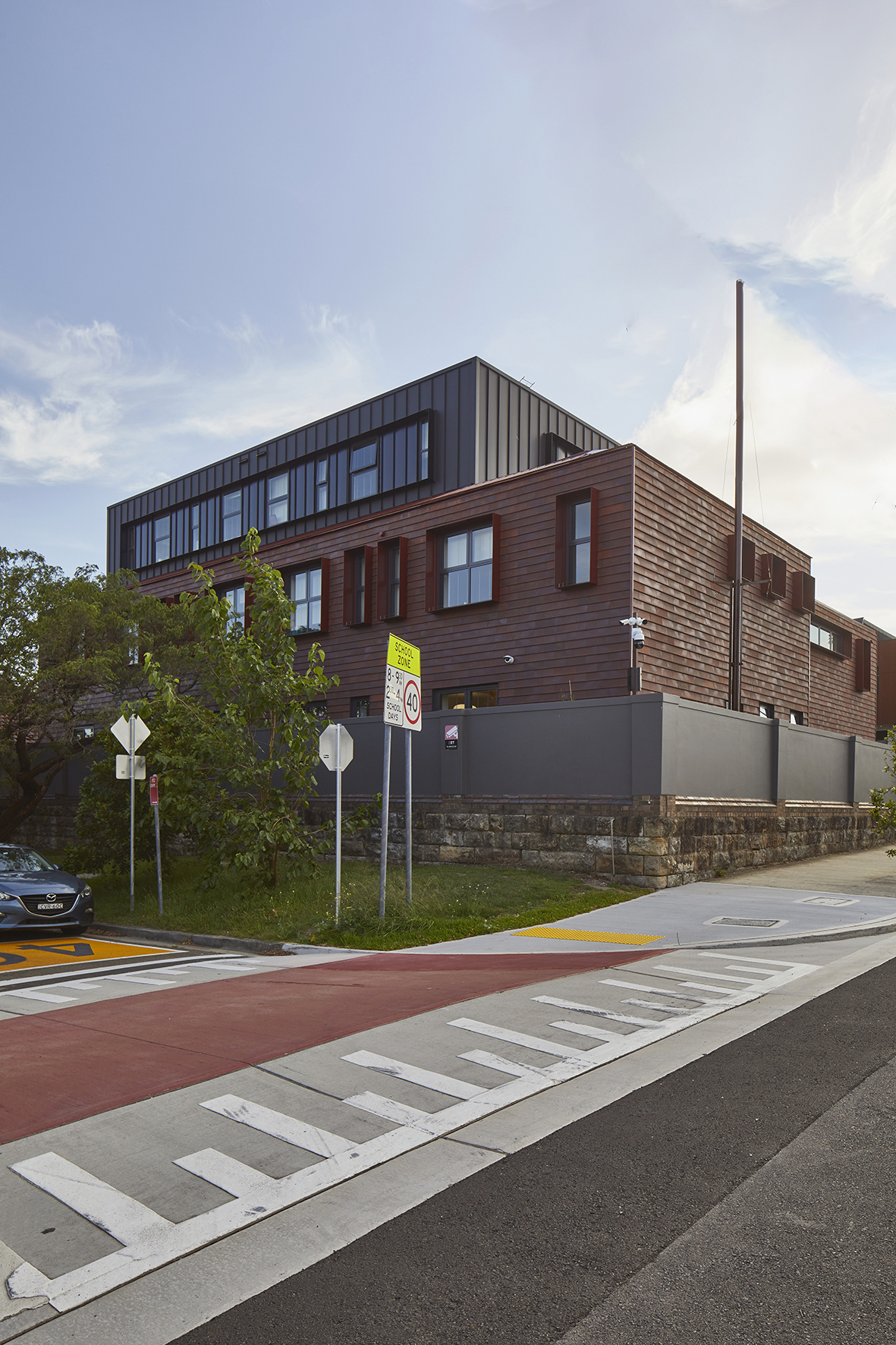
The B’Yachad Building reimagines a pragmatic 1970s teaching building as an innovative and engaging place for learning. The building includes 9 new learning spaces on three levels including an Imaginarium or maker space including support staff, meeting rooms and toilet facilities. The terracotta tiles and steel accentuate the articulated forms and setbacks on the upper level creating a building that is layered and modulated when viewed from the street.
Reusing the structural walls and floors of the original Adler Building acts as a starting point for a sustainable future while the building targets high levels of energy efficiency and lower operational energy consumption. The playful interior creates nooks for reading, quiet concentration spaces and permeations between spaces sharing light, air and sight connections. The landscape design assists in the comprehension and legibility of the site by building on the existing landscape patterns while creating better connections between the buildings.
Bill’s House | Fabric Architecture Studio
Bill’s house is a project that is close to one of our directors’ hearts, a considered reimagining of the tired family home to which was a classic red brick 1970’s piece of Australiana.
Not wanting to unsustainably discard the original home, the approach was taken to touch as little of the existing structure as possible and let the design organically grow out of the existing form. This approach was both cost effective and was crucial in creating a unique design that responds to the surrounding environment, (including feature angophora) and respecting the original house.