
Pocket Passiv | Anderson Architecture

Pocket Passiv is a small infill residential studio occupying the unused space of a spatially constrained inner city terrace house corner block. The project achieves ambitious levels of amenity for its residents all whilst occupying the pocket sized footprint of 27sqm. Located in Glebe, a thriving inner city suburb originally inhabited by the Gadigal people, Pocket Passiv sits within a relic of Sydney’s 19th century Victorian terrace house boom.
Pocket Passiv’s project aspirations were guided by an ethos of not only environmental sustainability but also social and economic. The dwelling has been built to the Passivhaus Plus Standard, an esteemed accreditation for high performance and energy efficient buildings originating from Germany. Passivhaus Plus further acknowledges the building’s ability to generate as much energy as it consumes ultimately becoming a net zero energy building.
Northcote House | LLDS
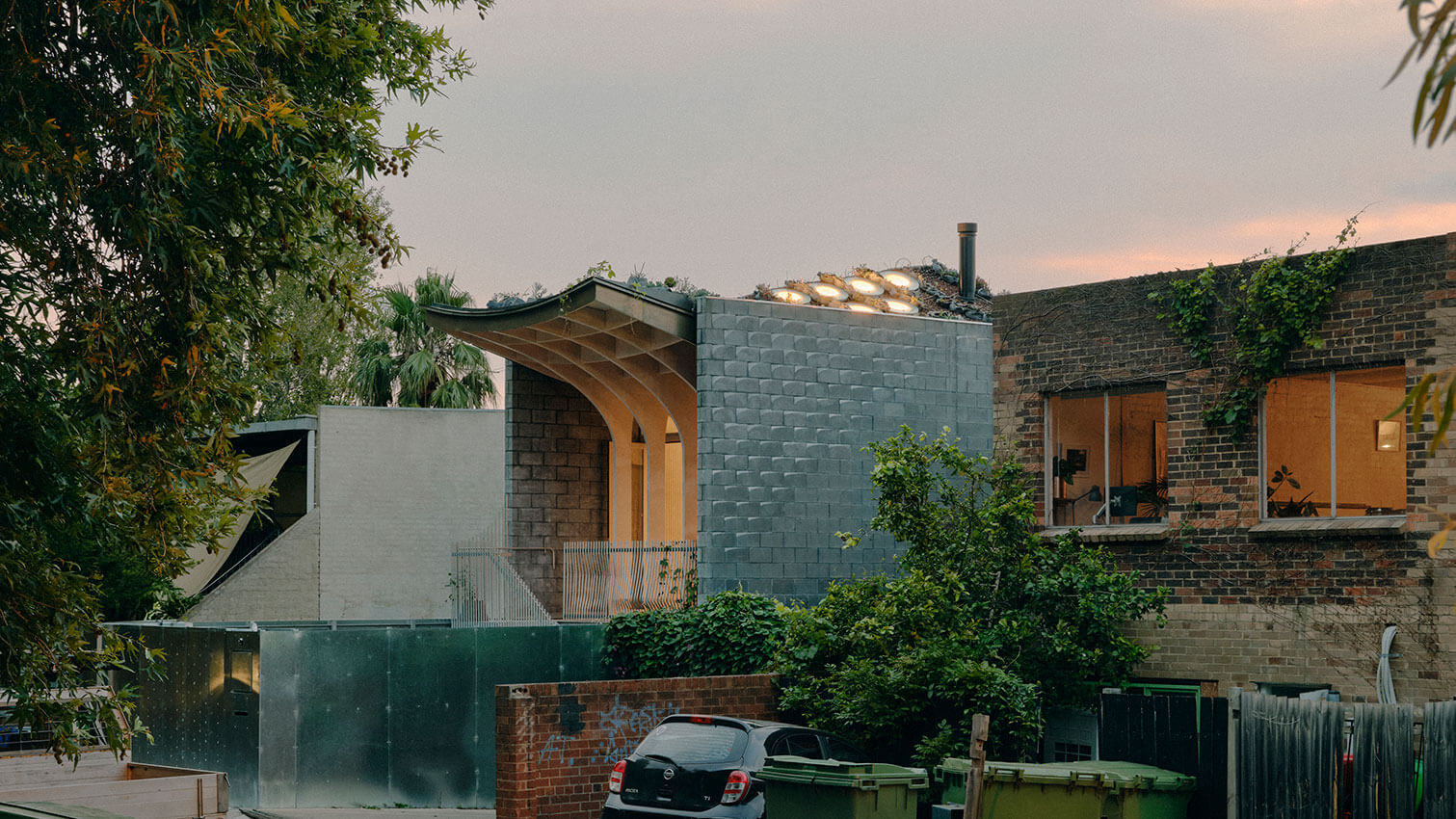
The project reconceptualises the Victorian terrace typology in response to the existing urban context. Sited on a narrow 4.6m wide plot, the ground is elevated to form a roof garden which reduces urban heat island effect and provide new space to support local ecology in an urban context. Below the freeform timber roof is a halllike room with a kitchen, dining room, and entrance veranda reminiscent of the neighbourhood’s large factory lofts and Victorian church halls. The highly textured concrete internal wall provides thermal mass and improves the acoustic of the dining room. The ground floor is spatially organised around a circular snug with a central void which brings natural daylight and ventilation to the depth of the House. The East and West façades are designed as a trellis for climbing plants with a generous entrance balcony acting as natural surveillance to the laneway and neighbouring public car park.
Oak Gully House | Max Pritchard Gunner Architects
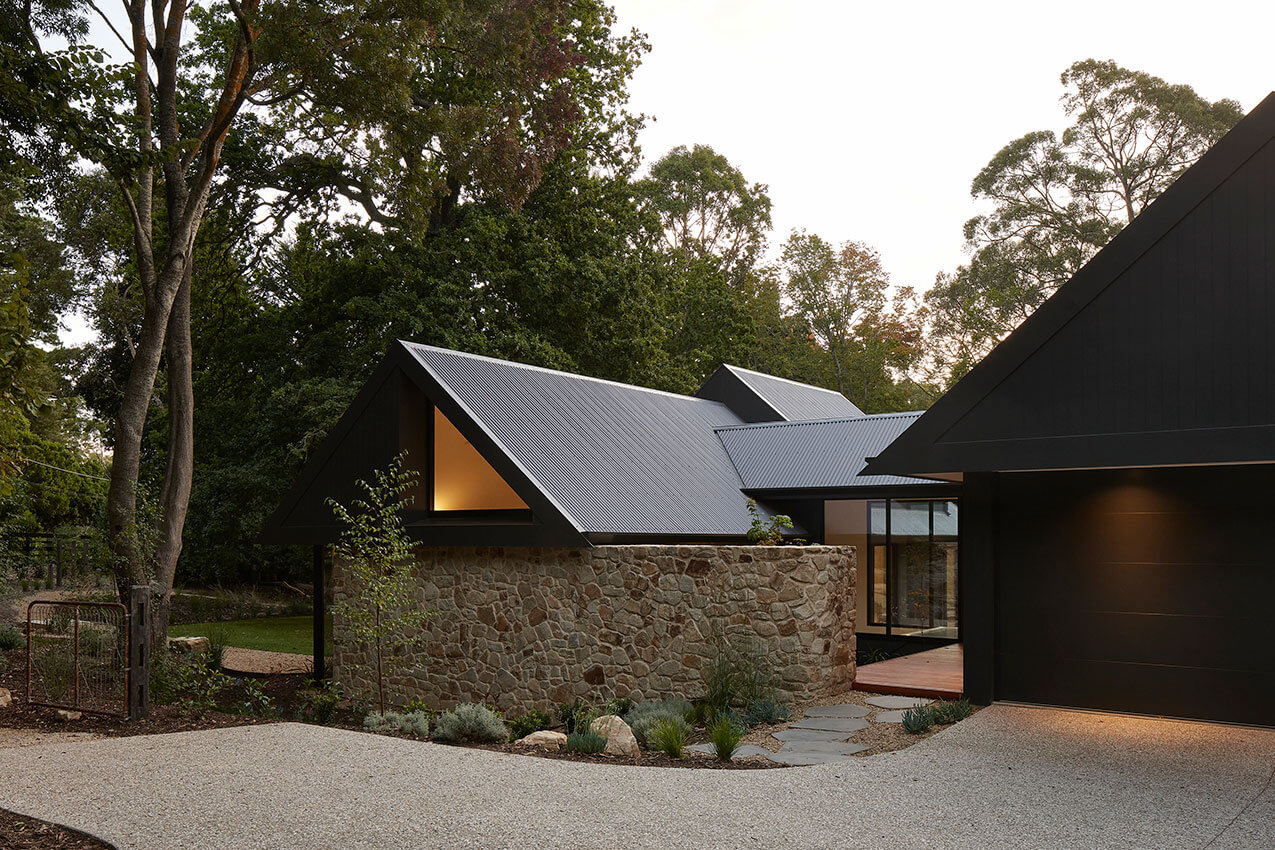
A small, timeless, family home that reflects traditional hills houses with their pitched iron roofs and local random stone.
Orientation to maximise passive solar performance was a key goal for the project. The resolution is two narrow pavilions. These reduce the visual bulk of the house and, orientated east west, maximize north facing windows for winter sun. The dark burnished concrete floor and internal stone effectively act as heat sink storing heat from the winter sun to warm the house at night. Internally a restrained material pallet create a warm timeless aesthetic.
The owners report how their house has been a social success with so many local residents calling past for a closer look and to compliment the design. It’s a great example of a couple, passionate about architecture, having the opportunity to share their passion with the local community and promote thoughtful sensitive design.
Olive Tree House | Bastian Architecture
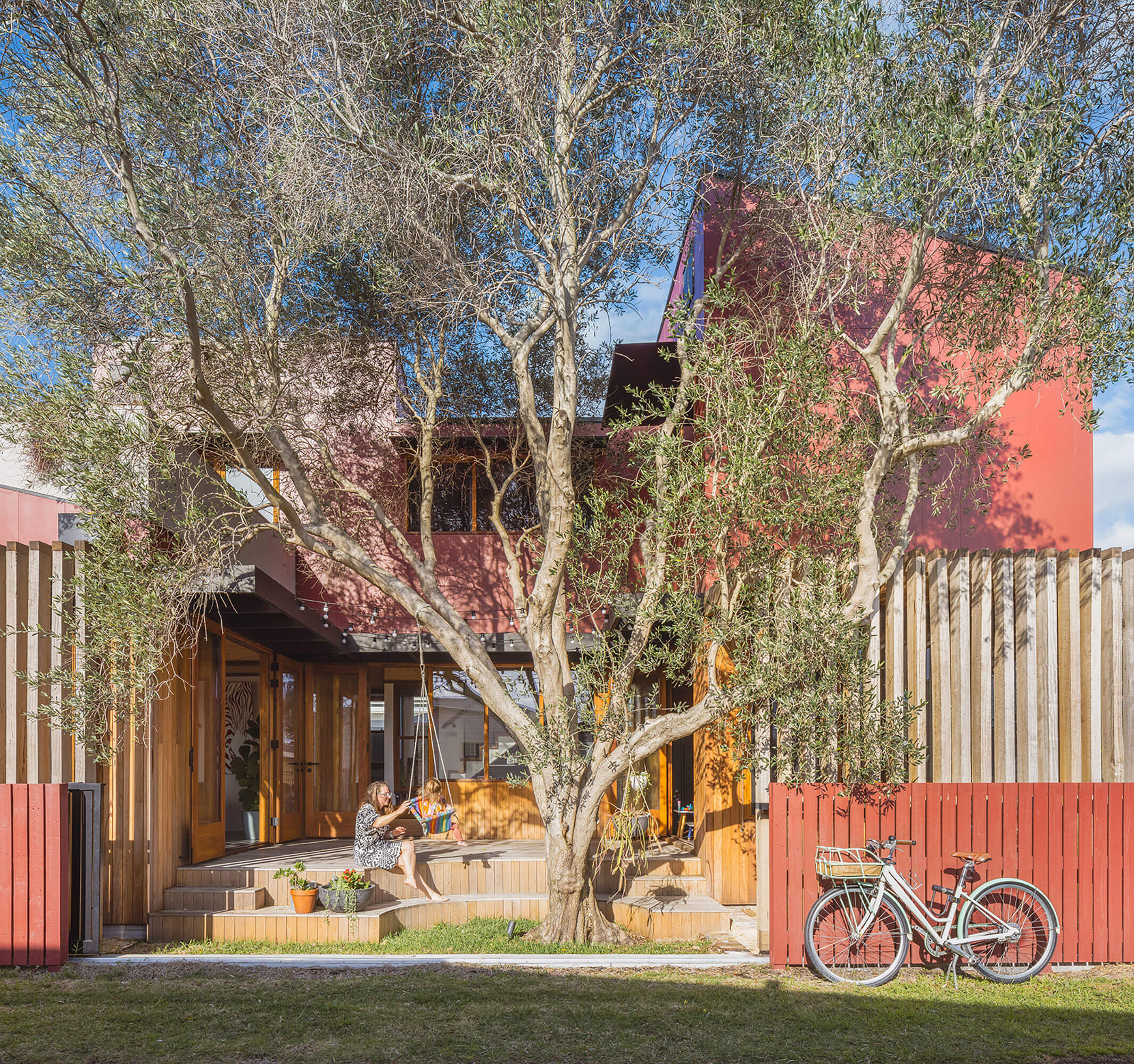
Olive Tree House is a new urban infill project, it has been designed to challenge the Australian norm of housing, it is half the size of an average Australian home, sits on a site half the size of an average site and provides flexible rather than large spaces.
Situated within sight of Stockton beach and the Hunter River the house responds to the coastal location. Planned for the inevitable summer afternoons at the beach and winter afternoons on the deck the house is flexible and allows for parts of the house to be left open to catch the coastal breeze or connect to the winter sun. The mature Olive tree is retained to provide shade and habitat for the site.
It is a small house in which every metre works hard to provide quality living spaces.
Oska’s House | Light House Architecture and Science

Oska’s House embodies the essence of its Canberra neighborhood’s evolution, drawing inspiration from the original red brick ex-government home and the surrounding streetscape. Designed with principles of flexibility, accessibility, and solar passive design, it seamlessly integrates into the neighborhood while offering modern comforts. With a modest scale reminiscent of older homes in the area, it features recycled red bricks from the original structure and modern touches like a skillion roof and mini-orb metal cladding. The layout prioritizes connection to a productive garden and includes adaptable spaces for guests or working from home. Collaboration with landscape designer and scientific modeling ensures sustainability and usability. Achieving an impressive 8.1 star energy rating, Oska’s House exemplifies efficient, thoughtful design within budget constraints, providing a comfortable, future-proof home for its residents.
Naples Street House | Edition Office

The Naples Street House is an exercise in formal and material restraint, towards a heightened connection to social and environmental rhythms.
A home for three generations of the one family where the twin elders of the family are reflected in the alternating roof peaks; experienced spatially as a cycle of change, of rising and falling forms, as its occupants circulate around the central courtyard.
The uniform outer skin of brick cladding wraps up the outer walls, over the folded roof forms, and down into the central outdoor garden room. The forms of the undulating & folded roofline curate views such that only sky and neighbouring trees are encountered from within the house. This room allows an intimate relationship to context, to light, sun and seasonal change.
The singular outer material presents the house as a carved solid, formally referencing lowslung pitched roof forms of the original interwar houses of the neighbourhood.
Murdoch Residence | Kyearn Architecture
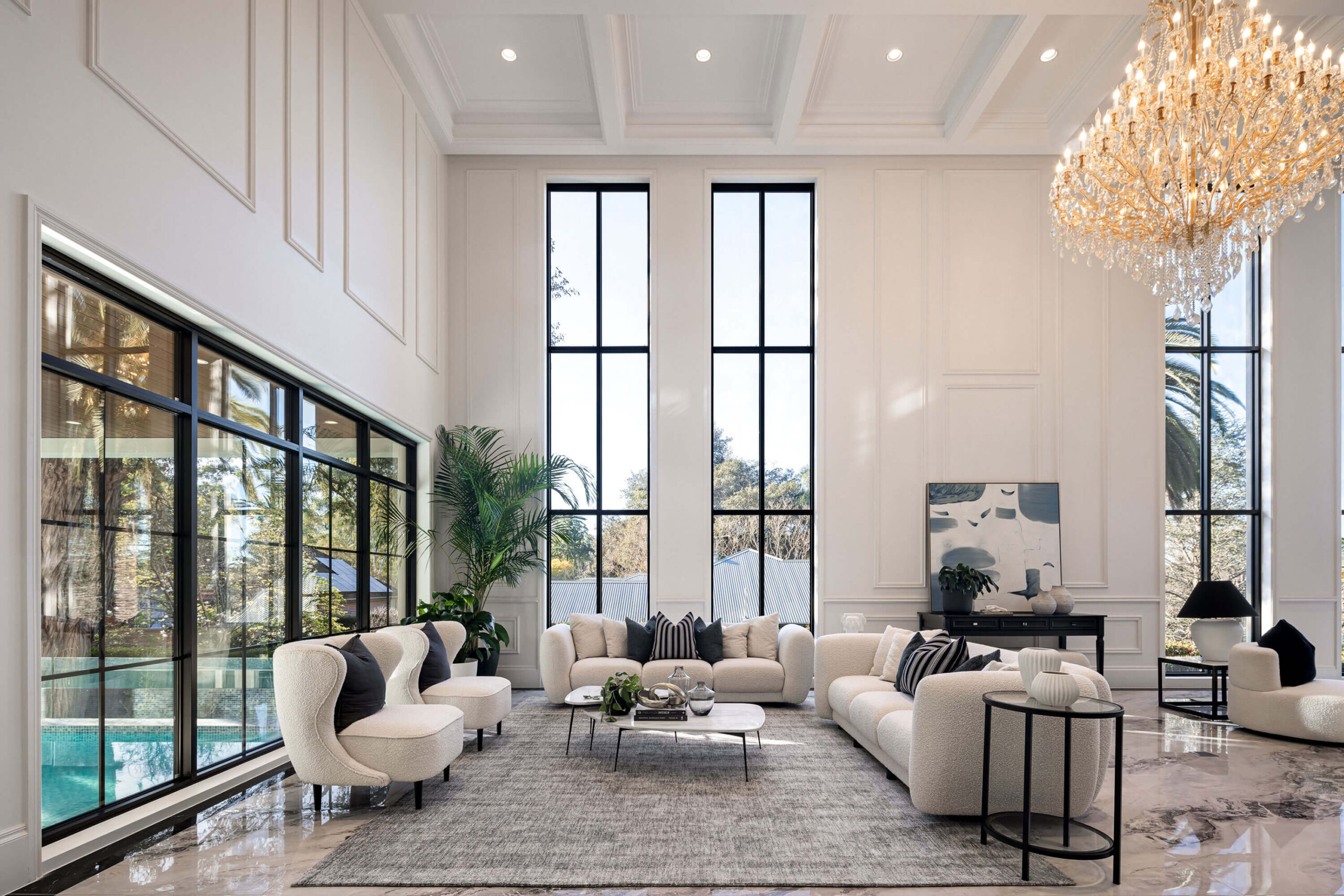
The Murdoch Residence stands out amidst suburban homes with its blend of openness and private retreats. Its welcoming entrance, highlighted by a grand staircase and lack of perimeter fencing, contrasts with typical suburban homes. Inside, a double volume living space offers space offers panoramic views and abundant natural light, while areas towards the rear provide intimacy and tranquillity, surrounded by lush trees of the adjacent park. Built on a challenging slope, the house preserves the original foundation and mature trees, minimising topographical changes and maintaining the landscape’s integrity. Sustainable Australian materials were prioritised in the interior design, reflecting a commitment to environmental responsibility, and supporting local industries.
Melrose Avenue | B.E. Architecture
TBA
Little Young Street 4A & 4B | David Langston-Jones
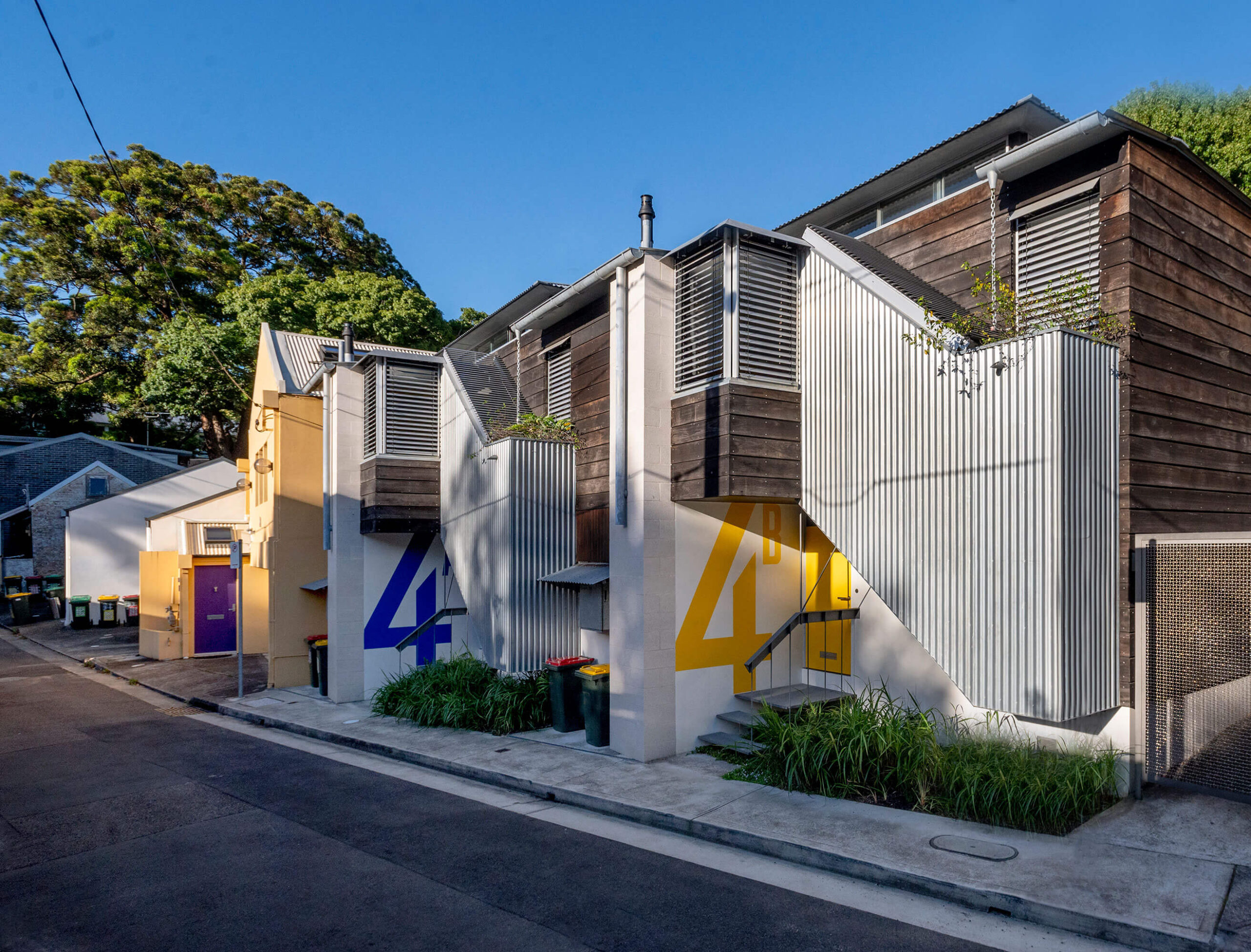
With a footprint little bigger than a pair of double garages, two 80 sq m houses have been fitted onto an awkward sloping site which most would expect to contain only one. Infilling a narrow inner city laneway, these replace the original asbestos ridden bungalow, which had outlived its usefulness, with two storey houses without garages taking advantage of their proximity to public transport.
The identical houses are ‘upside down’: bedrooms below and living areas above. All ‘machines’ bathrooms, stairs, kitchens, rubbish bins, etc are rowed in front concentrating the main massing away from the street. Articulate and expressive, the resulting external appearance contributes much to the streetscape.
Internally, the houses exhibit a spaciousness and grandeur that belie their size and are private yet transparent in spite of being cheek by jowl with neighbours. Carefully arranged openings frame views onto courtyard gardens, distant trees and the sky while filtered sunlight enliven the living areas throughout the day.
‘Littoralis’ Midway Point | Leigh Woolley Architect
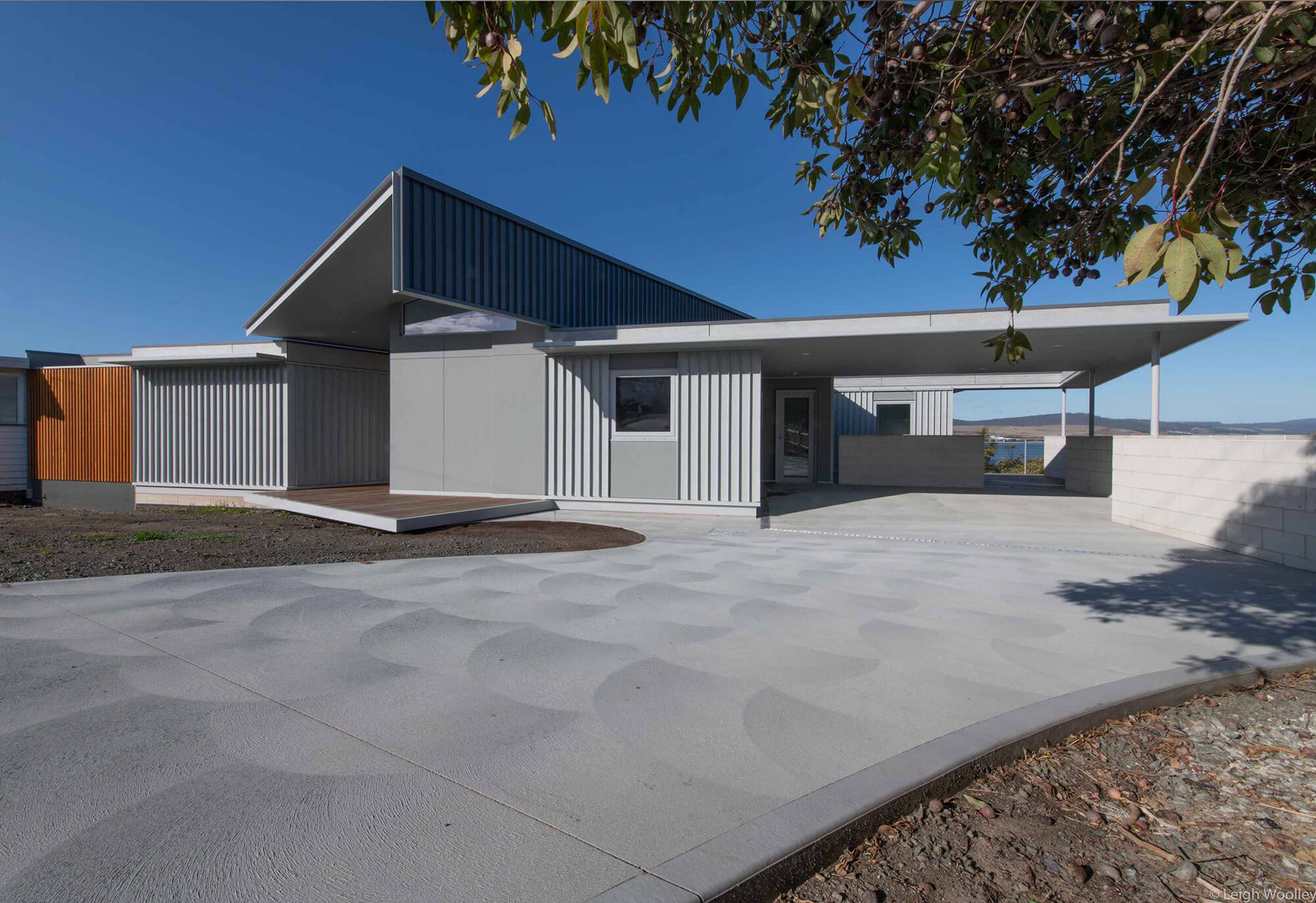
Attracted by the inter-tidal character and abundant bird life of the Pittwater embayment, the owners chose Midway Point, east of Hobart, to retire into. Maximising connection to the waterplane of the bay, the new dwelling provides both a living and viewing platform adjacent the coastal reserve and its abundant littoral shore.
In a compact plan providing diverse living spaces, the threshold between inside and outside is reinforced as a uniform datum. External edges in the sun, and out of the wind extend the interior outward providing local and regional orientation.
The design response has been to future proof the site for its retired owners by providing grade access via the driveway to the new dwelling, and its level living platform. Supplemented by vegetable and feature gardens, an existing dwelling provides ancillary accommodation (for a carer) to extend their longevity on the peninsula.