
The Wangal and Gadigal people of the Eora Nation
New South Wales
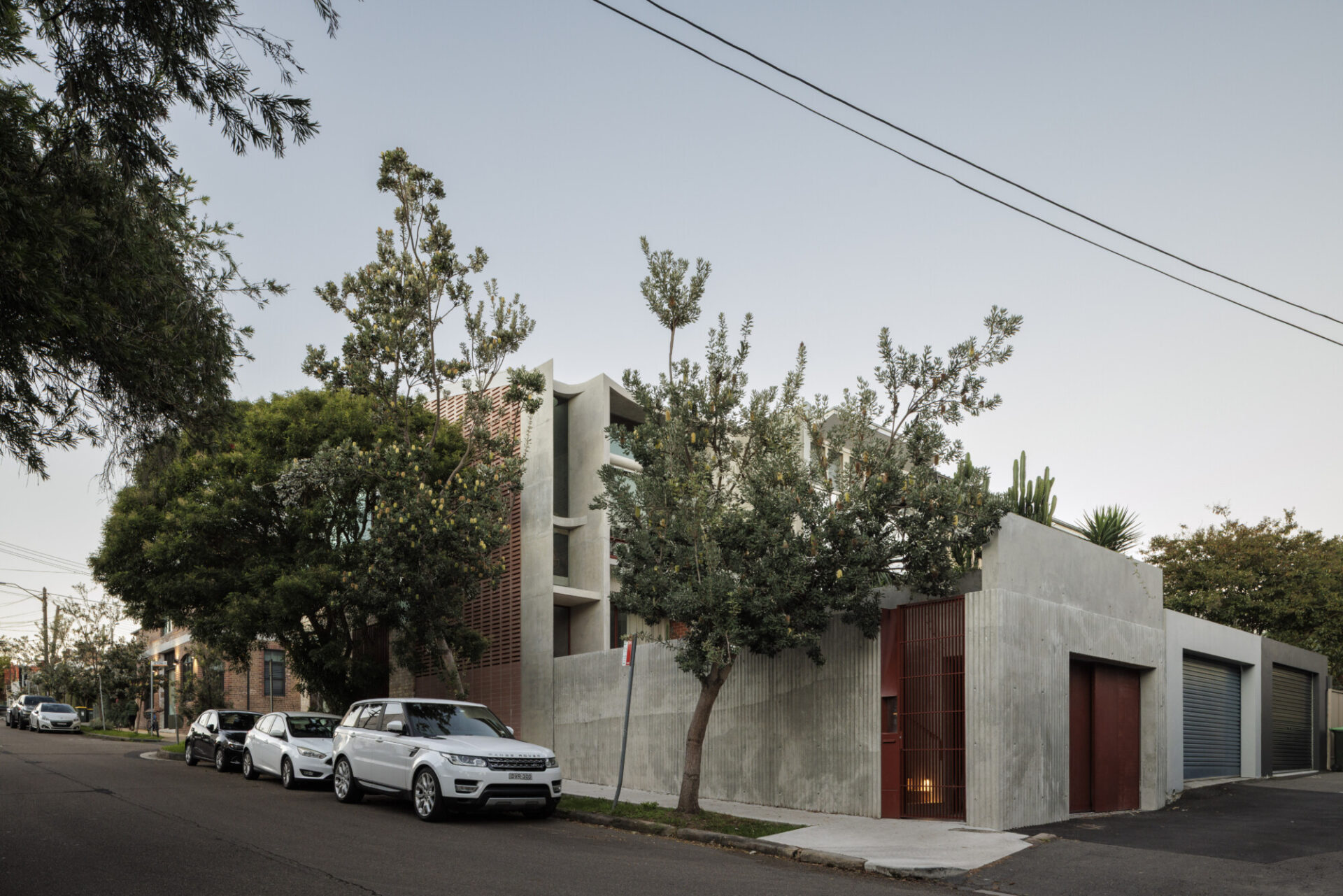
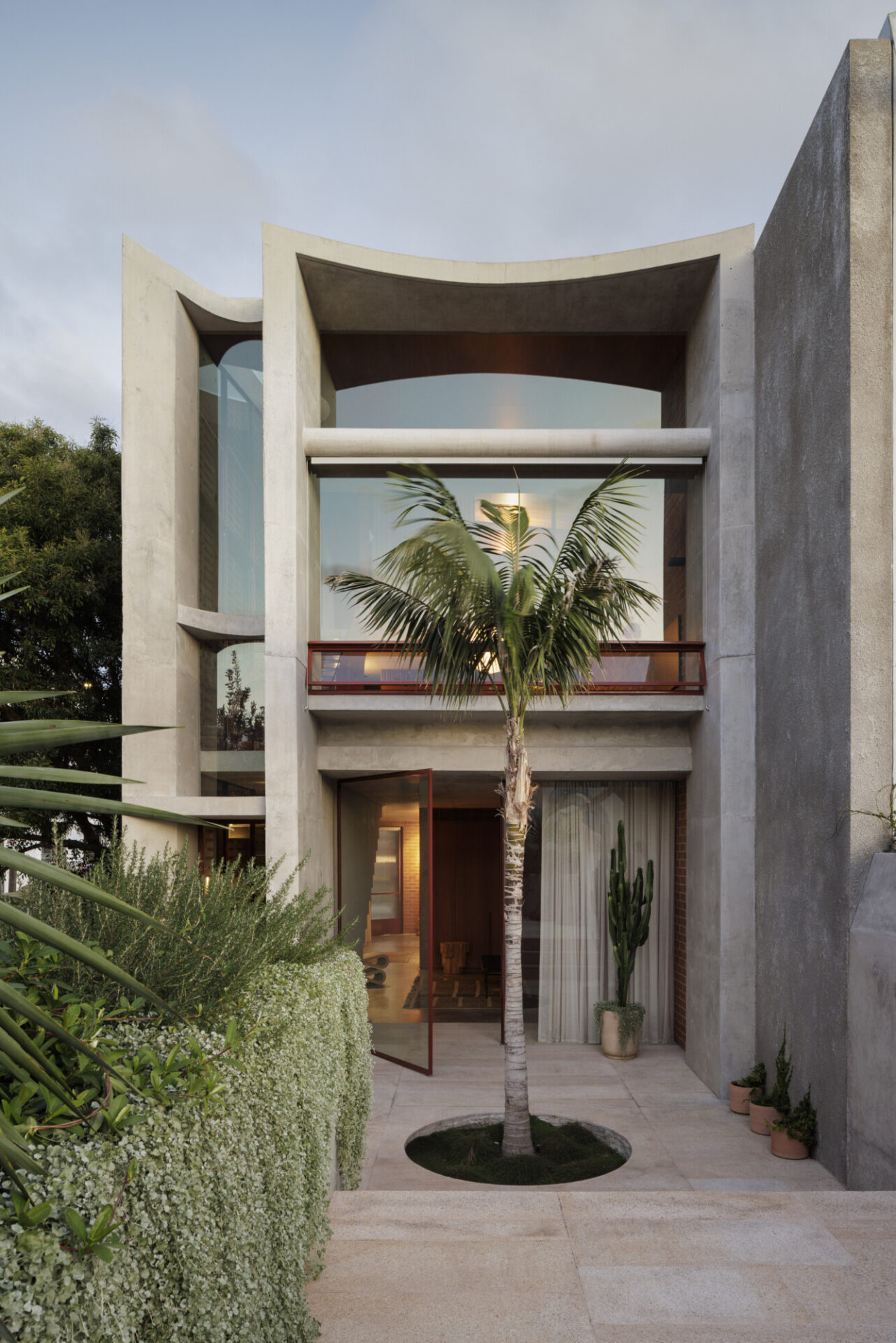
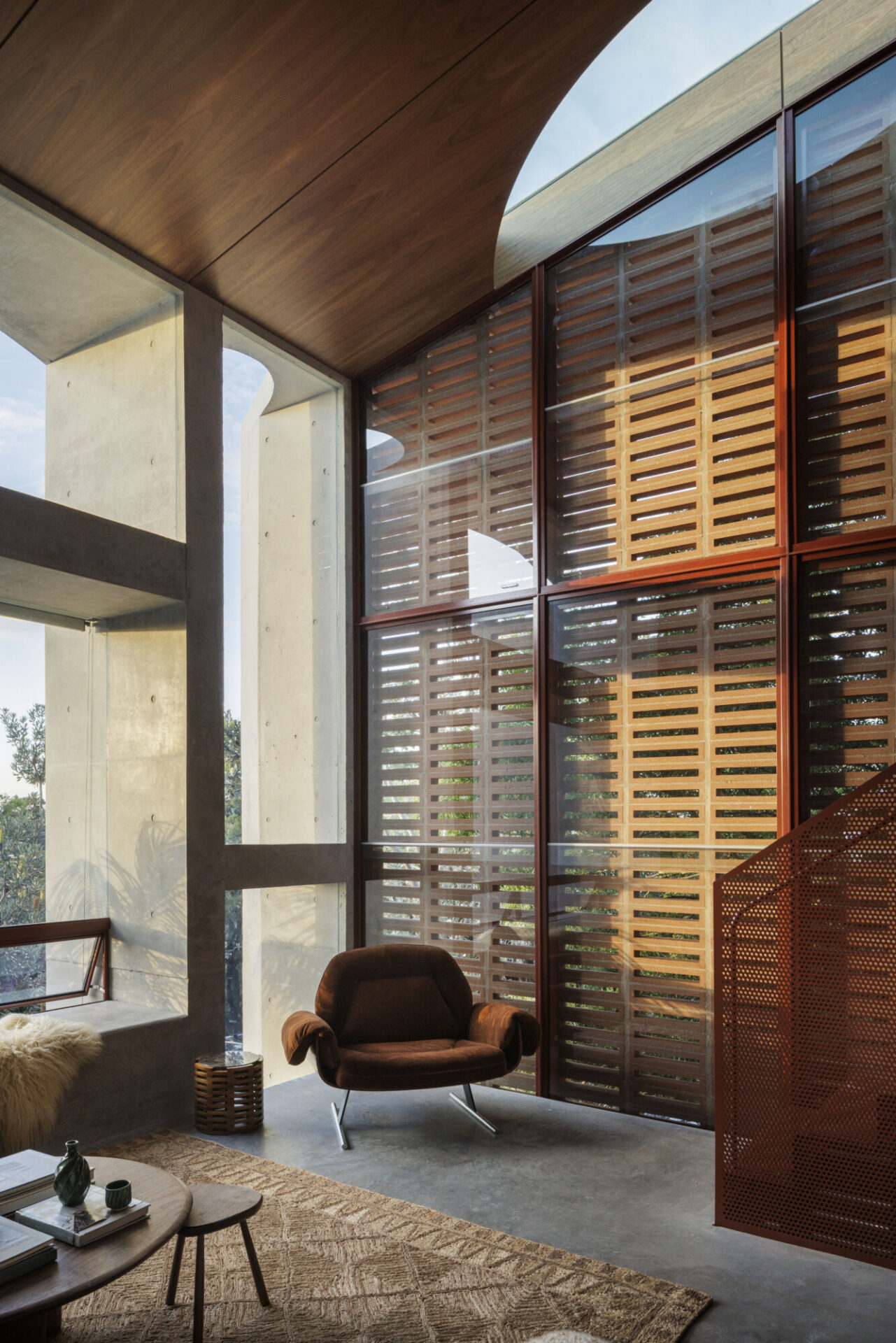
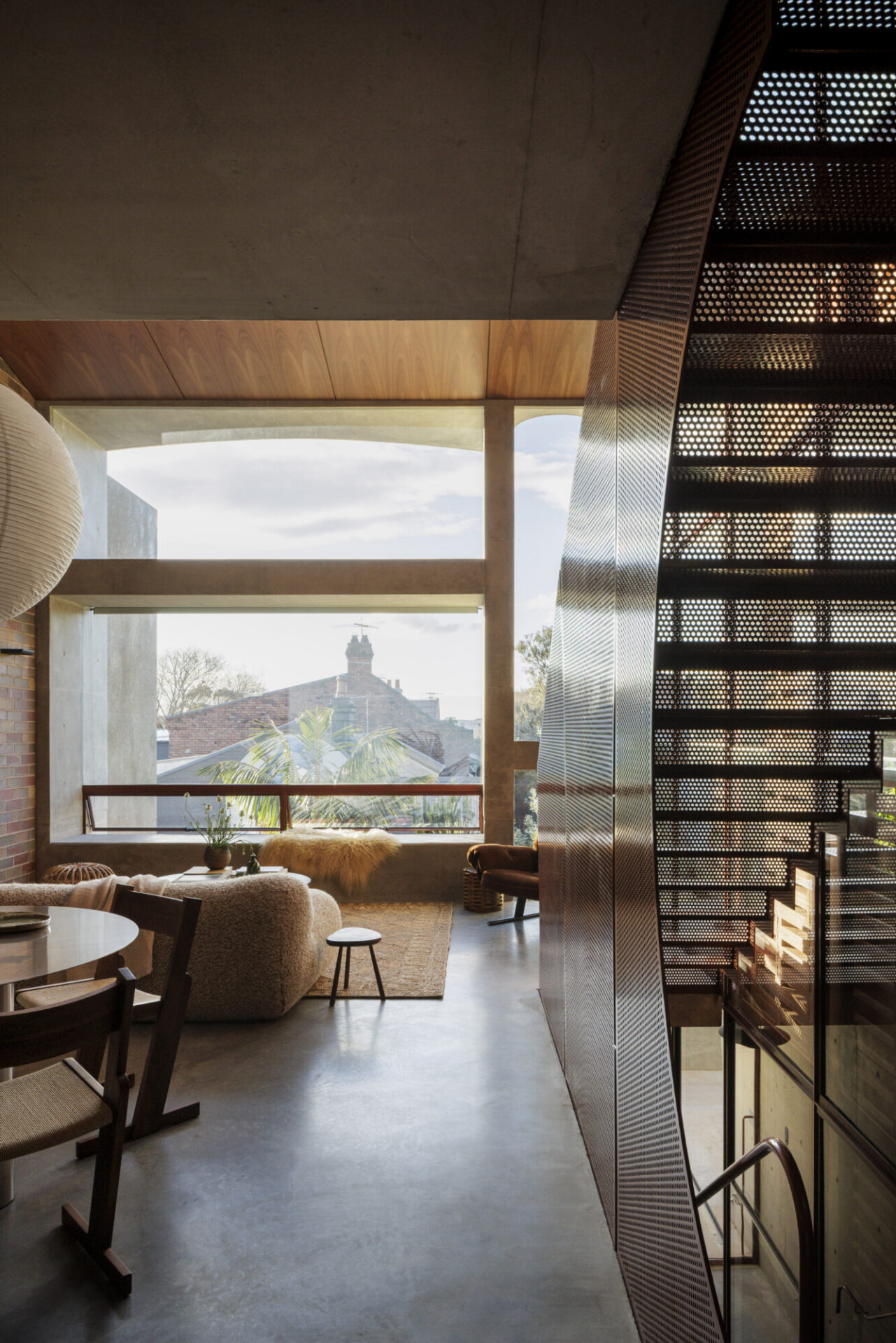
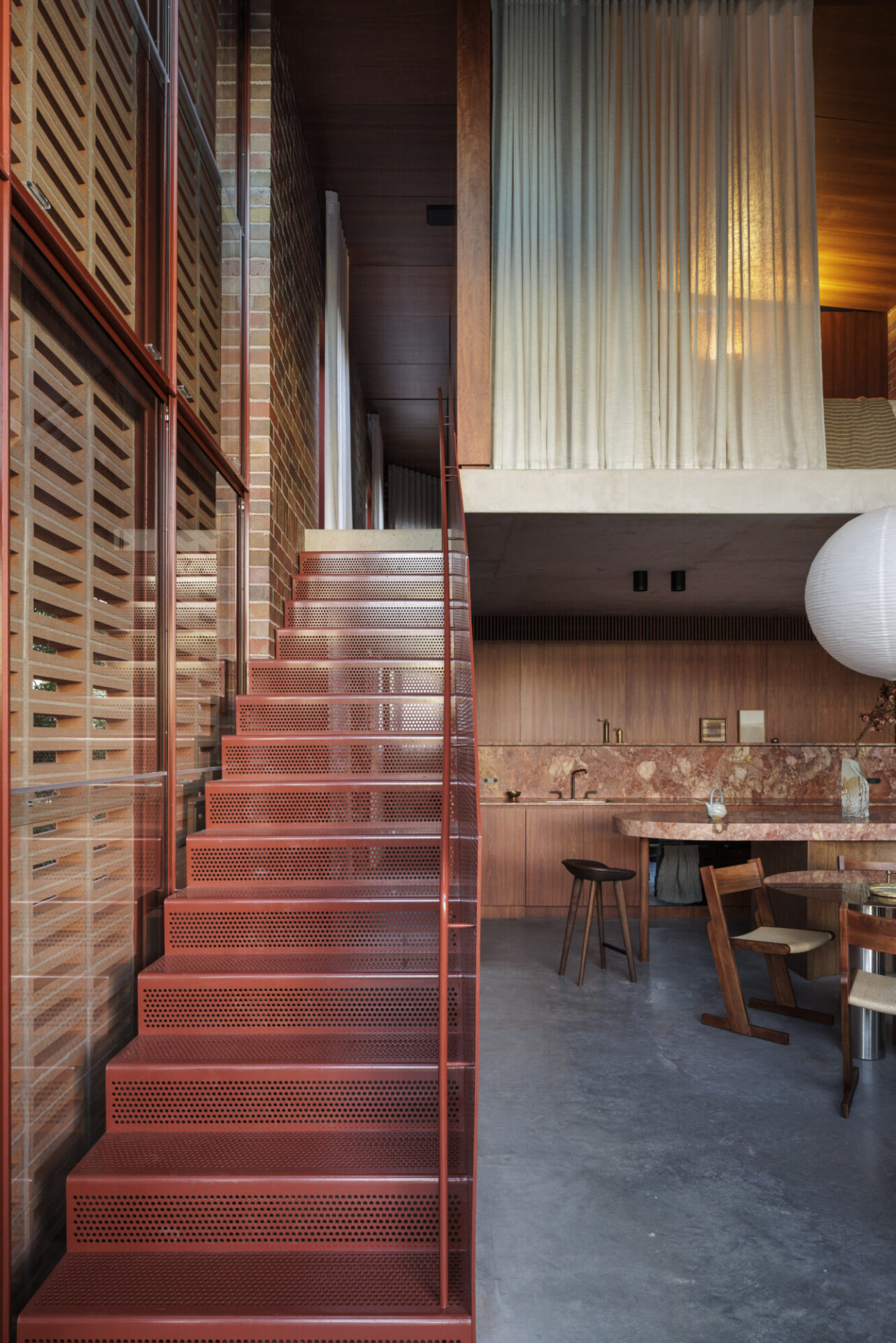
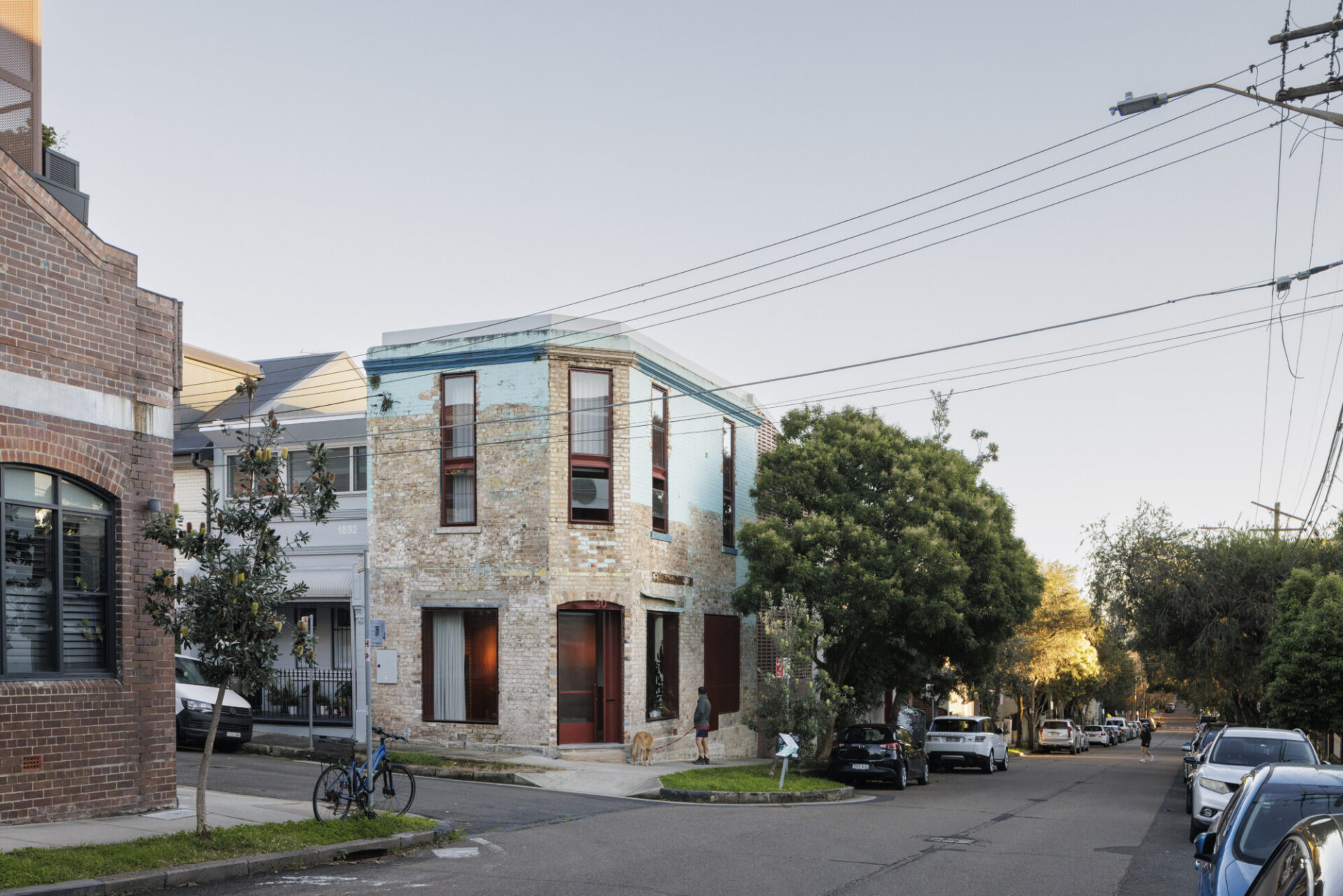
The Corner Shop House in inner-west Sydney reimagines a late-19th-century corner shop building, balancing preservation with renewal. The original brick envelope was retained while a new structure was inserted, realising higher density with the existing envelope. A ground-floor commercial tenancy connects to a rear courtyard, with a upper level residence above featuring double-height living spaces, bedrooms, and north-facing solar orientation. Curved concrete shading, permeable masonry screens, skylights, and passive design strategies optimise light, ventilation, and thermal performance. A cohesive palette of brick, timber, and terracotta-toned metal unites old and new, delivering a layered, contextually responsive urban infill.
Award for Residential Architecture – Houses (Alterations and Additions)
This house is a joyful example of how to retain and celebrate history and memory whilst adding new layers of inhabitation and meaning, where the architects have benefitted from a close collaboration with the owner/builder. This project successfully navigates the complexities of a dual-typology, of commercial and residential uses, within a tight footprint. The constraints of the two-storey heritage façade have been intelligently re-composed internally to allow for a third floor, with existing window openings adjusted and extended and external walls becoming a palimpsest of partially stripped back original brickwork and previous layers of paintwork.
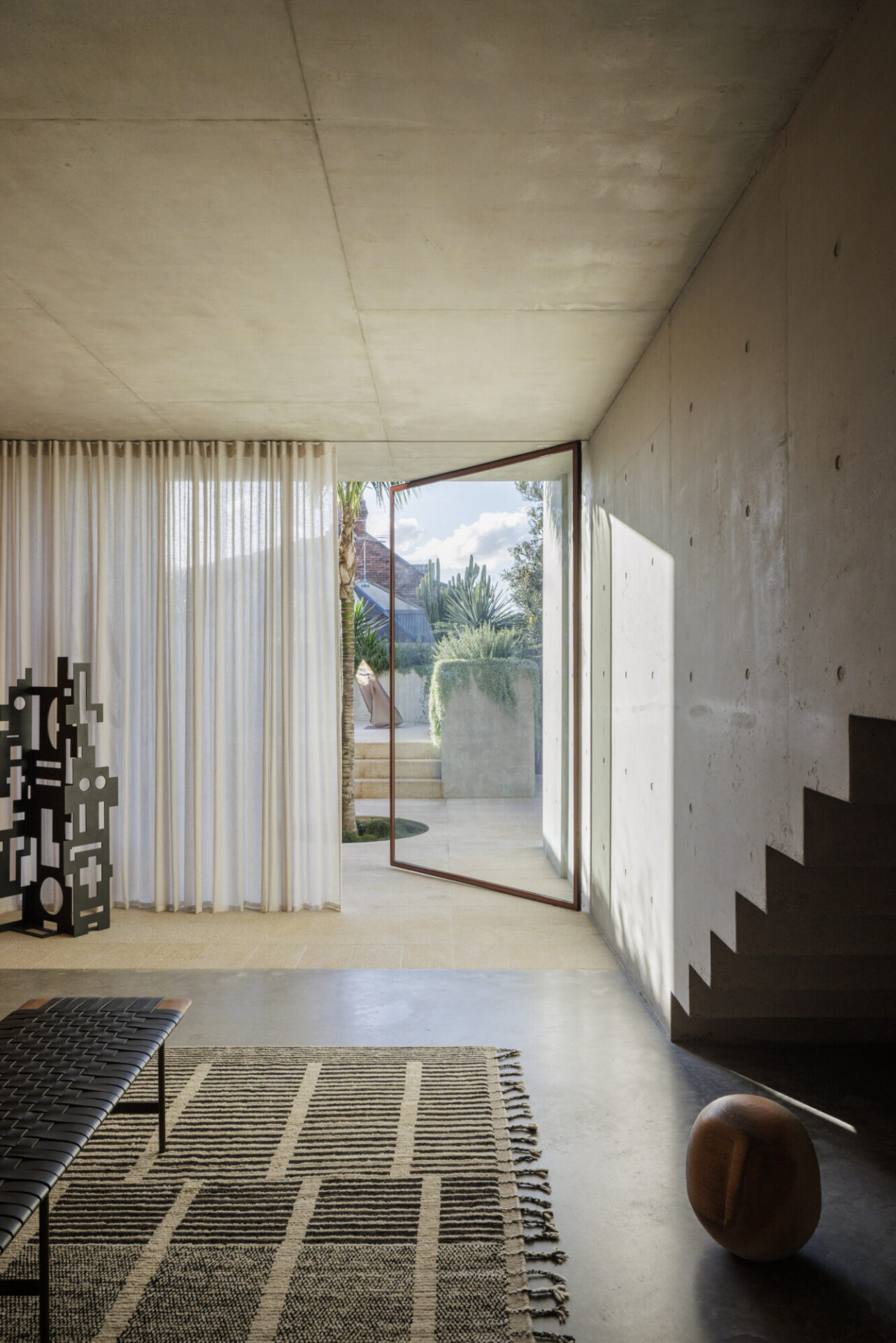
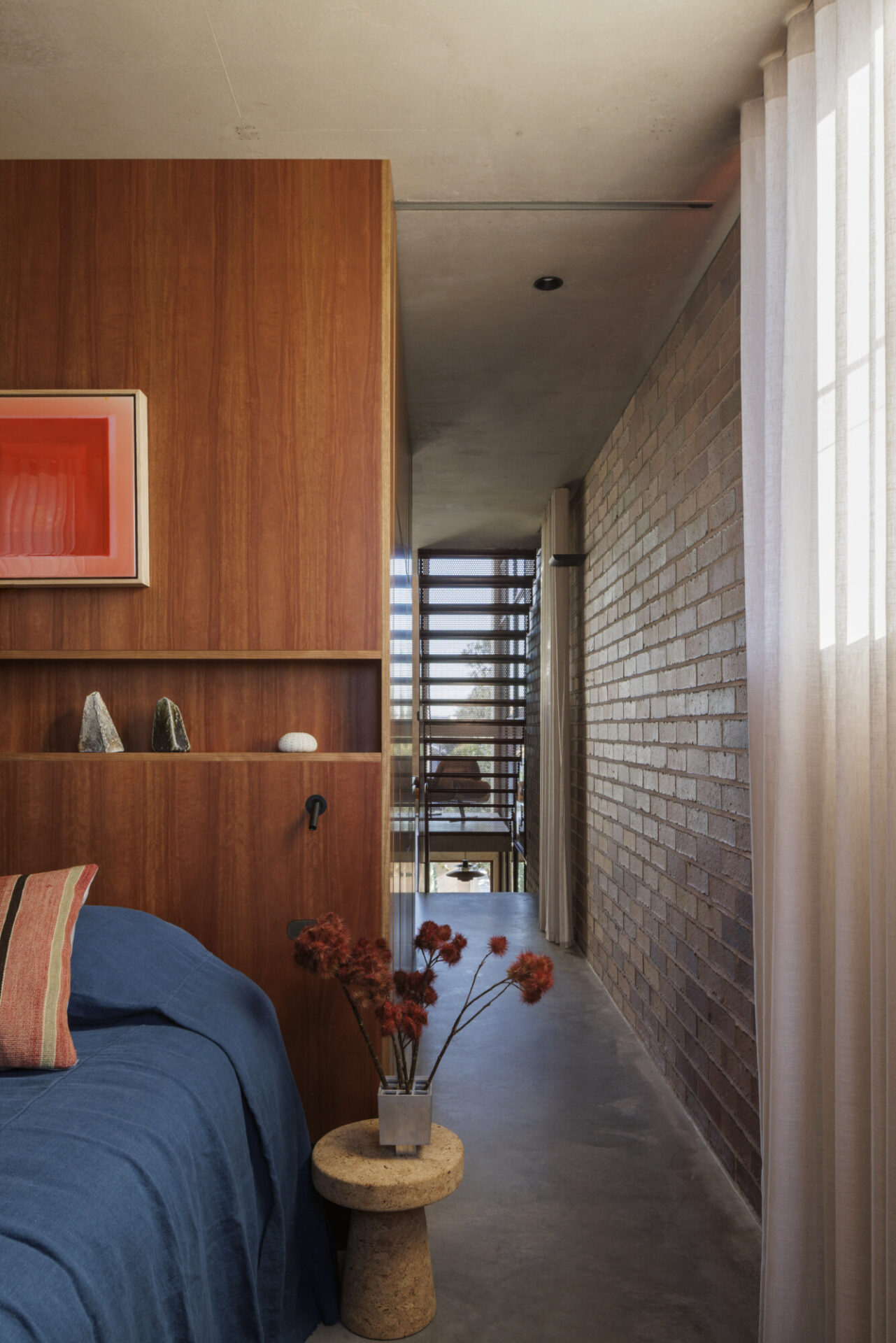
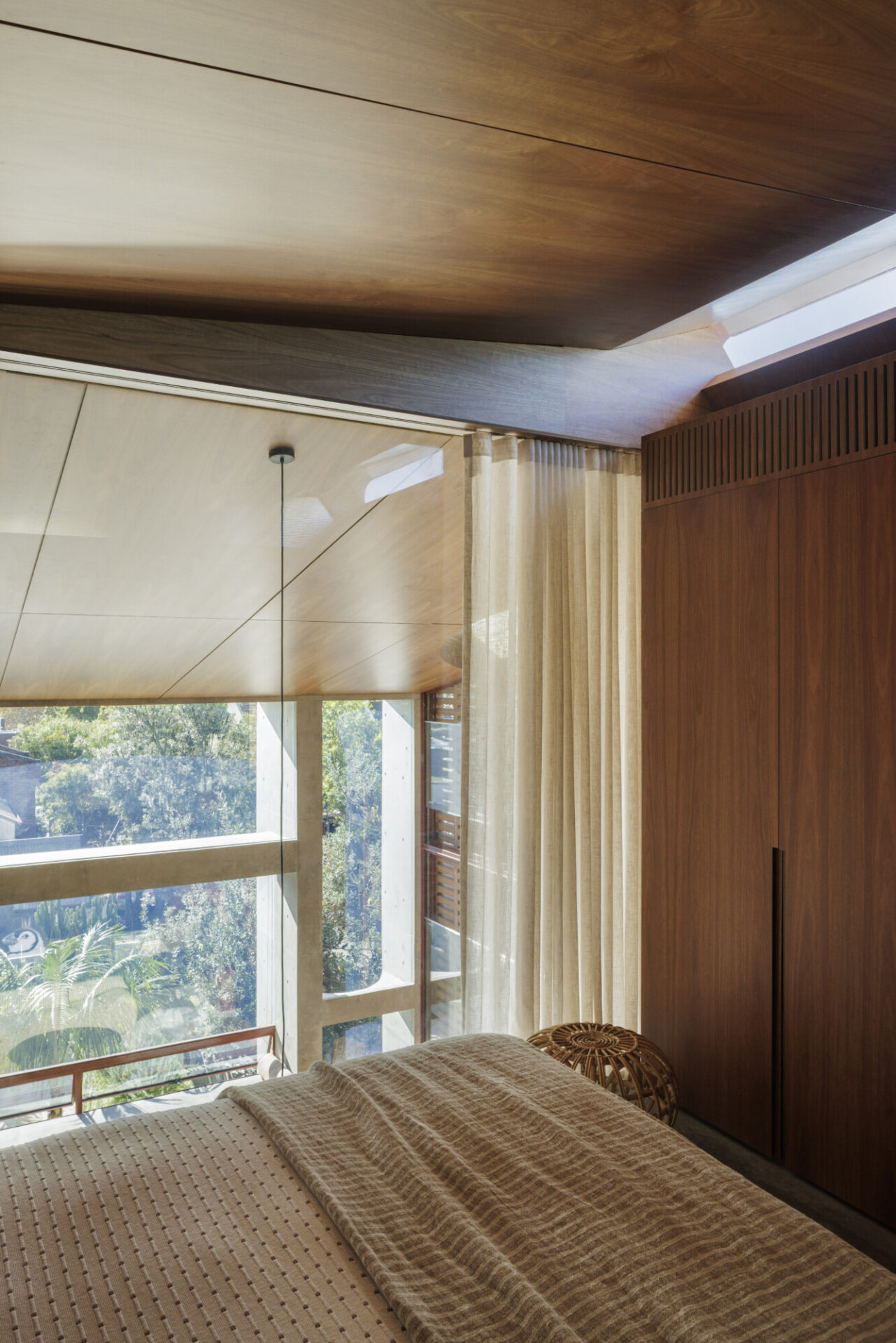
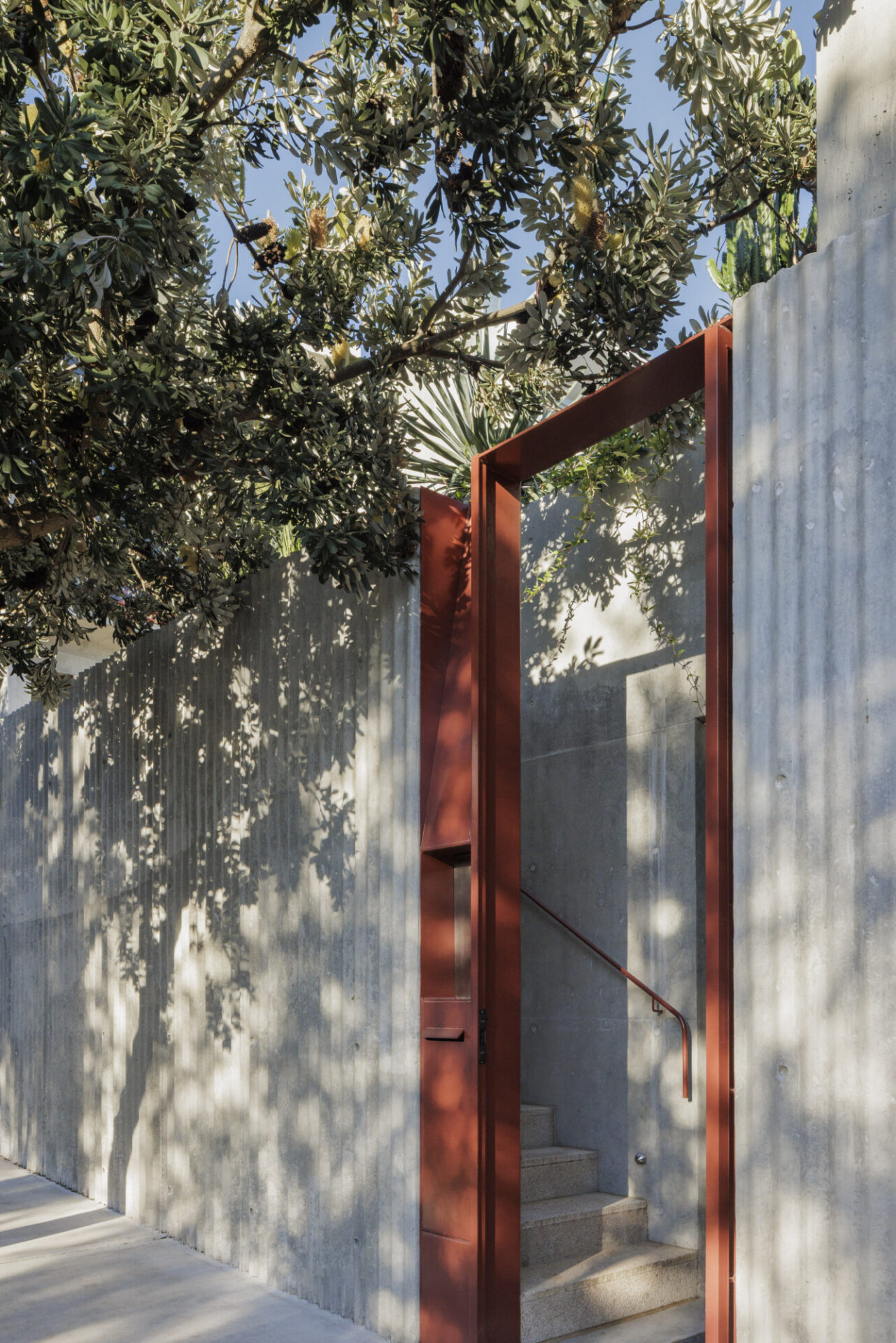
The project is a skilful combination of rich and honest materials, from brick to concrete, terracotta breeze block and metal, making the building feel layered, creating a variety of experiences to the rooms, especially in the modulation and quality of light and opportunities for ventilation. And the courtyard tree and garden are a delight!
Award for Residential Architecture - Houses (Alterations and Additions)
This house is a joyful example of how to retain and celebrate history and memory whilst adding new layers of inhabitation and meaning, where the architects have benefitted from a close collaboration with the owner/builder. This project successfully navigates the complexities of a dual-typology, of commercial and residential uses, within a tight footprint. The constraints of the two-storey heritage façade have been intelligently re-composed internally to allow for a third floor, with existing window openings adjusted and extended and external walls becoming a palimpsest of partially stripped back original brickwork and previous layers of paintwork.
The project is a skilful combination of rich and honest materials, from brick to concrete, terracotta breeze block and metal, making the building feel layered, creating a variety of experiences to the rooms, especially in the modulation and quality of light and opportunities for ventilation. And the courtyard tree and garden are a delight!
Client perspective