
Kombumerri people of Yugambeh Nation
Queensland
Gold Coast and Northern Rivers
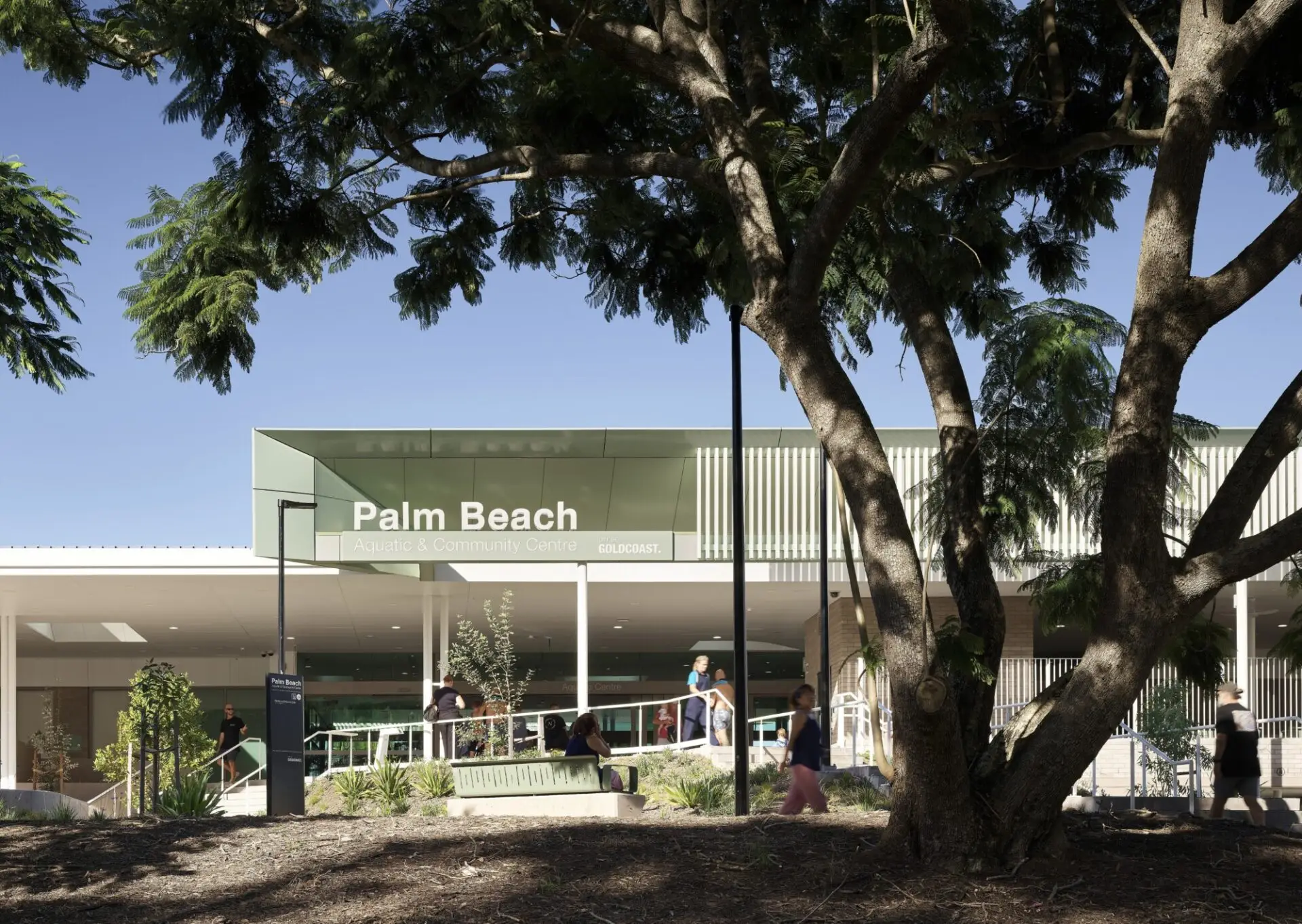
The Palm Beach Aquatic and Community Centre has been transformed into a lively, multi-use destination supporting the health, fitness and recreational needs of the southern Gold Coast community.
The redeveloped centre features a state-of-the-art aquatic complex, vibrant community centre and expanded fitness facilities, designed with a subtropical architectural approach that embraces the local climate and culture.
Originally built between 1977 and 1981 and located off Thrower Drive beside Currumbin Creek, the much-loved community hub has undergone a comprehensive redevelopment to meet the needs of a growing population. The result is a modern, inclusive venue offering spaces for people of all ages and abilities.
Upgraded facilities include four new pools alongside the existing 50-metre pool, as well as a new community centre with flexible spaces, a crèche and café.
Designed and Delivered by Liquid Blu and COX Architecture in association for the City of Gold Coast.
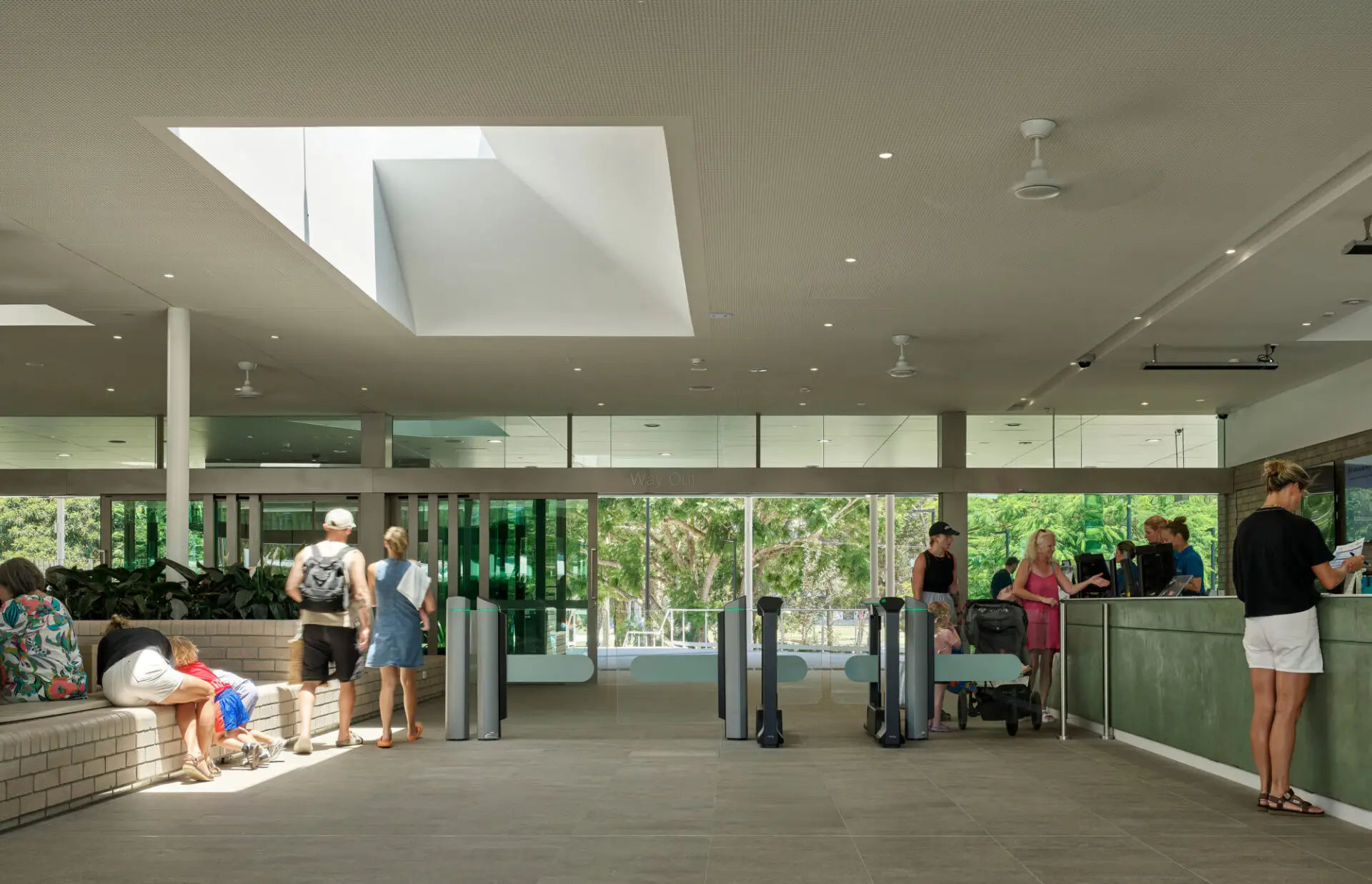
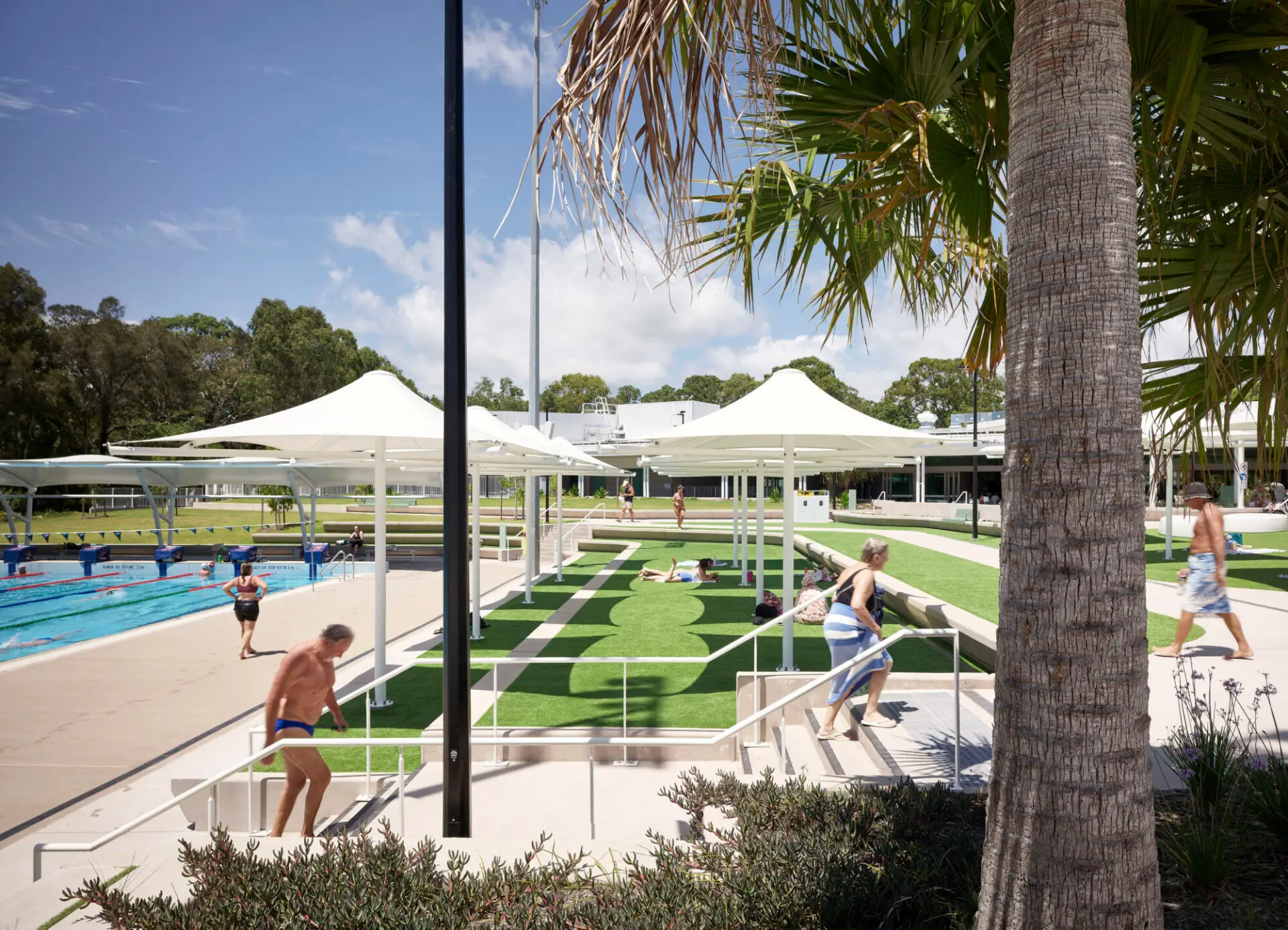
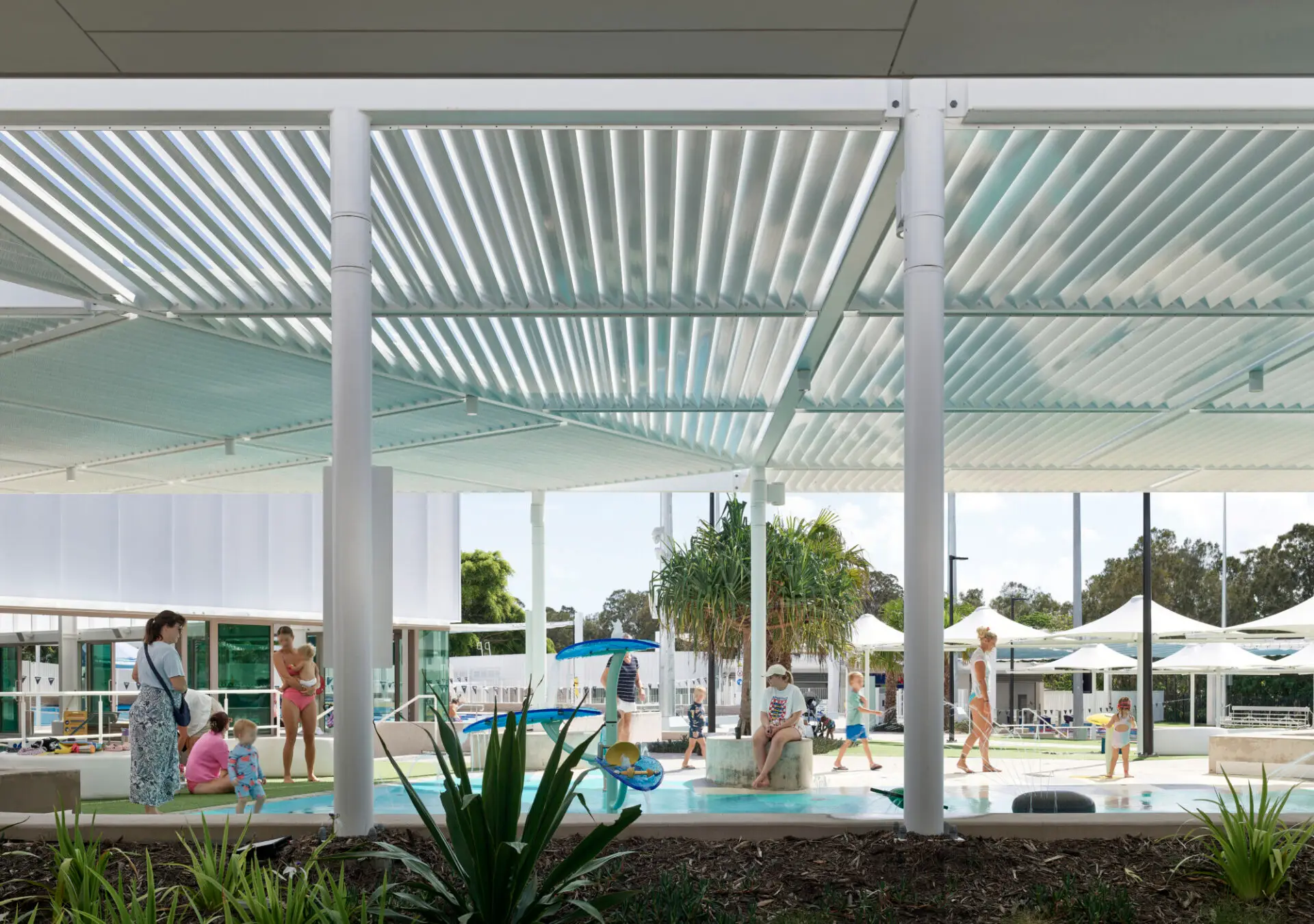
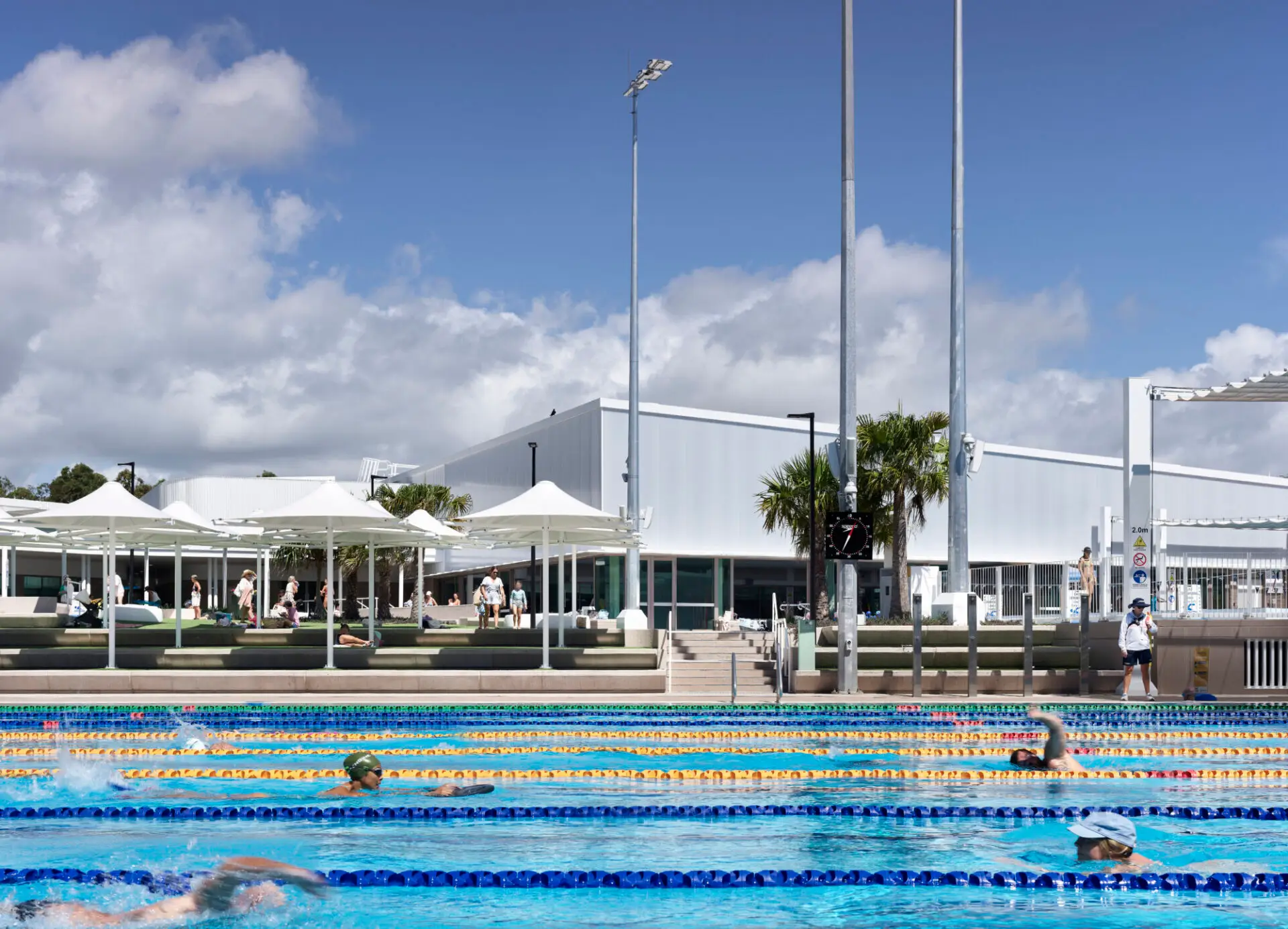
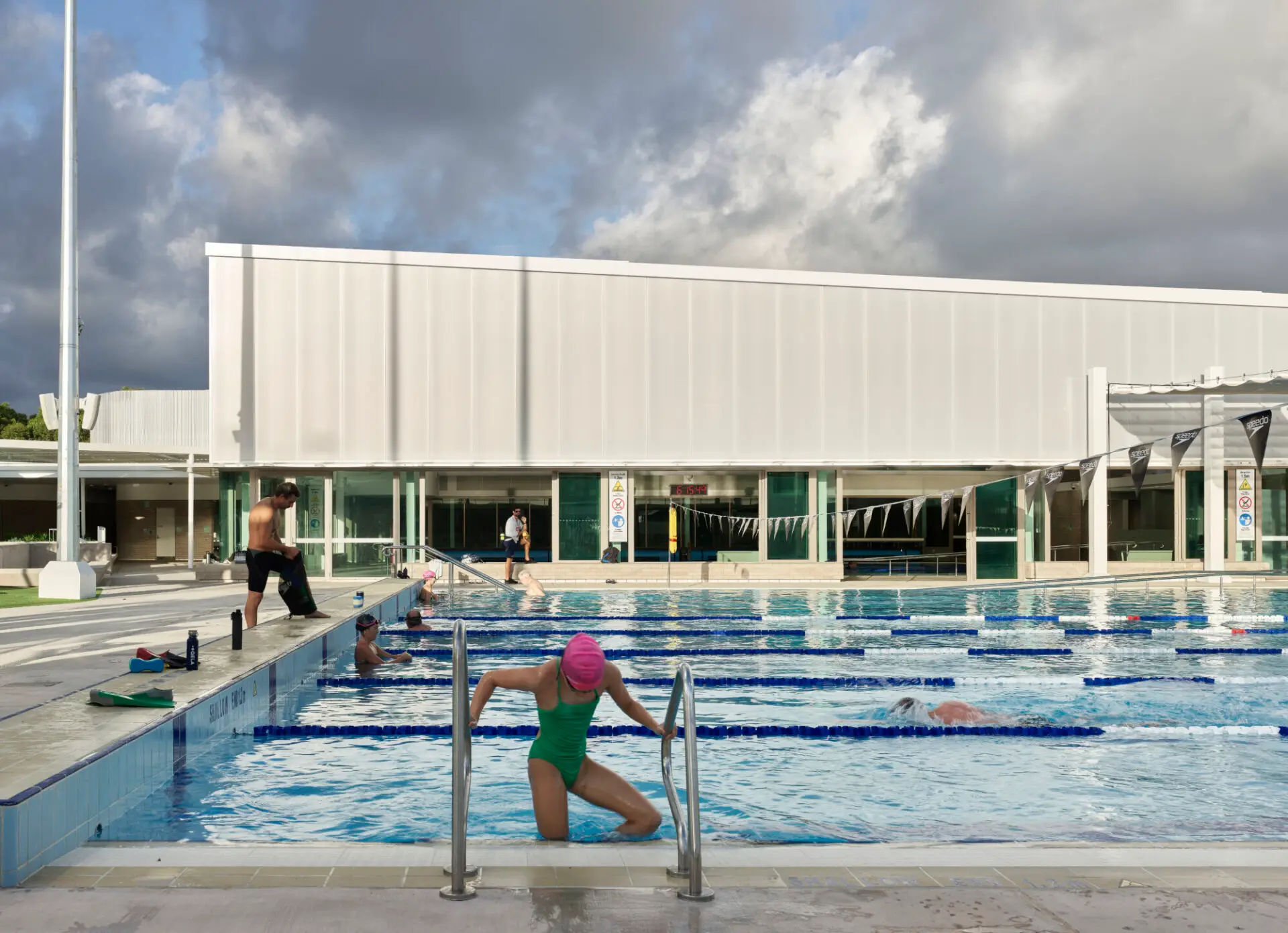
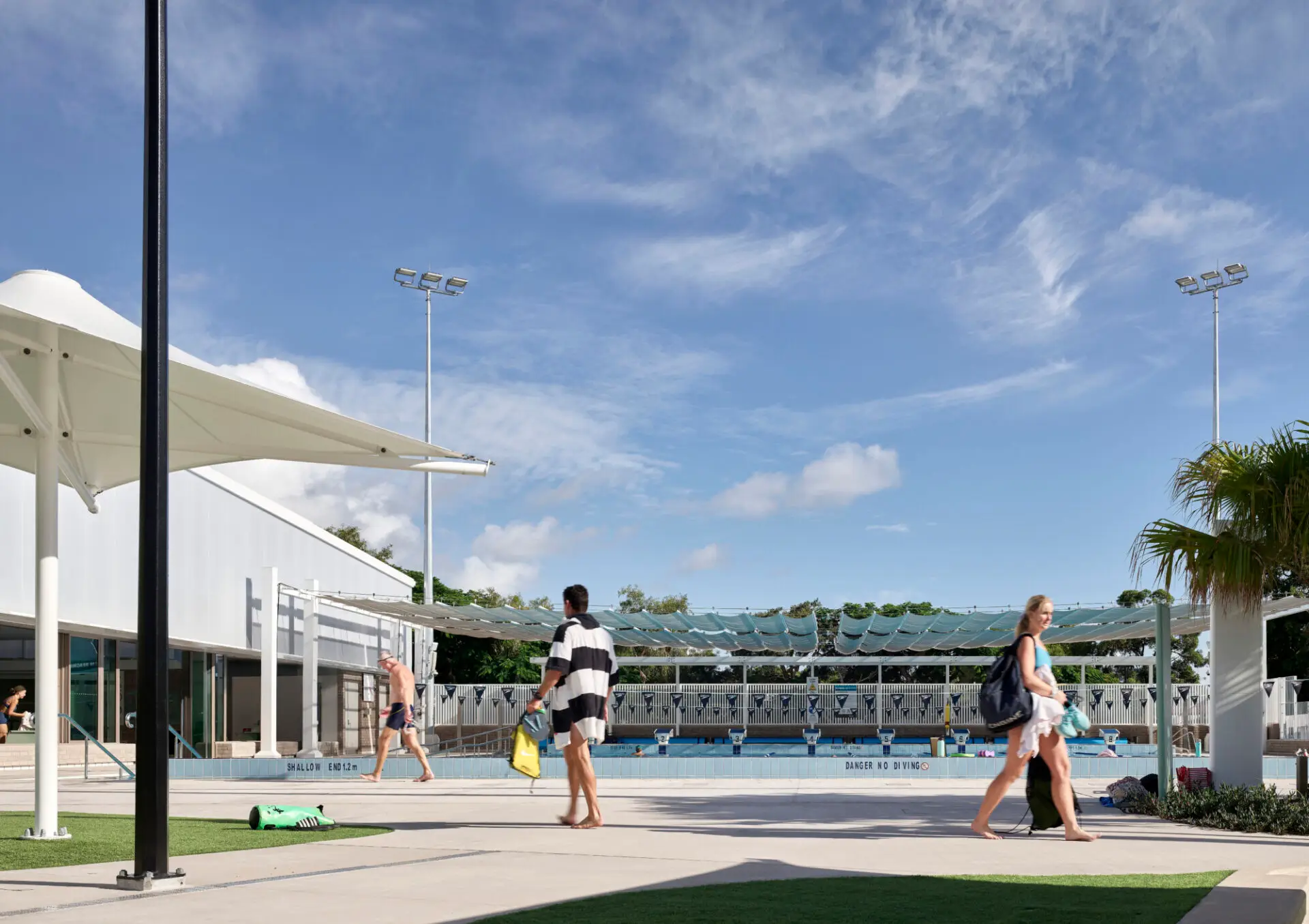
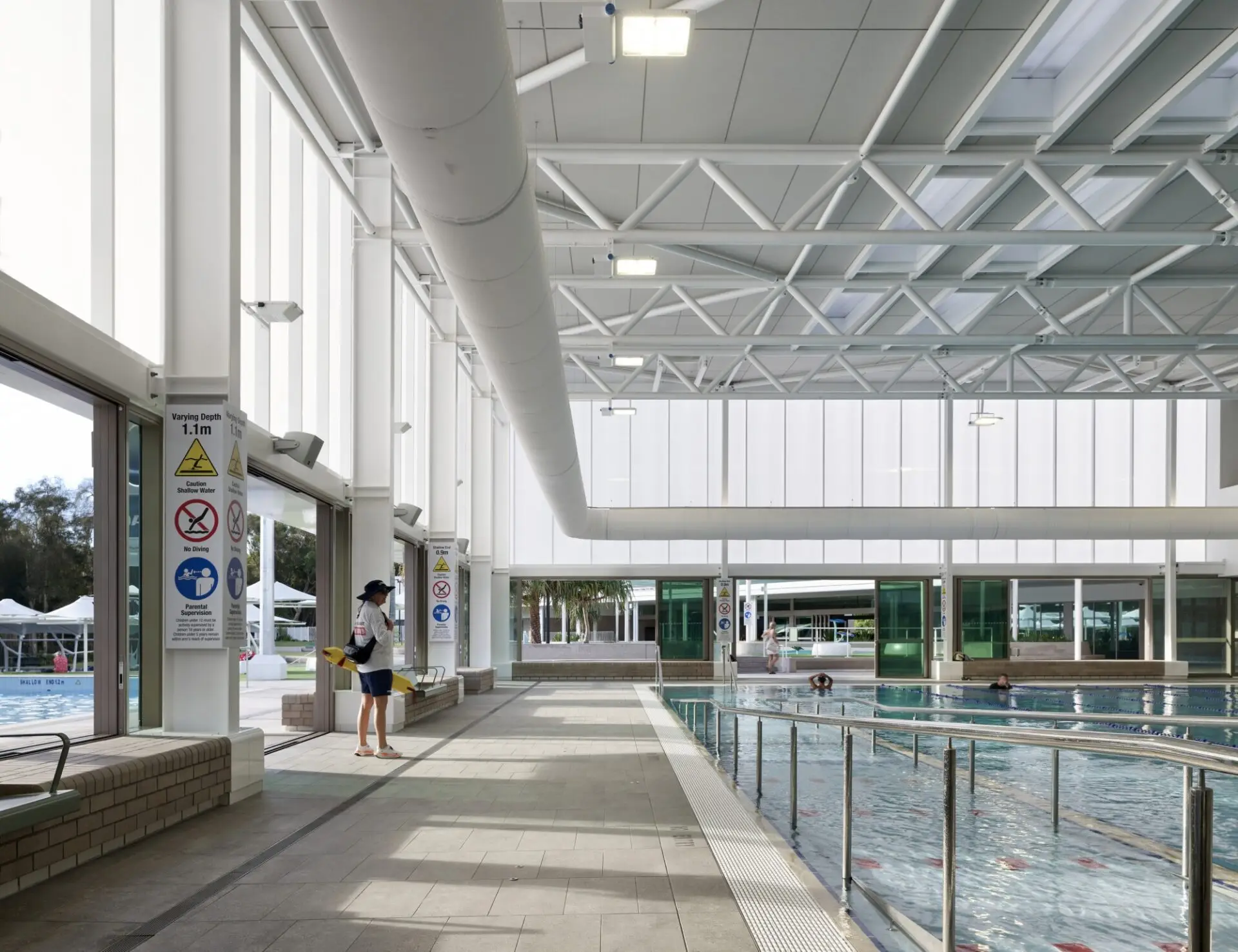
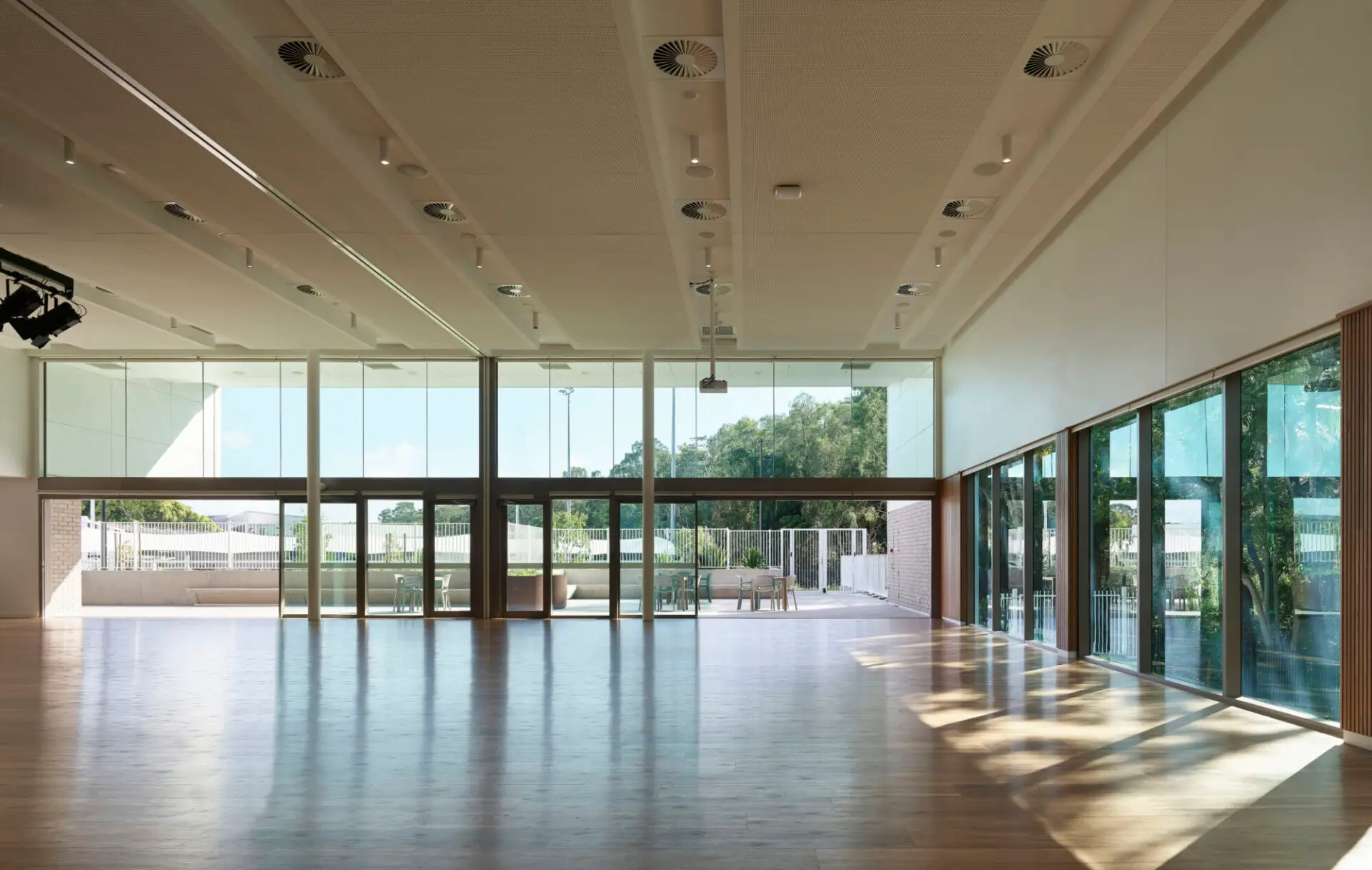
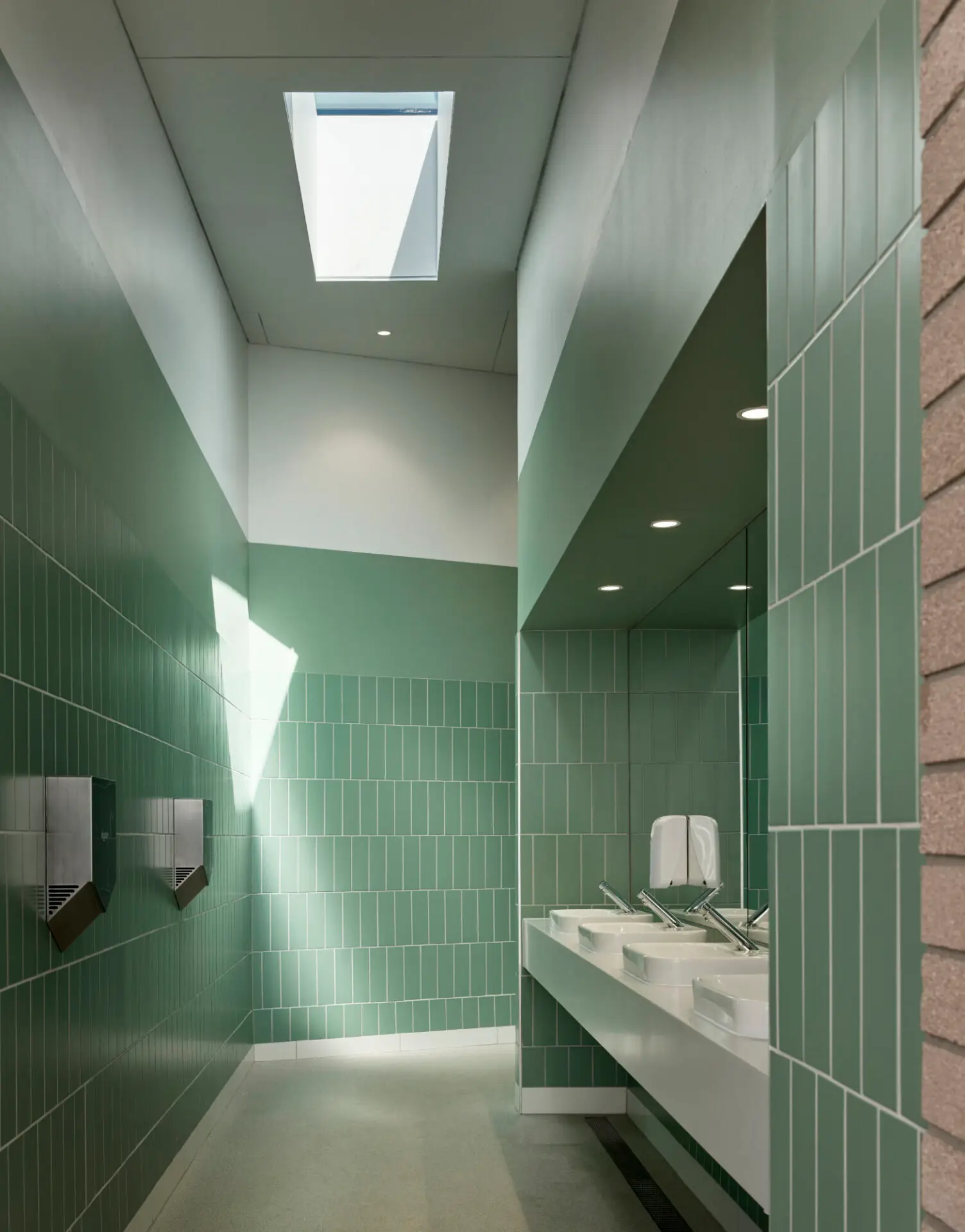
The Palm Beach Aquatic Centre is a case study in how good architecture moves beyond its specific brief and may serve a much more civic role in the community in which it is imbedded. So much more than a series of pools, the centre has become a key community gathering space by prioritising accessibility, sensitive siting, and flexible covered spaces to cater for a vast variety of functions and user groups. The architects have managed this complexity generated by in a way that feels relaxed and unforced, giving the complex a sense of welcoming that has seen its user numbers far exceed every expectation set by initial statistics modelling. Moving through the building there is a sense of ambiguity between internal and external spaces created by clever detailing of quality materials, and the celebration of key existing landscape views.
The FDG Stanley Award for Public Architecture
At the edge of Currumbin Creek, where wetlands meet the suburban fringe, the Palm Beach Aquatic and Community Centre responds with sensitivity to its setting. Its open, transparent form draws the surrounding wetlands, parklands and waterways into the experience of the building, while an elevated public podium creates shaded verandahs and expansive views. Endemic planting and a strong horizontal expression, referencing Palm Beach’s modernist heritage, anchor the centre within its coastal context.
The centre accommodates a broad and carefully integrated program, including indoor and outdoor pools, learn-to-swim facilities, children’s water play areas, fitness spaces, a multipurpose hall, dance studio, crèche and café. Accessibility is exemplary, exceeding Australian standards through Changing Places certification, intuitive wayfinding and a genuine commitment to inclusive participation. The jury noted a quality of welcome that felt effortless, the result of thoughtful planning and a genuine commitment to equitable participation for all.
Sustainability is embedded in the building’s operation through heat pumps, heat recovery systems, advanced water filtration and natural ventilation, reducing energy and water consumption.
Visiting mid-week, the jury observed a facility already operating beyond forecast patronage, animated by people of all ages. This is a project that has quickly become an essential piece of community infrastructure, demonstrating how thoughtful architecture can foster connection, wellbeing and a strong sense of community ownership.
Commendation for Public Architecture
The Palm Beach Aquatic Centre is a case study in how good architecture moves beyond its specific brief and may serve a much more civic role in the community in which it is imbedded. So much more than a series of pools, the centre has become a key community gathering space by prioritising accessibility, sensitive siting, and flexible covered spaces to cater for a vast variety of functions and user groups. The architects have managed this complexity generated by in a way that feels relaxed and unforced, giving the complex a sense of welcoming that has seen its user numbers far exceed every expectation set by initial statistics modelling. Moving through the building there is a sense of ambiguity between internal and external spaces created by clever detailing of quality materials, and the celebration of key existing landscape views.
Sustainability shortlist
The FDG Stanley Award for Public Architecture
At the edge of Currumbin Creek, where wetlands meet the suburban fringe, the Palm Beach Aquatic and Community Centre responds with sensitivity to its setting. Its open, transparent form draws the surrounding wetlands, parklands and waterways into the experience of the building, while an elevated public podium creates shaded verandahs and expansive views. Endemic planting and a strong horizontal expression, referencing Palm Beach’s modernist heritage, anchor the centre within its coastal context.
The centre accommodates a broad and carefully integrated program, including indoor and outdoor pools, learn-to-swim facilities, children’s water play areas, fitness spaces, a multipurpose hall, dance studio, crèche and café. Accessibility is exemplary, exceeding Australian standards through Changing Places certification, intuitive wayfinding and a genuine commitment to inclusive participation. The jury noted a quality of welcome that felt effortless, the result of thoughtful planning and a genuine commitment to equitable participation for all.
Sustainability is embedded in the building’s operation through heat pumps, heat recovery systems, advanced water filtration and natural ventilation, reducing energy and water consumption.
Visiting mid-week, the jury observed a facility already operating beyond forecast patronage, animated by people of all ages. This is a project that has quickly become an essential piece of community infrastructure, demonstrating how thoughtful architecture can foster connection, wellbeing and a strong sense of community ownership.
The Palm Beach Aquatic and Community Centre redevelopment prioritises social connection and community engagement, providing accessible, multipurpose spaces that meet diverse needs for now and future generations. Since opening on 28 October 2024, the centre has welcomed 404,624 visitors, 3,689 fitness members, and 1,880 Learn-to-Swim enrolments, achieving $3,192,376 in revenue – well above the forecast of 250,000 visitations and $1.5 million. Awarded Gold status on the Royal Life Saving QLD Platinum Pools program, the centre strengthens its role as a welcoming, inclusive hub for social interaction and community development in the southern Gold Coast.
Client perspective
Yuri Dillon, Project Director (QLD Registration Number 3576)
Richard Coulson, Project Director (QLD Registration Number 3039)
Ali Farmer, Associate Director (QLD Registration Number 4629)
Jared Kennedy, Architect (QLD Registration Number 5886)
James Ryan, Architect (QLD Registration Number 6014)
Cecile Viollet, Senior Interior Designer
Belinda Douglas, Senior Associate (QLD Registration Number 3890)
Natalie Scicluna, Senior Associate (QLD Registration Number 5246)
Liquid Blu, Architecture
Obvious Access, Accessibility
Renzo Tonin, Acoustic Consultant
SCP, Aquatic Structure & Hydraulic
IAS, Arborist
Byrne Consultants, BIM
East Coast Approvals, Certifier
ACOR, Civil Consultant
28 South, Environmental
Multitech, Electrical / Mechanical / Hydraulic
Stantec, ESD Consultant
FSDA, Food & Beverage
Butler Partners, Geotech
Novofit, Gym Equipment
Urbis, Landscape Consultant
Multitech, ICT / Fire / Security / VT
Turner & Townsend, Quantity Surveyor
Bligh Tanner, Structural Engineer
TTM, Traffic
Pool Star, Water Safety
Goldi, Wayfinding & Signage
MEL Consultants, Wind Engineering Consultants