
Ngunnawal people
Australian Capital Territory
The CEW Bean Building & Research Centre expands the Australian War Memorial’s archival and research capacity, strengthening the precinct’s civic presence while safeguarding the National Collection. Designed as an extension to an existing building, the project integrates public research spaces, conservation laboratories and workplaces within a carefully calibrated architectural response.
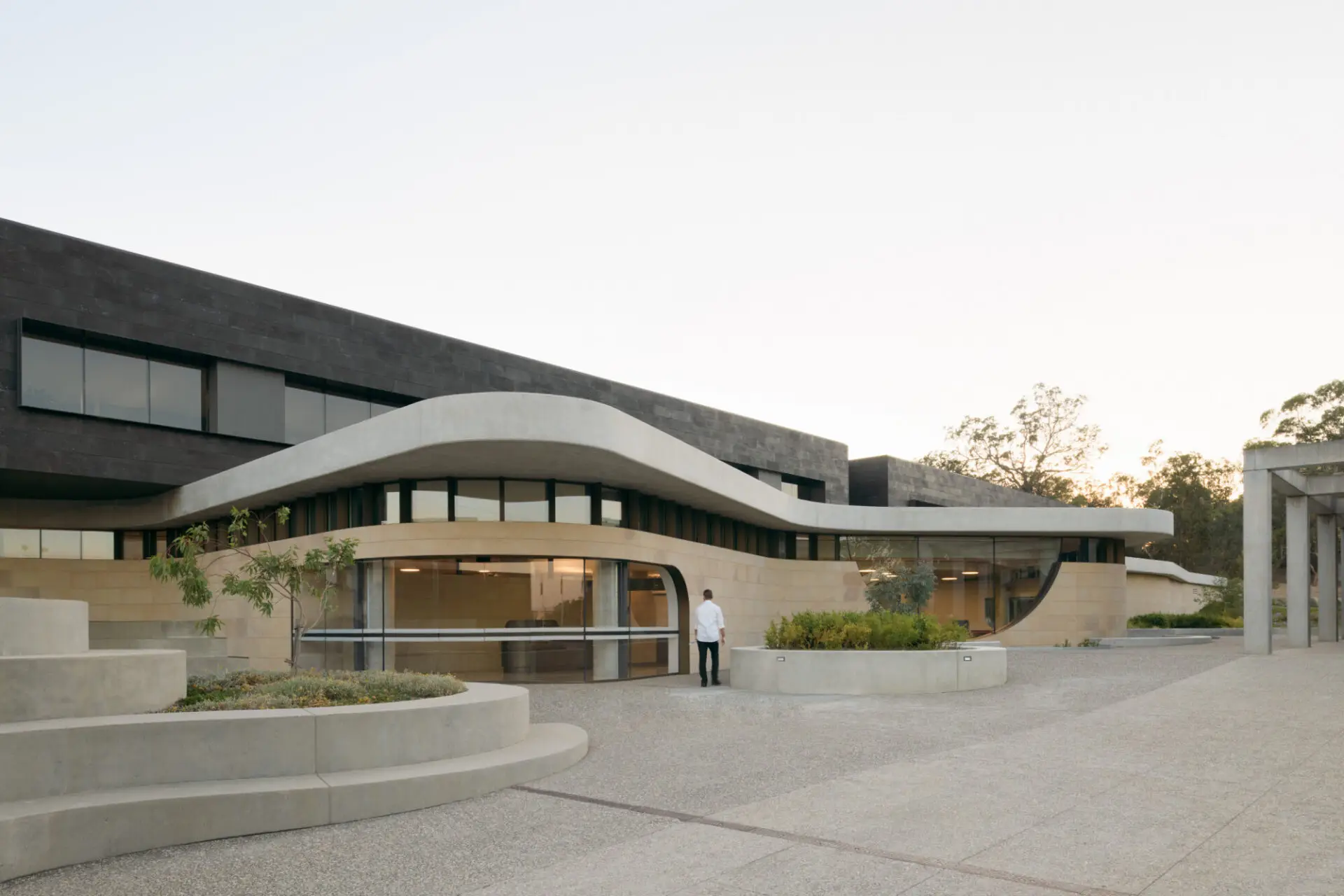
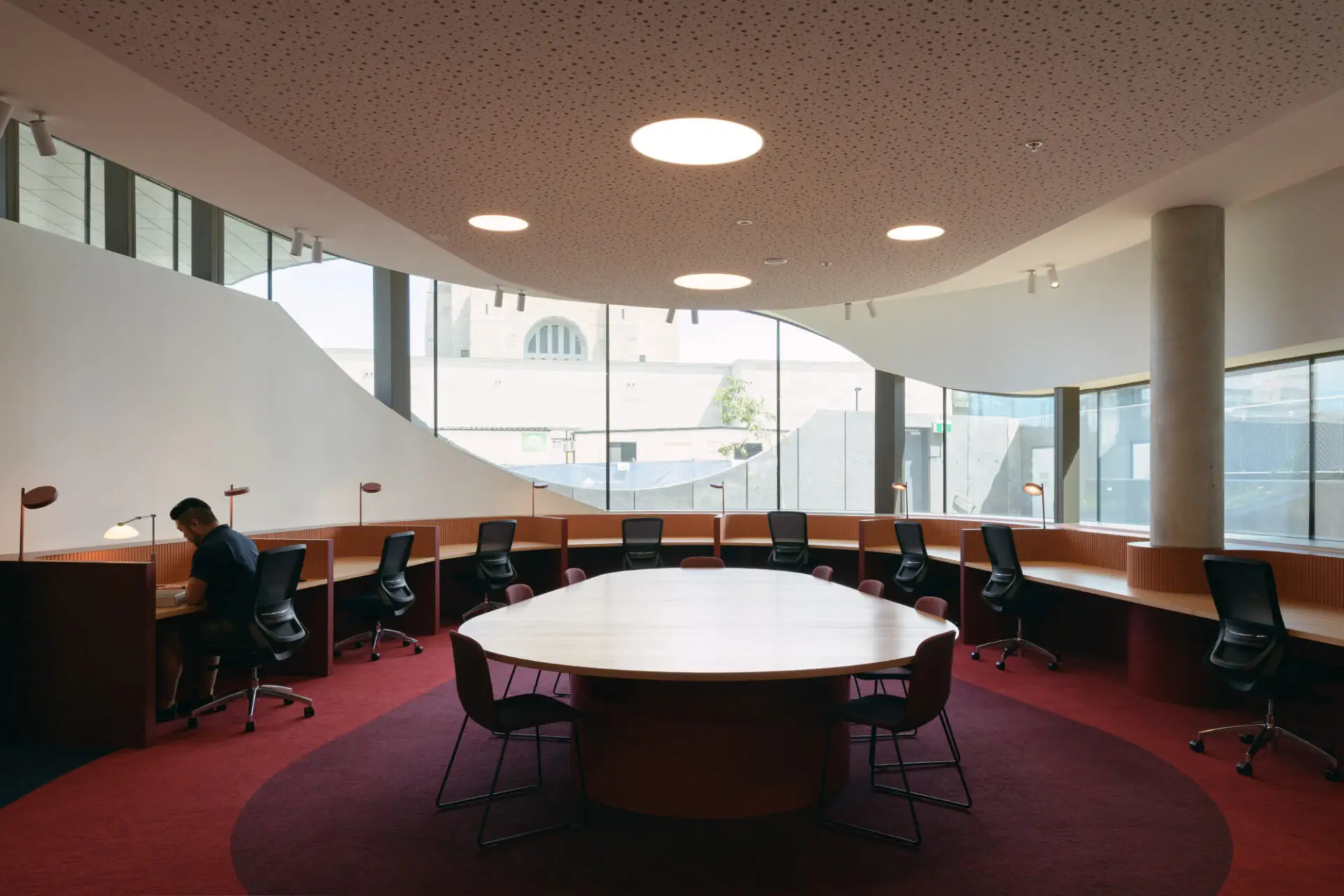
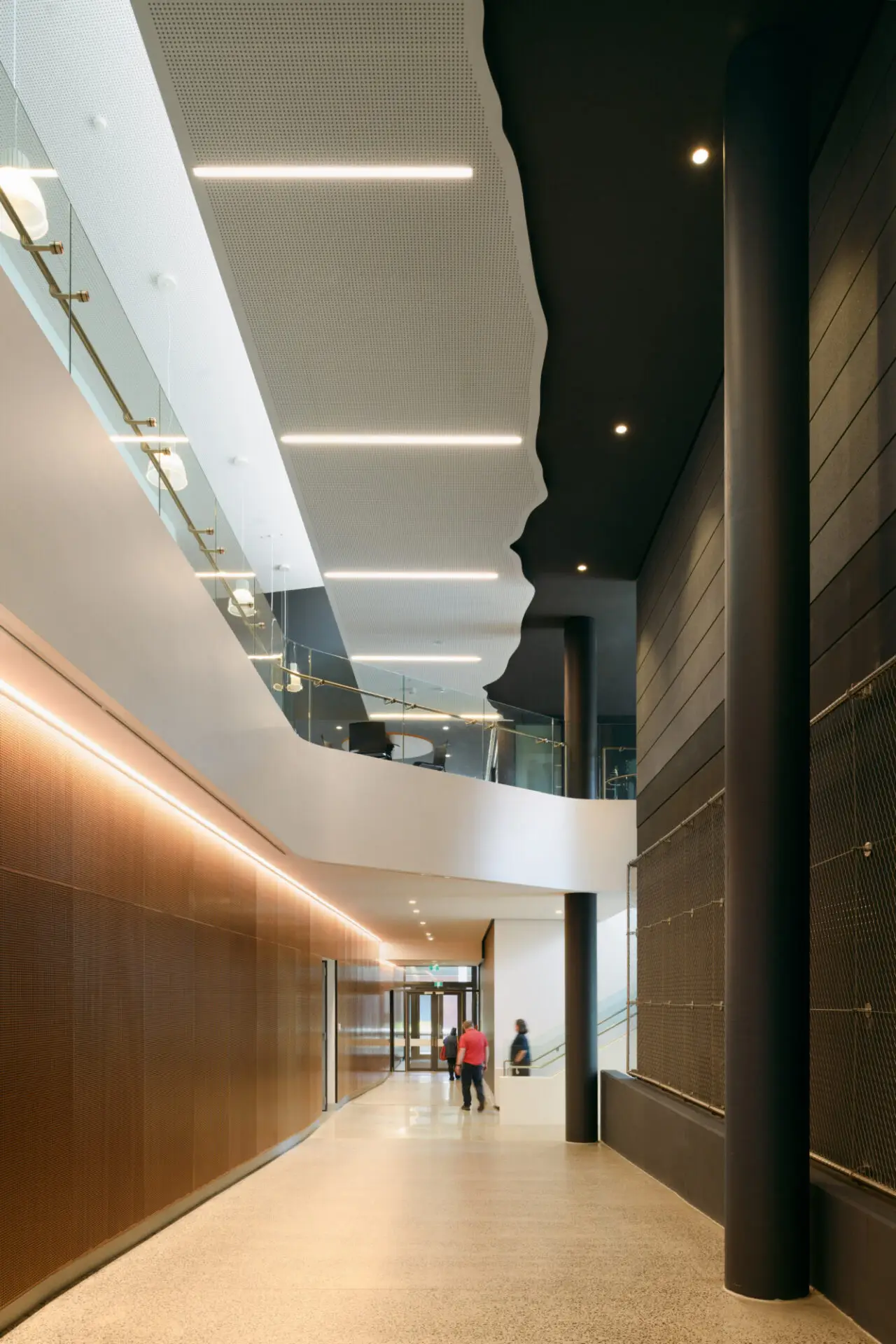
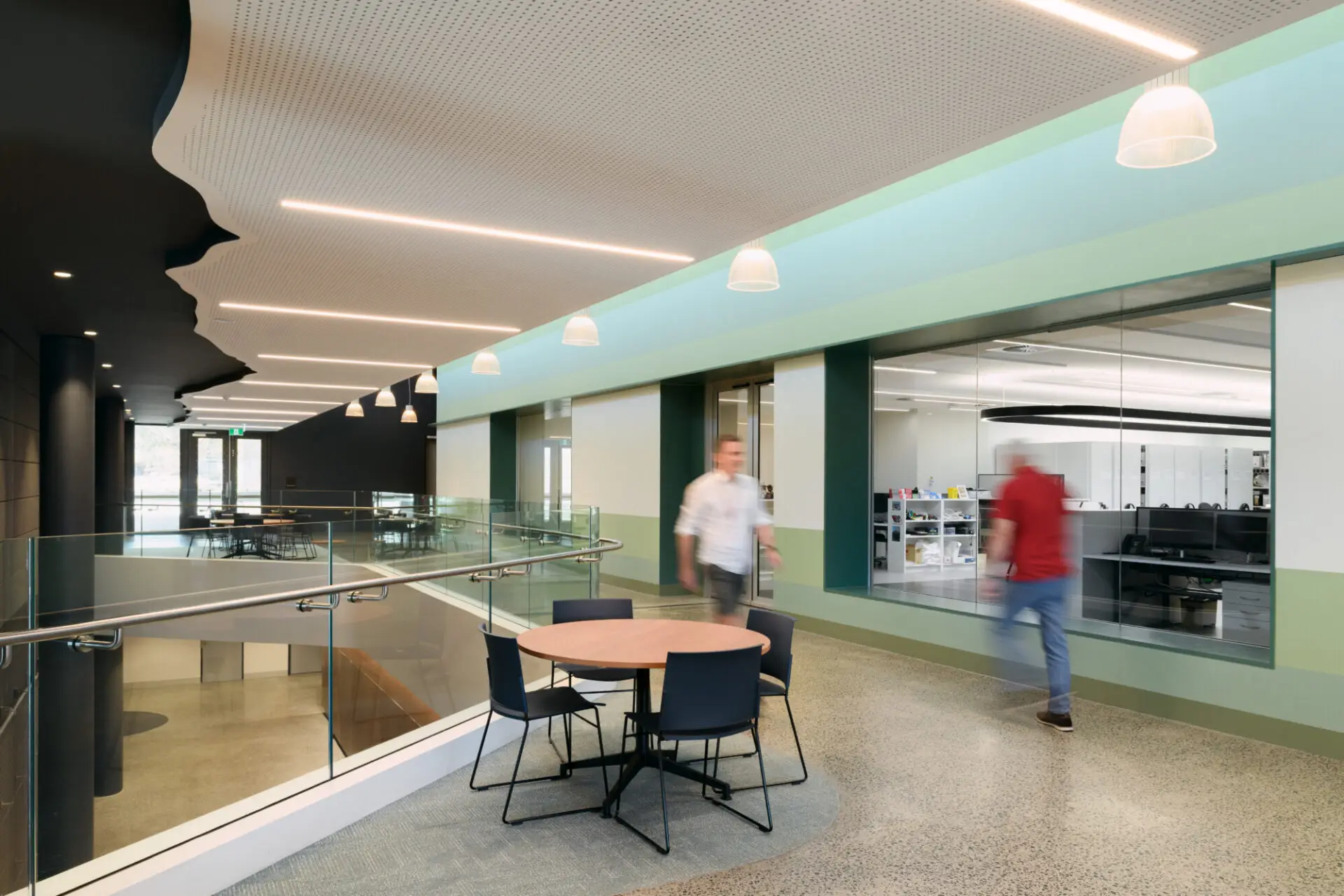
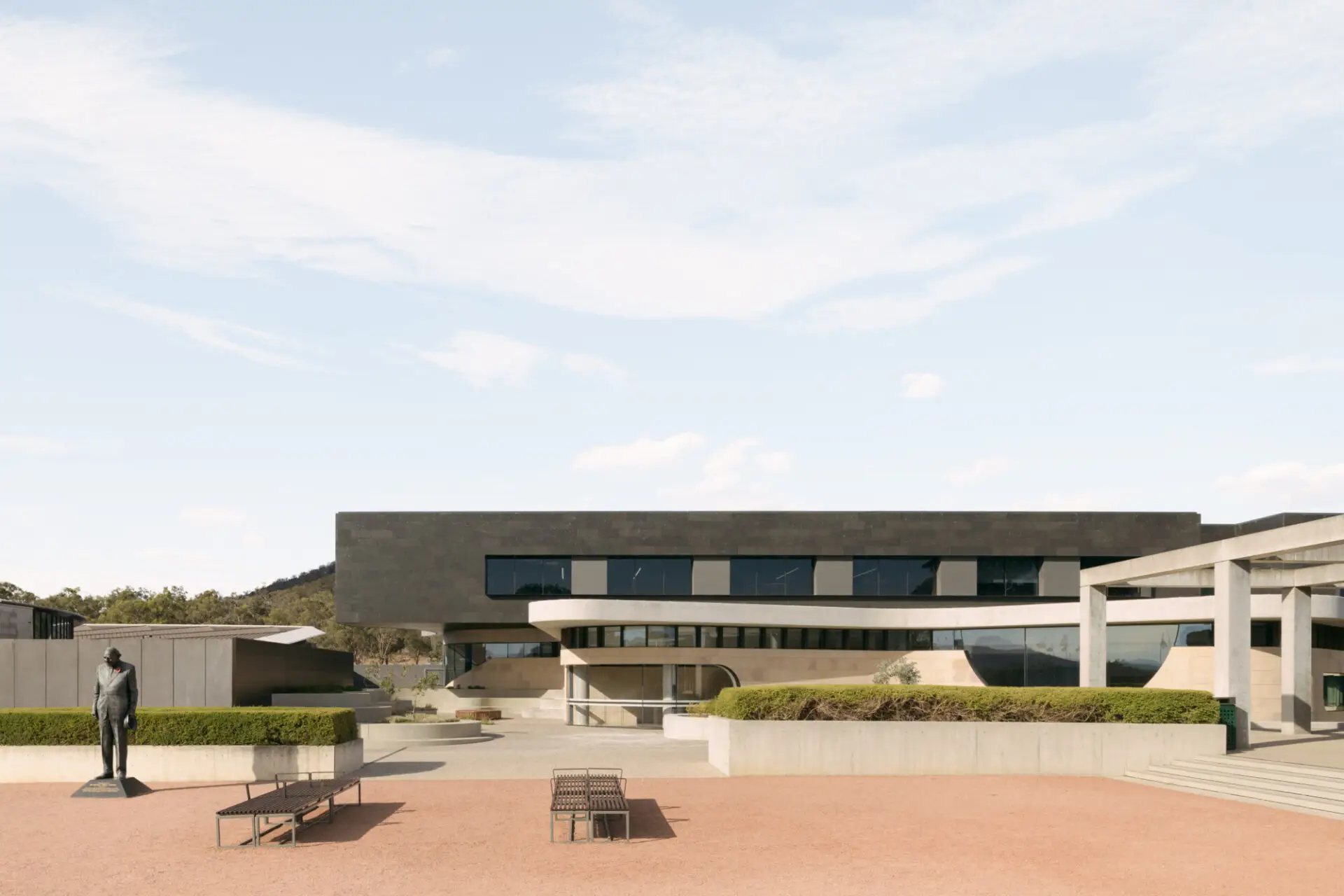
A public forecourt and Research Centre create a welcoming threshold for visitors, historians and families seeking access to service records. Internally, warm, stone-lined reading rooms and light-filled workspaces dignify the act of research, balancing accessibility with the protection of irreplaceable material. Externally, the building’s massing preserves significant view lines to the Hall of Memory Dome and embeds new forms within the established Memorial setting.
Landscape and infrastructure are seamlessly integrated, including a precinct-wide geothermal energy system that significantly reduces carbon emissions. Together, architecture, interiors and urban design position research and remembrance at the heart of a contemporary, sustainable civic institution.

Award for Public Architectue
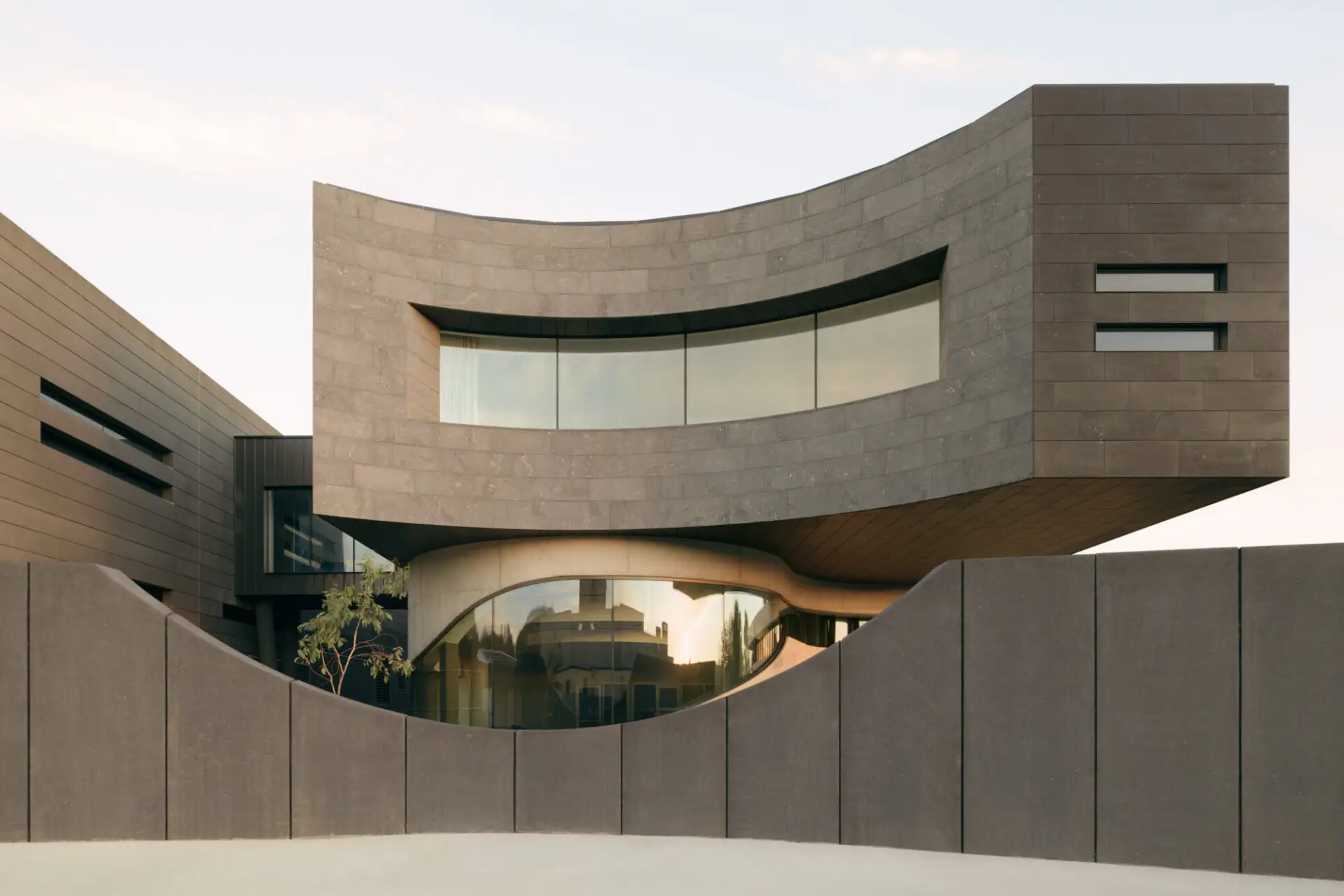
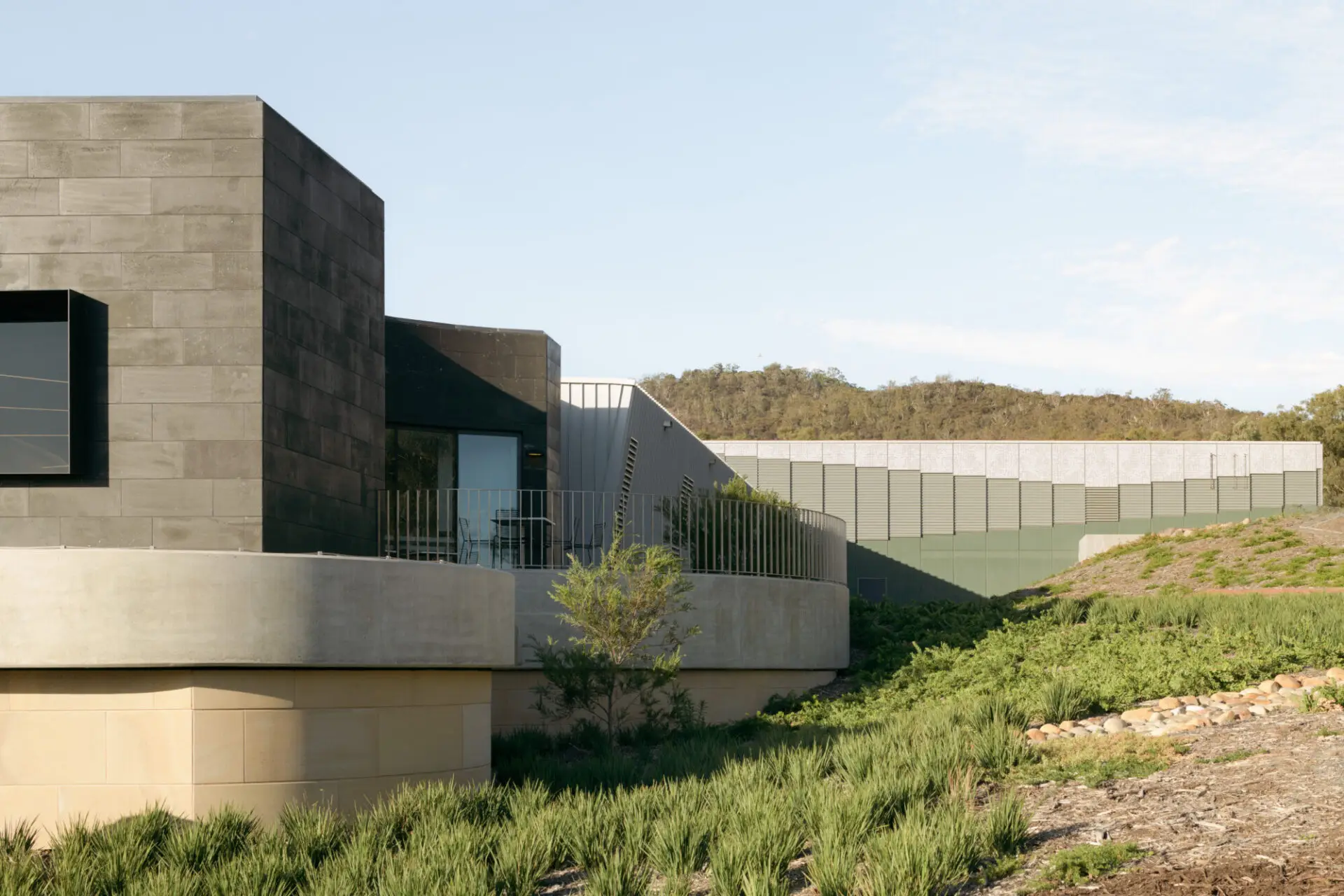
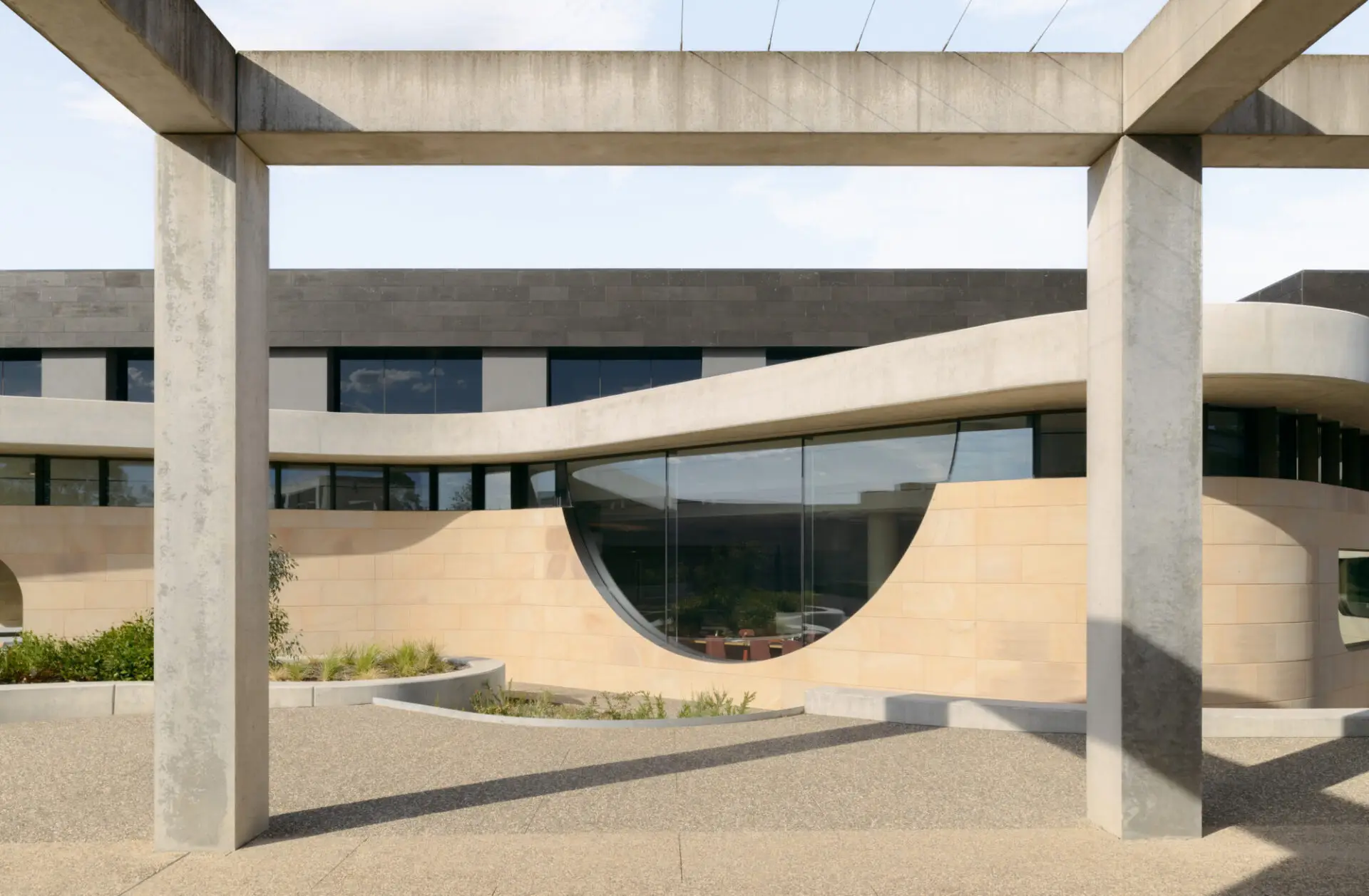
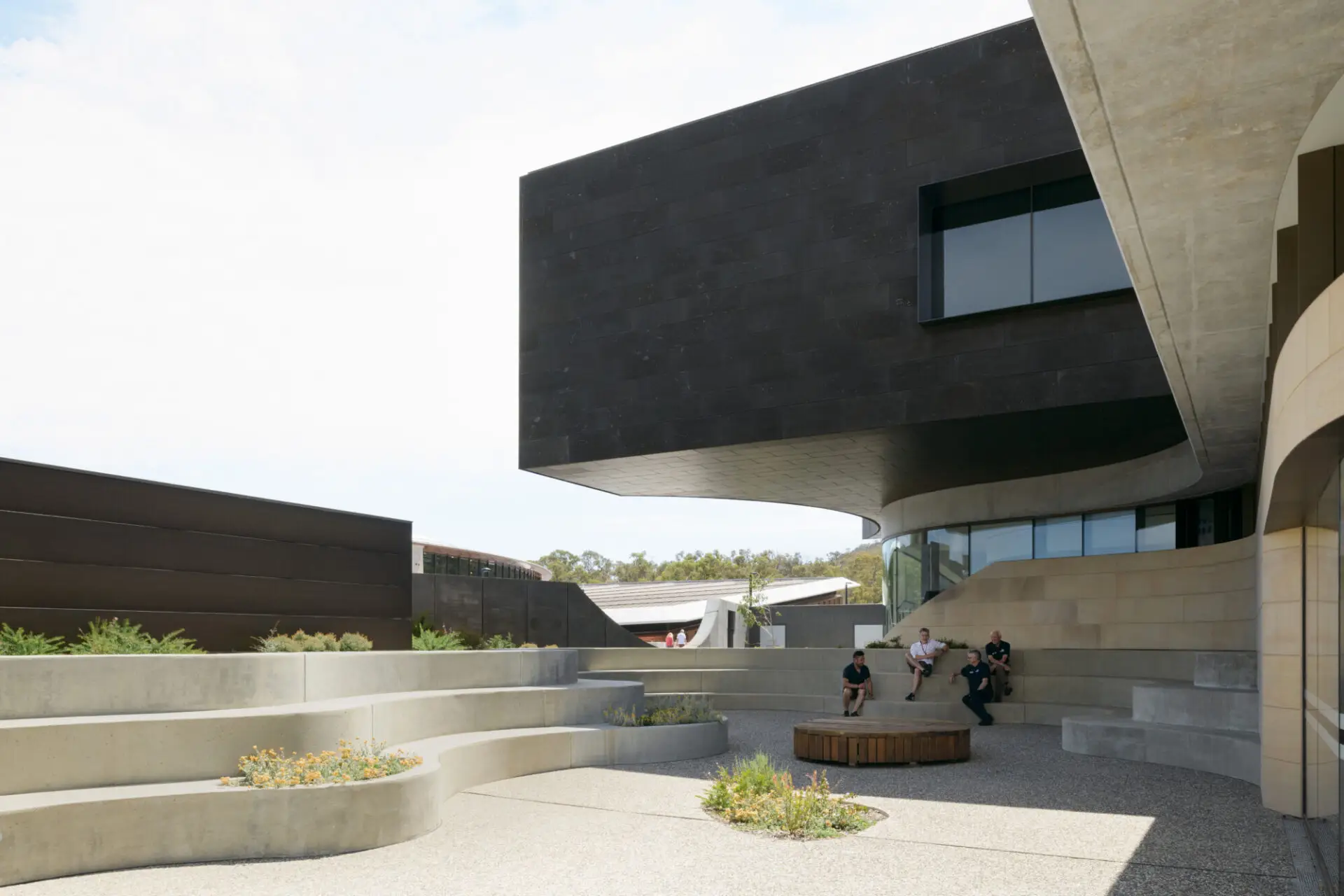
The CEW Bean Building and Research Centre speaks in two architectural languages, and Lyons has calibrated each with care. Above, a rectilinear bluestone volume references the tonal restraint of the existing precast concrete DCM building — disciplined, recessive, respectful. Below, a curvilinear sandstone form embraces a generous new forecourt, its glazing motif a quiet echo of the Hall of Memory dome beyond. It is at ground level that the building makes its civic offer — a welcoming threshold for researchers, families and historians arriving to engage with the National Collection.
A demanding brief — archival storage, conservation, digitisation, research and contemporary workplace — is resolved without strain, anchored by a warm, light-filled reading room of genuine quality. Less visible but equally significant is the building’s role as operational backbone of the entire precinct, folding a precinct-wide geothermal system — the largest closed-loop installation in the Southern Hemisphere — substations and delivery functions into the architecture without compromise.
Award for Public Architectue
The CEW Bean Building and Research Centre speaks in two architectural languages, and Lyons has calibrated each with care. Above, a rectilinear bluestone volume references the tonal restraint of the existing precast concrete DCM building — disciplined, recessive, respectful. Below, a curvilinear sandstone form embraces a generous new forecourt, its glazing motif a quiet echo of the Hall of Memory dome beyond. It is at ground level that the building makes its civic offer — a welcoming threshold for researchers, families and historians arriving to engage with the National Collection.
A demanding brief — archival storage, conservation, digitisation, research and contemporary workplace — is resolved without strain, anchored by a warm, light-filled reading room of genuine quality. Less visible but equally significant is the building’s role as operational backbone of the entire precinct, folding a precinct-wide geothermal system — the largest closed-loop installation in the Southern Hemisphere — substations and delivery functions into the architecture without compromise.
The CEW Bean Research Centre has delivered tangible, daily benefits for staff, researchers, and the collection itself. The extension and refurbishment have markedly improved efficiency across access, assessment, conservation, and digitisation, enabling the Memorial’s collection to be used as originally intended. Staff report that spaces are well planned, functional, and intuitive supporting improved workflows and significantly elevating staff wellbeing. Public response to the Charles Bean Research Centre has been strongly positive, reinforcing its role as a welcoming, fit for purpose research environment. The project has successfully aligned operational outcomes with long term stewardship and our public access objectives.
Client perspective
James Wilson, Project Director / Design Architect
Fiona Lew, Project Architect
Tess O’Meara, Design Architect
Alex McCabe, Technical Lead
Kate Woodman, Architect
James Francis, Site Architect
Laura Piccinno, Site Architect
Stephanie Lancuba, Architect
Kon Kotzapavlidis, Technical Architect
NDY, Services Engineers
NDY, ESD Consultant
TTW, Civil / Structural Engineers
Prism, Facade Engineers
WT Partnership, Quantity Surveyor
Lucid, Fire Engineering
AECOM, ITC & Security
Philip Chun, BCA / DDA
Turf Design Studio, Landscape Architect