
Celebrate diverse agency
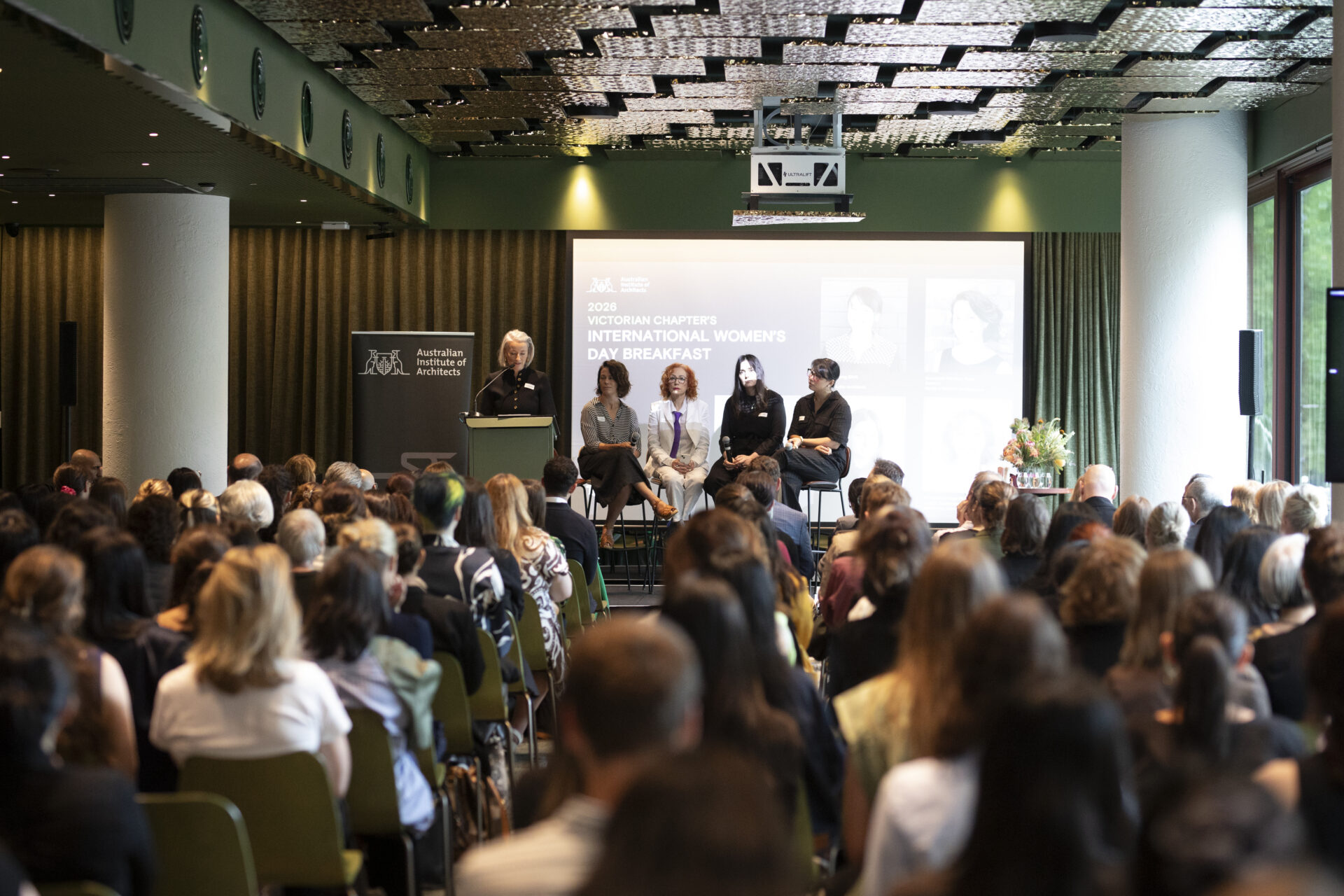
The tradition of celebrating International Women’s Day hosted by the Victorian Chapter of the Australian Institute of Architects has held steadfast the commitment to acknowledge progress, reflect on data and share stories. For the 2026 breakfast event at Hyde Melbourne, the future for Women in Architecture was laden with optimism and joy when we celebrate women’s successes and support each other as a collective. As visible leaders in their respective practices, teaching, advocacy and family life, the speakers spoke with humour and honesty.
Monique Woodward, co-founder and Director of WOWOWA, opened the discussion as moderator, energising the room by congratulating our industry’s matriarchs for creating generosity in Victorian practices. Honouring that we are “standing on the shoulders of giants here today”, referring to the exceptional women in our industry, she promoted the themes of transparency, openness, collaboration, and mentoring the next generation.
Suzannah Waldron, Director of Searle x Waldron Architecture, reflected on the practice’s recent recognition, including the AIA Victorian Architecture Medal, and the realities of leading a small, female-led studio. She spoke about the importance of challenging entrenched norms within the profession, noting that we need to “shift the idea of architecture as only hard work, to architecture as rewarding work.” She spoke of her leadership approach being grounded in “sharing the load of decision making and having a collaborative spirit” - inviting us to reflect on the value of women as decisions makers in civic architecture.
Dr Yolanda Vega, educator, author and advocate, highlighted the realities of the patriarchy's power, using data to challenge the status quo and androcentric narratives. Vega stated, “Today, women have more power than ever before. It is time for us to wake up and realise how our power can change the world”. Vega has voiced sex-based inequality for decades, and her achievements included founding Australia’s first national Women’s Chamber of Commerce and Industry; leading the first national Australian research on self employed women; representing Australia at the first Women’s APEC Summit, chaired by Hillary Clinton; completing a doctoral thesis in International Women’s Rights Law; and publishing her book Disbanding the Patriarchy: Sex, Policy and Power (Routledge).
Jean Graham, founding Director and Principal architect of Winter Architecture, extended her professional achievements by way of teaching and engaging with diverse groups. She felt rewarded “seeing people elevate themselves through the practice of architecture”.
Yvonne Meng, founder of Circle Studio Architects, recalled her greatest professional achievement as the intertwining of her personal pursuits. Meng started her PhD, the Architecture of footpaths, in her mid-30s at the confluence of her IVF journey and running a new practice.
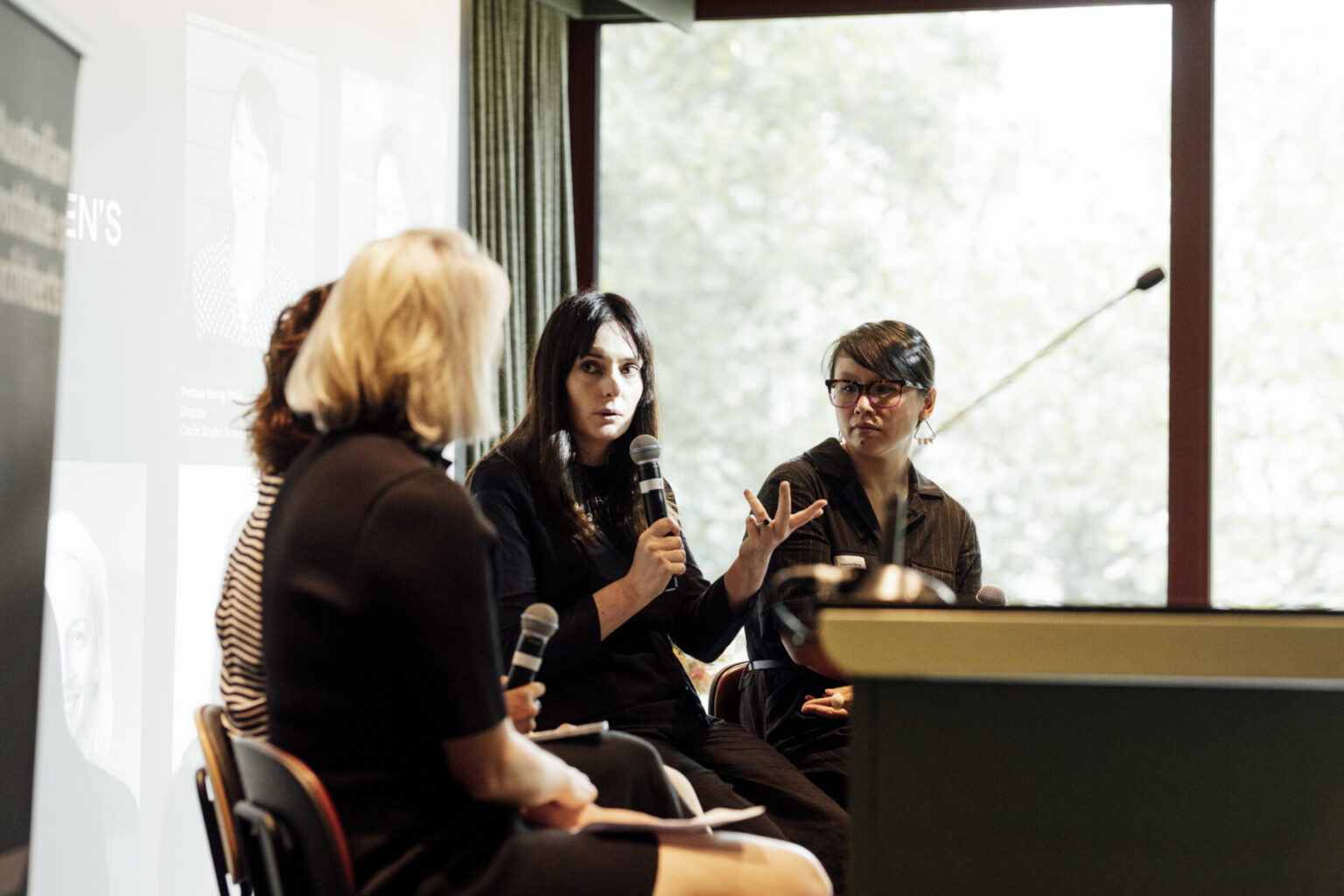
Flexibility in practice was explored in an optimistic venture
When asked what a thriving community looks like, in how we can win within a broken system and thrive in a Girl boss era, the concurrent theme was in finding the balance to live a good life. For Meng, “architecture doesn’t feel like an all-consuming thing anymore - it is a part of me but doesn’t define me”. She described the typical burnt-out journey and balanced her motivations by extending herself beyond architecture in joining a circus.
Graham reiterated that we should be more giving to one another, as she referenced the new Victorian work laws that employees may soon have 2 days Working From Home. She proposed it would allow people to spend more time doing the things that create love and joy for themselves. Graham advocated for flexible work giving permission to make new rules, to encourage change as leaders, to manifest creative play, to find peace and sanctuary within us and to make spaces for others. “What we have to do is elevate us all…so that we can all work safely.”
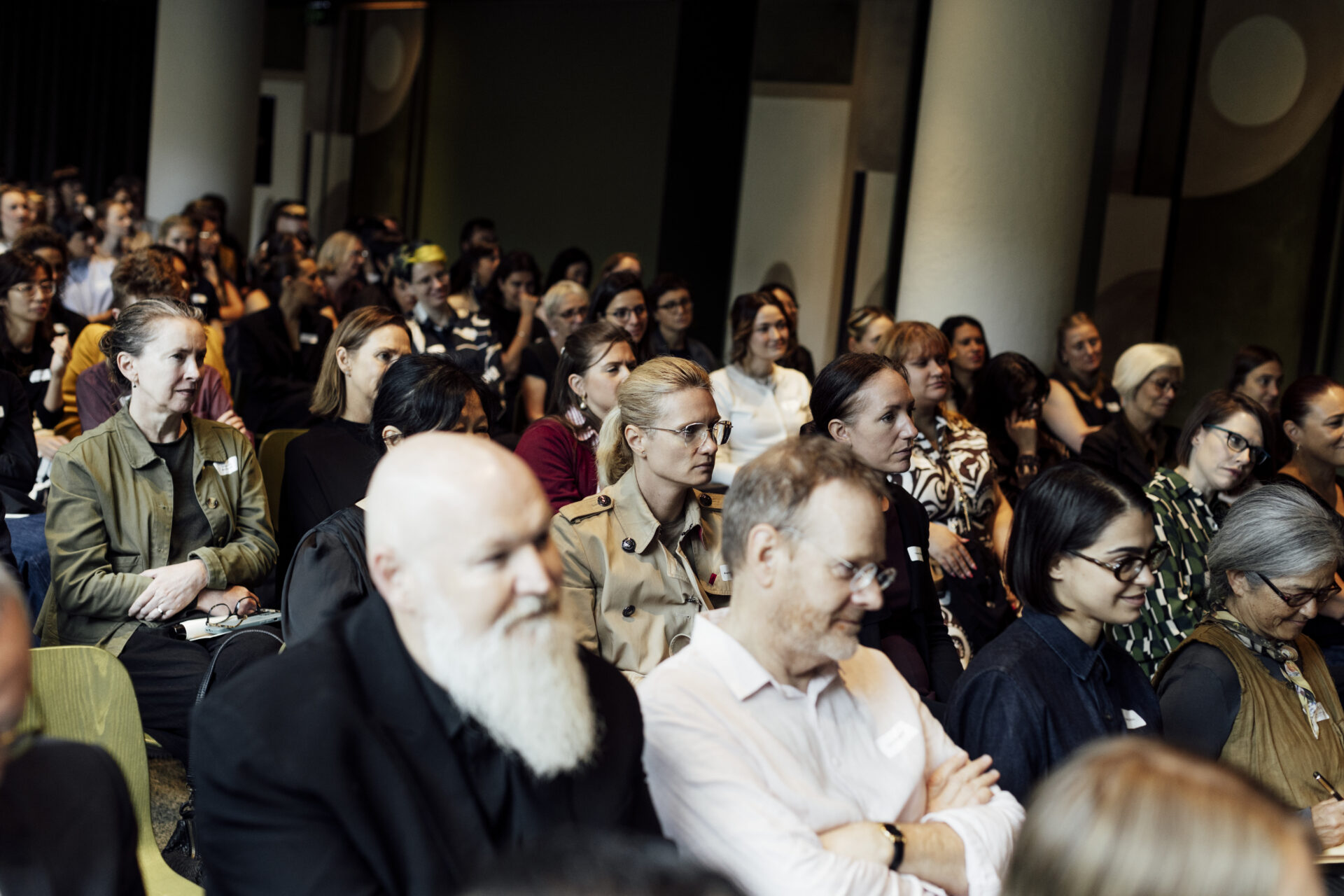
A four-day work week, being radically efficient within set hours, sets boundaries for time spent with family and friends. Waldron noted “we are a creative industry, so we should be able to think about the non-creative parts of the work that we do”, in designing our own balanced life.
Graham reminded us that “architects get better with age, so pace it out”. Flexibility refers to a practice’s adaptability, as she recalled allowing an employee to continue working overseas so her practice operated as a 24-hour studio to accommodate. The consensus was to redefine what work looks like.
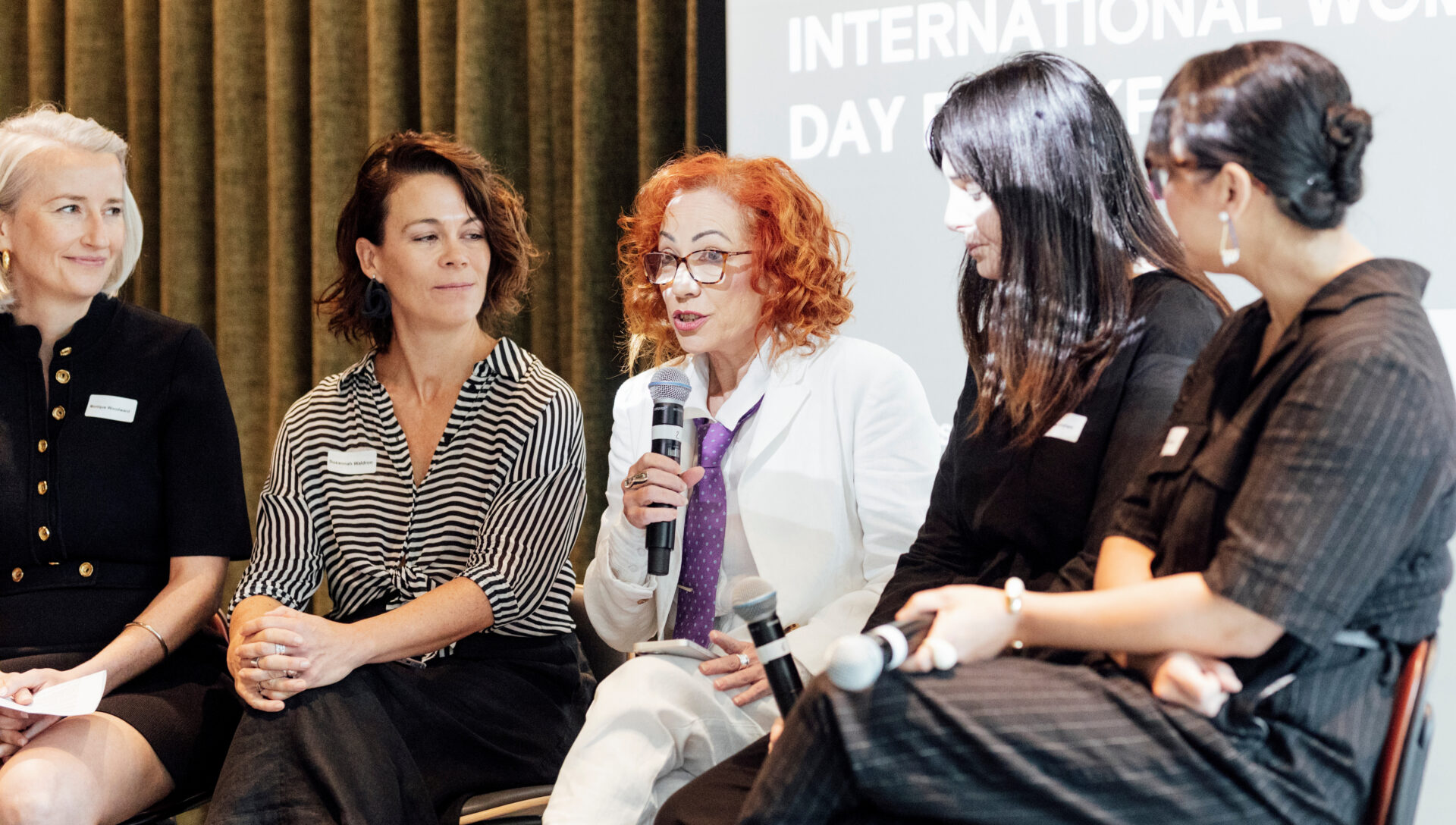
The audience was alerted to the urgency of recognising the power of women. Vega called for immediate attention to where our money is spent, urging us to purposely buy from women (services and products) and invest in women. “Money determines who holds power and influence in the world”, Vega reminded us. “As the largest and most powerful consumer group, women must intentionally direct spending and investment to support one another and strengthen our collective power if equality is to be achieved in our lifetime."
From an architectural perspective, investing in women can manifest in many ways. Meng brought the conversation to ownership and how small or large practices should have an open communication to build gender equity and defy the skew towards higher pay for males. Waldron suggested extending the project team of consultants to be female led, requesting for female leadership as key personnels. Woodward agreed, acknowledging that clients also want to see change.
Vega added that more action is required, as investors are not investing in women-led small businesses. In 2025, women entrepreneurs received only 2.7% of total global investments, a decrease from 3.1% five years earlier. This statistic suggests that angel investors and venture capitalists often perceive women-led businesses as less likely to generate sufficient return on investment (ROI). The opportunity, therefore, is to become more informed about where our money is directed and to use our collective influence to promote our values and support one another.
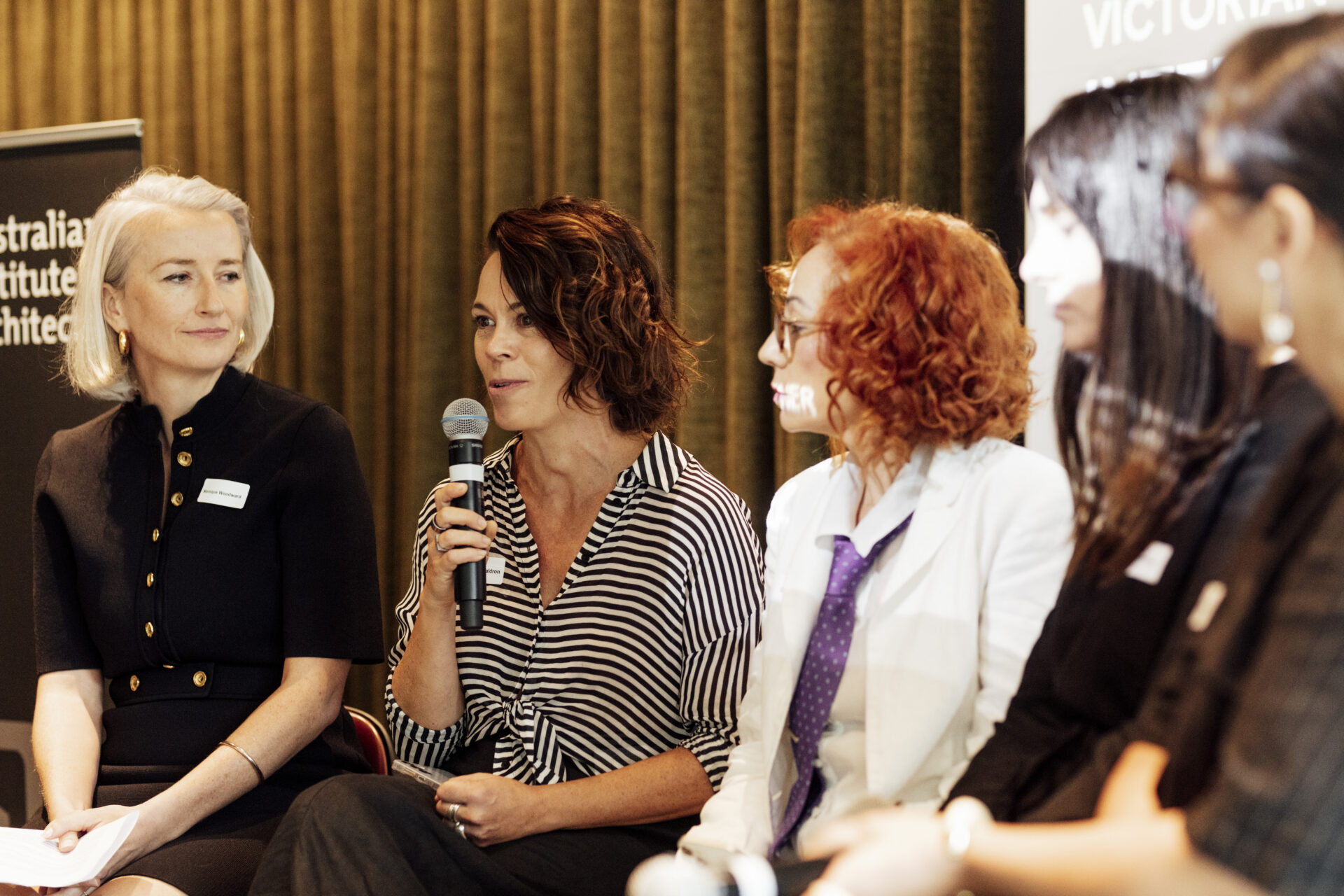
Envisioning a fluid future filled with conscious decisions to be innovative, imaginative, and inventive.
AI is changing the workplace, “process is going to be devalued, and judgement is going to increase in value”. Waldron reminded us that it is the human stubbornness that makes work great. Female empathy and kindness cannot be replicated. With AI, female leadership can prosper when there are less hierarchy and more collaboration.
Meng encouraged the pursuit of designing your own life, the reason for starting her own practice. She took agency to extend her practice to teaching and writing by way of advocating for herself and her time. Waldron quoted “you can’t be what you can’t see” highlighting the importance of mentorship in female architects who have set up their own businesses. For Graham, it was the woman’s innate sense of empathy that allows them to lead well. The future of work is when there is an equilibrium in elevating us all above the line.
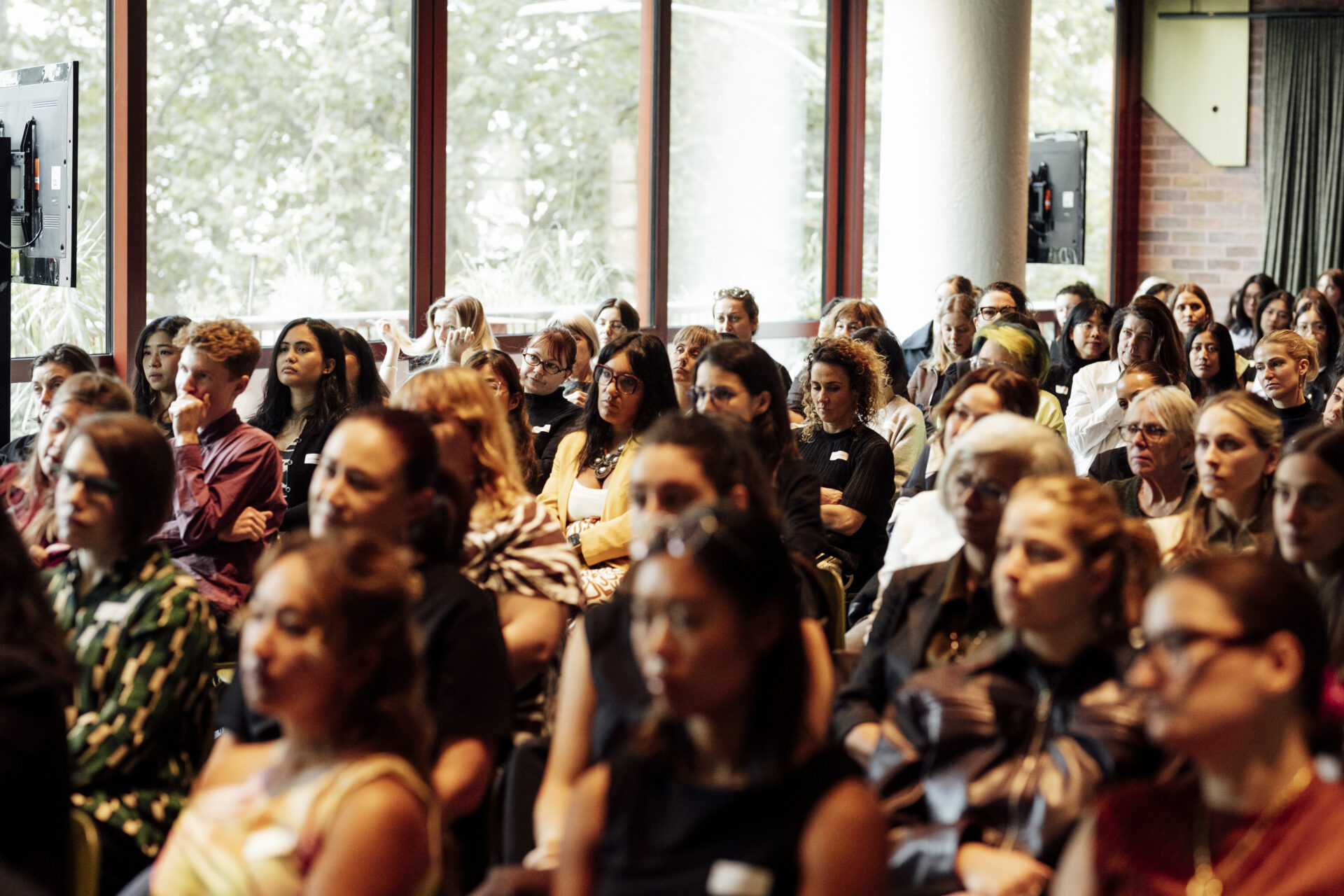
The influential and progressive conversation between a diverse inspiring group of women left a lingering energy to own our skills and abilities. Being amongst peers as a collective of women in architecture, was a moment to recognise the many celebrated women who have already paved the way to support the next generation to embrace their own extraordinary. Woodward concluded; champion our own inner knowing and wisdom, serve a greater purpose for design excellence and betterment of the built environment and to have the courage to be assertive and self-assured. “It’s important to be able to articulate to ourselves who we are and communicate it to others, so others can know and advocate for us”. ‘Create your own world’ carries new meaning when you reference each remarkable journey. Their motivations honour female leadership whilst giving permission to prioritise ourselves to make our own success.