
Cardijn College: Automotive & Engineering Building | Grieve Gillett Architects
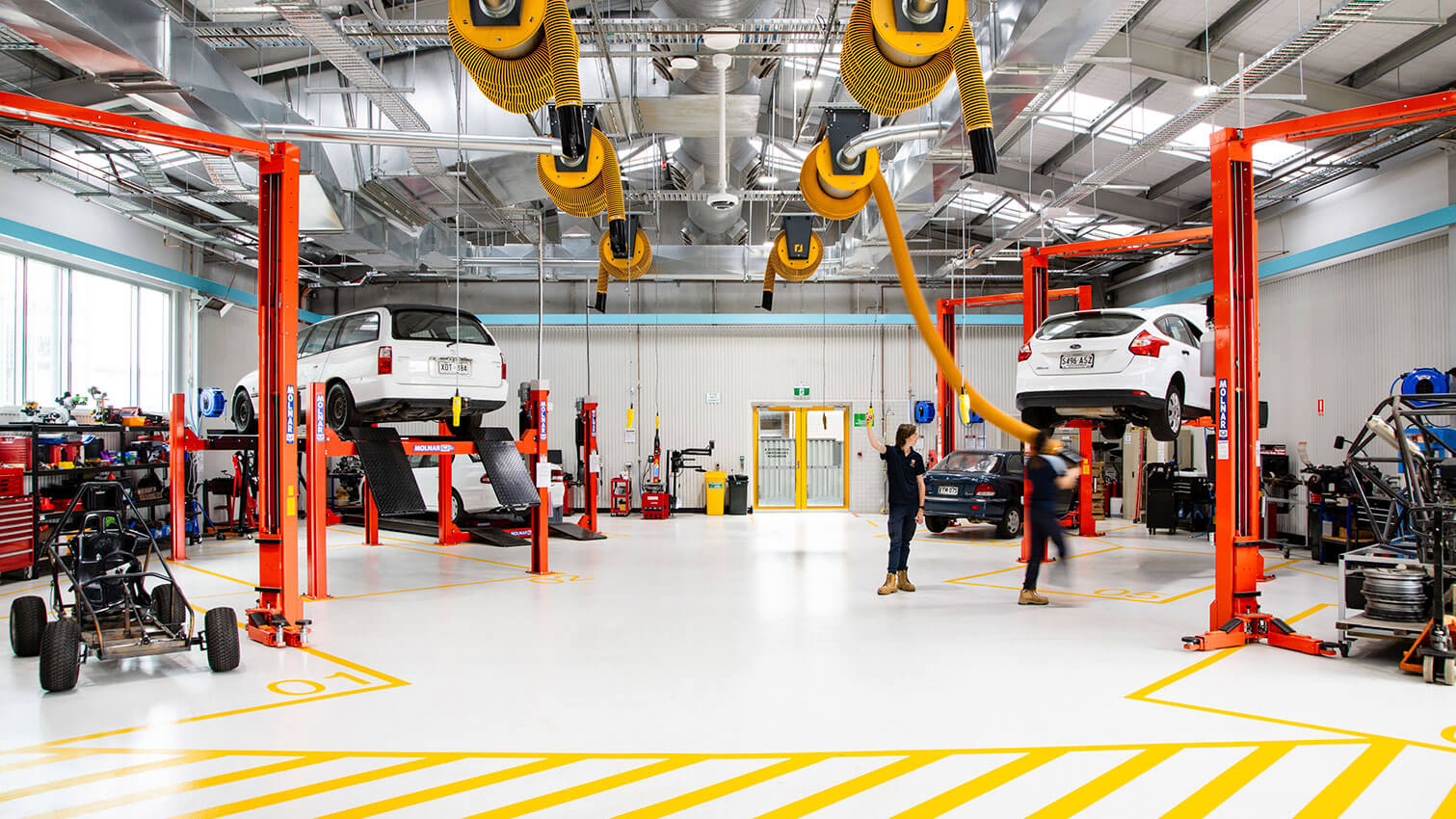
The co-ed senior secondary Marcellin Technical Campus of Cardijn College provides a unique and dynamic educational experience that enables students to study their SACE alongside a VET program designed to deliver workplace specific skills.
The College has a big vision for the future, responding to the current transformation as part of Industry 4.0 (the fourth industrial revolution) – a world of advanced manufacturing, cyber-physical systems, robotics and automation as well as the evolution of traditional trade-based industries such automotive and metal engineering. Following our masterplan, GGA commenced Stage 1: a new Engineering and Automotive Facility.
Informed by thorough consultation, GGA planned workshop layouts to optimise safety and process flows. Fulfilling the design philosophy of campus transparency, new acoustically separated classroom and staff spaces connect the workshop to rest of the campus both physically and visually. Colour and materiality unify the spaces and provide a fresh approach to the typical workshop typology.
Carrickalinga Shed | Architects Ink
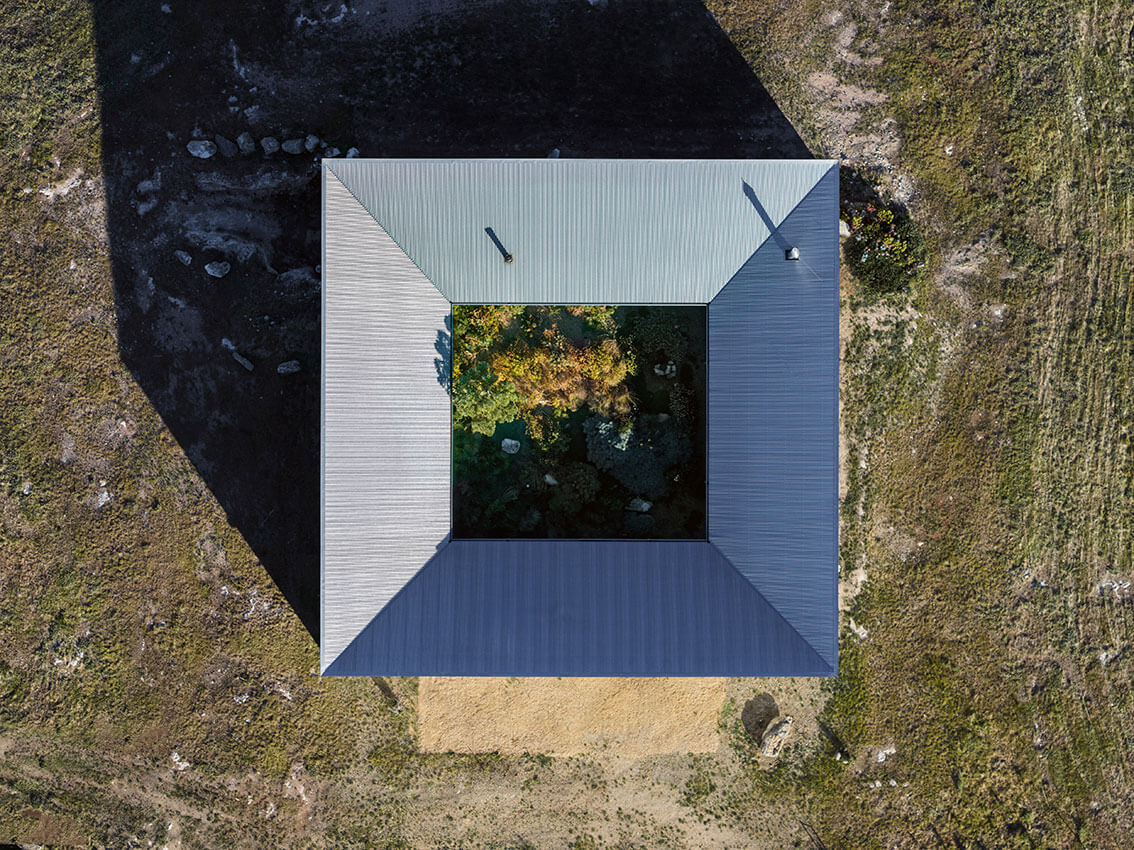
The premise was an interpretation of an Australian Federation Farmhouse, sited on a hilltop in Carrickalinga.
With extreme winds, we manipulated the traditional farmhouse, stretching the perimeter to a square, whilst removing the center for the courtyard. With the verandah on the ‘wrong’ side we inverted the roof. This creates a low eave to the protected garden allowing solar gain and solar access.
The apertures were aligned, framing the views of the landscape. Industrial shutters filter the amount of light desired, tuning the house to the seasons. All rooms have dual aspect to both sea and the garden.
Exterior walls and shutters are clad in heritage galvanized corrugated iron, folding over the ridge, and lining the internal valleyed roof. Structural columns were used as downpipes harvesting rainwater.
The dwelling is true to ‘place’, minimising its impact to its landscape and carbon footprint.
Ararat House | SJB

This is a rural right sizing project, a new chapter in the history of a modest house that enables an older couple to enjoy life in town. Within walking distance of shops, doctors and friends, Casa Parents is the reworking of a 1950s home that their youngest son was the last custodian of. This reimagining of the home captures its carbon and cultural footprint ensuring that its history is amplified. A new good room facing the north to the street includes a private courtyard and a contemporary veranda, while a bathroom box to the rear delivers delight and surprise.
Castlecrag Courtyard | Downie North

Seeking a return to the utopian spirit of the bushland suburb, the design of Castlecrag Courtyard draws from and repairs relationships in the landscape creating a house designed to last generations. Embracing an expansive endemic garden that remediates the landscape, the increased amenity and efficiency of the courtyard typology deftly addresses issues of privacy, protected private open space, access to sunlight, cross ventilation, reduced bulk and view sharing.
Complementing this alliance of architecture and landscape, is the material palette, selected for its inherent beauty, timelessness, and propensity to echo midcentury modernism. The house is organised into three distinct sections and spatial and material variegations applied across the levels accord with their function, heightening the experience of living within the landscape where shelter and refuge, exposure and prospect are paramount.
Catholic Care Head Office Renovation | Bennett Architecture
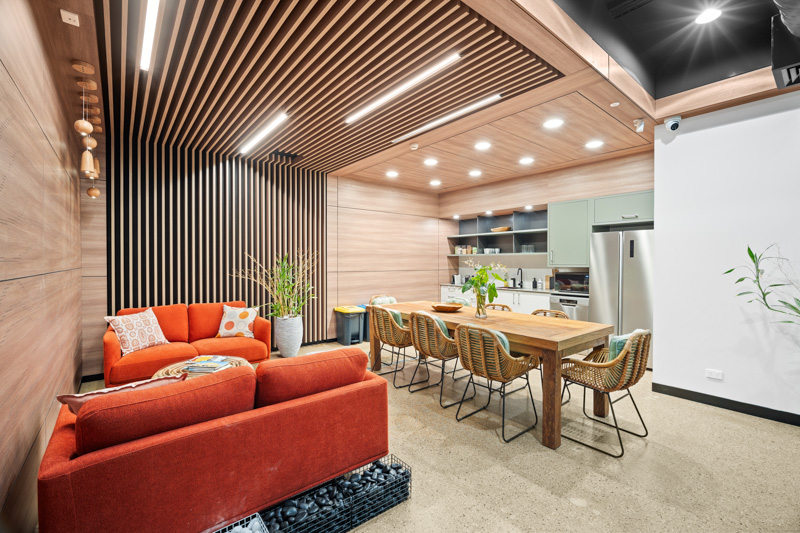
The Catholic Care head office was created as clean and minimalist office in combination with natural colours and patterns, balancing a holistic workplace while maintaining a professional setting.
The layout of the first floor consists of a variety of private offices, open workstations and staff outbreak spaces which encourage people to congregate informally or for office events. A combination of open and suspended ceiling areas accentuates these different zones.
Our holistic approach to the materiality and colour palette choices were guided by the surrounding landscape, colours of country, from the ochre tones of the local Porcellanite rock to the varied green hues of gum tree leaves.
The spectacular feature of this project is the incorporation of local indigenous artist, Homere Wosomo (Lily), who designed a pattern, applied to timber wall panels. This feature reflects Catholic Care NT and its community’s culture and forms the backdrop for their amazing services.
Cedar on Collins | Kennedy Associates Architects

Cedar on Collins, a senior’s development by Fresh Hope Communities, designed by Kennedy Associates, represents Fresh Hope’s core values of Kindness, Connection, Optimism and Integrity.
These values underscore KAA’s design, delivering 56 units, 5 communal areas, 4 roof terraces and 4 activity rooms that harmoniously balance individuality with community, and calmness with activity.
The heart of the development is the central space, 3 interconnecting courtyards supporting the community through the interplay of built form with private and communal space.
Earth toned bricks, the excavated rock strata, characterize the lower levels.
A covered walkway integrates wayfinding, buildings, courtyards and common rooms.
Irregularly placed columns define the walkway, support the grey toned upper storey and provide intimate recesses along the journey.
Over 50% of the site is communal open space or landscaped area.
The client, in their response to the design, said.
“Through its intelligent design, the built form feels like home”.
Central Village, Canberra City | AMC Architecture
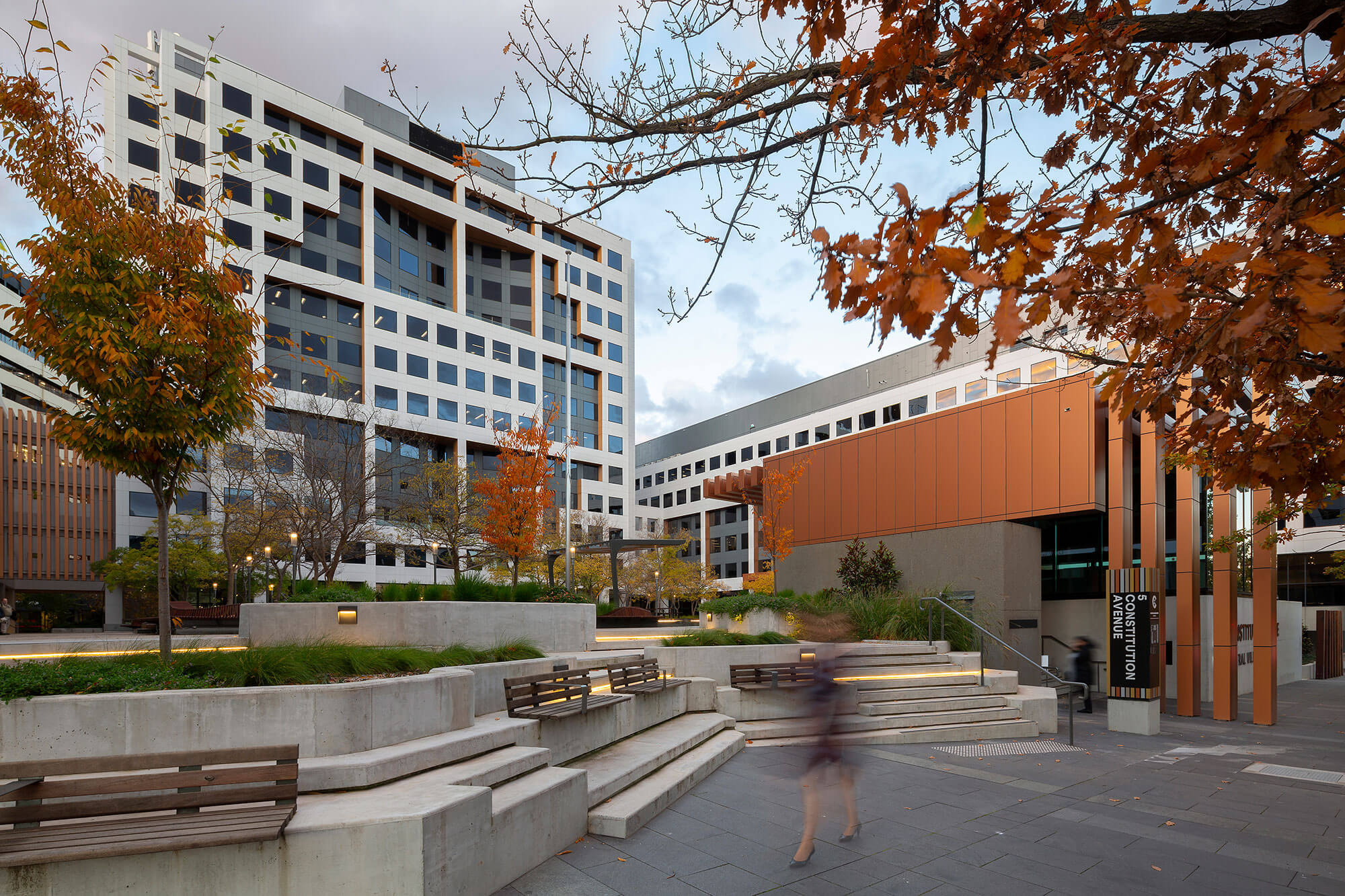
The Central Village redevelopment has taken a 1980s city office block and reimagined it as an exciting and active commercial precinct through wholesale improvements to the public realm, better integrating Nara, Allara and Customs Houses, increasing ground level permeability, carefully located retail uses and through refurbishment strategies that meet market needs. improved energy performance and meet NCC standards while preserving the embodied carbon. The central plaza is integral to its success with a beautiful new cafe pavilion, a warm materials palette, preservation and augmentation of existing trees and landscaping, improved microclimate, wayfinding and a sense of safety. The precinct is now fully tenanted as a testament to the success of the project and its marketacceptance.
Centre for Science and Art, Abbotsleigh Senior School | AJC
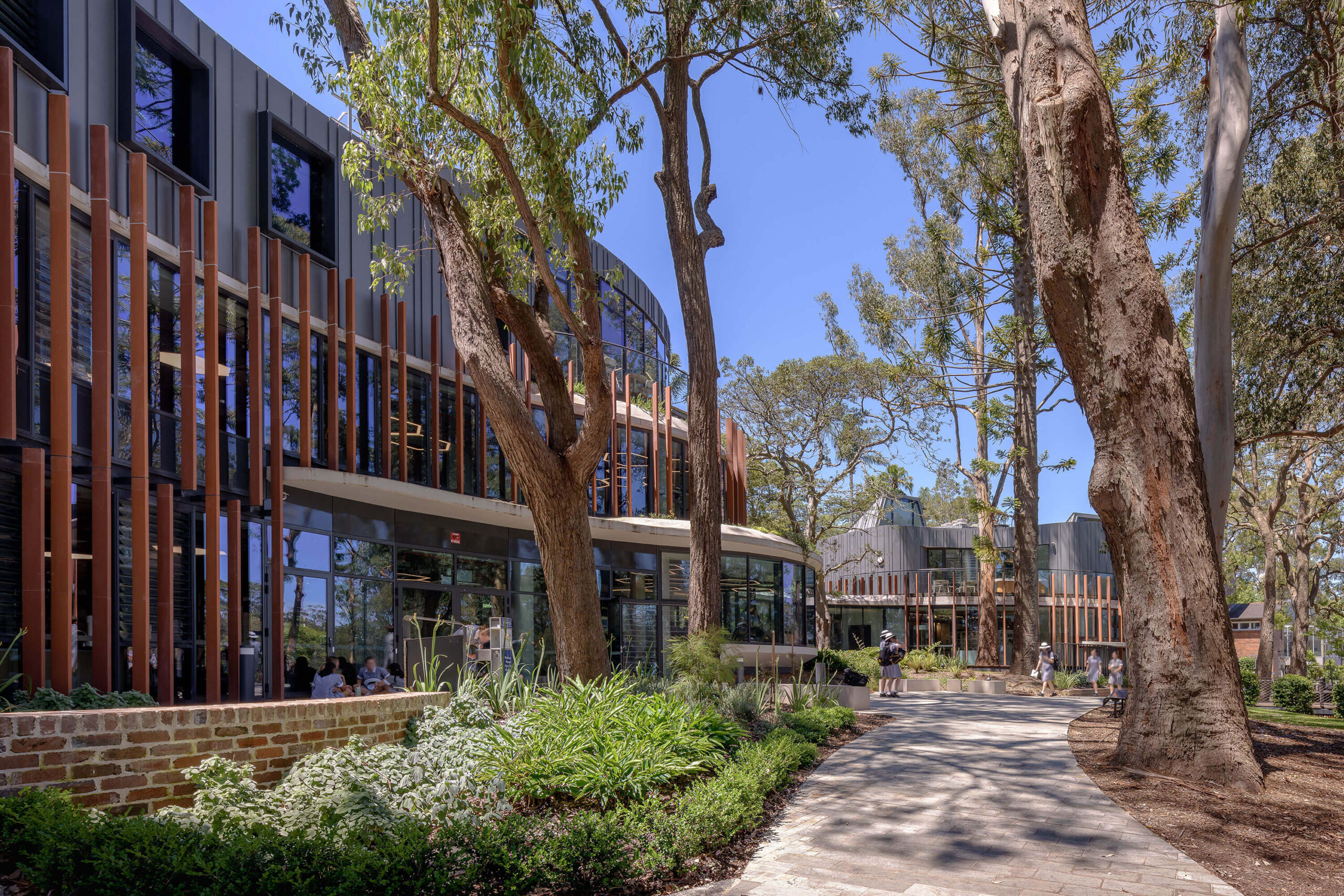
This pivotal step in the master planned extension of Abbotsleigh Senior School focuses the campus with a sculptural building designed around remnant blue gum forest. The butterfly shaped building is woven between the mature tree and the two heritage houses that bookend the site. Cloud point surveys helped determine the optimal form to preserve tree canopy and root systems. The two organically shaped wings one for science, one for art are joined centrally by a curved glass enclosed walkway.
In the spirit of scientific inquiry, the science wing expresses its material construction with exposed structure and services, while the art workshops and studios are naturally lit from windows and skylights to the south. Multiuse assembly spaces, staff and meeting rooms and informal breakout areas are distributed through both wings, with unprogrammed public spaces adjoining the glass bridge at either end, fostering dialogue between art and science exhibitions and happenings.
Bondi Abode | LAVA (Laboratory for Visionary Architecture)

A 1930s Californian bungalow with a 70s makeover featuring timber cladding and free-spirited vibe recalled the architect’s 70s childhood home in Germany.
The pokey, rambling original five-bedroom house, was transformed into a four bed four-bathroom house, in tune with current market demand in a desirable location.
The retro 70s vibe is complemented with a design for 21st century living bringing nature indoors, natural materials, flexible floor plans, and the latest technologies to address the way we live today: adaptable architecture, integrated facilities, smart technologies.
Clever engineering replaced solid walls and utilities that blocked the inside/outside flow. Within the same footprint, integrated pivot doors, disappearing sliding doors and screens offer privacy, ventilation and connection to an oasis garden. Flexible internal spaces allow various configurations for different ambiences. The house runs on solar and natural ventilation. The client’s favorite designers are integral to the design. An original 1970s hardwood staircase was restored.
Bookend Addition | Studio Heim
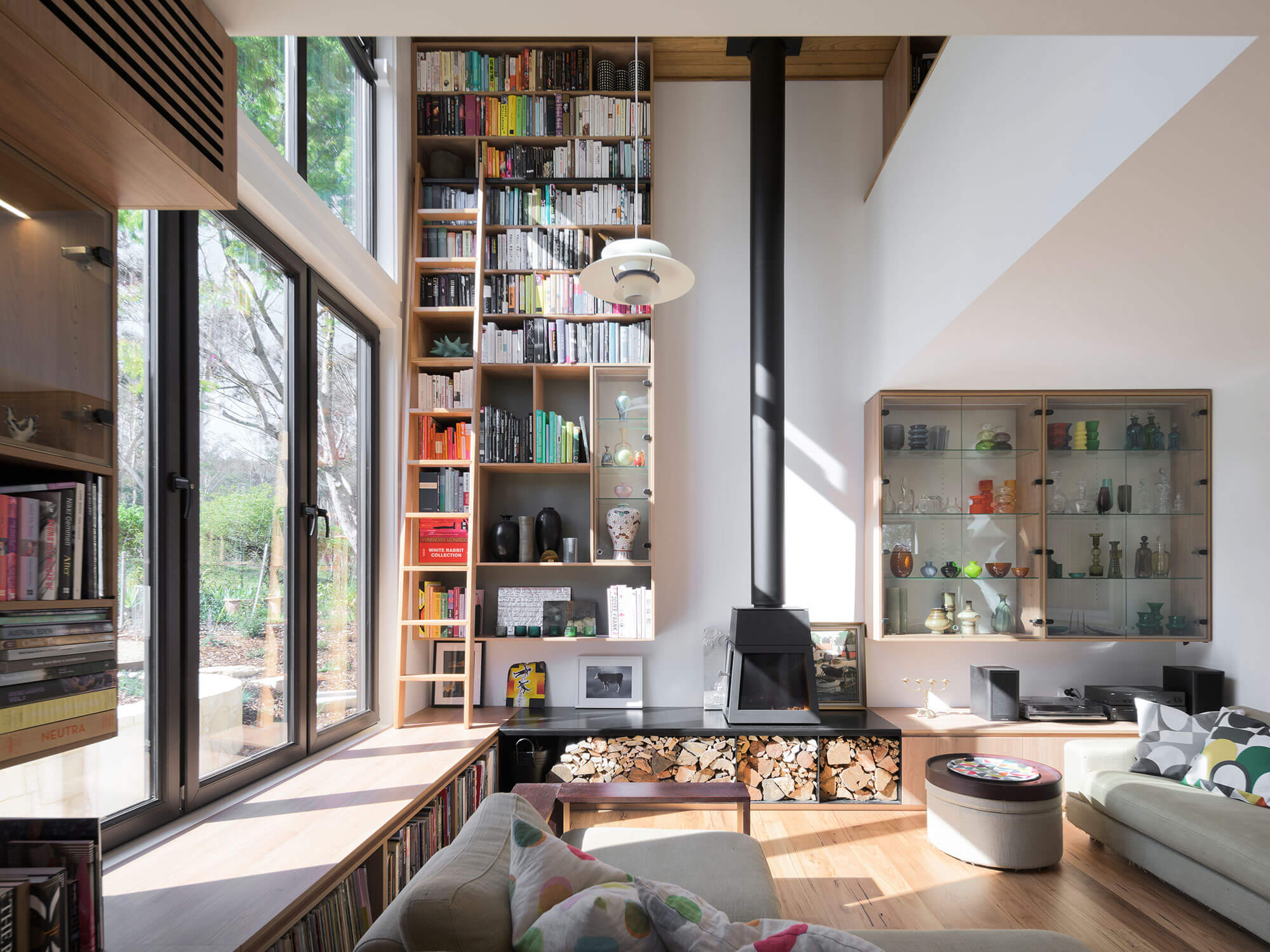
Bookending the front and rear of an existing midcentury Seidler inspired dwelling are two interventions that respect the original design. At the front, an undercroft area has been infilled to provide storage and a place for creative pursuits. At the rear, a contrasting two storey form holds new living and sleeping spaces.
Overcoming a challenging position on a wedgeshaped block, the new form is like a Tetris piece that hugs the existing dwelling whilst stepping to work with boundary setbacks. As a deliberate contrast to the existing dwellings cream brick, the new addition is clad in vertical Shou Sugi Ban, with a base of cream bricks, salvaged from a removed section of the rear façade, blending old and new together.
Bookend Addition is a light touch approach that enhances the dwellings liveability with a striking lightfilled form that makes the most of its unique position adjacent bushland.