
James Street | Taylor and Hinds Architects

Conceived as a brick villa, James Street is located on an overshadowed and compact site, on the urban rim of Launceston’s colonial streetscapes.
The condition of the tight site, topography, and the presence of a century-old walnut tree is resolved in a strategy of walled courtyards, terraces, and volumes which abut the street edge.
From the street, walled courtyards elongate the entry sequence into the private realm. Quieter, immersive needs are oriented toward the light of walled courtyard gardens.
Elevated brick terraces allow for measured access to sunlight and aspect, and create daily connections to the streetscape. The walnut tree is used as a seasonal hinge for the composition of these courtyards and rooms, around which the interior volumes and gardens coalesce. This offers an unanticipated sense of expansion to the interiors, which is magnified by a subdued and dark palette that lofts towards the higher volumes.
House 214 Yallingup | Paul Hofman Architect

This house is located on a stunning rugged coastal site in Yallingup in the south-west of Western Australia.
The house has been sited to take advantage of the north facing views over the ocean looking towards Cape Naturaliste.
The linear, north facing plan has been designed along passive solar principles allowing full winter sun penetration while excluding summer and provides abundant natural light and wonderful cross ventilation.
Environmentally the house achieves a 7 star rating. All doors and windows are double glazed, floors are heated via a hydronic underfloor heating system within the floor.
The simple palette of materials mimics the coastal setting. Walls are built from rammed limestone, floors are a similar-coloured travertine, and limestone removed from the site during the building process was used to create beautiful dry jointed limestone fireplaces and garden retaining walls.
Hackett Gardens House | Ben Walker Architects

The project comprised the design of a new single storey house in the northern Canberra suburb of Turner. The building forms a U shaped plan with an internalised large central court. This layout provides the desired privacy from the public realm, but allows for open and generous views from living spaces into the central court.
A series of indented solar courts provide light and refuge between the wings subtly demarcating the transition between zones and providing foreground views to landscape. Saw tooth roof elements contain highlight windows that provide northern sun to rooms that may otherwise be landlocked and generous interior volumes.
The 8 star house includes highly insulated triple layered walls. Ceilings and burnished concrete slab are heavily insulated, with both internal and external membranes providing excellent air tightness. Windows integrate high performance triple glazing and a PV system provides a substantial portion of household energy use.
Hanson’s House | XAAP Design Pty Ltd

The project is meticulously crafted for an architect’s personal residence. The duplex layout is artfully configured to optimize privacy and minimize interference between the two households, strategically positioning entrances and backyards. Drawing inspiration from a vertical wave concept, the building facade elegantly complements its surroundings. Softened corner principles extend to both interior and landscape design. The structural integrity of the building is underscored by the use of 50 tons of steel, facilitating large spans and cantilevers. The external walls, constructed with Ductal from Holcim, boast Concrete C120 strength, ensuring durability and resilience. Furthermore, double layer insulation and double-glazed window systems contribute to significant energy savings. Prefabrication technologies streamline construction, reducing onsite labor and environmental impact. The building cost is balanced by strategically increasing material costs while reducing onsite labor work time. This approach ensures optimal efficiency without compromising on quality or structural integrity, ultimately contributing to a cost-effective yet high-quality final product.
Henley Beach House | studio gram
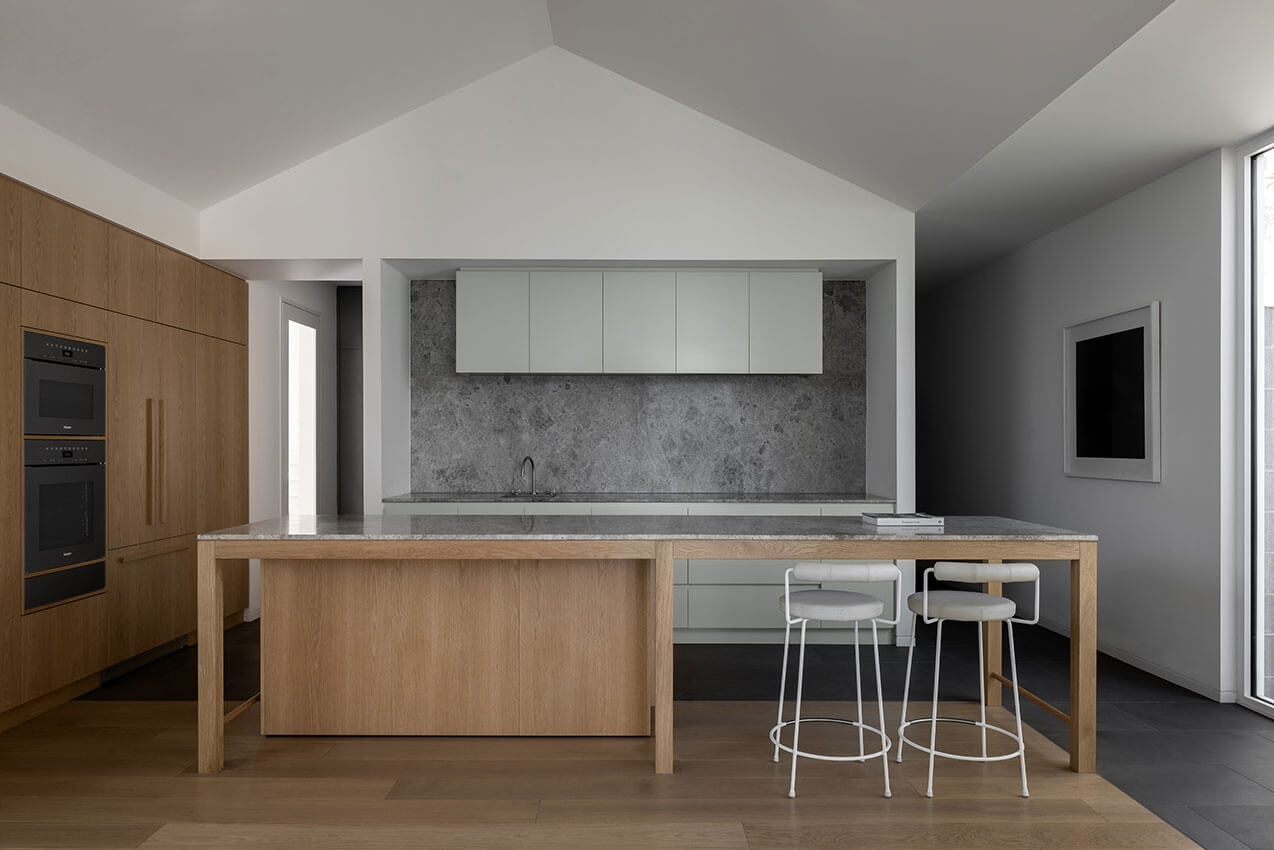
Henley Beach House embodies coastal living at its finest, seamlessly integrating with its surroundings to create a harmonious retreat. Meticulous design invites natural light to fill the interior, emphasising the connection between indoor and outdoor spaces. The upper level features a serene master bedroom with modern amenities, while the kitchen, dining, and living areas offer spaces for both relaxation and gathering. A courtyard pool enhances the flow between spaces, adaptable to various activities. On the lower ground, two additional bedrooms provide privacy, each with access to private gardens. Quality materials such as timber accents and concrete blocks contribute to the home’s durability and aesthetic appeal. With its blend of modernity and coastal charm, Henley Beach House offers residents a sanctuary to embrace the laid-back lifestyle of Henley Beach.
Highlands House | Luke Moloney Architecture

Highlands House was designed as a home for lovers of art.
Embracing views across the grey green immensity of the Australian landscape, the house serves as a retreat for busy people, a gracious family home, and an exemplar of off grid living.
Three barnlike pavilions are linked by a gently bending gallery space. Domestic spaces face outwards toward the landscape.
Long ribbon windows tie the interiors to the horizon space is at once contained and limitless.
Govetts Leap Bach | Anderson Architecture
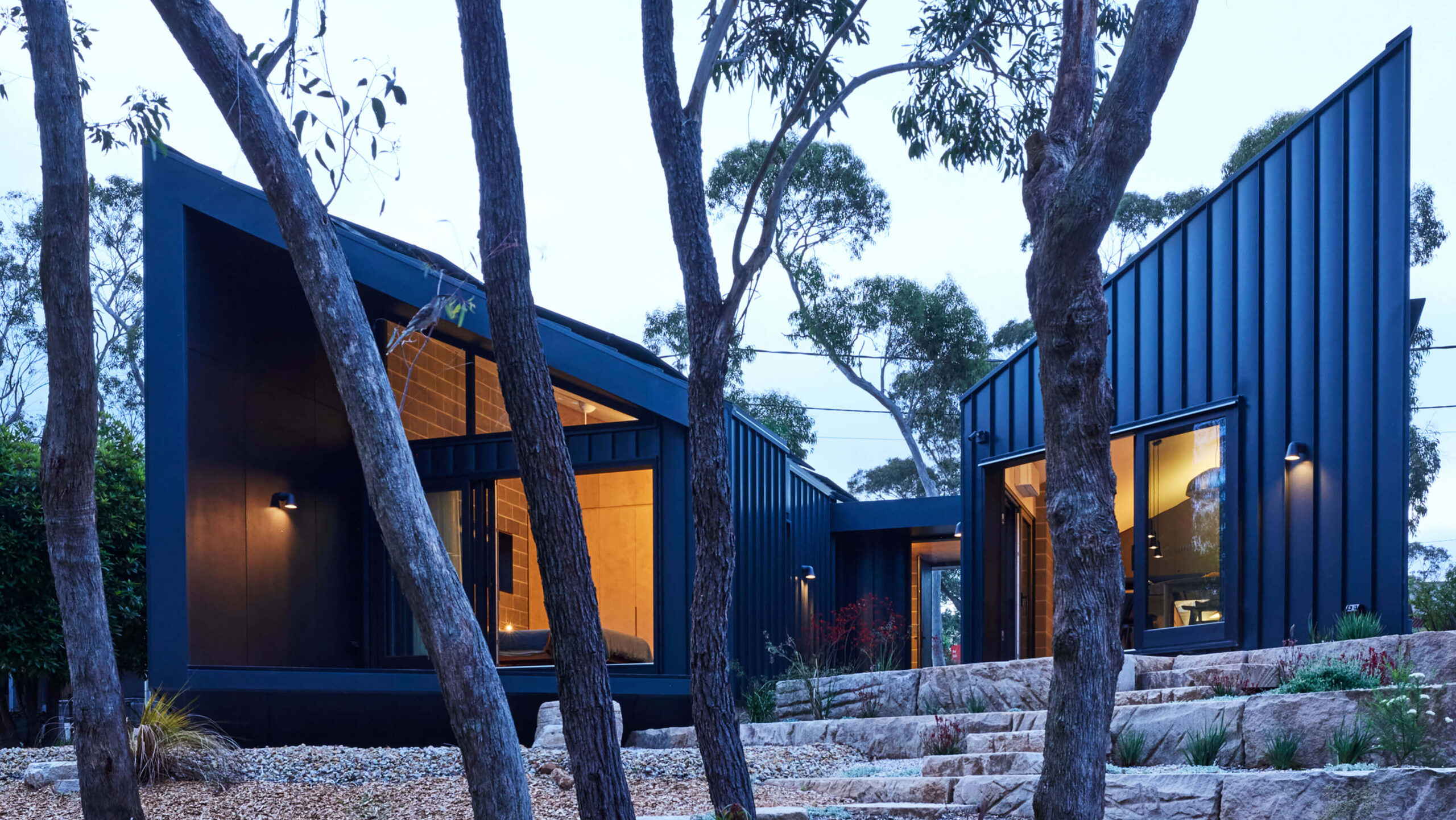
Govetts Leap Bach is representative of the synthesis of sustainable principles and technologies, and striking architectural character, informed not only by an awareness of the environmental sustainability and performance of the building fabric, but of the necessity for the spaces within to perform and endure over time. It demonstrates that passive design principles such as solar passive design remain valuable strategies alongside those more technocentric.
A single residential dwelling located in the Blue Mountains of NSW, Govetts Leap Bach has been designed with passive and Passivhaus principles front of mind. At 81sqm floor space, it is a compact home that responds to the duality of its context its situation on a residential block and its bushland setting. The overall design and materiality of the home speak to this duality, addressing its BAL 40 and BALFZ requirements and the wide range of climatic conditions experienced in the Mountains, whilst balancing amenity with privacy.
Gully House | Andrew Burges Architects

Gully House is conceived as an extension of the gully, proposing continuous, connected views through the length of the site. This guiding principle led to a differentiation of façade response for the east/west and north/south elevations. The transparency of the north/south façade visually connects the northern front courtyard to the landscape spaces of the lower gully to the south, creating a continuous, unified experience of the sloping site.
The east/west facades act as a filter, mediating privacy, ventilation, and glare while providing a place for layered planting. In response to the steep fall across the site, the house was organised by a split-level cross section determined by studies of sun angles and site lines desired within the site and to the gully beyond.
Ha Ha Haus | FIGR Architecture Studio
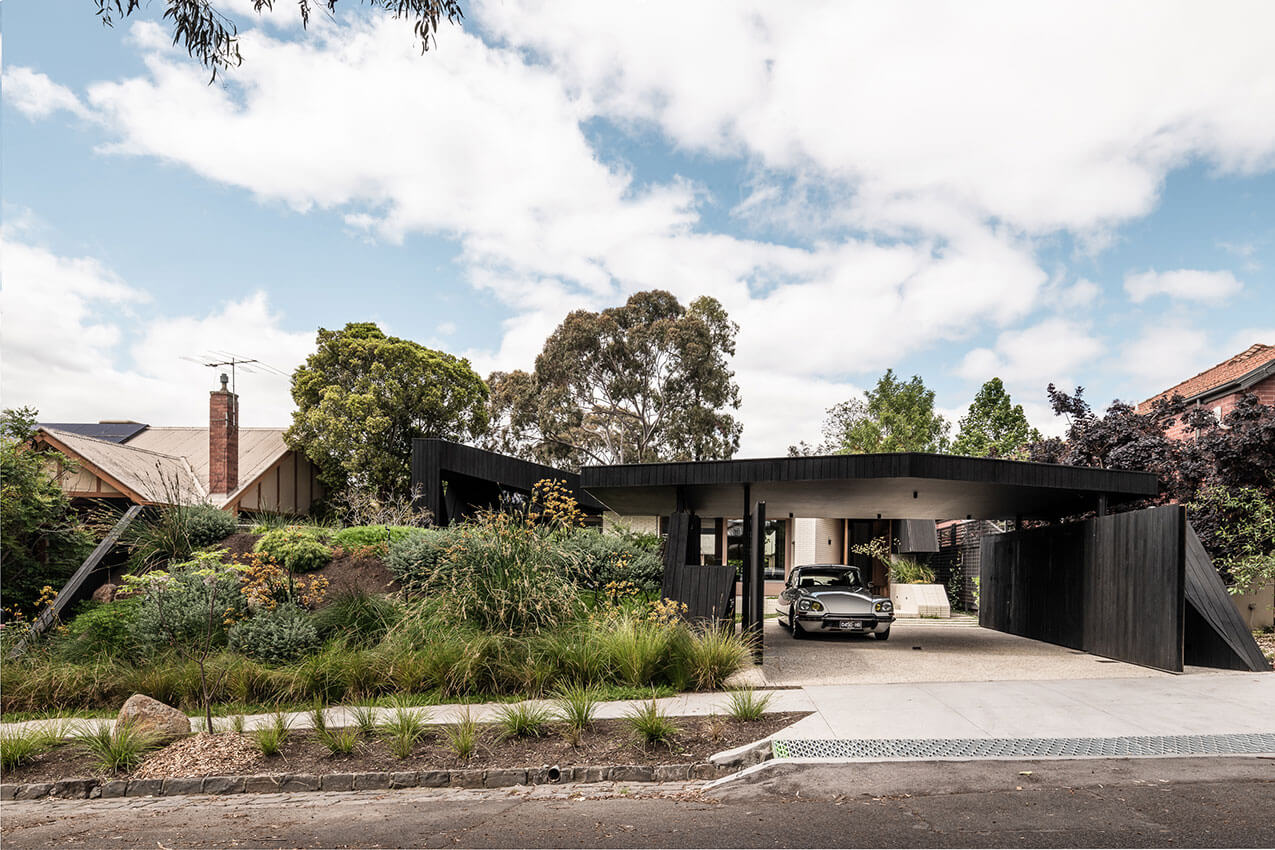
Embedded into the landscape, Ha Ha Haus is located in a leafy pocket of Alphington (Wurundjeri Country) where front fences are a refreshingly rare sighting.
Our client’s design brief centred around a close knit family home which caters for frequent visitors from overseas, intergenerational living and a transient occupancy. The single storey design addresses long term ageinginplace and responds to the sloping site and adjoining context.
The floor plan is a donut form surrounding a central landscaped courtyard, a place of refuge and a key design element grounded on the passive solar principles of maximising cross ventilation and northern glazing to what most would deem a challenging site with a south facing backyard.
From the footpath, the project aims to give back to the streetscape into which it is sleeved. A landscaped mound beguiles and conceals a 20,000L rainwater tank and a low lying house.
EW House | Thursday Architecture
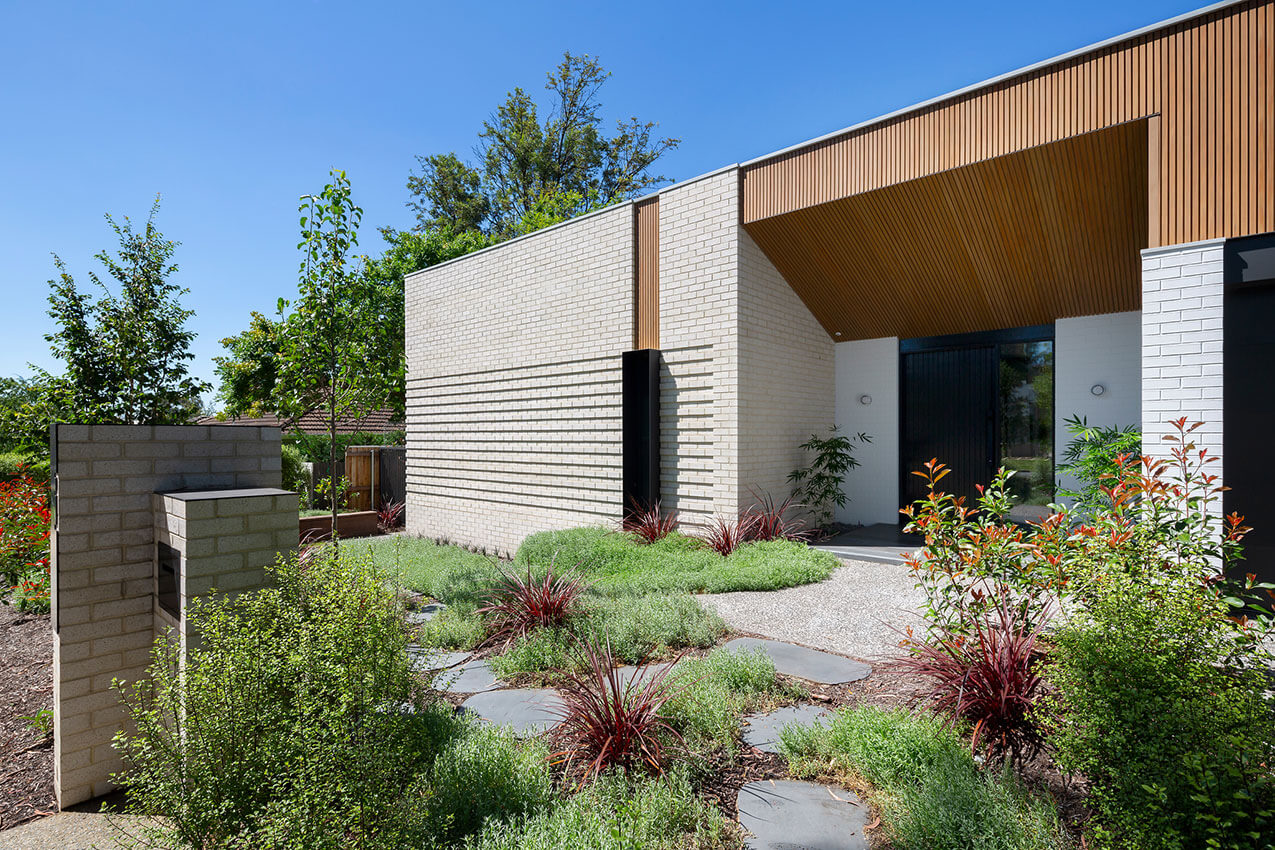
East West House draws inspiration from Eastern cultural values within a contemporary Western setting. Initial conversations with the client explored an understanding of their time spent living and working in Asia and their connection to Asian cultural values. Our design response was to interpret the traditional concept of the Siheyuan, or courtyard house within an Australian suburban context as part of the brief resolution to value outdoor space as much as indoor space. The design centres around the internal courtyard, seamlessly integrating the home with its surroundings while also emanating a feeling of privacy and seclusion from the outside world.