
Whadjuk people of the Nyoongar nation
Western Australia
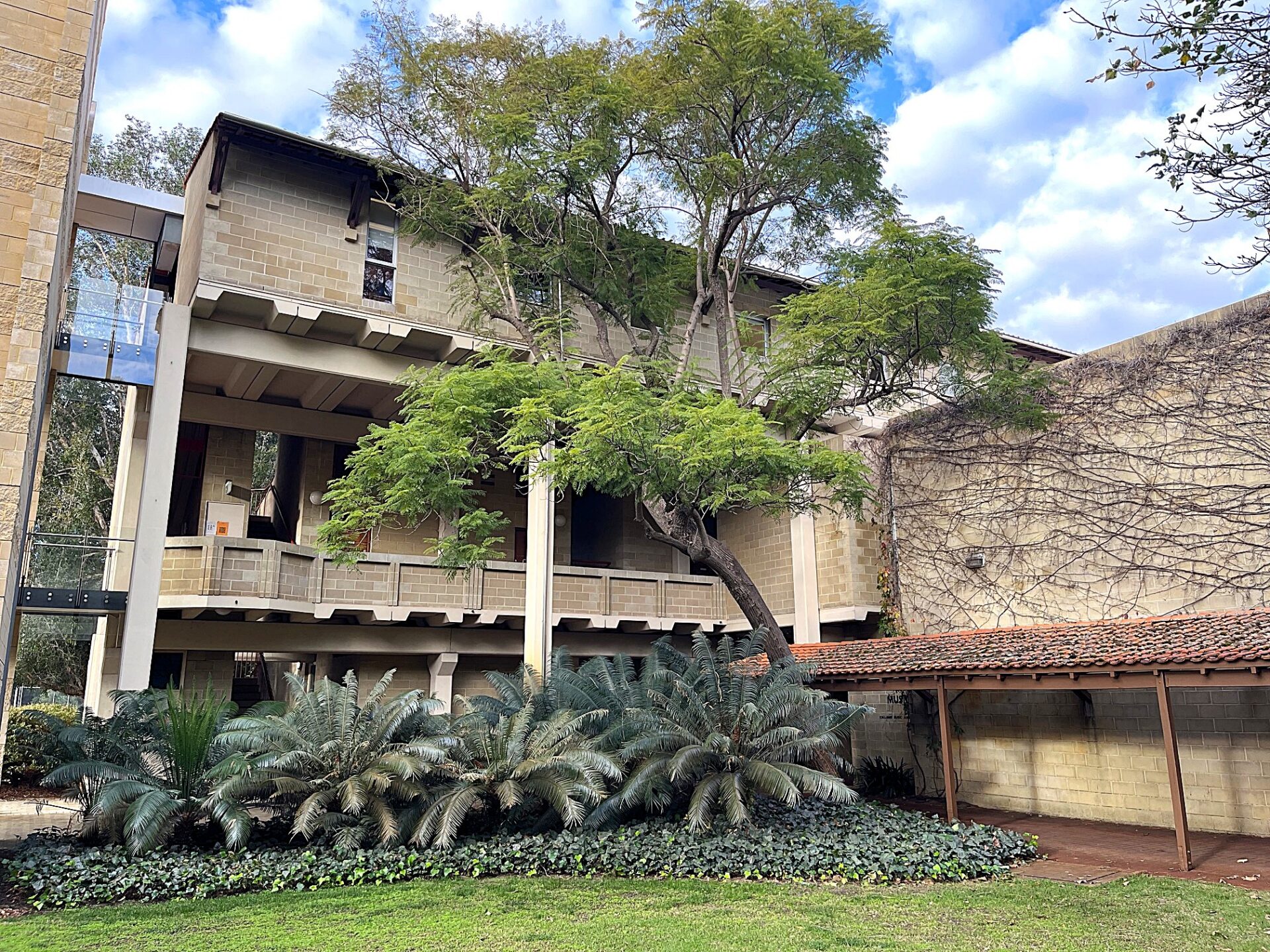
Designed by Architects Forbes & Fitzhardinge, with partner in charge Anthony Brand, this building was a runner-up in the 1976 WA Design Awards. Together with the Octagon and Dolphin Theatres it creates a performing arts complex. Extensions were carried out in 1978. (Ref: AHC Documentation) A government decision in favour of a university for Western Australia was made in 1901, however a shortage of funds prevented it being established until 1913. In 1921 Crawley was chosen as the permanent site for UWA. The Irwin Street building was relocated there in 1932.The foundation stone for the Hackett Memorial Buildings was laid in 1929. They form the focal point and symbolic landmark of UWA.
Source: inHerit


The Richard Roach Jewell Award for Enduring Architecture
This year, the UWA Conservatorium of Music, designed by Tony Brand during his time at Forbes and Fitzhardinge and completed in 1978, has won the 2026 AIA Enduring Architecture Award.
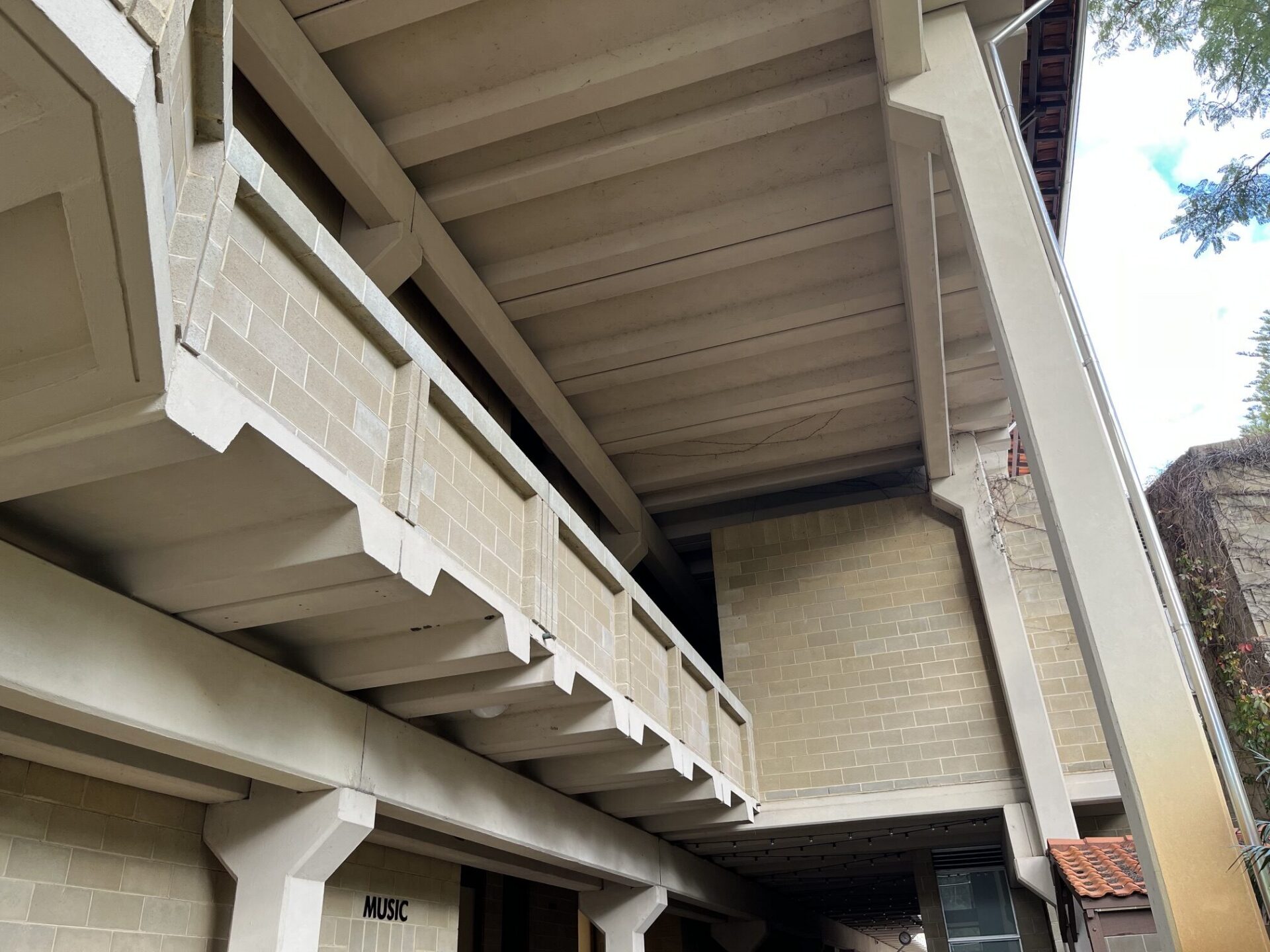
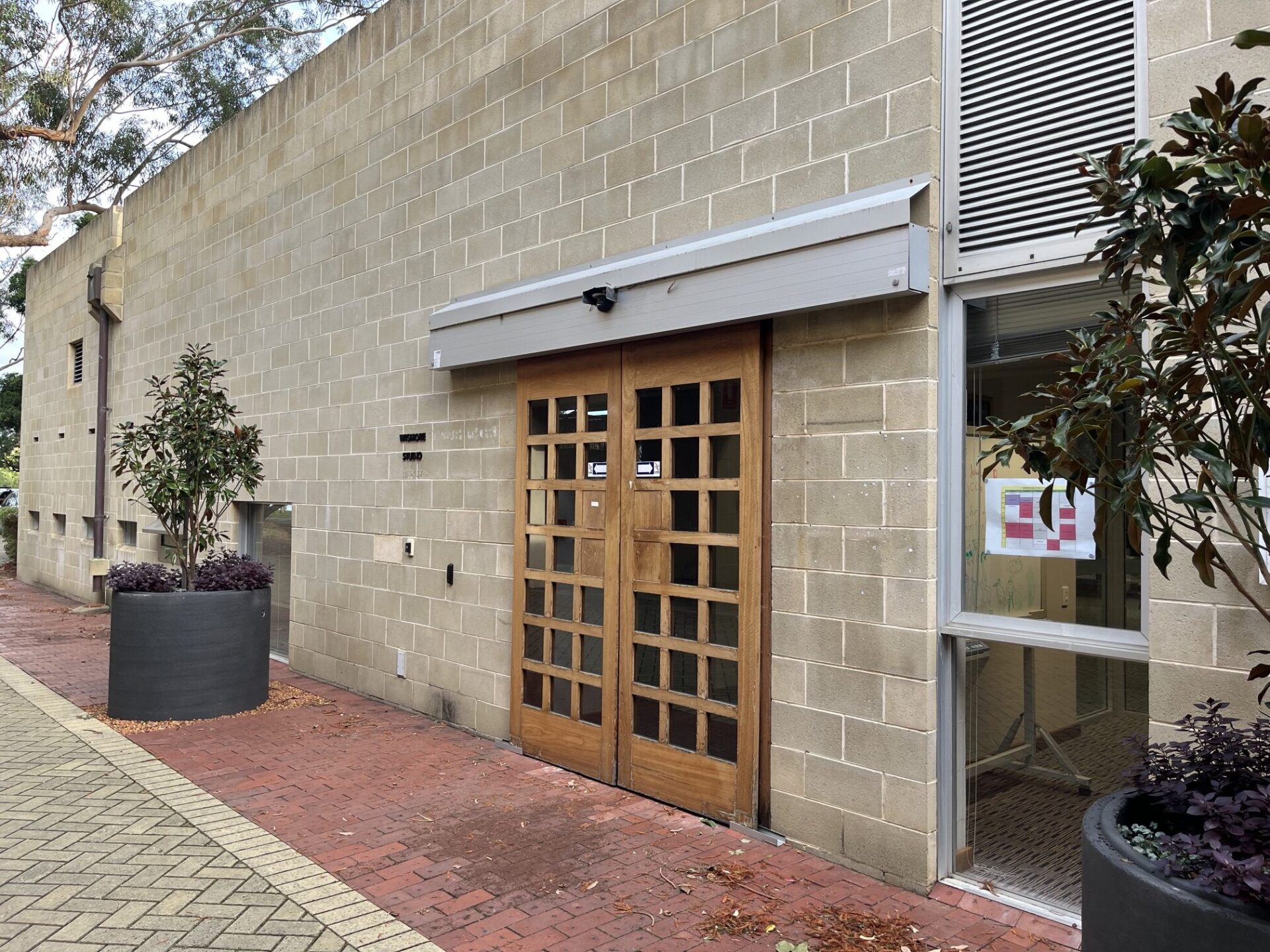
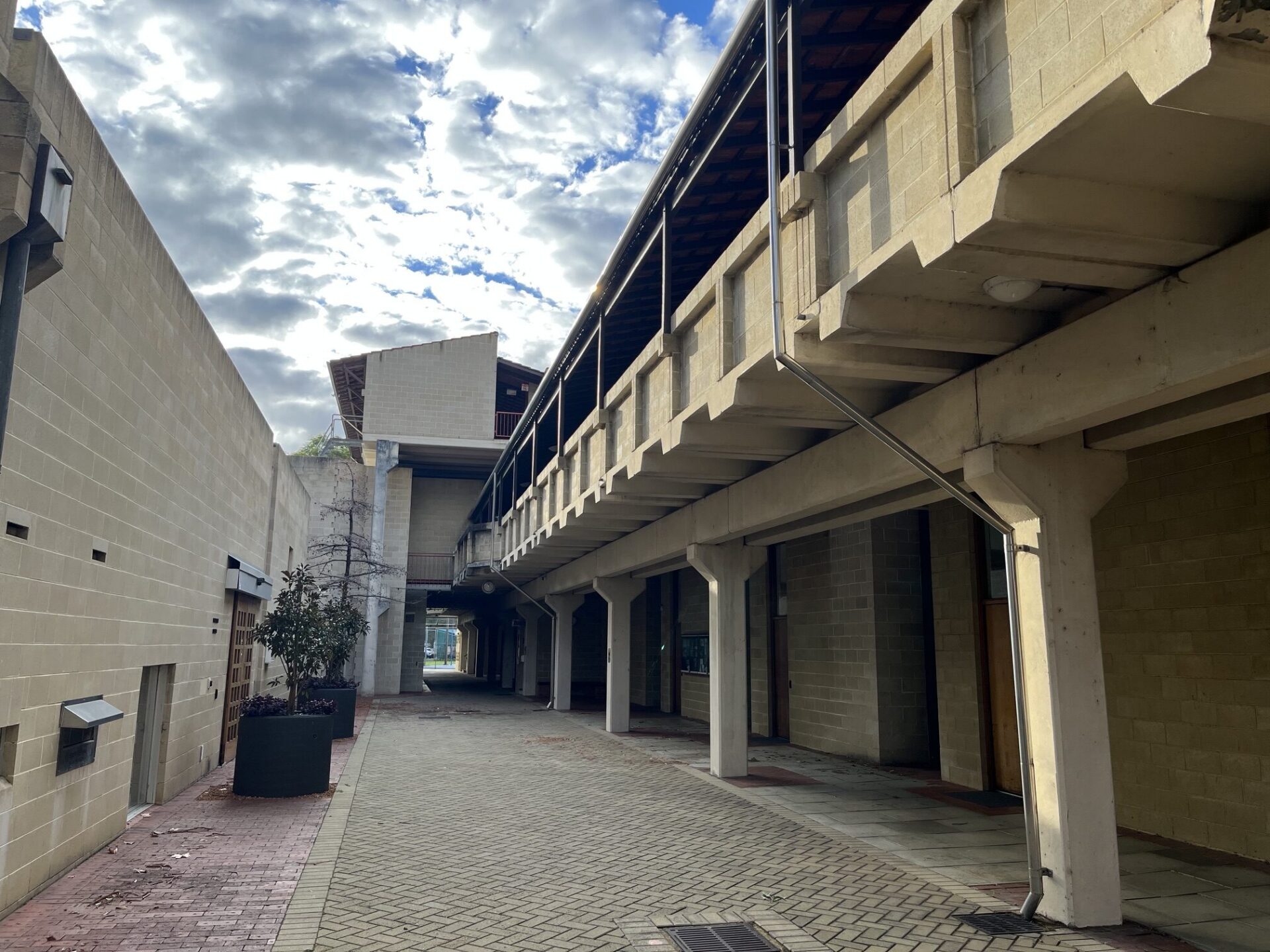
The building’s materiality follows Crawley campus design guidelines of limestone and terra cotta roofs, modernised with the use of limestone-coloured concrete block and one of WA’s first instances of precast concrete post and beam construction. Brand and long-term structural colleague, Peter Bruechle, were pivotal in developing precast in WA, and this project was, at its time, the high point of their experimentation. The use of pre-cast concrete also contributes to the building’s long-term adaptability. Large structural spans and modular concrete components allow interior spaces such as rehearsal rooms, studios, and performance venues to evolve over time without compromising the building’s integrity.
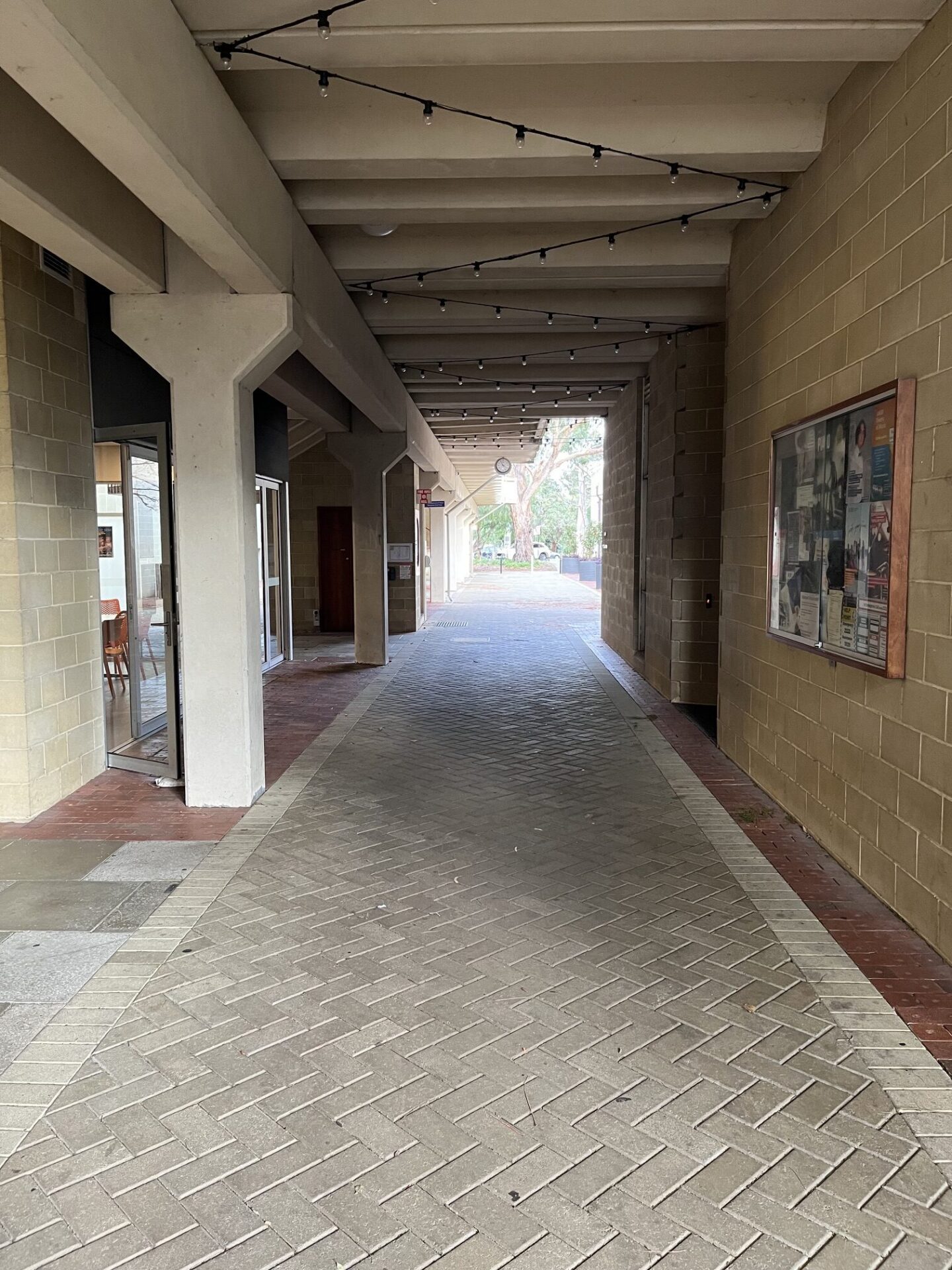
The project’s masterplan is simple, a long double-storey pre-cast column colonnade forms a spine, with offices and small practice rooms to one side, and larger performance spaces on the other.
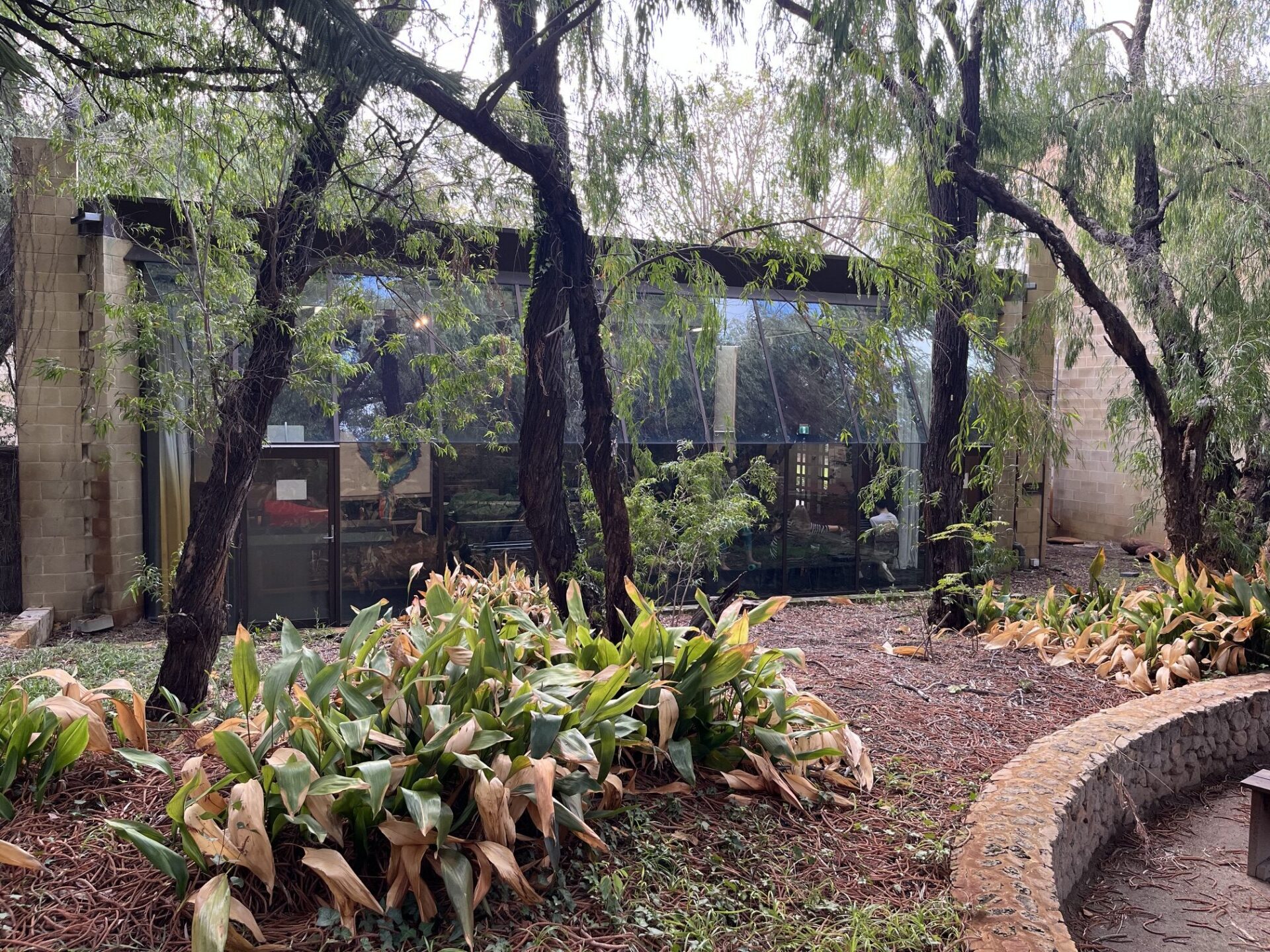
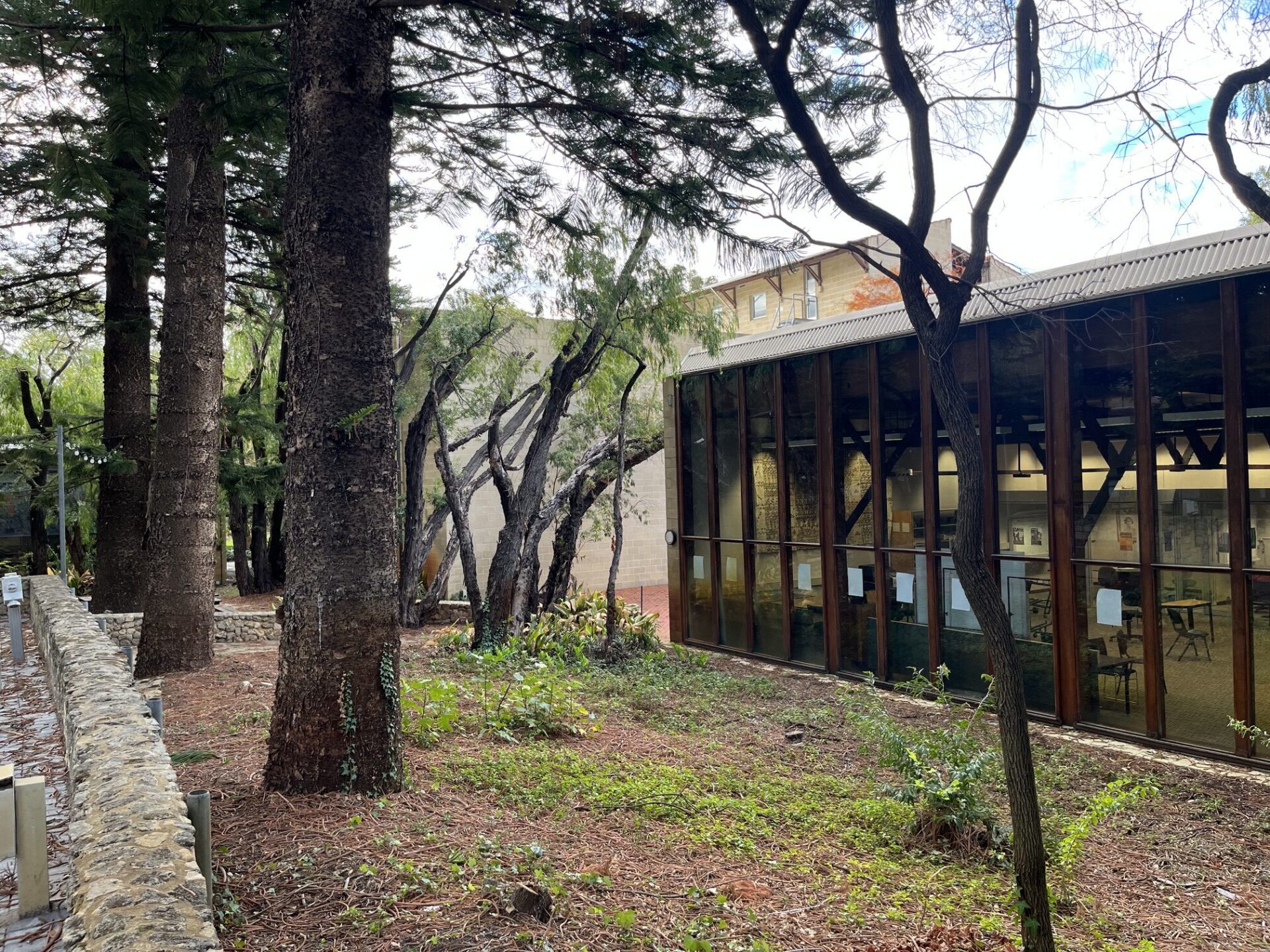
These performance spaces are the hidden gems of the project- with large expanses of glass facing out into hidden courtyard gardens. Ceilings are in rough sawn jarrah and steel trusses.
Brand and his contemporary, the other great UWA architect, Gus Ferguson, pioneered a simple modern language informed more by the Romanesque than the Classical, sturdy and durable, and unafraid to move away from Modern tropes to allow a more climate-responsive approach that included sloping roofs and deep eaves.
According to Brand, enduring architecture is achieved through durability, adaptability, and the honest expression of materials. The UWA Conservatorium of Music, as do many of his other buildings, reflects this underlying thesis that the principles of enduring buildings are a key measure of sustainability.
The Richard Roach Jewell Award for Enduring Architecture
This year, the UWA Conservatorium of Music, designed by Tony Brand during his time at Forbes and Fitzhardinge and completed in 1978, has won the 2026 AIA Enduring Architecture Award.
The building’s materiality follows Crawley campus design guidelines of limestone and terra cotta roofs, modernised with the use of limestone-coloured concrete block and one of WA’s first instances of precast concrete post and beam construction. Brand and long-term structural colleague, Peter Bruechle, were pivotal in developing precast in WA, and this project was, at its time, the high point of their experimentation. The use of pre-cast concrete also contributes to the building’s long-term adaptability. Large structural spans and modular concrete components allow interior spaces such as rehearsal rooms, studios, and performance venues to evolve over time without compromising the building’s integrity.
The project’s masterplan is simple, a long double-storey pre-cast column colonnade forms a spine, with offices and small practice rooms to one side, and larger performance spaces on the other.
These performance spaces are the hidden gems of the project- with large expanses of glass facing out into hidden courtyard gardens. Ceilings are in rough sawn jarrah and steel trusses.
Brand and his contemporary, the other great UWA architect, Gus Ferguson, pioneered a simple modern language informed more by the Romanesque than the Classical, sturdy and durable, and unafraid to move away from Modern tropes to allow a more climate-responsive approach that included sloping roofs and deep eaves.
According to Brand, enduring architecture is achieved through durability, adaptability, and the honest expression of materials. The UWA Conservatorium of Music, as do many of his other buildings, reflects this underlying thesis that the principles of enduring buildings are a key measure of sustainability.
Client perspective