
Muwinina and Palawa people of the Nipaluna Nation
Tasmania
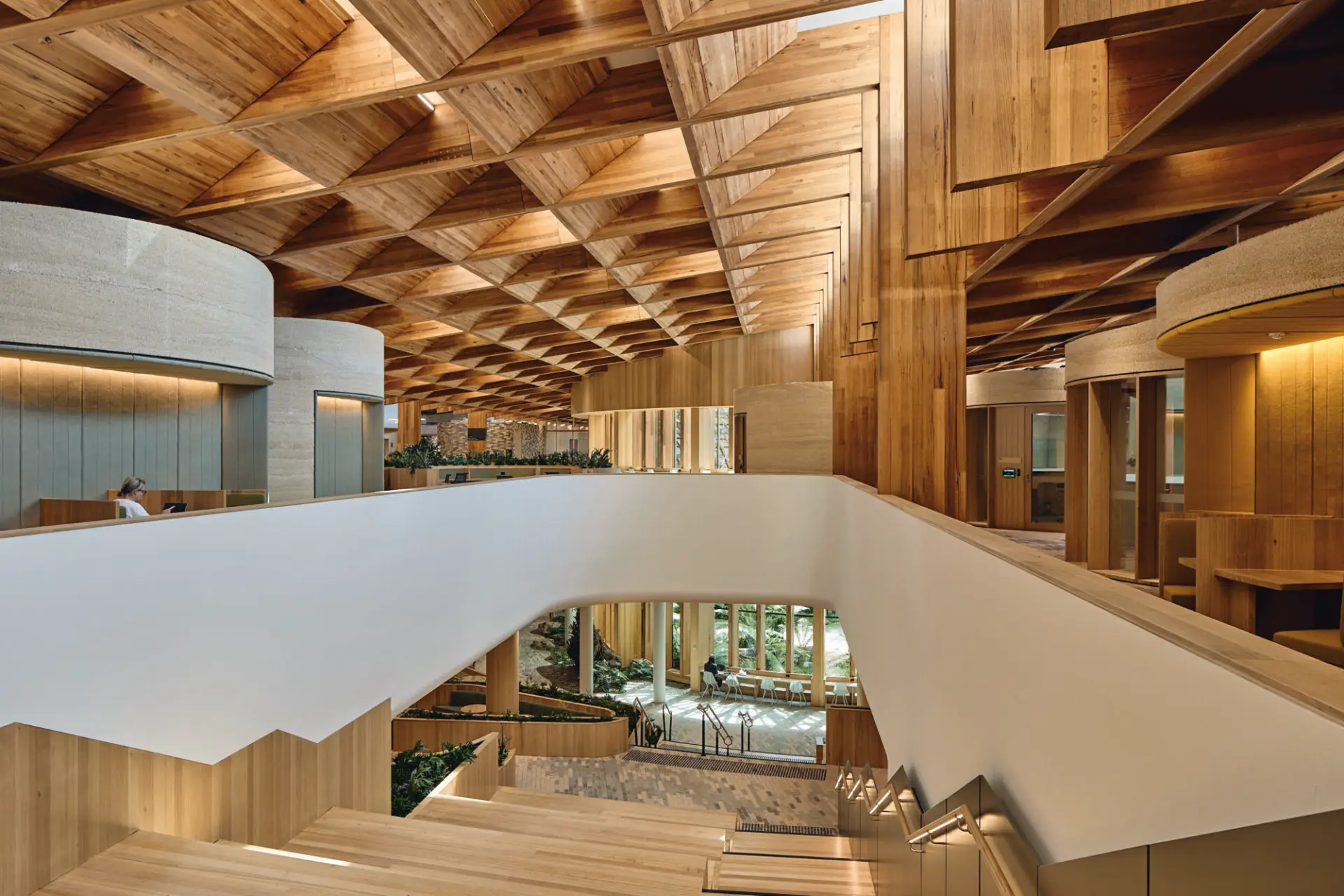
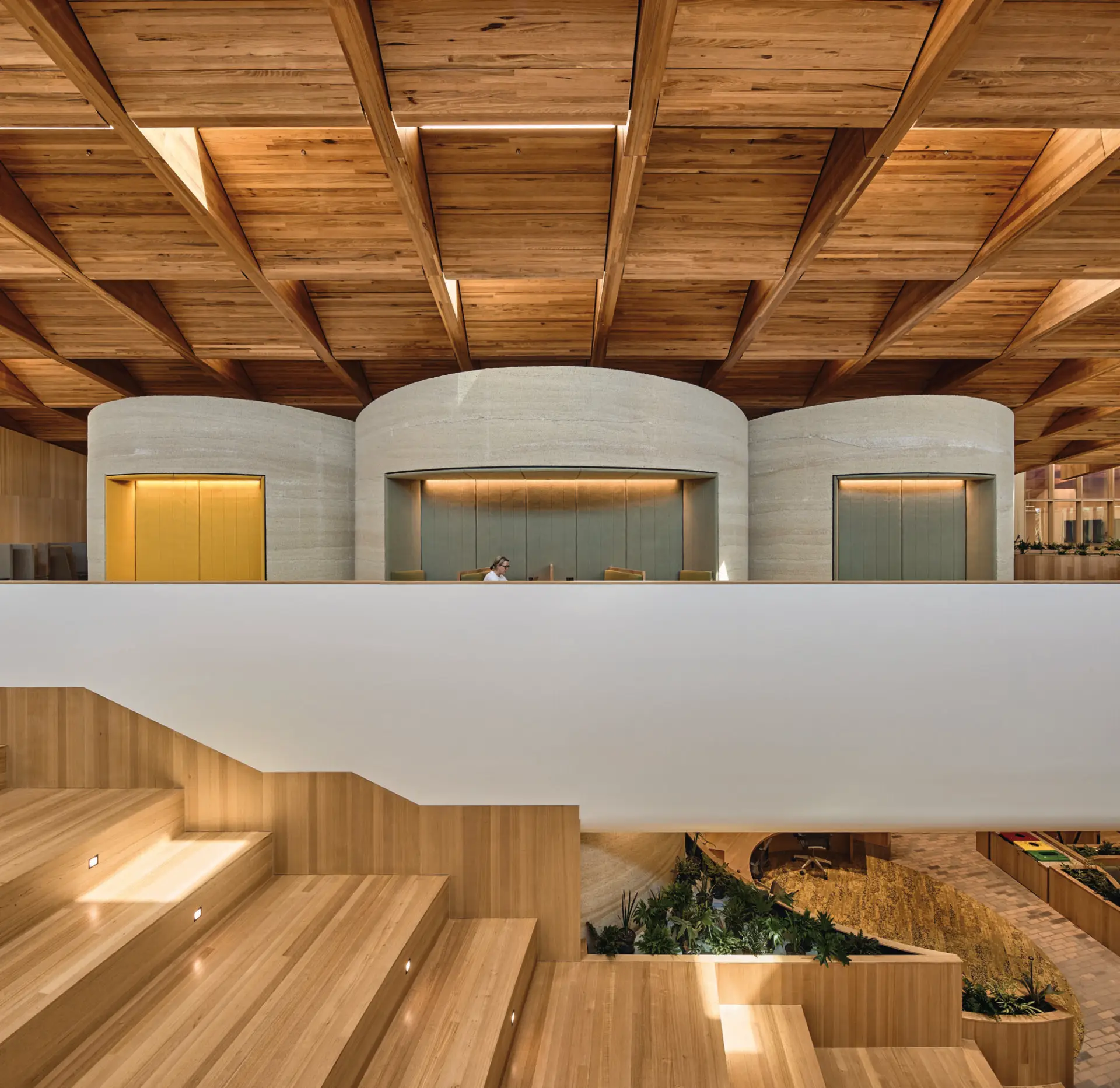
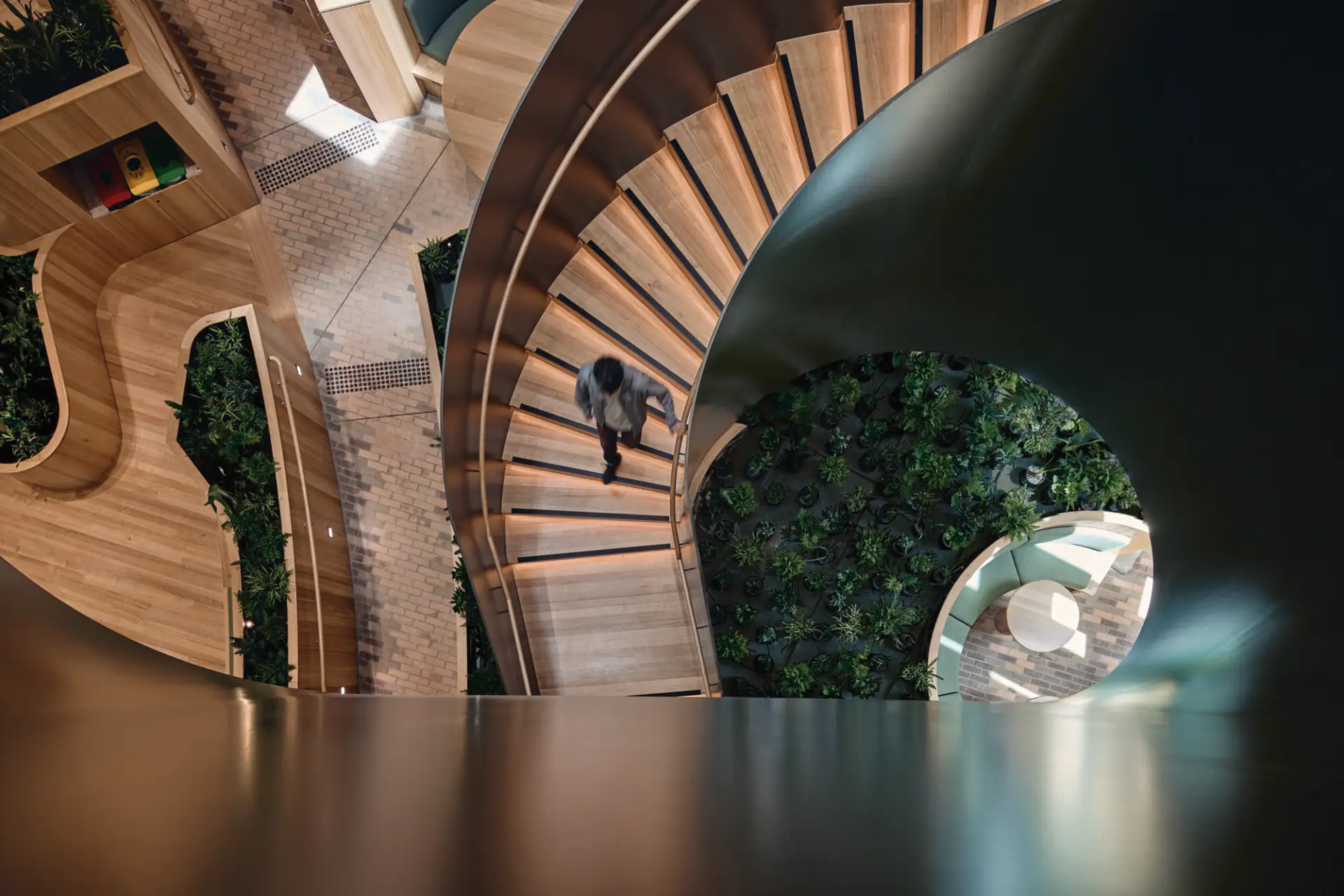
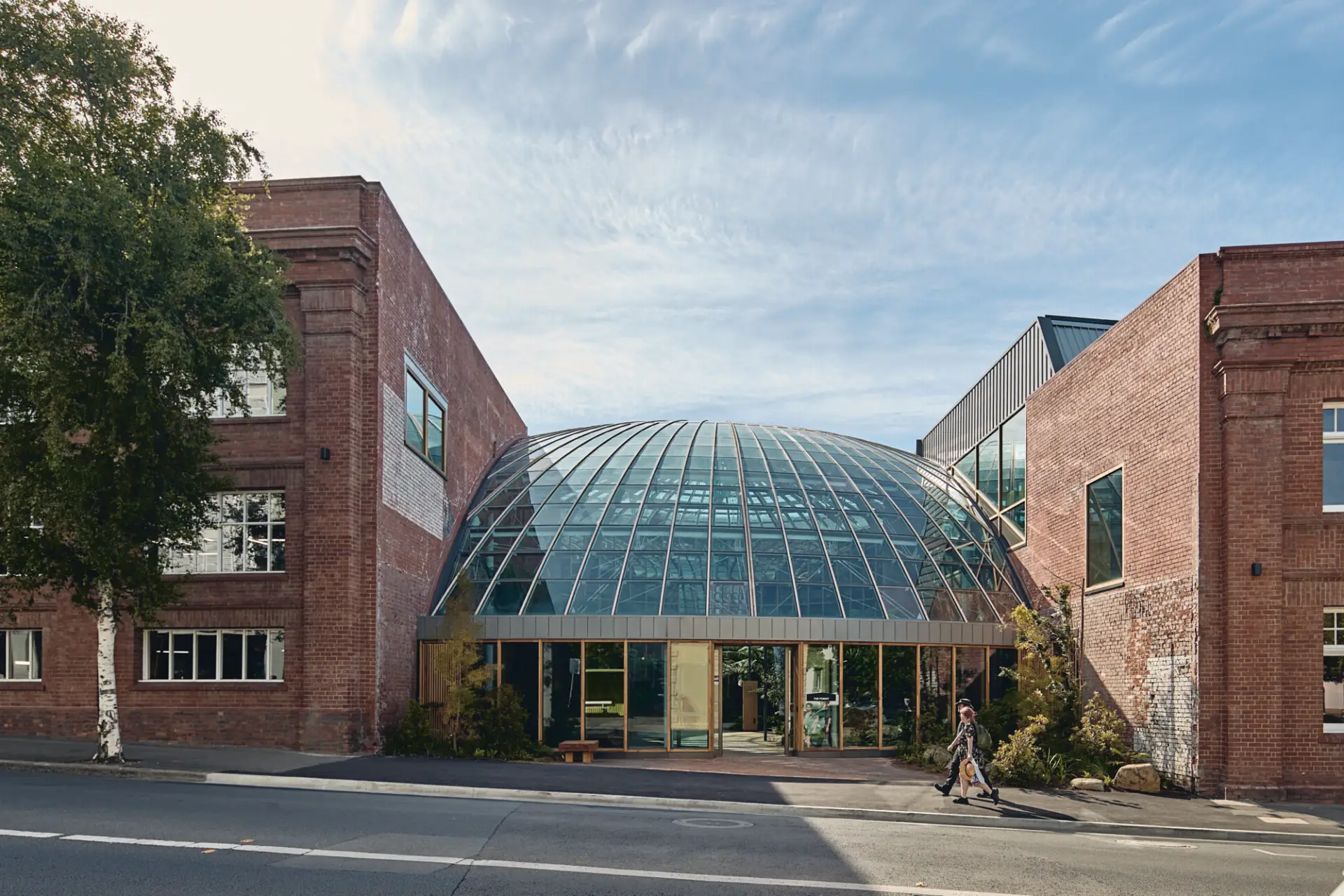
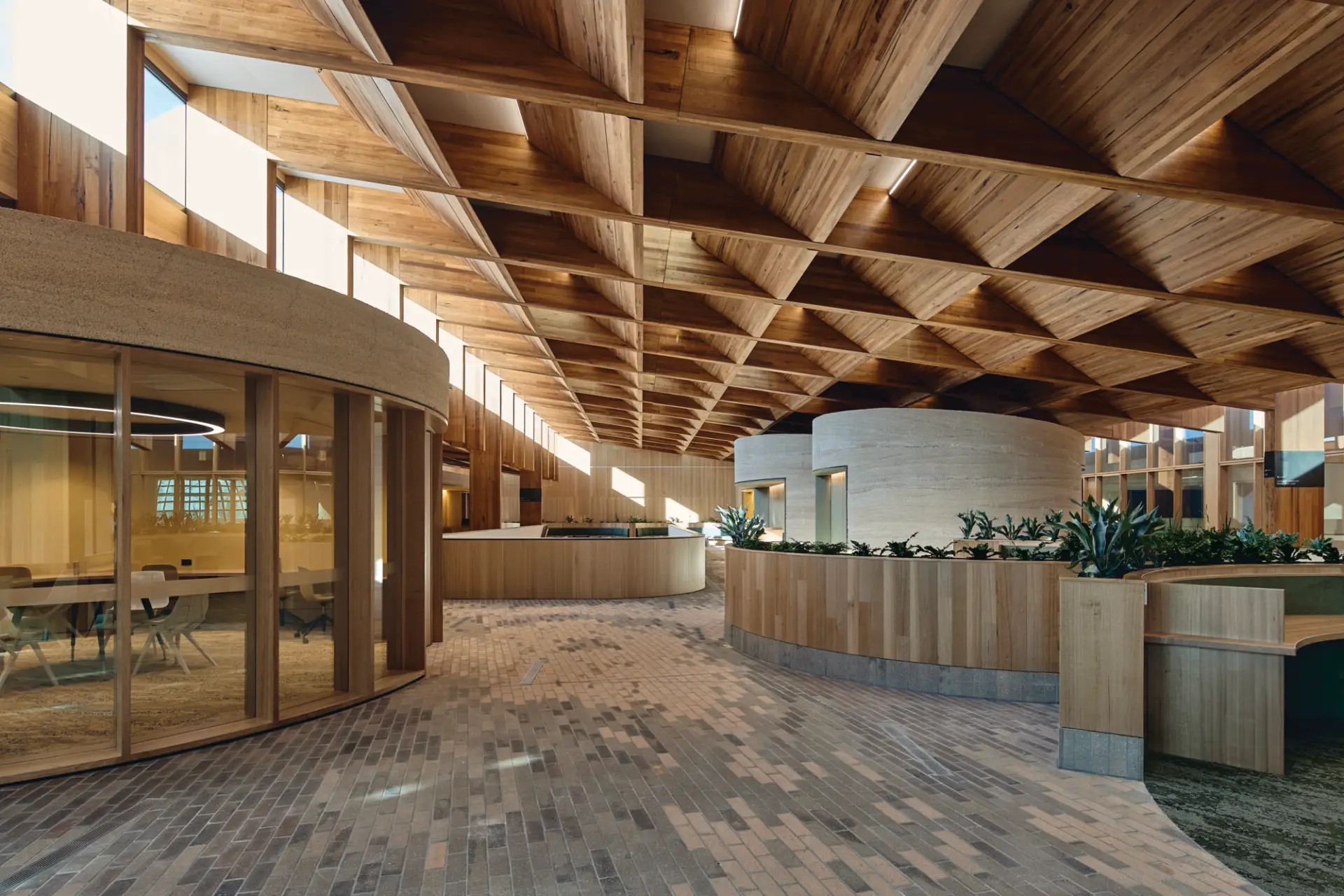
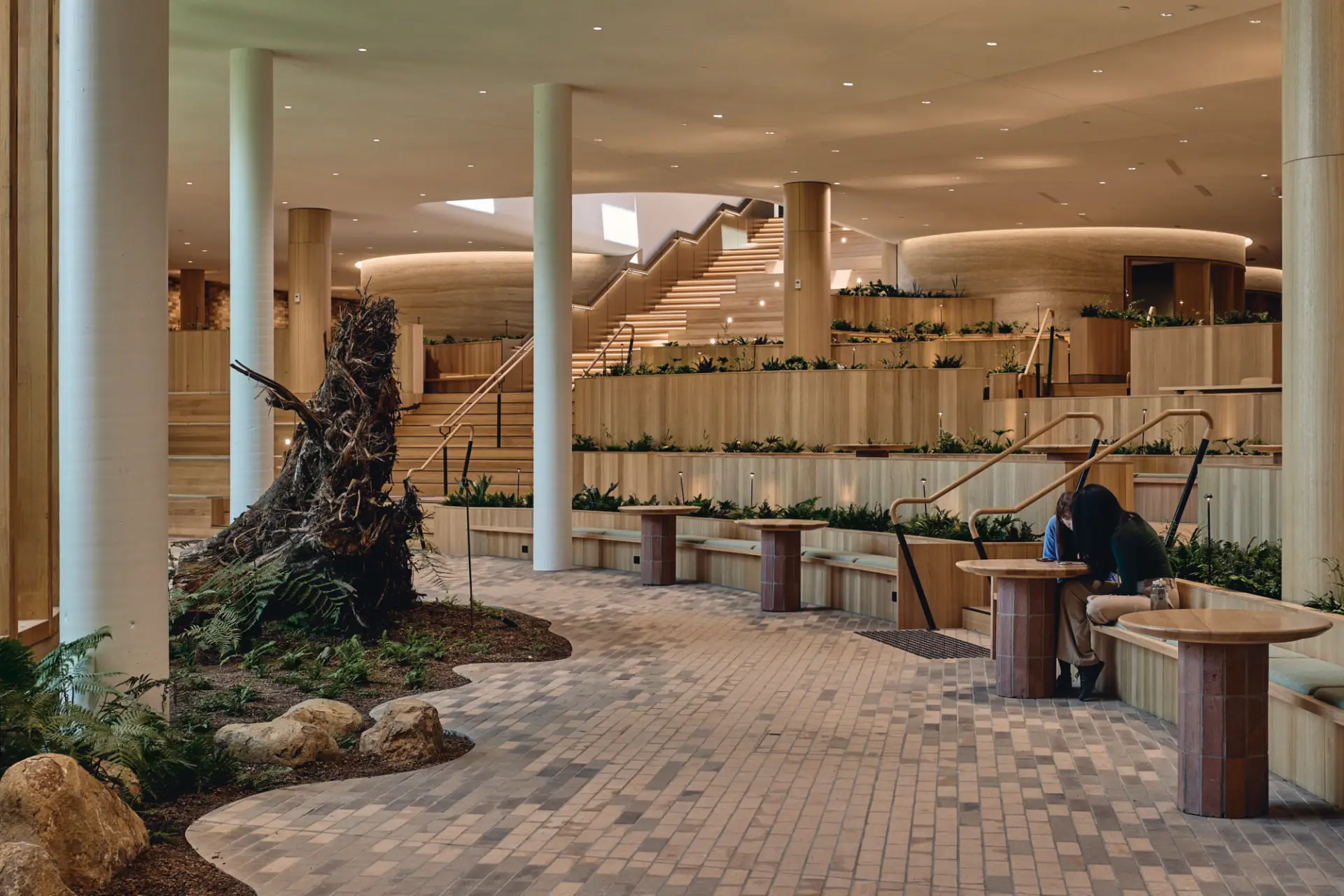
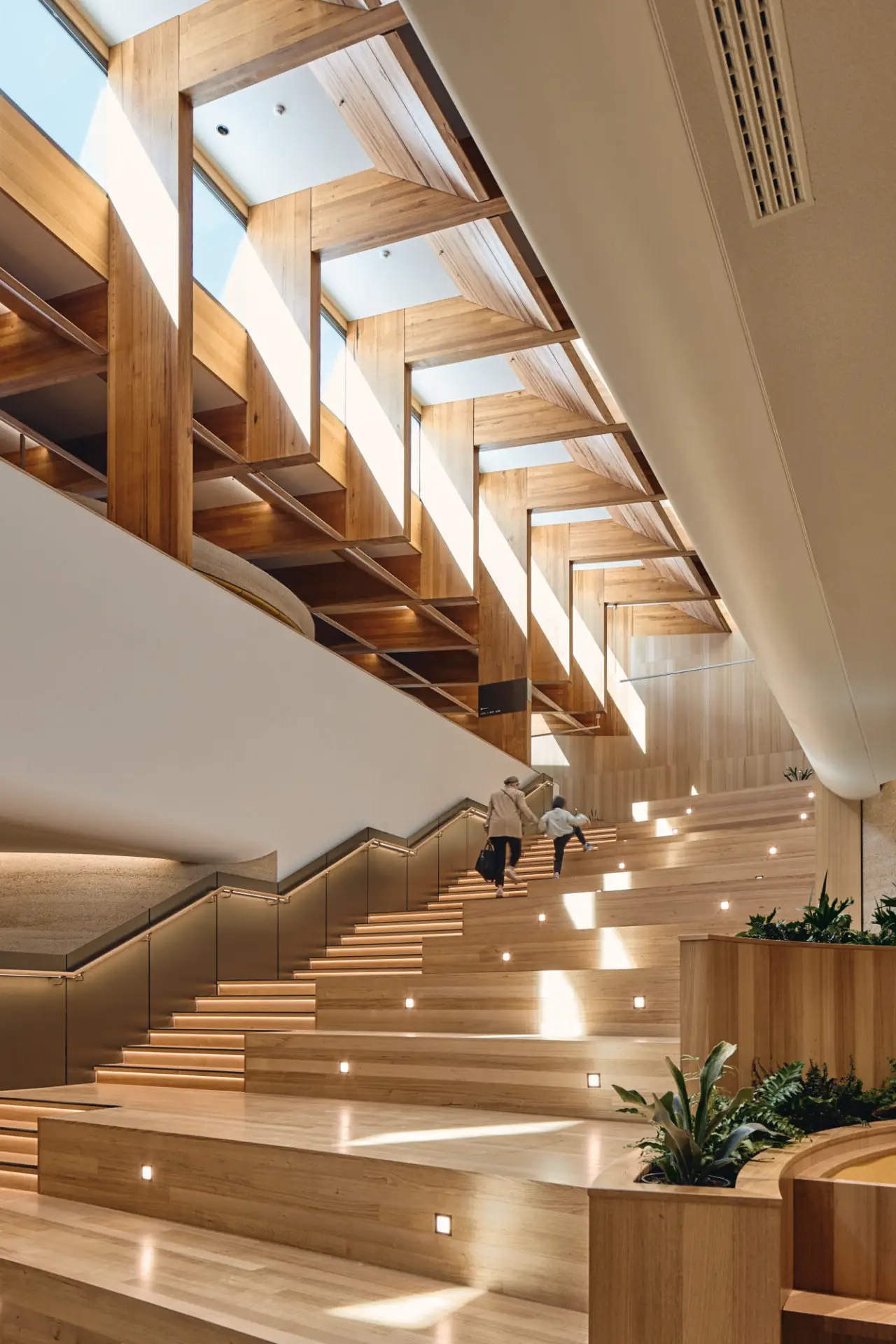
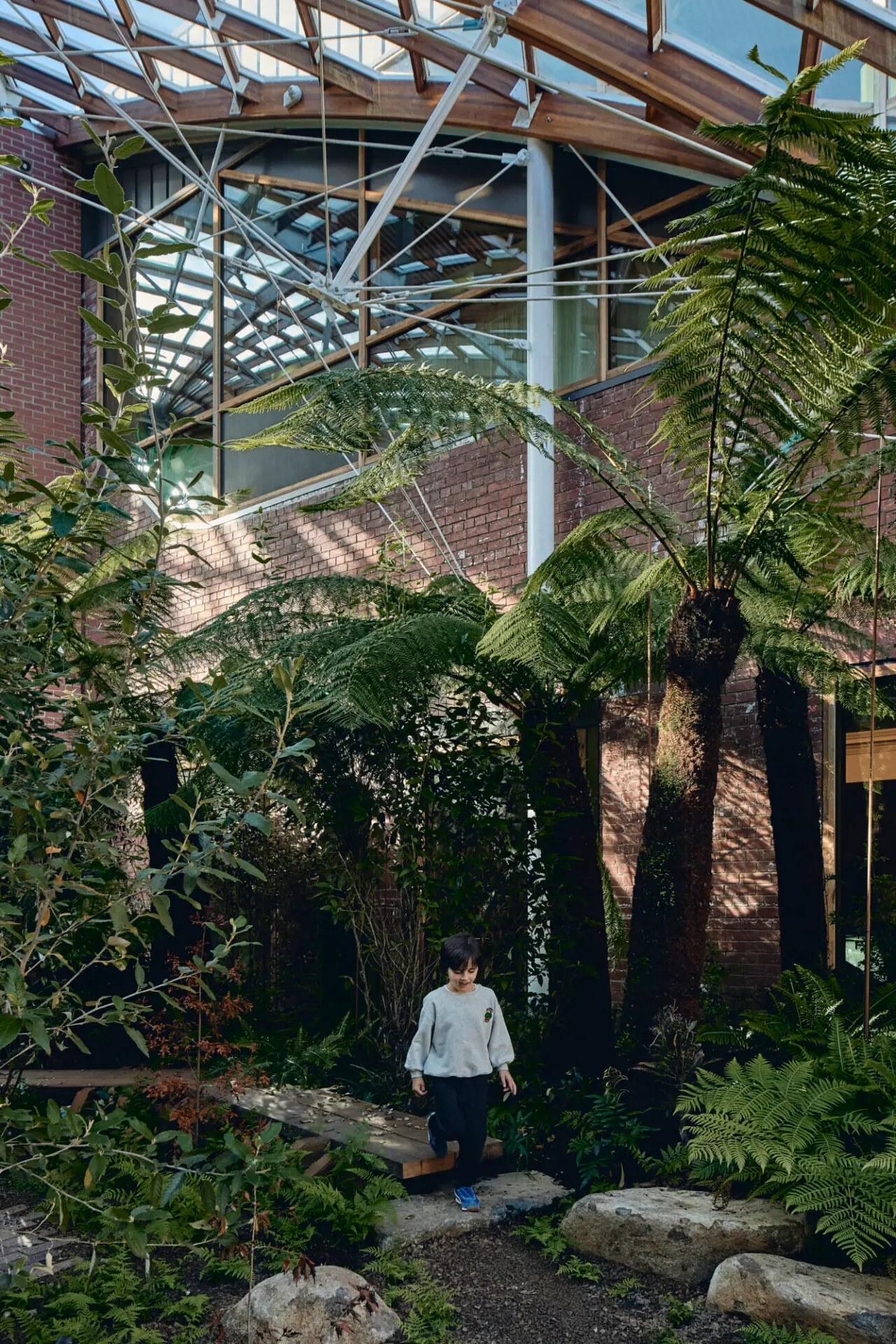
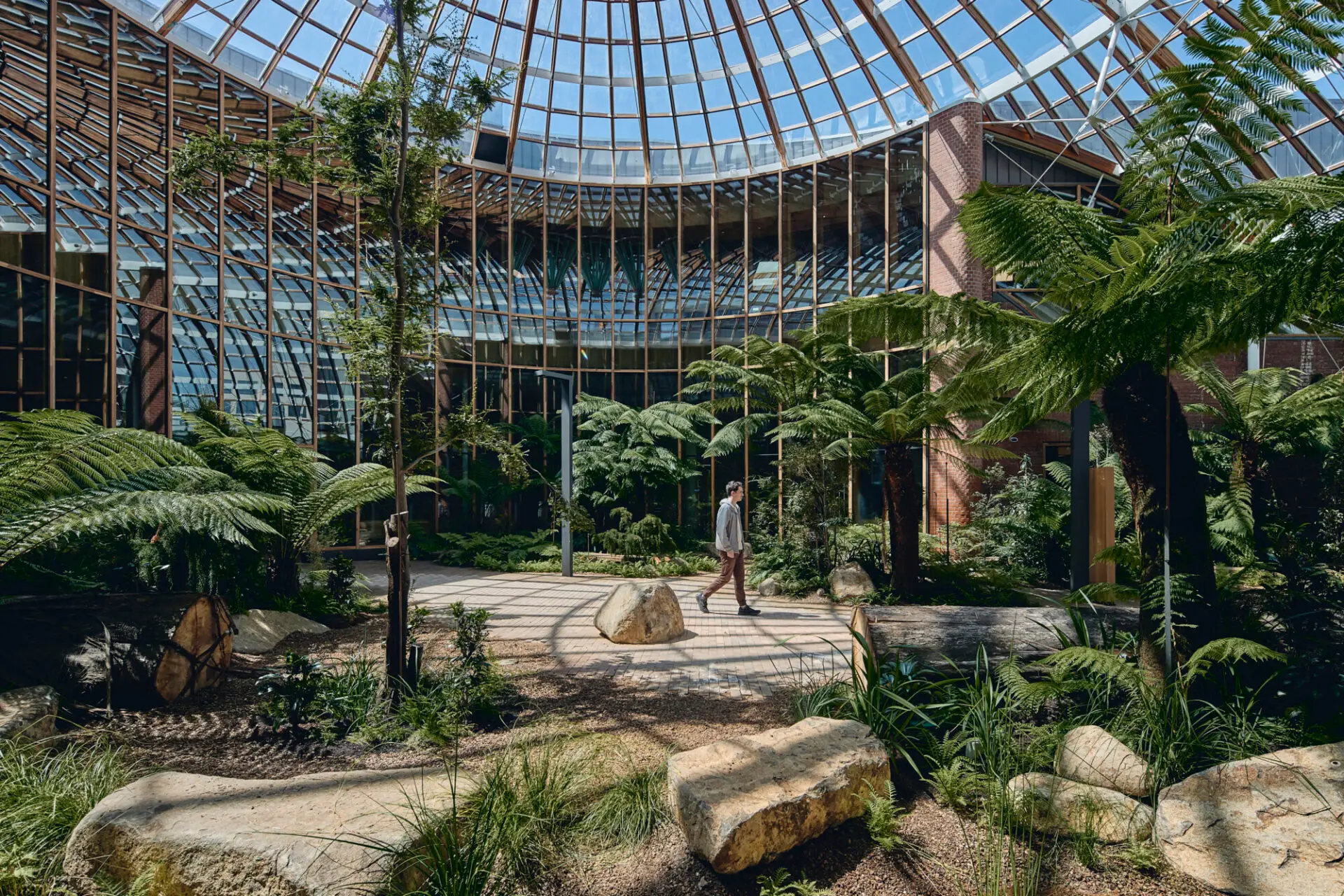
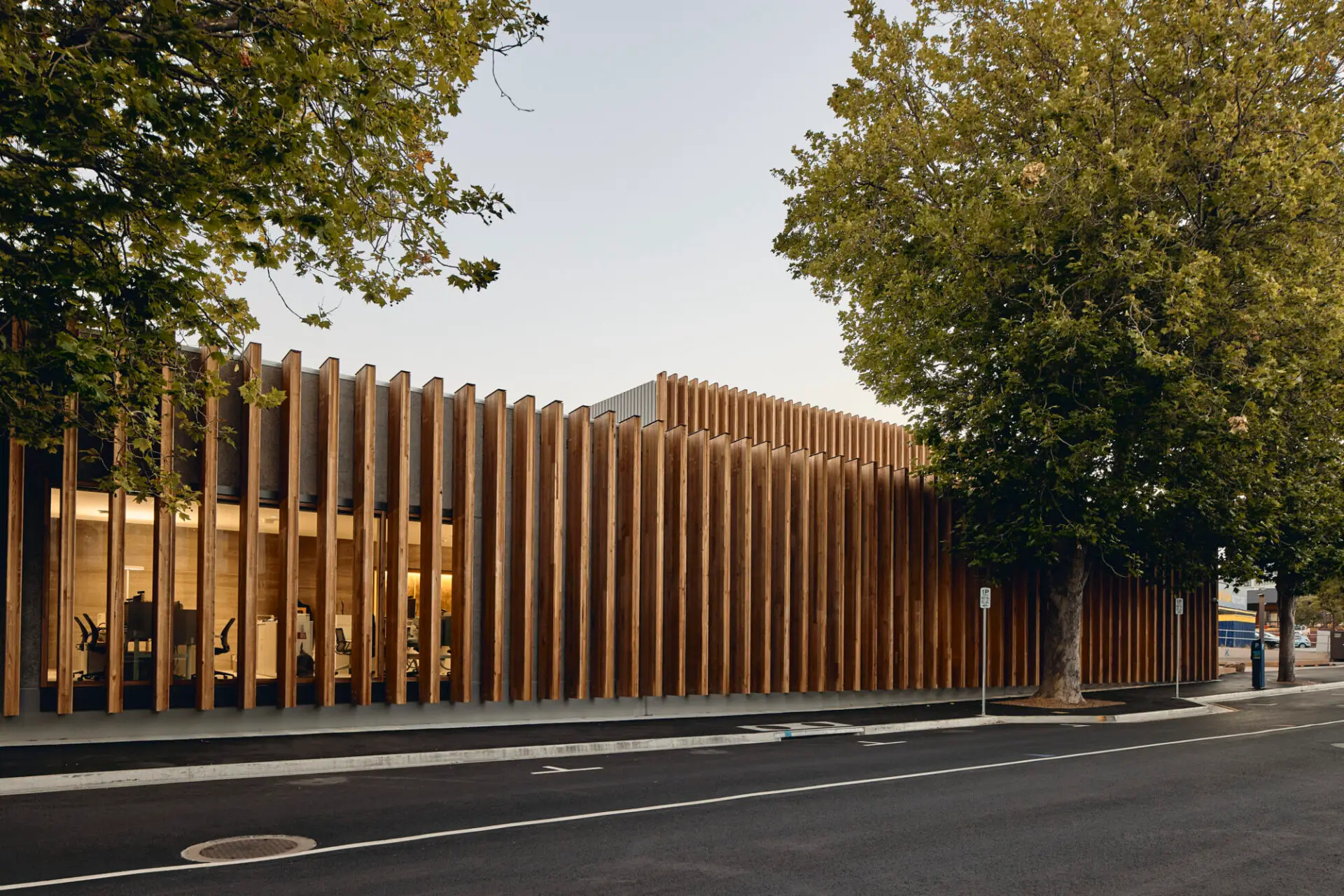
The Forest is the University of Tasmania’s flagship Hobart campus, providing an inner-city hub for learning, research, collaboration and community. Designed by Woods Bagot, The Forest is a highly connected campus that unifies the disparate built elements with integrated landscape, through-block connections and publicly accessible thoroughfares. As a highly flexible structure, the building’s demountable design will enable the university to adapt the interior environment as the university’s pedagogical needs change. Working with existing conditions, the project restores and revives two light industrial warehouses and heritage-listed domed atrium. The reinstated forested atrium provides the civic heart of the campus, celebrating history, biophilia, and climate-responsive design. As an example of mass timber construction, adaptive reuse, and the largest commercial use of hempcrete in Australia, the new campus combines innovative and experimental approaches to resilient and sustainable design while restoring and reviving an iconic piece of local heritage.
The Sydney Blythe Award for Educational Architecture
Ambitious, thoughtful and beloved by students, The Forest is a creative reimagining of what a university campus can be. Conceived as a sequence of spaces developed within existing built fabric, it brings together a diversity of learning environments with access to greenery, light and civic generosity.
Entry is through the iconic Robert Morris-Nunn glass dome atrium, which has been reactivated as a welcoming, landscaped anteroom. Existing heritage structures, including historic warehouses, are carefully revived and integrated with new interventions that bring new function to old buildings. The project’s commitment to low-carbon construction sets a high benchmark for responsible design, with the integrity of these decisions resulting in tactile, robust spaces.
The jury was struck by the project’s quality, comfort and resolution, despite its considerable complexity. The level of craftsmanship, coordination and thought stood out and brought delight and intimacy to a large-scale project.
When visiting, it is easy to see that The Forest is already well-used and well-loved. It supports a wide range of learning modes, from quiet focus to collaboration, while welcoming the broader community through generous public connections. Acoustic comfort and amenity were clearly successful as we observed hundreds of students working, collaborating, socialising and enjoying a space that felt theirs.
The Barry McNeill Award for Sustainable Architecture
The Forest demonstrates a deeply embedded commitment to sustainability, showing meaningful effort in incorporating low-carbon decision making at every stage of the design and delivery. Working with what already existed, the design prioritises adaptive reuse, significantly reducing the need for new construction while extending the life of significant buildings.
A rigorous lifecycle assessment informed key decisions throughout, guiding the selection of materials and systems. The result is a project that substantially outperforms typical benchmarks, achieving a remarkable reduction in both upfront and embodied carbon. These outcomes are not only technical achievements but are expressed in the character of the building itself, through the warmth and tactility of natural materials like timber, bricks and hemp.
The project embraces circular economy principles with integrity and visual legibility – a feature the jury loved to see as a key design principle in a learning space. Materials are used thoughtfully rather than decoratively, with many elements designed for disassembly and future reuse. Considerable effort by the Woods Bagot team was put into innovation, including scaling the credentials and usability of hempcrete in commercial applications by pursuing additional testing.
The Forest is an inspiring demonstration of how architecture can respond to the urgency of climate action, balancing performance, adaptability and felt experience. It sets a confident benchmark for a new generation of low-carbon, resource-conscious buildings.
The Sydney Blythe Award for Educational Architecture
Ambitious, thoughtful and beloved by students, The Forest is a creative reimagining of what a university campus can be. Conceived as a sequence of spaces developed within existing built fabric, it brings together a diversity of learning environments with access to greenery, light and civic generosity.
Entry is through the iconic Robert Morris-Nunn glass dome atrium, which has been reactivated as a welcoming, landscaped anteroom. Existing heritage structures, including historic warehouses, are carefully revived and integrated with new interventions that bring new function to old buildings. The project’s commitment to low-carbon construction sets a high benchmark for responsible design, with the integrity of these decisions resulting in tactile, robust spaces.
The jury was struck by the project’s quality, comfort and resolution, despite its considerable complexity. The level of craftsmanship, coordination and thought stood out and brought delight and intimacy to a large-scale project.
When visiting, it is easy to see that The Forest is already well-used and well-loved. It supports a wide range of learning modes, from quiet focus to collaboration, while welcoming the broader community through generous public connections. Acoustic comfort and amenity were clearly successful as we observed hundreds of students working, collaborating, socialising and enjoying a space that felt theirs.
The Barry McNeill Award for Sustainable Architecture
The Forest demonstrates a deeply embedded commitment to sustainability, showing meaningful effort in incorporating low-carbon decision making at every stage of the design and delivery. Working with what already existed, the design prioritises adaptive reuse, significantly reducing the need for new construction while extending the life of significant buildings.
A rigorous lifecycle assessment informed key decisions throughout, guiding the selection of materials and systems. The result is a project that substantially outperforms typical benchmarks, achieving a remarkable reduction in both upfront and embodied carbon. These outcomes are not only technical achievements but are expressed in the character of the building itself, through the warmth and tactility of natural materials like timber, bricks and hemp.
The project embraces circular economy principles with integrity and visual legibility – a feature the jury loved to see as a key design principle in a learning space. Materials are used thoughtfully rather than decoratively, with many elements designed for disassembly and future reuse. Considerable effort by the Woods Bagot team was put into innovation, including scaling the credentials and usability of hempcrete in commercial applications by pursuing additional testing.
The Forest is an inspiring demonstration of how architecture can respond to the urgency of climate action, balancing performance, adaptability and felt experience. It sets a confident benchmark for a new generation of low-carbon, resource-conscious buildings.
This building is about creating a sustainable future. In Hobart life expectancy drops by about 1 year from every km you travel from the centre of the city until lives in the outer suburbs are 20 years shorter. This building is inspired by the mission to create greater access to the transformative education which will change that picture. Equally, as a very low carbon, circular, locally sourced, retrofit the building embodies our commitment to a sustainable environmental future consistent with by being #1 University in the World for Climate Action for four consecutive years.
Client perspective
Bruno Mendes, Design Architect
Sarah Ball, Design Architect
Alastair Flynn, Project Architect
Fernanda Eusbio, Project Architect
Phoebe Settle, Interior Design Leader
Ariel Flores, Project Architect
Caitlin Wallace, Project Architect
Clare Conan, Design Architect
Frank Rog, Designer
Jess Dootjes, Interior Designer
Sue Fenton, interior Designer
Jordon Saunders, Design Architect
Kenneth Chou, Project Architect
Arup, Acoustic Consultant
Arup, ESD Consultant
Arup, Facades
ERA-co, Wayfinding
Slattery, Quantity Surveyor
Lee Tyers & Associates, Building Surveyor
GHD, Traffic
Praxis Environemtns, Heritage Consultant
Educology, Education Briefing
REALMstudios, Landscape Consultant