
palawa
Tasmania
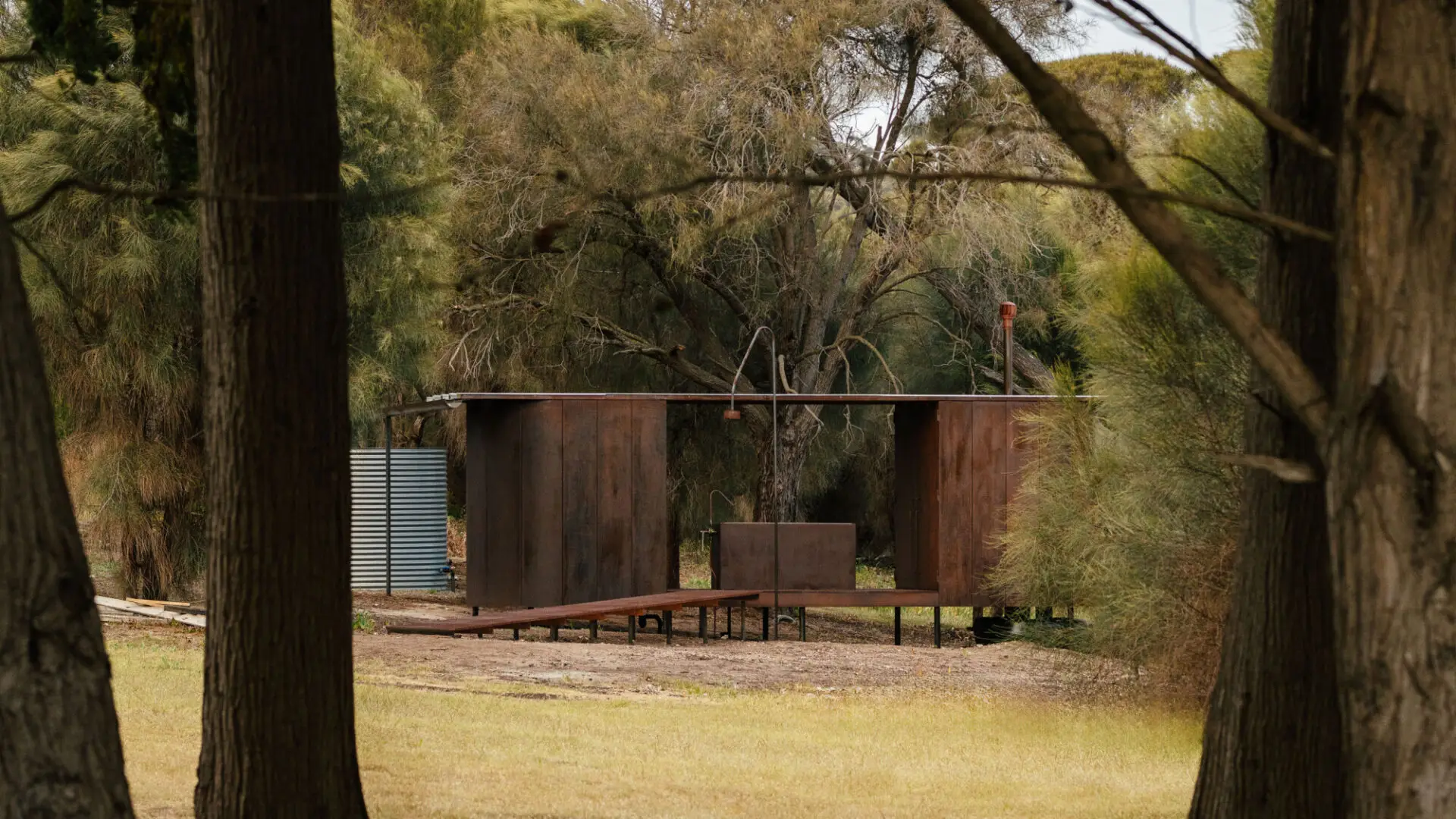
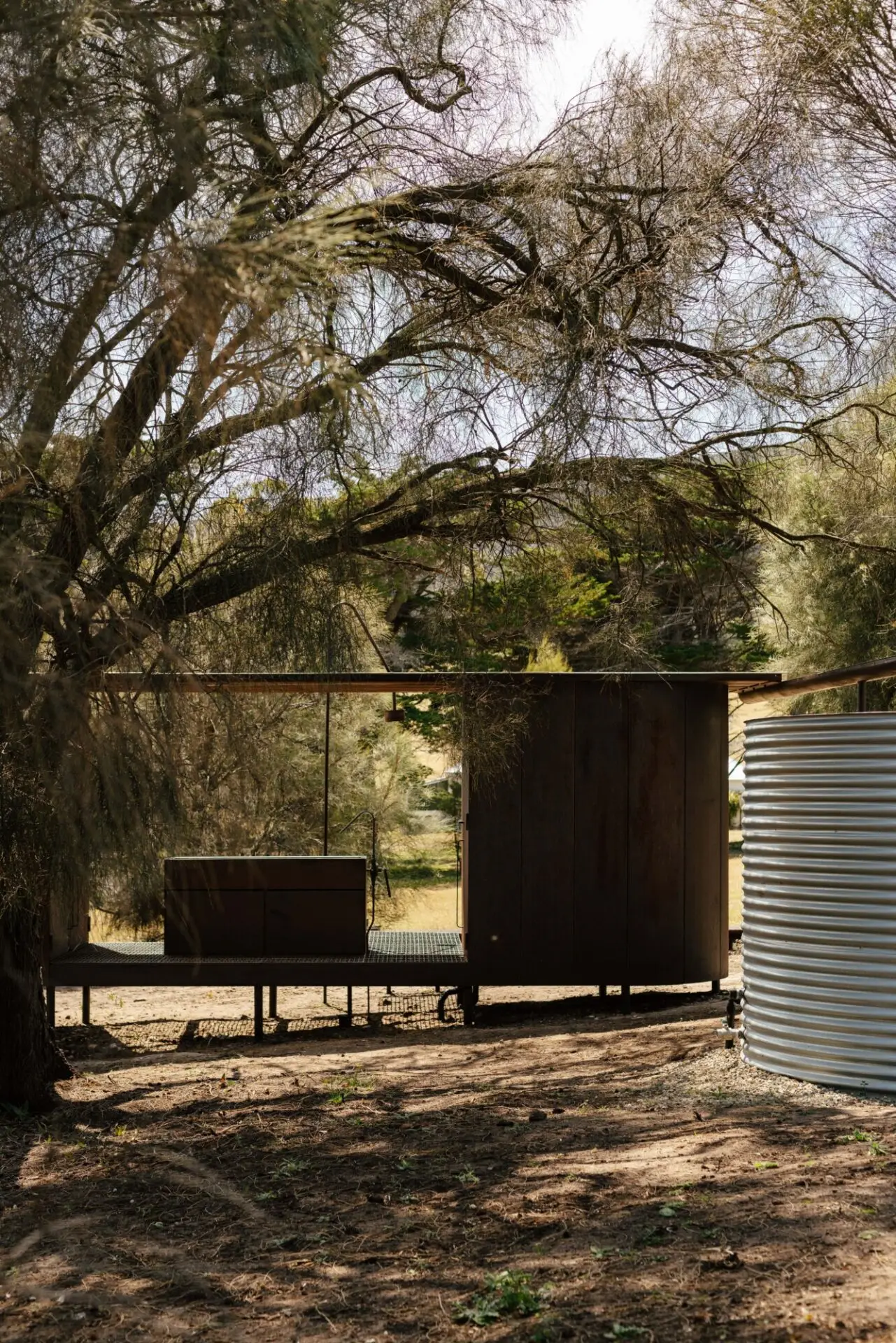
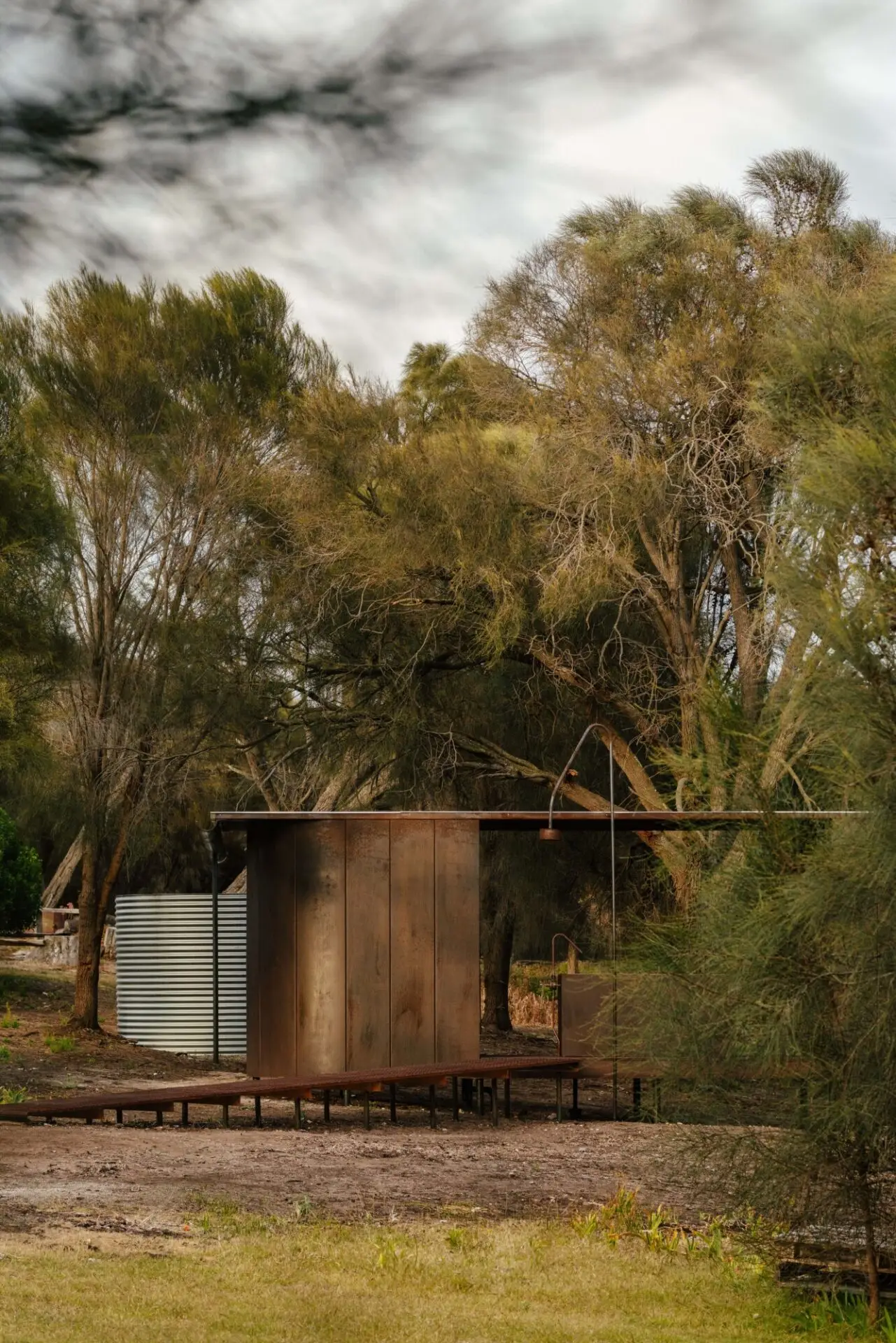
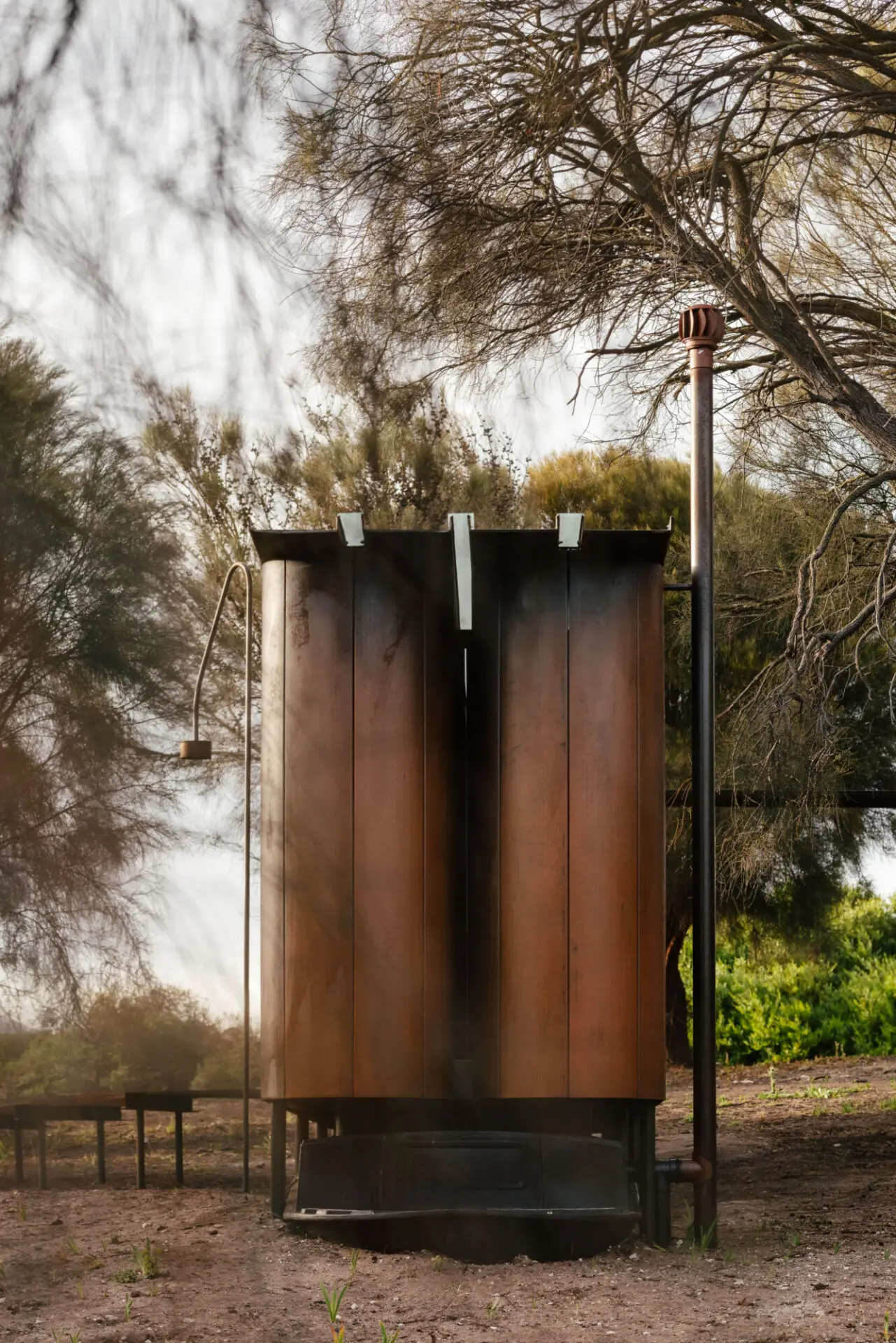
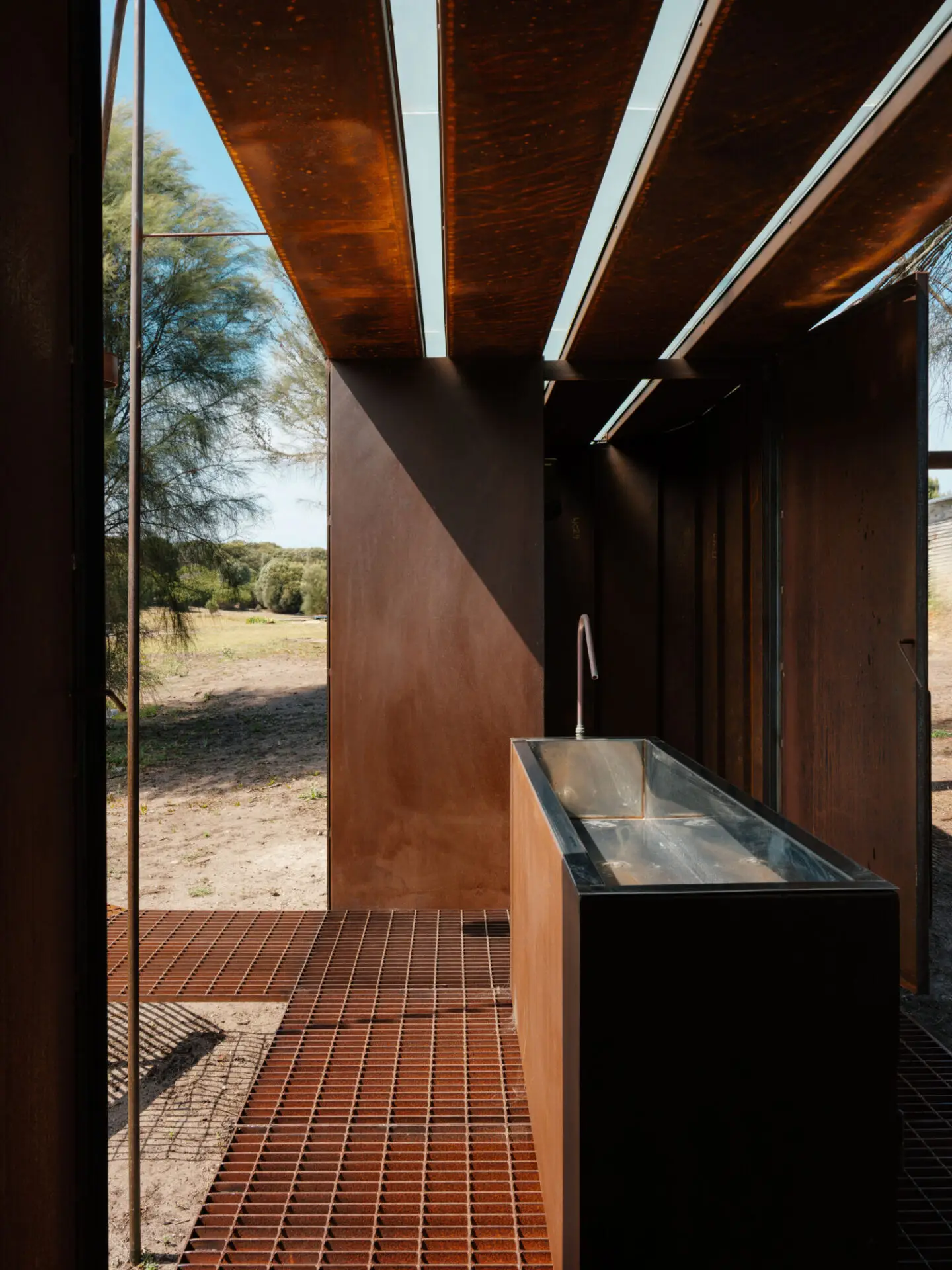
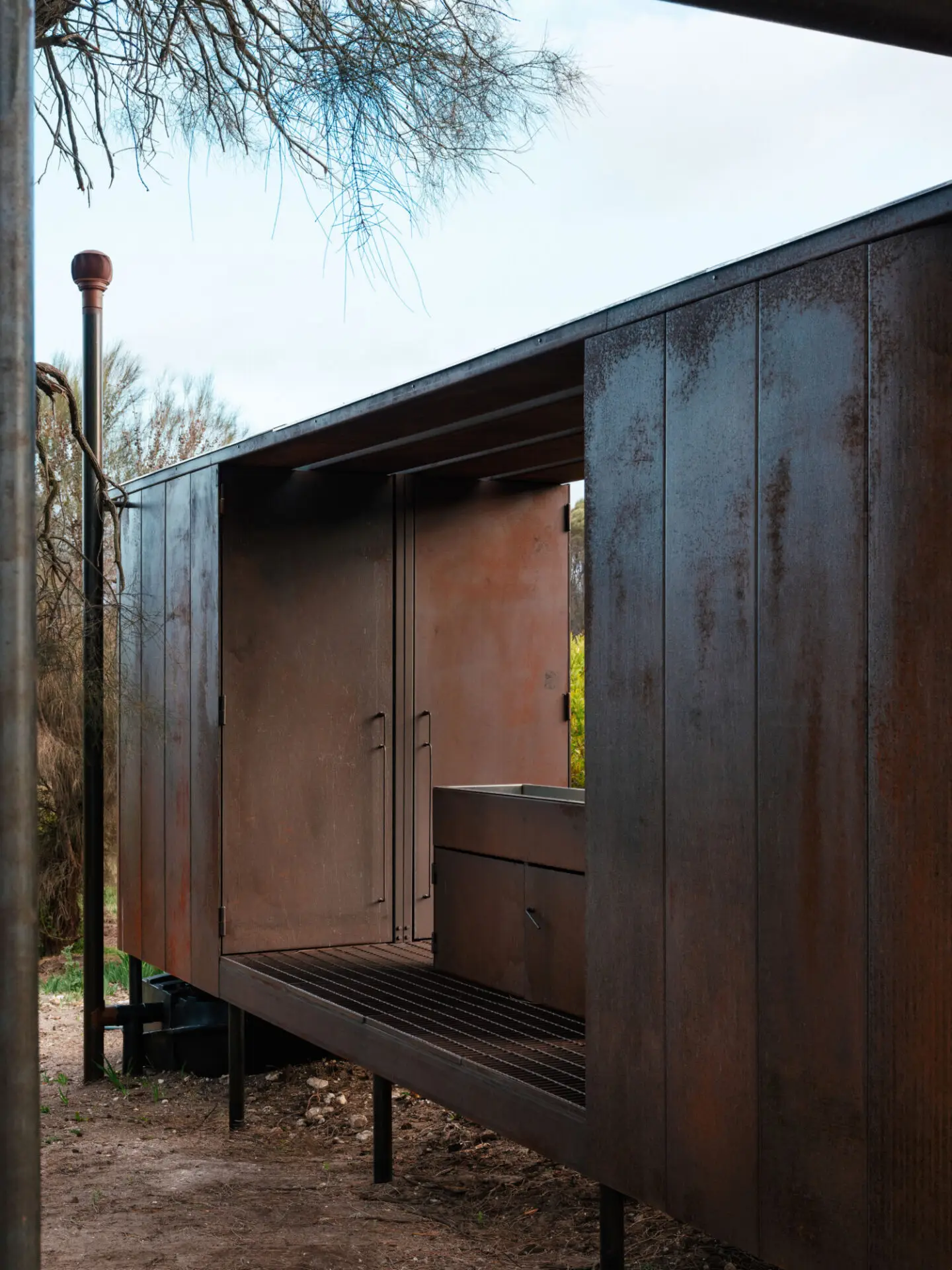
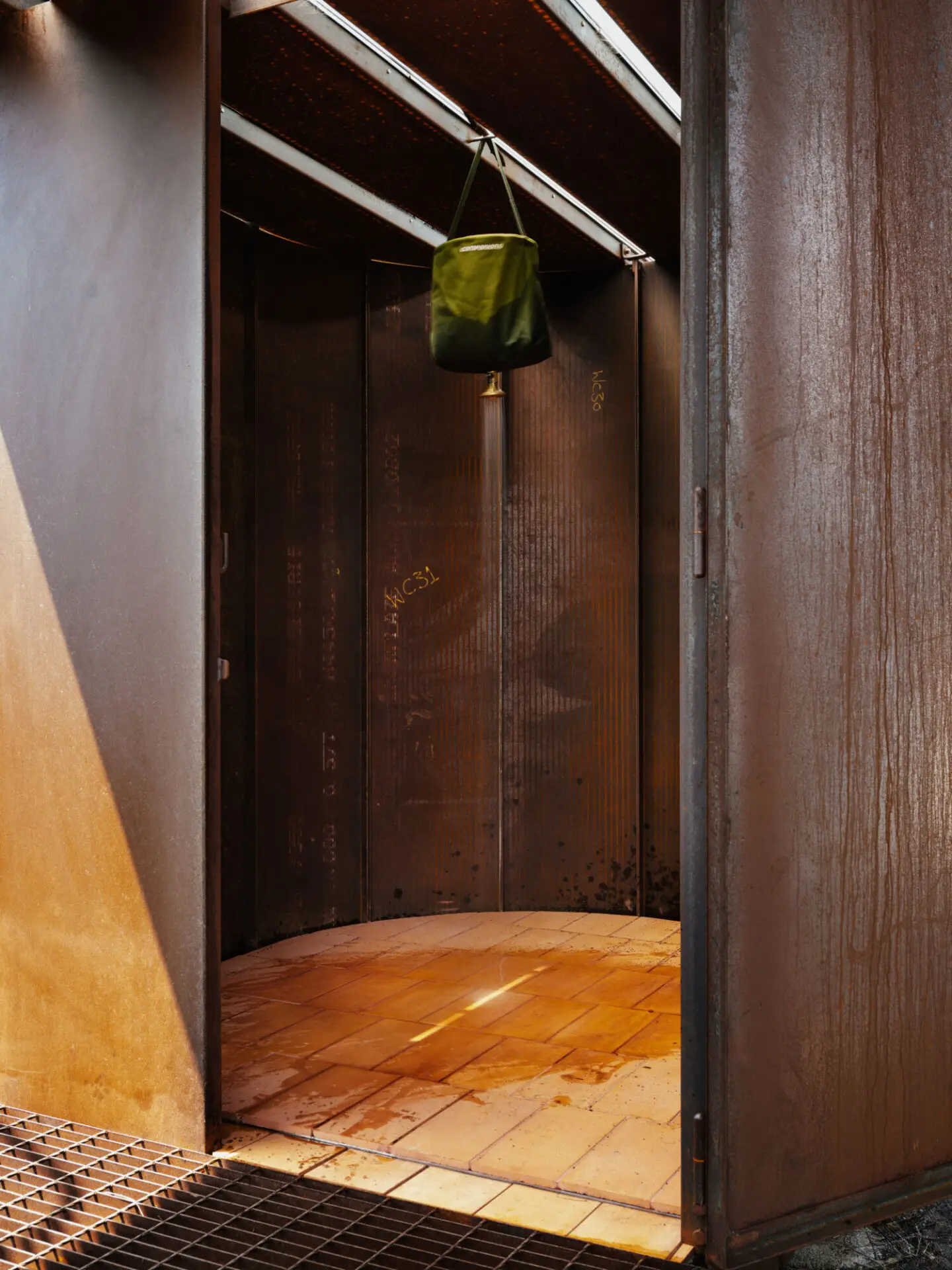
Wybalenna is a profoundly sacred place for Tasmanian Aborigines, recognised internationally as a place of genocide. From 1833 to 1847, it operated as an open-air concentration camp, and after prolonged activism, was returned to Aboriginal ownership and care in 1999. Limited funding support has hindered proper care of the site for decades. Responding to these challenges, the Aboriginal Land Council of Tasmania launched ‘Truth Telling at Wybalenna’ in 2023, and prioritized the realisation of communal amenity for Aborigines at Wybalenna. This ablutions pavilion is the first new structure at the site in over a century. Prefabricated and constructed pro bono, the ablutions offers community amenity while also honouring the enduring spirit of the Palawa. While prosaic, it is also architecturally symbolic, and through its materiality and siting seeks to reflect the resilience and cultural meaning of the setting.
The Peter Willmott Award for Small Project Architecture
In a category often defined by clever utility, The Ablutions at Wybalenna transcends its functional brief—to provide basic amenities—by becoming an architectural manifestation of resilience and endurance of the palawa people.
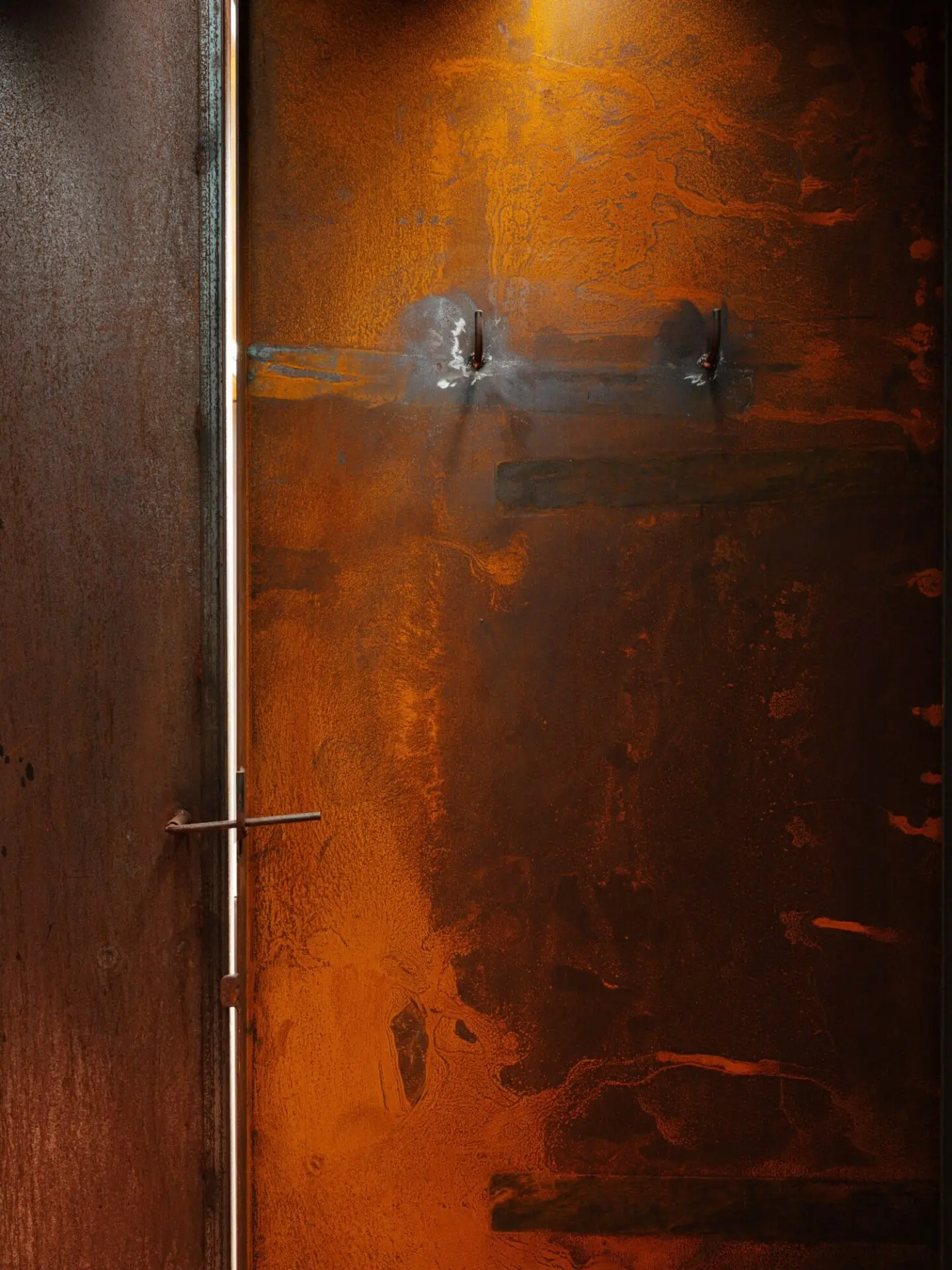
Taylor and Hinds have navigated the immense weight of Wybalenna’s history with profound sensitivity, delivering a structure that is both materially meaningful and culturally resonant. Form-making references traditional patterns of circular and curved scarification, whilst the use of Coreten steel echoes the use of ochre; a material denied to the Aborigines exiled at Wybalenna and replaced with mutton fat and the rust from convict farming implements to maintain their ceremonial obligations.
This is architecture as an act of service and reconciliation; it is a pro-bono gift of design and construction that provides a simple function but with extraordinary meaning. The words of the CEO of Aboriginal Land Council of Tasmania, Rebecca Digney, express it best: “To sit with us and hear our stories, and hear people talk openly about things, and then create architecture that breathes life into those feelings and emotions, is incredible to witness. It is like magic.”
COLORBOND® Award for Steel Architecture
For The Ablutions at Wybalenna, steel is not just a structural and functional choice; it is a medium selected for a symbolic and contextual dialogue. This project receives the Colorbond Steel Award for its exceptional use of material to articulate a narrative of resilience and survival. The choice of Corten steel throughout serves as a direct, visceral link to the history of the site, where the exiled palawa people, denied their traditional ochre, used mutton fat and the rust from convict farming implements to maintain their ceremonial obligations.
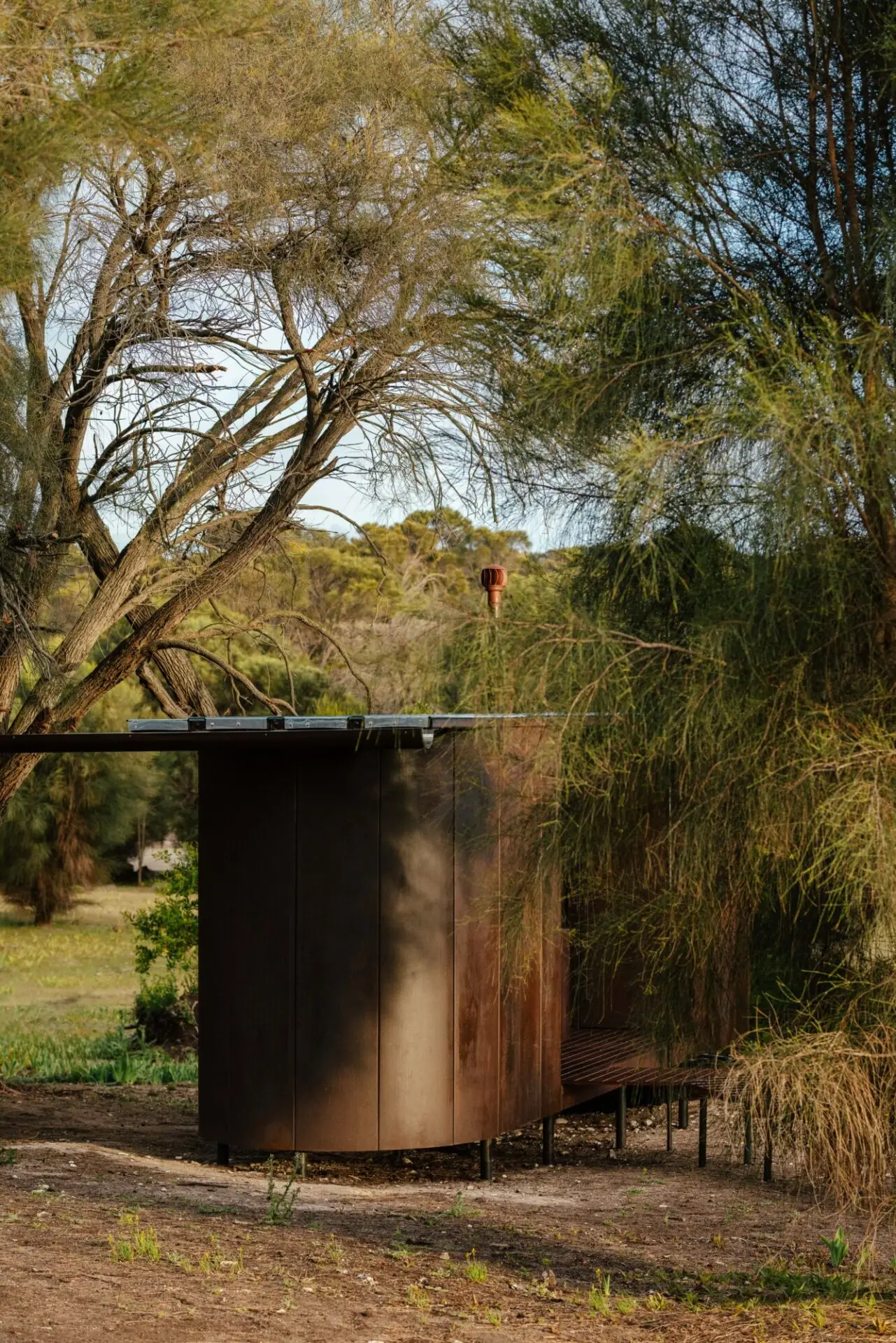
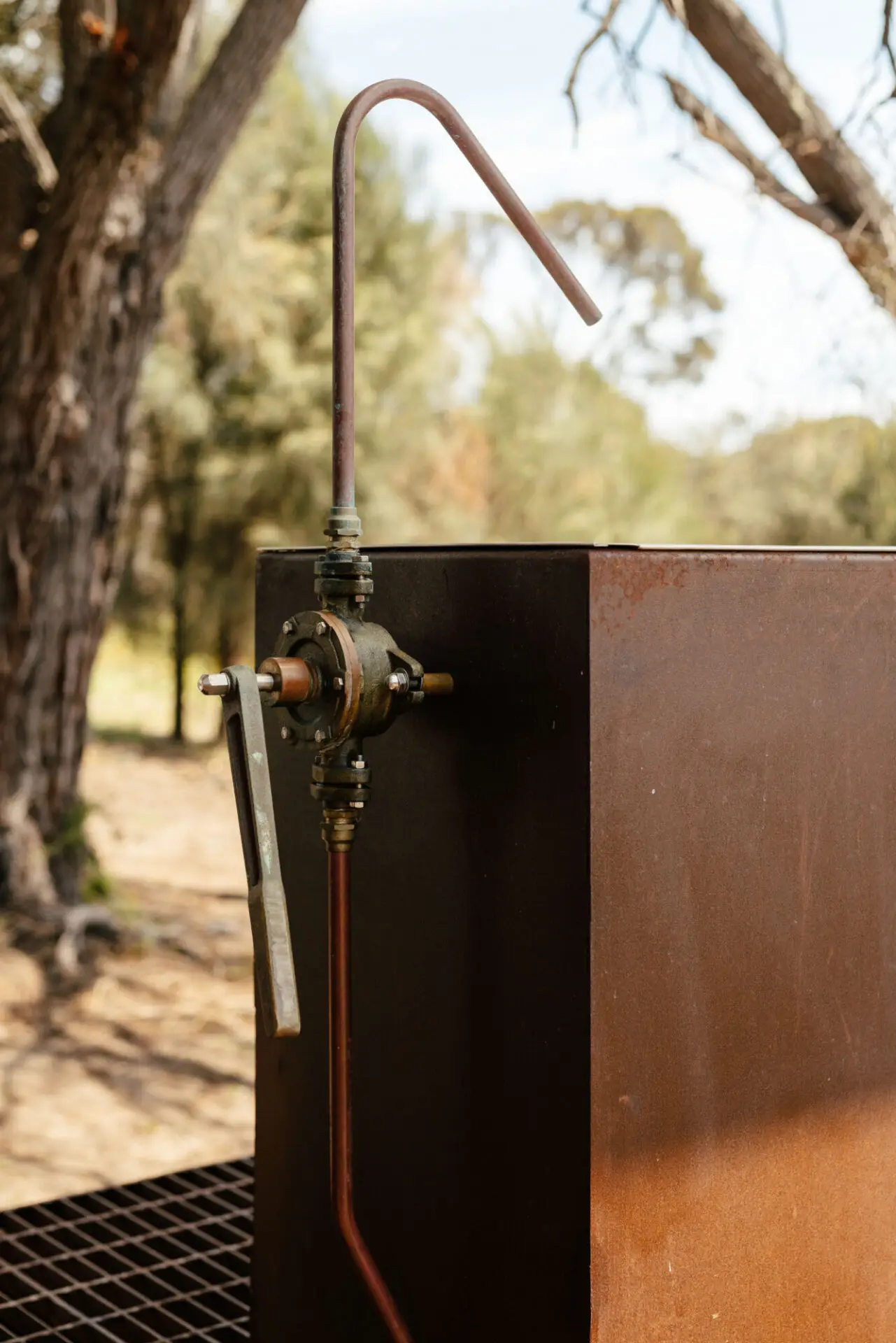
The execution of the pavilion demonstrates technical rigour through its prefabricated assembly and lean, expressive detailing. The rounded steel walls reference circular and curved scarification traditional practices of the Tasmanian Aborigines and cleverly provide cladding, structure, and experience in one. Designed to weather and patinate in harmony with the coastal environment, the structure is designed to endure and be easily maintained. By utilising donated steel to create a structure of such poetic and permanent quality, the project illustrates the power of materiality to tell truths that words often cannot.
For too many nations, there is a place where the traumas of history congeal as architecture. For lutruwita/Tasmania, that place is Wybalenna, site of the colonial internment of Aboriginal Tasmanians – an Australian genocide.1
Two architectural acts have been made on this haunted ground: an unbuilding and a building.
The old Homestead has been unbuilt, its layers of colonial occupation peeled away, disinterring the timber bones and brick flesh of the building. Minimal insertions, made of raw and noble materials, are sleeved into the remnant spaces. This is architecture as excavation, a taking away in order to give back, making space for remembrance, reclamation and reoccupation.
The Ablutions, most humble of functions, enacts the counterpoint: building. This simple raised pavilion, built entirely of oxidised steel, has the bearing of a delicate monument. With ochre colour and rounded forms the structure evokes the skin of ancestors adorned by ceremony and ritual. Its precise geometries bear time, like an ancient shell washed up from the depths.
Together, these interventions enact a quiet manifesto of architecture’s profound duty and promise. To give the past presence. To make the future tangible. To connect one another. To bear meaning and to heal trauma. They create a new foundation for this sacred place.
For all these reasons, the jury awards the Tasmanian Architecture Medal to Taylor & Hinds with the Aboriginal Land Council of Tasmania for the Homestead and Ablutions at Wybalenna.
1 Wybalenna Aboriginal Mission was explicitly reference by the Polish-Jewish lawyer Raphael Lemkin during the post-war establishment of the UN Genocide Convention.
The Peter Willmott Award for Small Project Architecture
In a category often defined by clever utility, The Ablutions at Wybalenna transcends its functional brief—to provide basic amenities—by becoming an architectural manifestation of resilience and endurance of the palawa people.
Taylor and Hinds have navigated the immense weight of Wybalenna’s history with profound sensitivity, delivering a structure that is both materially meaningful and culturally resonant. Form-making references traditional patterns of circular and curved scarification, whilst the use of Coreten steel echoes the use of ochre; a material denied to the Aborigines exiled at Wybalenna and replaced with mutton fat and the rust from convict farming implements to maintain their ceremonial obligations.
This is architecture as an act of service and reconciliation; it is a pro-bono gift of design and construction that provides a simple function but with extraordinary meaning. The words of the CEO of Aboriginal Land Council of Tasmania, Rebecca Digney, express it best: “To sit with us and hear our stories, and hear people talk openly about things, and then create architecture that breathes life into those feelings and emotions, is incredible to witness. It is like magic.”
COLORBOND® Award for Steel Architecture
For The Ablutions at Wybalenna, steel is not just a structural and functional choice; it is a medium selected for a symbolic and contextual dialogue. This project receives the Colorbond Steel Award for its exceptional use of material to articulate a narrative of resilience and survival. The choice of Corten steel throughout serves as a direct, visceral link to the history of the site, where the exiled palawa people, denied their traditional ochre, used mutton fat and the rust from convict farming implements to maintain their ceremonial obligations.
The execution of the pavilion demonstrates technical rigour through its prefabricated assembly and lean, expressive detailing. The rounded steel walls reference circular and curved scarification traditional practices of the Tasmanian Aborigines and cleverly provide cladding, structure, and experience in one. Designed to weather and patinate in harmony with the coastal environment, the structure is designed to endure and be easily maintained. By utilising donated steel to create a structure of such poetic and permanent quality, the project illustrates the power of materiality to tell truths that words often cannot.
Tasmanian Architecture Medal
For too many nations, there is a place where the traumas of history congeal as architecture. For lutruwita/Tasmania, that place is Wybalenna, site of the colonial internment of Aboriginal Tasmanians – an Australian genocide.1
Two architectural acts have been made on this haunted ground: an unbuilding and a building.
The old Homestead has been unbuilt, its layers of colonial occupation peeled away, disinterring the timber bones and brick flesh of the building. Minimal insertions, made of raw and noble materials, are sleeved into the remnant spaces. This is architecture as excavation, a taking away in order to give back, making space for remembrance, reclamation and reoccupation.
The Ablutions, most humble of functions, enacts the counterpoint: building. This simple raised pavilion, built entirely of oxidised steel, has the bearing of a delicate monument. With ochre colour and rounded forms the structure evokes the skin of ancestors adorned by ceremony and ritual. Its precise geometries bear time, like an ancient shell washed up from the depths.
Together, these interventions enact a quiet manifesto of architecture’s profound duty and promise. To give the past presence. To make the future tangible. To connect one another. To bear meaning and to heal trauma. They create a new foundation for this sacred place.
For all these reasons, the jury awards the Tasmanian Architecture Medal to Taylor & Hinds with the Aboriginal Land Council of Tasmania for the Homestead and Ablutions at Wybalenna.
1 Wybalenna Aboriginal Mission was explicitly reference by the Polish-Jewish lawyer Raphael Lemkin during the post-war establishment of the UN Genocide Convention.
"The quality of work undertaken for Truth Telling at Wybalenna would not have been achieved without the commitment and unwavering support of Taylor and Hinds (T&H) Architects. This significant effort is made on behalf of Tasmanian Aborigines, and the sacred memory of our Old People at Wybalenna.
T&H have helped deliver important amenity for our people at Wybalenna. They have worked carefully with the sacred reality of this place and have a deep understanding of the needs and aspirations of Tasmanian Aborigines that is second to none. T&H have worked with us, not for us, along this entire journey"
Client perspective
Mat Hinds, Project Architect
Poppy Taylor, Project Architect
Jessie Pankiw, Graduate of Architecture
Craig Suter – Crisp Brothers Haywards, Steel Fabricator
Tim Watson – Verto Engineers & Project Managers, Structural Engineer
Lucy Burke-Smith – Purcell, Heritage Consultant
Stephenie Cahalan, ALCT Project Officer
Lee Tyers – Lee Tyers Building Surveyors, Building Surveyor