Jagera and Turrbal
Queensland
Brisbane
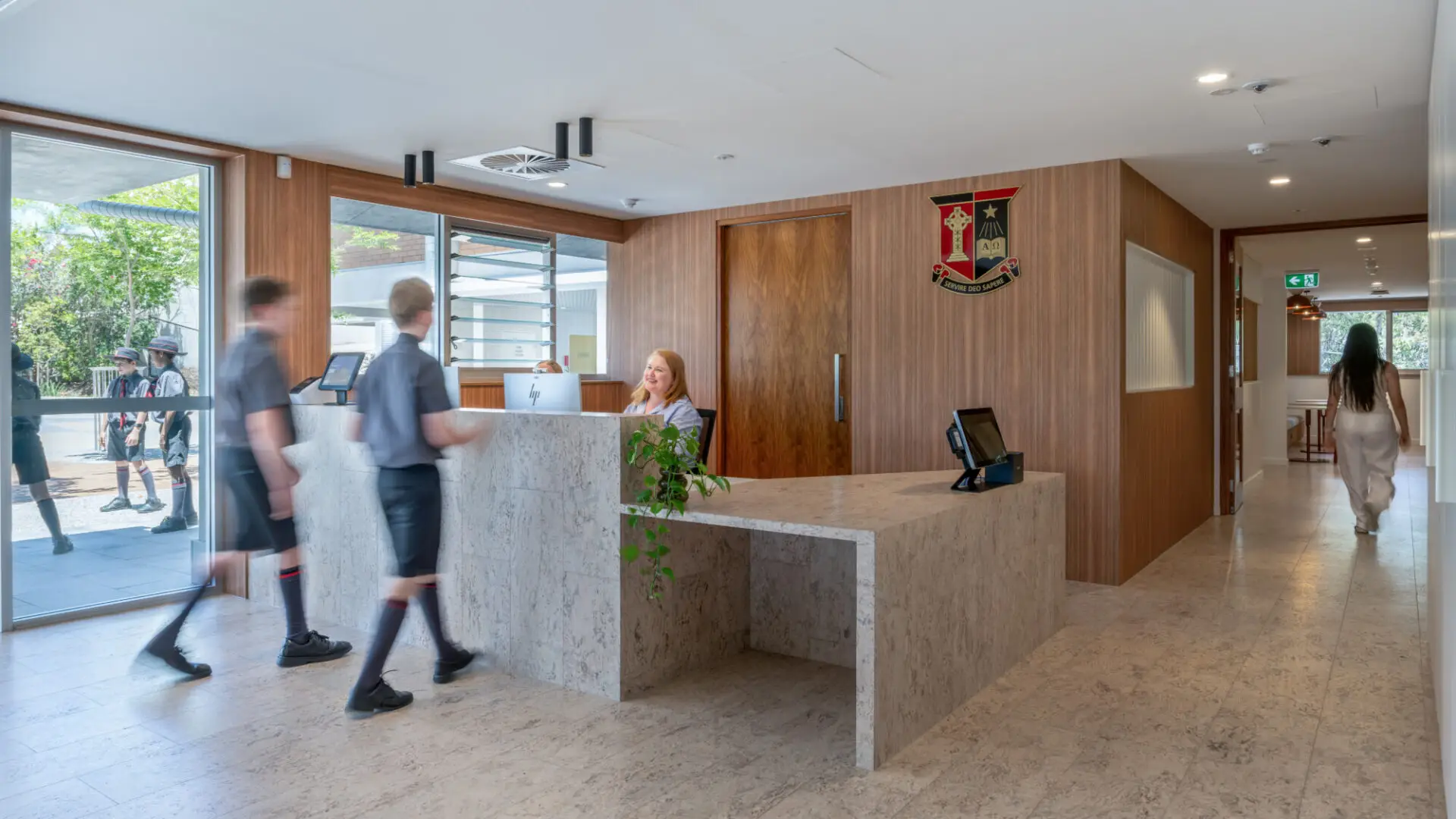
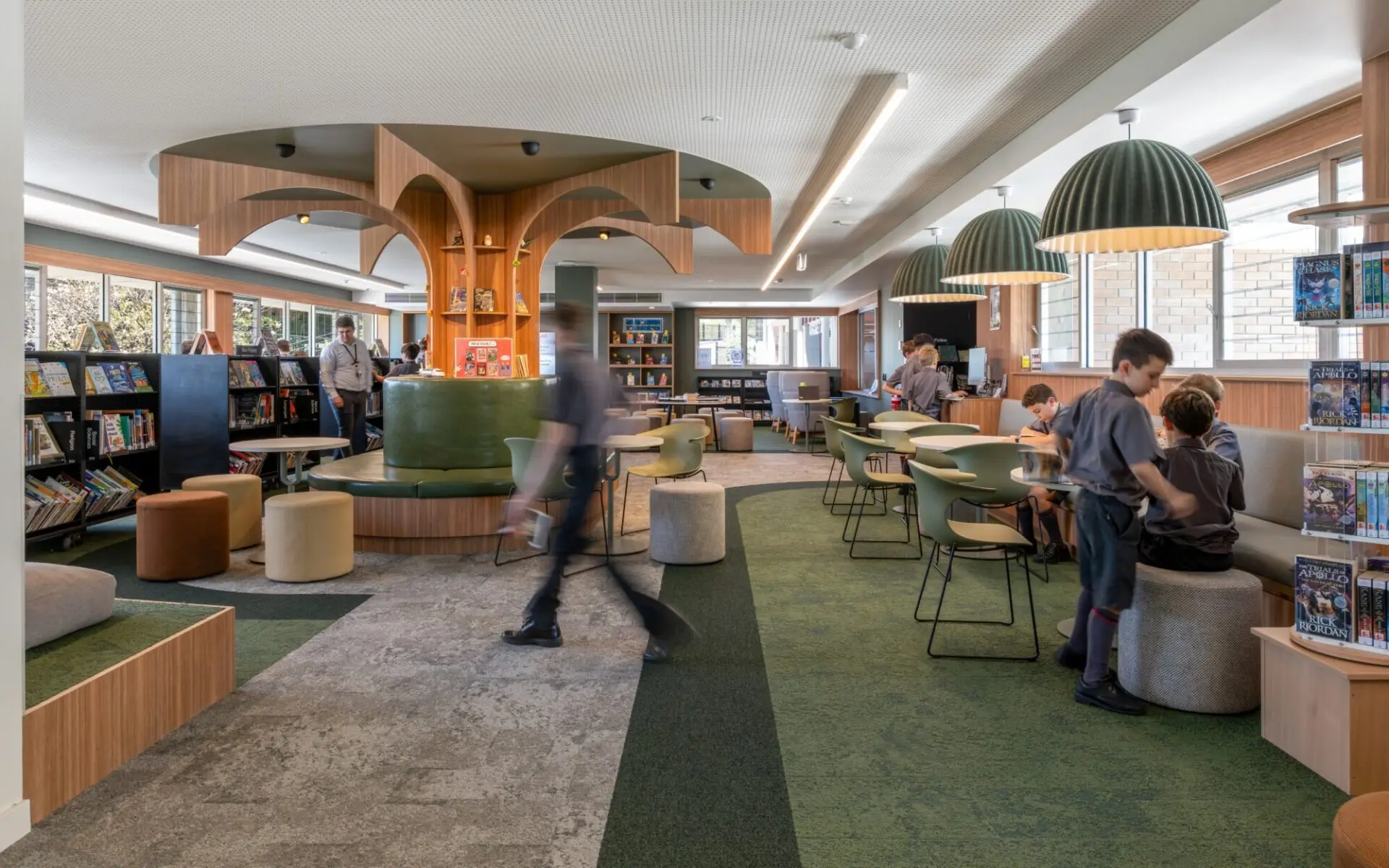
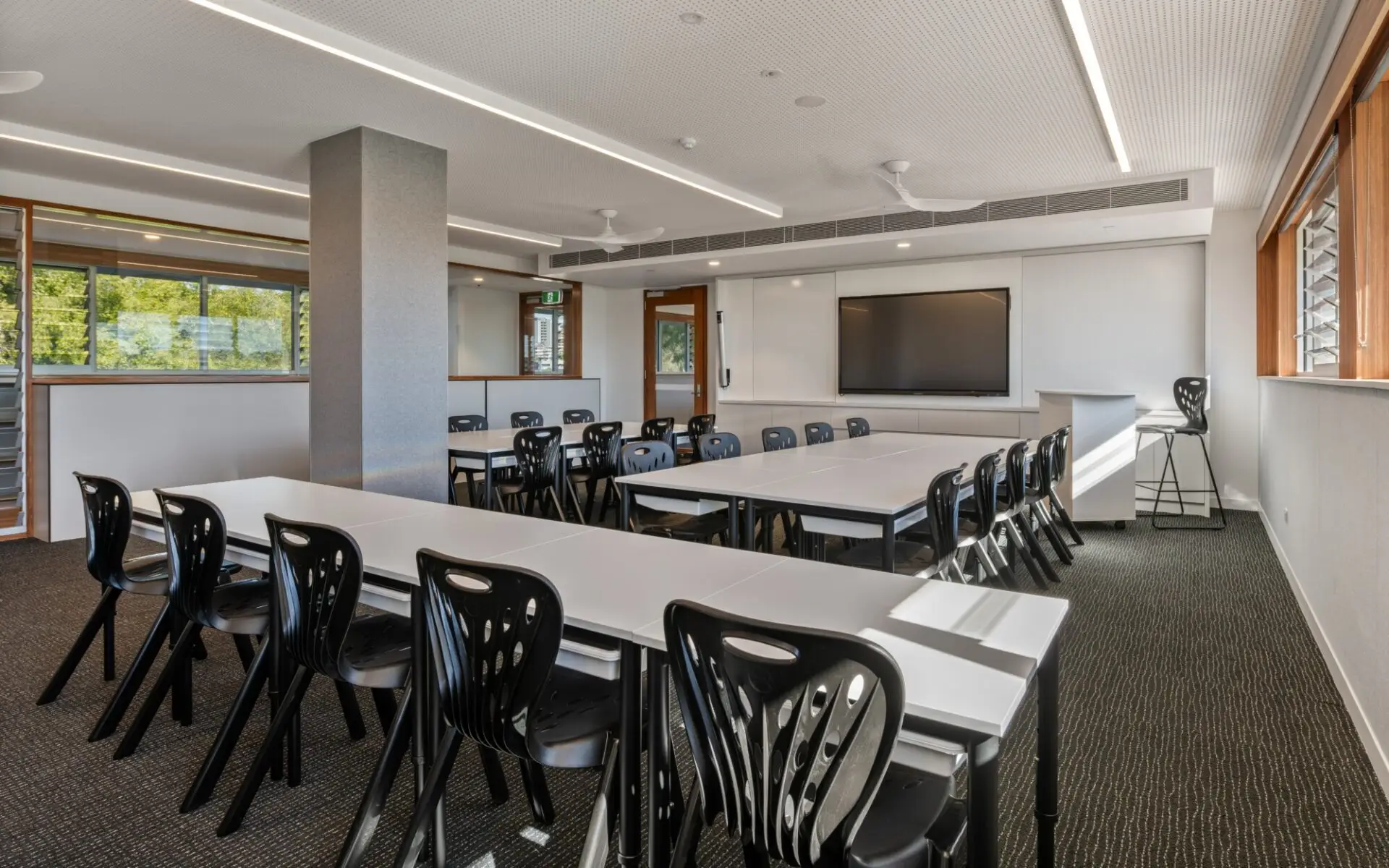
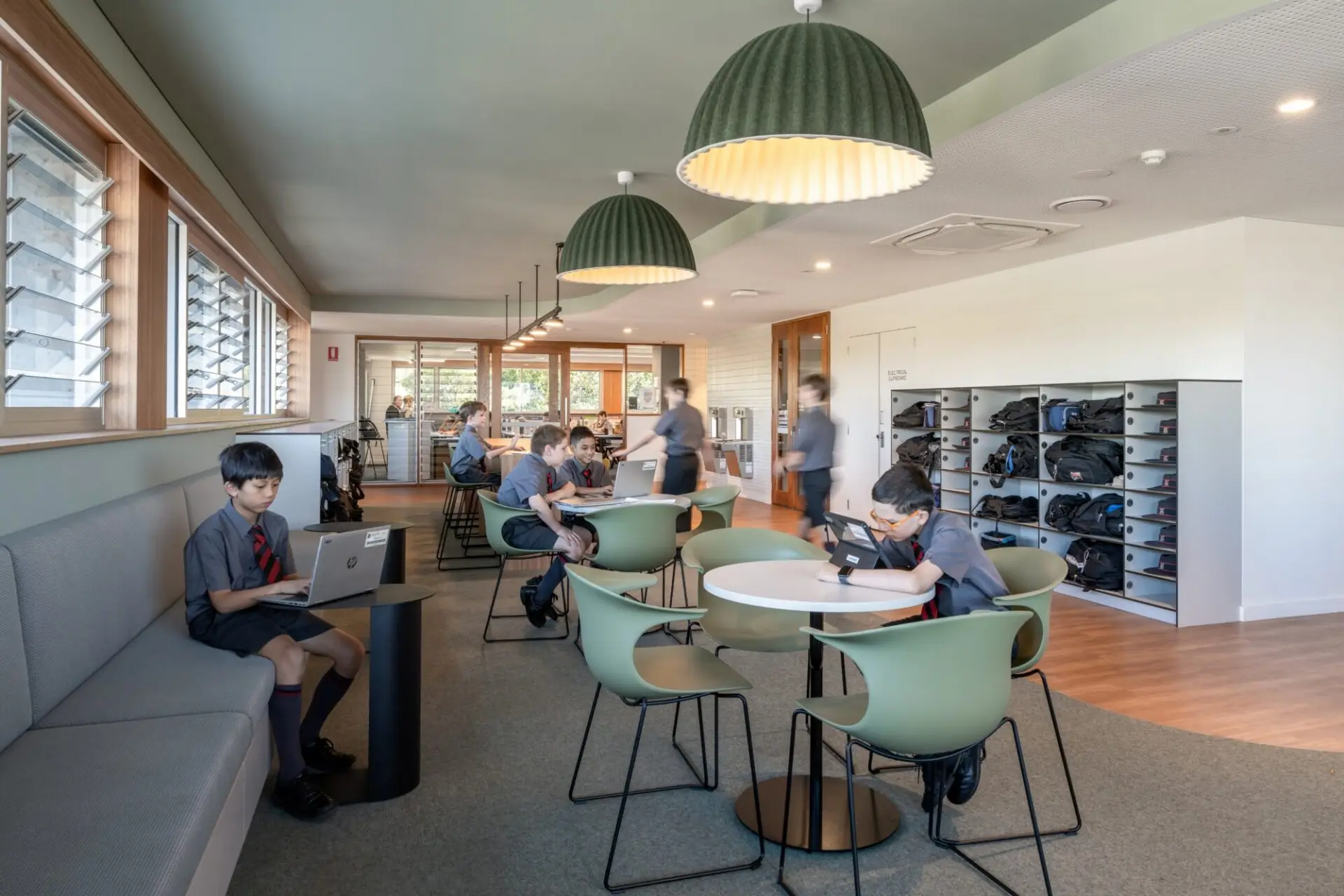
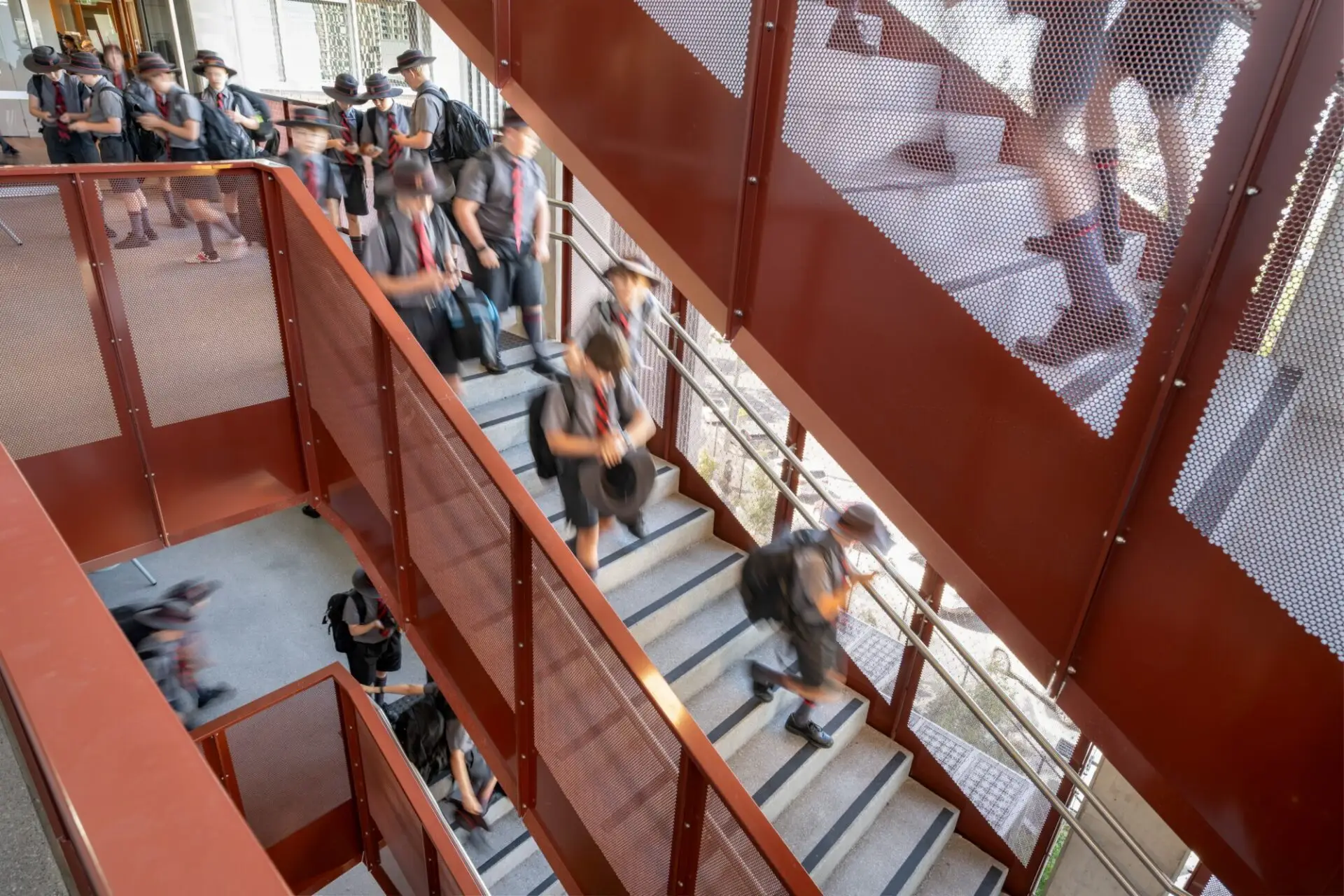
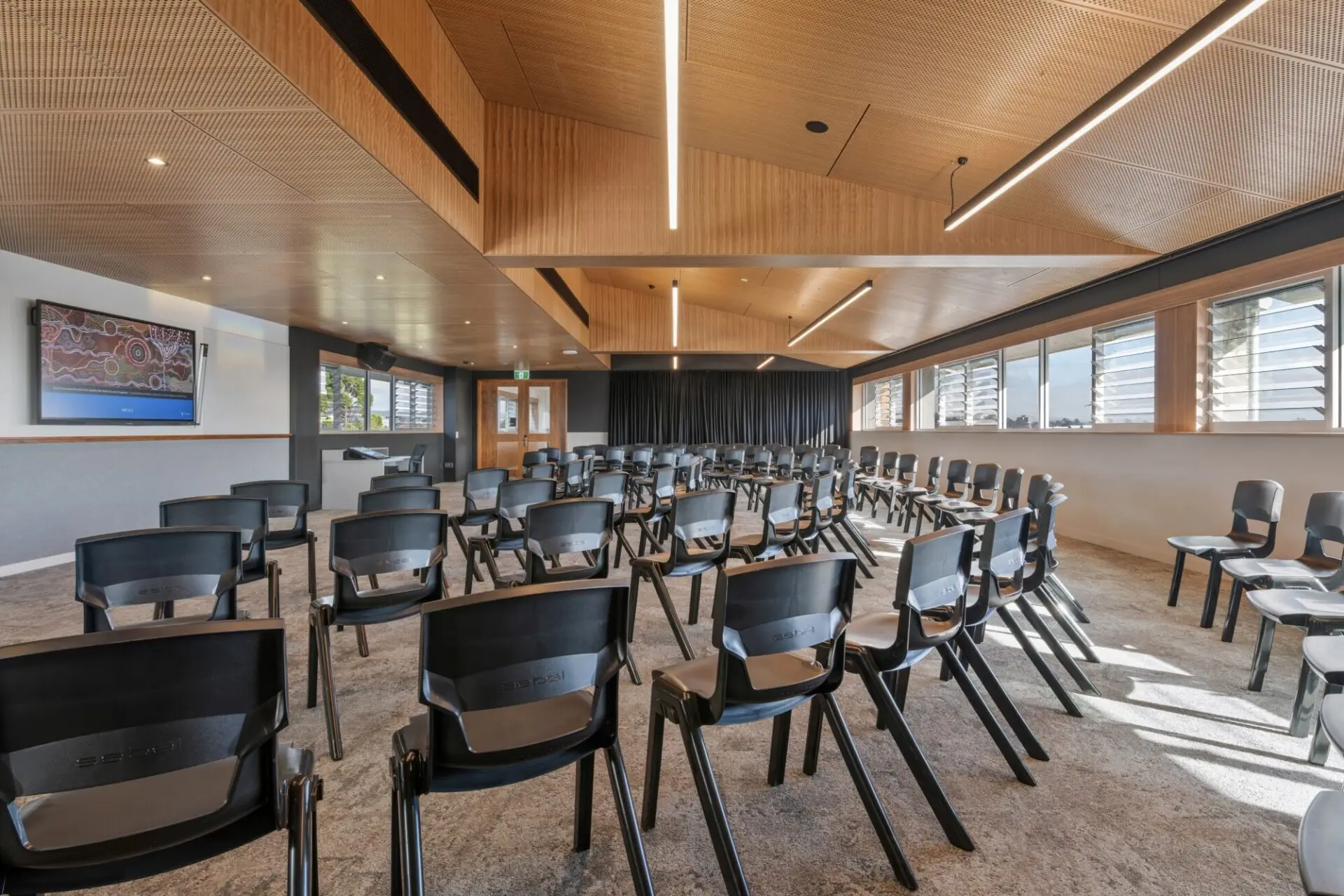
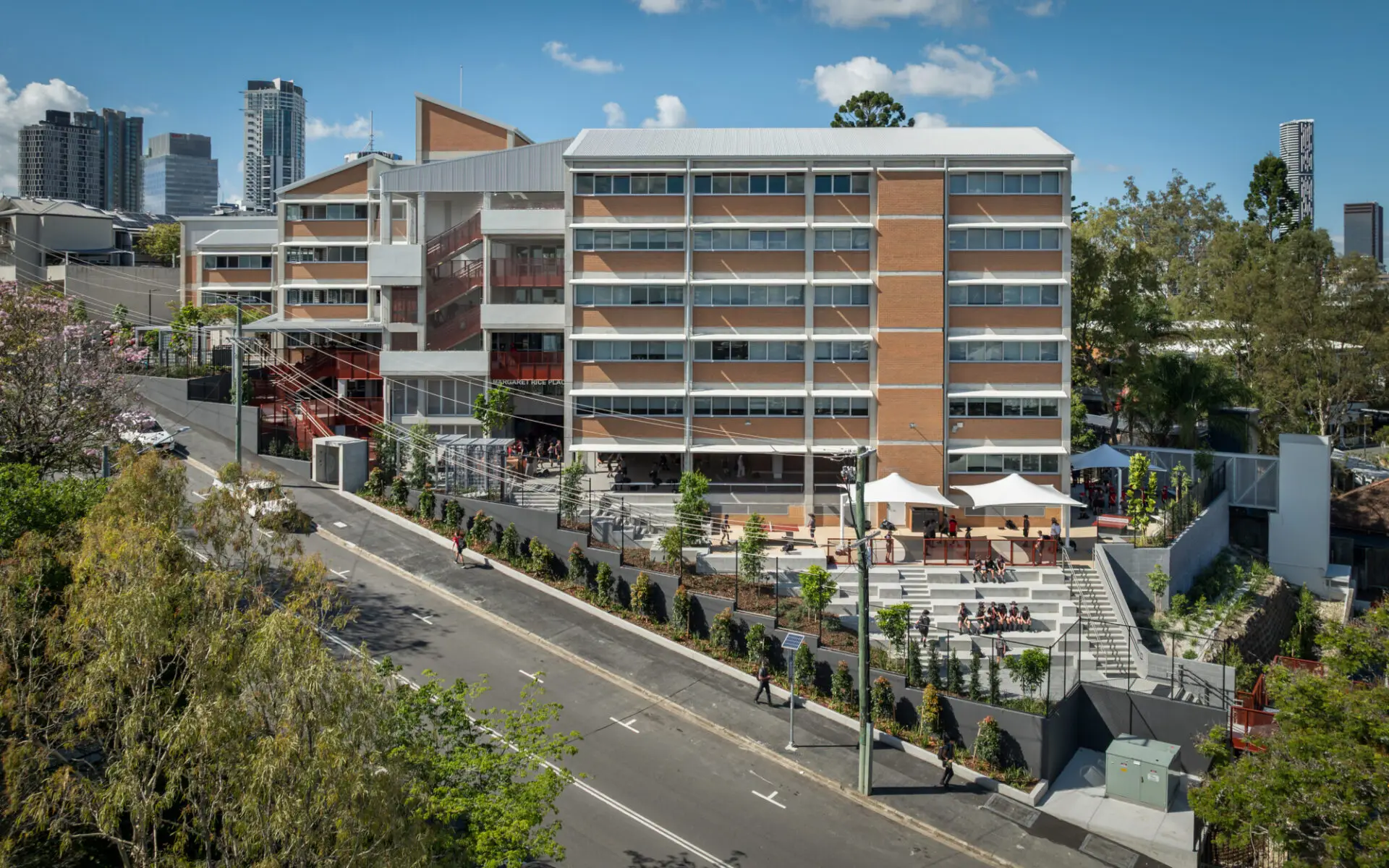
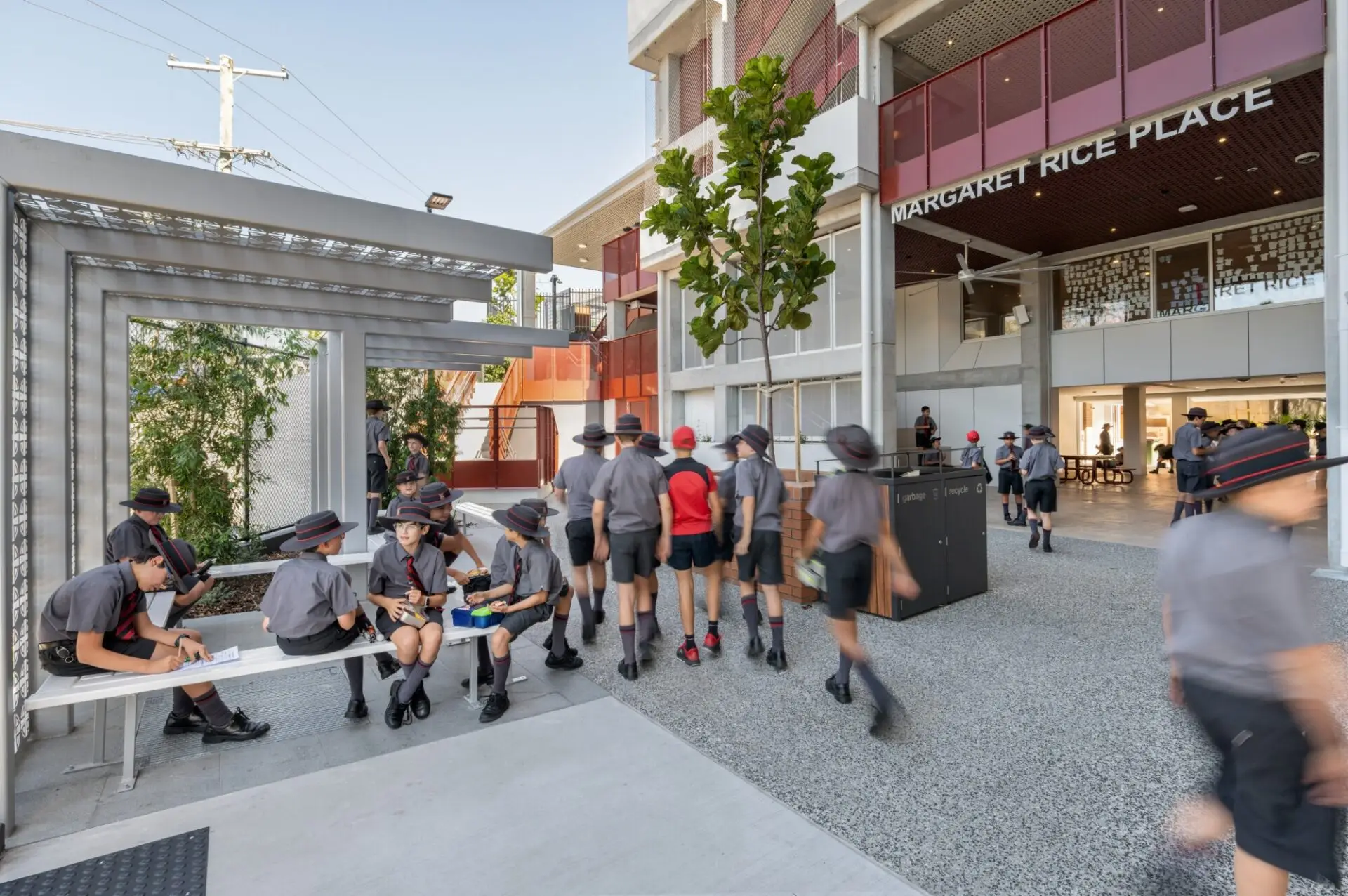
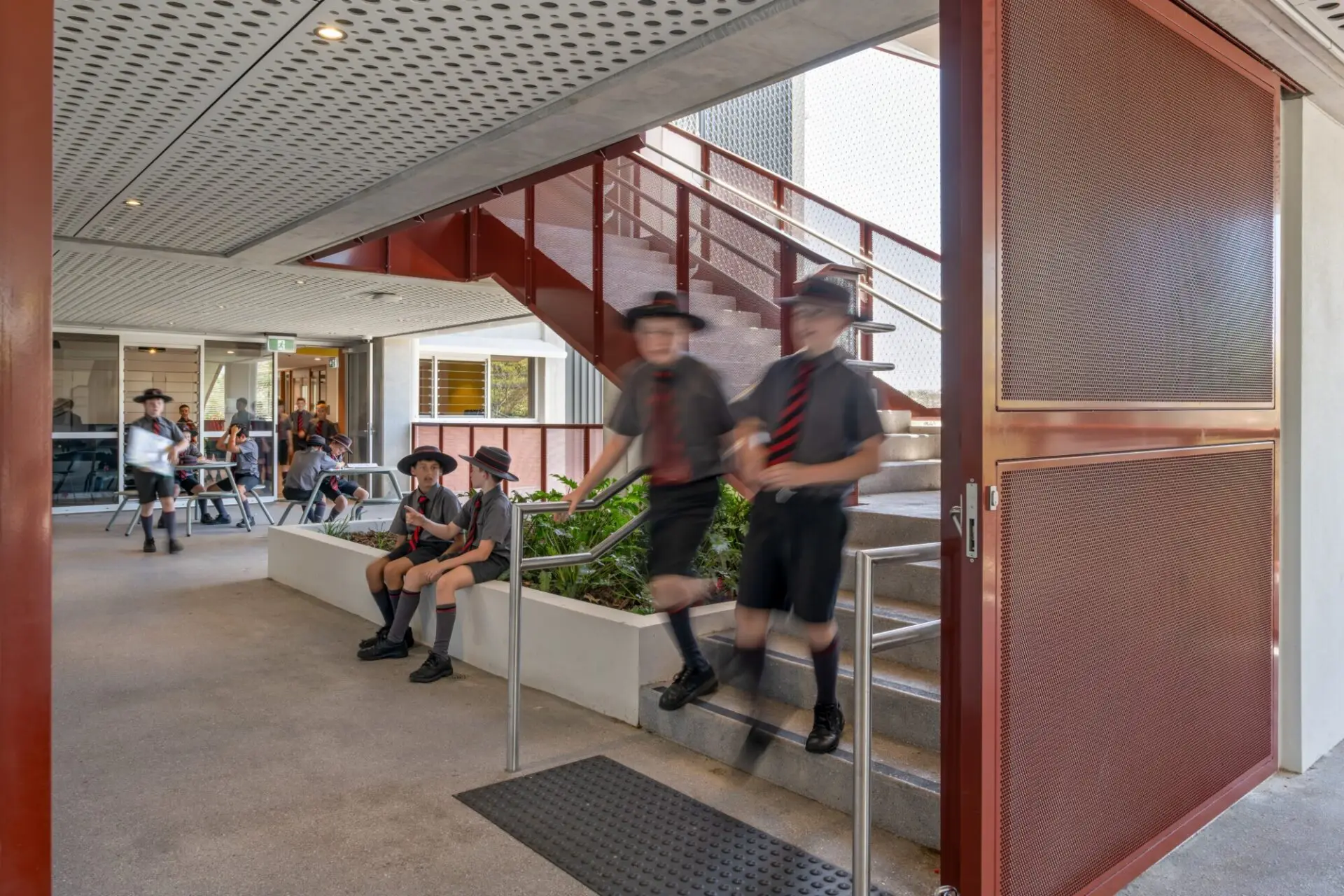
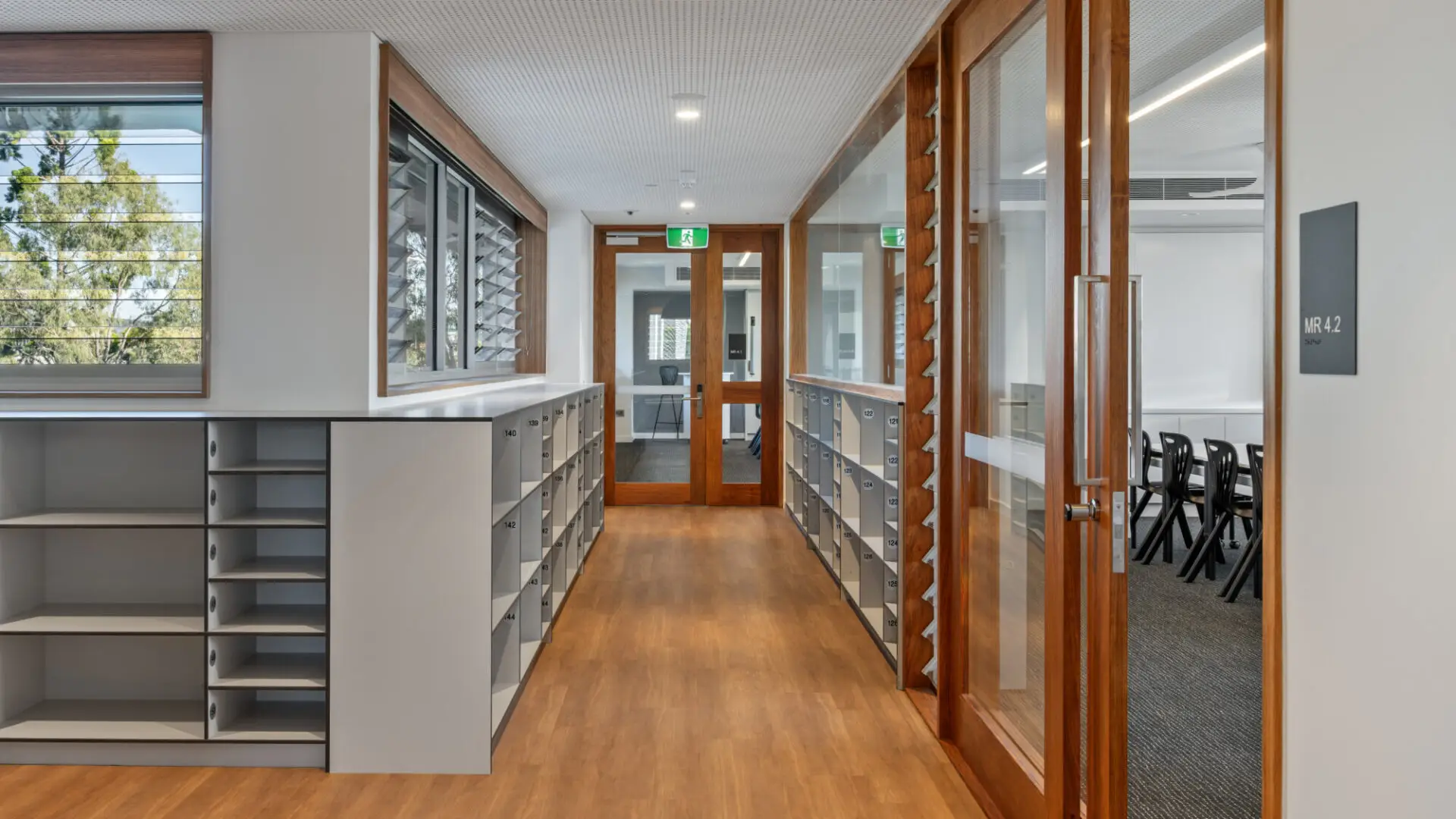
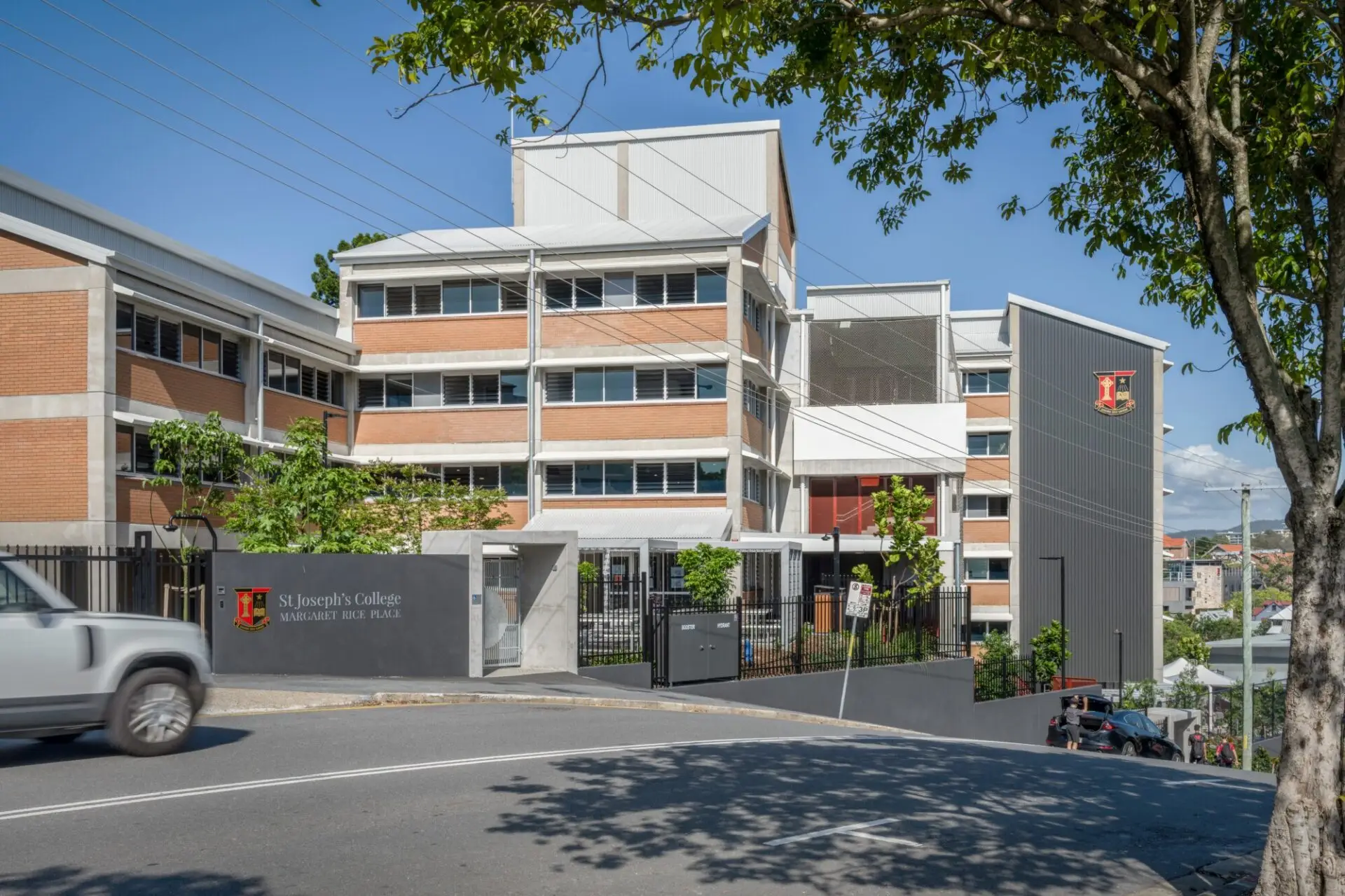
St Joseph's College Gregory Terrace Primary Precinct, Margaret Rice Place, is the vertical learning precinct for Year 5 and 6 students at the college. This adaptive reuse project transforms a six-storey institutional building and its surrounding landscape into a dynamic and engaging educational environment. Retaining the original building’s strong and well-preserved structure and façade offered sustainability, planning, and character benefits. By embracing the building’s quirks and inherent qualities, the architectural team was able to incorporate core design principles: access to natural light and ventilation, framed views and vistas, and a meaningful connection to the surrounding landscape. The primary precinct redefines urban education through its innovative vertical design – offering young learners an inspiring, inclusive, and adaptable space in which to thrive.
This project demonstrates a thoughtful adaptive reuse of an existing six-storey building, retaining
key structural and façade elements to minimise demolition waste and embodied carbon. A
significant portion of the site is reclaimed for natural landscaping, with former drop-off and
parking areas transformed into spaces for play and engagement with the natural environment.
Northern orientation is maximised to deliver generous daylight to classrooms and learning areas,
while enhancing opportunities for natural ventilation.
New operable louvres strengthen connections to surrounding landscape, capturing prevailing
breezes and reducing reliance on mechanical systems. The all-electric building incorporates
effective shading devices and strong passive thermal design principles to improve comfort and
energy performance. Together, these strategies support a resilient, low-impact learning
environment that prioritises wellbeing, sustainability and connection to place
The project is a successful repurposing of an existing six storey inner city institutional building, into a Primary School Precinct. Rigorously keeping within the existing building envelope, the architects have created a learning environment comprising general learning areas, library, music studios, break out and social spaces with a great degree of planning, new detail and acknowledgement of the surrounding environment. What has been provided is a timely example of the potential in adapting existing buildings for other uses.Â
Award for Educational Architecture
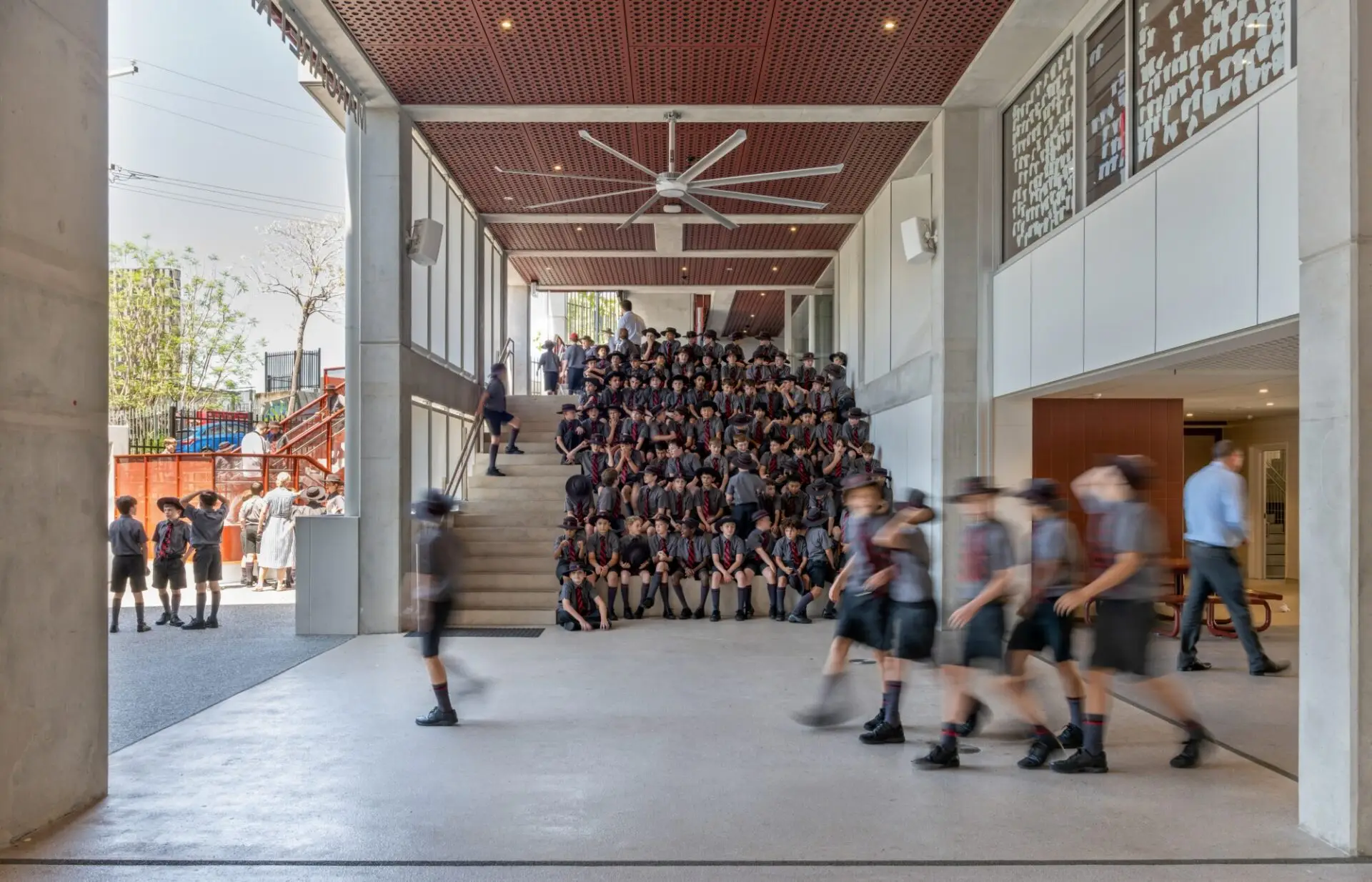
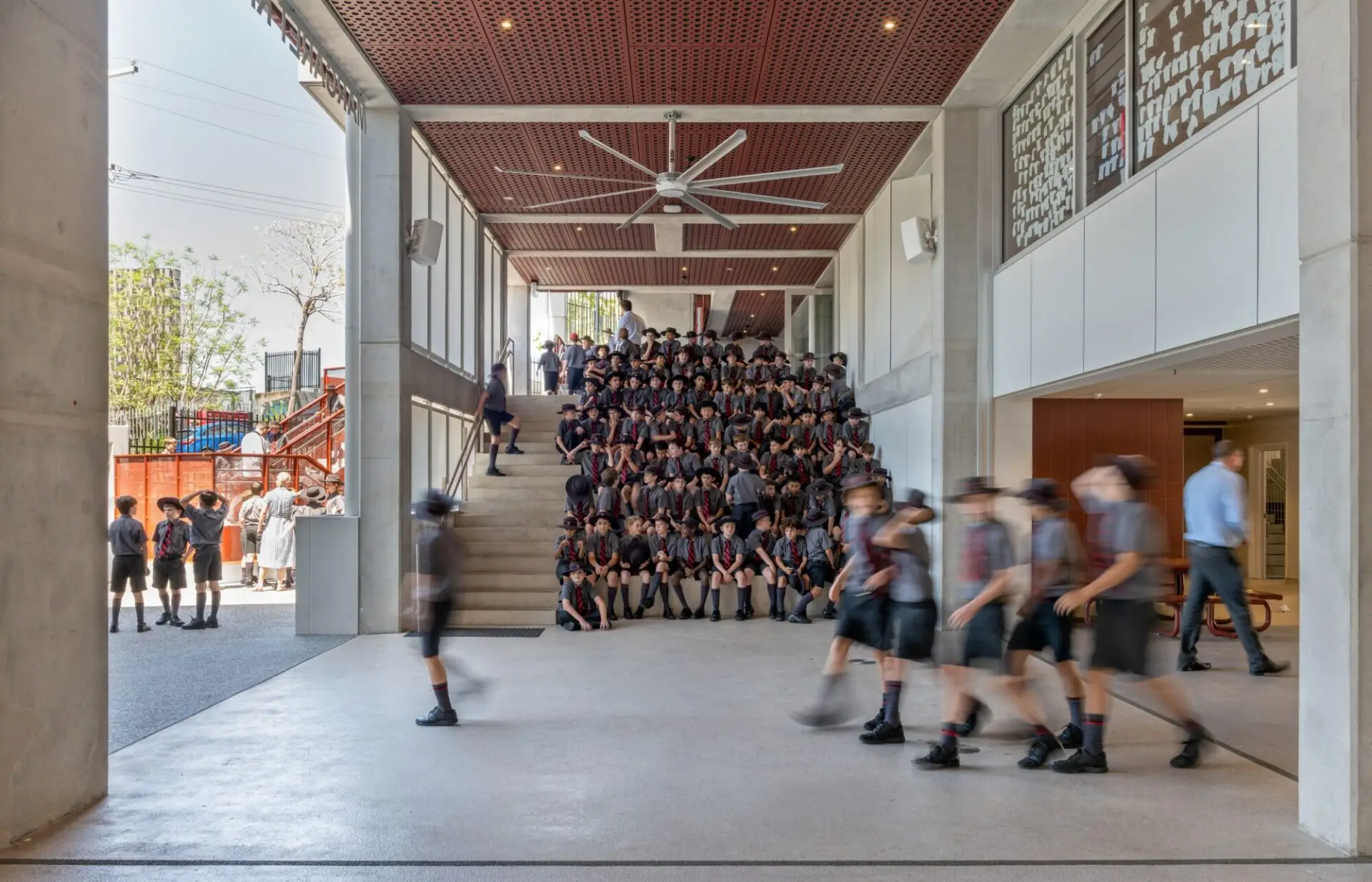
Margaret Rice Place is the vertical primary school precinct for Years 5 and 6 students at St Joseph’s College, Gregory Terrace, transforming a six storey former Salvation Army building into a dynamic learning environment. Situated on a steeply sloping Spring Hill site, the project successfully navigates challenging topography, working with the building’s zig-zag floor plate to organise learning areas, library, music studios, breakout spaces, and a two storey amphitheatre across multiple levels. Natural light, ventilation, and framed views are woven throughout, with a new external circulation spine connecting campus to street and landscape.
The retained façade and robust original structure delivered significant environmental and financial value, directing budget toward pedagogical enhancements rather than demolition. The jury recognised an exemplary act of adaptive reuse that has given a building new life for students at their prime learning years. It was evident during the jury visit that students can find their own pocket within the campus to enjoy their favourite activities, a vibrant vertical school that sets a compelling benchmark for the intelligent reuse of existing buildings.
Commendation For The Lord Mayor’s Buildings That Breathe Architecture Prize
This project demonstrates a thoughtful adaptive reuse of an existing six-storey building, retaining
key structural and façade elements to minimise demolition waste and embodied carbon. A
significant portion of the site is reclaimed for natural landscaping, with former drop-off and
parking areas transformed into spaces for play and engagement with the natural environment.
Northern orientation is maximised to deliver generous daylight to classrooms and learning areas,
while enhancing opportunities for natural ventilation.
New operable louvres strengthen connections to surrounding landscape, capturing prevailing
breezes and reducing reliance on mechanical systems. The all-electric building incorporates
effective shading devices and strong passive thermal design principles to improve comfort and
energy performance. Together, these strategies support a resilient, low-impact learning
environment that prioritises wellbeing, sustainability and connection to place
Commendation for The Lord Mayor's Buildings That Breathe Architecture Prize
This project demonstrates a thoughtful adaptive reuse of an existing six-storey building, retaining
key structural and façade elements to minimise demolition waste and embodied carbon. A
significant portion of the site is reclaimed for natural landscaping, with former drop-off and
parking areas transformed into spaces for play and engagement with the natural environment.
Northern orientation is maximised to deliver generous daylight to classrooms and learning areas,
while enhancing opportunities for natural ventilation.
New operable louvres strengthen connections to surrounding landscape, capturing prevailing
breezes and reducing reliance on mechanical systems. The all-electric building incorporates
effective shading devices and strong passive thermal design principles to improve comfort and
energy performance. Together, these strategies support a resilient, low-impact learning
environment that prioritises wellbeing, sustainability and connection to place
Commendation for Educational Architecture
The project is a successful repurposing of an existing six storey inner city institutional building, into a Primary School Precinct. Rigorously keeping within the existing building envelope, the architects have created a learning environment comprising general learning areas, library, music studios, break out and social spaces with a great degree of planning, new detail and acknowledgement of the surrounding environment. What has been provided is a timely example of the potential in adapting existing buildings for other uses.Â
Sustainability shortlist
Award for Educational Architecture
Margaret Rice Place is the vertical primary school precinct for Years 5 and 6 students at St Joseph’s College, Gregory Terrace, transforming a six storey former Salvation Army building into a dynamic learning environment. Situated on a steeply sloping Spring Hill site, the project successfully navigates challenging topography, working with the building’s zig-zag floor plate to organise learning areas, library, music studios, breakout spaces, and a two storey amphitheatre across multiple levels. Natural light, ventilation, and framed views are woven throughout, with a new external circulation spine connecting campus to street and landscape.
The retained façade and robust original structure delivered significant environmental and financial value, directing budget toward pedagogical enhancements rather than demolition. The jury recognised an exemplary act of adaptive reuse that has given a building new life for students at their prime learning years. It was evident during the jury visit that students can find their own pocket within the campus to enjoy their favourite activities, a vibrant vertical school that sets a compelling benchmark for the intelligent reuse of existing buildings.
Commendation For The Lord Mayor's Buildings That Breathe Architecture Prize
This project demonstrates a thoughtful adaptive reuse of an existing six-storey building, retaining
key structural and façade elements to minimise demolition waste and embodied carbon. A
significant portion of the site is reclaimed for natural landscaping, with former drop-off and
parking areas transformed into spaces for play and engagement with the natural environment.
Northern orientation is maximised to deliver generous daylight to classrooms and learning areas,
while enhancing opportunities for natural ventilation.
New operable louvres strengthen connections to surrounding landscape, capturing prevailing
breezes and reducing reliance on mechanical systems. The all-electric building incorporates
effective shading devices and strong passive thermal design principles to improve comfort and
energy performance. Together, these strategies support a resilient, low-impact learning
environment that prioritises wellbeing, sustainability and connection to place
St Joseph’s College, Gregory Terrace is delighted to welcome students from Years 5 and 6 to our new Margaret Rice Campus. The building’s original design and sound condition enabled renovation to proceed in place of demolition. The financial and environmental benefits were significant, and the final product is truly first class. The building’s features reflect careful consideration of our duty to responsible stewardship of the land on which we learn. All members of the Terrace Family are delighted with our newest campus, which combines an outstanding learning environment with strong consideration of our commitment to sustainability.Â
Client perspective
Sarah Rush, Project Architect
Jacquie Maestracci, Project Architect
Luke Petersen, Project Architect
Grace Weier, Project Architect
Jacinta Condon, Interior Designer
Bernard Rush, Project Architect
James Bailey, Project Architect
Tim Booth, Student of Architecture
Giselle Penny, Project Architect
Gabrielle Wan, Graduate of Architecture
Jenna Jensen, Project Architect
Elly Halpin, Graduate Interior Designer
Darren Chan, Student of Architecture
Olivia Braken, Graduate of Architecture
Hopscotch Projects, Project Manager
Steele Wrobel, Quantity Surveyor and Superintendent
ACOR Consultants, Structural and Civil Engineers
LCI Consultants, Mechanical, Electrical, Hydraulic, Dry Fire and ESD Engineers
Jeremy Ferrier Landscape Architects, Landscape Architect
McCarthy Consulting Group, Building Certifier
Stantec, Acoustic Consultant
Ethos Urban, Urban Planner
Fire Engineers Australia, Fire Engineer