
Jaggera and Turrbal peoples
Queensland
Brisbane
The Plant Futures Facility supports research into sustainable food, fibre, and fuel production in response to climate change, environmental degradation, and population growth.
The controlled environment rooms, reach-in cabinets, and rooftop glasshouses which form the core of this project, can replicate/manipulate any Queensland climatic condition in a highly accurate, controlled, measurable and repeatable manner, enabling world leading plant research.
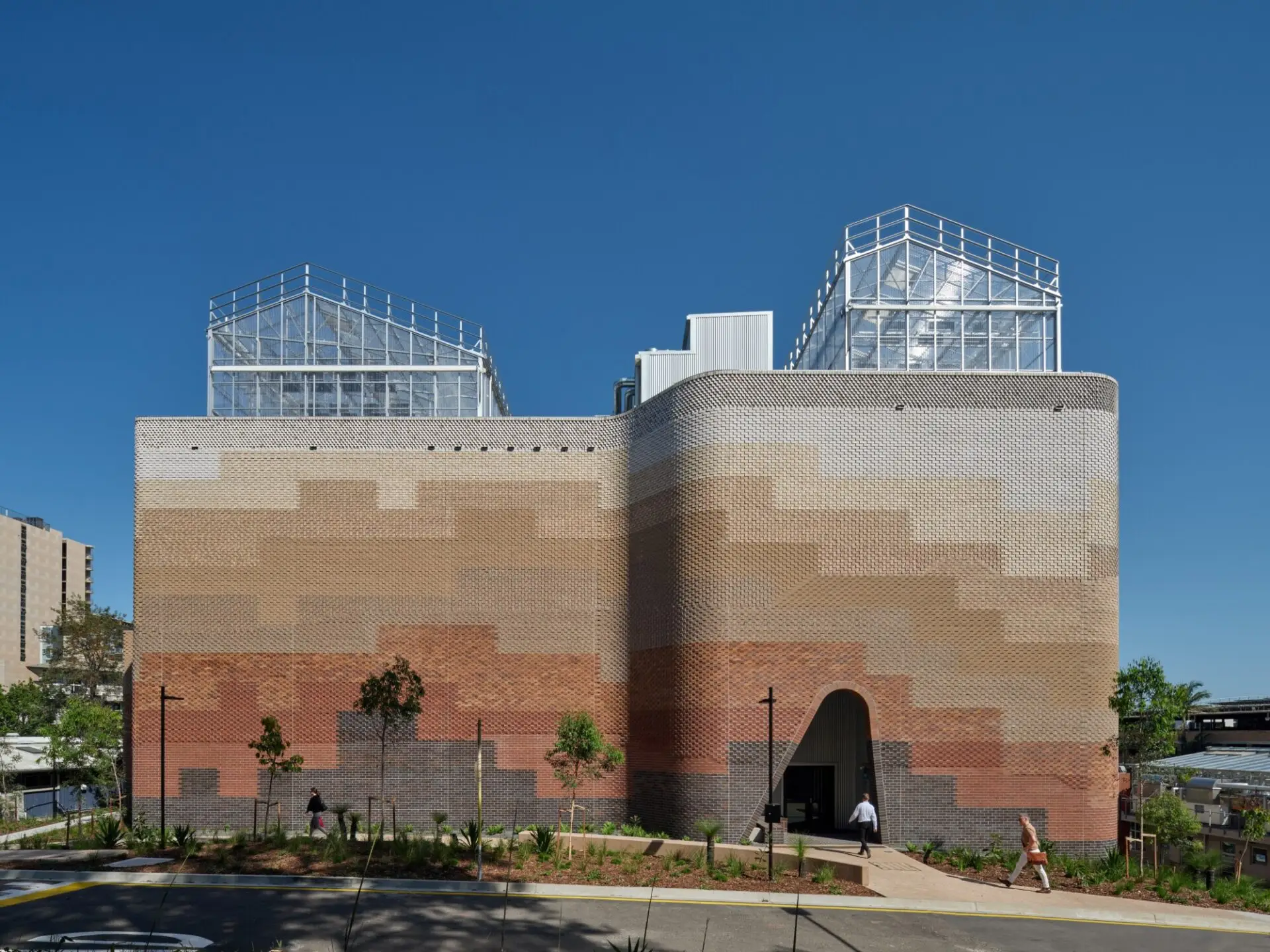
Defined as a “walled garden,” the building’s concept reflects its typology and context on “Country” – crafted from brick in a pixilated pattern referencing Queensland’s geological cross-section. From a distance, it reads as a stone wall; up close, it reveals a finely articulated façade. Internally, light and colour, combined with mirrored panelling, reflect the processes occurring in the environmental controls of grow rooms, subtly distorting. perception and experience.
The facility is both a high-performance research tool and a contextual, culturally resonant architectural statement.
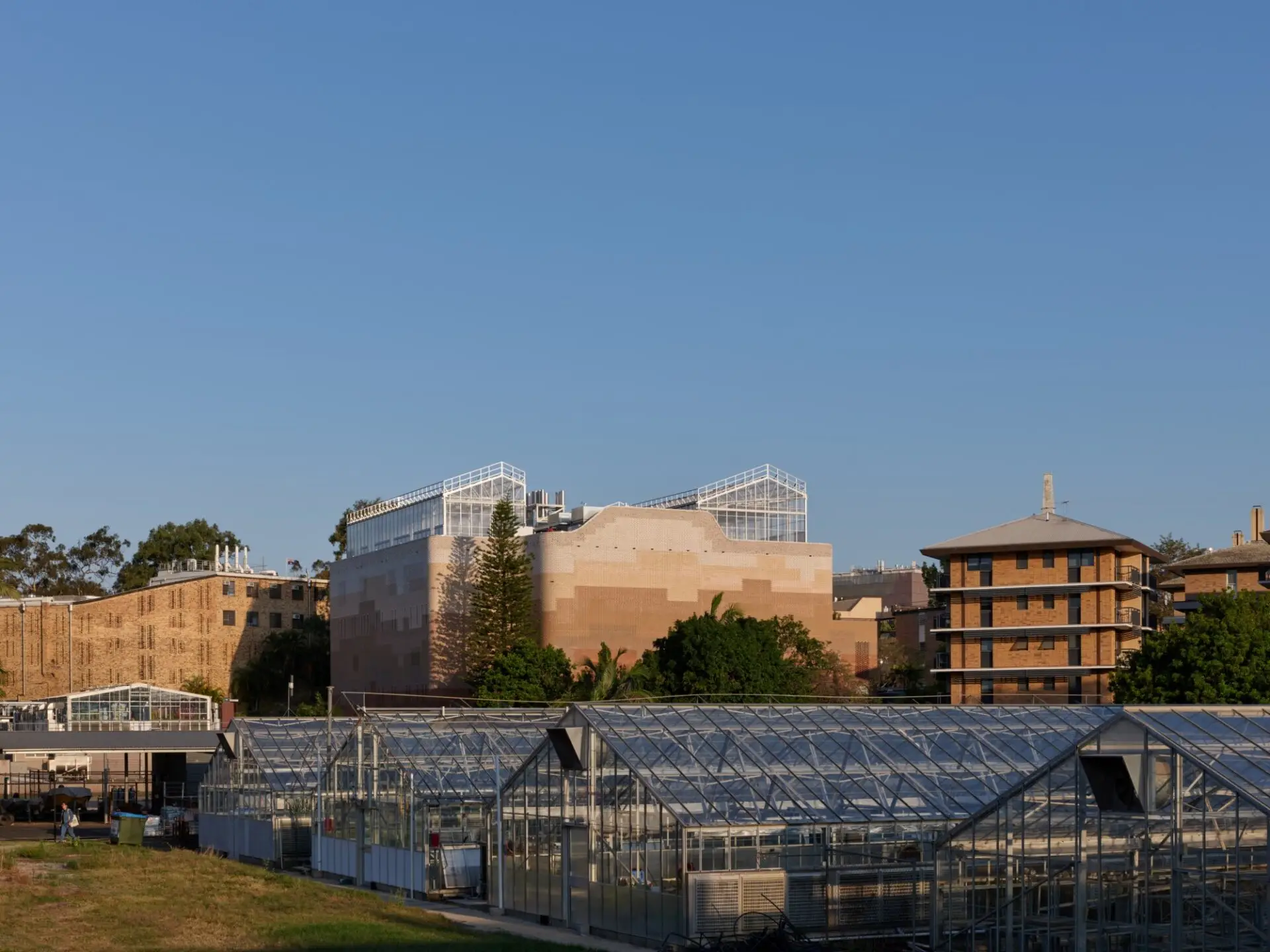
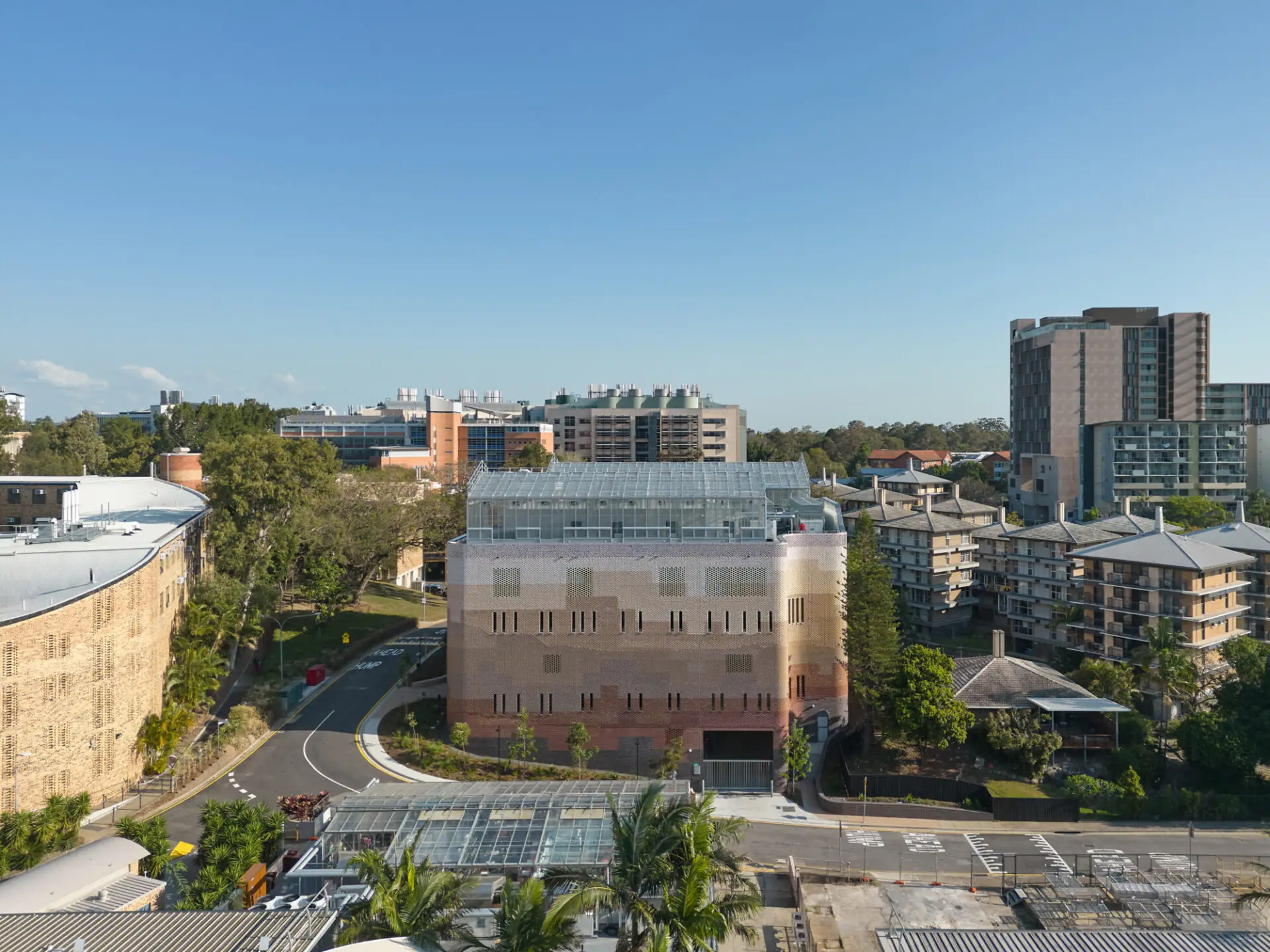
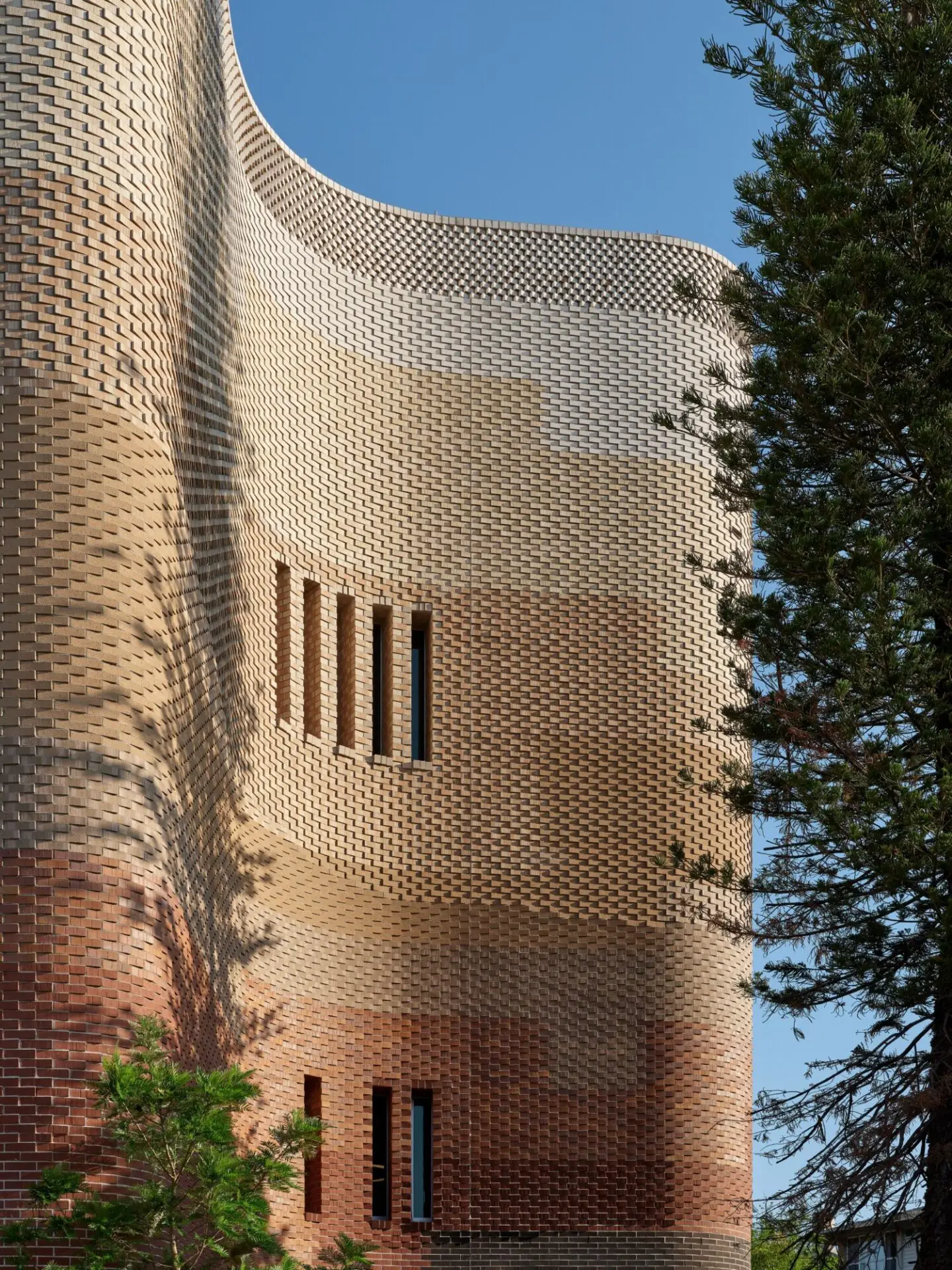
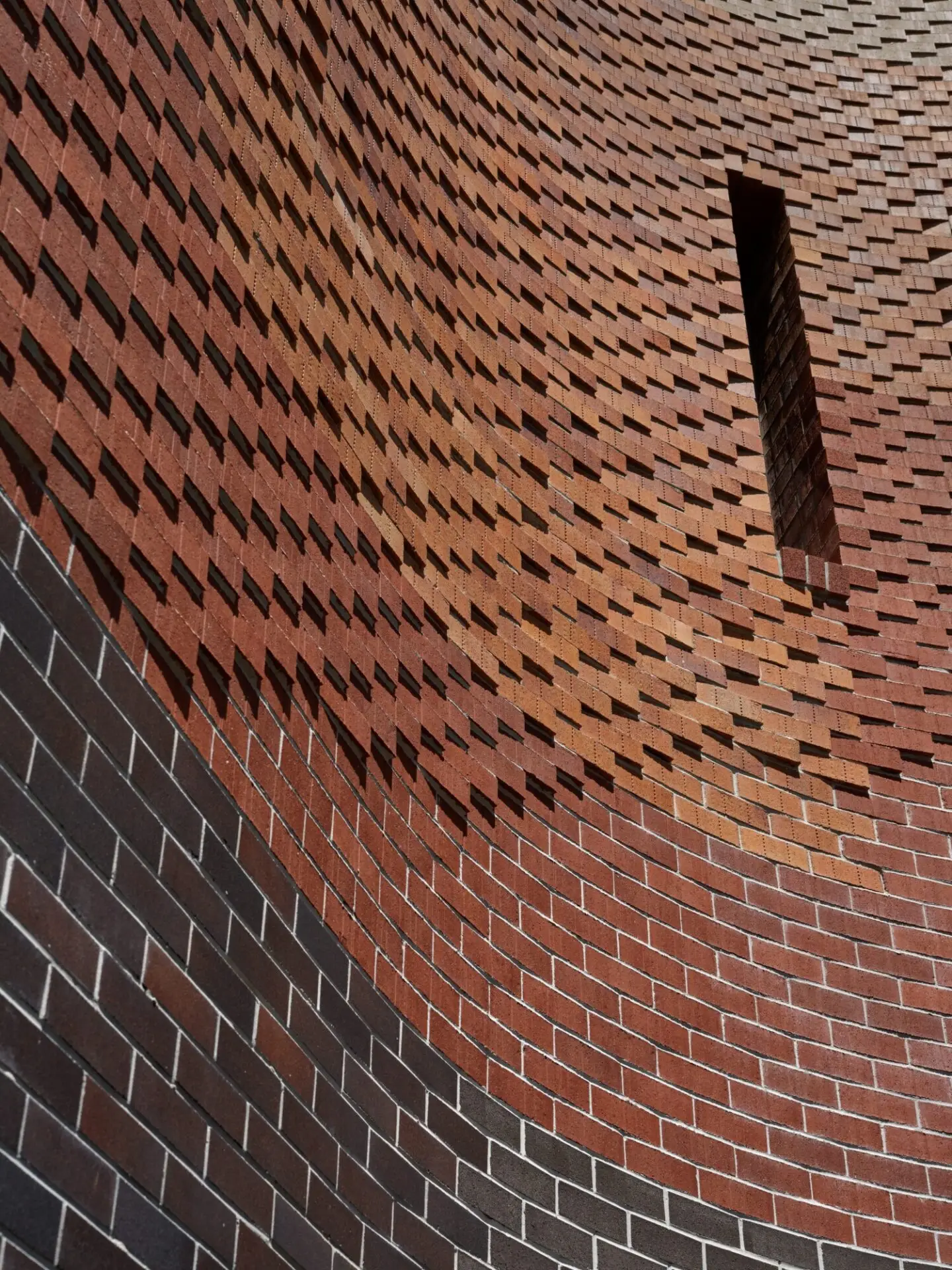
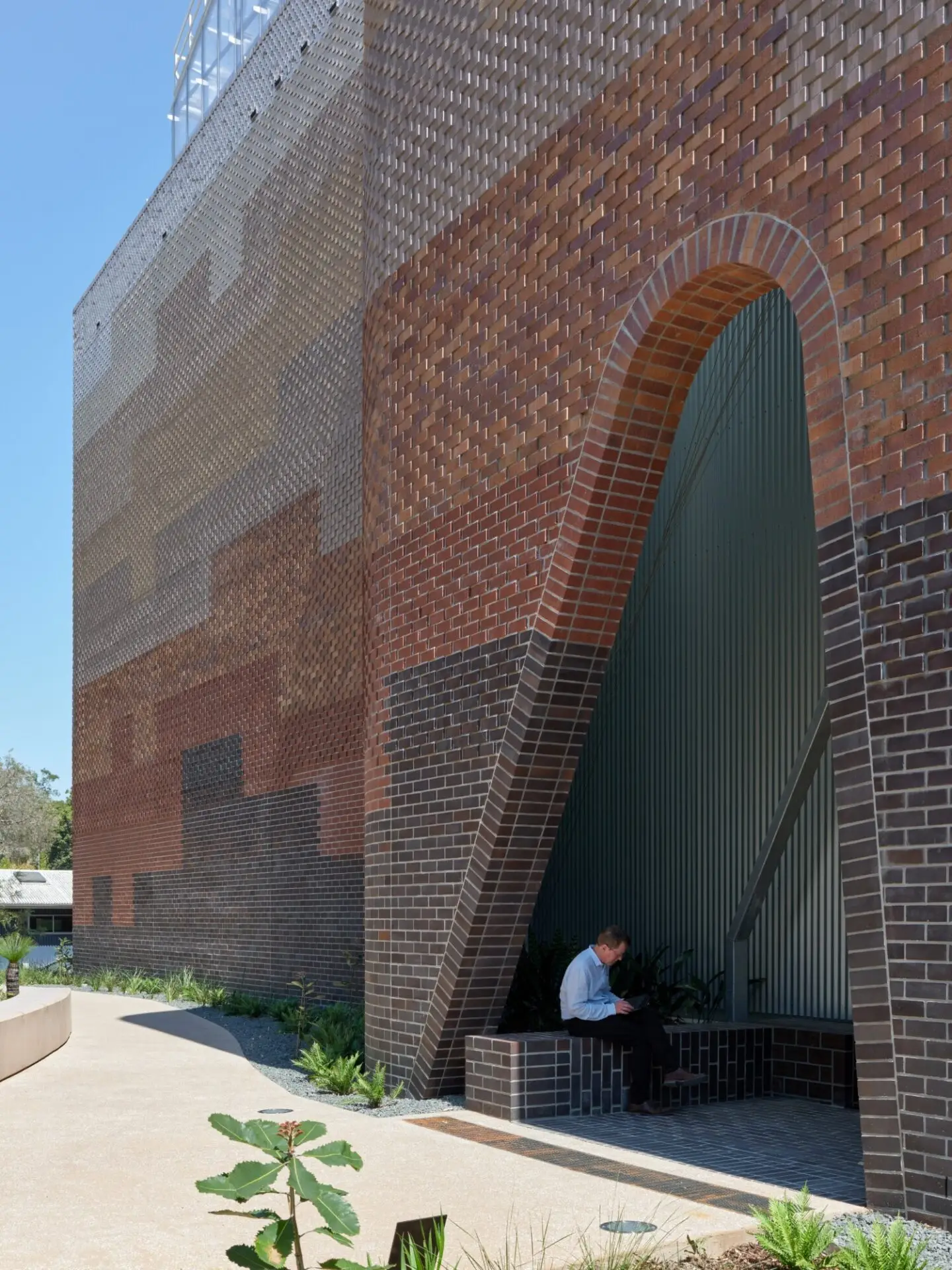
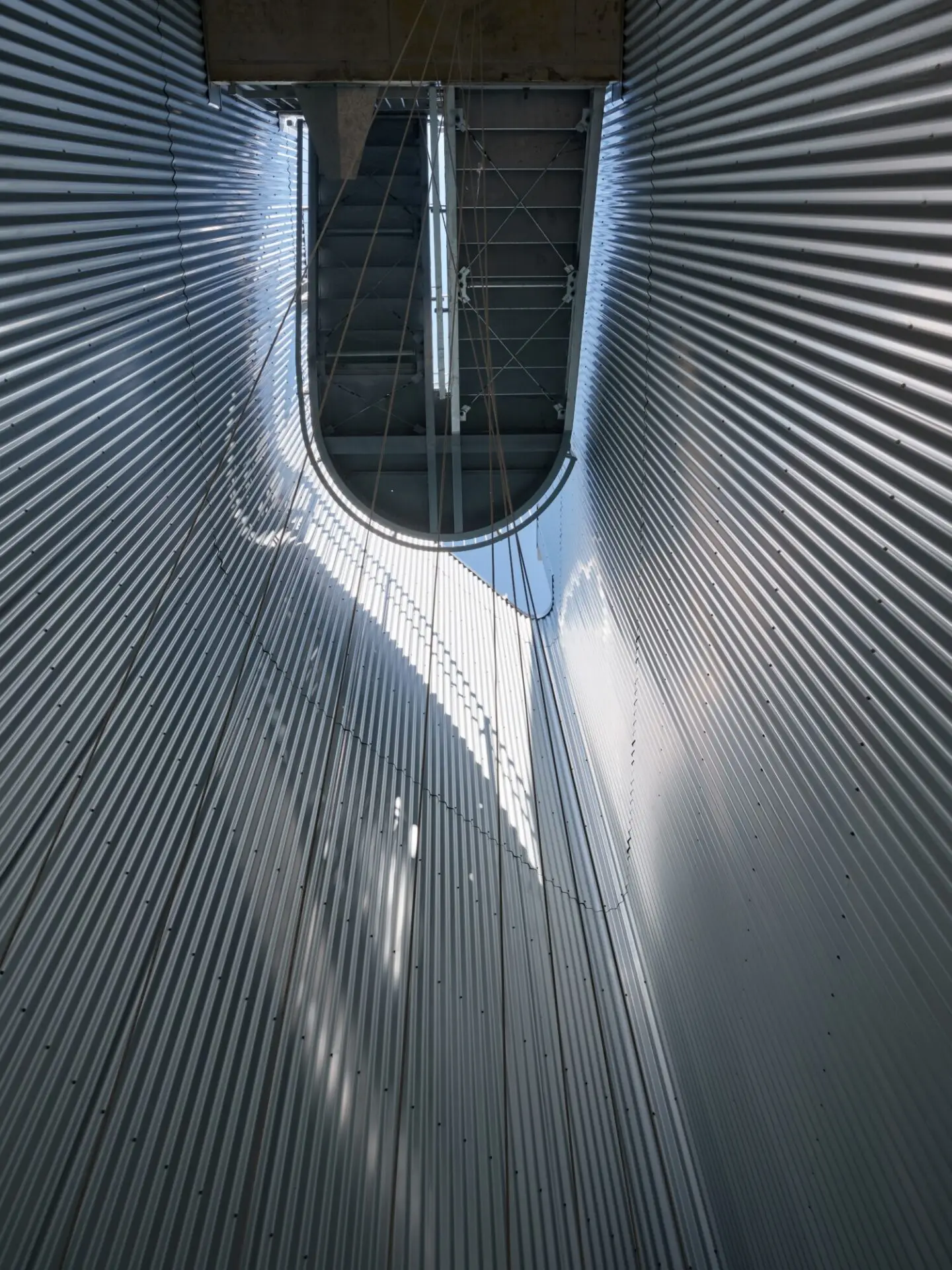
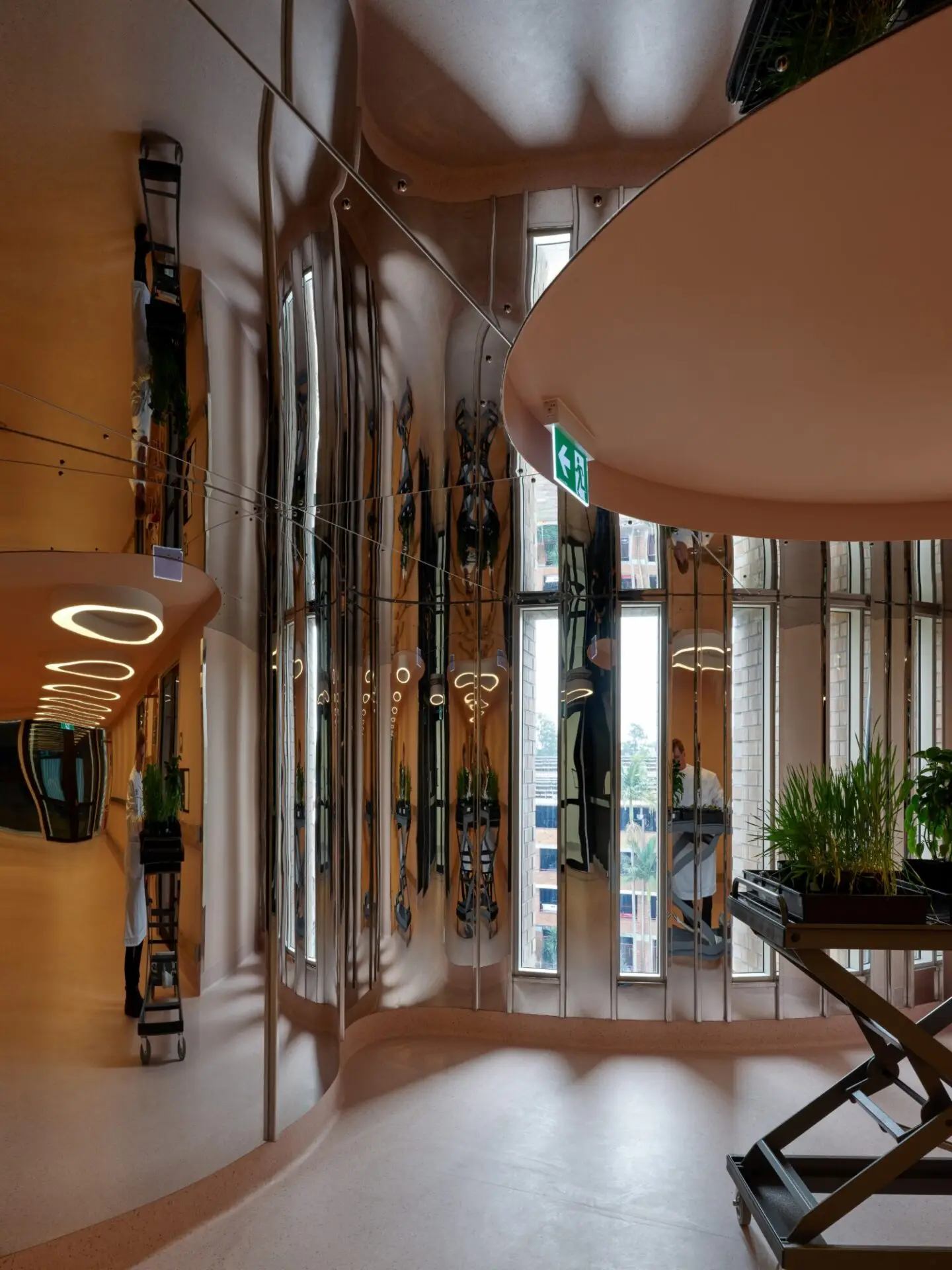
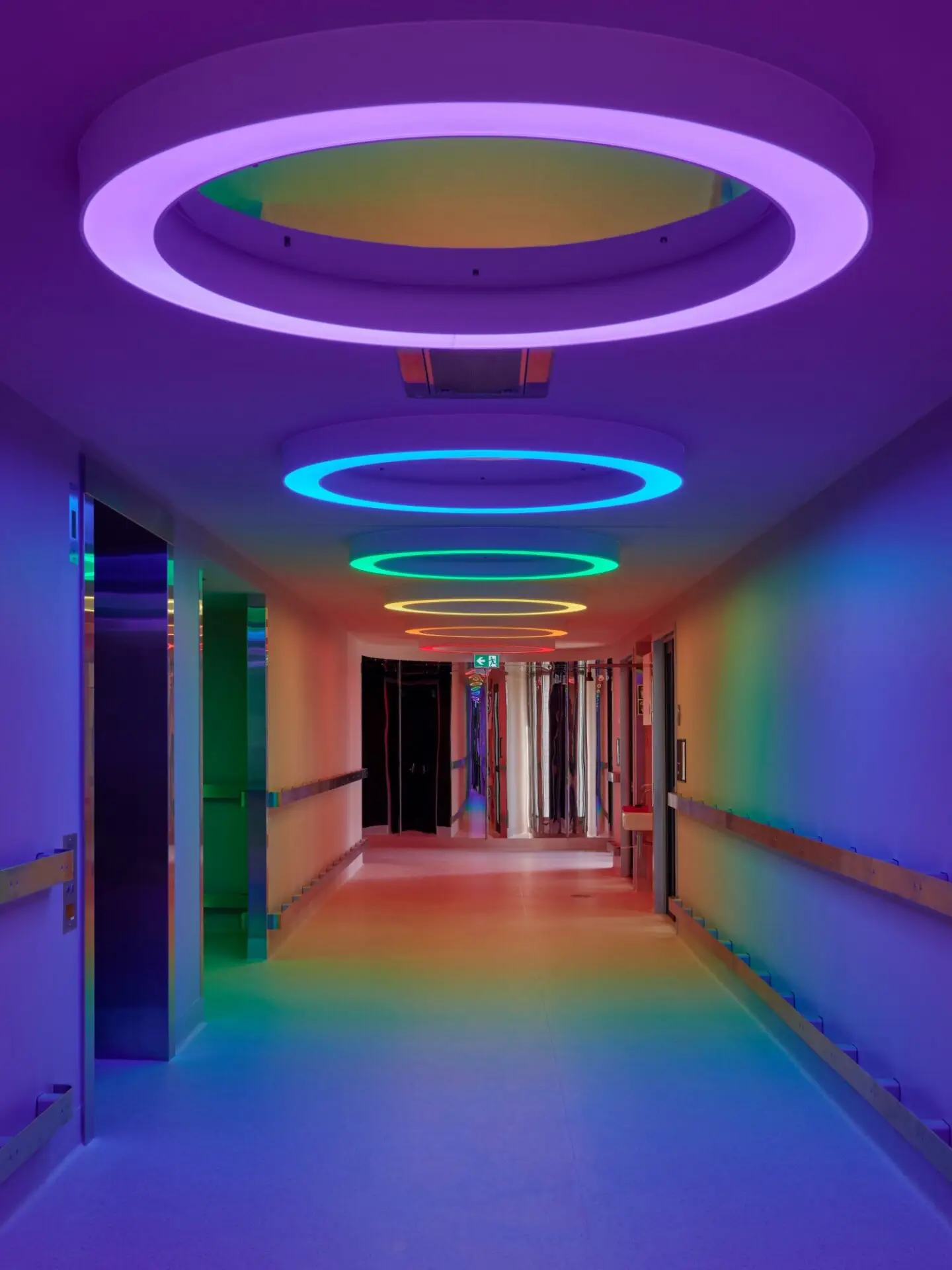
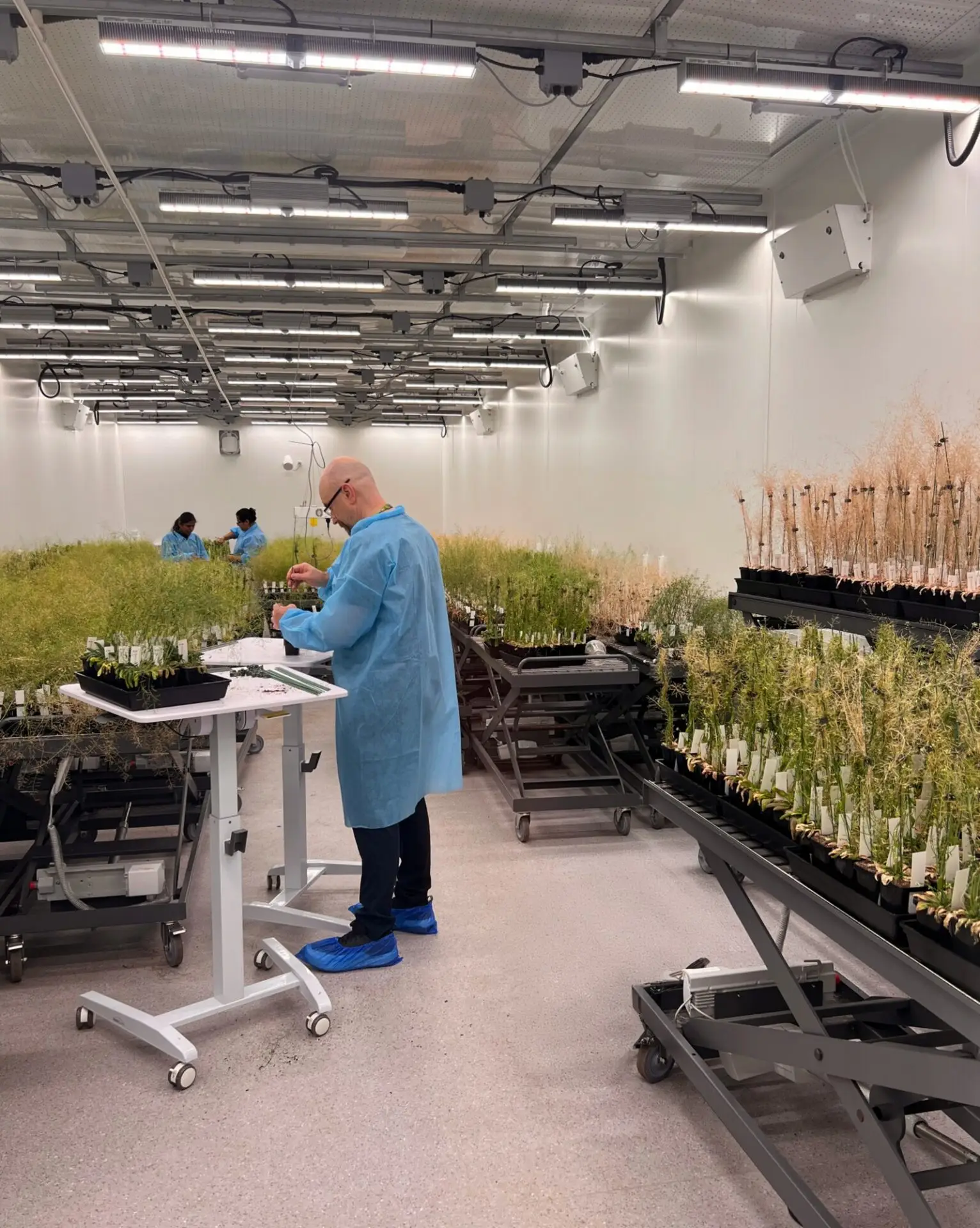
The Plant Futures Facility is landmark research building conceived as a "walled garden" — a secure, high-performance environment for world-class plant science. A rigorous planning module based on a single standard pot informs the planning. Expressively clad in eight brick types arranged in a pixelated pattern referencing Queensland's geological soil profiles, the building mediates between dissimilar campus scales while honouring Country. Internally, light, colour, and mirrored surfaces distort perception, echoing the environmental controls applied to plants. Ruthlessly efficient, yet culturally resonant, it is both finely detailed instrument and poetic architectural statement.
Award for Educational Architecture
The credible achievement of the Plant Futures Facility at UQ lies the mastery of the technical precision of this world class research centre paired with its urban sensibilities and identity. The significance and regard for the adjacent Hartley Teakle Building by Birrell is implicit in the work. The curvilinear edges to the building and studied dedication to layered brickwork in the creation of a conceptual ‘walled garden’ parallels its neighbour. The UQ ‘Campuses on Countries’ design framework has informed an interpretive native landscape surrounding the building which is juxtaposed against the eight-brick sedimentary cross-sectional study of Queensland soils in the building facade. The building echoes the earliest campus work executed by the Practice. The interior and exterior are somewhat divorced due to the nature of the programme – the interiors containing an array of highly technical, accurately controlled artificial environments created to research food, fibre, and fuel production. The Architects have calibrated the research spaces based on multiples of the modular unit of a single plant pot, a systemic idea which pervades the facility. Ultimately, the building yearns to contribute to the Campus identity despite its reticent program, a successful yield which might have fallen fallow in lessor hands.
Commendation for Educational Architecture
The Plant Futures Facility is landmark research building conceived as a "walled garden" — a secure, high-performance environment for world-class plant science. A rigorous planning module based on a single standard pot informs the planning. Expressively clad in eight brick types arranged in a pixelated pattern referencing Queensland's geological soil profiles, the building mediates between dissimilar campus scales while honouring Country. Internally, light, colour, and mirrored surfaces distort perception, echoing the environmental controls applied to plants. Ruthlessly efficient, yet culturally resonant, it is both finely detailed instrument and poetic architectural statement.
COLORBOND Shortlist
Award for Educational Architecture
The credible achievement of the Plant Futures Facility at UQ lies the mastery of the technical precision of this world class research centre paired with its urban sensibilities and identity. The significance and regard for the adjacent Hartley Teakle Building by Birrell is implicit in the work. The curvilinear edges to the building and studied dedication to layered brickwork in the creation of a conceptual ‘walled garden’ parallels its neighbour. The UQ ‘Campuses on Countries’ design framework has informed an interpretive native landscape surrounding the building which is juxtaposed against the eight-brick sedimentary cross-sectional study of Queensland soils in the building facade. The building echoes the earliest campus work executed by the Practice. The interior and exterior are somewhat divorced due to the nature of the programme – the interiors containing an array of highly technical, accurately controlled artificial environments created to research food, fibre, and fuel production. The Architects have calibrated the research spaces based on multiples of the modular unit of a single plant pot, a systemic idea which pervades the facility. Ultimately, the building yearns to contribute to the Campus identity despite its reticent program, a successful yield which might have fallen fallow in lessor hands.
The facility is an important national asset and reinforces the position of Australia, Queensland and UQ as a leader in plant science research.
The Plant Futures Facility has quickly become a landmark building, providing a new focal point for renewal of a previously underutilised part of the campus, continuing a tradition of expressive brickwork established by James Birrell. The Facility’s striking presence is a source of curiosity to campus users and a highly technical container.
The building fundamentally enhances how we conduct precision plant research in Australia by bringing people, technology, and growing environments together in a highly integrated way.
Client perspective
Michael Christensen, Design Architect
Michael Lavery, Design Architect
Fuller November, Project Architect
Jeffery Briant, Project Architect
Hal Chandler, Graduate of Architecture
Bronwyn Grimley, Project Architect
Lindsay Grundy, Project Architect
Katie Hawgood, Project Architect
Clint Mackay, Project Architect
George Taran, Project Architect
Julia Thorpe, Graduate of Architecture
Bligh Tanner, Structural Engineer
Bligh Tanner, Civil Consultant
Bligh Tanner, Facade Engineer
Lusch, Facade Structure
LatStudios, Landscape Consultant
NDY, Dewpoint Group, Wood, Mechanical Engineer
NDY, Design Engineering Solutions, KME, Electrical Consultant
NDY, McIntosh and McNeill, RTL Trades, Hydraulic Consultant
McIntosh and McNeill, RTL Trades, Siphonic Engineer
NDY, Vertical transportation consultant
NDY, Stantec, Section J consultant
Rob Kerslake, Tony Agostino, Controlled environment consultant
Fire Engineers Australia, Fire engineer
DMA Engineers, Fire Boar, Dry Fire Consultants
Certis, Building certifier
Sale Laboratory Architecture Consultancy, Third party assessor
Certis, Access consultant
Stantec, Acoustic Consultant
Hawkins Jenkins Ross, Hazardous area classification consultant
The University of Queensland Property and Facilities Division, Cadence, Ernst and Young, Savills Australia, Project Manager
Steele Wrobel, Quantity Surveyor
191 Consulting, Construction and performance specification consultant
Olivotto Consulting, Glasshouse structural engineer
Croudace, Glasshouse design
Rubidium Light, Artificial lighting consultant
Power Protection Industries, Lightning protection consultant
Hoslab, Specialist gas design
Kusch, MCQ Structures, Gripple, Polypas, Seismic engineer
Architectus Conrad Gargett, Laboratory design review architect
RLB, Project programming consultant
The University of Queensland Institutional Biosafety, Biological safety consultant
Asset Commissioning Management, Independent commissioning agent