
Jaggera and Turrbal peoples
Queensland
Brisbane
The project is a secure container for plants and their research conditions built-up from the inside out, from the size of a pot (8 pots = 1 tray, 5 trays = 1 trolley, 6 trolleys = 1 small grow room etc).
The controlled environment rooms cannot have windows. Embracing the ‘insulated box’ maximises the conservation of energy, with each grow room being its own sealed, insulated container.
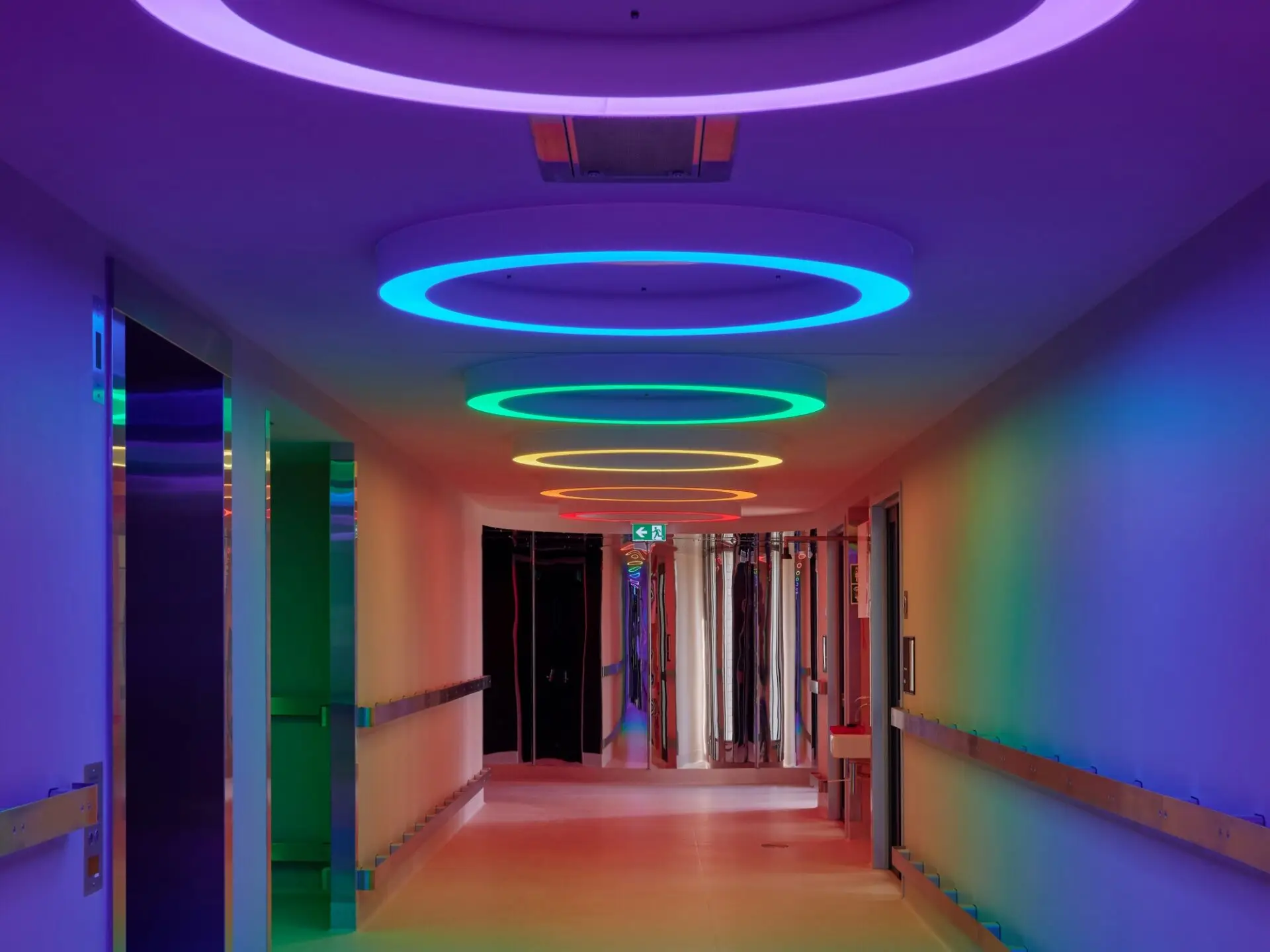
The building’s interior research environments are highly manipulated. The public spaces of the corridors respond to this.
Lighting in the corridors, changes the user’s perception of the ‘real’ colours of walls, floors, and ceilings. The changes in light quality also manipulate the user’s perception of the time of day. The shape of the distorted mirrored stainless-steel walls and the bent light continue to play with the perception of the inhabitants.
In this way, the interiors treat inhabitants the same as the plants they are studying.
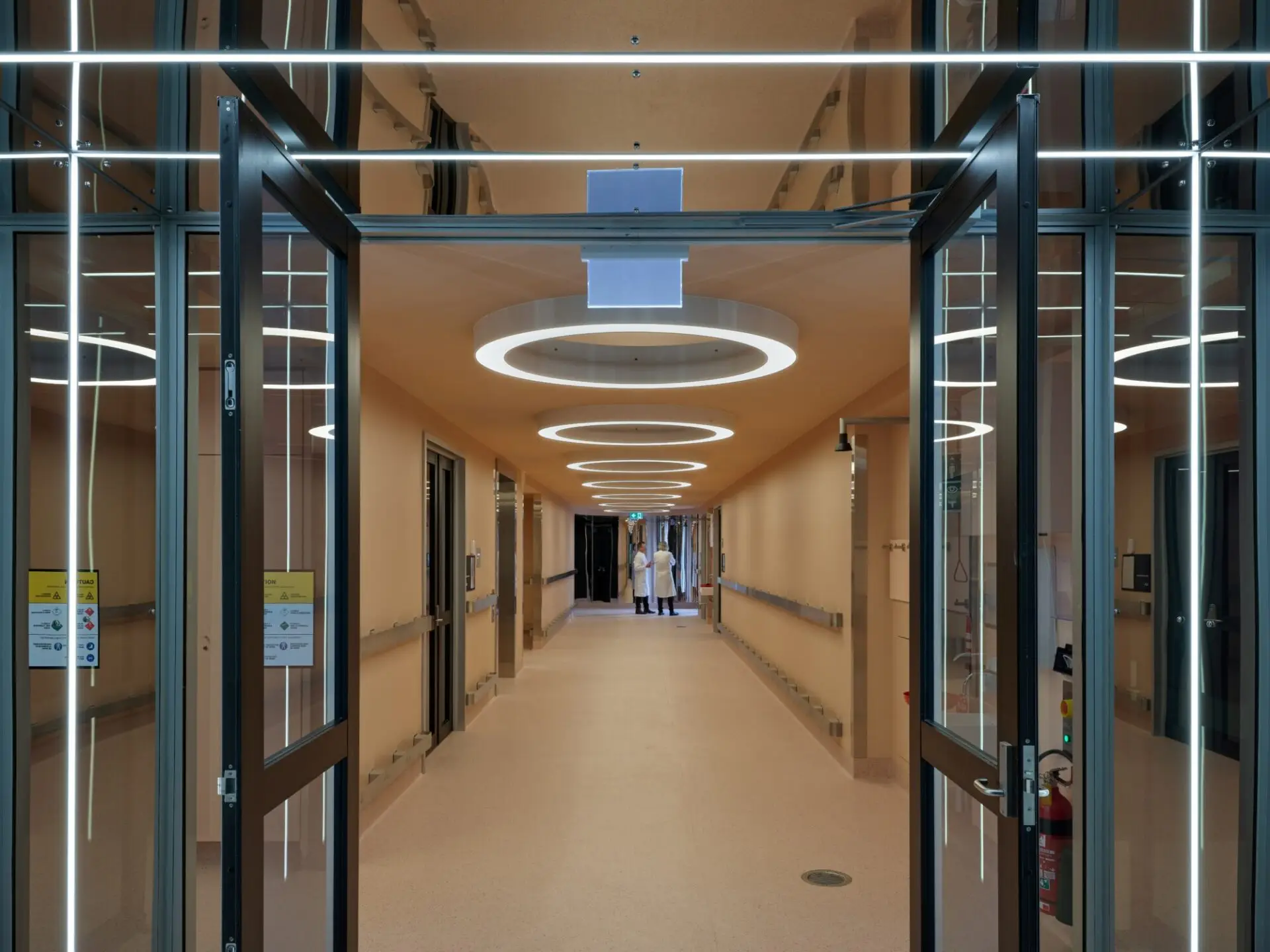
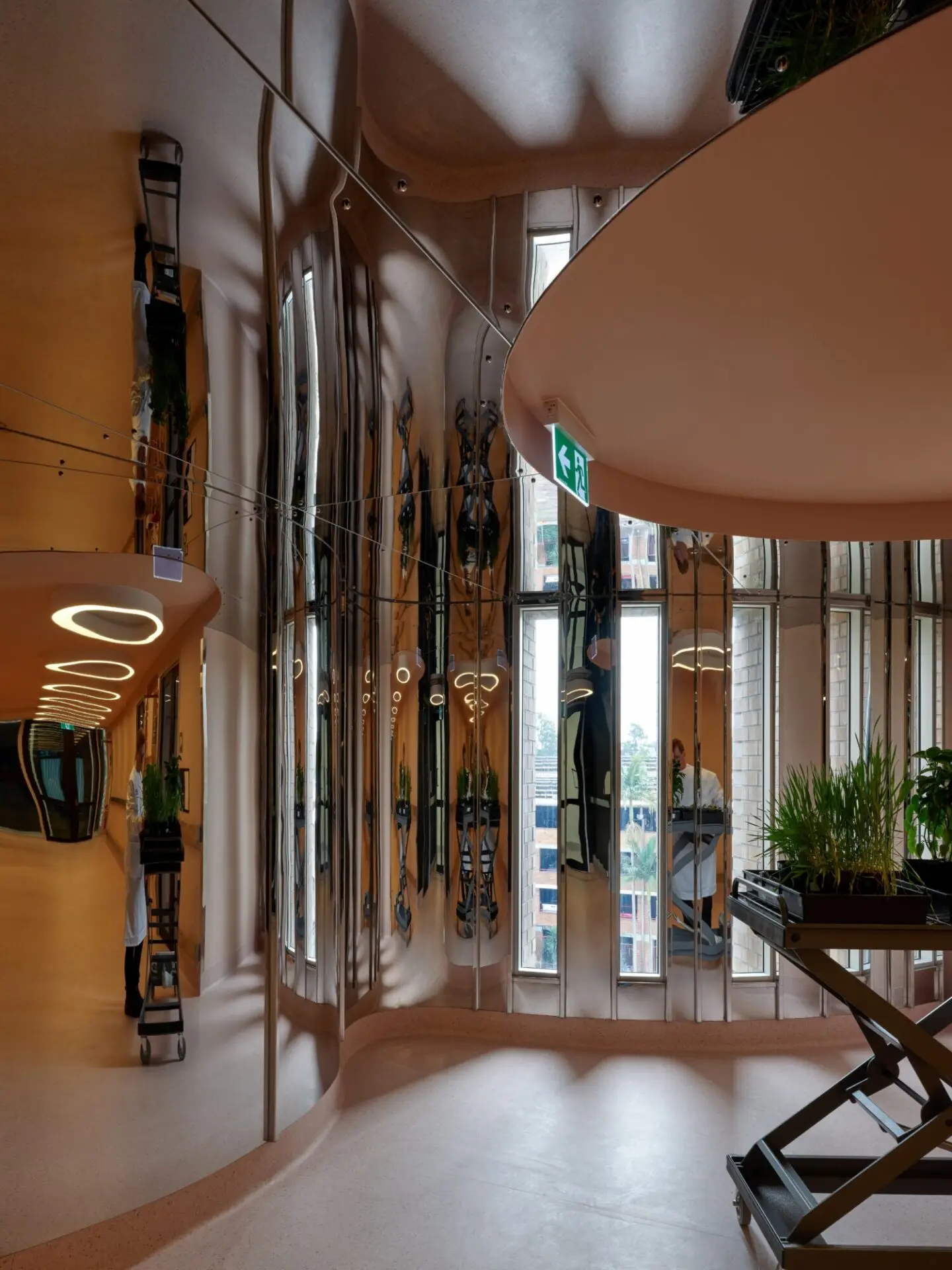
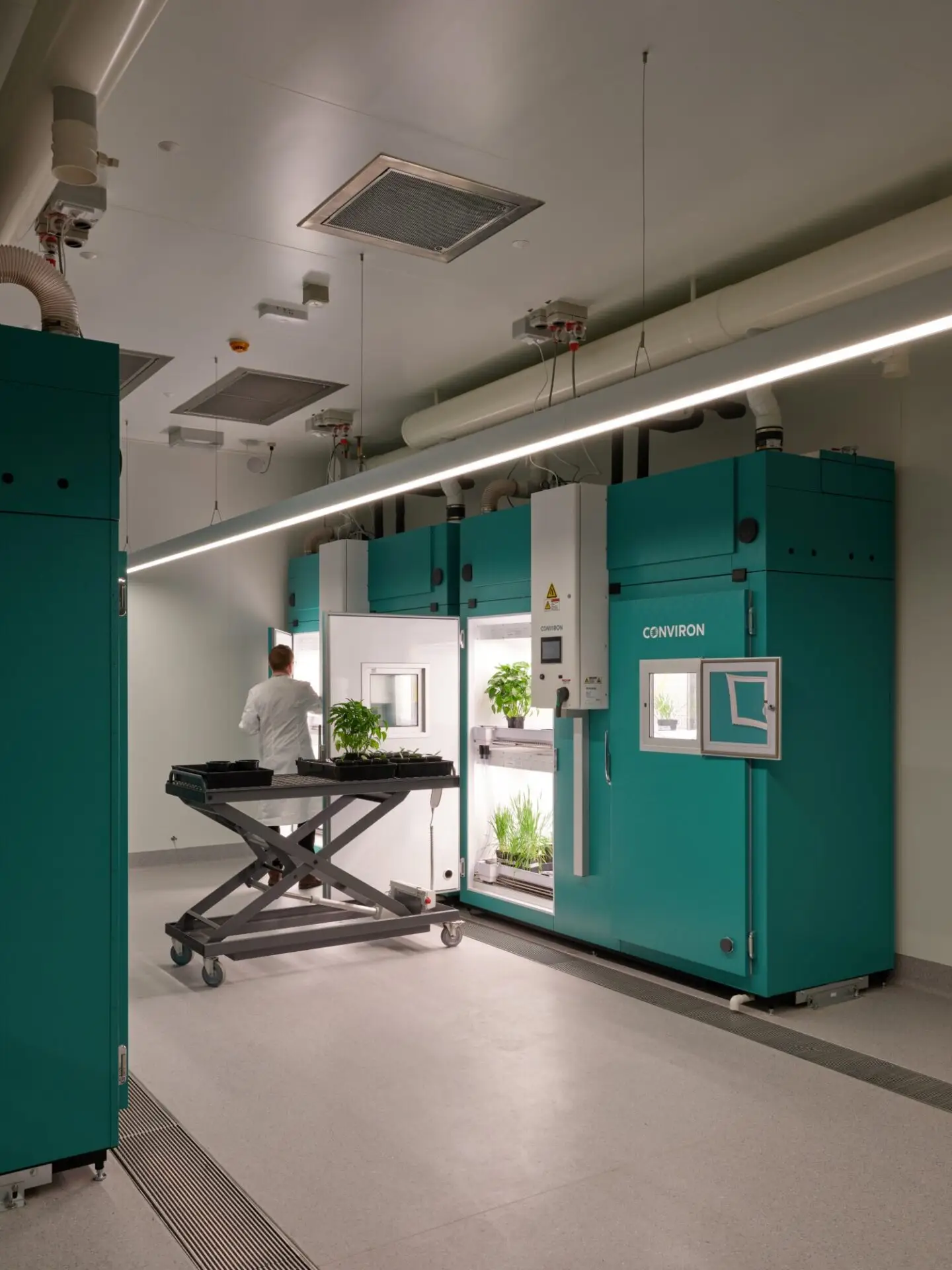
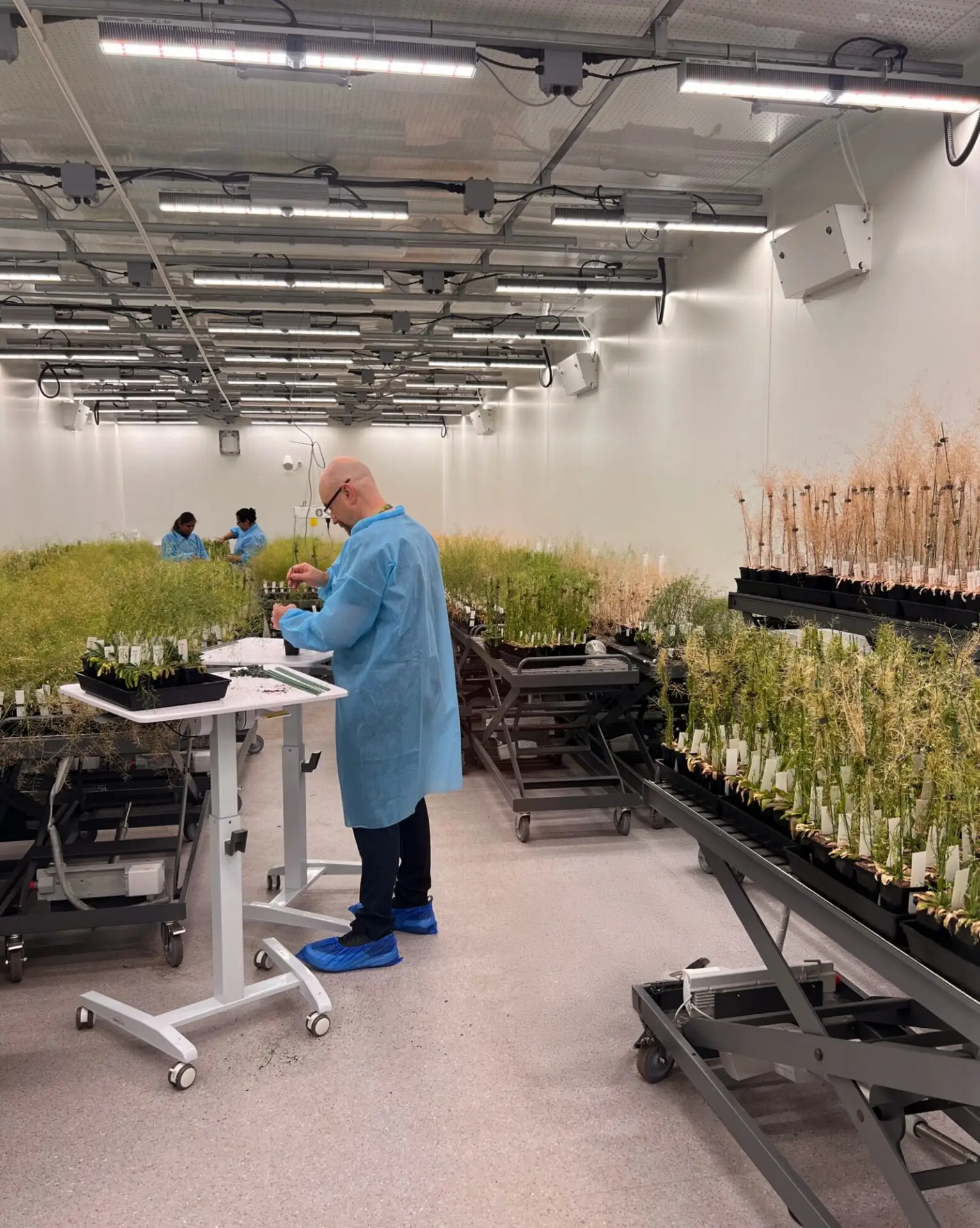

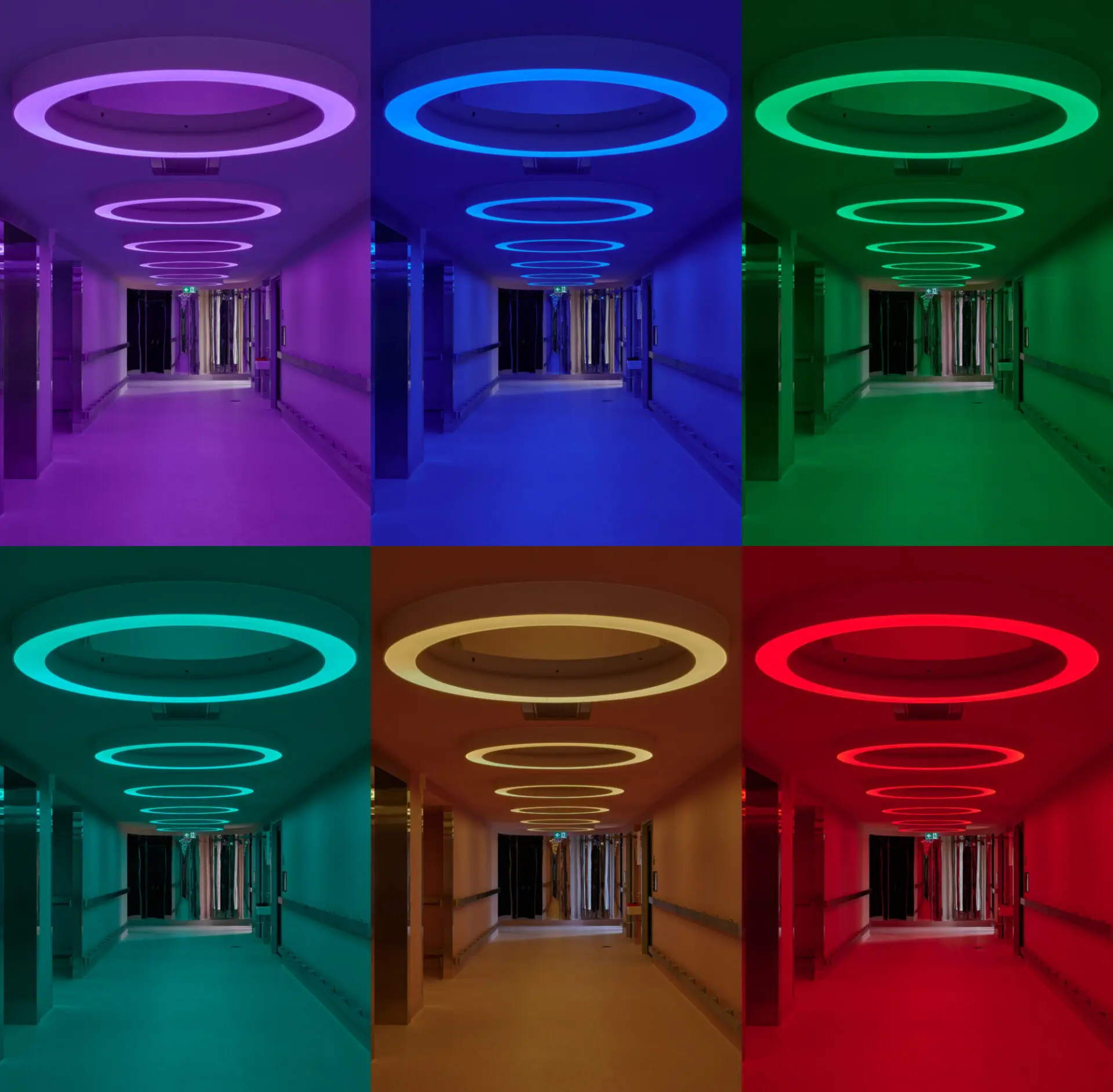
The Plant Futures Facility boldly injects playfulness and humanity into a highly technical building. Within a canvas of performance-driven finishes, the use of coloured light has transformed the central corridor into an adaptive, dynamic space. Despite the introspective nature of the building, the small visual connection to outside has been cleverly captured and reflected within the floor plan. In a building heaving with services, the deft co-ordination of consultants has resulted in a series of seamless spaces.
Award For Interior Architecture
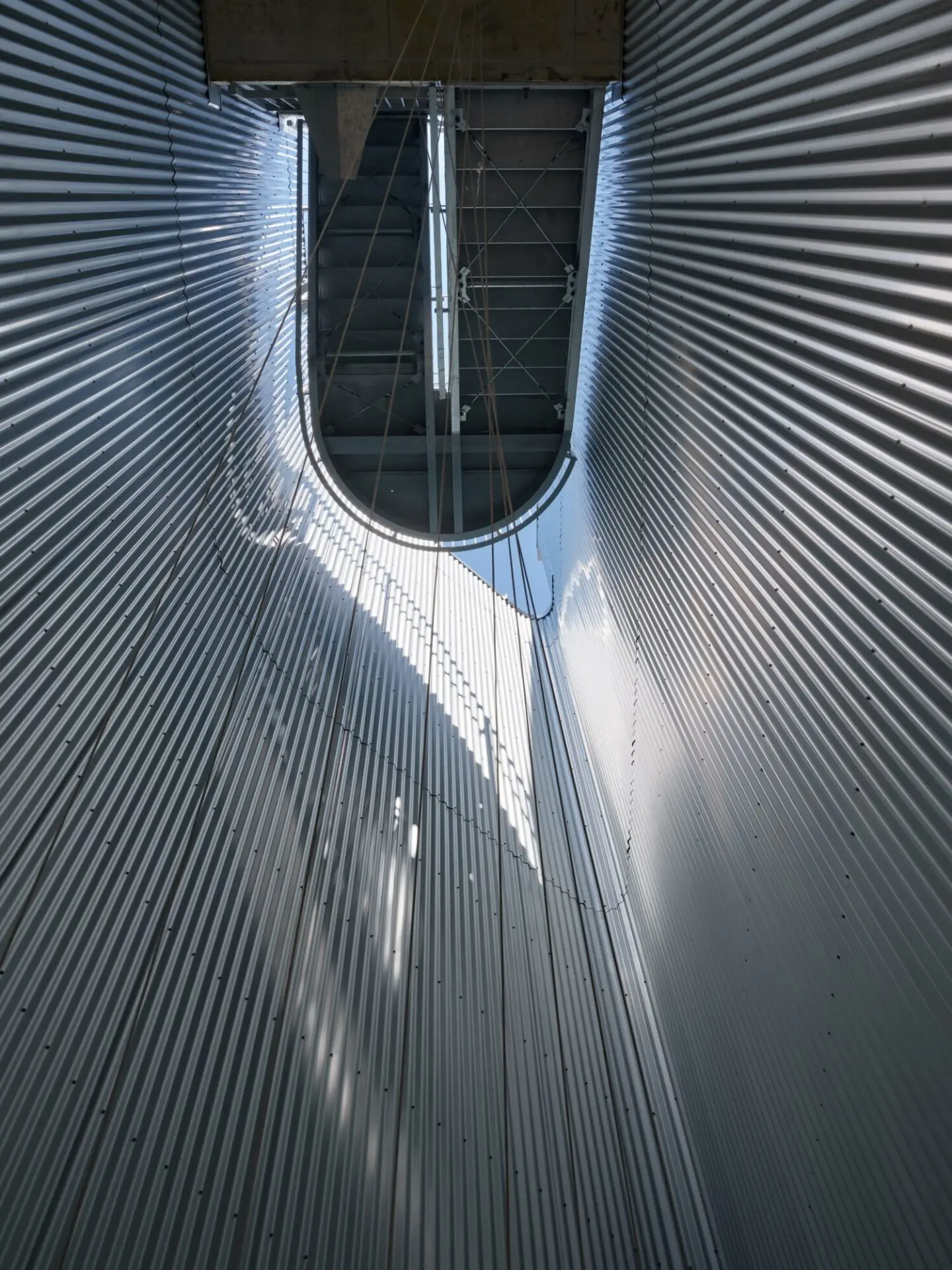
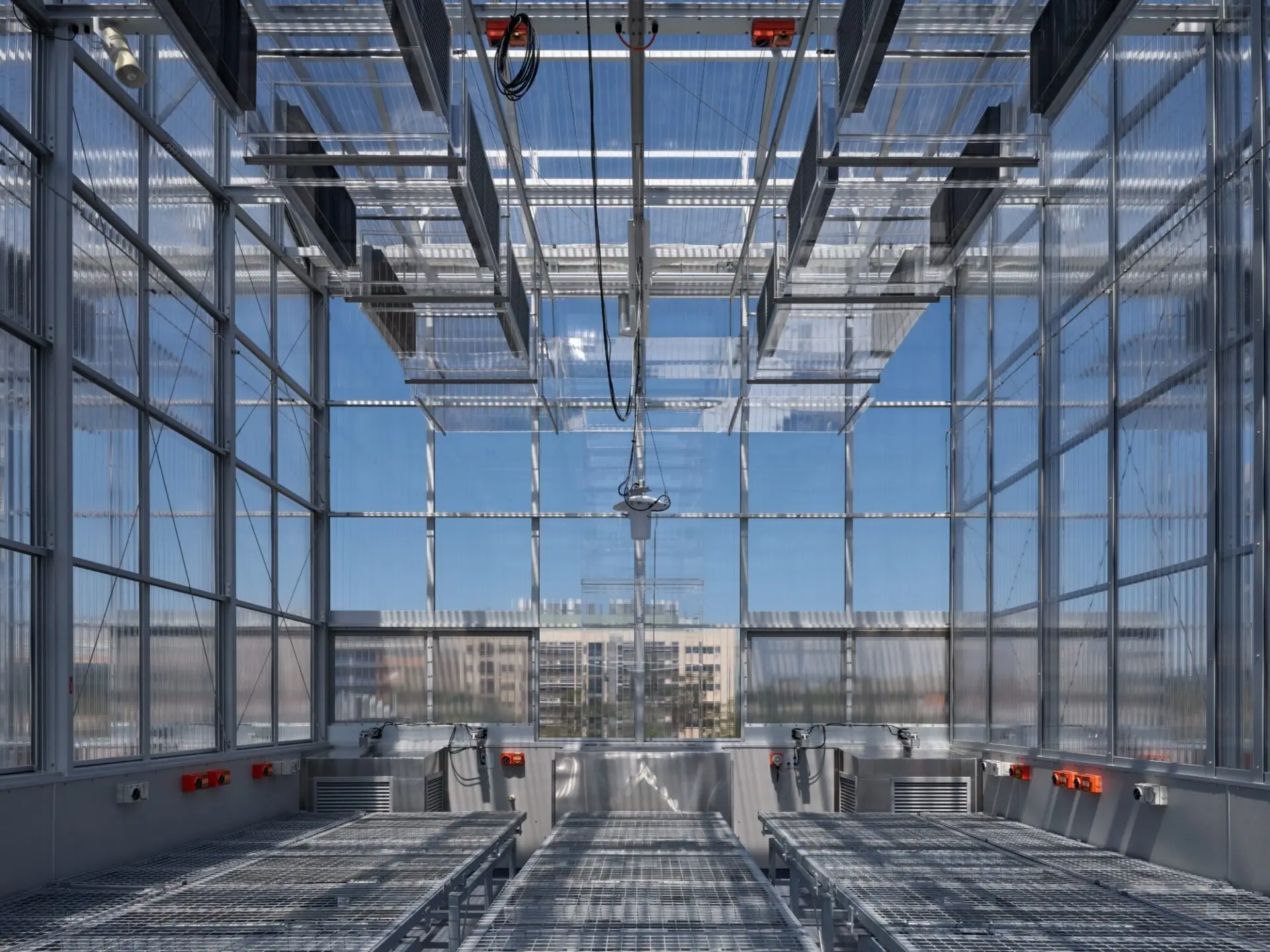
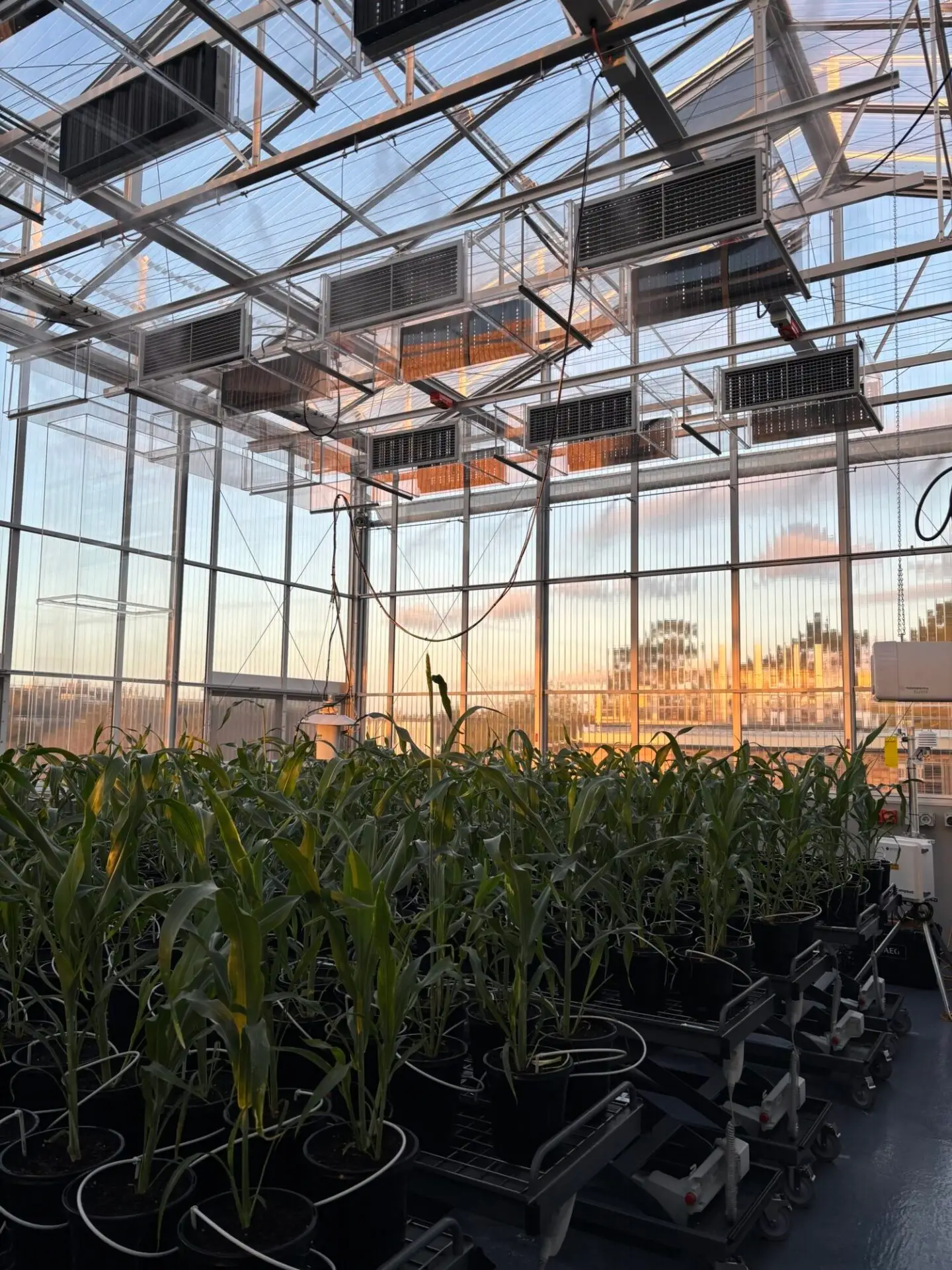
Plant Futures Facility at UQ, is one of the world’s most technically specific, climatically controlled, artificial internal environments. Designed for the purpose of agricultural research, the building is intended primarily for plants, not people, and was briefed without the windows or the desire for external influence or awareness. At the entry, a corrugated funnel raises the eye to a farewell glimpse of the sky. The Architects have calibrated the research spaces based on multiples of the modular unit of a single plant pot. Sectionally, the building resembles a club sandwich, with a floor plate of service plant stationed over each level of research rooms and capped off with a crown of clear glasshouses. At a critical point, the Architects have acknowledged the sensory deprivation likely to be experienced by researchers and staff occupying the building. Their response has been the creation of a suite of spaces that transform from utilitarian corridors into stimulating sensory interior spaces. Employing sophisticated lighting systems with colour modulation and whimsical curvilinear mirror walls, the spaces reflect a Kubrickian-like atmosphere. Coupled with the rare, approved slot windows within the building, these spaces offer a considerate awaking of the senses upon arrival or departure.
Commendation for Interior Architecture
The Plant Futures Facility boldly injects playfulness and humanity into a highly technical building. Within a canvas of performance-driven finishes, the use of coloured light has transformed the central corridor into an adaptive, dynamic space. Despite the introspective nature of the building, the small visual connection to outside has been cleverly captured and reflected within the floor plan. In a building heaving with services, the deft co-ordination of consultants has resulted in a series of seamless spaces.
COLORBOND Shortlist
Award For Interior Architecture
Plant Futures Facility at UQ, is one of the world’s most technically specific, climatically controlled, artificial internal environments. Designed for the purpose of agricultural research, the building is intended primarily for plants, not people, and was briefed without the windows or the desire for external influence or awareness. At the entry, a corrugated funnel raises the eye to a farewell glimpse of the sky. The Architects have calibrated the research spaces based on multiples of the modular unit of a single plant pot. Sectionally, the building resembles a club sandwich, with a floor plate of service plant stationed over each level of research rooms and capped off with a crown of clear glasshouses. At a critical point, the Architects have acknowledged the sensory deprivation likely to be experienced by researchers and staff occupying the building. Their response has been the creation of a suite of spaces that transform from utilitarian corridors into stimulating sensory interior spaces. Employing sophisticated lighting systems with colour modulation and whimsical curvilinear mirror walls, the spaces reflect a Kubrickian-like atmosphere. Coupled with the rare, approved slot windows within the building, these spaces offer a considerate awaking of the senses upon arrival or departure.
The building fundamentally enhances how we conduct precision plant research in Australia by bringing people, technology, and growing environments together in a highly integrated manner. By combining purpose-built controlled environment grow spaces with laboratories, offices, and collaborative spaces, the building facilitates rapid iteration between experimentation and analysis, benefiting research outcomes. Clear circulation and visual organisation supports efficient agriculture and biosafety operations in a complex vertical facility, while thoughtful design elements promote wellbeing in highly clinical spaces. Importantly, the building is adaptable and future-focused, supporting evolving research needs and providing a welcoming environment for education, research, industry engagement, and collaboration.
Client perspective
Michael Christensen, Design Architect
Michael Lavery, Design Architect
Fuller November, Project Architect
Jeffery Briant, Project Architect
Hal Chandler, Graduate of Architecture
Bronwyn Grimley, Project Architect
Lindsay Grundy, Project Architect
Katie Hawgood, Project Architect
Clint Mackay, Project Architect
George Taran, Project Architect
Julia Thorpe, Graduate of Architecture
Bligh Tanner, Structural Engineer
Bligh Tanner, Civil Consultant
Bligh Tanner, Facade Engineer
Lusch, Facade Structure
LatStudios, Landscape Consultant
NDY, Dewpoint Group, Wood, Mechanical Engineer
NDY, Design Engineering Solutions, KME, Electrical Consultant
NDY, McIntosh and McNeill, RTL Trades, Hydraulic Consultant
McIntosh and McNeill, RTL Trades, Siphonic Engineer
NDY, Vertical transportation consultant
NDY, Stantec, Section J consultant
Rob Kerslake, Tony Agostino, Controlled environment consultant
Fire Engineers Australia, Fire engineer
DMA Engineers, Fire Boar, Dry Fire Consultants
Certis, Building certifier
Sale Laboratory Architecture Consultancy, Third party assessor
Certis, Access consultant
Stantec, Acoustic Consultant
Hawkins Jenkins Ross, Hazardous area classification consultant
The University of Queensland Property and Facilities Division, Cadence, Ernst and Young, Savills Australia, Project Manager
Steele Wrobel, Quantity Surveyor
191 Consulting, Construction and performance specification consultant
Olivotto Consulting, Glasshouse structural engineer
Croudace, Glasshouse design
Rubidium Light, Artificial lighting consultant
Power Protection Industries, Lightning protection consultant
Hoslab, Specialist gas design
Kusch, MCQ Structures, Gripple, Polypas, Seismic engineer
Architectus Conrad Gargett, Laboratory design review architect
RLB, Project programming consultant
The University of Queensland Institutional Biosafety, Biological safety consultant
Asset Commissioning Management, Independent commissioning agent