
Kaurna Land
South Australia
The Noarlunga Mental Health Rehabilitation Unit (MHRU), south of Adelaide, delivers a progressive, recovery-focused model of care for people with chronic mental health needs who are unable to live independently. Integrating a 28-bed Acute Medical Unit above and a long-stay rehabilitation unit below, the development supports continuity of care while maintaining dignity, autonomy, and therapeutic benefit.
Designed to enable stays of up to 18 months, the MHRU provides graduated transitions from private to communal and community-facing spaces, empowering residents to rebuild life skills and social confidence at their own pace. Shared facilities allow continued access to therapy, counselling, and wellbeing services following discharge, supporting long-term recovery.
Co-designed with lived-experience consumers and First Nations representatives, the project embeds cultural identity and connection to place. A domestic architectural character, strong landscape integration, and flexible planning create a calm, non-institutional environment that fosters healing, inclusion, and meaningful community reintegration.
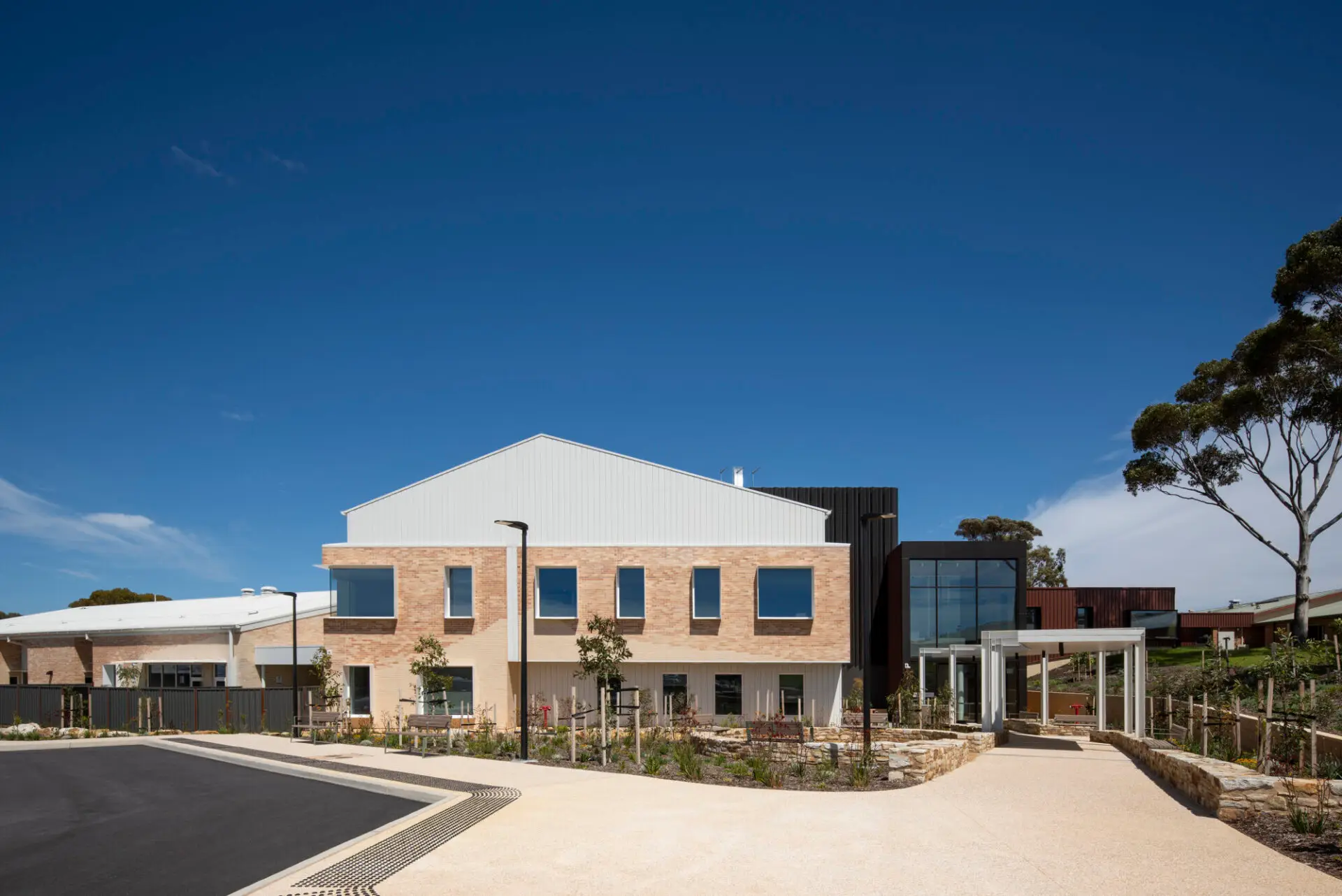
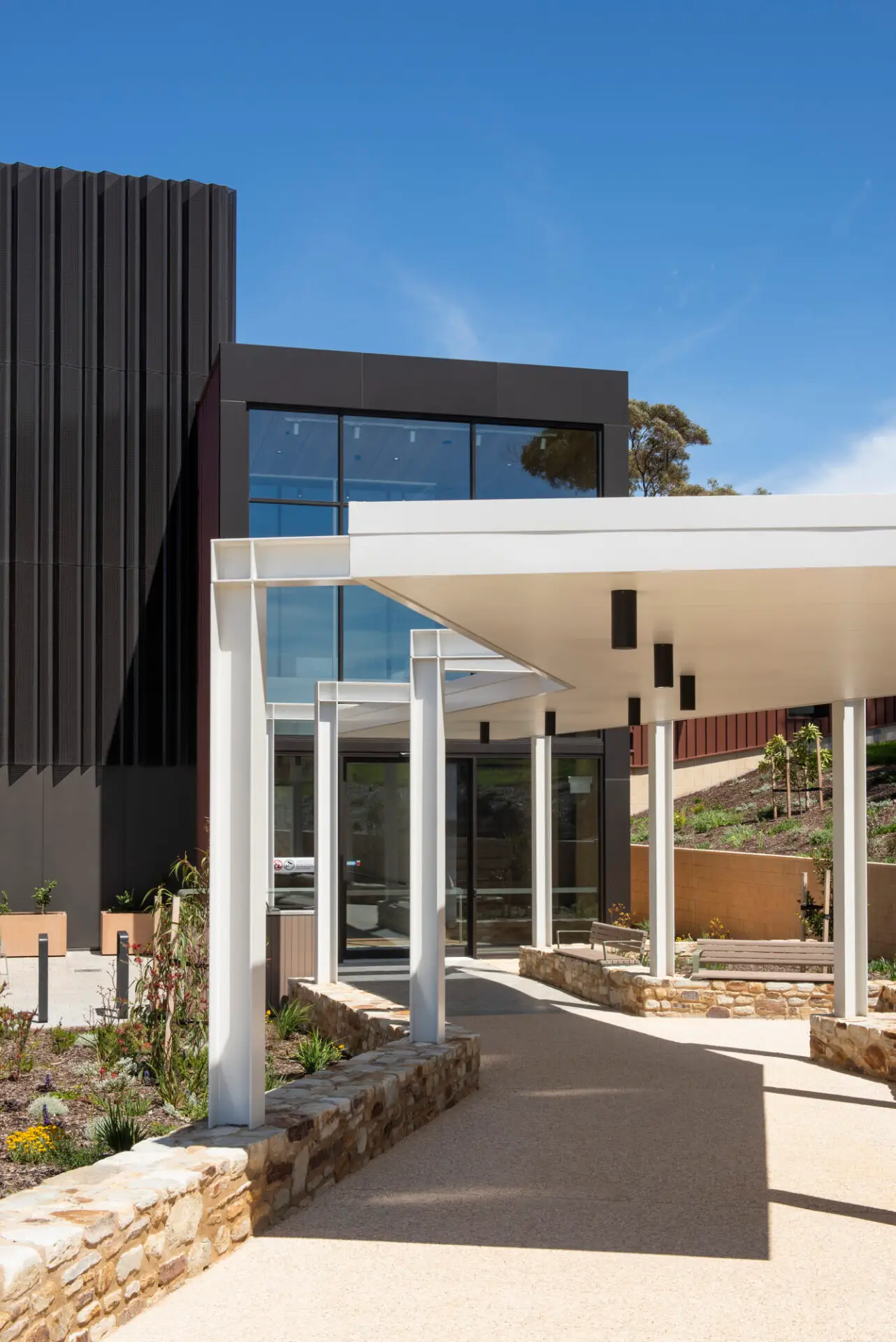
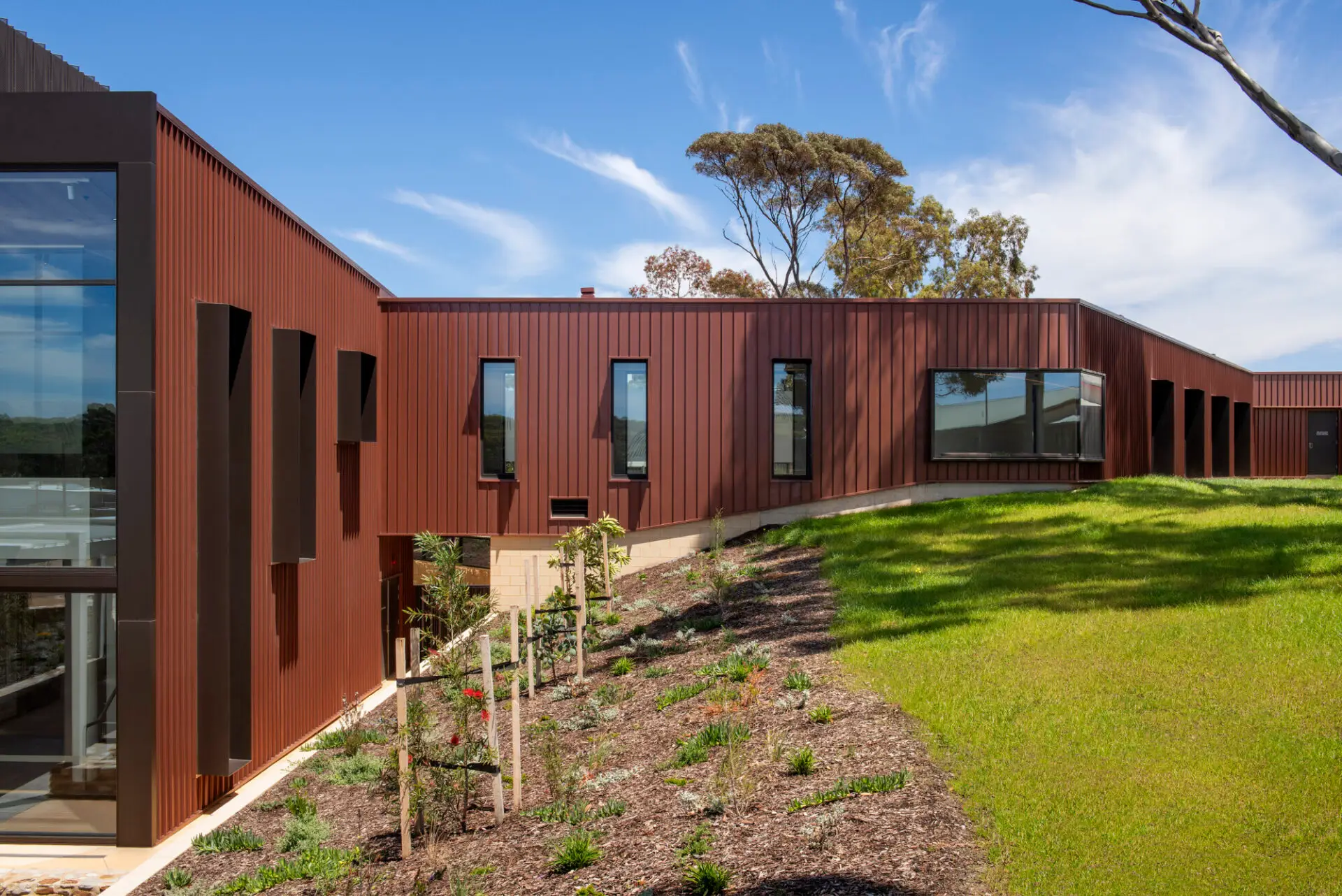
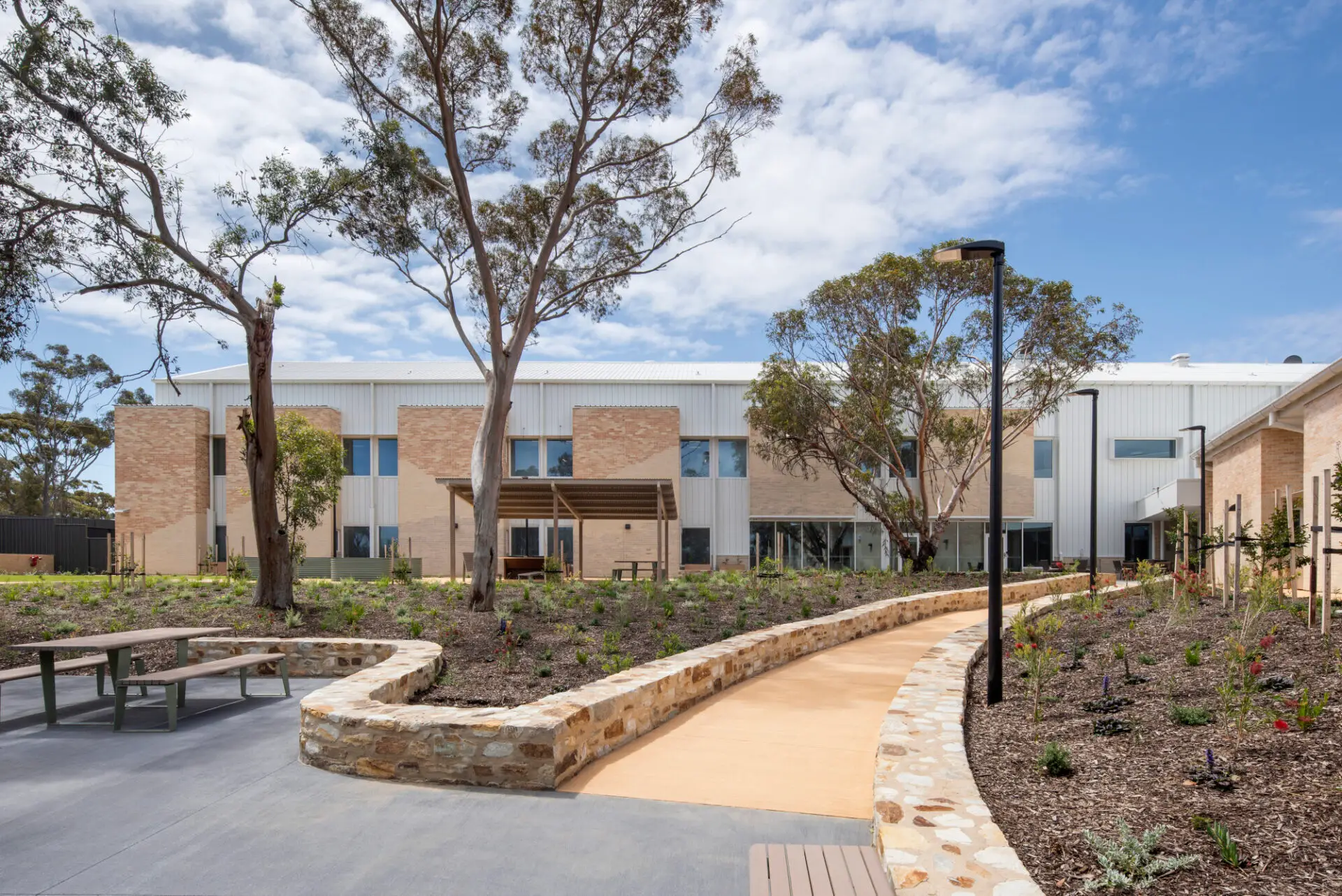
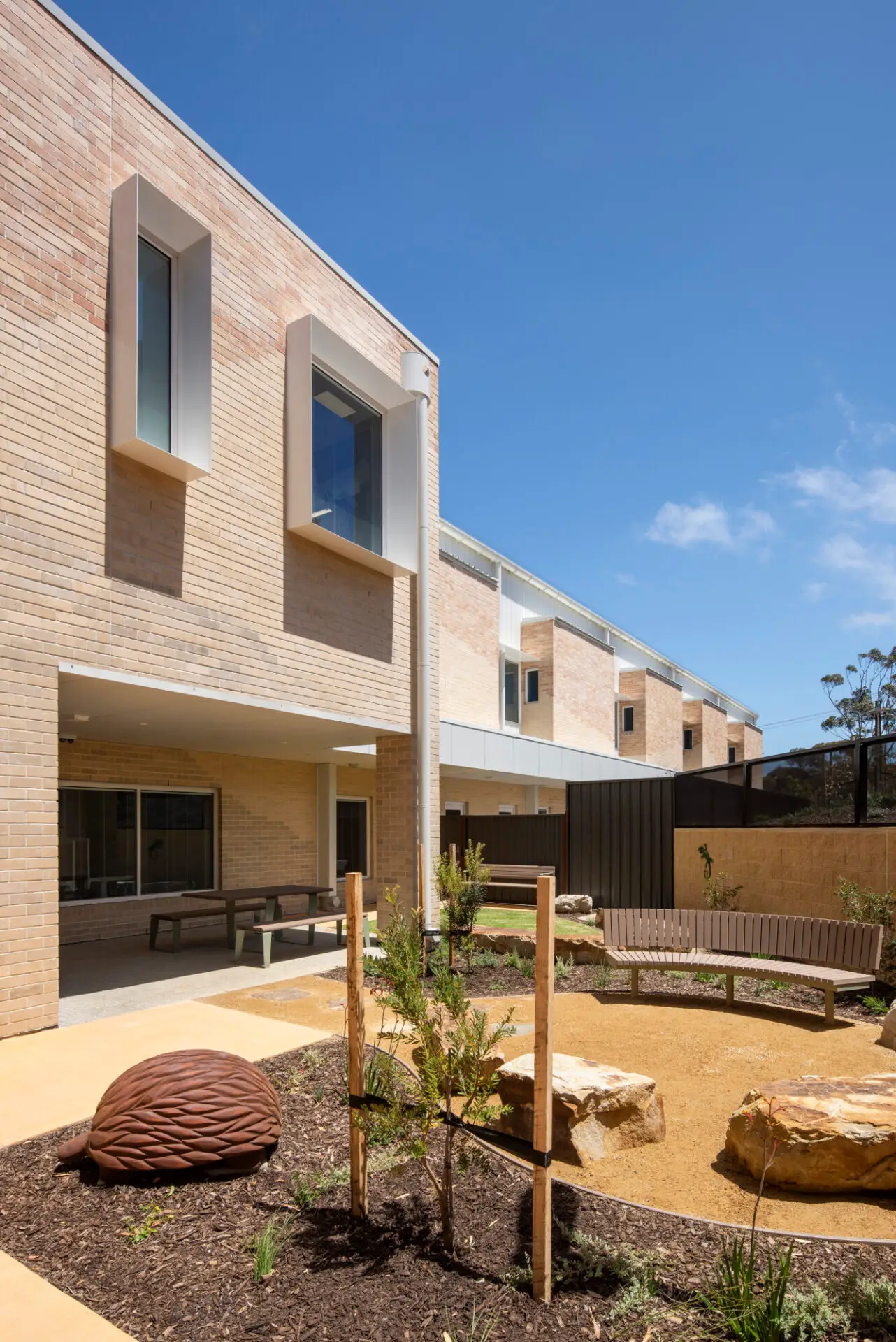
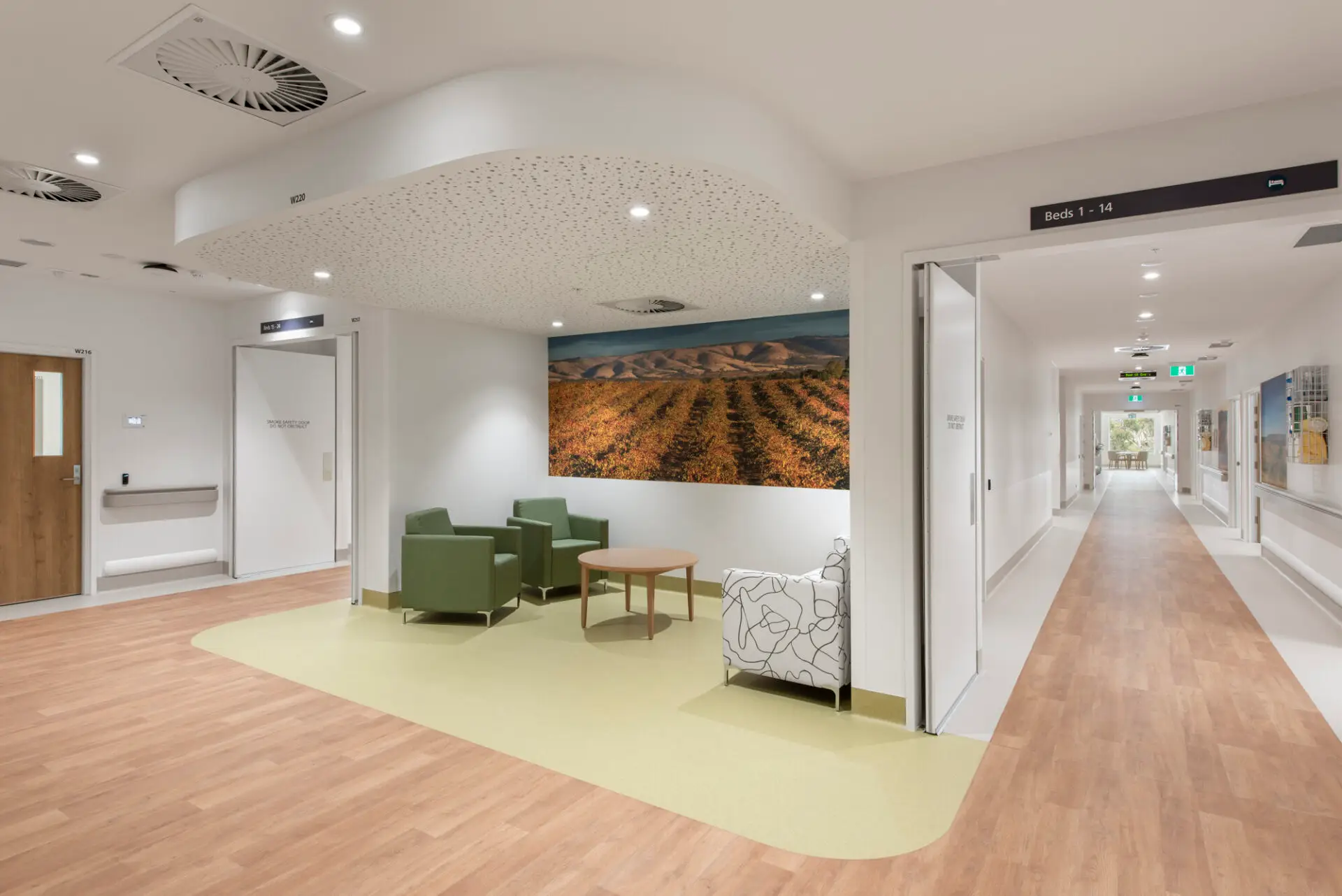
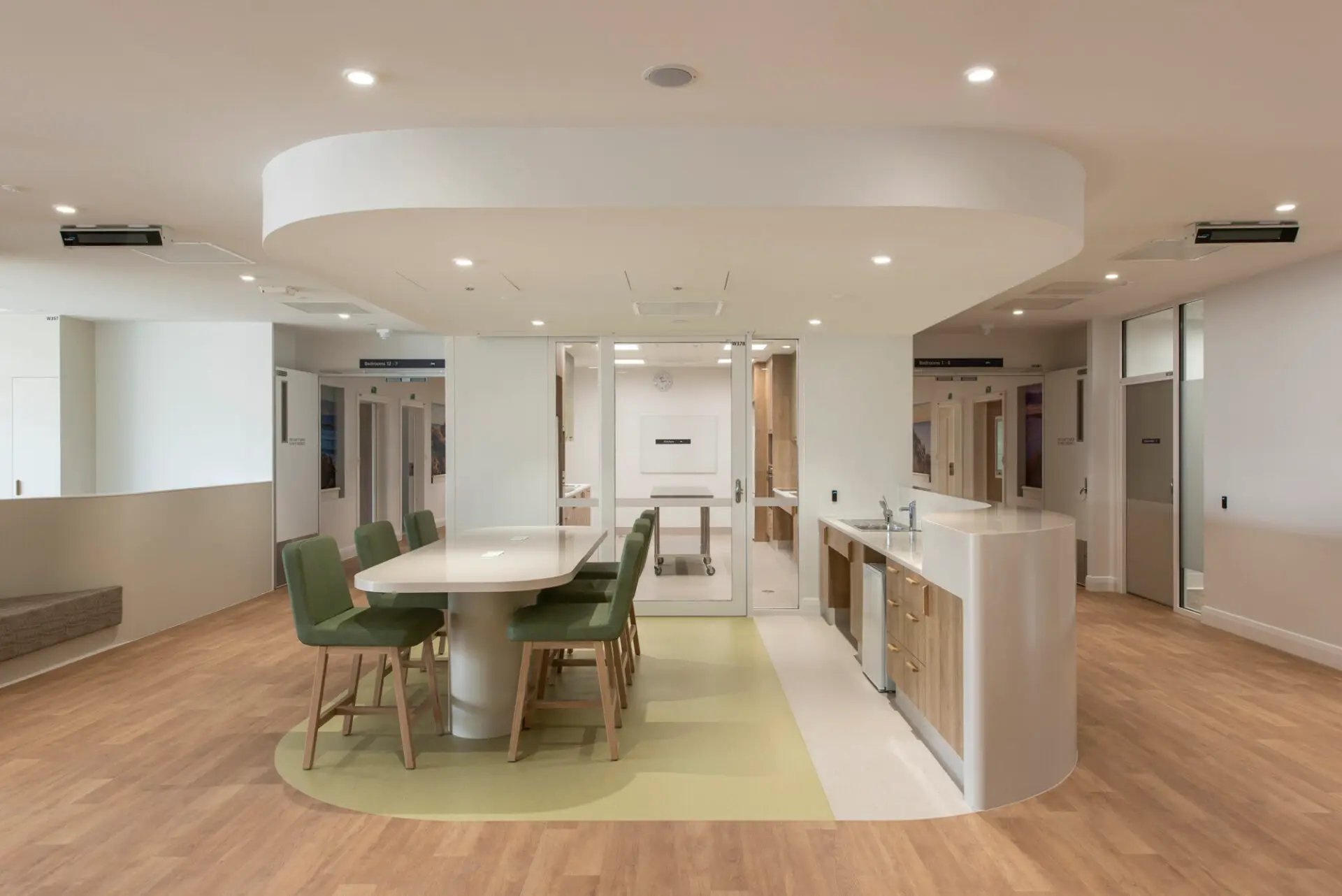
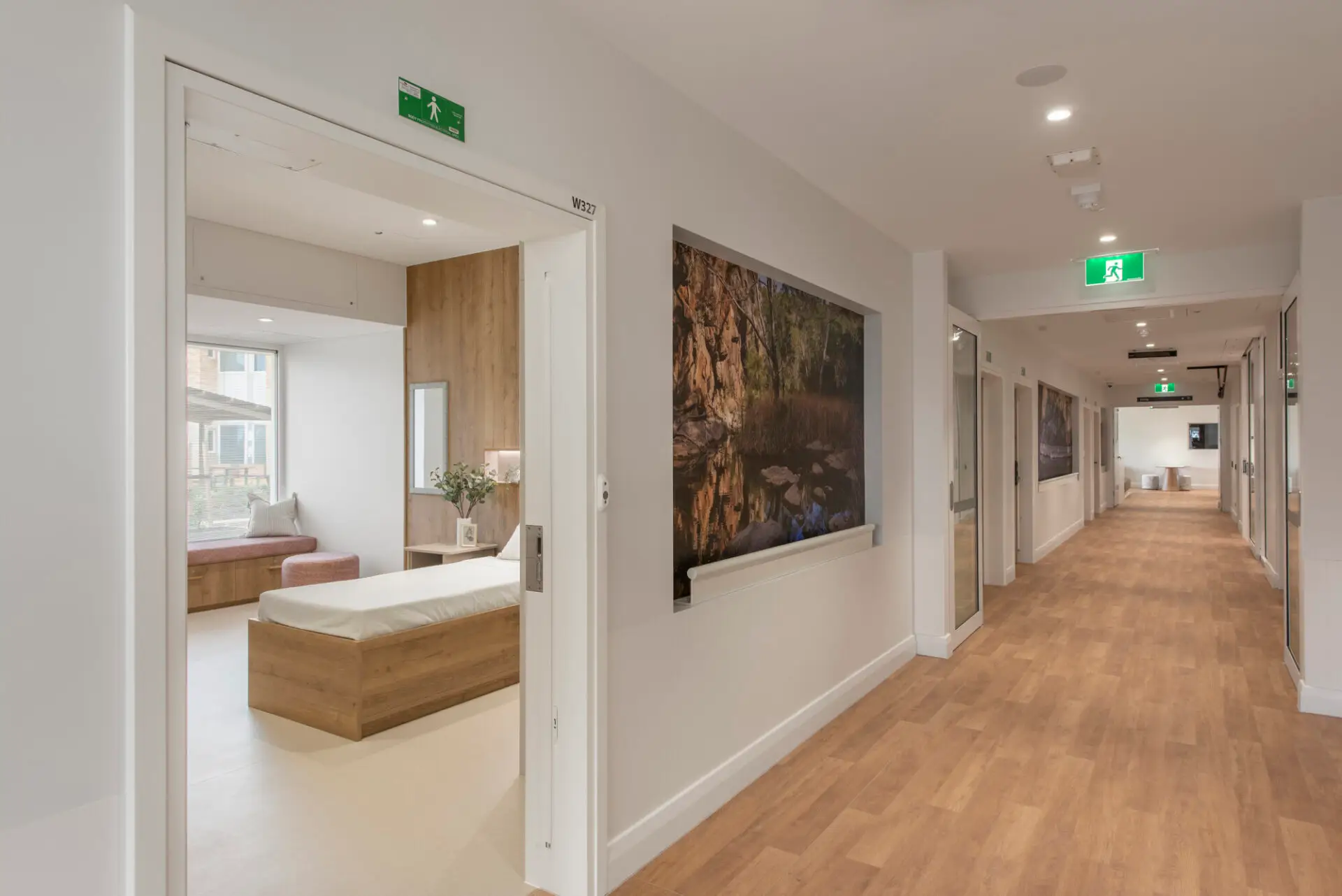
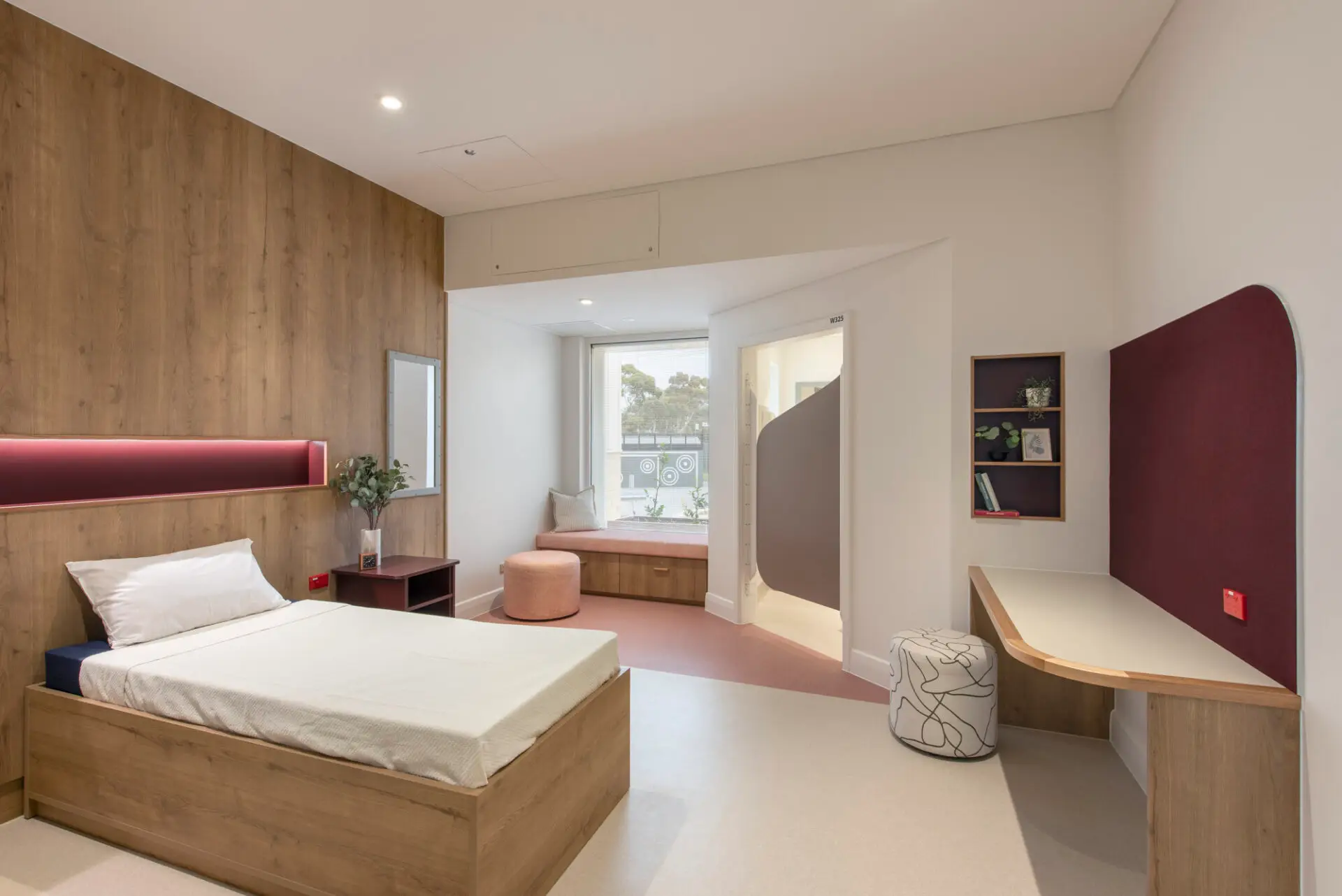
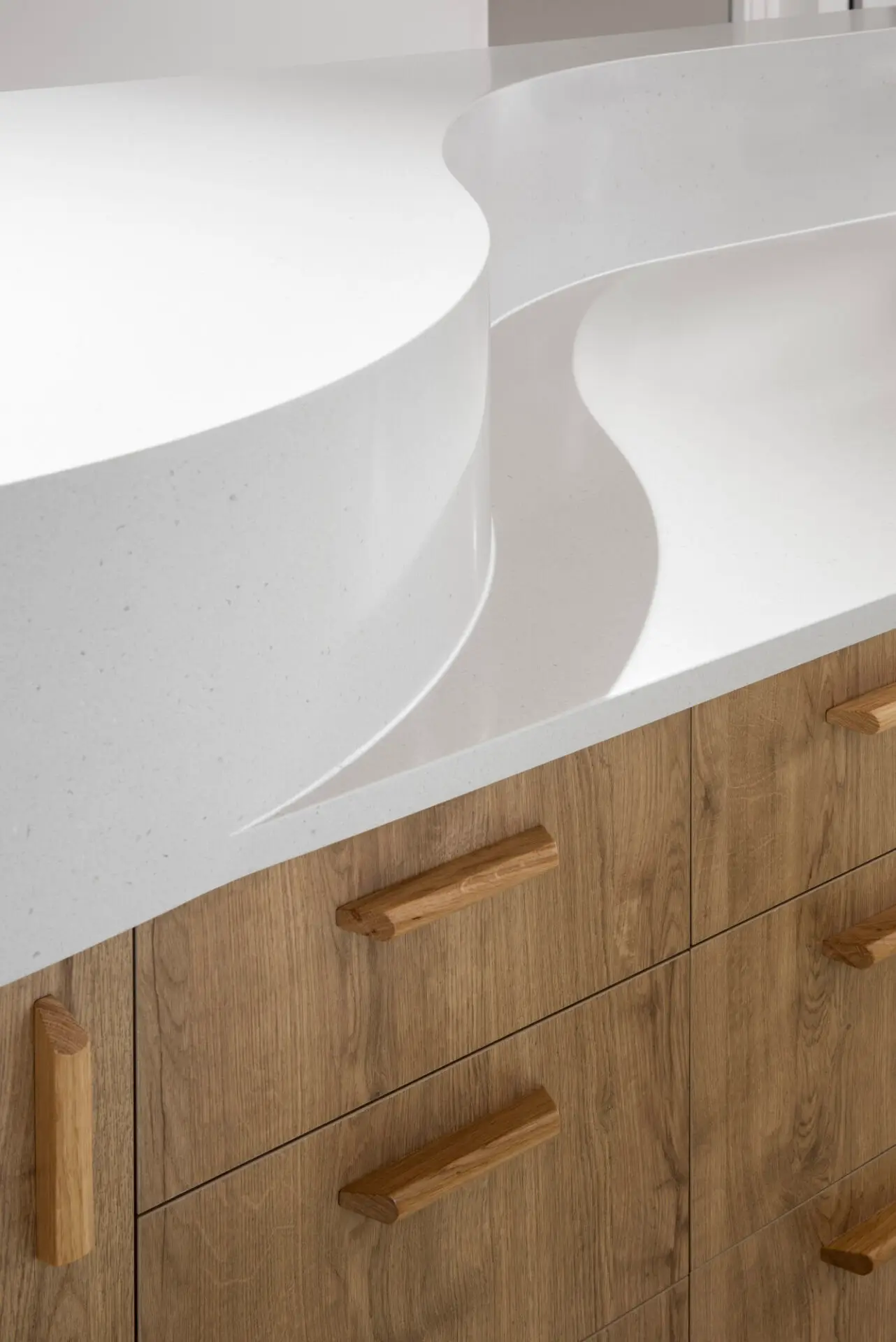
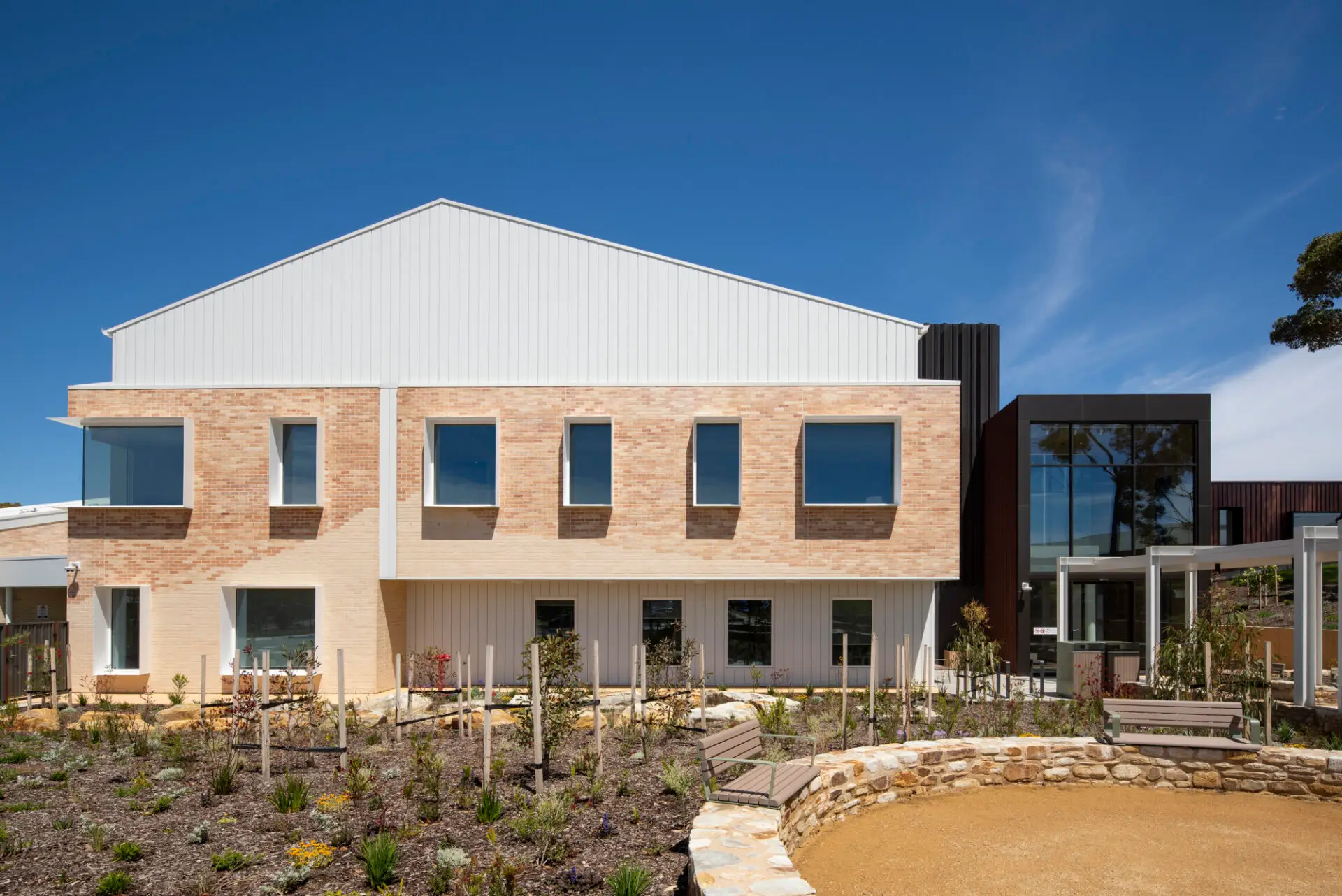
A welcoming, warm, domestic home for patients, the Noarlunga Hospital Mental Health Rehabilitation Unit is a deliberately domestic building in a civic campus setting. It offers a generous feeling of home for residents, providing a progressive and well-executed 28-bed recovery-focused model of care for people with chronic mental health needs who are unable to live independently.
The jury commends the warm and inviting feeling, creating a place to call home for up to 18 months. The non-clinical character is cleverly balanced with the complexity and technical requirements of a contemporary health facility, supporting continuity of care while maintaining dignity, autonomy and therapeutic benefit. A central garden at the heart of the building offers immersive outdoor access for therapeutic purposes while maintaining appropriate separation of spaces.
Responding to the client and user needs, the building planning offers flexibility, equity and dignity to residents. Living pods can function as open environments or be subdivided for smaller, safer settings.
The outcome is a bold and successful public building, carefully balancing domestic vernacular and scale, while creating a successful public presence located within a civic public hospital campus and responding to the sloping topography.
Client perspective
Mark Wiltshire, Design Architect
Ben Feijen, Project Architect
Dennis Tapp, Project Architect
Jake Fitton, Project Architect
Aurecon, Acoustic Consultant
Aurecon, Civil Consultant
Aurecon, Electrical Consultant
Aurecon, Structural Engineer
Aurecon, Mechanical Engineer
Condell Rustichelli, Artist
Brendan Hinton, Artist
BCA Concepts, Building Surveyor
Rider Levett Bucknall, Cost Consultant
Tract, Landscape Consultant
Wiltshire Swain, Interior Designer