
The Australian Institute of Architects, Queensland Chapter, together with the Australian Institute of Landscape Architects, Planning Institute of Australia and Design Institute of Australia, has lodged an a supplementary 2032 Green Grid submission as part of Brisbane City Council’s Brisbane: Making our Mark campaign.
The submission advances the Green Pathways, Gold Places advocacy by setting out a clear and practical vision for a connected inner-ring network of green corridors, streetscapes, footpaths, cycleways and public spaces that can support Brisbane in the lead-up to the 2032 Olympic and Paralympic Games while leaving a meaningful legacy well beyond them.
At the heart of the updated work is the idea that the Green Grid is both ambitious and achievable. Rather than being treated as one large infrastructure project, the submission presents the Green Grid as a coordinated program of smaller, targeted interventions that can be progressively delivered over time through public investment, private development and partnership-led action.
The submission identifies six priority green links across Brisbane’s inner city, including connections between Roma Street Parkland and Victoria Park / Barrambin, Woolloongabba and South Bank, South Brisbane and Newstead, City Gardens and Roma Street Parkland, James Street and the RNA, and Fortitude Valley and Bowen Bridge Road. Together, these links create a spatial framework for a greener, more accessible and people-focused city.
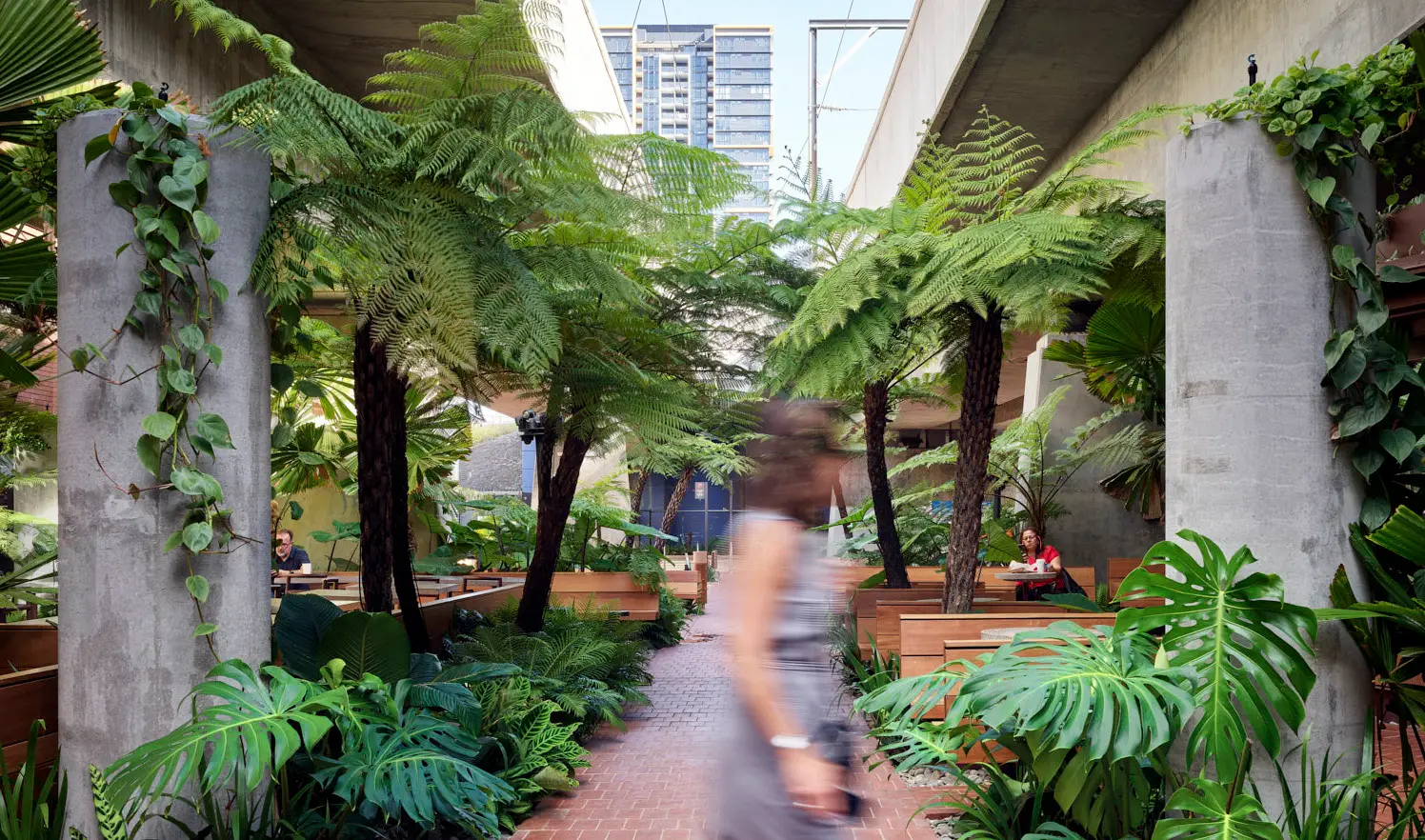
Importantly, the updated submission moves beyond vision alone. Through the Green Grid Evaluation Tool and supporting case studies, the submission demonstrates how shade, walkability, cycling connections, biodiversity and high-quality public realm outcomes can be assessed, prioritised and progressively delivered through practical, staged interventions. Examples from Woolloongabba, Southport, Rockhampton and Kangaroo Point illustrate that many of the outcomes sought by the Green Grid are already being achieved in Queensland through good design, partnership and leadership.
The work has also attracted broad support from health, industry, walking, climate and city-shaping organisations, reinforcing the Green Grid as a unifying framework for liveability, resilience, movement, nature and economic vitality as Brisbane grows and responds to a warming climate.
As the submission makes clear, timing matters. Tree canopy growth, streetscape renewal and behavioural change all take time. Early action is essential if Brisbane is to realise the benefits of a cooler, healthier and more beautiful city by 2032 and to ensure those benefits endure for decades to come.