
Library & Innovation Centre, Abbotsleigh Junior School | AJC
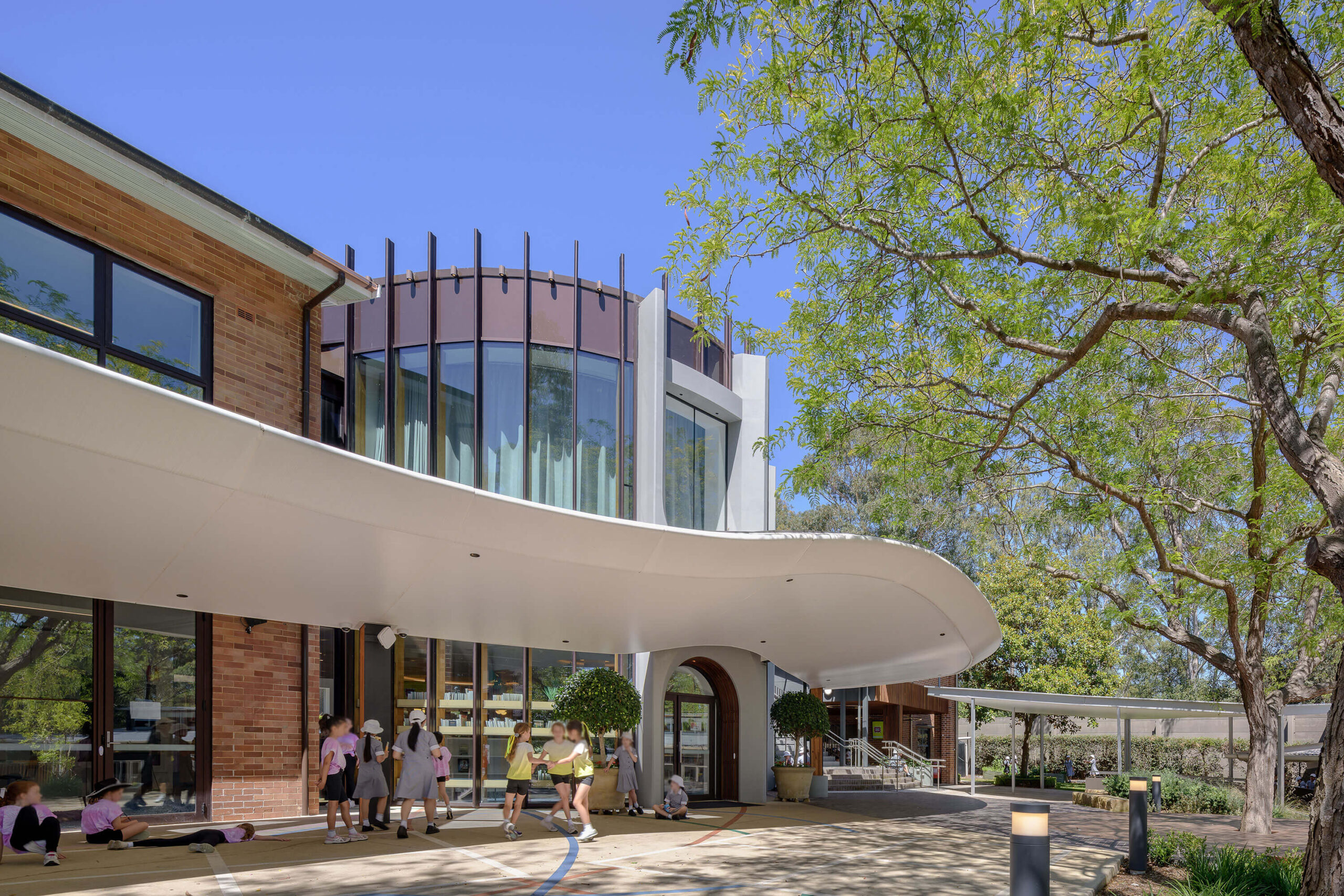
Designed to delight and inspire young minds, the Abbotsleigh Junior Library & Innovation Centre in Sydney forms a new central hub of the campus, bringing together teaching and admin facilities with active indoor and outdoor learning spaces, around a glass egg shaped building.
Creating the 1,140 sqm centre involved the partial retention and integration of an older 1950s building and the insertion of a new glass ovoid building that beautifully punctuates the more conventional campus buildings improving visual permeability and connectivity.
Interiors of the tech enabled library use organic circular forms drawn from nature with a maze of curved bookcases, an immersion for wide screen viewing, glow worm caves for quiet reading and spiral patterned ceilings referencing ripples in a pond.
Uniting the old and new buildings is an undulating canopy of glass reinforced concrete that signals the library entrance and shelters an outdoor play area.
Lidcombe Childcare | CO-AP (Architects)

A new purpose built 36 place childcare centre is situated on a residential corner site in Western Sydney. Terraced gardens and outdoor play spaces integrated over two levels, with semi basement parking.
The strong building form is enveloped by a veil that peels away from the facade, becoming a privacy and acoustic screen to outdoor playspaces.
Each storey is articulated by contrasting materials of timber, face brick and concrete, with colours and finishes referencing the surrounding residential context.
The sweeping outdoor play area is supported over a sloping concrete structure. Radial concrete ribs span over the vehicular ramp down to the semi basement carpark which is naturally ventilated by hit and miss brick screen openings in the facade.
Lidcombe Rise | Plus Architecture
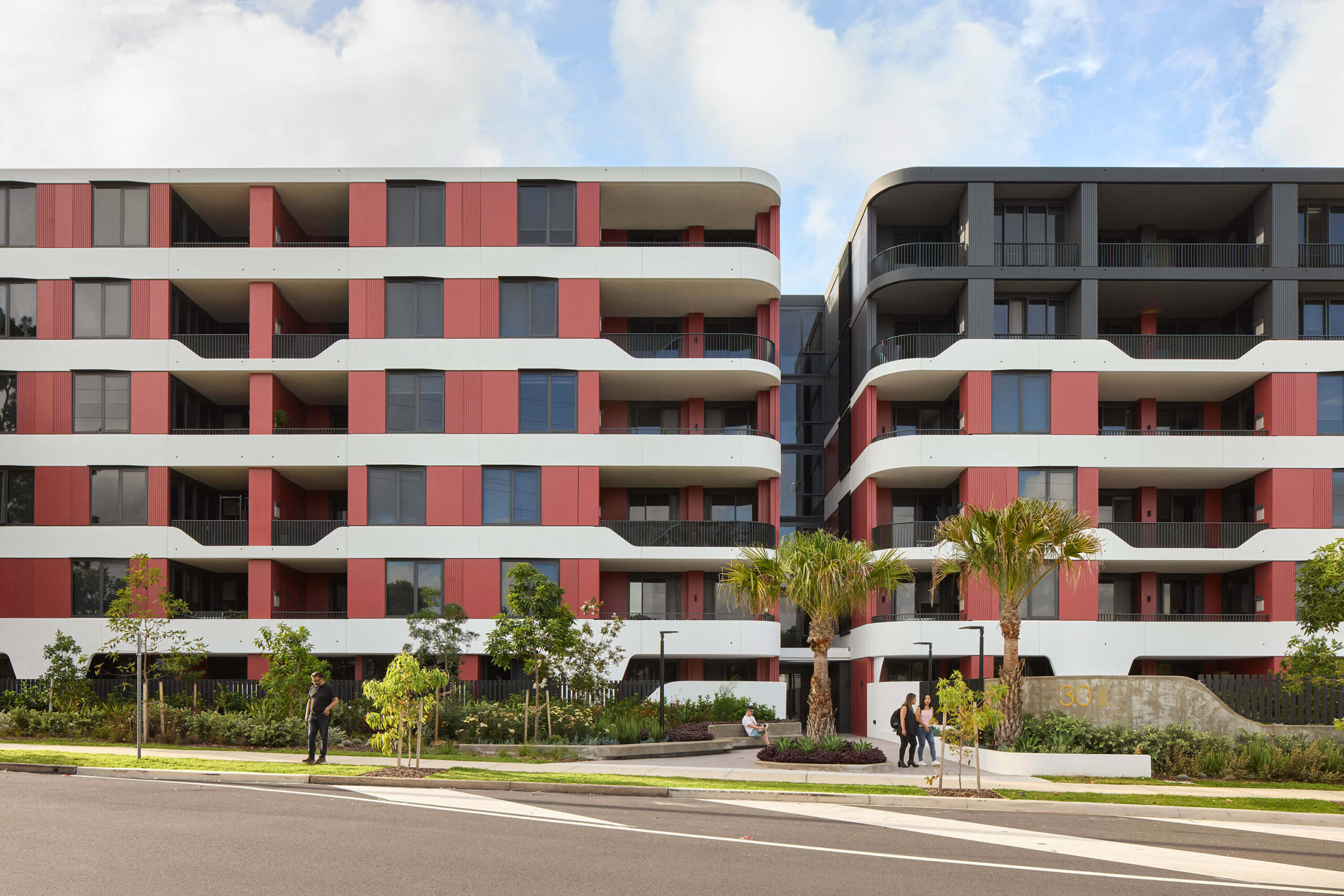
Lidcombe Rise, at 236 Church St Lidcombe, is the first Communities Plus Development to be delivered in NSW. Communities Plus is an initiative by the NSW government to revitalise and expand its stock of Social Housing across NSW by partnering with private developers and NGO’s.
Comprising four buildings housing 376 apartments,the foundational design principle guiding the design and development teams was the notion of equity of amenity across the residential typologies provided. From the experience of the residents as they entered from the street into their lobbies and to their apartments, the quality of the ground floor amenity zones and the amenity offered by the apartments themselves, the overall offering was designed to be indistinguishable between the different types of tenure offered, realising the opportunity implicit within the provision of such developments that the base nature and dignity of the occupant doesn’t change, regardless of circumstance.
Kidman Lane | Plus Minus Design

Briefs are rarely this demanding on a small site in a heritage controlled inner suburb and with a modest budget, create a functional home with additional bedrooms and off street parking. A garden too, please. And don’t upset the neighbours!
Our elegant, efficient and flexible plan delivers generous living spaces connecting to a landscaped garden, 3 bedrooms, 2 bathrooms and off street parking. The sawtooth roof (inspired by a nearby warehouse) provides high ceilings without overshadowing plus abundant light/ventilation.
The courtyard garden extends the living/dining areas and transforms into parking. Upstairs, 3 rooms interchangeable as bedrooms, offices or living areas plus a spacious bathroom.
Detailing is direct thoughtful arrangement of standard components rather than high-end craftsmanship while vibrant colour design animates and amplifies spatial character.
Although different, the home fits the suburb. Not only did Council approve a potentially controversial design, it has been enthusiastically welcomed by neighbours you’ve renovated the whole street!
Killcare Heights Escarpment House | Matt Thitchener Architect
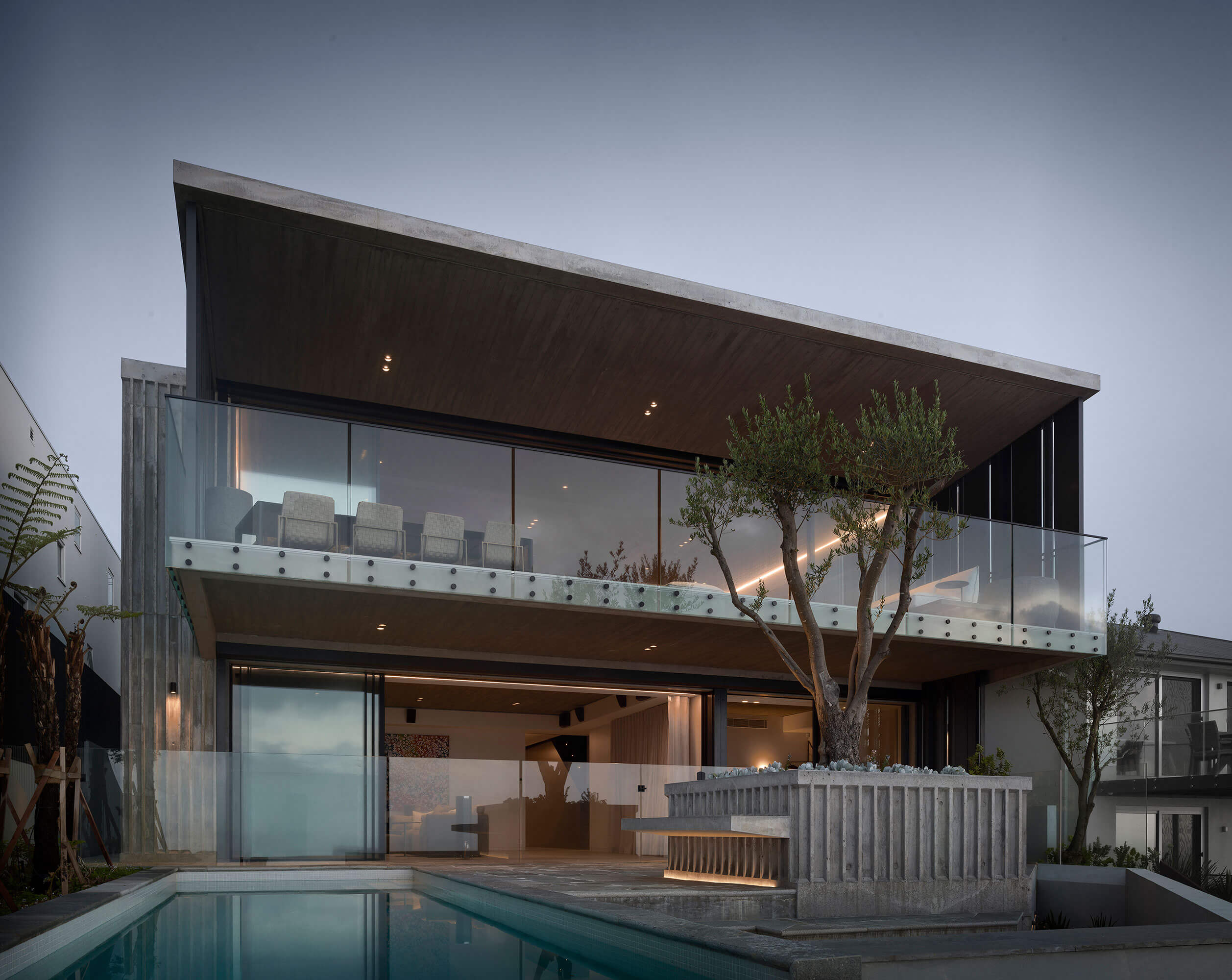
The Killcare Heights Escarpment House replaces an aged holiday home, seamlessly integrating coastal living with durability and environmental sensitivity.
Positioned on the edge of a rock escarpment on an elevated site, it balances simplicity and resilience, welcoming sandy feet and capturing panoramic views.
The design is modern yet respectful of neighbouring homes and is softened by raw, textured materials and native landscaping throughout.
Mindful of sustainability, the all electric home utilizes energy efficient glazing, natural ventilation, ample thermal mass, substantial solar and rainwater harvesting, and a battery bank w EV charging.
Simple pavilion forms allow ocean views throughout, break down building bulk & ensure light & ventilation permeate deep into the interior. Clever integration of disciplines hides services, structure, and addresses bushfire protection seamlessly.
The blackened entry provides a precursor to the spectacular views celebrated throughout the home, embodying a visually stunning and sustainable coastal retreat.
Killcare House | Southmarc Architecture
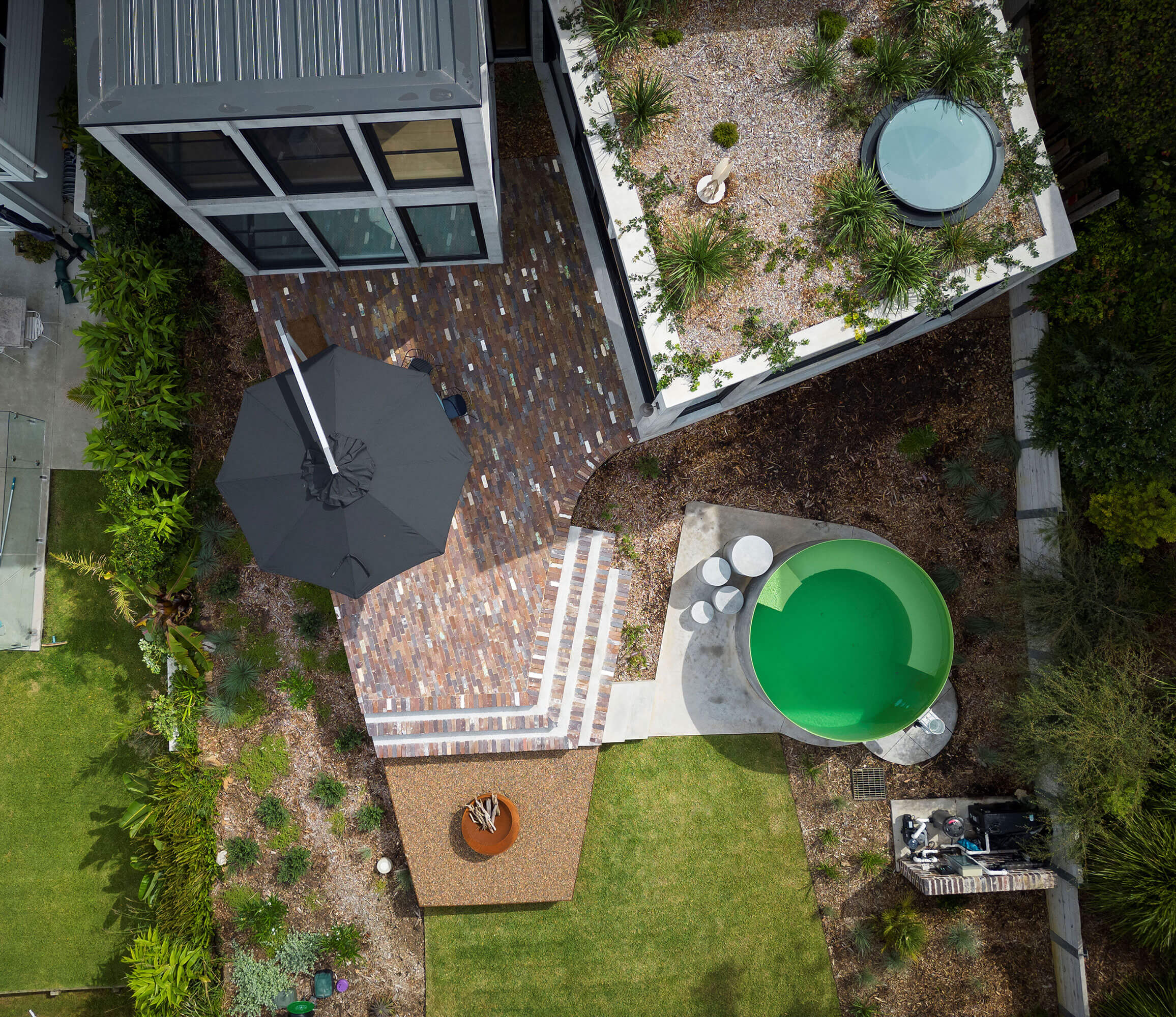
The only sustainable solution is to renovate.
The original house was constructed 50 years ago on the edge of the Bouddi National Park.
Now it is wrapped with insulation, powered by 10KW of Solar panels (car, cooking, heating and cooling), is doubled glazed and protected from bushfires.
All new work is made from concrete.
Sustainable engineered timber is throughout the interior: on floors, benches, hook rails and dining table. All custom designed to suit the space.
The architectural expression is playful. Internally two red steel portal frames mark the threshold of the Bushfire Flame Zone.
Light penetrates deeply with the use of Danpalon translucent polycarbonate. It surrounds the ensuite and forms the balustrade.
The new native filled garden attracts biodiverse native species: wallabies, a goanna, turkeys and native birds.
This was an old house, that has evolved to become electric. Conservation is no longer optional it is essential.
Kurraba Penthouse | Mathieson Architects
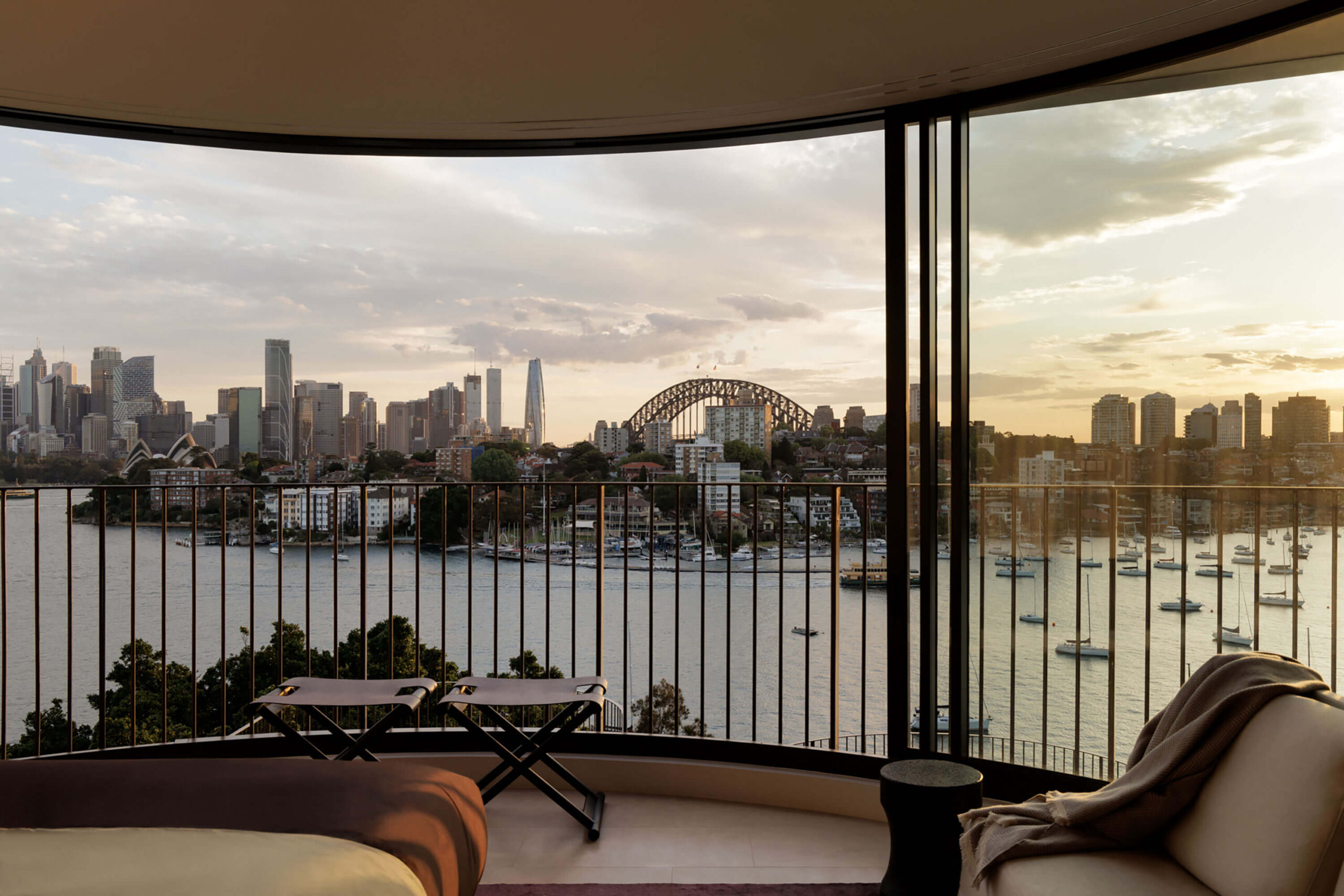
Kurraba Penthouse, designed by Mathieson, is exemplary of the studio’s approach to timeless design. Rigorous internal planning, considered details and a limited palette of materials were adopted to create a sense of overall calm and to pursue a notion that luxury does not need to be obtrusive. The two level apartment accommodates 4 bedrooms with robes and ensuites to the upper level with the living spaces located on the lower level that open out to an expansive roof terrace, garden, private pool and views to the surrounding harbour. The living spaces are arranged as a series of interconnected rooms that can be used in a contemporary open plan manner, or closed off to create a succession of private rooms. Pairs of doors are aligned at room ends creating through vistas.
International Grammar School: Renaissance Centre | BVN

The Project was envisaged to be the anchor project for this part of the campus, operating a city block away from its main buildings.
The public domain functions as the school corridors, shared with the Ultimo community as the learning within the classrooms adds to the activation of the streetscape.
The outcome of several consultation workshops saw three key elements would be the driving aspirations for the project to succeed.
It was designed to be a forum for exchange of ideas, a place where thinkers can gather in the round and share their work with the school, and vice versa.
Working on making flexible and inspiring spaces with an existing structural grid and a low ceiling, whilst aiming for an exceptional acoustic performance were the biggest challenges.
Each space aims to quickly adapt to the needs of the users, implementing different tools to open up or divide areas into more intimate spaces.
Irrawaddy | Incidental Architecture
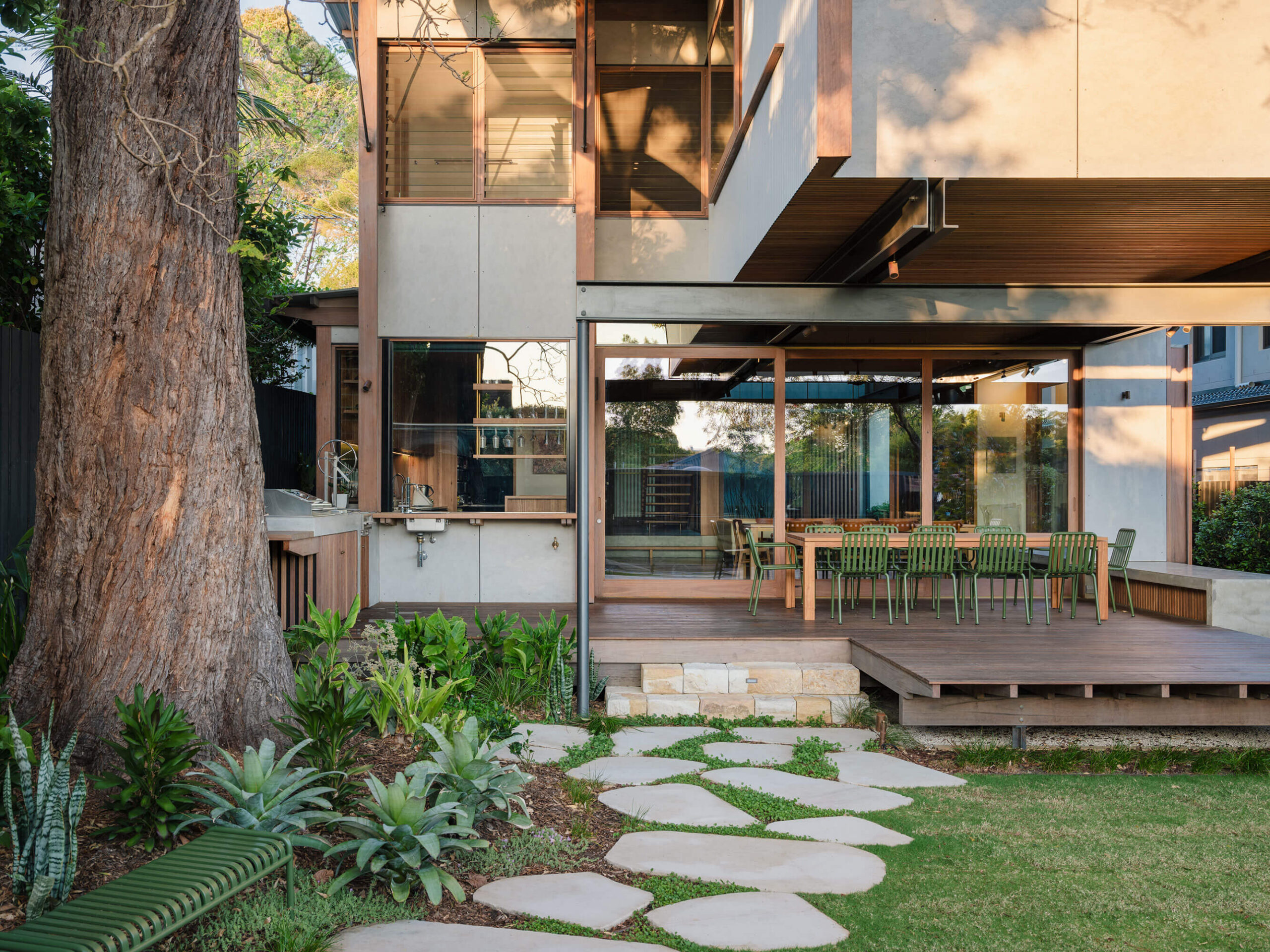
Irrawaddy is on Cammeraygal land, within suburban Chatswood. Although a larger house (271m2), Irrawaddy incorporates the fine grain to nurture a family of eight.
The clients, having grown up in what was Burma, shared stories of the Irrawaddy river being synonymous with the lifeblood of Burmese culture and fundamental to every aspect commerce, transport, spirituality, and not least, shelter.
Taking inspiration from the vernacular of Burmese delta houses on stilts, the branch like steel structure of Irrawaddy is expressed inside and out, straddling the ground floor footprint. Living spaces spill outside as the first floor floats overhead.
Motivated by their six children, playful elements are scattered throughout. A loft space is accessed by a rolling ladder through high level joinery. Monkey bars span between pavilions. Pivoting screens steal views between levels.
Kids bedrooms are deliberately tiny, only 2.3mx1.9m, with built in joinery allowing maximum function.
A house to gather yet retreat, work yet play.
Horizon Apartments | CKDS Architecture & Hill Thalis Architecture + Urban Projects, architects in association

Horizon Apartments occupies a generous 5,600m2 site on Newcastle’s waterfront, located at the junction of three new public space: the Honeysuckle promenade, a public square on Steel Street’s extension and a park on Cottage Creek Corridor.
The project comprises three buildings defining two courtyards open to the water. The buildings are united by their waterfront alignment, scale and material palette. The design is an exemplar of equitable view sharing as the landscaped courtyards allow views between the buildings from both the public and private domain behind.
The buildings sit on a gently raised brick plinth, providing flood proofing and prospect over the adjoining public spaces.
Containing 110 generous apartments with a range of plan types, all achieve high amenity. 88% of apartments face north with harbour views, over 75% are cross ventilated.
The design is a considered response to this exceptional site and a model for the area’s evolving urbanity.