

The Yorta Yorta Nation whose clans include Bangerang
Victorian
Wangaratta District Specialist School caters to students who have clinically diagnosed physical and intellectual disabilities. The new building provides spaces for students to develop skills that encourage independent living.
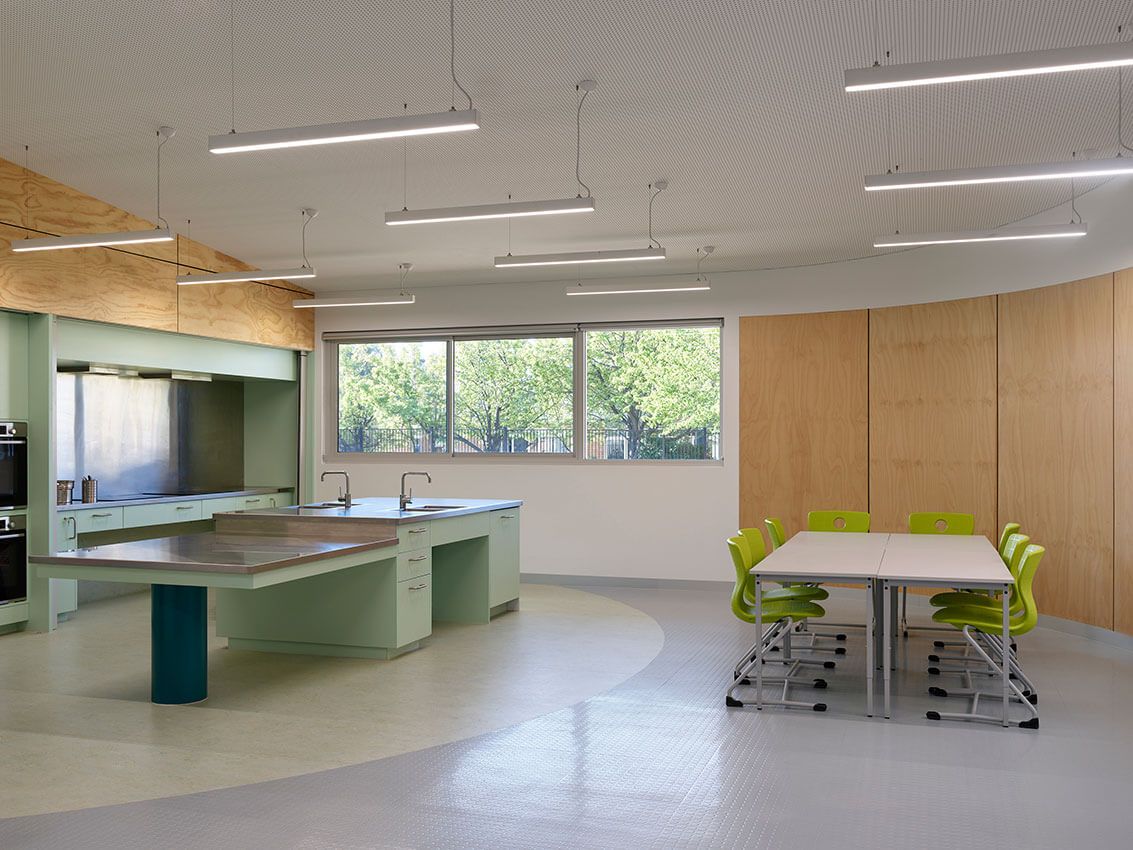
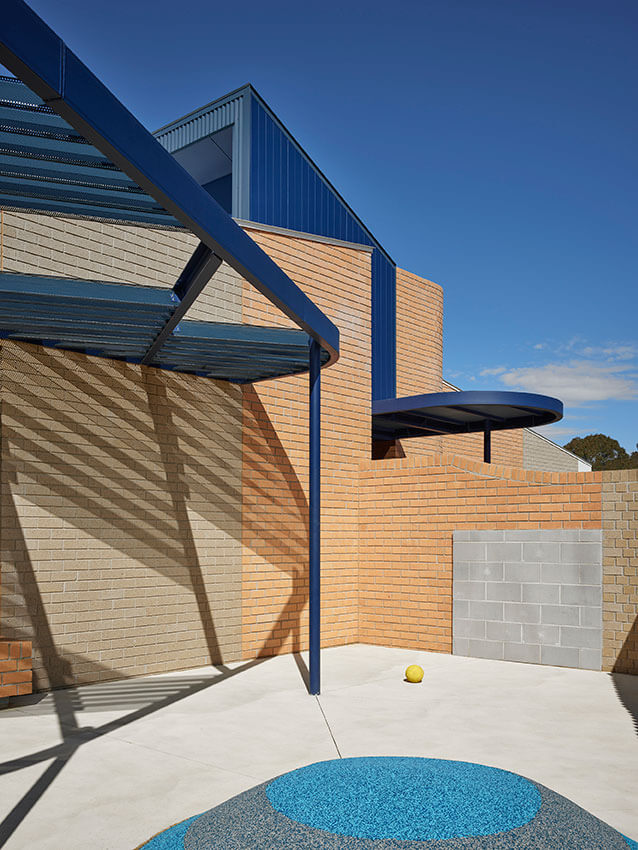
Sensory design devices are employed including colour, tactility, and atmosphere. Such devices are an integral part of the pedagogical experience. These are manifested in several sensory considered spaces, spaces for quiet, spaces for wonder and spaces for respite.
Classrooms are designed with intimate learning in mind, with each classroom having its own breakout space and outdoor zone. Colour is used throughout the design to create identity and familiarity for students. With each function of the school assigned a unique identity. The school provides students with space to build skills that encourage independent living, beyond the school years.
Commendation for Educational Architecture
Wangaratta District Specialist School is a truly joyful building. This sense of joy goes beyond the playful use of colour and sculptural forms. The real delight is the outcome it has provided for the students and the school community. Sibling Architecture have taken the time to truly understand the specific needs of the users. There is a tenderness in its approach, creating spaces which are dignified and calming, yet also engaging and thoroughly uplifting. This building really does make you smile.
EmAGN Project Award
The project demonstrated a collaborative leadership approach between a practice director in the EmAGN demographic and a graduate team member, who grew into the role of project architect throughout the project’s duration. Leadership was particularly evident throughout the sensory design zones, as the team were challenged to draw upon insights garnered from Sibling’s experience in exhibition design to champion innovative sensory solutions within the VSBA framework and tight budget.
The project team demonstrated their commitment to collaboration, actively involving end-users and specialists throughout the design process. The team interrogated the initial design brief, to enrich the building’s functionality and flexibility through extensive end-user consultation. This ensured that the project has a high-level of research and understanding embedded within the design, to meet the diverse needs of students and educators.
The built outcome is a playful, thoughtful, and a highly functional response, expertly balancing a challenging brief and tight budget. The jury believes the project sets a new benchmark for the design of inclusive spaces and exemplifies best practice in designing for students who have clinically diagnosed intellectual disabilities. The outcome is dignified, responsible and delightful.
Commendation for Educational Architecture
Wangaratta District Specialist School is a truly joyful building. This sense of joy goes beyond the playful use of colour and sculptural forms. The real delight is the outcome it has provided for the students and the school community. Sibling Architecture have taken the time to truly understand the specific needs of the users. There is a tenderness in its approach, creating spaces which are dignified and calming, yet also engaging and thoroughly uplifting. This building really does make you smile.
EmAGN Project Award
The project demonstrated a collaborative leadership approach between a practice director in the EmAGN demographic and a graduate team member, who grew into the role of project architect throughout the project’s duration. Leadership was particularly evident throughout the sensory design zones, as the team were challenged to draw upon insights garnered from Sibling’s experience in exhibition design to champion innovative sensory solutions within the VSBA framework and tight budget.
The project team demonstrated their commitment to collaboration, actively involving end-users and specialists throughout the design process. The team interrogated the initial design brief, to enrich the building’s functionality and flexibility through extensive end-user consultation. This ensured that the project has a high-level of research and understanding embedded within the design, to meet the diverse needs of students and educators.
The built outcome is a playful, thoughtful, and a highly functional response, expertly balancing a challenging brief and tight budget. The jury believes the project sets a new benchmark for the design of inclusive spaces and exemplifies best practice in designing for students who have clinically diagnosed intellectual disabilities. The outcome is dignified, responsible and delightful.
Client perspective