
Whadjuk Noongar
Western Australia
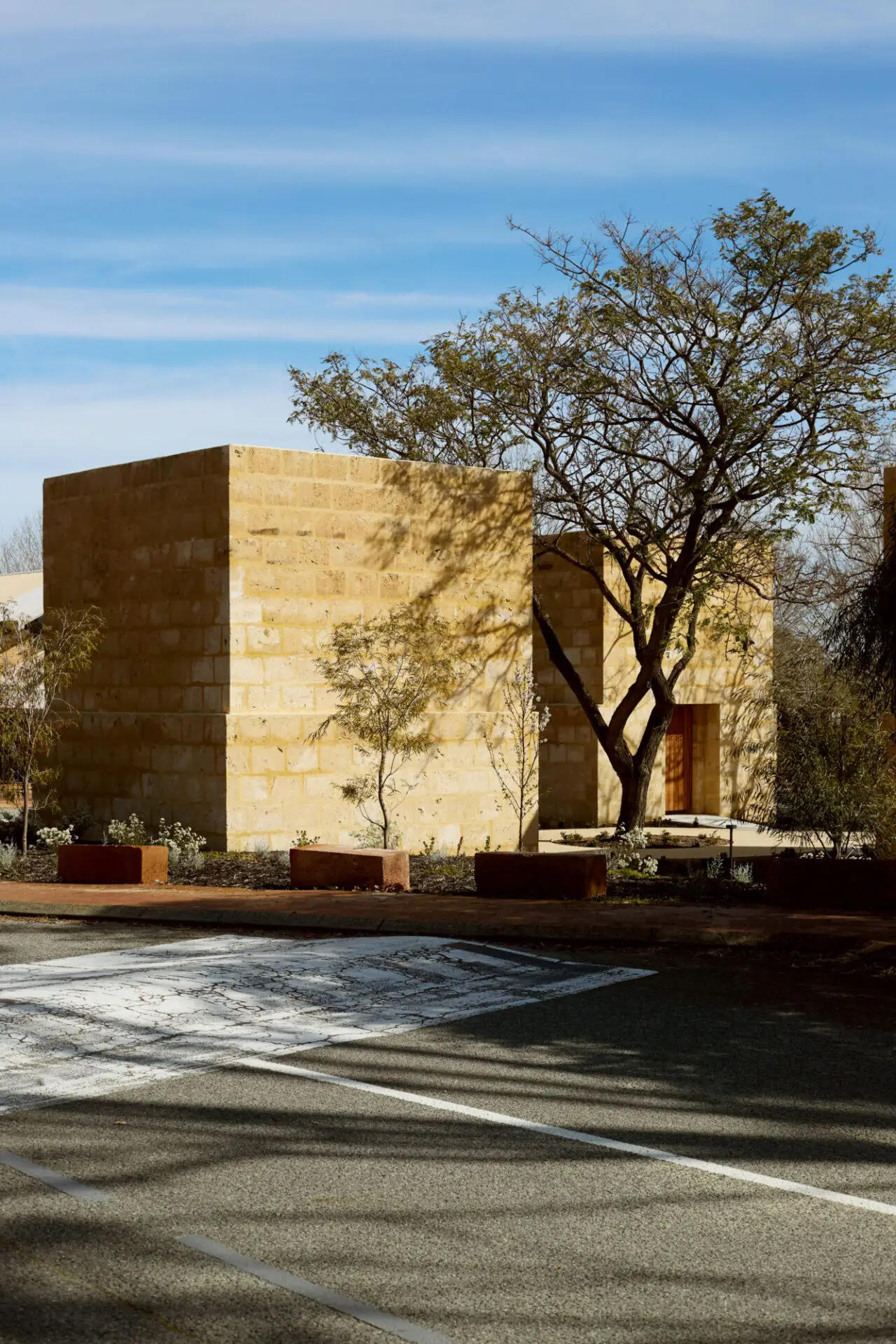
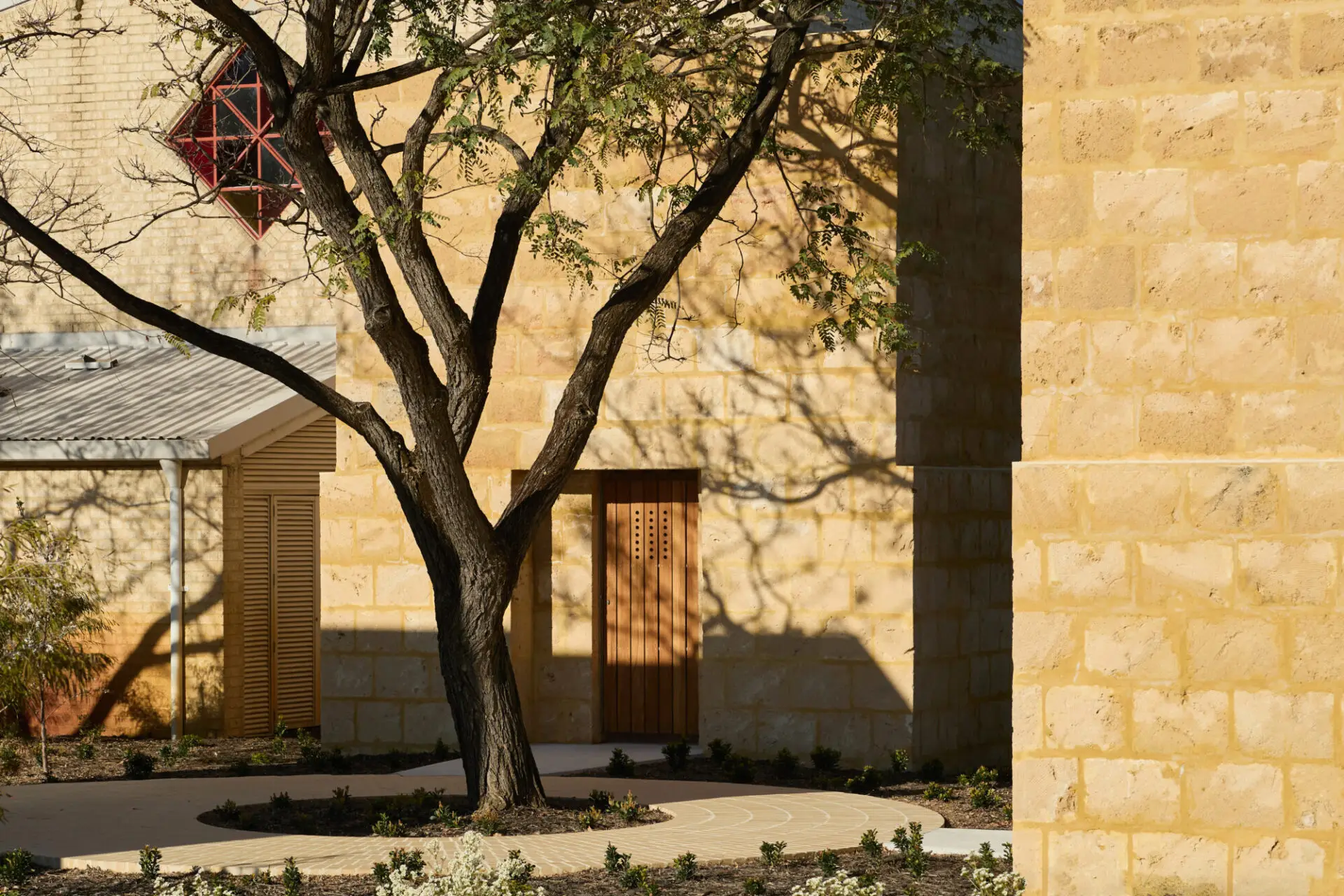
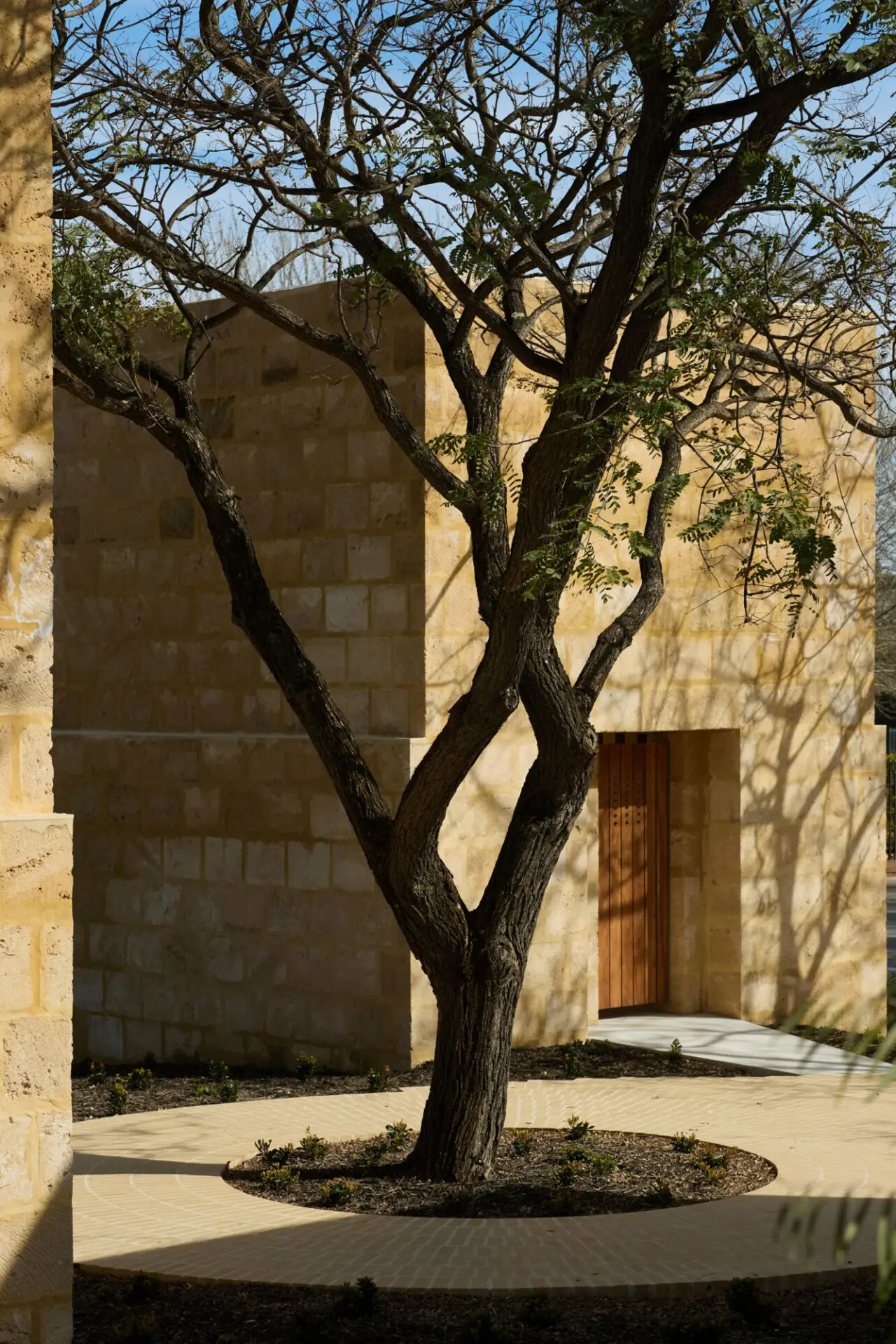
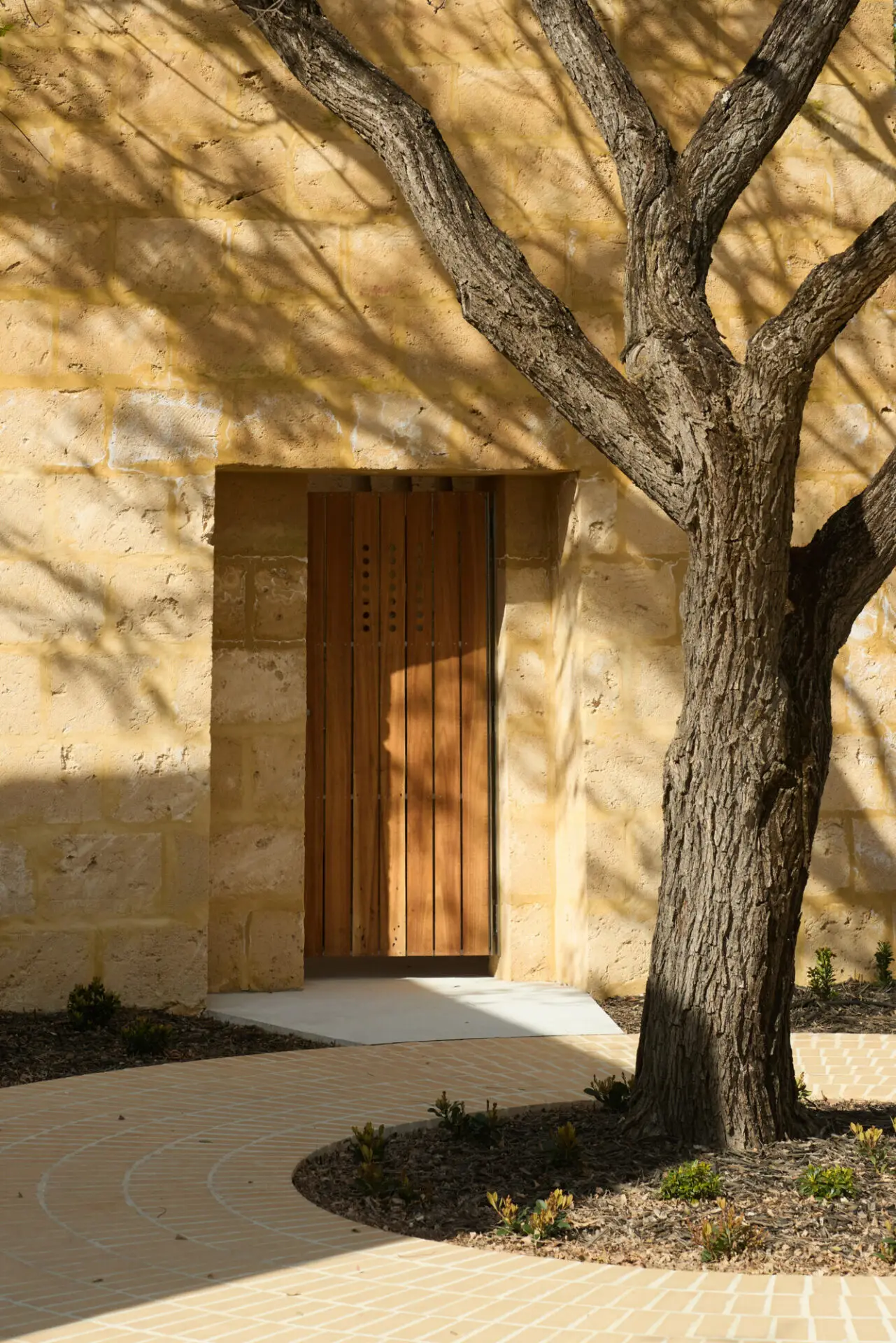
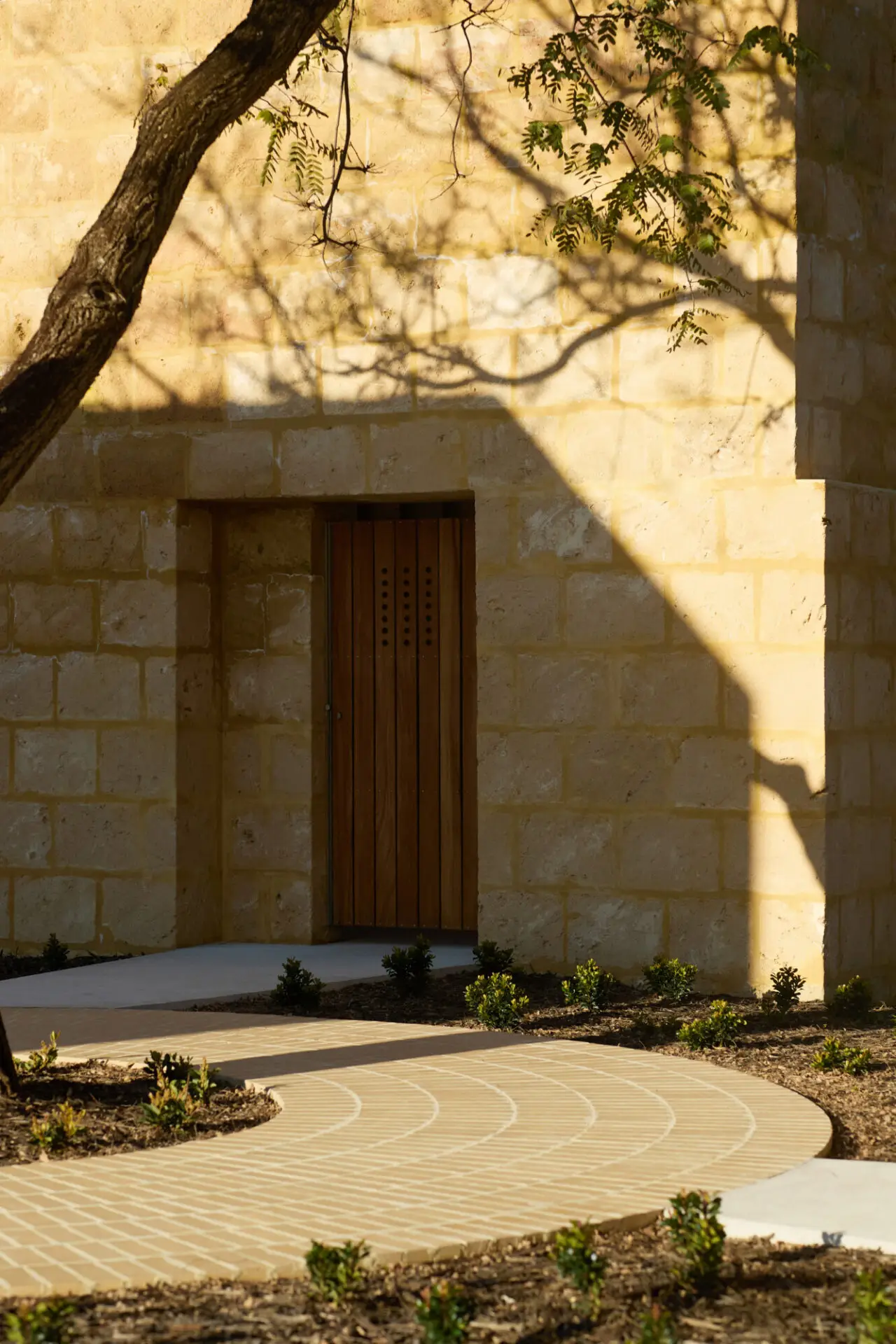
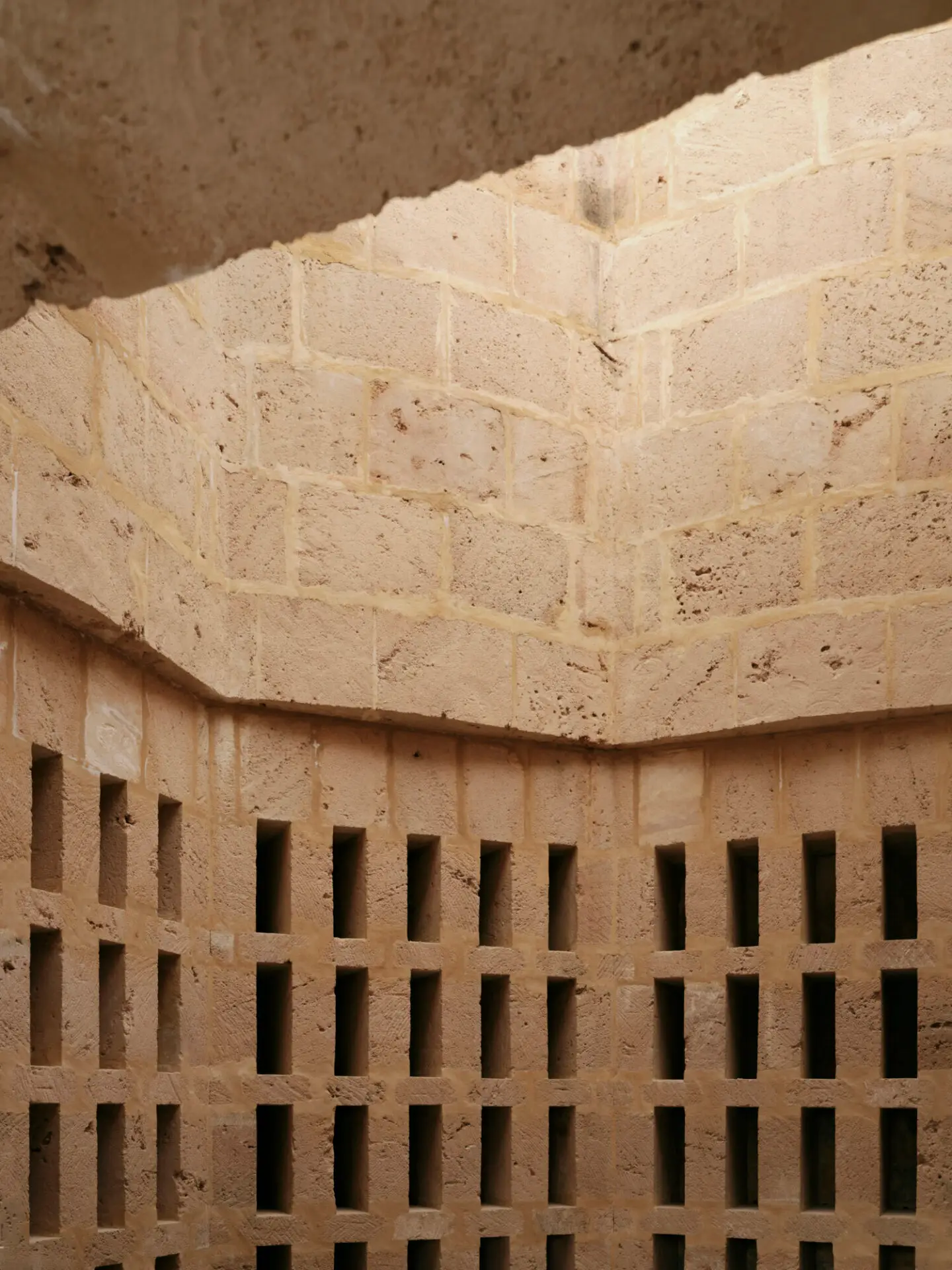
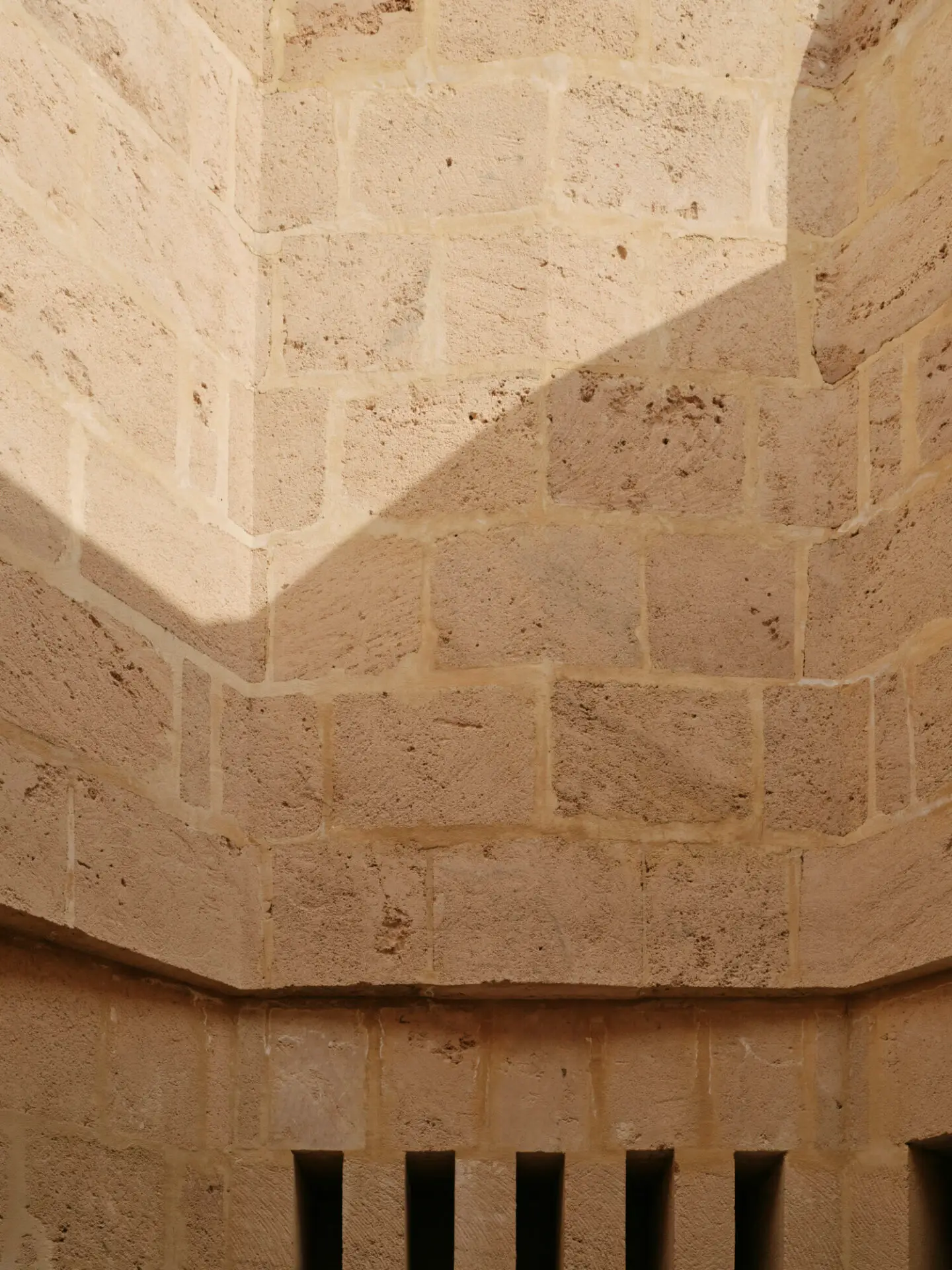
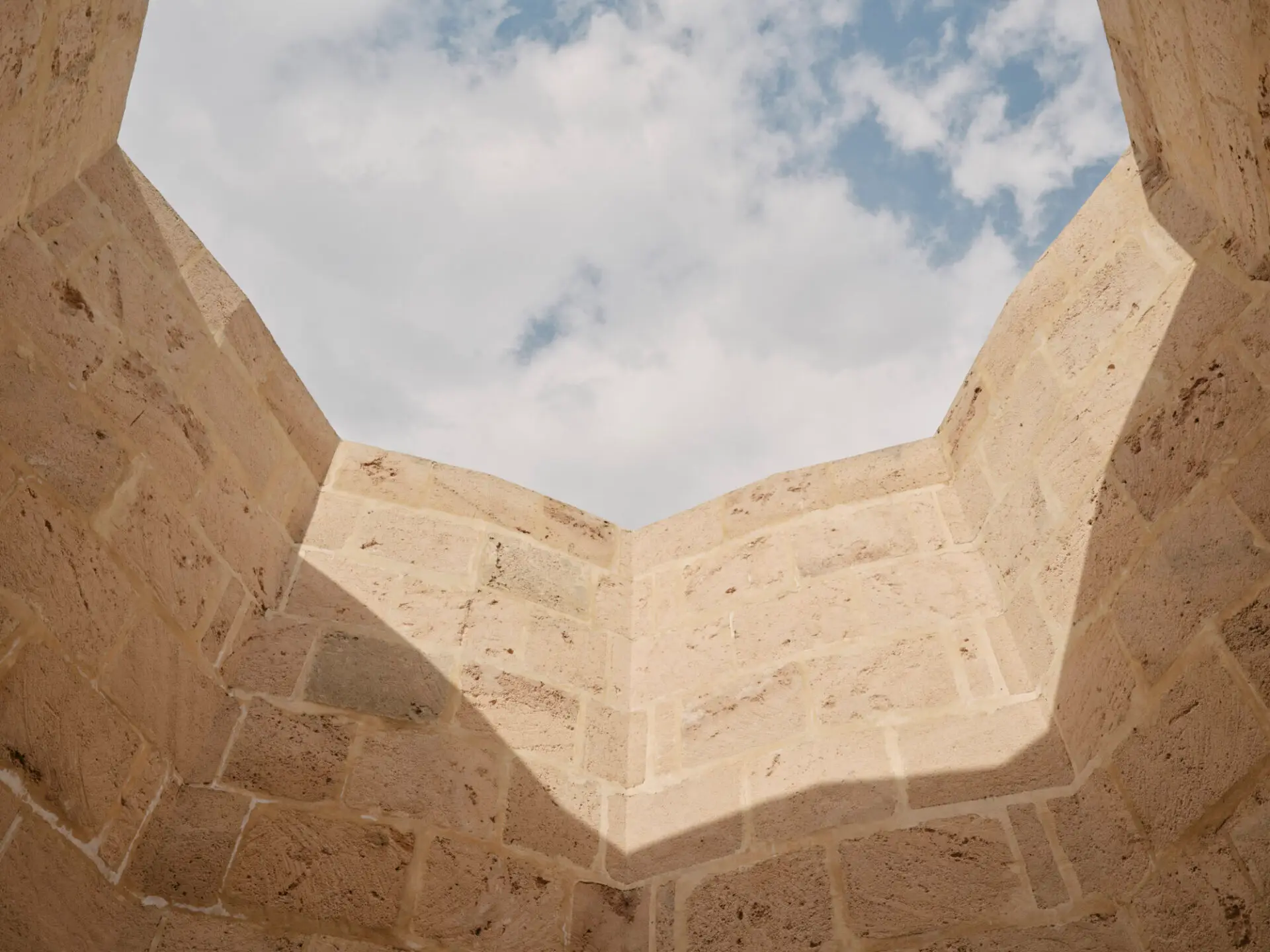
Three limestone towers, open to the sky are held by a tear-drop shaped brick pavement, set amongst existing trees in a new, expanded garden. When designing the new Columbarium, we looked to its origins, their role in collective internment, dignity, and their atunement to the otherworldly, the sky, weather, time and season. The towers hold the central space. The entrance of each tower centred upon its own tree.
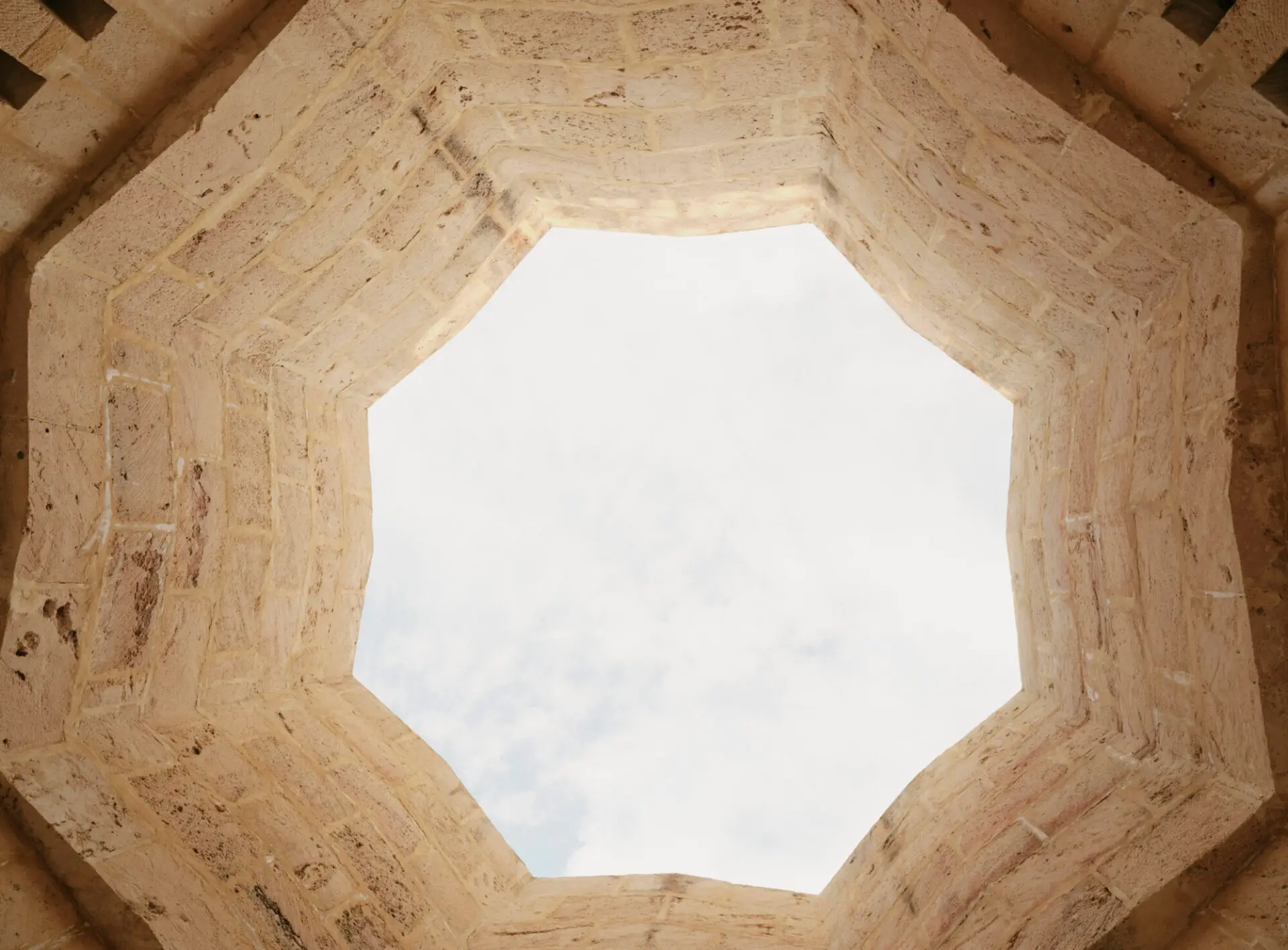
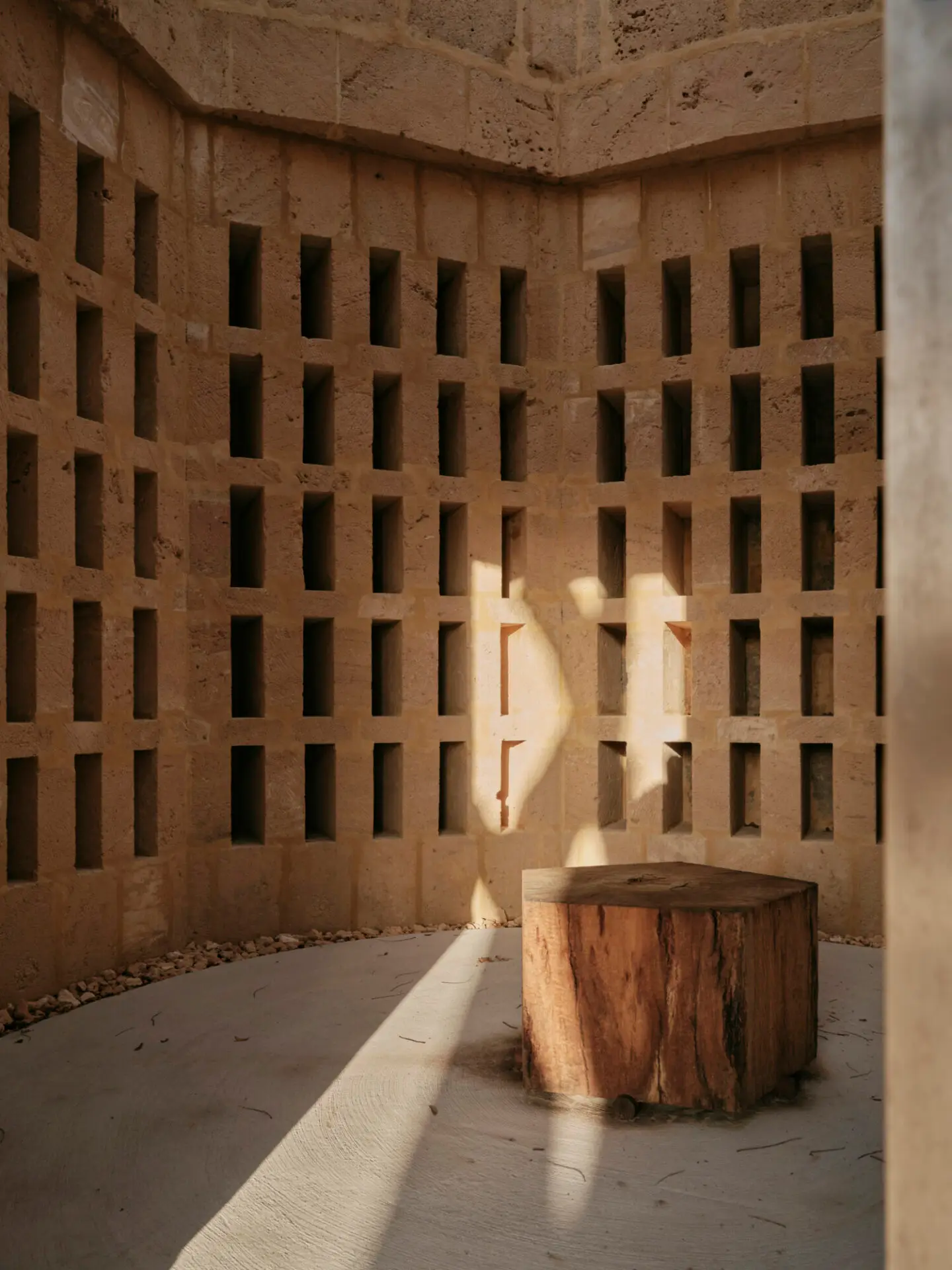
The niches are arranged as octagonal-shaped rooms. In the Catholic tradition the octagon symbolises resurrection, new beginnings, and eternal life.
A pentagonal shaped seat made from solid hardwood sits at the centre of each tower. In the Catholic tradition the pentagon represents the five wounds of Christ.
The trees in the garden are of two types – Peppermint and Almond. Peppermint trees (Wanil in Whadjuk culture) are important for ceremony and habitat. In the Catholic tradition almond trees symbolise divine favour.
The Iwan Iwanoff Award for Small Project Architecture
An almost perfect expression of architecture. The Columbarium demonstrates a complete creative endeavour. A wide breadth of invention is executed by Simon Pendal Architect, whilst rigorous research and an understanding of historical precedents ensured a culturally relevant response. Coupling this research with a sensitive understanding of the project’s specific circumstances enabled the design to extend beyond the expectations of the client.
Minimal but critical design decisions create a pure, simple form that is dense with symbolism. Authentic materiality generates a quiet monumentality. Site and regulatory conditions have been navigated to enrich the form. Existing trees are retained and superbly integrated, with the blocks sitting amongst a sympathetic planting of surrounding elements. Waste was carefully utilised in the build to minimise environmental impact. This has all been developed through productive relationships between all parties and a clear understanding of budget.
The result is a sublime arrangement of absolute forms that offer a divine experience to the living and those who have passed.
The Nicholas Murcutt Award for Small Project Architecture
Small project architecture has the capacity to surprise, haunt, delight and turn the mundane into an architecture of compelling beauty. Even within that range of experience, St Thomas More Columbarium is uniquely arresting. It is rare, exquisitely rare, harnessing tensions between shifting parish building styles, hard-inclined ground plane, planting, sky and an additive assemblage of limestone blocks to create a sacred experience.
Three unornamented limestone towers, open to the sky and held within a teardrop-shaped brick pavement, sit amongst existing trees in a newly expanded garden. The architecture appears almost inevitable, yet this simplicity belies an extraordinary depth of research, symbolism and invention. Drawing upon the ancient Roman columbarium, Simon Pendal Architect understands collective interment not as an architecture of display, but one of dignity, community and quiet otherworldliness. The towers shun monumentality as spectacle, instead creating serene spaces attuned to weather, season, time and sky.
The landscape is not an accompaniment but an essential part of the architecture’s meaning. Existing trees are retained and carefully woven into the composition, with each tower’s entrance focused upon a tree of its own. Peppermint trees, significant to Whadjuk culture for ceremony and habitat, sit alongside almond trees whose Catholic symbolism evokes divine favour. The result is an astoundingly serene landscape where cultural, religious and ecological meanings coexist without hierarchy.
Within each tower, the octagonal room evokes resurrection, new beginnings and eternal life, while a centrally positioned pentagonal hardwood seat recalls the five wounds of Christ. These gestures are minimal but resonate densely with meaning. Waste materials were carefully reused, while site, regulatory and budget constraints are harnessed as opportunities rather than compromises.
This is architecture of remarkable discipline and invention. Rigorous research, coupled with a sensitive reading of place and circumstance, has produced something far beyond the expectations of a small project. It is a seminal work: absolute in form, generous in spirit and inaudibly monumental, offering a divine experience to both the living and the eternally at rest.
The Iwan Iwanoff Award for Small Project Architecture
An almost perfect expression of architecture. The Columbarium demonstrates a complete creative endeavour. A wide breadth of invention is executed by Simon Pendal Architect, whilst rigorous research and an understanding of historical precedents ensured a culturally relevant response. Coupling this research with a sensitive understanding of the project’s specific circumstances enabled the design to extend beyond the expectations of the client.
Minimal but critical design decisions create a pure, simple form that is dense with symbolism. Authentic materiality generates a quiet monumentality. Site and regulatory conditions have been navigated to enrich the form. Existing trees are retained and superbly integrated, with the blocks sitting amongst a sympathetic planting of surrounding elements. Waste was carefully utilised in the build to minimise environmental impact. This has all been developed through productive relationships between all parties and a clear understanding of budget.
The result is a sublime arrangement of absolute forms that offer a divine experience to the living and those who have passed.
The Nicholas Murcutt Award for Small Project Architecture
Small project architecture has the capacity to surprise, haunt, delight and turn the mundane into an architecture of compelling beauty. Even within that range of experience, St Thomas More Columbarium is uniquely arresting. It is rare, exquisitely rare, harnessing tensions between shifting parish building styles, hard-inclined ground plane, planting, sky and an additive assemblage of limestone blocks to create a sacred experience.
Three unornamented limestone towers, open to the sky and held within a teardrop-shaped brick pavement, sit amongst existing trees in a newly expanded garden. The architecture appears almost inevitable, yet this simplicity belies an extraordinary depth of research, symbolism and invention. Drawing upon the ancient Roman columbarium, Simon Pendal Architect understands collective interment not as an architecture of display, but one of dignity, community and quiet otherworldliness. The towers shun monumentality as spectacle, instead creating serene spaces attuned to weather, season, time and sky.
The landscape is not an accompaniment but an essential part of the architecture’s meaning. Existing trees are retained and carefully woven into the composition, with each tower’s entrance focused upon a tree of its own. Peppermint trees, significant to Whadjuk culture for ceremony and habitat, sit alongside almond trees whose Catholic symbolism evokes divine favour. The result is an astoundingly serene landscape where cultural, religious and ecological meanings coexist without hierarchy.
Within each tower, the octagonal room evokes resurrection, new beginnings and eternal life, while a centrally positioned pentagonal hardwood seat recalls the five wounds of Christ. These gestures are minimal but resonate densely with meaning. Waste materials were carefully reused, while site, regulatory and budget constraints are harnessed as opportunities rather than compromises.
This is architecture of remarkable discipline and invention. Rigorous research, coupled with a sensitive reading of place and circumstance, has produced something far beyond the expectations of a small project. It is a seminal work: absolute in form, generous in spirit and inaudibly monumental, offering a divine experience to both the living and the eternally at rest.
Client perspective
Simon P, Design Architect
Marco deGois, Graduate of Architecture
CAPA Studio, Landscape Consultant
Forth Consulting, Structural Engineer
Oceanside Consulting Services, Electrical Consultant
HW Associates, Quantity Surveyor
Taycon, Building Surveyor