

Whadjuk people of the Nyoongar nation
Western Australia
This new 3-bed, 2-bathroom house on a sub-divided laneway block is home to a young family who are very climate and ecologically conscious.
They aimed to dramatically improve upon the status quo of Perth housing, which tends to be oversized and inefficient, and typically provides poor thermal performance and low levels of comfort for residents.
Instead, they wanted a modest home where their family could thrive and grow, that would be comfortable all-year round without artificial heating or cooling.
The resulting design has a very small footprint – just 135sqm floor area on a 470sqm lot – and prioritises passive solar design principles for thermal performance; access to natural light; and connections to the generous garden.
In keeping with their aspirations, their home saves money on energy bills without sacrificing year-round comfort, and offers a flexible plan that works well now and into the future, as their children grow up.
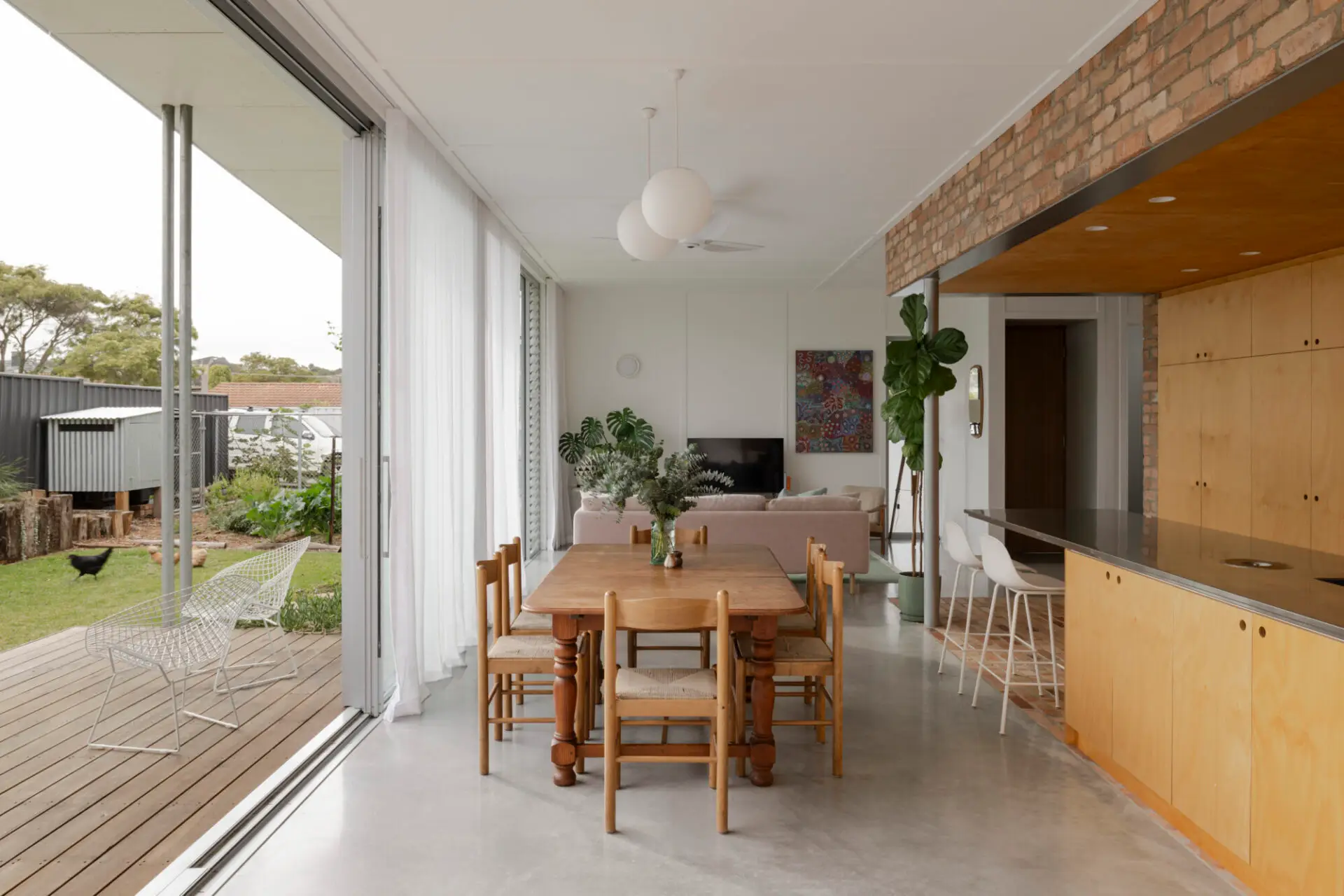
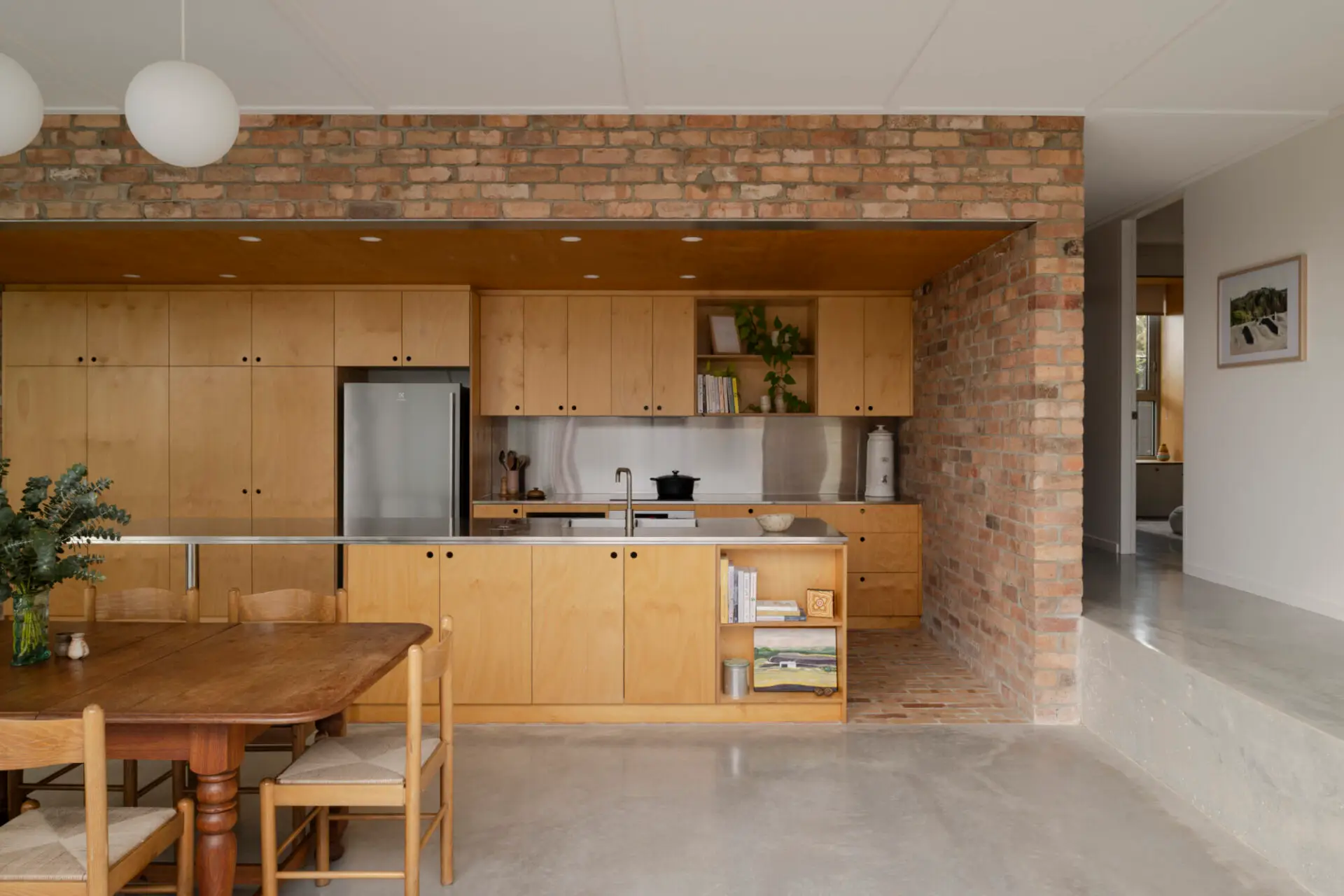
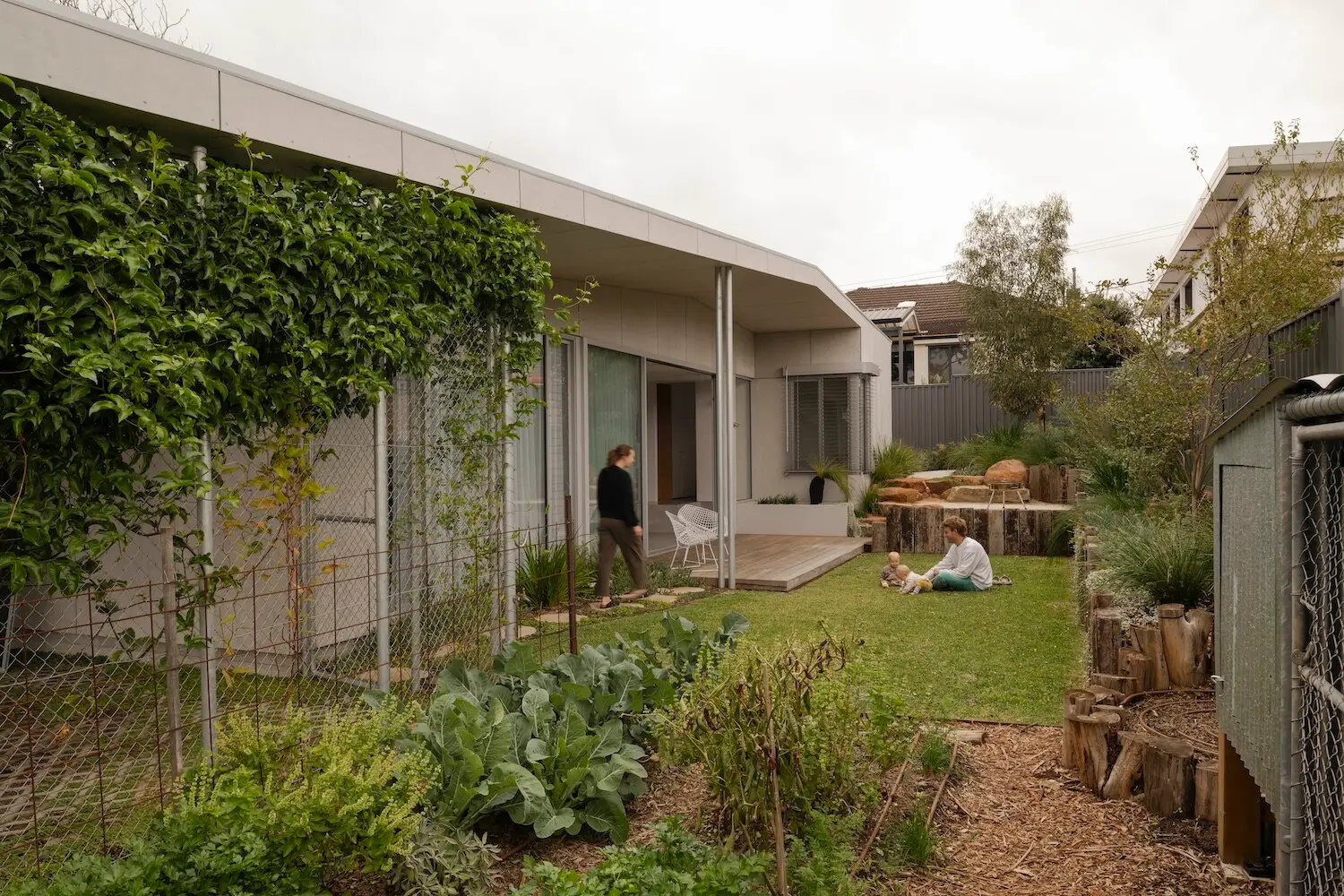
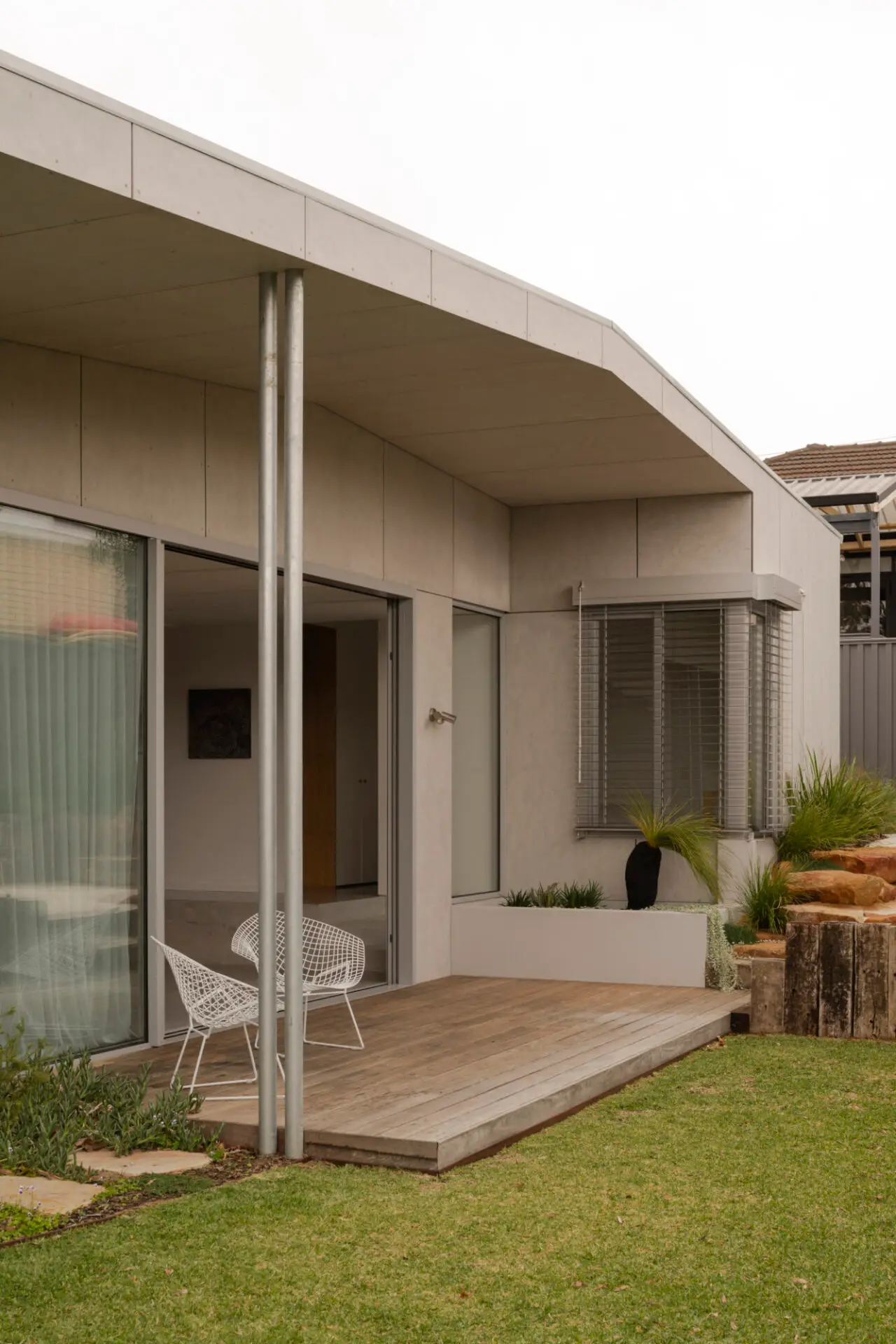

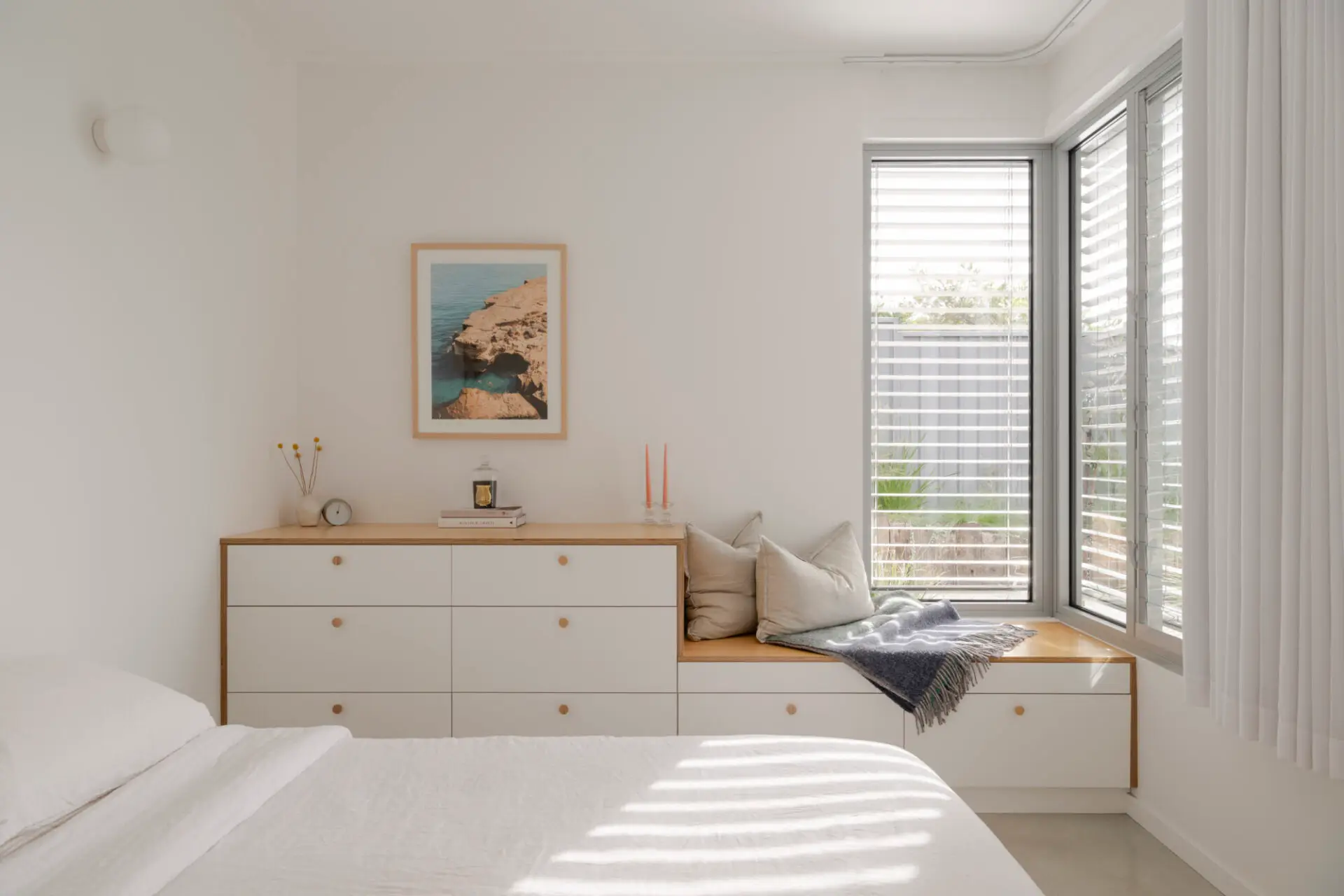
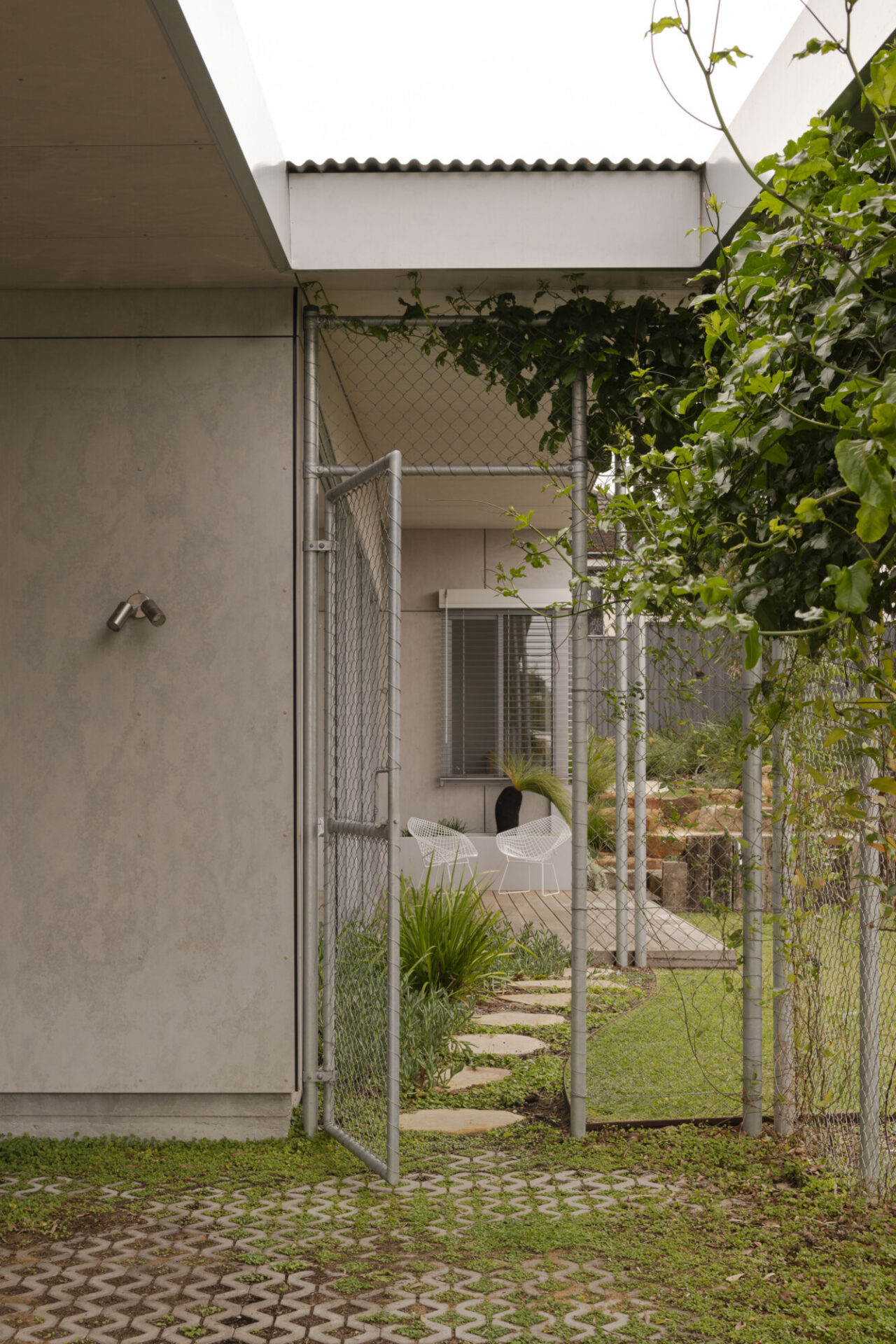
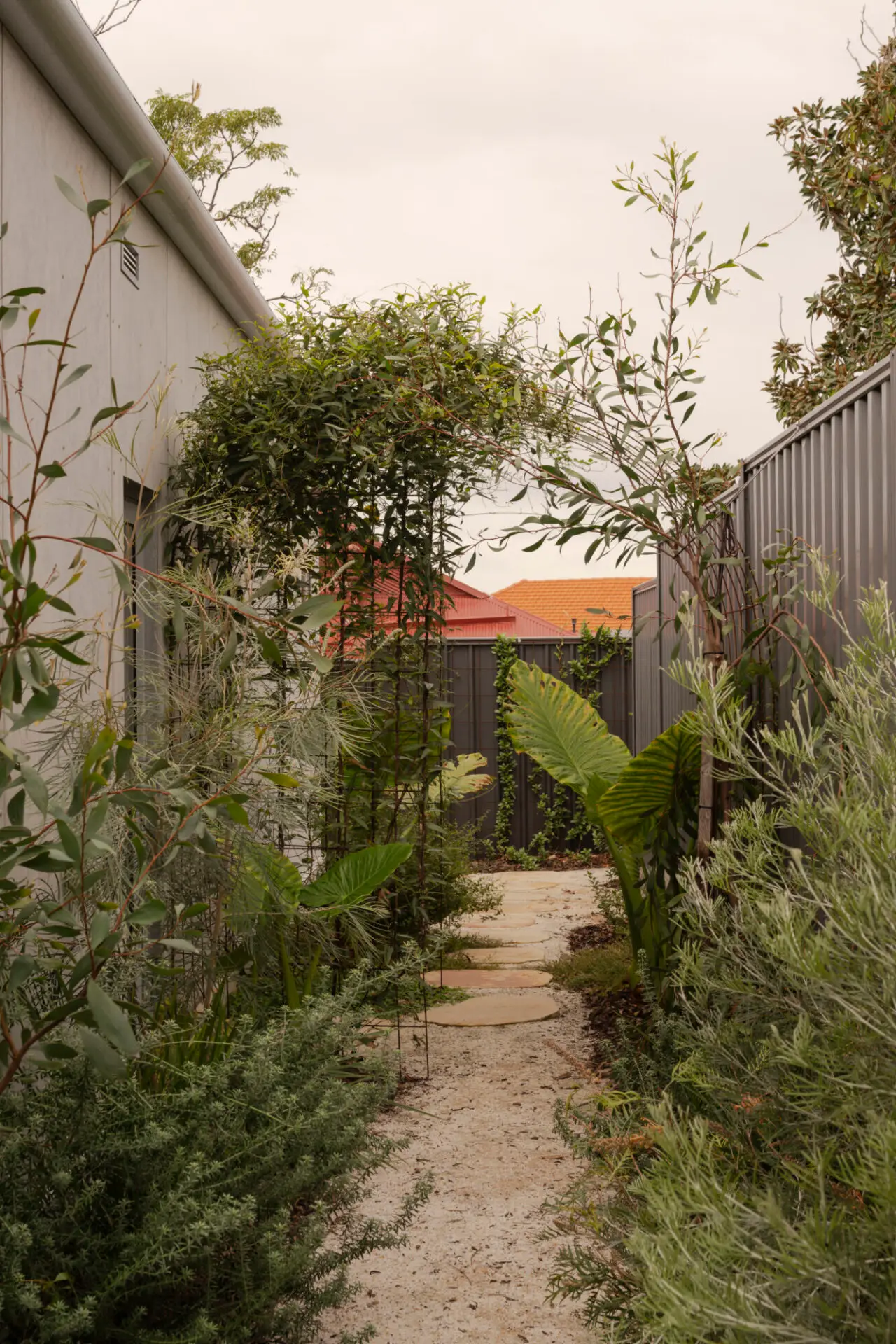
Hinderwell is tucked behind an existing dwelling, presenting a linear northern aspect across a simply landscaped garden. Landscape makes up 70% of the site. The place exemplifies sustainability in a modest-scale project.
Major glazing faces north to deliver natural light and winter solar gain to all of the living spaces. South-facing windows are kept to the minimum. External walls are constructed in thermally efficient reverse veneer construction.
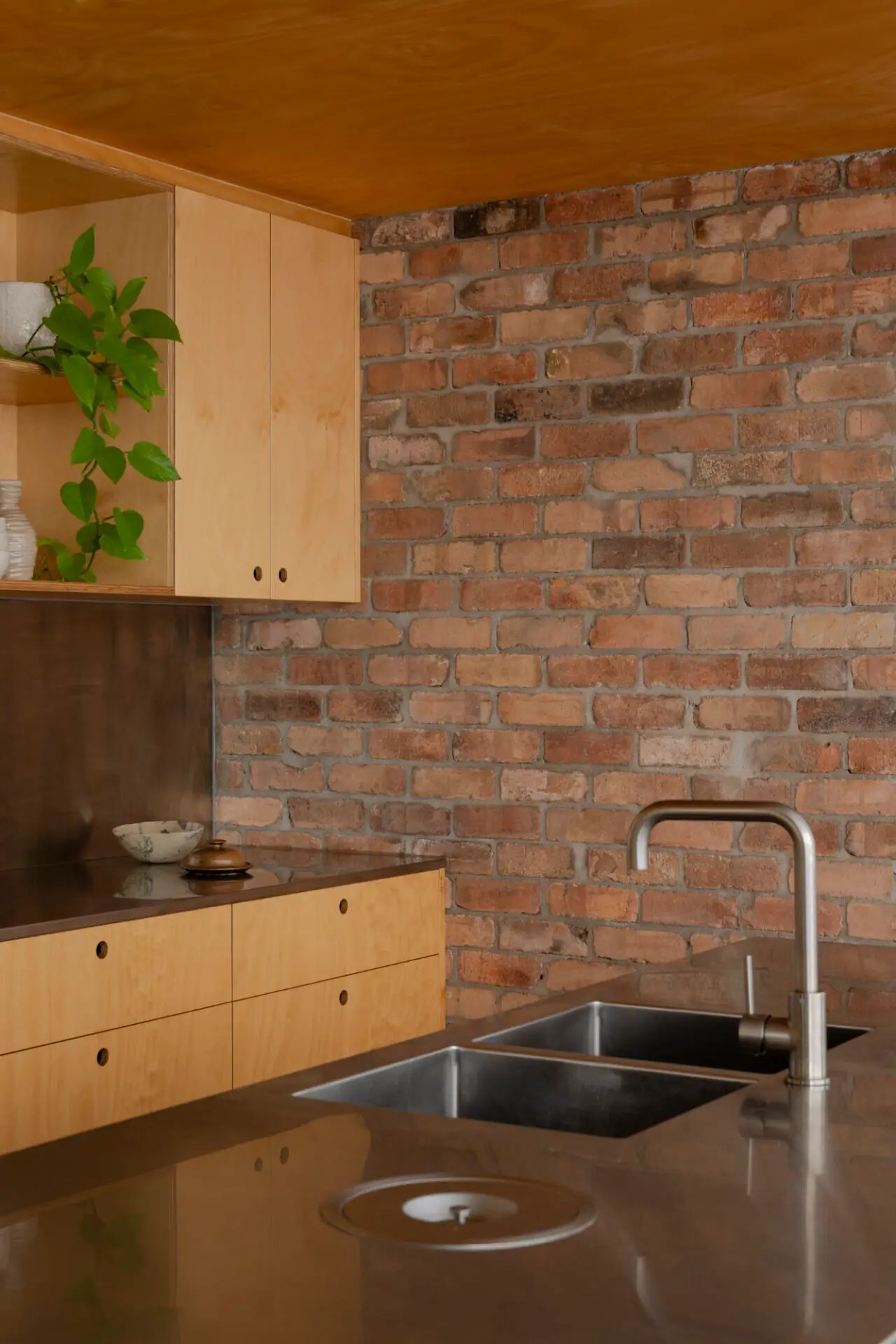
Planning is simple and clear and offers flexibility in use. The project explores material innovation with expressive details, favouring recycled, low carbon, and Australian made materials in the palette, while maintaining a cost-conscious lens. The NatHERs and LCA ratings show that the project performs well technically.
The house achieves an 8‑star NatHERS rating, an 87% carbon saving over its lifetime, greywater recycling, and rainwater harvesting. The house performs well against the sustainability criteria.
Hinderwell House is humble, yet its message to the architectural profession is weighty and critical: it showcases sustainable design strategies that the industry must support by broadcasting and scaling them. It is economically sustainable, successfully arguing against the narrative that sustainability is expensive.
It’s a modest-sized house, and manages to feel very open and cosy at the same time. Within the confines of our budget, we wanted interesting products that we thought should be more widely used.
We use almost every square metre of this house on a weekly basis. There’s no wasted space.
Client perspective